

Bottom line up front: A drone hit a US-owned tanker in Egypt on Wednesday. That is not an isolated incident. It is the newest data point in a five-month war that has already drained the country’s emergency oil reserve to a four-decade low and burned through more than half its missile interceptors. The fighting is moving faster than either government’s messaging can keep up with, and Americans are the ones absorbing the cost.
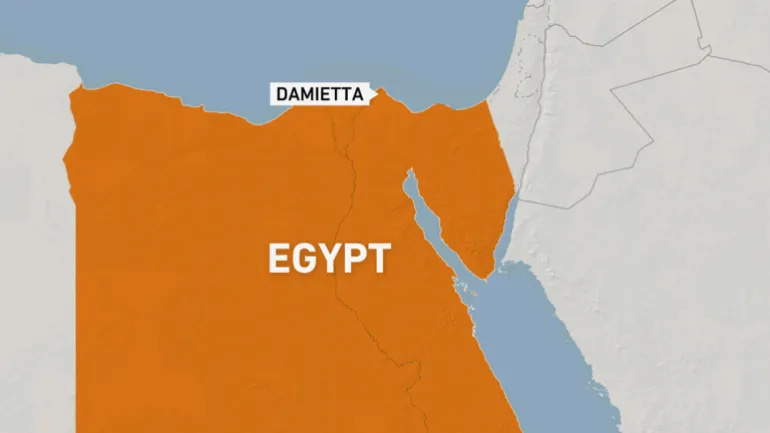
Multiple independent outlets confirm the core facts. On Wednesday, a drone struck the Energos Winter, a US-owned, Marshall Islands-flagged LNG storage tanker docked at Egypt’s Damietta port.
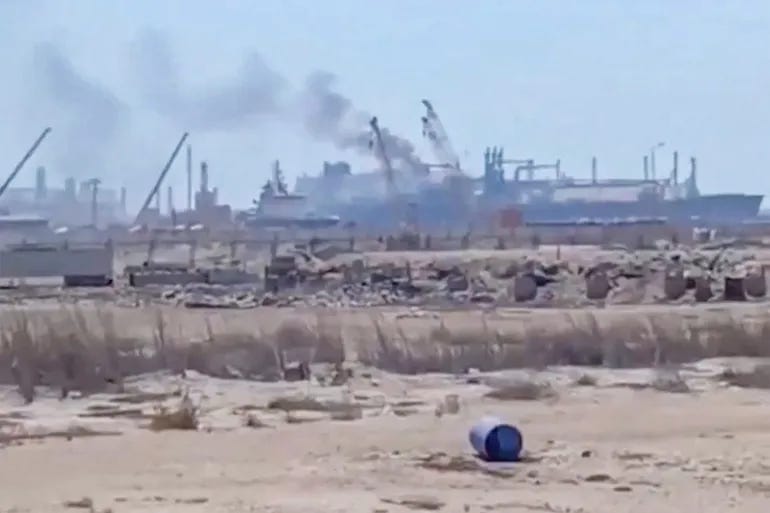
The fire spread to a second vessel, the Gaslog Salem. Egypt’s Cabinet confirmed a day later that preliminary investigations found the fire was caused by a drone, though no group has claimed responsibility. Maritime security firm Ambrey had flagged Iranian state television’s identification of Damietta as a possible retaliation target days before the strike.
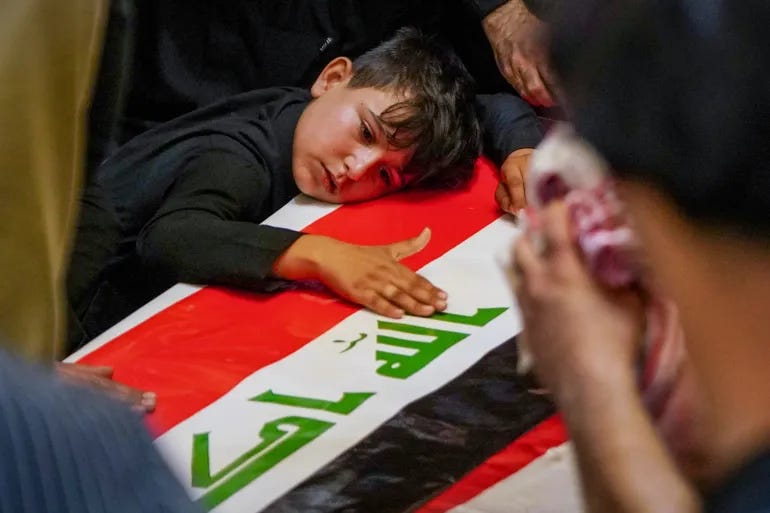
This came hours after the US resumed strikes on Iran following a brief pause, and hours after Iran fired ballistic missiles at a US base in Jordan, which CENTCOM says were all intercepted. It also followed joint US-Saudi airstrikes on Iran-backed militia positions across Iraq, which Iraq’s Popular Mobilization Forces say killed at least 20 of its members and wounded 32, in retaliation for a wave of drone attacks on Saudi oil facilities. Iraq’s National Security Council called the strikes a “flagrant violation of Iraq’s sovereignty.”
Notice what is happening here. Egypt, Jordan, Iraq, and Saudi Arabia have all been pulled into direct fighting in the span of about 48 hours. This is not “a little more of the same.” This is a regional war that keeps finding new fronts, and each government involved has its own incentive to spin what’s actually happening on the ground.
This is where the story stops being about the Middle East and starts being about your household budget.
The emergency reserve is nearly empty. The US Strategic Petroleum Reserve fell this week to its lowest level since March 1983, after four years of drawdowns tied to the Iran war and the war in Ukraine. Government auditors have warned that more than a quarter of what’s left can’t even be pulled out due to aging infrastructure. That reserve exists specifically to cushion Americans from oil price shocks. It is running thin at the exact moment shocks keep happening.
The country’s missile defense is stretched thin. A new CSIS analysis found the US has fired through roughly half its Patriot interceptors and half its THAAD interceptors, with replenishment measured in years, not months. That is not an abstract Pentagon budget line. It is the difference between a missile getting shot down over an air base and a missile getting through.
The public has noticed, and it’s showing up in the polls. Trump’s approval sits at 34% in the latest CNN poll, matching his career low, and a same-day Quinnipiac poll put it at 32%, with 66% disapproving of his handling of Iran specifically. This is not a partisan reading. It is a bipartisan verdict on a war with no clear end point and a rising bill attached.
Even the protest art has caught up to the moment. In Washington and now in Manhattan’s Foley Square, a satirical art collective installed a 10-foot “Iran War Participation Trophy” mocking the war’s lack of a defined outcome. It is a small detail, but it captures something real: a broad, cross-partisan exhaustion with a conflict that keeps escalating without anyone being able to say what winning looks like.
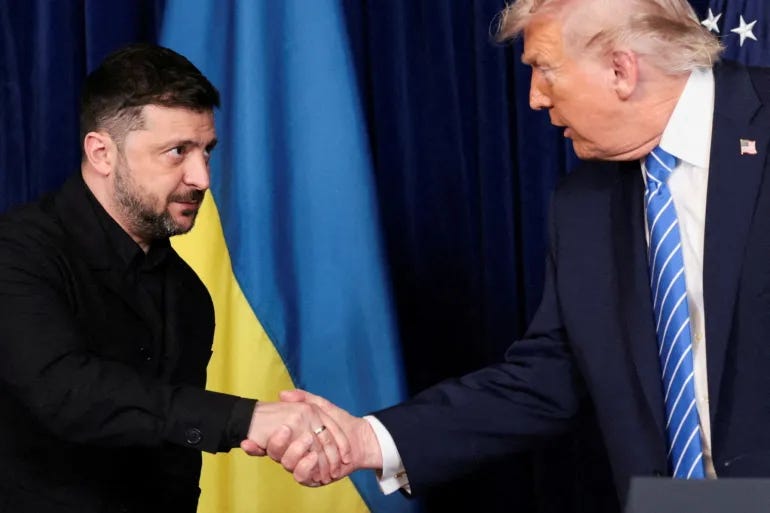
Meanwhile, on the diplomatic side, Ukrainian President Volodymyr Zelenskyy met Trump in the Oval Office this week to discuss a deal for Ukraine to help produce Patriot interceptors domestically, a tacit acknowledgment from Washington itself that the current stockpile situation cannot hold two wars at once indefinitely.
This is the point where most coverage moves on to the next news cycle. It shouldn’t. What comes next is the part that actually determines whether this gets better or worse, and it has nothing to do with who wins a shouting match in the Oval Office.
The rest of this analysis is for paid subscribers. Independent, source-checked reporting on stories like this only survives if readers fund it directly, not through ad networks with their own incentives. If that’s worth something to you, here’s the subscribe button.
Comments
Nothing yet. Say the first thing.
Sign in to join the conversation.