
Ray Dalio built the world’s largest hedge fund from a two-bedroom apartment and delivered roughly $53 billion in cumulative gains for investors with a 12% average return and no major losses. He is one of the few managers who foresaw the 2008 financial crisis, posting a 9.5% gain that year while the S&P 500 fell almost 40%.
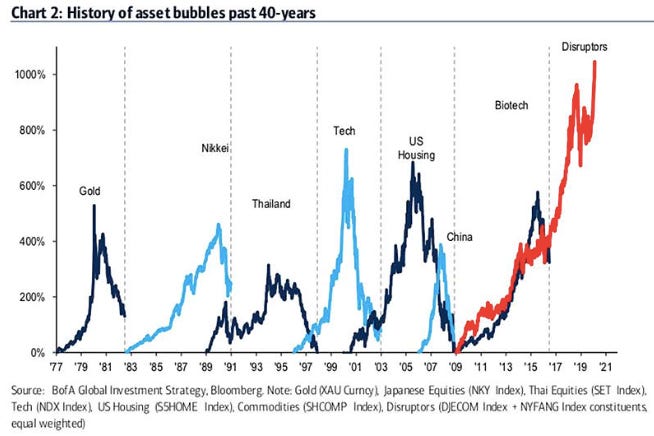
He just told that Jeremy Grantham, the investor who called the 1989 Japan bubble, the 2000 dot-com crash, and 2007, is right again. AI is a bubble. And when it bursts, the pain will not stay confined to Silicon Valley balance sheets. It will show up at your grocery checkout, in your job listing search, and in a government that cannot pay its bills.
This is not a story about whether you should buy Nvidia. It is a story about whether the system that decides who absorbs the pain when this bubble pops will include you, or run straight past you the way it always has.
Grantham calls this the biggest investment bubble in American history, warning AI stocks could fall as much as 70%. Dalio agrees the classic signs are present: excitement outrunning earnings, debt-fueled buying, and new stock issuance flooding a market that cannot absorb it.
Both men have been early before. Neither is speaking from the sidelines. Grantham manages $85 billion at GMO. Dalio built Bridgewater into the largest hedge fund on earth.
Dalio’s explanation is mechanical, not mystical. Investors borrow against inflated paper wealth. When interest rates rise or fear spreads, they must sell to cover debts, and the falling prices force more selling. Wealth is not money. You can only spend money, and the moment everyone needs it at once, the bubble pops.
The trigger is usually tighter monetary policy meeting a flood of new stock issuance chasing the same excitement. That combination has preceded every major crash of the last century.
Dalio’s advice for ordinary households is blunt. Cash sitting in a bank account loses to inflation over time. A diversified mix, spread across stocks, bonds, gold, and property, reduces risk without sacrificing return. No single asset should carry your entire future.
The deeper point matters more than any specific allocation. He counts financial security in months of survival if income stopped tomorrow, not in headline net worth. That is a floor most working Americans have never had the chance to build.
For someone with little capital, Dalio says your only real asset is yourself. The task is finding where your skill is valued highest and building toward work you can sustain, not just tolerate.
That advice is sound as far as it goes. But it also quietly concedes the harder truth: individual hustle cannot fix a system where the rules of who gets ahead are written by people who never have to live with the consequences.
Dalio holds roughly 1% of his portfolio in Bitcoin but favors gold as the asset governments cannot print, seize, or freeze as easily. He points to Russia’s frozen dollar reserves as a live example of what happens when a currency becomes a political weapon. Gold, he argues, has none of that exposure.
Grantham goes further, dismissing Bitcoin outright as an asset he expects to eventually go to zero, recommending precious metals and non-US equities instead as the AI mania unwinds.
Here is where the story stops being about markets and starts being about democracy. Only about 62% of Americans own stock in any form, according to Gallup. Ownership drops to just 28% among households earning under $50,000.
Even among owners, the gains are lopsided. The wealthiest 10% of households hold roughly 87 to 93% of all household stock market wealth, according to Federal Reserve data. When AI-driven markets rise, most of that wealth flows to people who were already at the top.
Dalio frames this as an evolutionary pattern: machines first replaced physical labor, and now they are climbing into cognitive labor. He does not dismiss the disruption. He simply separates it from the bubble cycle, calling it a slower, structural shift running underneath the boom and bust.
The uncomfortable part is that both forces can hit at once. A bubble bursting triggers layoffs for cash-flow reasons at the exact moment automation is quietly replacing the same jobs for good.
Silicon Valley’s answer points to the industrial revolution: new machines, new jobs. Dalio is skeptical that this comparison holds when both physical and cognitive labor are being automated simultaneously.
He notes that the share of business revenue going to workers has been falling while the share going to owners has been rising. That is not a forecast. It is a trend already visible in the data he tracks.
Dalio’s advice to his own grandchildren is not a job title. It is adaptability: know your own nature, learn continuously, and use tools like AI to amplify your usefulness rather than compete against it. He is candid that anyone promising a specific safe career is misleading them.
That candor is honest. It is also a quiet admission that no individual strategy protects a generation from a system nobody elected them to navigate alone.
This is the live debate on both sides of the Atlantic right now. Former Citibank trader Gary Stevenson has built a national platform around a proposed 2% annual tax on wealth above £10 million, arguing Britain cannot absorb a billionaire class compounding wealth at rates the rest of the economy cannot match.
Dalio’s caution is mechanical rather than ideological. Forcing sales of assets to pay a wealth tax can itself help trigger the very bubble-bursting dynamic described above. He favors closing loopholes like stepped-up capital gains at death over a blunt annual levy, while agreeing the current trajectory of concentration is not sustainable.
Britain has had seven prime ministers since the start of 2016, a turnover rate Dalio calls a textbook symptom of a country over-indebted, under-productive, and out of easy political choices. When there is not enough money to satisfy competing demands, leaders make promises they cannot keep, and voters throw them out in turn.
Dalio’s proposed fix, a bipartisan commission of people willing to make hard, shared-pain trade-offs, sounds reasonable. It also depends entirely on trusting the same political class that produced the revolving door in the first place.
Dalio’s advice is to build “without borders,” seeking out education, capital, and civility wherever they concentrate rather than staying tied to one struggling system by default. It is sound advice for an individual founder.
It is also a description of capital’s freedom to route around any country that fails its own people, while ordinary citizens have no comparable exit option.
The mechanics are genuinely hard. Wealth is difficult to value precisely, unlike income, and taxing it can accelerate the very asset sales that help trigger a downturn. Wealthy individuals can and do relocate in response, as seen in the UK’s own recent capital flight debates.
But the absence of a perfect mechanism is not the same as an argument for doing nothing. The current concentration trend, record shares of stock wealth in the hands of the top 10%, is itself a policy choice being made by default.
Dalio’s framework tracks roughly 80-year cycles of rising debt, widening wealth gaps, and shifting world power, layered on top of the shorter 6-year boom-bust cycles of ordinary recessions. He places the US and UK late in that longer cycle now, in what he calls the decline phase.
Objective markers, debt levels, education competitiveness, internal political conflict, are measurable, he argues, the same way a physical exam measures health. On those markers, both countries are showing symptoms of a system past its peak.
Dalio believes the most likely outcome is a regional world rather than a single dominant power, with the US and China each anchoring their own sphere. That is a meaningfully less catastrophic outcome than a direct conflict between two nuclear powers.
But it is also a world where American ordinary citizens have less leverage to demand anything from institutions that increasingly answer to global capital rather than local voters.
Dalio calls US involvement around the Strait of Hormuz a real-time demonstration of eroding American leverage: a superpower whose public no longer has the appetite for a prolonged war, and whose threats increasingly go untested by rivals who suspect follow-through will not come.
He compares it to the British Empire’s loss of credibility over the Suez Canal. The lesson, in his words, is that once a threat is tested and found hollow, it stops working everywhere else too.
Comments
Nothing yet. Say the first thing.
Sign in to join the conversation.