
NBE Reaffirms Ban on Virtual Assets, Warns Public Against Crypto Transactions
T-Bill Auctions to Raise 197 bn Birr
Ethiopia's Fintechs Form a United Front as Regulator Works on Rewriting the Rules
Supreme Court Ruling Allows Developers to Reprice Signed Housing Deals
Average Bid Registers at 158 Birr in Latest NBE Forex Auction
How Ethiopia’s Fintech Boom Bypassed Its Farmers
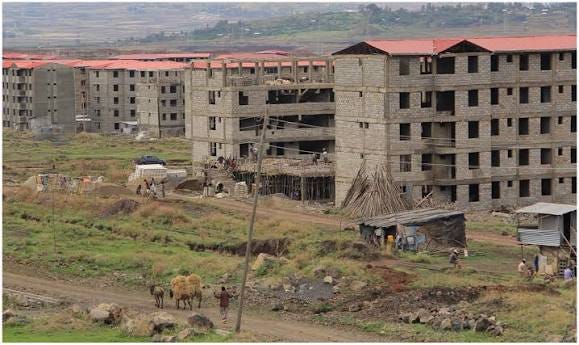
A short internal circular from the Addis Ababa City Housing Development and Administration Bureau, disbursed a few weeks back, sets the allowable residential rent increase for the 2026/27 fiscal year at 11.5 percent. Addressed to all ten sub-city housing offices, it instructs uniform implementation, directs woredas to absorb tenant complaints locally, and asks sub-cities to coordinate with security and legal offices where disputes escalate. Contract registration opened across the sub-cities on 8 July 2026.
On its face, this is routine administration. The Rent Control and Administration Proclamation No. 1320/2016, in force since June 2024, mandated exactly this kind of annual, government-set adjustment. What is easy to miss, reading the circular alone, is how much sits beneath it. The letter is terse and administrative, but the number it carries is not invented. It is the output of a commissioned rent-valuation study, and the more revealing story is not that the figure lacks a basis, but that the basis it rests on has already stopped holding.
The National Bank of Ethiopia (NBE) has reaffirmed that the use, trading and transfer of virtual assets including cryptocurrencies remain prohibited unless expressly authorized by the central bank.
In a public notice, the NBE clarified that the restriction applies broadly to all virtual assets, not just cryptocurrencies. The bank defines virtual assets as digital representations of value that can be electronically traded, transferred or exchanged, or used for payments, investment and similar purposes.
The ban covers the purchase, sale, exchange, transfer, trading, settlement and facilitation of virtual asset transactions, unless specifically authorized under Ethiopia’s existing legal framework.

The Ministry of Finance plans to raise 197.2 billion birr through Treasury bill (T-bill) auctions in the first quarter of the 2026/27 fiscal year, as government borrowing costs continue to decline and the National Bank of Ethiopia (NBE) expands its use of market-based monetary policy tools.
According to the ministry’s auction calendar, seven T-bill auctions are scheduled between July 8 and September 30, with the largest single issuance 40 billion birr set for August 5.
The first auction of the fiscal year, held on July 8, raised 30.71 billion birr at an average yield of 9.2 percent, bringing T-bill rates back into single-digit territory after an extended period of elevated borrowing costs.
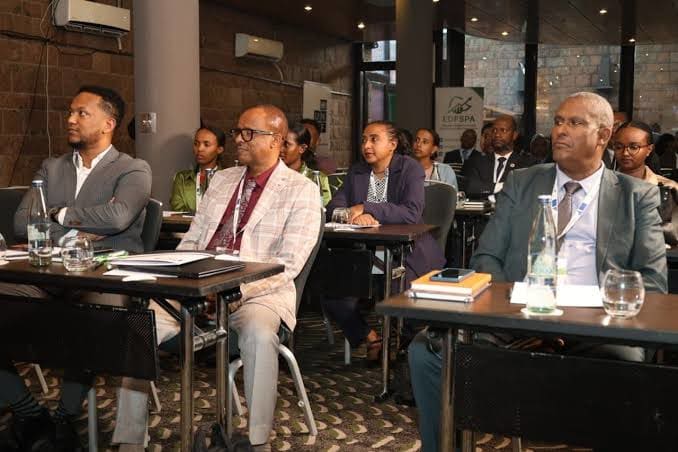
Ethiopia’s rapidly expanding fintech sector has taken steps toward greater industry coordination, with digital payment companies coming together to establish a new industry association. The move comes as the country’s digital finance ecosystem continues to scale rapidly. In the last fiscal year, fintech transactions reportedly reached 18.5 trillion birr, nearly double the previous year, while close to 200 million accounts were recorded across mobile money, mobile banking and internet banking platforms.
Mobile money has been a major driver of this growth, with accounts increasing from around 12 million in 2020 to more than 139 million by the end of 2025. Much of the market is powered by 21 licensed non-bank payment service providers.
The newly formed association brings together 18 members at launch, giving the sector a collective platform as digital payment providers navigate a rapidly evolving regulatory environment and growing scrutiny of the industry.

Ethiopia’s Federal Supreme Court Cassation Division has ruled in favor of a real estate developer in a long-running dispute over fixed-price housing contracts, potentially giving developers greater room to revisit agreements amid sharp increases in construction costs.
The case involved more than 700 home buyers who had signed contracts with Flintstone Homes but did not receive their properties within the agreed timelines. The developer later sought to increase the original price from around 13,700 birrs to 24,500 birr per square meter, citing a roughly 500% rise in construction costs.
The court upheld an arbitration decision ordering the developer to refund buyers with interest and compensation based on 10,800 birr per square meter, rather than requiring the homes to be delivered at the original contract price.

The National Bank of Ethiopia (NBE) has sold USD 100 million to commercial banks at a weighted average rate of 158 birr per US dollar in its latest foreign currency auction.
The auction, held today following a postponement last week, saw 16 commercial banks submit bids, with eight banks securing foreign currency. The lowest successful bid was recorded at 157.99 birr per dollar.
The latest sale marks the 23rd foreign currency auction conducted by the NBE since August 2024, when the central bank began selling foreign currency to commercial banks as part of the government’s broader economic reform program and IMF-backed measures.
The amount offered was significantly lower than the USD 500 million made available in the previous auction.

Digital finance and agricultural technology are each told as Ethiopian success stories. That they reached maturity barely acknowledging one another is the quiet forfeiture at the heart of the country’s inclusion project, and the roadmap now on the table will decide whether they are finally joined.
This article is an output of AKOFADA (Advancing Knowledge on Financial Accessibility and DFS Adoption), a project working to increase knowledge and transparency within Ethiopia’s DFS ecosystem.
No posts
Comments
Nothing yet. Say the first thing.
Sign in to join the conversation.