
Actually, Russia’s fuel problems never really went away. While the situation stabilised slightly through lower demand and higher prices, Ukraine simply kept applying pressure.
Now, as Ukrainian forces announce significant territorial gains, at the same time, refinery shutdowns, fuel shortages, rationing and collapsing fuel exports are once again exposing more vulnerabilities inside Russia.
For once, it seems that in recent weeks I’ve had the chance to write about some positive developments, which makes a refreshing change from covering the overhaul that, unfortunately, is still taking place across Ukraine. I wish that also meant the wider picture had suddenly become rosier, far from it, Russia is still unfortunately preparing for a long war, one that, in my opinion, isn’t going away anytime soon.
For much of this year, the battlefield narrative has continually been pushed that Russia is advancing and Ukraine is struggling to stop it, especially by the Kremlin, except, the battlefield isn’t moving in only one direction, and generally, it isn’t that simple.
If that had been the continuous reality since 2022, how is it that Russia’s Black Sea Fleet has been forced to relocate much of its capability away from occupied Crimea, while the Crimean Peninsula itself — and Putin’s only real strategic territorial gain since the full-scale invasion, the southern land corridor connecting Russia to Crimea — is increasingly under threat?
That’s something any high-ranking officer in the Russian military is probably choking on over his morning coffee reading the headlines, that’s if he hasn’t already found himself on the receiving end of a Ukrainian assassination operation.

The Telegraph@Telegraph
A Russian military officer has been killed by a female assassin in Crimea. Robert Mansurovich Shageev, a Ukrainian naval officer who defected to Russia during the 2014 annexation of Crimea, was believed to be the target of the attack. Read the full story here ⬇️

3:00 PM · Aug 13, 2026 · 25.3K Views
13 Replies · 48 Reposts · 180 Likes
Over the last 18 months, the contact lines of this war have been widening considerably, especially for Ukraine. The battlefield is no longer defined simply by trenches and villages in Donetsk or Zaporizhzhia. The Black Sea, Crimea, Russia’s refineries, defence industry and logistics network hundreds or even thousands of kilometres behind the front are now part of it, with that reach continuing to grow, while Russia is increasingly unable to impose its will militarily in the way it once expected it could.
Only this week, Ukraine announced new ballistic capabilities, while continued innovation in long-range drones and domestically produced weapons like the FP-5 Flamingo, means that targets once considered safely beyond Ukraine’s reach are now in reach.
Moscow itself is increasingly within Ukraine’s sights.

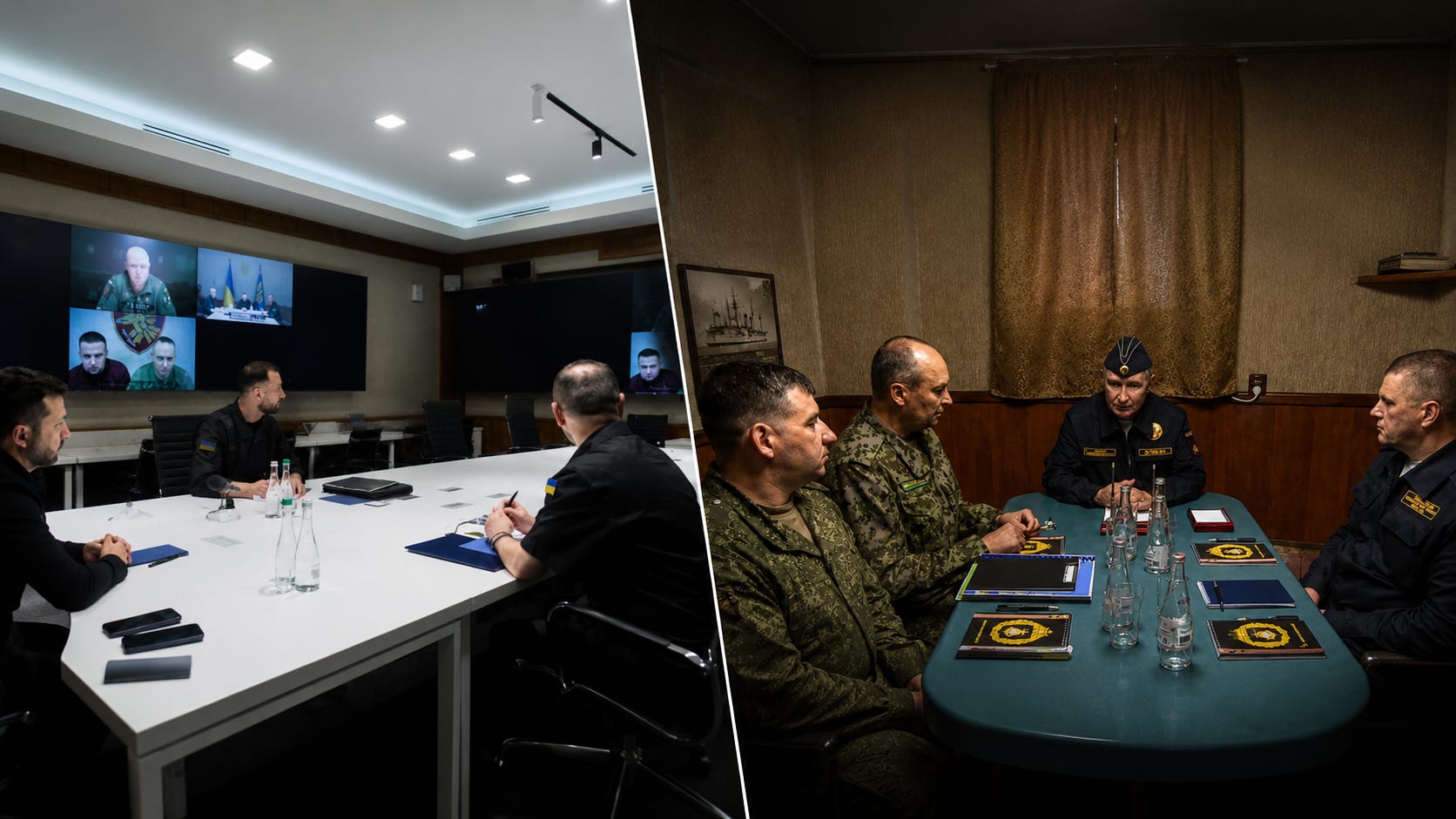
President Volodymyr Zelenskyy has also revealed that between January and August, Ukrainian forces conducted an offensive operation in the Oleksandrivskyi sector, regaining 745 square kilometres of Ukrainian territory and 26 settlements across the Dnipropetrovsk, Donetsk and Zaporizhzhia regions.
The operation covered roughly 60 kilometres of frontline around the point where those three regions meet.
According to Zelenskyy:
“This offensive operation of ours was carried out with precision – exactly as planned.”
Ukraine says Russian forces suffered at least 9,550 killed and more than 6,600 wounded during the operation, while Russian soldiers were also captured for Ukraine’s prisoner-exchange fund.
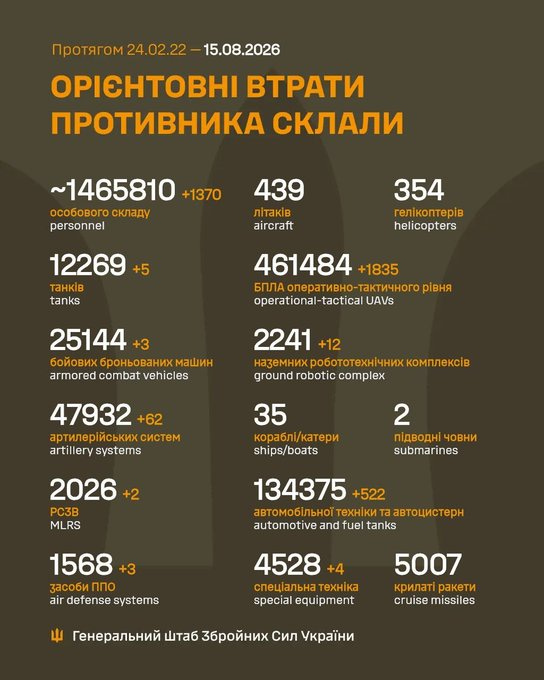
There is some independent evidence supporting the direction of Kyiv’s claims. DeepState has recorded Ukrainian forces restoring control over 19 settlements and pushing Russian troops back in another six, although its calculation of the territory recovered is lower than the official Ukrainian figure.
However, Russia continues attacking elsewhere, particularly escalating its ballistic missile campaign against Ukrainian cities, including the use of cluster munitions against Kyiv itself and North Korean ballistic missile stockpiles, as I’ve previously reported.

Human Rights Watch@hrw
Russia apparently used cluster munitions contained in at least one ballistic missile in an attack on Kyiv early on August 5. The attack reportedly killed three people at a sorting center belonging to Nova Poshta, Ukraine’s largest private courier and mail service, and

7:12 PM · Aug 13, 2026 · 90.8K Views
106 Replies · 51 Reposts · 95 Likes
Russia also retains enormous advantages in manpower and resources, but this announcement challenges the simplistic narrative that Ukraine is merely retreating everywhere while Russia relentlessly moves forward.
Ukraine is still capable of creating local superiority, counterattacking and taking territory back. Russia may be larger and have considerably more resources, but that size also creates vulnerabilities, lots of them, and Ukraine has been exploiting those vulnerabilities for some time.
As I covered recently, more than ever, Russia is susceptible to a declining workforce, growing manpower pressures and a deteriorating financial position as the Kremlin tries to keep the entire war machine functioning. But while Ukraine has been exploiting weaknesses on the battlefield, another Ukrainian campaign has been unfolding much deeper inside Russia itself.
As i said, Russia’s fuel problem never really went away.
If you have been living under a rock for the last couple of years, then what I’m about to tell you might blow your mind, so I apologies to some of you if I’m teaching you to “suck eggs”, a strange old military expression for explaining the blatantly obvious.
Ukraine has been systematically attacking the infrastructure that turns Russia’s enormous crude-oil reserves into the petrol, diesel and aviation fuel that its economy, and crucially, its military, actually needs to keep functioning.
Russia has plenty of oil in the ground, the problem is turning it into usable fuel, then getting that fuel to where it is needed, and that’s where consequences are becoming increasingly visible.
“This is the path to the failure of the so-called SMO, and a prelude to a severe systemic crisis in the Russian Federation” — Maxim Kalashnikov
Now that’s done, we can move on.
At least 16 Russian regions are now reportedly experiencing renewed fuel shortages or restrictions, with queues appearing at filling stations across the country. Orenburg became the latest region to impose restrictions following another Ukrainian attack on its refining infrastructure.
But Ukraine isn’t only targeting the refineries themselves, it’s also attacking Russia’s wider oil infrastructure, and the logistics network that moves its energy products not just locally, but around the world. They are increasingly now part of the battlefield.
That includes Novorossiysk, one of Russia’s most important Black Sea ports, most heavily protected and a critical hub for oil exports. Ukrainian drones attacked the area again this week, continuing the pressure on a port that has become increasingly important to Moscow since much of the Black Sea Fleet was forced away from occupied Crimea.

Natalka@NatalkaKyiv
During the attack on Novorossiysk, some Ukrainian drones were equipped with sharks with laser beams attached to their heads that fired indiscriminately at the city. Jk But the locals are equally ridiculous! 🔽🔽🔽 “During the attack on Novorossiysk, some Ukrainian drones were
5:24 PM · Aug 13, 2026 · 16.2K Views
41 Replies · 81 Reposts · 656 Likes
And that is significant because Ukraine is increasingly attacking the entire chain — production, refining, storage and transportation. Destroying a refinery component creates one problem, disrupting the infrastructure required to move what Russia can still produce creates another.
The scale of the campaign is important.
Ukraine’s Defence Ministry says its forces struck 11 Russian oil refineries during June alone, alongside fuel logistics facilities and eight defence-industrial enterprises. Several major refineries were either stopped or significantly disrupted.
Then came Orsk.
Ukrainian drones struck the Orsk oil refinery in Russia’s Orenburg region this week, forcing the facility to shut down completely, with repairs potentially taking up to six months.
Orenburg Region Governor Yevgeny Solntsev described the situation at the refinery as “difficult,” saying that damaging elements had struck “key infrastructure” that could not currently be restored. The problem is compounded by the refinery’s reliance on imported equipment, which sanctions have made considerably more difficult to replace or repair.
This isn’t an insignificant refinery, as Orsk processes approximately six million tonnes of crude oil annually, producing petrol, diesel and aviation fuel.
Only around 80% of Orenburg’s 287 filling stations were operating following the strike, with emergency and specialist vehicles receiving priority.
Solntsev’s assessment was also particularly revealing. Solntsev, who has governed the region since 2025 and previously headed the Russian-installed government in occupied Donetsk, warned:
“We are preparing for a worst-case scenario and will have to rely on fuel supplies brought in from outside the region.”
This is happening inside one of the world’s largest oil producers.
Russia isn’t running out of oil, it’s struggling to refine enough of it into the right products, in the right places, at the right time, and that’s important to note, because a Russian tank can’t run on a barrel of Urals crude, neither can a truck, fighter aircraft, generator or the enormous logistics system required to sustain hundreds of thousands of Russian soldiers across more than 1,000 kilometres of frontline.
And the damage does not stop with the military logistics chain.

Shaun Pinner@ShaunPinnerUA
🇷🇺 Empty streets and bankrupt stores, this is Sochi and Adler during peak season. Many Russians didn’t care when 25,000 predominantly Russian-speaking Ukrainians were slaughtered in Mariupol, including children. But they care about cars, fuel, lip fillers and holidays.
12:33 PM · Aug 14, 2026 · 433 Views
4 Reposts · 11 Likes
Fuel shortages are rippling directly into the civilian economy, hitting small businesses that depend on deliveries, transport and customers being able to travel. During the peak tourist season, that becomes even more damaging: fewer road trips, cancelled holidays and disrupted supply chains mean emptier hotels, restaurants and shops in regions that rely heavily on summer tourism.
That is the wider effect that Ukraine’s refinery campaign is having, the pressure on Russia’s war economy increasingly becomes pressure on the appearance of normal life at home.
By July, Reuters reported that Russian gasoline production had fallen to approximately 65% of normal seasonal demand following repeated Ukrainian attacks.
That left Russia facing an estimated shortage of 40,000–45,000 tonnes of gasoline every day, and it’s getting worse.
Moscow has responded by drawing down stockpiles, restricting exports and increasing imports. Belarusian deliveries reached record levels, with around 6,000 tonnes of gasoline per day arriving during June, while Russia also turned to other foreign suppliers.
The ‘gas station of the world’ is now having to import fuel, the very commodity on which the Russian state built its wealth
Now another statistic demonstrates how much pressure Russia’s refining system is under is seaborne exports of refined petroleum products, they fell 33.3% in July compared with June. Compared with July last year, they collapsed by 54.7%, falling to approximately 3.93 million tonnes.
Reuters attributed much of that decline to unplanned refinery maintenance following Ukrainian drone attacks.
Again, Russia isn’t about to suddenly run out of fuel, but Ukraine doesn’t need that to happen, with the objective just making Russia continually compensate.
Move fuel farther, draw down inventories, import more, restrict exports, repair another refinery, protect another facility, while moving air defence systems hundreds of kilometres away from somewhere else.
And then Ukraine strikes again.
Shaun Pinner@ShaunPinnerUA
This morning, the governor of Russia’s Samara region confirmed that a missile strike had hit an industrial enterprise in Samara. Reports indicate the target was TsSKB-Progress, part of Russia’s Roscosmos space and missile industry, with a significant fire reported at the site.

Shaun Pinner @ShaunPinnerUA
A series of powerful explosions rocked the Russian city of Samara overnight, following what monitoring and OSINT channels report was a Ukrainian long-range missile strike. The weapons have been identified by several sources as Ukraine’s domestically produced FP-5 Flamingo cruise
6:45 AM · Aug 15, 2026 · 1.96K Views
4 Replies · 22 Reposts · 76 Likes
Perhaps the most important part of this campaign is that the geographical sanctuary Russia once enjoyed is disappearing. Ukraine’s Defence Ministry said earlier this year that Ukrainian deep strikes had already reached targets approximately 1,750 kilometres from the border.
Ukraine’s long-range arsenal is continuing to develop.
The recently revealed Ukrainian MICH 2000 long-range strike drone reportedly has a range approaching 2,000 kilometres and can carry warheads of approximately 25–60 kilograms.
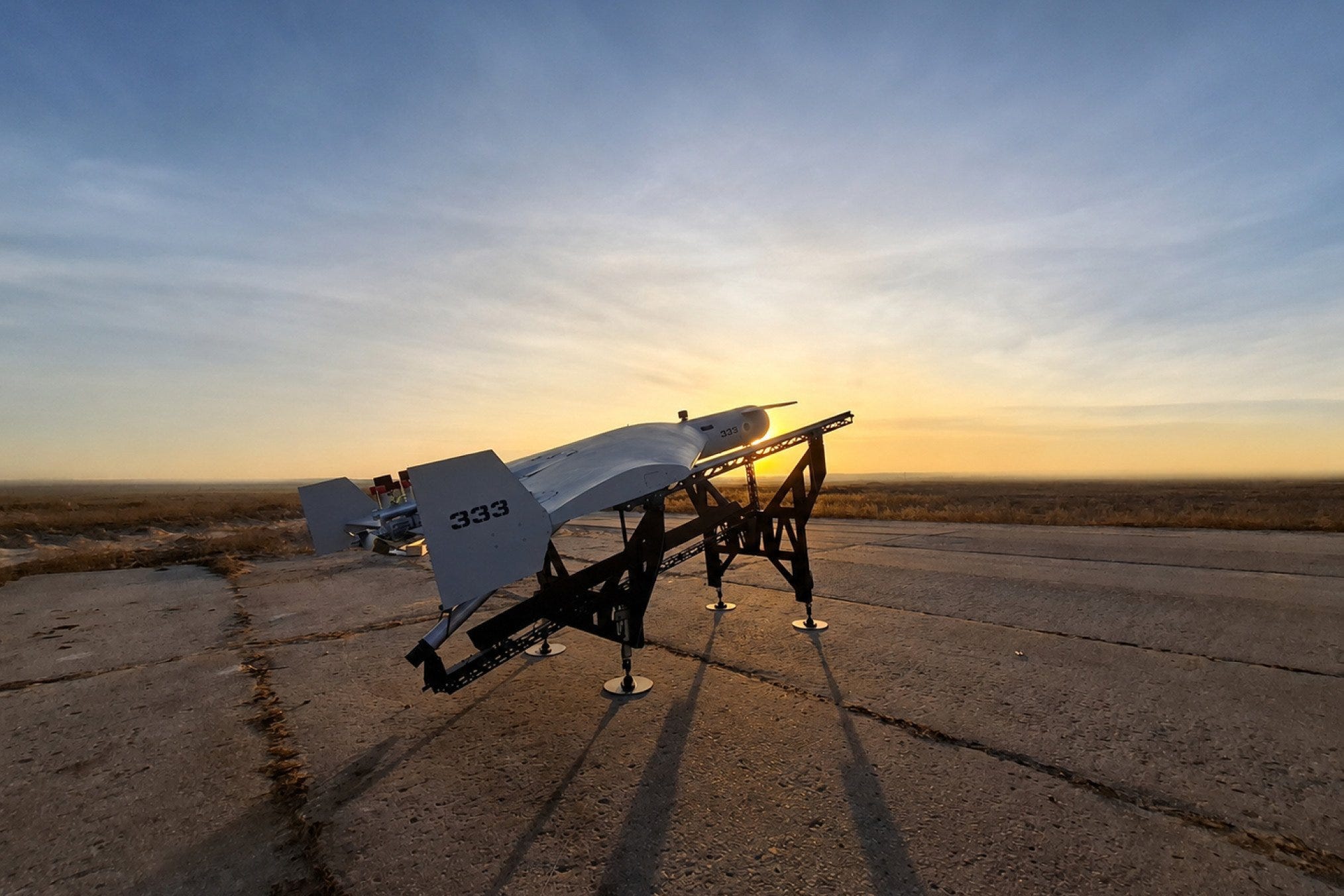
That potentially places an enormous amount of Russian military and industrial infrastructure within reach, and this is where Ukraine’s battlefield gains and Russia’s fuel problems become part of the same story.
Refineries, fuel depots, defence factories, logistics hubs and the infrastructure connecting them are all part of the battlefield now. Ukraine doesn’t necessarily have to destroy Russia’s war machine outright; it has to make that machine increasingly expensive, complicated and difficult to sustain.
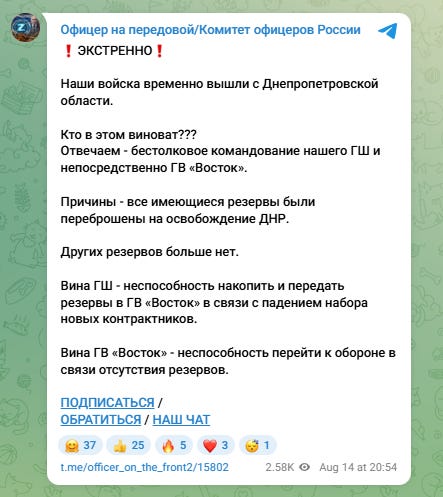
So while Ukrainian soldiers have quietly been taking territory back across the Oleksandrivskyi sector, Ukrainian drones have been striking the infrastructure required to keep Russia’s enormous war machine moving.
Asymmetric warfare at scale, attack the system behind the army, not simply the army in front of you.
But, as I keep saying, none of this means Russia is collapsing imminently, what it does mean is that Ukraine is finding ways to exploit the vulnerabilities of a much larger opponent, imposing costs far beyond what it could achieve by simply trying to match Russia tank for tank, soldier for soldier and shell for shell.
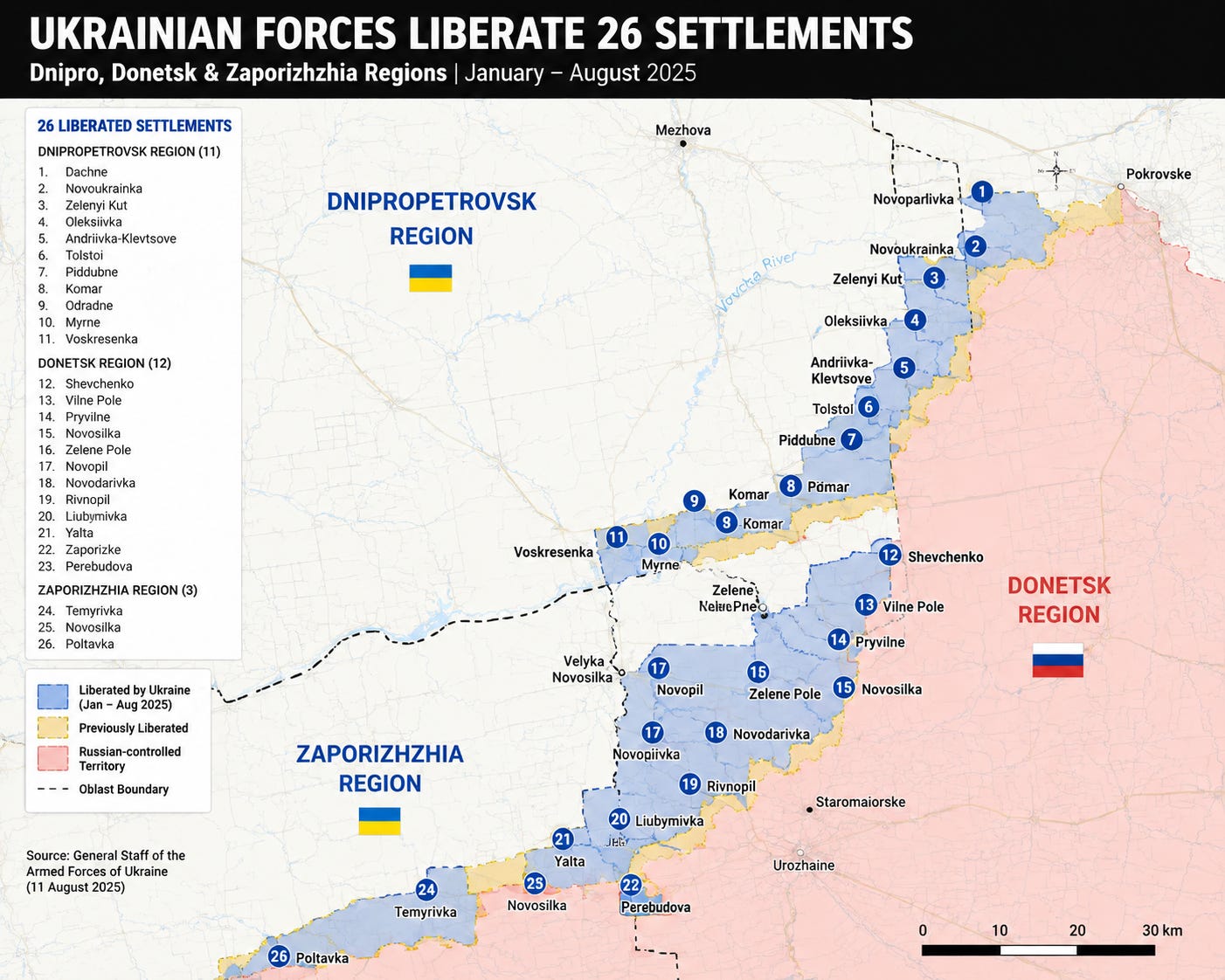
But 26 settlements returned to Ukrainian control, fuel restrictions spreading across Russia and refined-product exports falling by more than half year-on-year hardly describe a country effortlessly winning its war.
Ukraine’s strategy increasingly looks like death by 1000 cuts.
One village.
One refinery.
One fuel depot.
One logistical problem after another.
The individual explosion in Russia eventually disappears from the headlines, but damage to the system, clearly isn’t.
I just wanted to say a genuine thank you.
Last month we’ve reached more than 3,000 subscribers here on Substack, and Voices from the Front has become a Substack Bestseller, regularly ranking in the Top 50 for World Politics/ News
Pinner’s Patter monthly newsletter is below, looking back on what has been an incredibly productive—and very busy—July.
When I started writing, my aim was simple: to provide honest, independent reporting from Ukraine, backed by firsthand experience rather than headlines or soundbites. I never imagined so many people from around the world would choose to come on that journey with me.
I’ve also always tried to keep the vast majority of my work free to read. I believe that reporting from Ukraine, particularly at a time when misinformation is so widespread, should be accessible to as many people as possible. Those who choose to subscribe make that possible. Your support doesn’t just help this publication grow, it helps ensure that everyone else can continue reading, whether they can afford a subscription or not.
Every subscription, every comment, every restack and every recommendation has helped build this community. In a world where misinformation spreads quickly, you’ve shown there is still a place for thoughtful analysis, reporting from the ground, and conversations rooted in facts rather than algorithms.
Many of you have been with me since Mariupol, through Russian captivity, the death sentence, my return to Ukraine, and now this new chapter of reporting, writing and broadcasting. Others have joined more recently, but whichever camp you’re in, thank you for your trust. I never take it for granted.
This isn’t just another milestone. More than 3,000 people on Substack have chosen to support independent journalism from someone living and reporting in Ukraine. Across all platforms, Voices from the Front is now followed by more than 250,000 people. That support allows me to spend more time where I believe it matters most, on the ground, documenting events, speaking to the people living through them, and trying to explain not just what is happening, but why it matters.
There is still much more to do. I’ll continue reporting from the ground, producing Voices from the Front, and telling the stories that deserve to be heard.
Thank you for reading, sharing, challenging me, and supporting this work.
We’re only just getting started.
Shaun
No posts
Comments
Nothing yet. Say the first thing.
Sign in to join the conversation.