
Minnesota Nice
I first learned about Minnesotans in South Africa. Well, more precisely, on the border of South Africa and Swaziland, now the Kingdom of Eswatini. In 2008, I blogged a conference in Johannesburg focusing on mobile phones for social change. There were sessions about apps for community healthcare workers to help with births, for farmers to learn the best pricing for their crops, for teens to learn to prevent HIV.
It was my first time in South Africa. My five-year-old was in New Jersey with my parents. When I Skyped him, he was busy playing War with his cousin Emily at the kitchen table and barely looked at the camera, so I knew he was okay without me. Which was good, because I left several days after the conference open for unplanned activities.
On the last night, I sat at the outside bar drinking a stein of Castle Lager. One of the attendees was talking about going to a safari near Capetown where you could pet lion cubs, and that almost won out. I turned to the blonde, blue-eyed woman next to me.
“I’m Jennifer, she said. “I was a Peace Corps volunteer in Swaziland and I’ve started a nonprofit there to help youth via technology. Actually we’re going back to Swaziland tonight,” she said, gesturing toward her Swazi friend Gcina whose name started with a click.
“Do you wanna come?”
I really did want to see those lion cubs, but not as much as jump in the car with those two and speed toward Swaziland close to midnight. As we neared the border, Gcina said in a measured tone, “Oh…we’re in no-man’s land. I have to speed, because carjackings are common here.”
“Okay – speed,” I told him, gripping the grab handle so hard my fingernails dug into my palm.
So we got to the border and it was almost midnight and we rolled up to the border patrol guys dressed in military gear with rifles slung over their shoulders. One of them strutted up to us and said, “Oh sorry, the border is closed now, you’ll have to turn back, unless you pay a fine.”
And then with a sadistic grin: “Or you can sleep here with me.” He looks over to a cinderblock hut.
Jennifer said, with Midwestern indignity, “There’s no way we’re paying a bribe!”
I nudged her, hard, in the shoulder. “Sir–sir…here you go, we’ll pay the fine,” I said, handing the border guard fifty rand.
“Please…welcome to Swaziland!” he said, waving us in.
The next day in Swaziland we drove up to barren villages, dirt mainly, and visited homesteads of children whose parents had died of HIV. On a chalkboard outside one ramshackle hovel was written in long-faded chalk, Mother is sick help us. Jennifer’s non-profit was providing these youth mobile phones and phone credit or cash to help them navigate being heads of households to their younger siblings. Jennifer treated the children we met in a straightforward, friendly, respectful way – like they were her neighbors she was looking out for.
“Does helping a few kids really do anything?” I ask. “There’s not enough clean water, there’s a 38% HIV rate, girls are sleeping with men for food.”
“You have to do something,” said Jennifer.
Last summer, I met Jennifer in Minneapolis, and we drove up to a cabin in the Boundary Waters. My kid, off on his own foreign trip, had just graduated college, now often too busy to Facetime me. Jennifer now has a baby, at fifty-two years old and a single mother by choice, and was determined to take him canoeing on the pristine waters bordering Canada. Her neighbors from Minneapolis, whom she knew from church, came to visit with their nine-year-old daughter, Mattie.
Mattie boarded the canoe with us, and sat in the center, and Jennifer handed her Liam in a life jacket. She sat with him sprawled in her lap, both of them looking up at the perfectly blue sky as we paddled, me in the front, Jennifer in the rear. There was no question we’d take a baby canoeing. Not only that, her neighbor had jumped in to help.
Her parents canoed next to us, mirrored by a perfect reflection of their craft in the water. They took a photo of us, two adults and a child and one baby gliding through the water. I was impressed by their thoughtfulness, as I was too focused on paddling and overwhelmed by the beauty of the sky and forested shoreline where fur trappers had roamed, to remember to take a photo of them.
One day, when Liam was a bit older, we’d paddle all the way to Canada.

The next day we went to a pie social, yes a pie social, at the Chik-Wauk Museum and Nature Center that showed the history of the region. As we were about to park, a woman in a BMV cut us off and took the one remaining spot near the entrance.
“Oh…is there more parking up there?” Jennifer said, rolling down her window.
The parking spot thief nodded. Jennifer closed the window and turned back toward me. “Minnesota Nice,” she said. “That was like saying fuck off, you took my parking spot in New York City.”
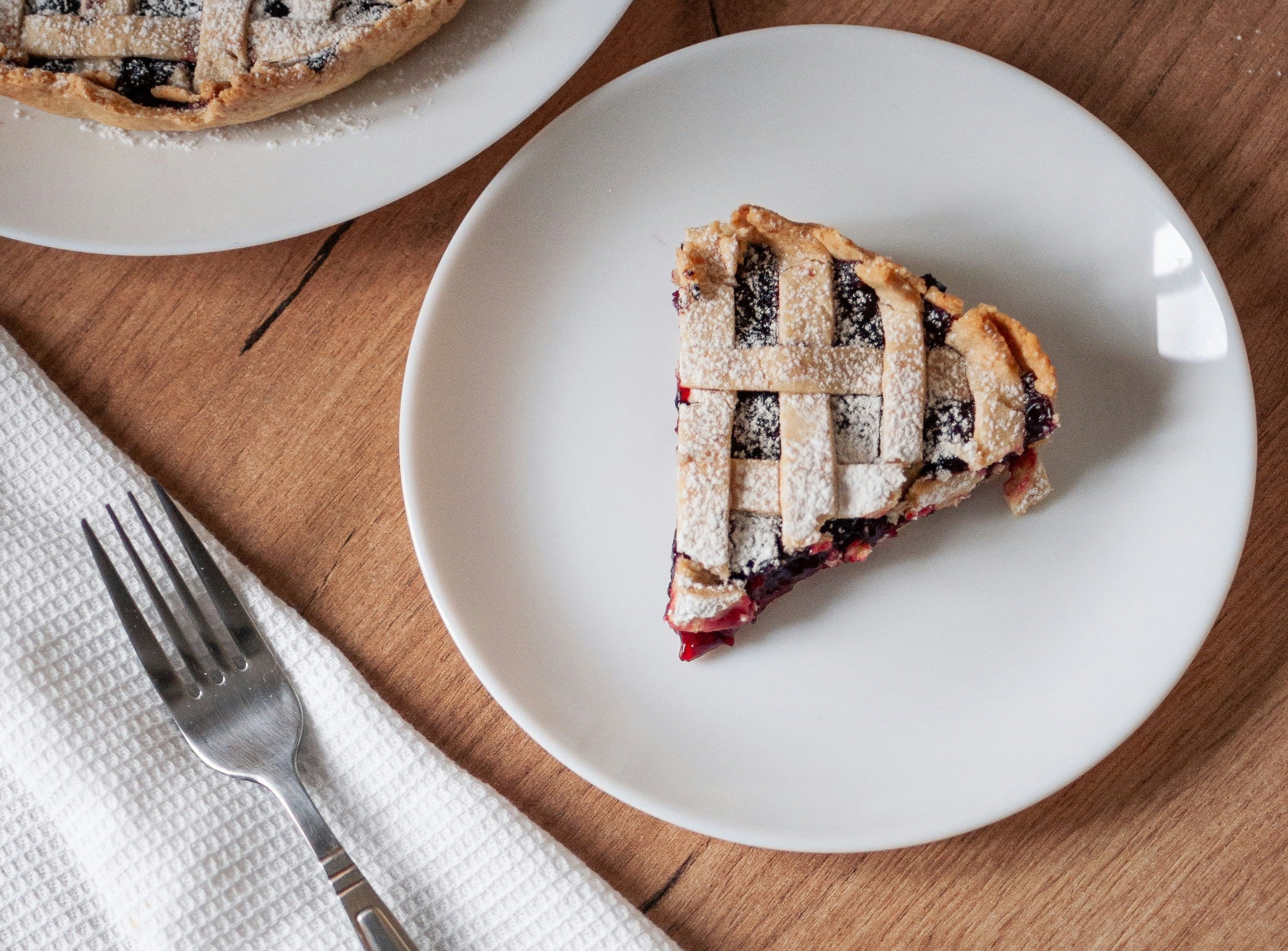
We paid five bucks for the fundraiser. There were tables full of chocolate pie and blueberry pie and cream pie and raspberry pie and lemon pie, all homemade, and we got to pick any slice we wanted. I rarely eat pie, but I did there. Licking remnants of chocolate off my lips, I wandered around into a fur trapper shack that had a view of a waterway going all the way to Canada. The fur traders from France ended up with Cree and Ojibway women and created the Metis culture.
At the end of the event, stout women with doughy biceps wrapped up extra slices of pie for us, in layers of plastic wrap, and urged them into our hands. I got the blueberry and the cream.
“Take more pie.”
That was the Minnesota way of telling us it was time to go.
Last month in LA, I got a call from Jennifer.
“The parents are taking turns driving home the staff from Liam’s Spanish immersion preschool. The bus is too dangerous, ICE. At my church, we’re preparing and delivering food for people who are scared to leave their homes. You have no idea how bad it is here. I feel like crying.”
Watching Minnesotans today help their neighbors, pack grocery bags, stand outside courthouses in frigid weather, I am not surprised. Renee Good telling the ICE officer, “I’m not mad at you.” Alex Pretti’s last act, defending a woman from getting pepper-sprayed.
It’s the anger that’s jarring, the middle-aged ladies who finally stop being nice. The same women who wrap pie in layers of plastic, sending you off kindly, now stand in parking lots and church basements and outside courthouses, shouting in fury at ICE officers to leave their neighbors alone.
I check my texts and there’s a link to the video of Liam’s baptism. The reverend is female.
“We celebrate that everyone is welcome here. There is going to be a baptism next.”
“Do you accept the freedom and power God gives you, to resist evil and oppression in whatever forms they present themselves?”
“…we will surround this child in a community of love and forgiveness, that he may grow in his service to others.”
The reverend walks Liam down the church aisle. He rests in her arms, arms open, resplendent, all eyes on him.
“Look how big your family got!”
No posts
Comments
Nothing yet. Say the first thing.
Sign in to join the conversation.