
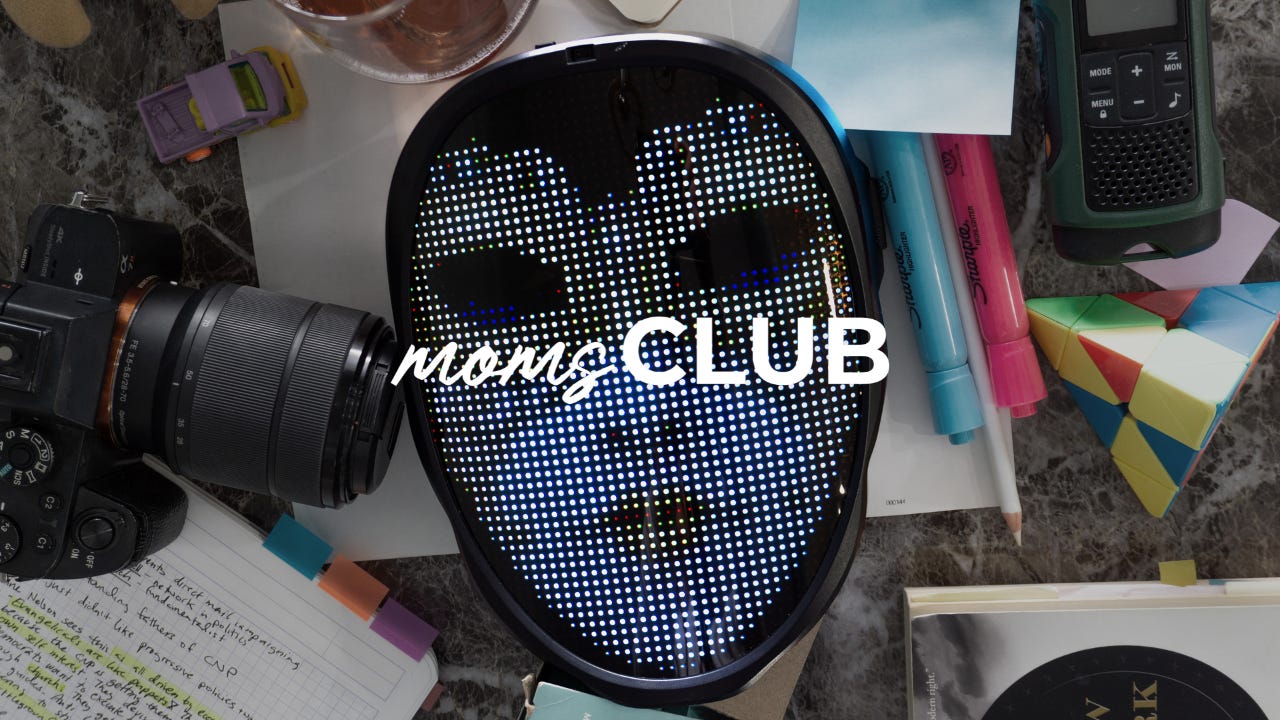
Moms Club is a documentary about a group of suburban moms who discover their public schools are under attack by a powerful network of religious extremists. They then form a secret resistance to protect LGBTQ+ kids and defend free public education. Armed with Open Source Intelligence (OSINT) research, infiltration tactics, and a nationwide alliance of bad-ass moms, they wage a high-stakes battle to expose the conspiracy and reclaim their communities.
Told with the urgency of a true crime thriller and the heart of a grassroots uprising, Moms Club is a defiant, deeply personal story of resistance. This is not just a film about school board drama - it’s a battle cry for democracy, inclusion, and the future of our children.
Shannon is hosting a screening of the documentary on Saturday, August 1st. Learn more about the screening here.

Angie Givant, Featured in Moms Club
Angie Givant is a Southern California mother, organizer, and advocate for public education and LGBTQ+ youth. Featured in Moms Club, Angie helped track the patterns, tactics, and networks showing up at local school board meetings and worked alongside other parents and advocates supporting protections like California’s SAFETY Act.
Kristi Hirst, Featured in Moms Club
Kristi Hirst is a former teacher, public school parent, and co-founder of Our Schools USA, an organization created to defend public education and push back against extremist efforts targeting schools. She helped advocate for California’s SAFETY Act, which strengthened protections for LGBTQ+ students and educators.
Angie: Back in 2020/21, a random man started attending our school board meeting repeating what seemed like talking points I had seen shrieked at chaotic school board meetings across the country in places like Florida and Pennsylvania. The Red Scare style accusations of “Marxist indoctrination” coming from someone who didn’t even have kids in our local schools made me suspicious this was some kind of a coordinated effort. This suspicion only increased as the local agitator brought in materials from FAIR- a reactionary organization founded by Bari Weiss and started, with a handful of anonymous accounts, posting relentlessly in local parent/school-related Facebook groups. The posts made allegations against the district, accusing teachers of being “woke” and clearly trying to recruit parents into an organized group (which later became the Leave Our Kid Alone- LOKA- group that rioted outside Saticoy Elementary and Glendale Unified School District in June 2023).
When videos of the local ringleader’s speeches (which the district was tending to ignore and most parents thought were ridiculous) started appearing on large viral social media accounts like LibsofTikTok, the Daily Wire, PragerU and others, it was clear that there was under-recognized infrastructure via traditional and social media that was very effectively seeding distrust of public schools and animosity toward LGBTQ+, especially trans kids. We were able to watch a handful of people getting radicalized online who were then looped into a regional network involving similar groups from other school districts.
Kristi: The pivotal moment for me was a Chino Valley Unified School District board meeting on July 20, 2023, when my kids’ district became the first in California to pass a forced outing policy. About 1,000 people attended, including Proud Boys, convicted January 6 participants, nearly every Southern California influencer I had seen attacking public schools online, and California State Superintendent Tony Thurmond. I sat just feet from people later convicted for January 6 as they harassed local students during public comment.
After Thurmond spoke and returned to his seat, the board president accused him of “perverting children.” When he returned to the microphone to respond, the room erupted. Proud Boys and January 6 supporters screamed at him to leave while board members pointed and shouted. Four police officers surrounded him as community members formed a wall behind him. I stood up and started recording.
The chaos continued throughout the meeting. Those of us who opposed the policy needed police escorts to our cars. Afterwards, the board celebrated with a photo filled with people who did not live in our community. It perfectly captured what these attacks on public education look like: astroturfed support for regressive policies backed by outside political actors.
Angie: I recognized pretty early on that the baseline attacks on pandemic safety measures and CRT were part of a larger project to defund public education, destroy unions, and further marginalize LGBTQ+ kids, immigrants, and other vulnerable groups, but at least at first I got the sense that most people thought this would just go away and that no one really took the local agitators seriously. It was clear that people needed to understand where the attacks were really coming from and the larger political project they were part of, one that goes back decades and is rooted in opposition to civil rights and school desegregation.
Initial research was focused on showing who the larger organizations were and how they were connected to local candidates and influencers. This led to learning to follow the money, including via campaign finance disclosures and public filings of non-profit organization taxes, for example.
Lastly, we noticed that public records requests were being used by the reactionary agitators to flood the district with lengthy disclosures. These vast troves of emails, internal documents, and other information became hunting grounds for material to publicize as evidence of the district “keeping secrets” or pushing “inappropriate content.” An initial research tactic that wound up being very revealing was doing a public records request to find out who was making the requests that led to discovery of material they were clearly using to manufacture controversies to exploit. By doing that we were able to see that the requests were made not just by the local agitator we knew, but by right wing organizations, legal entities and media.
Kristi: At the beginning, my role in the research was rooted in on the ground experience. I live down the street from mega pastor Jack Hibbs who worked (still works) with CNP members Karen England, Gina Gleason, and Charlie Kirk (to name a few). He had Michael Flynn as a guest speaker at his church. I had experience with these people before I knew or understood what was happening at the national level. When I connected with the other moms in the club it was my lived experience that supplemented their knowledge of these national orgs (and vice versa). We really all came together with different information and areas of expertise and then we put it all together and realized just how dangerous the national movement was and how much influence it already had in California.
Things really snowballed from there. I read the Shadow Network. I dove into learning all about the Heritage Foundation and the Council for National Policy. When Project 2025 was published in the fall of 2023 myself and my co-founder of Our Schools USA read the entire chapter and recorded several podcasts breaking down what the plan called for as well as the impact it would have on our public education institution and the families who rely on it. We tried hard to sound the alarm.
Angie: Speak out as early as you can, it will help you find your people. Early on, I was new to the community and didn’t know many people. When I started speaking at school board meetings, like a lot of people I experienced some harassment from the reactionary group (being called a “groomer,” having videos made about me being a “witch” and a “communist,” threats being sent to me and my husband etc.). I also had way more people reach out who were disturbed by what was happening and wanted to fight back. This was the start of a local coalition that eventually expanded and networked with the other moms in the film and the groups they’d started in their areas.
This fight can be extremely disturbing and upsetting, knowing people do not accept your children or yourself and hearing the viciousness of the attacks and accusations is heartbreaking and infuriating. A lot of us have found that the most effective way to channel those feelings is into organizing and community-building. We’ve been reminded that although the reactionary groups have way more funding and access to media amplification that makes their “movement” appear powerful, there are way more of us who want a society that accepts everyone and provides equal opportunities and access for all.
Kristi: Find your people and use your voice. Your people are out there, you just need to connect. I promise there are other parents and community members who feel the same way you do. Start attending board meetings and reading all meeting agendas. Post about it on your personal social media, speak at board meetings, and write letters to the editor for your local newspaper. Find time and space to gather in person and build community (this can start off as simple as a coffee meet up, or a gathering in your home). Find ways to give back and help your local schools and teachers.
Connect with people doing this work in other communities. We are all fighting the same battles whether we are in Texas or California, because this is a nationally driven campaign against public education. Talk to other people doing this work and learn from them. Connecting parents across the country and helping provide resources is the reason I co-founded Our Schools USA. As soon as we launched, I started hearing from parents across the country and every single person would tell me a very similar story about what was happening in their community. Knowing we are all fighting together across the country is comforting and will help you take action in your community. You are not alone even if it feels like it right now.
Angie: I’m given hope by the strength, brilliance, and fearlessness of the women and other parents in the film and whom I organize with. And also with everyone all over the country who is engaged in every type of work to attempt to fight against regressive efforts, authoritarian overreach by the government, and attacks on immigrants and trans people. Seeing the ways people are learning to defend neighbors and values and teach others to do the same keeps me focused, energized and committed to what I believe will be the work of the rest of our lives: to claw back the rights that have been diminished and work for the true and full realization of the promises and values of liberty and justice this nation claims to be founded upon.
Kristi: The thing that gives me the most hope is people. This journey has connected me with so many amazing people, and they keep me hopeful. With the state of our country it can feel hopeless, taking action on the ground and connecting others who care keeps me hopeful and motivated. Sometimes I feel like the news is so horrific that I should not add to the mental load of people by talking about the attack on our schools, but then I remember the crucial role public education plays in the fight to save democracy. There is a reason the Trump administration has focused so heavily on destroying public education, they know a well educated population is hard to control. By working to protect and improve our public schools we are also helping create a country where civil rights are protected (and enhanced), where people are free to marry who they want and control their own bodies. High quality public education helps to create a society where empathy is the norm, and the quality of life increases for all people.
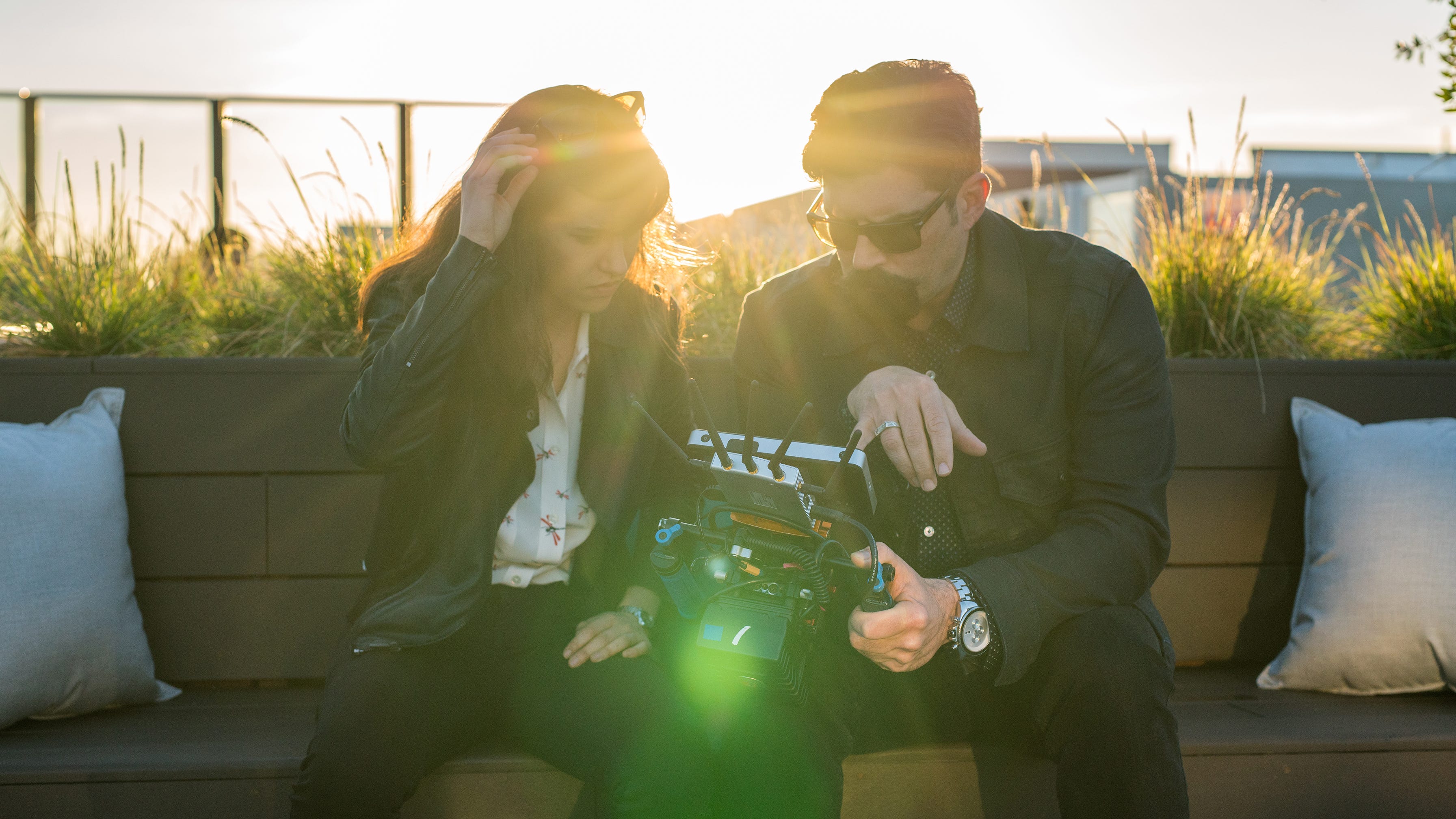
Miranda Winters, Writer and Director of Moms Club
Miranda Winters is an award-winning writer, director, editor, producer, and co-founder of the Los Angeles-based production company Winters Rock. Winters is drawn to stories of seemingly ordinary people confronting extraordinary challenges, with a focus on social justice, environmental conservation, and community resilience.
Miranda: We were aware of the bigger picture before we met the moms, but we were still honing in on the details and the real-world implications. Co-director Rocky Romano and I had been researching dark money networks for a previous project when we first started learning about influential conservative organizations and nonprofits. Then, in 2020, Rayna Zemel (executive producer of Moms Club and my wife), Rocky, and I started documenting protests and events connected to the George Floyd uprising. We were recognizing patterns, seeing the same faces and hearing the same talking points over and over again.
In 2023, we attended the protests at Saticoy Elementary and Glendale Unified, so we knew that the same people we knew from years of documenting protests were also at the school boards. But it wasn’t until Kelly Stuart, who had been photographing protests alongside us for all that time, introduced us to the moms that the film found its direction. We realized that the most powerful way to tell the story was through the eyes of the people living with the consequences in a profound way. This allowed us to tell an expansive story that was also deeply personal—one about how everyday people can find the courage to confront powerful, well-organized forces in defense of their communities.
Miranda: I once heard someone say, “being told to edit a documentary is like someone handing you a bag of sentences and telling you to write a book,” and I used that phrase as a way to communicate the process to folks with an outside perspective. But to the sentences you add footage, images, music, sound design, graphics, and the element of timing. And in this case, I was going through more than a dozen interviews, ranging from one to seven hours long, forensically looking through protest footage, watching entire school board meetings, and going through archives of right-wing videos and publications, over and over again. It was an immense amount of information to wrap my head around. Add to that all the arrangements and the refining, and it can be a frustrating process—but incredibly gratifying when you get it right.
From the beginning, we wanted audiences to understand that organizations like the Council for National Policy are investing enormous amounts of time, money, and effort to shape public opinion and influence local politics. As we got to know the moms, though, we realized the film was also about community and what happens when ordinary people decide they are no longer willing to feel powerless. That became the heart of the story.
Miranda: I think one of the biggest misconceptions about documentaries is that once the film is finished, the work is done. In reality, finishing this film is just the beginning. The Impact Campaign is about taking the film into communities and using it to spark conversations about public education, democracy, media literacy, and civic engagement. You can learn more about the Impact Campaign here.
The challenge is that hosting screenings, creating educational resources, building our digital toolkit, and organizing community events all require ongoing support. That is why fundraising remains so important. People are not just helping distribute a documentary—they are helping create opportunities for education, conversation, and community across the country. If you are able to support the film, please consider donating through our GoFundMe, and if not, sharing the fundraiser with others is just as valuable.
Our hope is that someone watches Moms Club, leaves inspired, and has the tools to take that next step in their own community. That is what the Impact Campaign is all about.


If you’re looking to unleash your potential, find your personal, professional, or political fire, and to connect with a community who is doing the same, click here to learn more.
Comments
Nothing yet. Say the first thing.
Sign in to join the conversation.