
Reader’s Note: Grief has an unexpected habit of opening forgotten doors. Since my mother’s death last month, memories have returned in not just tidal waves but also in tantalizing fragments. Each memory leads to another, revealing the people, places and ideas that quietly formed me long before I realised it.
This series, Lives That Shaped Me, is my attempt to follow those threads. This post is about Akhtar Shirani, my mother’s favourite poet, and explores how her love for his poems resonates with my own search for another, kinder world where human dignity is not selective.
I hope you’ll enjoy travelling with me.
(Brussels) - My mother loved poetry. When I was a child we spent hours reading her beloved English Romantics. But the poems that moved her most were by renowned Pakistani poets including Faiz Ahmed Faiz and Ahmed Faraz.
Yet it was Akhtar Shirani who touched her heart more deeply than anyone else.
I had glimpses of her love of Shirani’s verses through my life. She would quote him at just the right moment in conversations with good friends. Then, turn to me with an inquiring smile: Do you understand?
I did. And I loved hearing her recite his poems from memory. They spoke of love and longing, of nature and vanished springs, of memory, separation and loss. Melancholy flowed through them like music, sadness and beauty magically entwined.
After each brief recitation, she would explain the verses to me in simple, elegant Urdu, slipping effortlessly into English whenever she wanted to emphasise a particularly beautiful image or thought.
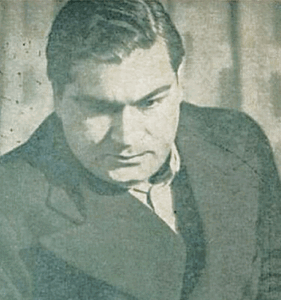
Pakistani poet Akhtar Shirani (1905-1948)
She wanted me not only to understand Shirani but to love his poetry as much as she did.
I shared her fascination and cherished the evenings when my parents gathered with friends and amid the talk of politics, there were ghazals by Mehdi Hasan and Nur Jehan and someone – often my mother – would recite a verse that captured the moment perfectly.
Someone would then, quite often, put on a record of singer Nayyara Noor’s rendition of one of Shirani’s poems. Or Iqbal Bano would sing Faiz.
Unlike my parents’ friends and family who grew up equally skilled in Urdu and English – and Persian – I belong to a generation who speak and understand Urdu but write and read English more comfortably.
In school, I was besotted with English literature and to lighten the load, I opted for “Easy Urdu”, just enough to read shop signs and newspaper headlines, not entire articles.
And certainly, not enough to read entire poems and books.
Sadly, I am not alone. The elevation of English over Urdu continues in Pakistan today, creating a bizarre situation where, as a newspaper notes, knowledge of English “draws lines between privilege and exclusion”, thereby carrying forward colonial hierarchies into the present.
Yet, for all my passion for English I have also always loved the beauty of Urdu and the culture and literature associated with it. Like many of my friends, I wished I’d spent more time honing my Urdu reading skills.
That longing became stronger one recent evening after my mother’s death, when her younger sister came and sat with us with a well-worn volume of Akhtar Shirani’s poems.
With tears already in her eyes, she said quietly: “Shada, this is the poem your mother was reading in the days before she died.”
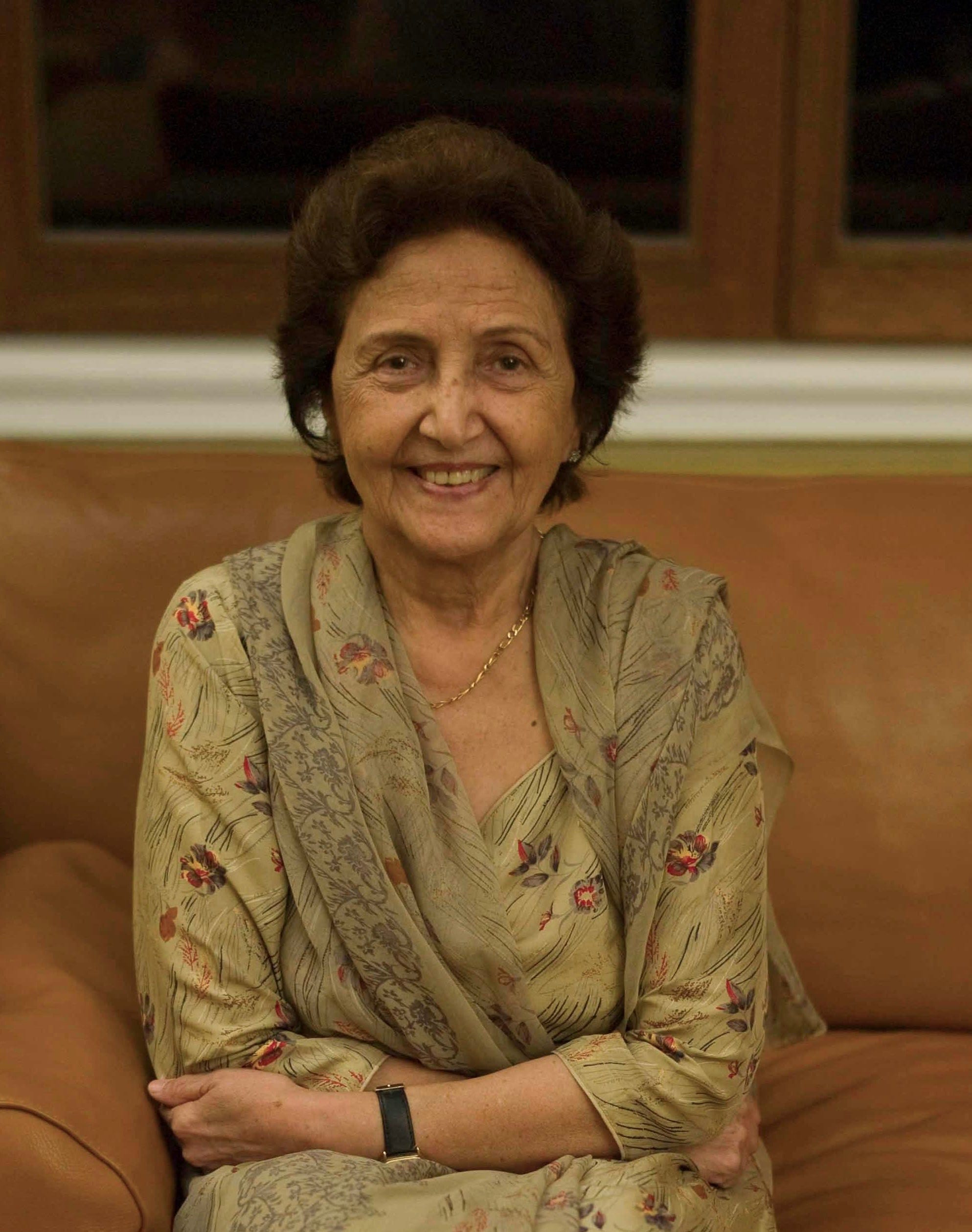
(Photo of my mother Abeeda Qamar ul Islam, courtesy of Chris Norall)
She had found the collection of Shirani’s poems on my mother’s bedside and began to recite a verse that my mother had marked.
The room fell silent. For a moment, it was as though my mother’s voice had returned. “They have gone. And with them, spring itself has departed..” my aunt read from “Rukhsatdari” (Farewell) in Urdu. (The translation is mine).
Those opening words, simple and devastating, captured not only the poem but our grief.
I had always known that Akhtar Shirani was my mother’s favourite poet. It is only after her death that I have begun to understand why he mattered so profoundly.
Of course, there was the beauty of his language, its rhythm, melancholy and yearning. But Shirani meant something even deeper to her - and now to me.
That evening my aunt revealed the family connection. As a young girl growing up in Lahore, my mother had almost certainly met Shirani in her father’s home. My grandfather, Hakim Nayyar Wasti, was one of the poet’s close friends.
Suddenly, for me, the poet who occupies such an important place in Urdu literature was no longer an abstract literary figure. He had sat in our family’s living room, had shared meals, conversations and laughter with my grandfather.
He was loved and admired by those that I loved and admired. His death had been mourned under their roof. My grandfather later wrote an elegy in his honour, while my aunt still remembers his wit, humour and mischievous conversations.
For my mother, Shirani was therefore never simply a poet but also part of her life and a world that she still remembered so well.
Today, as I grieve my mother, I treasure her many influences – direct and indirect, visible and invisible – which continue to shape my life and are also reaching into another generation: my son, my daughter and now my granddaughter.
I often find myself wearing my mother’s rings and bracelets, wrapping her scarves around my shoulders and even reaching for her favourite red Chanel lipstick. I remember her infectious laughter and her delight in beautiful things.
I remember the way she sang Urdu lullabies to my granddaughter over the telephone, while the little one clapped, danced and laughed with joy, tryng to mimic the melodious sounds.
Families often end up squabbling over possessions and money. Yet what we truly inherit from our parents has no price. If we are fortunate, we inherit their decency and compassion, the poems they loved, the music that kept them company in good times and bad, and the stories that helped them make sense of the world.
I have spent decades writing about geopolitics, conflict, exclusion and injustice, witnessing how readily those in power excuse cruelty. Looking back, I suspect my mother loved Akhtar Shirani not only because he celebrated beauty, but because his poetry reflected her own yearning for a gentler, more humane world, one where human dignity is never selective.
One of my mother’s greatest parting gifts to me is the poetry of Akhtar Shirani. Along with it comes the comforting knowledge that she lives on in the books she treasured, the poems she recited, the songs she sang and the stories she told.
That is how love survives death and how memory becomes inheritance. As Shirani wrote: Their kindness.
Their laughter.
Their gentleness.
Their love
Remain woven into our lives,
long after their footsteps have faded.
(translation my own)
END
No posts
Comments
Nothing yet. Say the first thing.
Sign in to join the conversation.