
Welcome to Singapore Noodles, a newsletter where I share recipes from my kitchen in the Netherlands. Archived recipes and other content can be found via the index. My cookbooks, Wet Market to Table and PlantAsia: Asia’s Vegetable Wisdom in Recipes, Stories, and Techniques, are available for purchase. Thank you for being here, and enjoy this week’s post! ✨ — Pamelia
JAPANESE CHEESECAKE
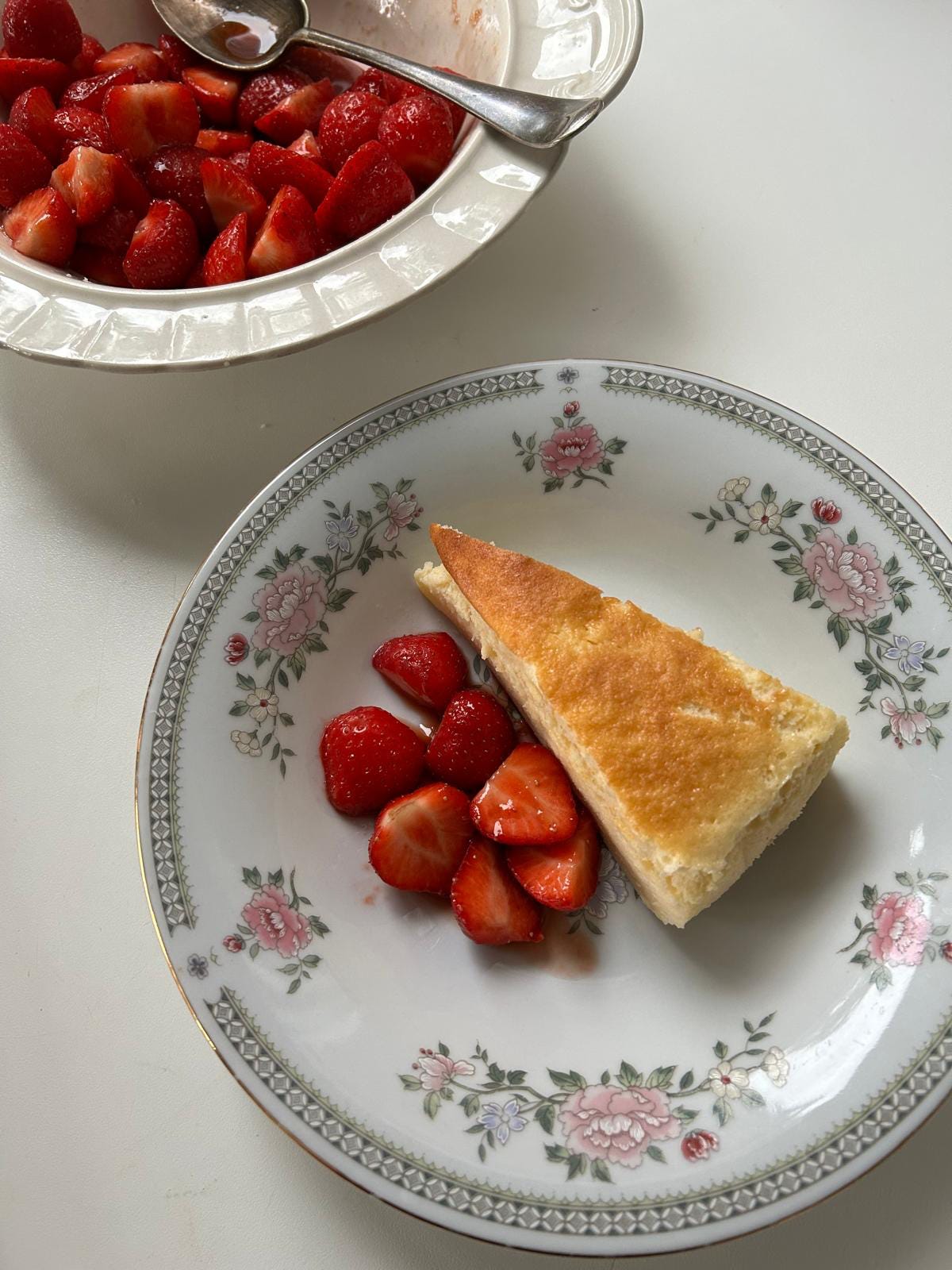
When I was growing up in Singapore, it was far more common to enjoy a spongy, airy cheesecake than a rich, dense one. This style of cheesecake — also known as cotton or soufflé cheesecake — was invented in the 1960s by Japanese pastry chef Tomotaro Kuzuno after tasting German cheesecake. Adapted to Japanese tastes, the cake involves whipping egg whites into a meringue and folding it into a cream cheese batter, then baked in a water bath so that the cake is cloud-like with a gentle wobble. Whether you ate it at room temperature or straight from the refrigerator, it was simultaneously ethereally airy, melt-in-your-mouth, and lushly creamy; like if a chiffon cake and cheesecake had a baby.
Japanese cheesecake was incredibly popular in Singapore in the ‘90s (and probably still is), and could be found in neighbourhood bakeries next to local breads and pastries. Its popularity in Singapore is unsurprising as it really is the perfect treat in blistering weather — light enough to not weigh you down, but rich enough to taste luxurious.
Getting its rise almost entirely from eggs, Japanese cheesecake can be a little finicky, but it is not much harder than making a chiffon cake (if you’ve made my pandan chiffon cake with success in the past, you wouldn’t have trouble with this cheesecake). For a long time, I’ve favoured making Basque cheesecake for its ease, but now that we’re in summer, Japanese cheesecake feels just right.
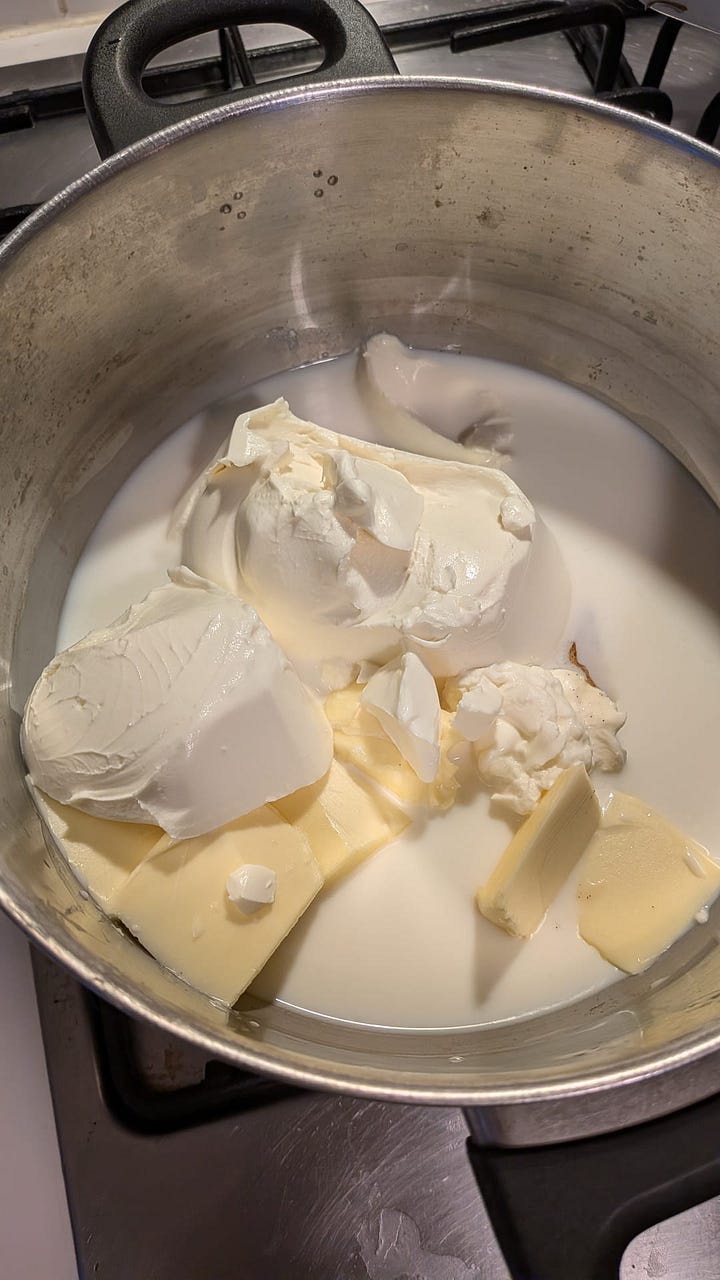
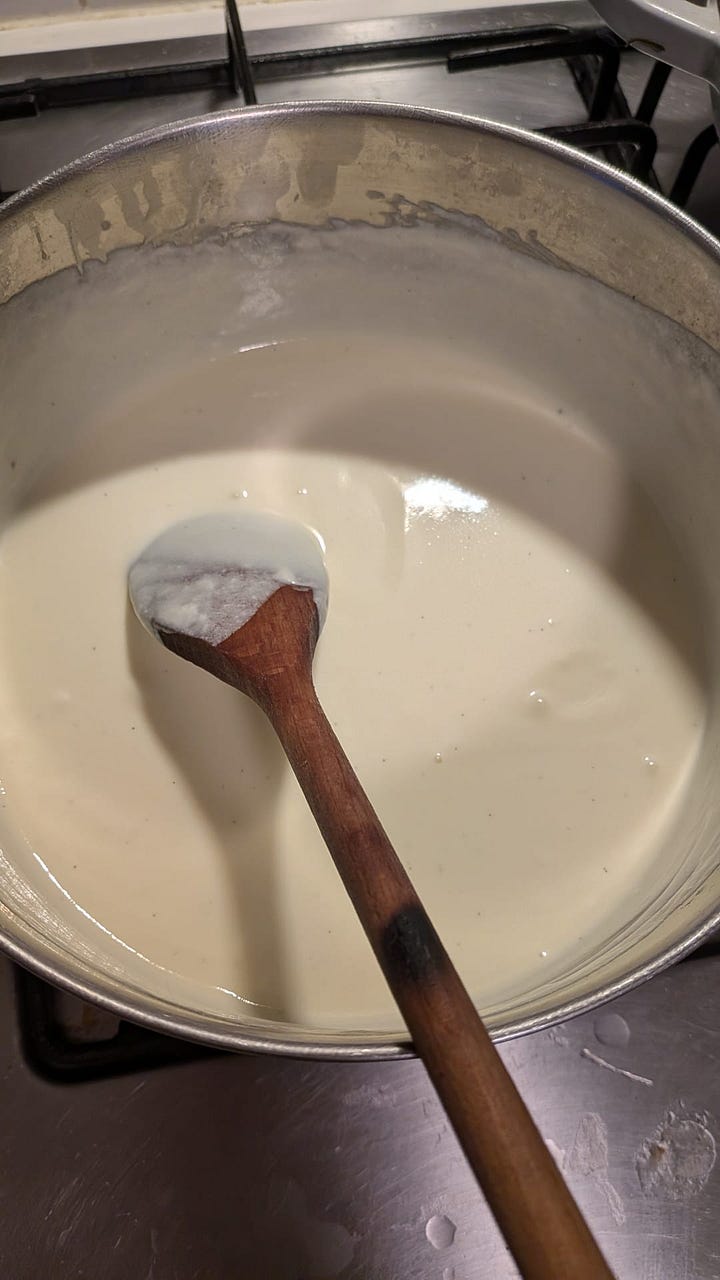
Cream cheese is what separates Japanese cheesecake from chiffon cake and other sponge cakes. It provides not just a source of fat, but also contributes to a custardy mouthfeel. It has to be warmed through for it to be incorporated into the batter — I warm it with butter and milk over the smallest flame in a saucepan. Some recipes specify using a bain-marie to do this, but it is not necessary as long as you are vigilant. The last thing you want is for the mixture to get too hot and split.
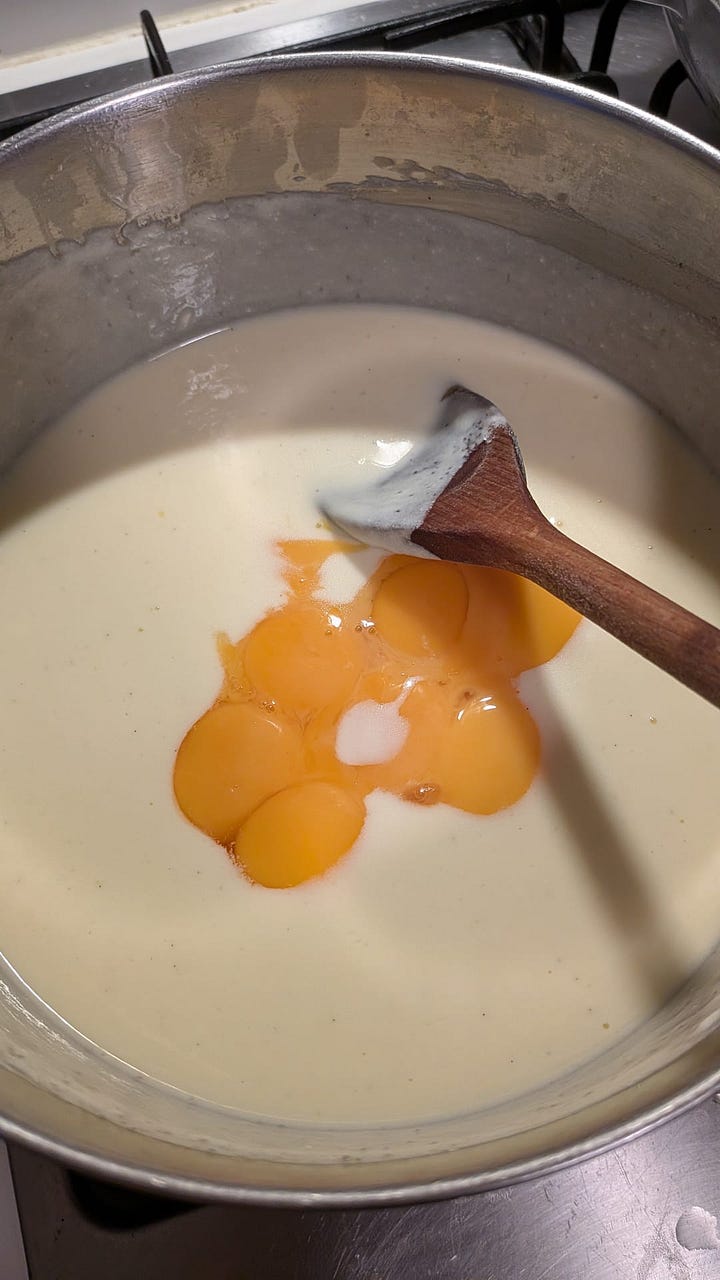
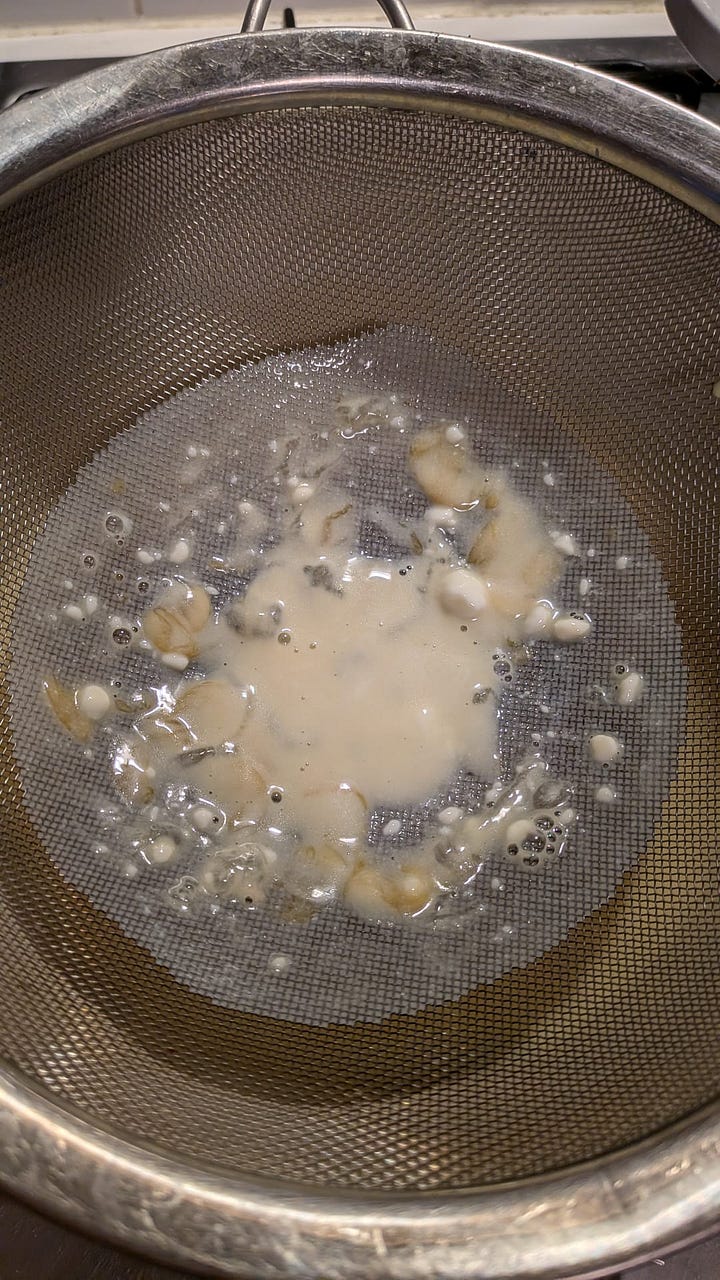
When everything looks smooth, I whisk in the sugar, salt, and egg yolks. The mixture should be the temperature of baby’s milk, not hot enough to scramble the eggs. For the smoothest finish, it’s best to pass this mixture through a sieve to catch any small clumps of cream cheese or thick strands of egg.
In terms of the starch in Japanese cheesecake, there are two: plain flour and cornstarch. Plain flour (used in a tiny quantity compared to a conventional cake) provides some structure so that it is sliceable like a cake. Cornstarch enhances the cake’s smooth, rich mouthfeel, but also plays the crucial role of keeping weeping to a minimum. Watery liquid exuding from cake happens when egg proteins are overcoagulated, such as when the cheesecake is baked too aggressively or for too long. Because cornstarch absorbs water and traps it in a gel when it gelatinises, it acts as a buffer and makes the mixture less prone to weeping.
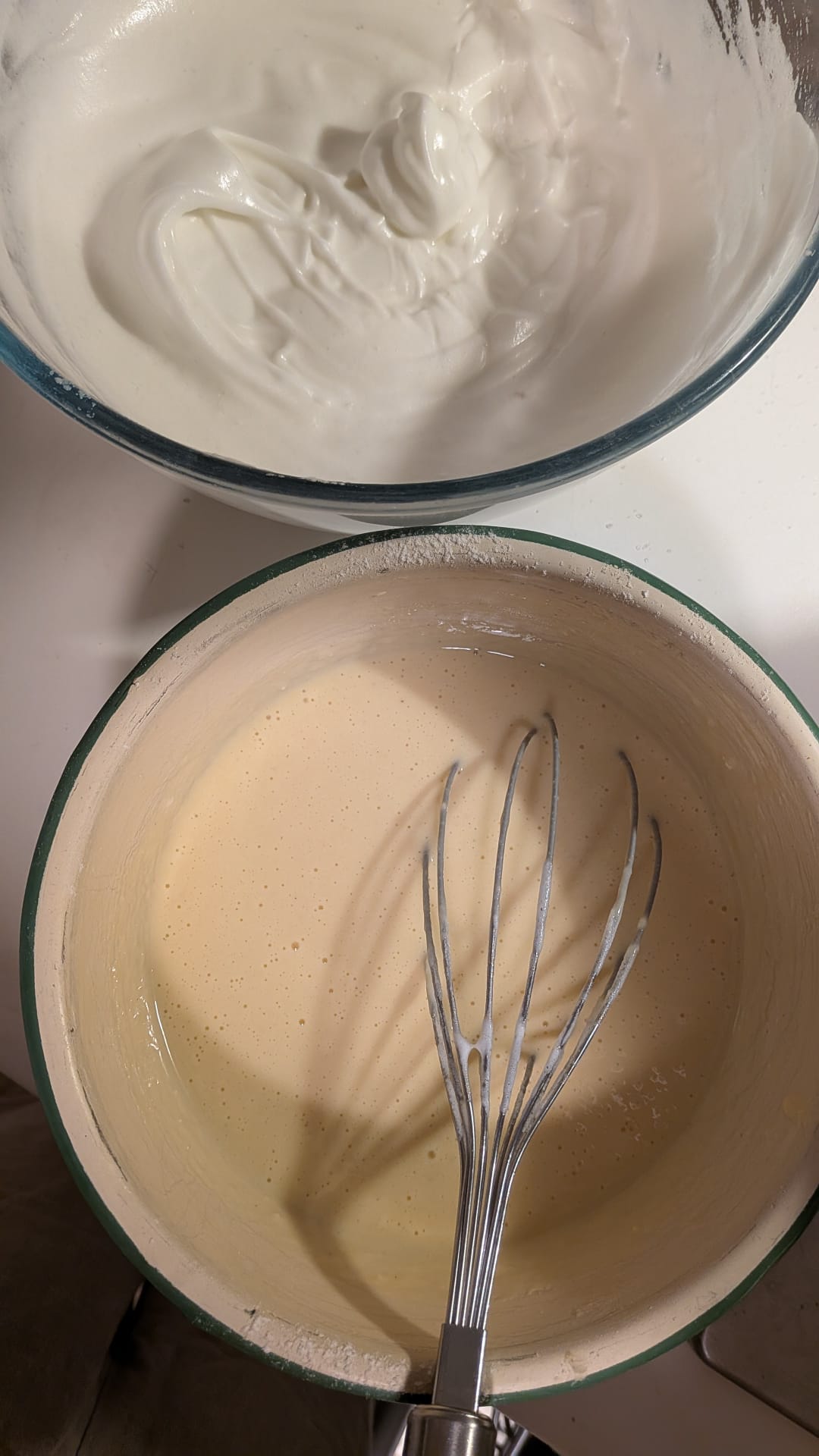
Like chiffon cake, Japanese cheesecake relies upon an egg foam for its rise and structure, rather than on flour. Where the two cakes depart is the extent to which the whites are beaten. For chiffon cake, it is common for the whites to be beaten to medium-firm peaks because the chiffon batter is lighter, so the meringue has to hold structure and resist collapsing while the cake sets. For Japanese cheesecake, because it is a heavier batter with cream cheese and baked more gently, soft peaks are preferred to encourage gradual, gentle inflation. The egg whites get folded into the cream cheese mixture.
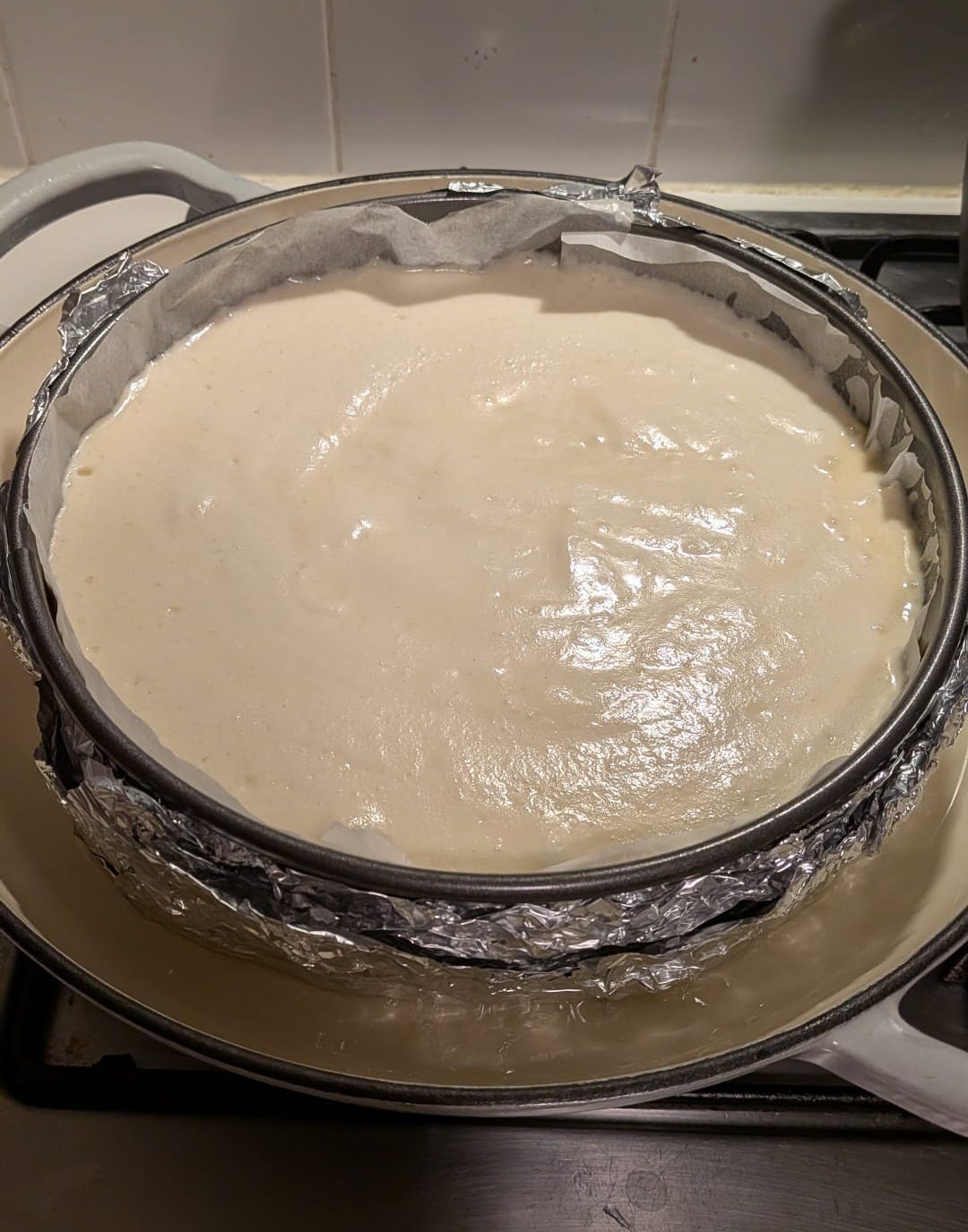
A low temperature-bake is essential for Japanese cheesecake, so that the eggs coagulate slowly, like the making of a delicate custard. In addition to a low temperature, a water bath is also necessary to coddle the custard and conduct heat evenly, thereby achieving a flat and uncracked top. Without one, the cake may set and contract on the outside while its centre is still expanding, leading to cracks or collapse. (To avoid water seeping into the batter while it is baking, wrapping the pan in layers of foil is paramount if you’re using a springform pan.)
There are many ways to ascertain doneness, such as the skewer test or the jiggle test, but the most reliable one is to use a thermometer. I aim for an internal temperature between 70-75°C. The cake’s surface should feel springy and soft and will not hold the indent of your finger when pressed.
The cooling of a foam-based sponge cake also takes as much care, because the fresh-from-the-oven cake contains a lot of trapped air and steam. As the cake is removed from the oven, the sudden temperature drop causes the gases to contract or condense into water while its structure still remains delicate. This causes the walls of the bubbles to get pulled inwards, leading to collapse. There are ways to circumvent this. Chiffon cake, for example, is typically flipped upside down to cool, so that the air cell structure is supported as the cake sets. Japanese cheesecake, being more custardy, cannot support its own weight upside down and will tear if inverted warm. Allowing the cake to cool in a turned-off oven allows the cake to cool gradually so that its structure has a chance to set while the gases escape.
With something as quietly perfect as Japanese cheesecake, I like to keep things very simple. As strawberries are in season now, I toss them in a bit of sugar and balsamic vinegar and let them macerate for 15 minutes or so, before serving them alongside the cake. Japanese cheesecake keeps well in the refrigerator for up to 3 days. Some people warm slices of it in the microwave so that it’s wobbly and fragrant, but I much prefer it well-chilled.
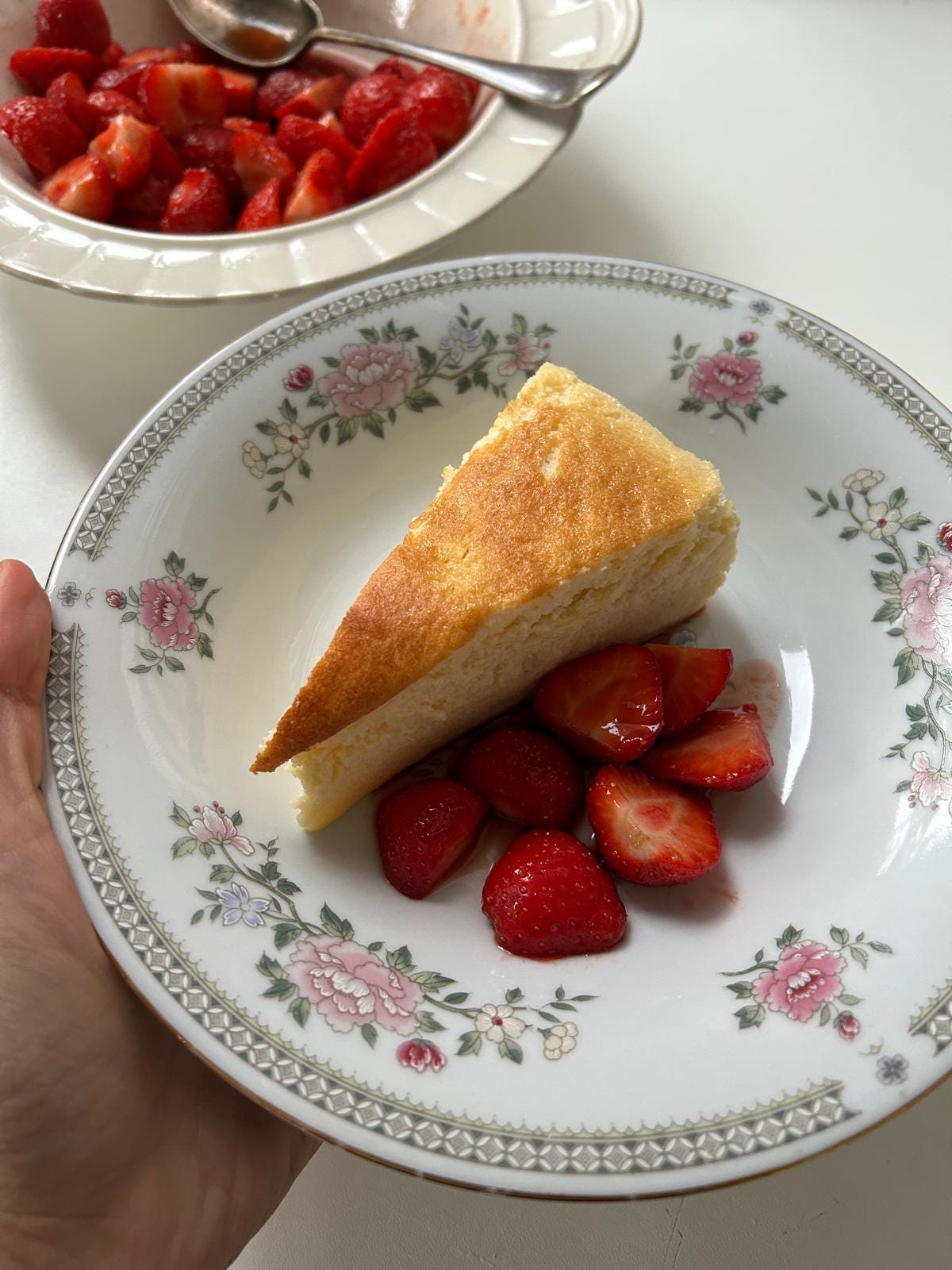
Japanese Cheesecake
Makes a 9” cheesecake
Comments
Nothing yet. Say the first thing.
Sign in to join the conversation.