
If today were the last day of your life, would you want to do what you are about to do today? - Steve Jobs
Time is relentlessly running away, which forces one to contend with the horror of approaching death, causing him to question all that he does and his very life - a brief and insignificant moment “which to day is, and to morrow is cast into the oven” of oblivion. The nature of heaven may be in that time is no more; yea, this may also be the nature of hell - thus, the former relieving existential dread, while the latter making it timeless. Indeed, hell may very well be not a place of cauldrons and pitch-forks, but of dread with no end - not that the end is not forthcoming or not yet visible, and thus can still be hoped for, but that in the absence of time, an end cannot exist, which fact makes hope impossible.1
The natural deterministic mode of existence is common to both man and beast - eat, sleep, procreate. But some men are not satisfied with what is natural to animals and reach for the timeless in their attempt to defy determinism: art, philosophy, theology - all would amount to rather useless pursuits for animals, which often interfere with appetite, sleep, and procreation. Socrates had children as likely did the Apostle Peter, but the significance of their having offspring is overshadowed by their other accomplishments to such a degree that they may well have been celibate. (And perhaps, Peter lived as one after meeting Jesus, but there is no compelling reason to think so.) Speaking of celibates, it is often said that monastics, while choosing the path of natural childlessness, gain many spiritual children. Perhaps, this is so in a few cases. But no young novice enters a monastery and dies to the world for the express purpose of having “spiritual children.” (And if a man expressly entered a monastery in order to acquire spiritual children, his intention would be scrutinized as odd at best or even indicative of some delusion.) In its purest form, monasticism, from μονος - alone, solitary, is driven by anything but a desire to father children - spiritual or otherwise (albeit, both sometimes happen to monks).
In a very direct way, monasticism is a radical and rebellious solution to the approaching doom and dread of death; it is a form of willful suicide, when one refuses to participate in the “rat race” of the world - accomplishments, marriage, children, careers, accolades, grandchildren, friends, parties, vacations, etc., etc. - on account of the ephemerality and meaninglessness of such things, of their being but distractions from the main task; and such a man chooses to die to the world, because in a way, we are all already dead, some of us just do not know it yet. And if this is so, why wait around? This death to the world is rebellion against the impending death of everything worldly and of the world itself. This is not to say that having children or careers is incompatible with Christian living, but no one seems to think that at the Final Judgment, one will be taken to task for having too few children, having attended too few parties, or having not achieved his full potential at the office. Monasticism appears to be just that - a refusal to have children or to attend parties or to work for promotions and vacations - that is, monasticism in its purest form. Perhaps, this does not describe all monks. But what do I know? I am not a monk.
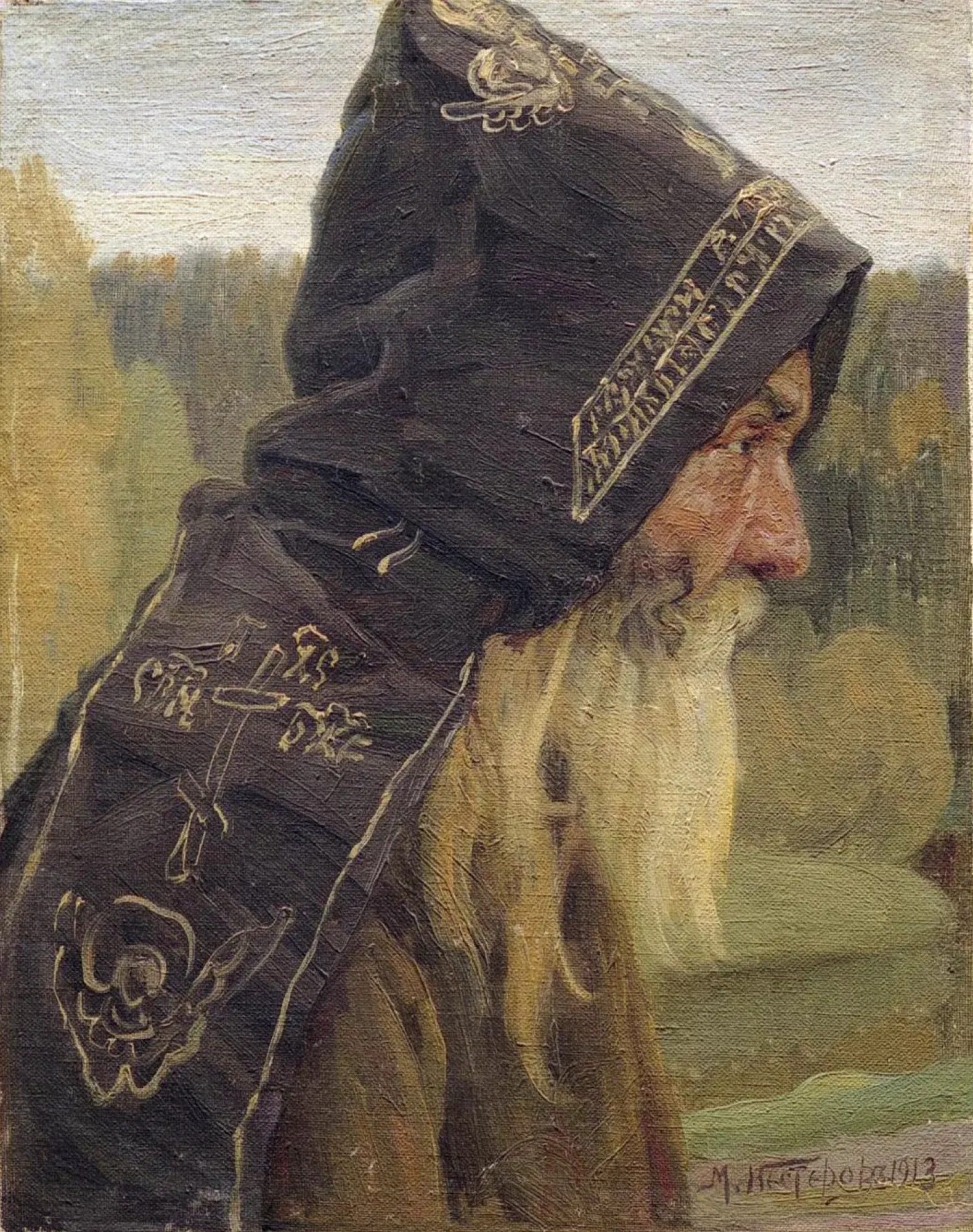
“A monk” by M. Nesterov
There is another path. Some would propose that monasticism is an attempt to run away, to escape from the God-given burden, to forsake the heavier cross of living in the world for a lighter one of living in a setting shielded from worries, troubles, doubts, temptations, and responsibilities. Indeed, it may be much easier to observe the strictest fast for days-on-end than it is to raise a family. Having tried both, I can confirm that this is so. At least, this is so for me. And while the consequences of being a neglectful monk may indeed be dire for the monk, the consequences of being a neglectful father reach far beyond one person and negatively affect his children and, often, the larger society.
Besides, most monks find themselves in a supportive community which is intimately involved in their spiritual progress. Many men living in the world find themselves in isolation, carrying their domestic and spiritual burdens solely by themselves. It may well be argued that this should not be so - fair enough - but it is. While not all monks attempt a solitary lifestyle, many lay men are hermits in this world and must be successful at spiritual self-reliance or plummet off the ridge of heaven, doomed both by their lack of skill as charioteers and by the “horse of evil nature [which] weighs the chariot down” and will not listen to its hapless owner. The tradition of learning the art of “training horses” - for it is an art at least as much as a craft - if it ever existed in the world, is now mostly confined to books which, while of some use, cannot fully replace true apprenticeship to a good master. (Here, I will not endeavor to speak of women or on their behalf, except to mention that they seem to have an easier time connecting with others - something which may be natural for women, but, alas! not for men.)
Be that as it may, the end of time, including one’s personal end of time, may have been something that most people welcomed or, at least, with which they were reasonably comfortable.2 Death caused by accident, disease, or war was commonplace for much of human history. Child mortality was around 50% and more in many cases, which means that every family experienced several child deaths in its lifetime. While a small number of those who survived childhood lived in luxury and later on the pages of our history books, an overwhelming majority of humans made a living by subsistence farming or were slaves and are now long-forgotten. In the words of Thomas Hobbes, who was likely not far off the mark, life was “poor, nasty, brutish, and short.” It is in this context that the prayer of Revelation 22:20 can be understood: “Surely I come quickly. Amen. Even so, come, Lord Jesus” - a sentiment all but foreign to the present-day Church with her obsession with “Many years, many years, ma-a-a-a-ny years!” Of the endless litanies in which she prays “again and again” for seasonable weather and abundance of the fruits of the earth, there is but one petition mentioning a Christian ending to our lives.
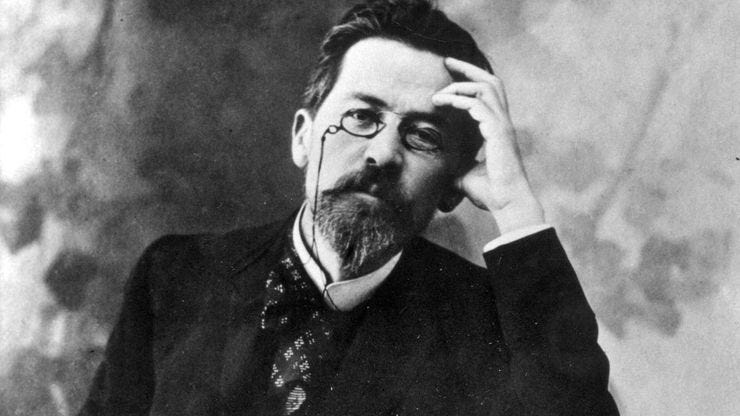
Anton Chekhov
One of the masters of the short story, Anton Chekhov maintained a remarkable indifference in facing his own death. Perhaps, as a medical doctor, he had become desensitized; perhaps, his lengthy struggle with tuberculosis helped him to become a close acquaintance of the scythe-wielding visitor. But perhaps, as sometimes happens with restless souls, he felt deeper into the essence of Christ’s teaching than many of his self-content contemporaries. A self-professed atheist - likely, a Christian whose honesty with himself did not allow him to use this title - Chekhov once wrote: “I would gladly become a monk if monasteries would accept people who are not religious and who do not have to pray” - an insight into life - yea, into living - so profound that one can contemplate it for a long time. He yearned to die to the world - as is the aim of monasticism; and yet, when Tolstoy3 visited him on his death bed, Chekhov did not want to talk about afterlife; he still had a little bit of this life left and did not want to waste it on the fruitless musings of his troubled friend. Perhaps, he would have made a good monk - maybe as good as the Blessed Augustine. He died as he lived - simply and unpretentiously; he was 44 years old. It seems, some can accomplish more in their 44 short years than some others in their 84. I do wonder: how old was the Good Thief?
“Many years, many years, many, many years…”
Such restless souls as Chekhov and Saint Augustine, Thomas, and yes, even Tolstoy, as unpleasant and confused as he was, and so many others - they revolt against babbitry,
And though they know the dark is right,
They rage, and write,
They think, compose, create,
To face the dying of the light.
They write, because they see little worth in much else, because in thoughts, ideas, images they find a connection to things more permanent than anything filling their material existence. Mostly, they write for themselves, although they do enjoy a sense of validation, if their ideas happen to resonate with others. As Andrei Tarkovsky once noted:
“A man writes because he is tormented, because he doubts. He needs to constantly prove to himself and the others that he’s worth something. And if I know for sure that I’m a genius? Why write then? What the hell for?”
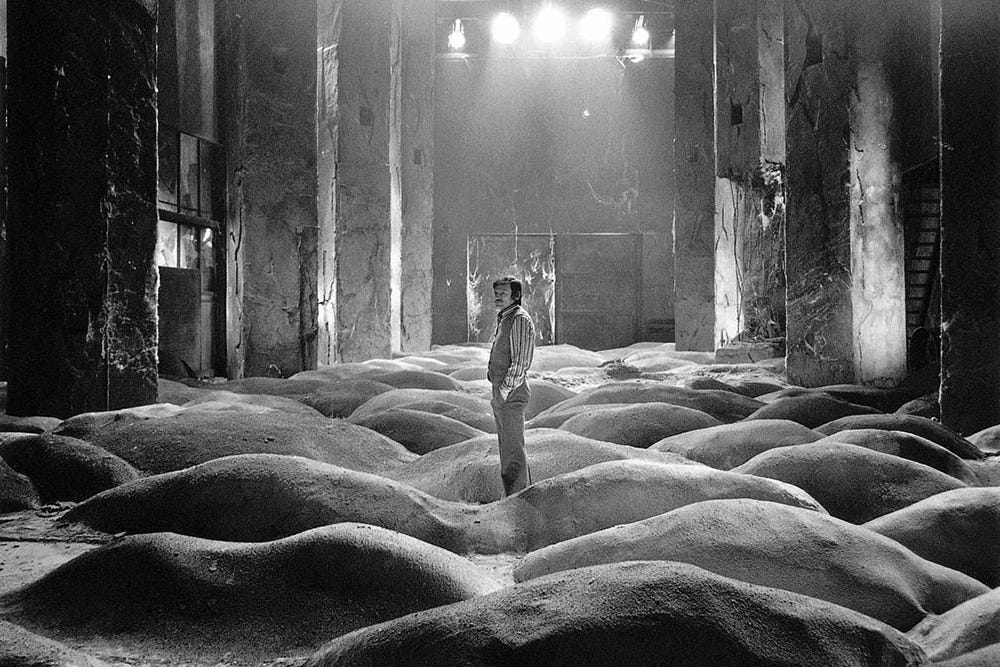
Andrei Tarkovsky on the set of “Stalker”
Yet all this writing is never enough; it is never complete and fails to complete - at least, for the writer. The Old Adam did not write anything, as far as anyone can tell4, and neither did the New Adam5 - except, perhaps, with His finger in the dust - an unmistakable symbol of the impermanence of the written word. Because man writes out of torment and doubt, his literary compositions can never give meaning to his life - they are quite literally never enough, and many writers die before they finish their “final” work. (If they do manage to finish it, it is not their final, and there will be another one which they will not finish.)
Writing then, is just another attachment; perhaps, it is loftier than some, yet fundamentally the same. The Apostle Paul writes that Christians are to be “strangers and pilgrims on the earth” (Heb 11:13; cf. 1 Pet 2:11). Strangers have no attachments to a place, which is not theirs, or to its implements. Nothing we do - and nothing we write - is particularly meaningful in the final analysis. This is not to say that some actions are not intrinsically better than others or that all writing is created equal but that, to borrow from Paul, “God will destroy both one and the other” (1 Cor 6:13).
The Buddha taught something quite similar, when he urged his disciples to free themselves from attachments to the things of this world. In Buddhism, when all attachments are shed, when possessions are given up, love6, affection, hatred, or any other emotion no longer troubles the still waters of consciousness, when all is extinguished, one is left with nothing - quite literally. The ultimate goal of Buddhism is nirvāṇa - the dissolution of self in śūnyatā, the great void of nothingness.
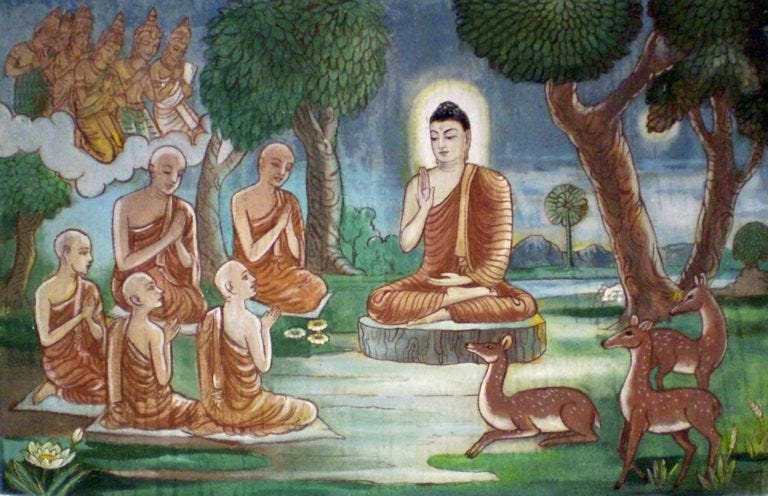
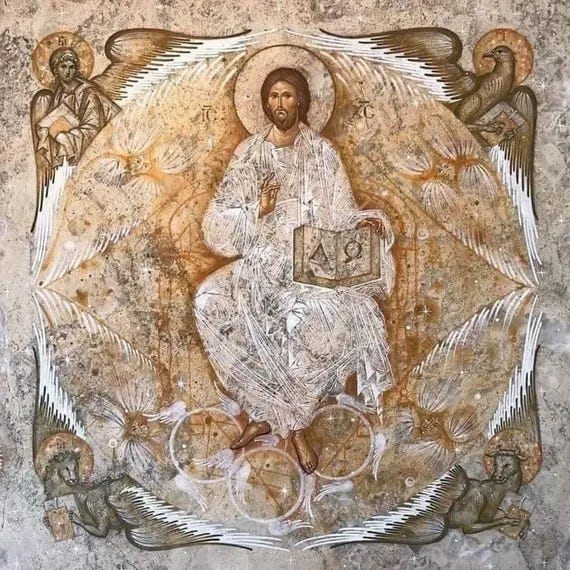
In Christianity, when all material possessions have been given away to the poor, all earthly attachments have been released, when all books and paintings have been burnt, when the “many, many years” have been cut painfully short by an accident or an illness or the passage of time - “Whereas ye know not what shall be on the morrow. For what is your life? It is even a vapour, that appeareth for a little time, and then vanisheth away.” (Jas 4:14) - when one has died to the world and lost even his very name, when nothing earthly remains - there is the Christ. There is no void, no emptiness, no nothingness, no extinguishing; there is the Christ who is the fullness of life, the source of all being, being itself. The meaning of life cannot be found in any act or deed, art, a musical or literary composition, biological or spiritual progeny, life-span or health-span - “Vanity of vanities, saith the Preacher, vanity of vanities; all is vanity. What profit hath a man of all his labour which he taketh under the sun?” (Eccles 1:2, 3) The meaning of life is found not in any product thereof, but in its source - the Christ.
In him was life; and the life was the light of men. And the light shineth in darkness; and the darkness comprehended it not. (Jn 1:4, 5)
“[W]ise men at their end know dark is right, because their words had forked no lightning…” - but there is light, divine light, the light which comes not “of the will of man, but of God” (13).
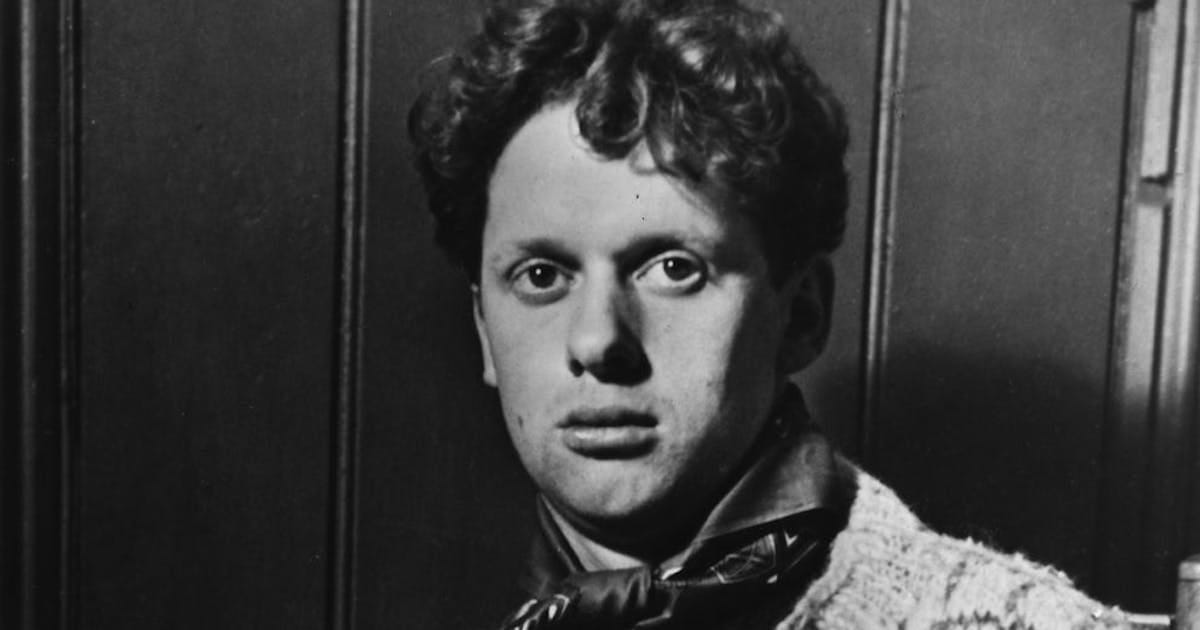
Dylan Thomas
Man that is born of a woman is of few days and full of trouble.
He cometh forth like a flower, and is cut down: he fleeth also as a shadow, and continueth not. - Job 14:1, 2
Time is relentlessly running away, which forces one to contend with the horror of approaching death, causing him to question all that he does and his very life - a brief and insignificant moment “which to day is, and to morrow is cast into the oven” of oblivion. It is much later than we think. Even so, come, Lord Jesus.
-
If you enjoyed this post, please share it with your friends - this will help keep this project going, and Anton Chekhov and Dylan Thomas would approve.
There exists a beautiful idea in Christian theology which is as follows in the first approximation. There is the first judgment which occurs at the moment of death of each one of us, whereby the eternal destination of the trajectory of our earthly life is finally revealed in no uncertain terms. And there is the second judgment, the Final Judgment. If divine jurisprudence is in any way similar to ours - and there is no self-evident reason to believe otherwise in this particular case - those who have been justified at the first judgment will not be judged again - for indeed, what might be the outcome of a second judgment for the righteous? Would some of them be condemned after all? - This would be arbitrary and capricious. “Truly, truly, I say to you, he who hears my word and believes him who sent me, has eternal life; he does not come into judgment, but has passed from death to life.” (Jn 5:24) Rather the second judgment is akin to an appellate process: those who were found lacking in the first judgment may still have hope to pray for mercy at the Final Judgment, and there may be an opportunity for amicus briefs on their behalf.
Undoubtedly, religion can play a large role in one’s attitude toward death. Sir Thomas More, for example, wrote the following: “For though a man lose of his years in this world, it is more than manifold recompensed by coming the sooner to heaven,” - very fitting words for a Christian who is awaiting a union with Christ.
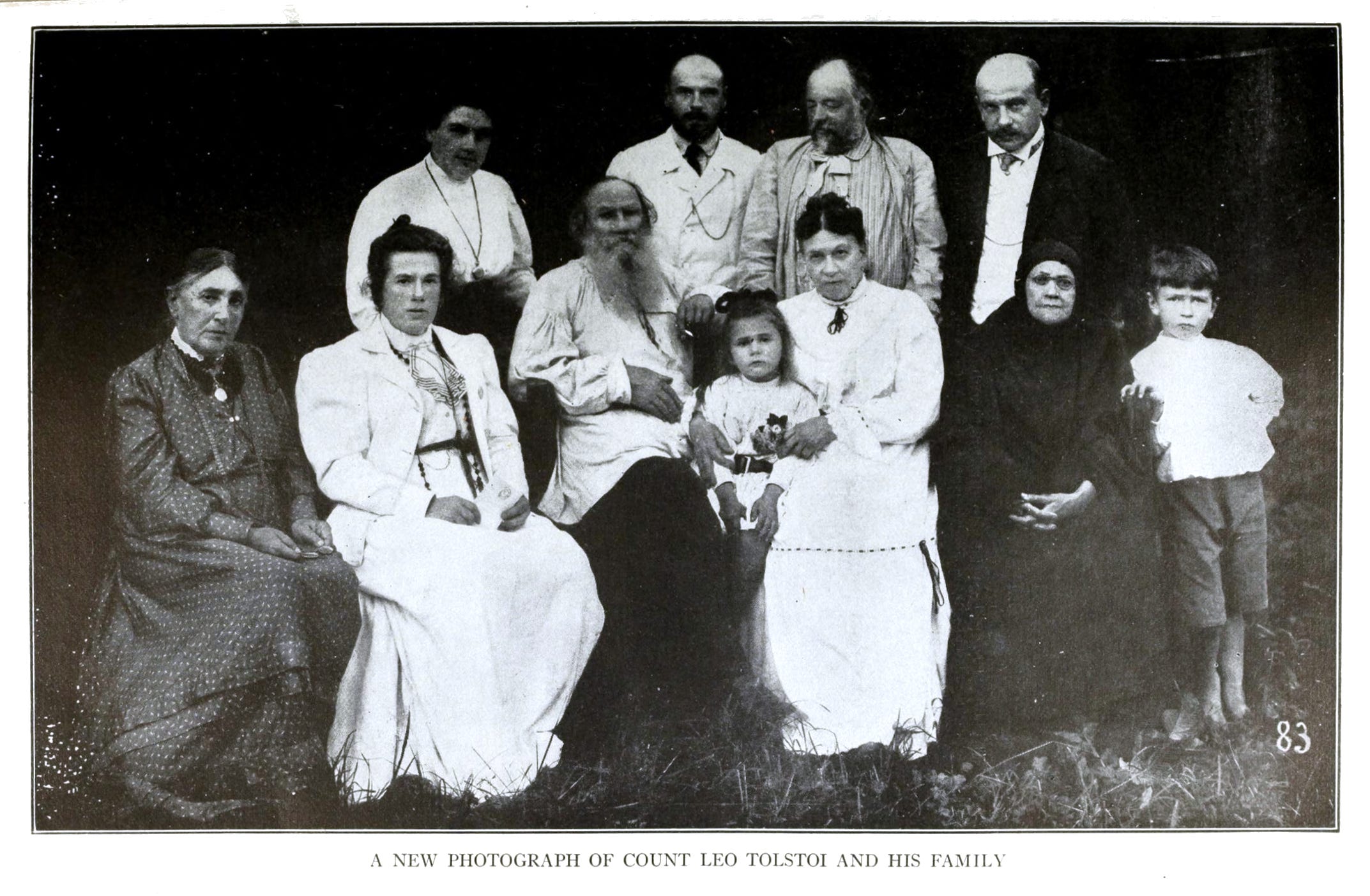
Leo Tolstoy and his wife Sophia had 13 children. Tolstoy was a count and had access to the best medicine of his day as well as to proper nutrition for his children. Eight of them survived to adulthood, but their family cemetery near their family estate had five little graves: Peter, 14 month; Nikolai, 9 months; Varvara, 2 hours; Alexei, 4 years; and Ivan, 6 years. It is difficult for us to imagine a family that lost five children, but this was common in their world; and the Tolstoys had a better outcome than most.
However, the Jewish tradition holds that Adam had the Torah written in his heart - cf. Jer 31:33/Heb 8:10 and Rom 2:15.
It is sometimes asserted that the Scriptures are the Word of God, which is sometimes understood to mean “the direct and exact word of God” - especially, by the proponents of sola scriptura. It is not my task here to explore this idea, except to note that Jesus did not really author any manuscripts, not really, not in any sense in which we author ours - consider, for example, Lk 1:3, 2 Thess 3:17, or Gal 6:11, among others.
Perhaps contrary to popular belief, the so-called loving kindness (Pali: mettā - a concept which Buddhism borrowed from Hinduism) is not the ultimate goal in Buddhism; it is but a step up from the normal states of affection or hatred in a movement toward nirvana. The key characteristic of loving kindness is in that to one who achieved it, all is equal as he cultivates good will toward all things - both animate and inanimate - however, he has no emotional attachment to any thing.
Comments
Nothing yet. Say the first thing.
Sign in to join the conversation.