

This week, I found myself having almost exactly the same conversation with three different home educating parents of PDA children.
The first proudly told me about the new phonics sound cards she had bought. She had done exactly what many of us do when we decide to teach our children something new. She had searched online, found resources that looked popular, spent the money and hoped they would tell her everything she needed to know. Then she looked at me and laughed.
“I’ve bought them... but I don’t actually know how to say the sounds.”
She wasn’t talking about her child’s understanding. She meant her own.
She didn’t know which sounds children usually learn first, what order to introduce them in, how quickly to move through them or even what many of the symbols and terms actually meant. Nobody had ever explained the theory behind phonics to her because, quite understandably, nobody had expected that one day she would be teaching somebody to read.
The second told me that she wants to Home Educate her PDA daughter but that she’s worried that she’s not sure what to do or where to begin with getting her engaged with reading. That her meltdowns make things hard and her demand avoidance mean she can’t ‘teach’ her anything before she walks away.
The next day, another parent told me she had started teaching her son to spell. Wanting to keep things simple, she pointed to the letters S-A-L-T and asked him what they spelled.
Without missing a beat, he looked at her and replied,
“I dunno... slut?”
I laughed harder than I probably should have.
Not because she had done anything wrong, but because it perfectly summed up what happens when loving, capable parents are left to figure all of this out on their own.
Over the years, I have seen this countless times. Not only now, as someone supporting home educating families, but long before that when I was teaching Year One.
Every September for nine years, during the first week of term, I would invite all of my new parents into the classroom for an evening reading workshop. I always told them it was one of the most important meetings of the year because if we could work together, their children would make far greater progress than if reading remained something that only happened in school.
The parents would arrive after work, squeeze themselves onto tiny classroom chairs and politely look at the phonics sound mats I had placed on the tables. There was often a little smiling, sometimes a few raised eyebrows and occasionally someone would quietly comment about how it all looked pretty ‘straightforward’.
Then I would begin. “Can anybody point to the split vowel digraphs?” Silence. “How about the consonant digraphs?” More silence. “Can someone find me a CVC word?” By that point the smiles had usually disappeared.
Not because these parents weren’t intelligent. Quite the opposite. They were nurses, police officers, accountants, engineers, business owners and university graduates. The problem wasn’t intelligence. The problem was that nobody had ever taught them how children learn to read.
By the end of the evening almost every workshop finished in exactly the same way.
“I had no idea there was so much to it.”
And they were absolutely right.
Learning to read is one of the most remarkable things the human brain ever learns to do. Unlike spoken language, which most children acquire naturally through everyday interaction, reading has to be taught. It requires children to connect spoken sounds with written symbols, blend those sounds together to make words, develop fluency and, eventually, understand increasingly complex texts. It is a process that develops over years, not weeks, and there is a great deal happening beneath the surface that most adults never see because, by the time we reach adulthood, reading has become completely automatic.
The difficulty is that many home educating parents suddenly find themselves responsible for supporting something that they have never been taught themselves. We know how to read, but very few of us know how we learned to read. We don’t remember being taught to blend sounds or decode words because those skills became automatic many years ago.
When you are also home educating a child with a PDA profile, that uncertainty can feel like someone sitting on your chest. Parents often tell me they are frightened of getting it wrong. They worry that if they don’t introduce phonics early enough, or choose the right scheme, or buy the right resources, they will somehow hold their child back. Others become so overwhelmed by conflicting advice that they avoid teaching reading altogether because they simply don’t know where to start.
If that is you, I want to reassure you of something before we go any further. You do not need to be a teacher, an education degree or an expensive reading scheme to help your child become a confident reader, and you certainly do not need to recreate school in your dining room. What you do need is a basic understanding of how reading develops, a willingness to follow your child’s pace rather than somebody else’s timetable and the confidence to know that learning can happen in hundreds of different ways. That is exactly what I hope this article will give you.
Within this article (and Part 2 which will come soon), I’m going to show you where I would begin if I were teaching my own child to read from scratch. We’ll look at why PDA changes the way we approach reading, the foundations that matter long before children open their first phonics book and, perhaps most importantly, how to protect your child’s relationship with reading so that it becomes something they want to do rather than something they feel they have to do.
Before we go any further, I want to acknowledge something important. There is more than one way that children learn to read, and home educating families successfully use a wide range of approaches. Some children appear to teach themselves through constant exposure to books, others thrive with whole-language or literature-rich approaches, and many families combine different methods depending on their child’s needs and interests.
This article isn’t intended to suggest that systematic synthetic phonics is the only way to support early reading. Rather, it reflects the approach I know best. As a teacher, I spent nine years teaching children aged four and above to read using systematic synthetic phonics, and it is the approach I continue to use with my own children. It has supported my eldest son, who has a PDA profile and is now a fluent reader at almost seven years old, and it is also the approach I have been using successfully with my four-year-old, who is already beginning to read independently.
There are many ways to nurture a love of reading. The reason I have chosen to focus on systematic synthetic phonics is simply because it is the methodology I know best, the one I have seen work consistently with hundreds of children and the one I feel professionally qualified to guide other parents through.
Although the phonics approach I use is systematic, the way I introduce it is anything but rigid. Throughout this article I’ll be discussing what I teach, but just as importantly how I teach it with PDA children. In my experience, the methodology and the delivery are equally important. A beautifully structured phonics programme can still fail if it is introduced in a way that overwhelms a child’s nervous system.
One of the biggest misconceptions about learning to read is that it begins with flashcards, worksheets or sitting at the kitchen table sounding out words. In reality, the foundations of reading are being laid years before a child ever picks up their first decodable book.
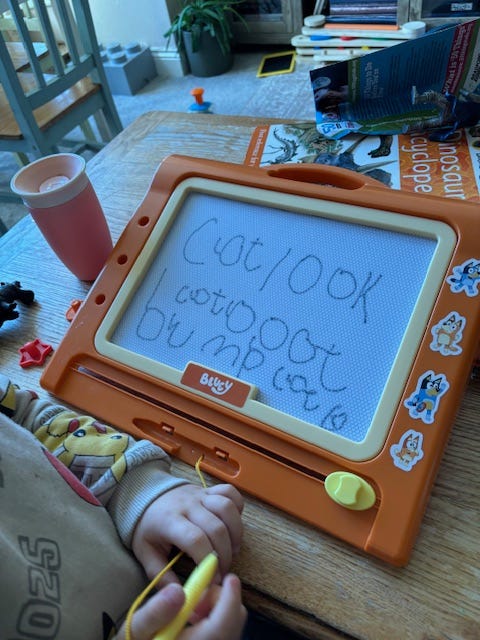
Long before children learn that the letters c-a-t can be blended together to make cat, they are learning that words carry meaning. Every bedtime story they listen to, every nursery rhyme they sing, every road sign they ask about and every cereal box they recognise is helping them to understand that print communicates ideas. They begin to notice that their favourite programmes always start with the same words, that the golden arches mean McDonald’s and that the label on their favourite yoghurt always looks the same. To us, these moments seem insignificant. To a child, they are the earliest building blocks of literacy.
Research consistently shows that a child’s spoken language development is one of the strongest predictors of later reading success (Snowling and Hulme, 2021). Before children can recognise written words, they first need to understand spoken ones. They need rich conversations, stories, songs, rhymes and opportunities to hear language used naturally in meaningful contexts. Through these experiences they develop vocabulary, comprehension and what educators call phonological awareness; the ability to notice and play with the sounds in words. These skills underpin successful reading long before formal phonics teaching begins.
This is wonderful news for families home educating children with a PDA profile because it means that learning to read doesn’t have to start with something that feels like school. In fact, I would argue that for many PDA children, it probably shouldn’t.
When we think back to our own school experiences, it is easy to picture reading as something that happened sitting at a table with a reading book in front of us. But children encounter print everywhere. They see subtitles on television, menus in cafés, labels on toy boxes, signs at the zoo, birthday cards arriving through the letterbox, recipes while baking and maps when exploring somewhere new. They ask, “What does that say?” dozens of times a week without even realising they are engaging with literacy.
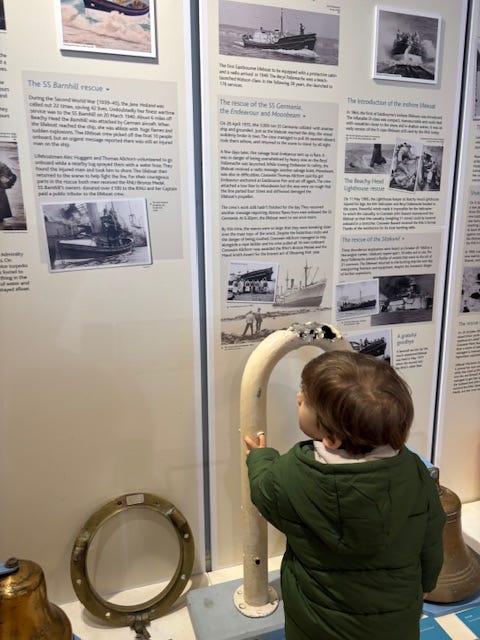
Once you begin looking for these opportunities, you realise that reading is woven into everyday life. That realisation can take an enormous amount of pressure off. If your child doesn’t want to sit and read a book today, it doesn’t mean reading has stopped. It simply means you might need to notice the reading that is already happening around them.
One of the concepts I speak about regularly with home educating families is strewing. If you’ve never come across the term before, it simply means thoughtfully placing interesting resources into your child’s environment without directing them towards them. Rather than saying, “Come and do phonics,” you might leave a beautifully illustrated dinosaur book open on the coffee table, place a magnifying glass next to a nature guide in the garden or quietly leave a comic beside the sofa where your child likes to sit. There is no expectation that they pick it up. No lesson attached. No outcome you are trying to achieve. You’re simply making curiosity easier.
For PDA children, this can be a far gentler invitation into learning because it preserves something that is often absolutely essential: autonomy.
This is where I think many of us, myself included, can unintentionally make reading harder than it needs to be. We buy the flashcards, organise the phonics folder, print the worksheets and decide that after breakfast we’ll spend twenty minutes learning sounds. We have wonderful intentions, but what our child experiences can sometimes be very different. They don’t necessarily experience “Mummy helping me to learn.” They experience somebody else deciding what they will do, when they will do it and how long it will last.
For many children, that isn’t a problem. For many PDA children, it can be.
Research into Self-Determination Theory suggests that people are most intrinsically motivated when three psychological needs are met: autonomy, competence and relatedness (Ryan and Deci, 2020). In other words, we are far more likely to engage in learning when we feel that we have some choice, believe we are capable of succeeding and feel emotionally safe with the person supporting us.
Alongside this, Stephen Porges’ Polyvagal Theory reminds us that learning and curiosity flourish when the nervous system feels safe (Porges, 2011). When a child perceives threat, whether physical or psychological, the brain prioritises protection over exploration. That doesn’t mean the child is choosing not to learn. It means that, in that moment, learning is no longer the nervous system’s priority.
I think this is one of the most important things parents of PDA children can understand. Our first job is not to teach phonics. Our first job is to protect our child’s relationship with learning.
If reading becomes associated with pressure, correction and repeated experiences of feeling unsuccessful, we may eventually teach the mechanics of reading while unintentionally damaging the motivation to read at all. On the other hand, if reading is associated with stories, connection, laughter, curiosity and genuine interest, children begin to see books and words as something worth coming back to.
That doesn’t mean we abandon phonics or simply wait for children to learn to read through exposure alone. Systematic phonics remains one of the most effective ways of teaching children to decode written language (Department for Education, 2021). However, understanding when to introduce phonics, how to introduce it and what to do when your child isn’t ready is just as important as knowing the sounds themselves.
And that’s where I’d like to go next.
Because once we understand why phonics works, teaching it becomes far less intimidating than most parents imagine.
If I could give every parent just one piece of advice before they begin teaching reading, it would be this:
Don’t start with letters.
I know that probably sounds strange coming from a teacher, but hear me out.
One of the mistakes I see parents make is assuming that because reading eventually involves letters on a page, that’s where learning should begin. In reality, children need to learn to hear sounds before they can successfully connect those sounds to written symbols. Think about it this way.
If I showed you a page of Japanese characters, you wouldn’t know what they meant because your brain hasn’t yet connected those symbols to sounds or meaning. Children are doing exactly the same thing when they first encounter letters. Before those marks on the page become meaningful, they need lots of playful experiences listening to sounds, noticing patterns in words and learning that spoken words can be broken apart and put back together again.
The lovely thing is that none of this needs to feel like formal teaching. Most of it can happen while you’re walking to the park, making lunch or getting dressed in the morning. Long before my boys ever sat down with a reading book, we simply played games. Lots and lots of games.
One of our favourites was an adapted version of I Spy. Rather than saying, “I spy with my little eye something beginning with B,” I would exaggerate the initial sound.
“I spy something beginning with /ssssss/...”
or
“Can you see something beginning with /t/?”
Without realising it, they were learning to hear the onset sound at the beginning of words. They weren’t thinking about literacy. They thought we were just being silly together.
Another game became affectionately known as Mummy’s Secret Language. I’d wander around the house saying things to myself.
“Where’s my /h/ /a/ /t/? I can’t find my /h/ /a/ /t/...”
The boys would burst into laughter before shouting,
“HAT!”
I’d act completely shocked.
“How did you know my secret language?”
They loved it.
The game wasn’t that I was teaching them to blend. The game was that they were cleverly decoding something they weren’t supposed to understand. The control stayed with them. They weren’t being asked to perform, they were choosing to join in because it was funny.
Looking back, I think that’s one of the biggest lessons my own children have taught me about supporting PDA learners.
Humour lowers demand.
Novelty creates curiosity.
Play removes pressure.
When we stop trying to make learning look educational, children often learn far more than we realise.
There is good evidence to support this approach too. Before children begin formal phonics instruction they benefit enormously from developing phonological awareness. This simply means becoming aware of the sounds within spoken language. Research has consistently shown that skills such as recognising rhyme, hearing the first sound in a word, clapping syllables and blending spoken sounds together are strong predictors of later reading success because they prepare children for phonics instruction (Snowling and Hulme, 2021).
I realise now that we were laying foundations long before anybody saw a flashcard. We sang nursery rhymes every day. We reread the same books over and over again. We exaggerated funny voices, paused before predictable words and laughed at favourite pages that had been read hundreds of times before.
As an autistic family, there was probably another reason this worked so well for us.
Many autistic children are thought to be Gestalt Language Processors (GLPs), meaning they often acquire language in larger chunks or phrases before analysing the smaller parts within them. Although not every autistic child is a gestalt language processor, and not every PDA child is autistic, many families will recognise this style of language development. For these children, repeatedly hearing familiar stories, songs and predictable phrases can provide rich opportunities to absorb language patterns before they begin analysing the individual sounds within words.
That doesn’t replace phonics, but it gives phonics something to grow from.
And that brings us to the question every parent eventually asks me.
“So... where do I actually begin?”
If you’ve found this article helpful, Part Two will walk you through exactly where I begin when supporting a child to learn to read. We’ll look at the order I introduce sounds, the games we played long before opening a reading book, how I know when a child is ready to move on, the resources I genuinely recommend (including a few money-saving tips!), and the common mistakes I see parents make when trying to support early reading.
If you’re not already subscribed to SENDinMama, I’d love you to join us. A free subscription means you’ll be notified as soon as Part Two is published, along with future articles and resources. If you’re in a position to choose a paid subscription, your support helps me continue creating evidence-informed resources for PDA and SEND families. As a thank you, you’ll also receive my monthly curated book lists for PDA and SEND children, alongside an exclusive downloadable resource each month designed to help you support your child with confidence.
If you’re looking for more personalised support, I also offer 1:1 home education and PDA support sessions for families who would benefit from talking things through with someone who understands both the educational and lived experience sides of the journey. Whether you’re just beginning to consider home education, feeling unsure where to start, or looking for practical strategies tailored to your child, you can find more information about working with me.
With Love,
SENDinMama
Buy the poor girl a dishwasher fund...
More from SENDinMama:
1:1 Support Services: Personalised support services for PDA families
Resources Hub: Printable, PDA, ADHD and SEND friendly tools and Book Lists for Home Education & School
Articles:
I Didn't Need to Bring School Home. I Needed to Leave It Behind.
·
Jun 30
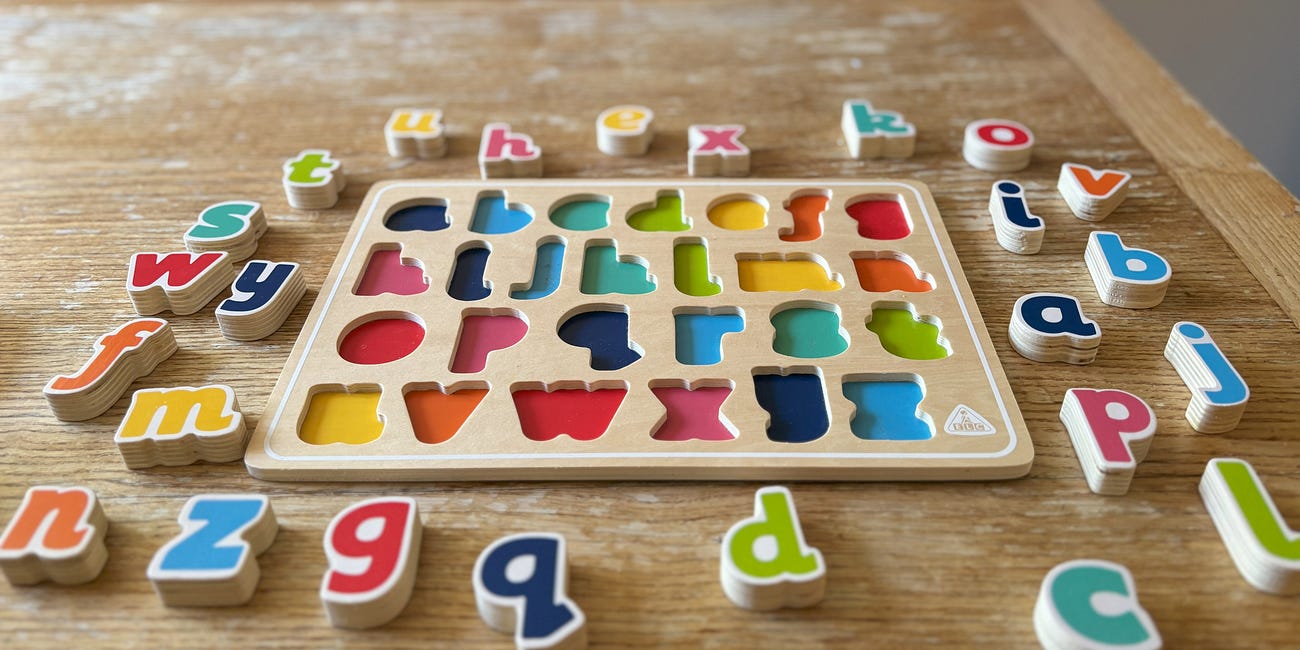
The week after I deregistered my son, I was a woman on the edge. We had decided to ‘electively Home Educate’ after the slow motion car crash that was his first term in Reception. Except, it wasn’t especially ‘elective’, It was more that we were stuck between a rock (threats of fines and interventions by the local authority if we don’t get him into the c…
Letters and Sounds: Principles and Practice of High Quality Phonics (2007) Nottingham: Department for Education and Skills.
The Reading Framework: Teaching the Foundations of Literacy (2023) London: Department for Education.
Language at the Speed of Sight: How We Read, Why So Many Can’t, and What Can Be Done About It Mark Seidenberg (2017) New York: Basic Books.
The Science of Reading: A Handbook Margaret J. Snowling and Charles Hulme (eds.) (2022) Oxford: Blackwell.
The Simple View of Reading Philip B. Gough and William E. Tunmer (1986) Remedial and Special Education, 7(1), pp. 6–10.
The Polyvagal Theory: Neurophysiological Foundations of Emotions, Attachment, Communication and Self-Regulation Stephen W. Porges (2011) New York: W.W. Norton.
Intrinsic Motivation and Self-Determination in Human Behavior Richard M. Ryan and Edward L. Deci (2020 edn.) New York: Springer.
The Psychology of Reading Margaret J. Snowling and Charles Hulme (2021) 2nd edn. Oxford: Wiley-Blackwell.
The Reading Mind: A Cognitive Approach to Understanding How the Mind Reads Daniel T. Willingham (2017) San Francisco: Jossey-Bass.
Comments
Nothing yet. Say the first thing.
Sign in to join the conversation.