
Thanks to your support this month, I was able to cover the costs of the following:
A Copy of Admiral John H. Towers: The Struggle for Naval Air Supremacy: $17
A Copy of History Of United States Naval Aviation: $16
A Copy of The Navy’s Air War: A Mission Completed: $19
A Copy of The Second Navy Reader: $17
A Copy of The Reminiscences of Adm. James S. Russell: $73
A Copy of Fighting Fifteen: The Navy’s Top Ace and the Deadliest Hellcat Squadron of the Pacific War: $22
If you’ve been getting value out of these updates, and aren’t already, consider becoming a paid subscriber or passing this along to someone who might. Every bit helps me acquire more primary, secondary, and other sources!

Samuel Eliot Morison is, by many measures, one of the most influential and successful American historians of the 20th century. His career spanned nearly 60 years, and by the end, his resume included two Pulitzer Prizes, two Bancroft Prizes, the Balzan Prize, the Legion of Merit, and the Presidential Medal of Freedom from President Johnson. Including his seminal The History of United States Naval Operations in World War II, he also wrote the popular Oxford History of the American People and co-authored the classic textbook The Growth of the American Republic with Henry Steele Commager, as well as biographies of Christopher Columbus and John Paul Jones, which won him his Pulitzer Prizes.
Morison was already a successful historian by the start of World War II, with 30 years in Harvard’s history department where he had gotten his PhD. A few months after Pearl Harbor, Morison thought of writing a history of the Navy in the conflict. What better opportunity than to do it as it was unfolding. When Morison first pitched his idea to the Navy, he was laughed out of the room. Luckily, he just so happened to be close friends with President Roosevelt and appealed directly to him over the heads of Navy officials. FDR loved the idea, and before he knew it, Morison was commissioned as a lieutenant commander in the US Naval Reserve and called up to active duty. He spent most of the war overseas in both theaters conducting interviews with key officers and gathering a ton of primary source material. He nearly took a Kamikaze to the face off Okinawa in April 1945 while aboard the battleship Tennessee.
With full access to the archives and a small army of research assistants, he got the first volume, The Battle of the Atlantic, September 1939 – May 1943, published in 1947 by Little, Brown and Company. He subsequently spent the next 15 years on the project, eventually finishing the 15th volume, Supplement and General Index, in 1962. In many ways, The History of United States Naval Operations in World War II became the de facto official history of the Navy’s war even though, for all intents and purposes, it was “normal historical work.” The Navy’s official administrative history, a collection of 175 unpublished analytical studies currently housed at the Washington Navy Yard’s rare book reading room covering internal naval policies, logistics, and establishment, is another impressive resource but not something for the uncurious. Morison was quick to acknowledge his own shortcomings but equally defensive, writing, “Historians in years to come may shoot this book full of holes; but they can never recapture the feeling of desperate urgency in our planning and preparations, of the excitement of battle, of exultation over a difficult operation successfully concluded, of sorrow for shipmates who did not live to enjoy the victory.”1
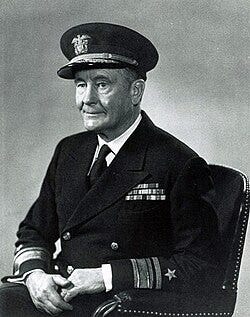
I first encountered Morison in a “history and writing” class in undergrad. Interestingly, my professor was not a fan, stating that he “spent too much time on storytelling and not enough time on scholarship.” On one hand, I was sympathetic; scholarship is important to any writing project dealing with history. On the other hand, wasn’t history just a story? And that story would be enhanced by the way it was told. That tension shows up most clearly in the label historians have stuck on Morison’s work: “drum and trumpet history.” It’s not entirely unfair. Morison wrote battle and ship movement with a novelist’s instinct for pacing, and he had little patience for the kind of dry administrative analysis that fills, say, those 175 unpublished studies at the Washington Navy Yard. When I first acquired one of the volumes, New Guinea and the Marianas, March 1944 – August 1944, I was genuinely blown away by his writing style and his ability to make the reader feel like he was in the cockpit of a plane or on the bridge of a ship.
However, the critique my professor voiced didn’t emerge in isolation either. It arrived alongside a broader shift in the historical profession, starting in the 1960s and accelerating through the following decades, away from top-down narratives of admirals and campaigns and toward more social history: the experience of ordinary sailors, questions of race and labor within the wartime Navy, the home front, and so on. Morison’s history, for all its scope, is fundamentally a history of decisions made by commanders and the operations that followed from them. It has comparatively little to say about, for instance, the experience of Black sailors confined largely to stewards’ duties, or the labor that built and provisioned the fleet he was chronicling. That’s not a flaw exactly, since it wasn’t the books he set out to write, but it does mean the volumes have aged as a particular kind of history rather than a comprehensive one, and later scholars have had to fill in what Morison’s frame left out almost by design.
But the label also undersells what made his approach genuinely novel and unique. Morison wasn’t just narrating from the archives after the fact. He was aboard destroyers during the Battle of the Atlantic, present for landings in Sicily and Normandy, and out in the Pacific interviewing pilots and officers within weeks or months of the actions he’d later describe. He was, in a sense, doing embedded journalism decades before the term existed, except the dispatches took fifteen years and fifteen volumes to file. That immediacy is exactly what gives the prose its urgency, and it’s also what makes the “insufficient scholarship” critique more complicated than it first appears. Morison wasn’t skipping scholarly rigor out of laziness. He was making a deliberate choice about what kind of history he wanted to write, one grounded in testimony gathered while the war was still a lived experience rather than a closed archive.
That choice came with real costs, and later historians have been right to point them out. Because Morison worked so closely with active-duty officers and depended on the Navy’s cooperation to gather material, his history sometimes reads less critically of command decisions than the documentary record would support. He had access, and access has a way of shaping sympathy. Historians working the archives decades later, unencumbered by wartime friendships and postwar institutional loyalties, have been able to revisit episodes Morison treated gently and find a messier picture, for example, the command decisions made by Bull Halsey at Leyte. This is, incidentally, part of why projects like mine lean so heavily on both American and Japanese primary sources rather than taking either side’s after-action claims at face value. Reconciling loss records against victory claims isn’t a rejection of Morison’s method so much as an extension of it, using tools he didn’t have consistent access to in 1943.
What’s remained durable, though, is the sense that naval history and military history in general could be readable without being dumbed down. Before Morison, the operational history of a navy at war was, almost by convention, the province of internal studies and staff reports: useful, thorough, and largely unread outside the institution that produced them. Morison proved there was an audience, a large one, for the same material told as narrative, with real people making decisions under real pressure rather than units executing doctrine. You can draw a fairly straight line from Morison’s decision to ride along on those destroyers to the expectation, now nearly universal in popular military history, that the historian owes the reader a scene, not just a summary.
It’s worth pausing on just how anomalous a project like the fifteen volumes actually is, because nothing quite like it exists before or since. Official military histories of comparable scale are typically produced by committee, written by rotating teams of institutional historians, and published under an agency’s imprint rather than a single scholar’s byline. The Army’s Green Books and the Army Air Force’s own multi-volume histories of the war followed something closer to that model. What Morison did instead was closer to what a single novelist attempts with a multi-volume epic: one sustained authorial voice, one set of judgments and emphases, carried across fifteen years and some 6,000 pages without ever being handed off. That kind of endurance is rare enough in academic history generally, where a single-author project spanning even a decade is unusual, let alone one requiring the logistical apparatus of a small research operation, active-duty travel to two theaters of war, and continuous cooperation from an institution that had initially wanted nothing to do with the idea.
The closer analogy might be something like Edward Gibbon’s The History of the Decline and Fall of the Roman Empire, another single-author history that took decades and covered an entire war-spanning arc from beginning to end, except Morison was writing about events that were still happening around him as he began, which no comparable project can claim. It also helps explain why nothing has really replaced it. Later historians, myself included, work in the gaps and corrections around Morison’s volumes rather than attempting to redo the whole edifice, partly because the sourcing has grown so much richer since 1962, and partly because the sheer institutional access and personal stamina the project required would be almost impossible to replicate today. A single historian simply does not get commissioned as a naval officer, flown to two active theaters, and given a standing research staff for fifteen years anymore. That combination of circumstance, patronage, and personal ambition was very much a product of its moment, and it’s unlikely to happen again in quite the same form.
So maybe the answer to my professor’s complaint isn’t to pick a side in the storytelling-versus-scholarship divide, but to notice that Morison’s real innovation was refusing to accept it as a divide at all. The scholarship is what earns the right to tell the story; the story is what makes anyone want to read the scholarship. Whether he balanced the two perfectly is a fair question, and one every naval historian working in his shadow, myself very much included, has to keep asking of their own work.
Morison's Preface from Volume One, Battle of the Atlantic.
Comments
Nothing yet. Say the first thing.
Sign in to join the conversation.