
In case you missed it: I’m Writing a Book!
Thanks to your support this month, I was able to cover the costs of the following:
A Copy of The Reminiscences of Capt. David McCampbell, USN (Ret.): 1910-1996: $54
A Copy of The Reminiscences of Adm. James S. Russell, USN (Ret.): 1903-1996: $73
A Copy of Titans of the Seas: The Development and Operations of Japanese and American Carrier Task Forces During World War 2: $9
A Copy of American and British Aircraft Carrier Development, 1919-1941: $26
A Copy of Skipper: Confessions of a Fighter Squadron Commander: $13
A Copy of A Battle History of the Imperial Japanese Navy, 1941-1945: $8
If you’ve been getting value out of these updates, and aren’t already, consider becoming a paid subscriber or passing this along to someone who might. Every bit helps me acquire more primary, secondary, other sources, and research tools!
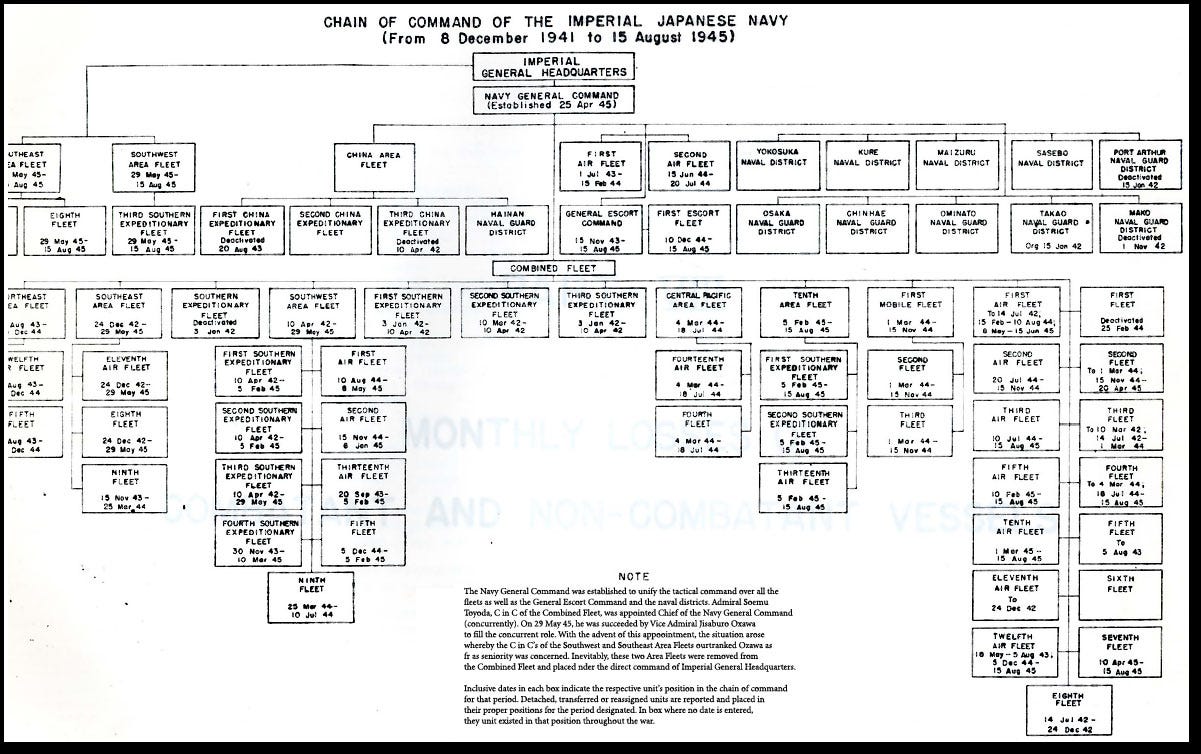
After Japan’s surrender in September 1945, the American Army’s General Headquarters, Far East Command, set the Japanese government to work reconstructing its own military history. Under General MacArthur’s instruction, SCAPIN No. 126, issued in October 1945, assembled former officers of the Imperial Army and Navy under the Historical Records Section of the First and Second Demobilization Bureaus, the successor bodies to the wartime Army and Navy Ministries, and set them to write operational accounts of the war. This was not a project the Japanese necessarily volunteered for. It was more or less imposed as an occupation directive, staffed by officers who in many cases had commanded the very units whose failures they were now asked to narrate, and the men doing the writing knew their work would be read by the same Americans who had beaten them.
The reason so much of the series had to be written from memory rather than checked against paper is that much of the paper never survived to be checked against. In the days surrounding the surrender broadcast of August 15, 1945, and continuing through the weeks before occupation authorities could seize anything, Japanese ministries and military headquarters undertook a systematic campaign of document destruction, burning files by the ton in courtyards and incinerators across Tokyo and at commands throughout the collapsing empire. War Ministry and Navy Ministry officials, along with staffs down to unit level, understood that surviving orders and diaries could become evidence, whether for an occupying power assembling a war-crimes case or simply for a public reckoning with how the war had actually been fought and lost, and they moved to see that as little of that evidence as possible would still exist once the Americans arrived.
The National Archives’ own institutional history of the captured-records program is blunt about the consequence for anyone hoping to write from Japanese paper: of the vast quantity of wartime material American forces eventually processed, a significant share of what would have been most valuable was already gone, having been hidden, destroyed during the bombing campaigns, or destroyed by the Japanese themselves.
The resulting corpus, eventually some 187 numbered studies, moved through several hands before it became usable for English-language researchers. A first draft manuscript was produced in Japanese. The Military Intelligence Service Group under G-2, General Headquarters, Far East Command, translated it into English. Later, as the occupation evolved into a standing bureaucracy, the Allied Translator and Interpreter Section (ATIS), the same joint Australian-American organization that had spent the war translating captured orders and interrogating prisoners, took over checking and editing those translations, with the dubious passages sent back to Japanese-language specialists attached to OCMH’s own Pacific Section for a second look. The whole apparatus was under something called the Japanese Research Division, the in-house name for the group of Japanese consultants, many of them the same former staff officers, who spent the 1950s revising their own earlier work.
A companion project, the Japanese Studies in World War II series, ran to nearly 150 further reports covering ground the numbered monographs did not, and a separate four-volume compilation called Statements of Japanese Officials on World War II collected interrogation narratives ranging from cabinet ministers down to infantry company commanders, offering a second and independently gathered account of many of the same events. Custody of the entire collection, Japanese originals and English translations both, ultimately rested with OCMH, which is also where the numbering scheme researchers cite today was standardized, since the series had already been renumbered once by G-2 GHQ FEC during its early, disorganized years. They are now all digitized online on the Center for Research Libraries if that is of interest to you. Here is an example of what one page looks like.
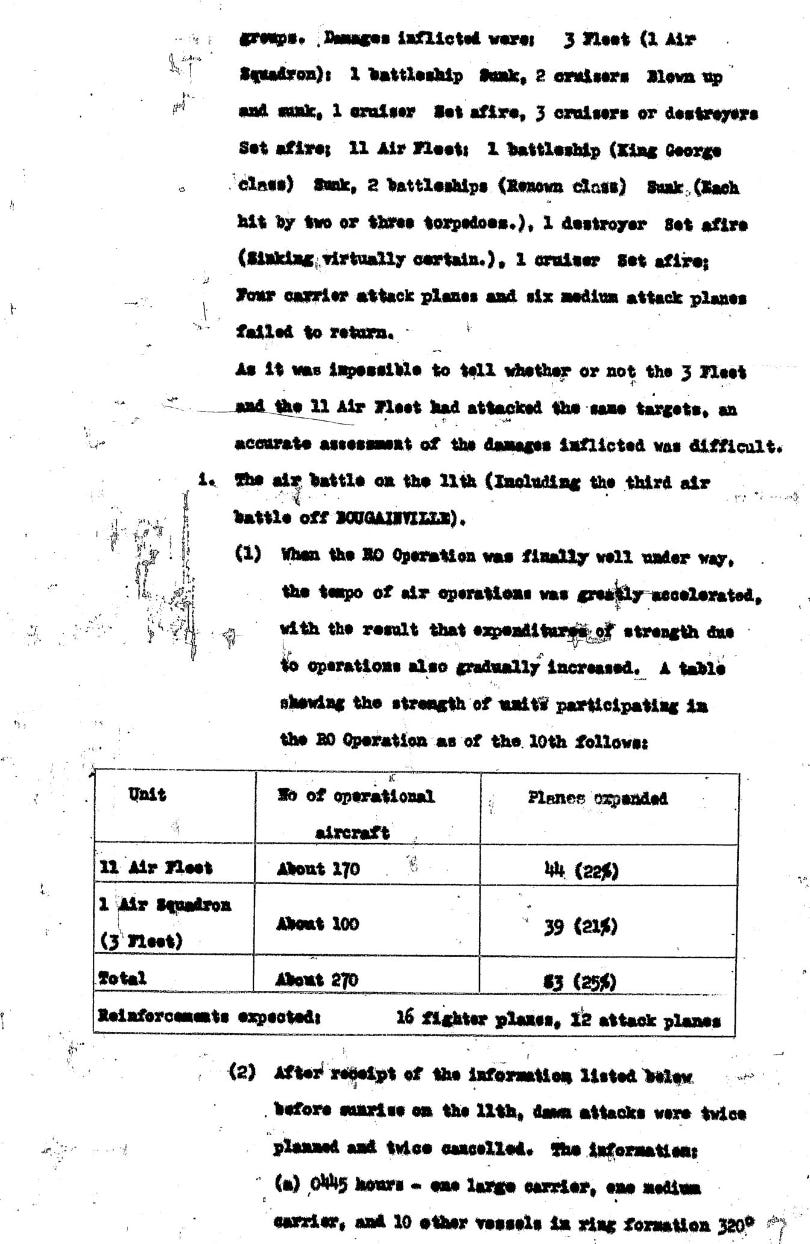
Nothing about that production process should be mistaken for an archive. For example, the monograph on the Leyte campaign, No. 45, states that the first Japanese manuscript was written hurriedly, finished in November 1946, and drew heavily on memory because the officers assembling it did not have their own wartime records in front of them, most of which had been destroyed, lost in the collapse of 1945, or simply never generated under combat conditions. What repair the series later received came from Colonel Takushirō Hattori, formerly chief of the Operations Section of Imperial General Headquarters, whose postwar Historical Research Institute spent years tracking down surviving documents on the Pacific War and writing corrections back into the monographs. Even the orders and directives quoted inside individual monographs carry this same caveat: OCMH’s own bibliographic notes acknowledge that most were reconstructed from memory, in a number of cases by the very officer who had issued the original order, and describe them only as believed accurate rather than textually identical to anything that survives.
This also means the monographs are not one tier of reliability but several, and the tier changes by monograph, by section, and sometimes by paragraph. Some passages are close to primary, an officer’s direct reconstruction of an order he wrote or a signal he sent, checked later against a document that was found. Others are narrative filler smoothing over a gap nobody could fully reconstruct or written with an incentive toward a more flattering account of their own judgment. The 1962 Guide to Japanese Monographs and Japanese Studies on Manchuria, 1945-1960, which OCMH issued as a master finding aid, says this almost apologetically about its own collection: that the later Manchuria studies, prepared several years after the original operational monographs and produced under closer guidance from the Japanese Research Division’s consultants, are simply better organized, more accurate, and more complete than the wartime Pacific monographs researchers actually want to use the most. In other words, the part of the series covering the theater and period this book needs is, by the compilers’ own admission, the least polished part of the whole run. That is not a reason to set the monographs aside, but it is one of the few challenges a researcher faces when using these particular sources.
Comments
Nothing yet. Say the first thing.
Sign in to join the conversation.