
Right now, somewhere in the North Sea, a whale is dying entangled in a gillnet. Nobody is filming it. Nobody has given it a name. There is no livestream, no government reversal, no crowdfunding campaign.
There will be no viral moment, because there is no moment; only a quiet, slow death in cold water, invisible to everyone on land.
This happens to animals in those waters every single day.
On the morning of March 3, a humpback whale was spotted swimming in the Baltic Sea, where the water is too shallow and too enclosed. But there it was, near the port of Wismar in northern Germany, and observers could already see something was wrong. The animal was entangled in a fishing net and its body condition was poor.
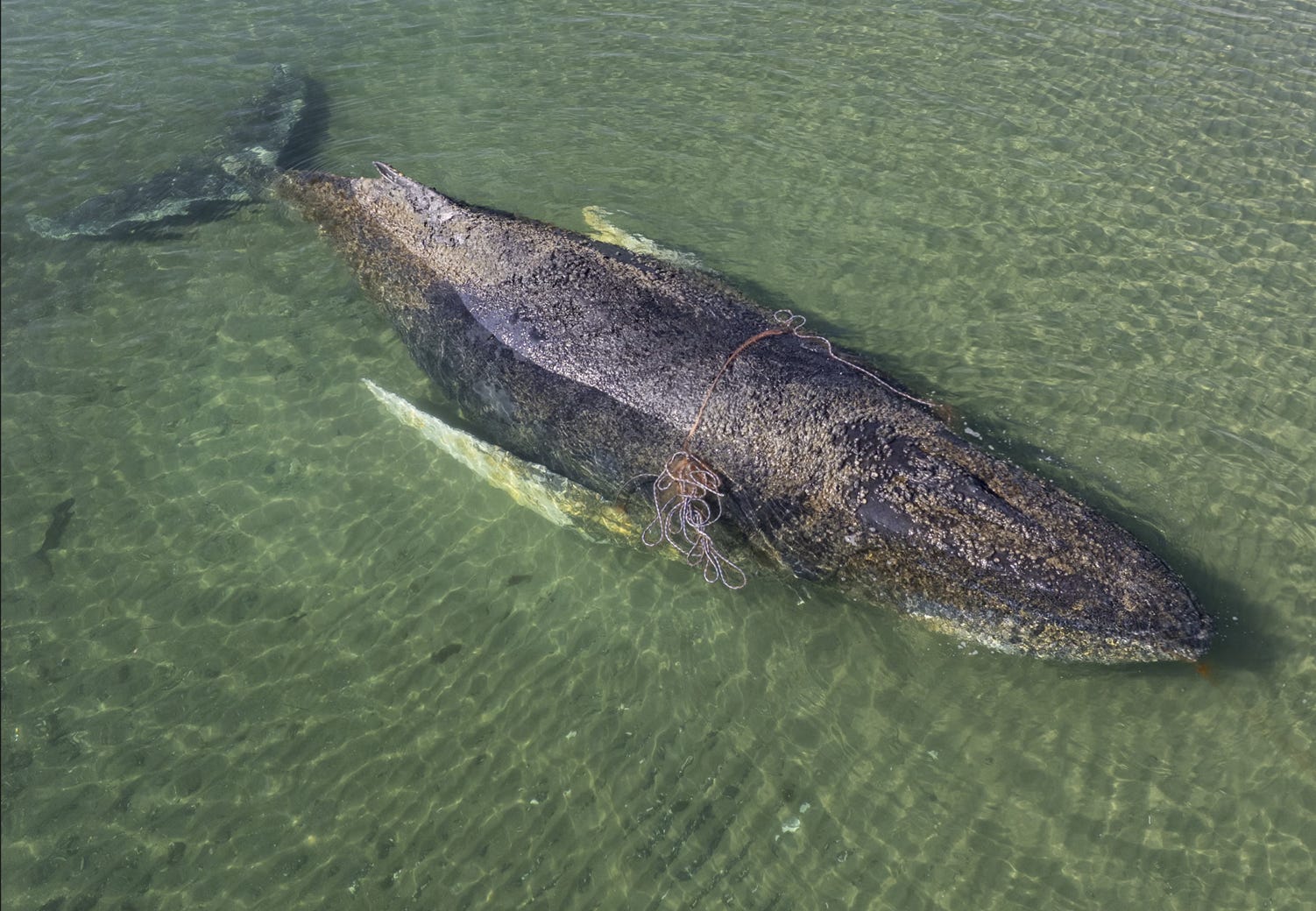
For the next three weeks, the whale moved along the Mecklenburg-Vorpommern coastline. Scientists watched, documented, and they worried.
Then came the night of March 23, when the animal ran aground for the first time at Timmendorfer Strand, the beach resort whose name it would carry forever. That is where “Timmy” was born.
The following days brought a cascade of failed attempts. On March 24, a small suction dredger was deployed to excavate a channel. It didn’t work. On March 25, a larger dredger was brought in. Rescuers honked, drummed, and shouted to try to coax the animal into motion. Timmy made loud, low growling sounds. By the evening of March 26, the whale had fought its way through and there was cautious relief.
Instead of heading toward the open sea, Timmy turned back into Wismar Bay.
Over the weekend of March 28–29, the whale managed to free itself from two new groundings under its own power.
Then, on March 30, it was stuck again, this time on shallow flats off the Baltic coast. Greenpeace Germay was on the water and their documentation showed what the cameras on shore had missed: skin lesions. Fishing gear lodged deep in the animal’s mouth.
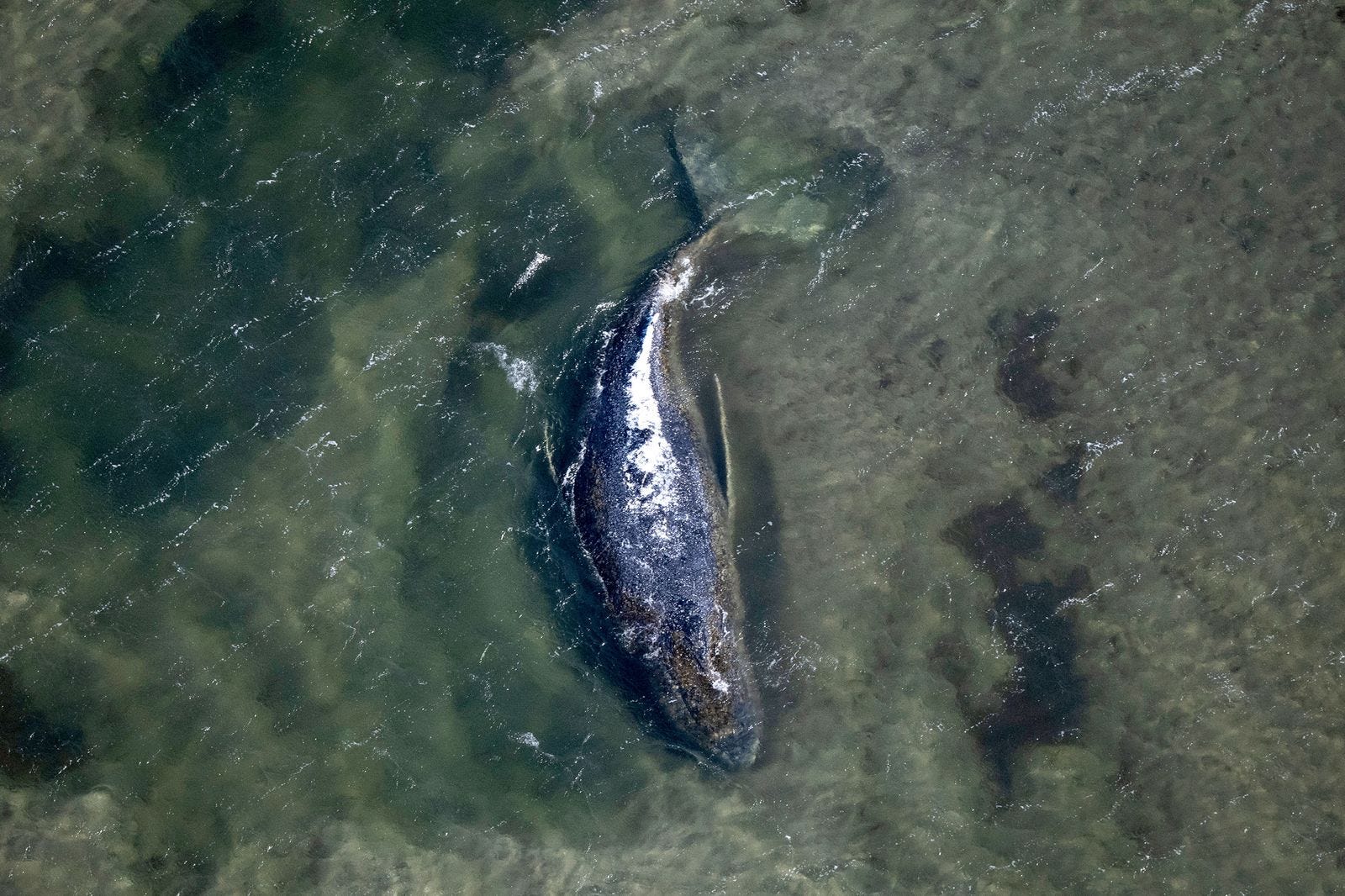
On March 31, Timmy freed itself once more and disappeared for hours only to be spotted swimming in Wismar Bay the following morning.
On April 1, the whale was back in Wismar Bay, aground again near the small island of Poel.
By April 12, the scientists watching had reached a consensus. The whale was in the dying process. It had stopped reacting to nearby boats, which marine biologists describe as a hallmark of the final stages.
Biologist Lisa Klemens had already begun preparing for the autopsy. Researchers warned publicly that what lay ahead might be a long wait: whales can go weeks without food, and the body can take time to fail even when the outcome is certain.
We don’t run ads. We don’t take corporate sponsors. Every investigation, dive, and exposé we produce is powered entirely by people who care. People like you.
If you want to help us keep uncovering the hidden costs of “green” industries, defending ocean life, and challenging destructive systems head-on, you can.
We’ve partnered with Bracenet to create a limited-edition collection of bracelets and keychains made from abandoned fishing nets recovered from the ocean. If you want to make a statement and start conversations, you can find our collaboration products here:
Now, let’s continue.
What happened next has almost nothing to do with marine science.
The International Whaling Commission’s Strandings Expert Panel had been clear: palliative care (keeping the animal calm, undisturbed, and as comfortable as possible) was the only responsible response. The regional government of Mecklenburg-Vorpommern agreed. There was a quiet, painful consensus among the biologists: this animal could not be saved. The kindest thing was to let it go.
Then Timmy went viral.
Millions of people were watching. The story was on every major news outlet in Germany and quickly spread across Europe. Social media was flooded with footage, with speculation, with grief and with something else: a collective demand.
People wanted a rescue. They wanted a hero and they wanted a happy ending. But it was, most likely, too late.
Under the pressure, the regional government reversed its position and a privately funded rescue operation was approved, financed by Walter Gunz (founder of the MediaMarkt electronics chain) and Karin Walter-Mommert (an equestrian event organizer).
Every established cetacean researcher in Germany refused to take part. The team that stepped in instead was led by a German influencer and a Peruvian author who described himself publicly as a “whale whisperer”. A veterinarian who joined the mission quit after four days to go back to their previous job, telling journalists that the operation was being run for clicks, likes, and book sales but not for the animal.
Drone footage captured what happened on the barge the night before the release: crew members pulling Timmy by his fluke (the tail) using a rope. The fluke is made almost entirely of muscle and connective tissue, with no bones to absorb the force. Marine biologist Fabian Ritter described it very clearly: “Rule number one during a whale rescue: you never, never, ever pull a whale by its fluke.”
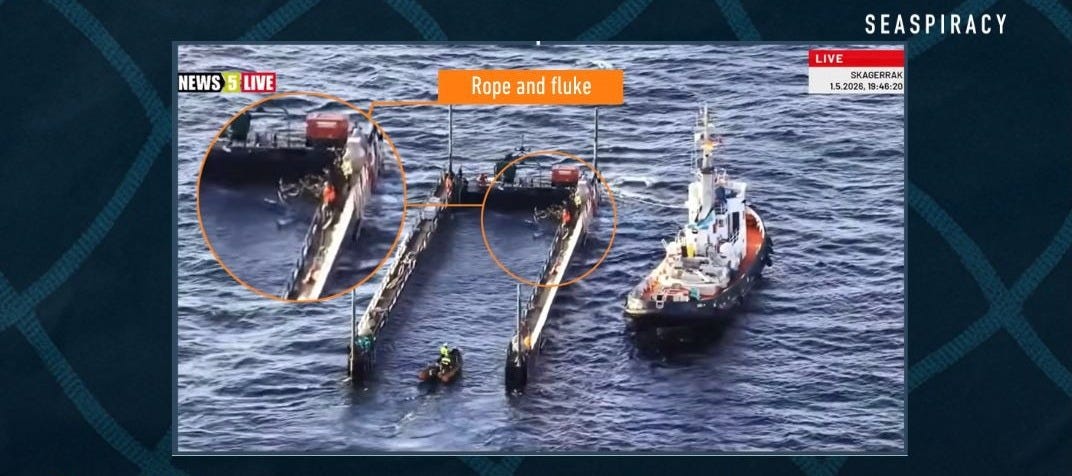
On April 28, in a four-hour operation, Timmy swam into the partially submerged barge. On May 1, the netting across the entrance was removed and additional tanks were flooded, but Timmy would not leave. Then, in the early hours of May 2, the rescue team reported that he had finally exited the barge, dived, resurfaced, and swum away.
Nobody can verify this. The release itself was not filmed, or at least those images have never seen the light. Although they had been livestreaming the whole operation on TV, no video footage of Timmy leaving the barge has been made public. As of today, May 19, none exists in the public domain.
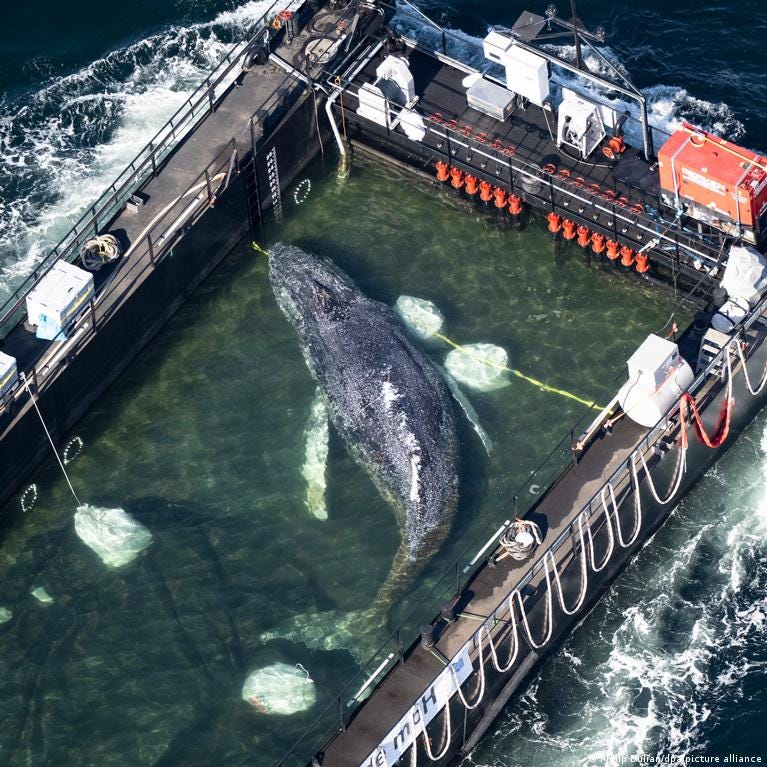
It was framed as a triumph and presented as a happy ending.
A satellite tag had been attached before the release, which gave off a signal. Then it went dark.
The IWC confirmed the device was not transmitting, and no independent researcher could locate the animal. Oceanographer Burkard Baschek had already said there was a “strong possibility” Timmy would die. Danish authorities, for their part, had stated publicly that if the whale stranded near Denmark, they would not intervene as it was, they said, “a completely natural phenomenon.”
When the operation ended, the accountability went with it. The wealthy private funders who had paid 1,5 million euros to rescue the whale released an open letter distancing themselves from what had happened on the barge.
The ship’s crew blamed the rescue team. The rescue team blamed the crew. The veterinarian blamed everyone.
One animal, multiple institutions and not a single person willing to own the outcome.
Then, on Thursday May 15, a dead whale washed up near the small Danish island of Anholt in the Kattegat.
On May 17, Danish authorities confirmed it was Timmy.
We are not going to tell you that the people who cried for Timmy were wrong. They weren’t.
Humans are wired to respond to individuals, not statistics. Give someone a face, a name, a story, and the empathy activates. Tell most people that over 300,000 whales and dolphins are estimated to die every year due to bycatch and entanglement in fishing gear, and the mind processes it as a number, not a tragedy.
This is how human cognition works: we evolved in small groups, responding to individuals in front of us, not to abstract population-level data.
When Timmy got a name, he got a face. When he got a face, he got an audience. When he got an audience, he got governments, funders, cameras, and an operation that, despite everything, millions of people desperately wanted to succeed.
That impulse to save the creature you can see is ancient, and it is not wrong, but it has a shadow side, and that is what we need to talk about.
On the same days that cameras were following Timmy around the Baltic, other animals were dying in those same waters.
Thousands of harbour porpoises get entangled in gillnets across the Baltic and North Sea every year. They drown quietly and out of sight in gear set for fish that nobody is watching.
In the same weeks that a German government mobilized to save one humpback, the same type of fishing gear entangled in Timmy’s own mouth was being legally deployed across the same marine environment by the thousands of kilometres.
The gillnet in Timmy’s mouth is the same type that kills hundreds of thousands of marine mammals globally every year. The difference between Timmy and those animals is not the suffering but just the name.
There are whales dying right now who will never be documented. There are porpoises whose deaths will never be measured, because the effort to count them systematically barely exists. There are dolphins washing up on beaches in France, Spain, and Portugal (according to the Pelagis Observatory, between 6,000 and 10,000 dolphins are killed each winter at sea in the Bay of Biscay), many of them with the wounds of trawl gear, and the public largely doesn’t know because no one named them.
No name means no viral moment for them, and no rescue team. Just a body and a statistic that nobody reads.
We are not asking you to stop caring about Timmy or future Timmies, but to let what you feel for Timmy be the beginning and not the end.
The grief that millions of people felt watching that whale run aground again and again is real and it is appropriate. The ocean is in crisis, and every individual animal lost is part of a catastrophe that is ongoing and accelerating. Timmy gave that crisis a face. The question is what we do with the face.
The answer cannot be that we save the ones with names and accept the deaths of the ones without. Because the ones without names are dying in incomparably larger numbers. Because the system that kills them with gillnets, trawls, ghost gear, bycatch… is legal, industrial and largely invisible. Because the political will to address those systems only appears when a camera is watching, and most of the ocean is unwatched.
The uncomfortable lesson of Timmy is about a crisis of attention. We have limited empathy and unlimited need.
The only way to bridge that gap is to consciously, deliberately extend the circle: to treat the named and the unnamed as equally real, equally worthy of protection, equally deserving of the political pressure and institutional accountability that Timmy briefly, chaotically received.
Every animal entangled in a gillnet right now is Timmy. They just didn’t wash up somewhere with a camera.
The whole Timmy story made us angry, and then it made us sad, and then it made us think carefully about what we actually want to build here.
We don’t want a conservation movement that only activates when something goes viral, and we certainly don’t want ocean protection that depends on whether a whale happened to strand near a beach resort with a memorable name. We don’t want governments that reverse scientific consensus when public pressure spikes and quietly return to inaction the moment the cameras move on.
We want the other 300,000 to be considered. We want the porpoises no one is counting to be considered as highly as Timmy. We want the dolphins washing up in Spain whose deaths are attributed to “unknown causes” because investigating would be inconvenient for the fishing industry. We want the legislation that protects every animal in the water, not the handful humans on shore happened to see.
Timmy deserved better than what he got; from the fishing gear that entangled him, from the shady rescue operation that terrified him, from the political system that used him as a backdrop for visibility. But so do the whales nobody named. So do the ones dying in these same waters tonight, with no livestream and no rescue team and no satellite tag that anyone is checking.
We are going to keep writing about them. We hope you will keep reading.
If you want to save more whales in the Baltic, we’ve prepared easy email actions for everyone to take:
If you found this article valuable, please consider becoming a paid Substack member or donating to Seaspiracy. Your support allows us to keep digging, keep publishing, and keep amplifying the voices that powerful industries would rather silence.
No posts
Comments
Nothing yet. Say the first thing.
Sign in to join the conversation.