
Seafood has been a big part of my career, dating back to my time as editor of Simply Seafood magazine published a few decades ago. In the years since, I’ve focused on seafood in a number of cookbooks, magazine articles, cooking classes, and other projects. All of those experiences—plus my genuine love of cooking, eating, and learning about seafood, both at home and when traveling—fuel the stories I share here on Seafood Savvy. Thanks so much for joining me.
Before I get into canned salmon, a few events coming up for shellfish (especially oyster) fans in the Puget Sound area:
April is Oyster Month at Alderbrook Resort on the Hood Canal. They’re offering a range of activities throughout the month, from beach safaris to beach-side cookouts. I’m thrilled to be a guest this year, there for part of the first weekend’s festivities. Come by and say hi if you’re in the area. One option is at the Oysters & Champagne Reception Friday April 3 from 5:00 – 6:00 where I’ll be sipping and slurping, and signing cookbooks.
Also in April just up the road on Hood Canal will be the return of a fun, dynamic weekend at Hama Hama Oysters. After a haitus, Oyster Rama is back! This two-day event is packed with amazing seafood, beverages, fun activities (trivia! music! a shuckathalon!), all sorts of opportunities to learn about oysters, and a chance to stroll the tide flats—even harvesting some oysters for yourself if you choose to go that route. I’m so looking forward to having some Rama fun again.
And the first weekend in May sees SLURP! return to Olympia. Put on by the Pacific Coast Shellfish Growers Association, this year’s event expands to include activities beyond the signature Sunday afternoon that showcases shellfish along with local breweries and wineries, and live entertainment.
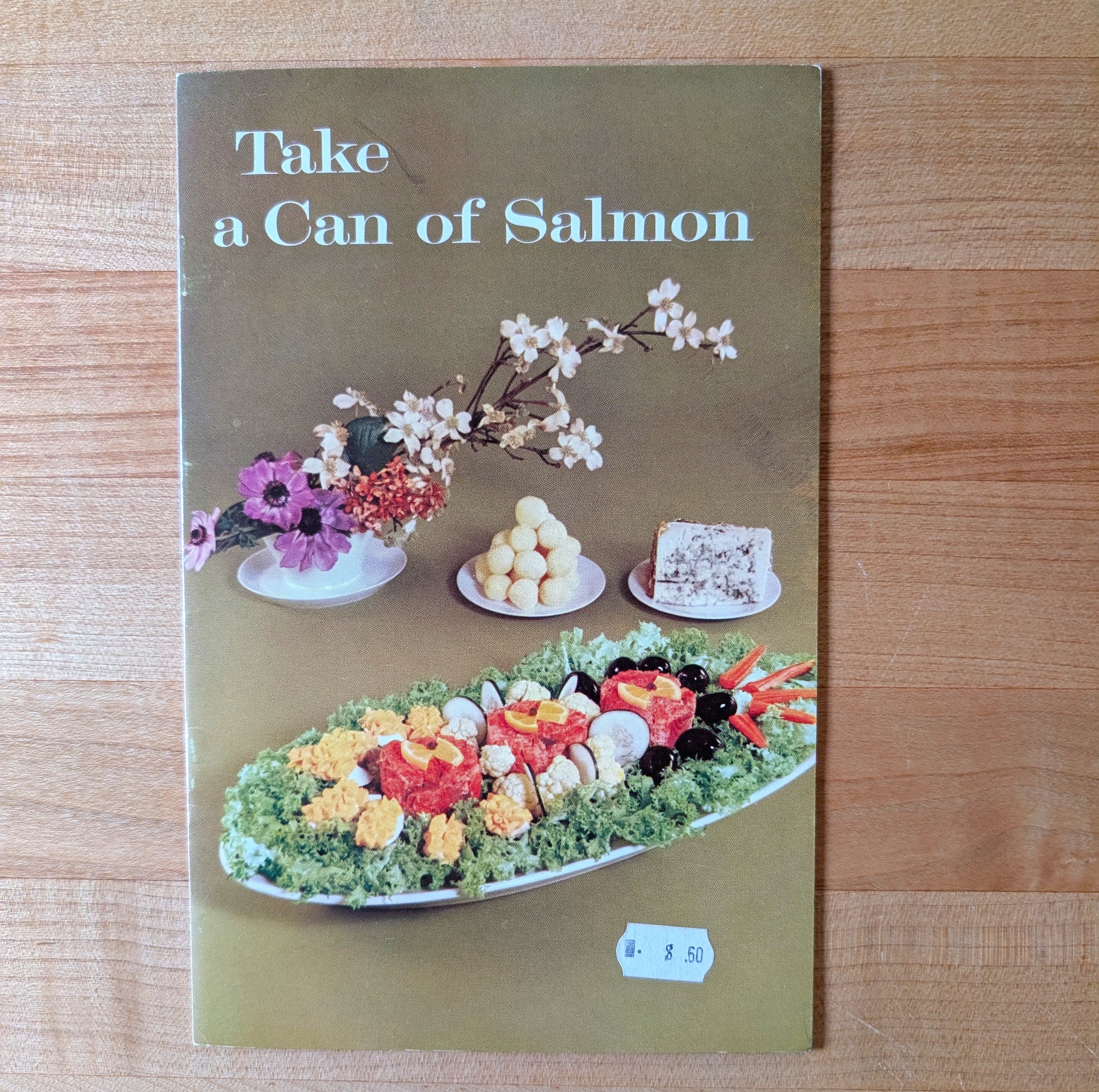
A dear friend gave me that pamphlet above in the past year or so. She knows very well my deep sense of nostalgia, and my love of retro foods, with bonus points when that’s seafood-related.
This gem was produced by the U.S. Department of the Interior—Fish and Wildlife Service, Bureau of Commercial Fisheries (quite a mouthful), with contributions from the Canned Salmon Institute that was based here in Seattle. It notes that “thanks to modern canning methods, [salmon] is becoming known more widely than ever as a cosmopolitan food fish.” A couple dozen recipes are offered to inspire those cosmopolitan cooks—salmon burgers, salmon tetrazzini, salmon chowder, and the intriguing “salmon buffet” shown on the cover, with note to preserve the cylindrical shape of the salmon direct from the can. The booklet itself lists no date, but I found a press release online from December 1959 announcing its release.
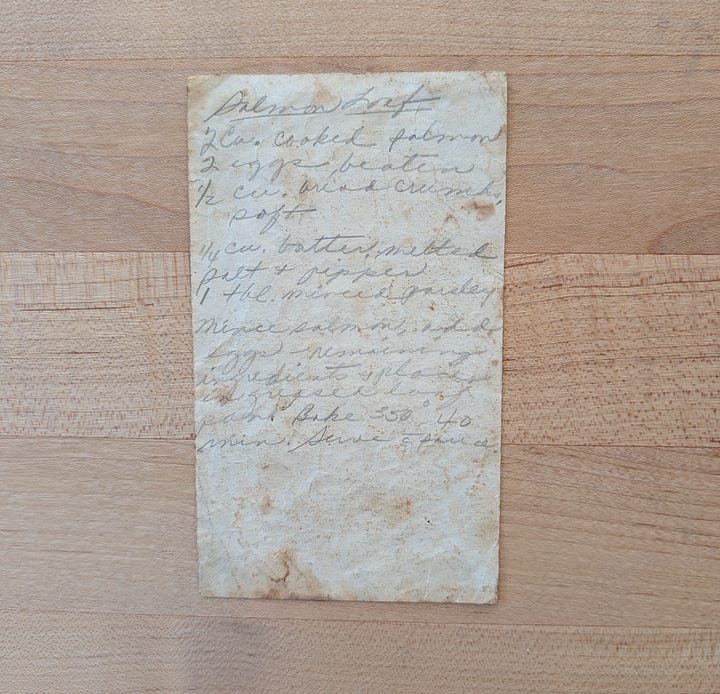
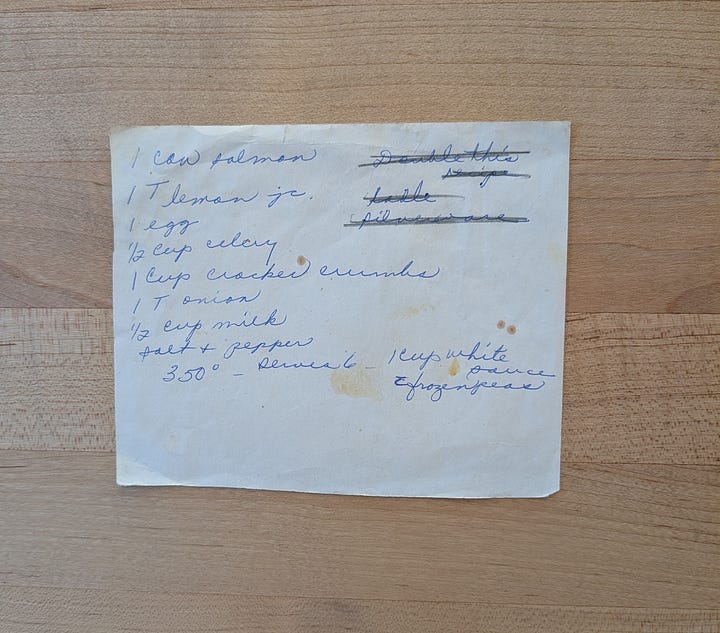
While digging around in my mom’s big, battered, falling-apart recipe folder these last few years, I’d come across a few of her recipes using canned salmon. One is clearly “Salmon Loaf,” another has no name but is very similar. As you’ll see below, it’s one of those succinct recipes that Mom wrote out for herself: just enough info to remind her of the core details, leaving out the things she inherently knew: such as what to put the mixture in for baking, and how long to bake it.
The thing I remember her making most is salmon cakes, for which I don’t see a recipe in her folder. It’s possible she used one or the other of her loaf recipes and simply pan-fried in cake form rather than baking. Though on page 131 of her 1946 copy of Joy of Cooking there’s a salmon cake recipe with tell-tale spatters, so perhaps she used that one as well: canned salmon, cracker crumbs, eggs, salt, and paprika, formed into cakes and sautéed in butter. Pure and simple. You’ll see my ode to salmon cakes below.
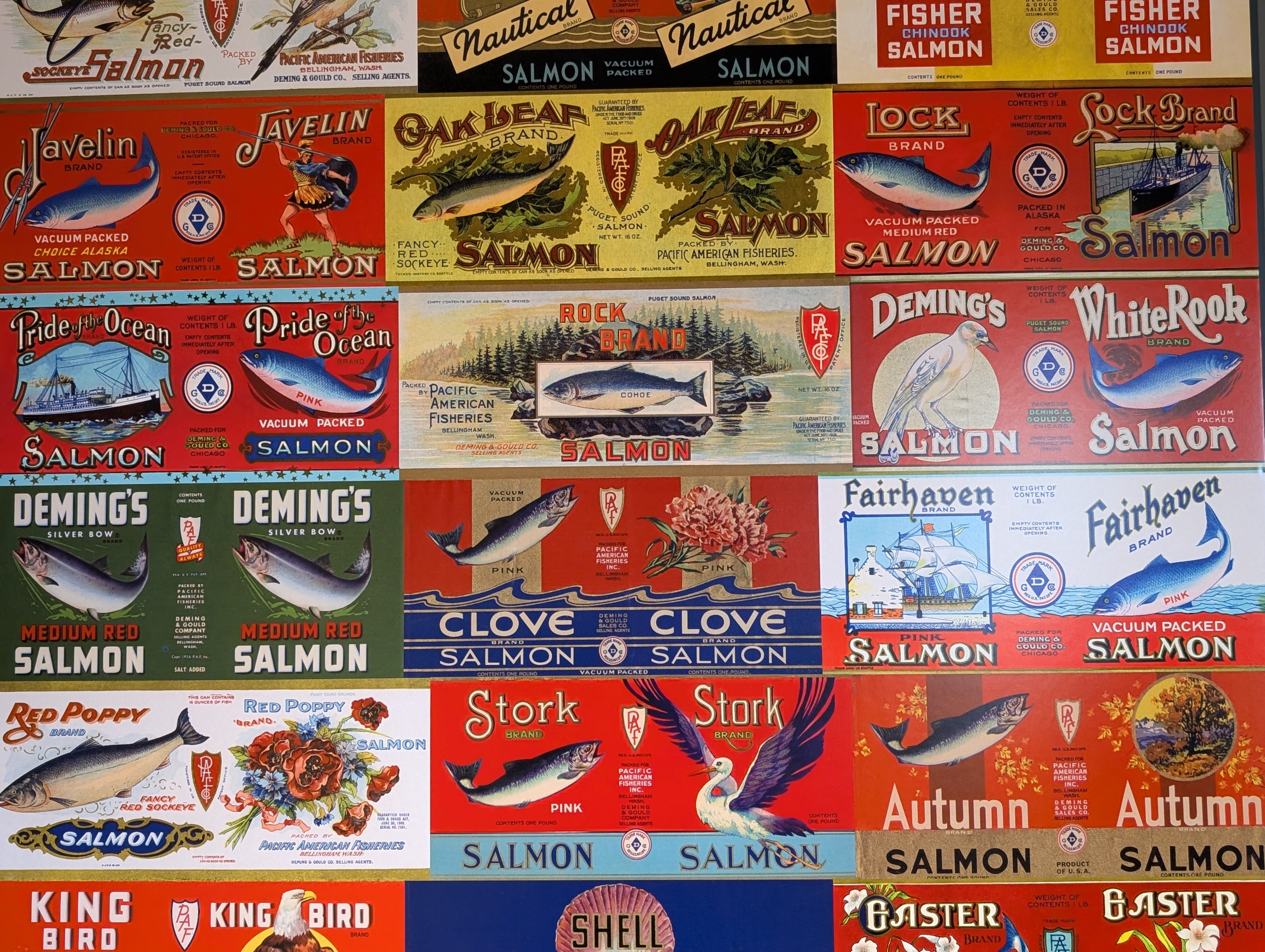
Talk of canned salmon invites the question of the difference between “tinned” and “canned” seafood. Which tees up the punchline version of an answer: about $5 a can. The tinned category is considered to be more upscale, thanks in part to fancier design and packaging, and the distinctive ingredients and flavor profiles used. And these are usually ready-to-eat items, ideal for a picnic or as part of a snack spread that starts an evening with friends, while canned seafood tends to be used in recipes. (Though tinned seafoods can certainly be used in recipes too, the Fishwife Cookbook is packed with suggestions for doing so.) This post from a few years ago covered tinned seafoods a bit more, including a fabulous shop I went to in Lisbon for stocking up on them.
From my brief bit of looking around on grocery shelves and online, I found that the tinned seafood brands primarily feature salmon in smoked form—which seems to echo the ready-to-eat convenience those brands offer.
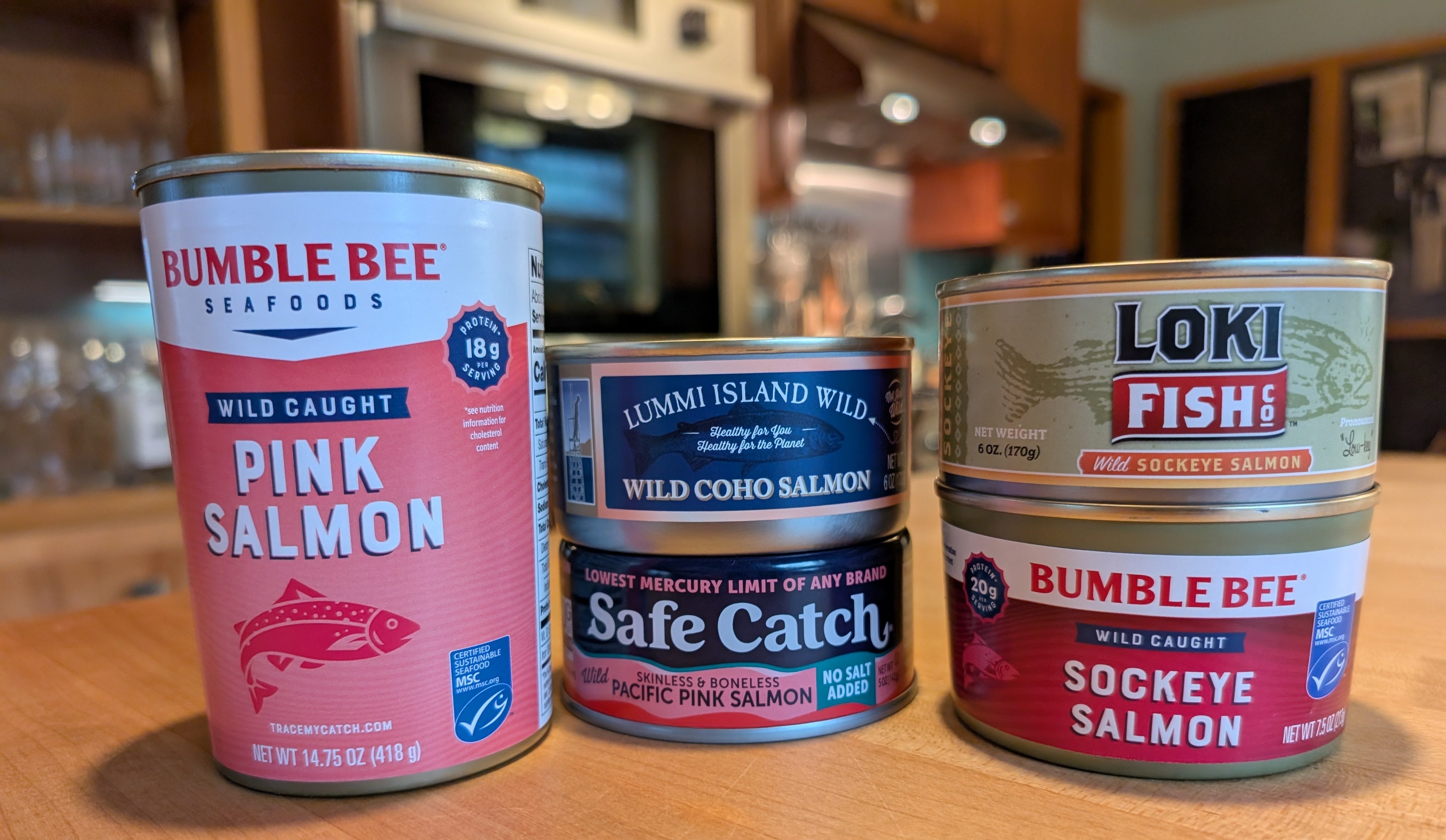
The canned salmon I’m focusing on here is un-smoked, usually very simple products with little more than salmon and salt, maybe an occasional splash of olive oil. So, very similar to the canned tuna that has long been a staple in many of our kitchens. Its appeal is similar: something to keep on hand, ready to grab from the cupboard for making a quick sandwich mid-day and easy dinner options. And canned salmon can be a decent stand-in for fresh salmon in recipes such as pastas, chowders, and baked dishes like this artichoke dip I made again recently using canned salmon.
I imagined that humbler canned salmon wouldn’t have many options on grocery shelves these days, given the popularity of tinned seafoods, and was happy to see a range of brands (national and local) and salmon species represented (sockeye, coho, and pink among those I saw).
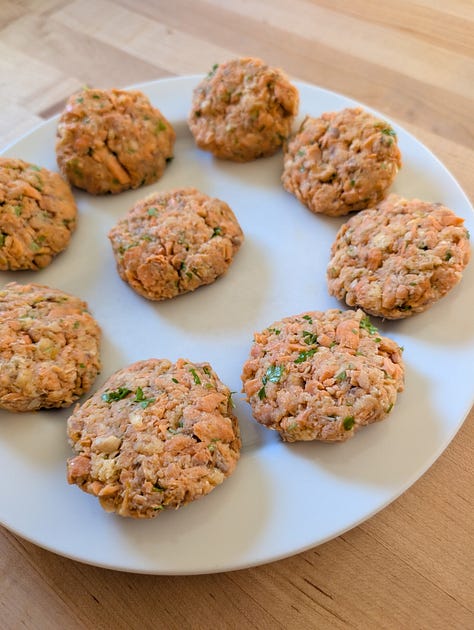
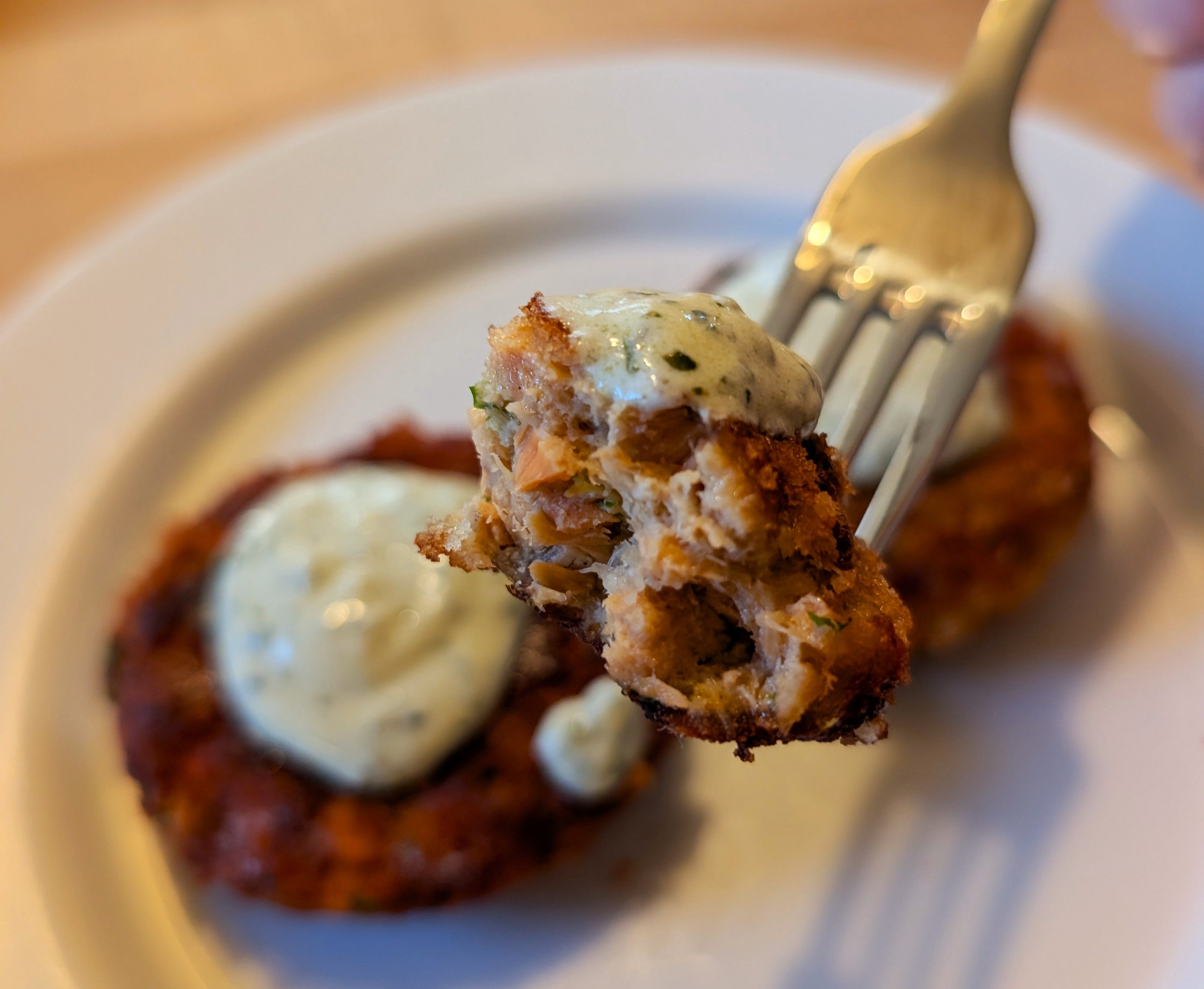
Salmon cakes, croquettes, loaves, patties. They may have different names, different shapes, different cooking methods, but generally these share a similar foundation: flaked cooked/canned salmon, with something to bind the fish together, plus aromatics and/or seasonings. The binding can include bread/cracker crumbs, egg, mashed potatoes (a great use for leftovers). I once made cakes with cooked salmon and canned chickpeas that I’d mashed. A thick bechamel sauce can also be used, but just enough to hold the salmon together; too much and the croquettes can lose their shape when cooked.
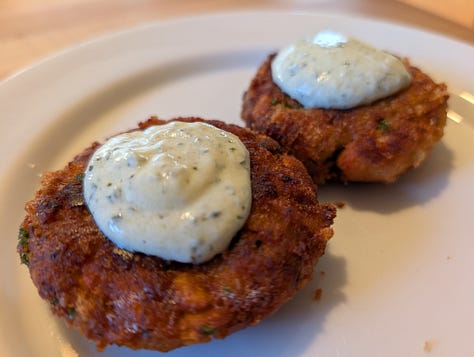
Any number of sauces can be served with these croquettes. Your favorite classic tartar sauce, or the version with fennel that I shared here. When I made these croquettes I served them with a simple blend of yogurt and some basil purée (with olive oil) that I’d frozen last summer. A spoonful or two of pesto would do the trick, too. I also often stir some harissa into yogurt for a quick sauce.
Can sizes varied enough that I list the salmon here in cup volume instead; as a point of reference, I found that 6-ounce cans provided about 1 cup flaked meat.
2 eggs
1 teaspoon finely grated lemon zest
Kosher salt and freshly ground black pepper
2 cups flaked canned or leftover cooked salmon, any skin and bones removed
3/4 cup fresh or dried bread crumbs, plus more for coating
2 tablespoons finely chopped flat-leaf parsley and/or dill
Olive oil, for frying
Sauce of choice for serving (see above)
Put the eggs in a medium bowl and blend well with a fork. Add the lemon zest with a good pinch each of salt and pepper and stir to mix the zest evenly with the eggs. Add the salmon, bread crumbs, and parsley, tossing well to evenly mix.
Form the mixture into 8 cakes of about 3 inch diameter and about 3/4-inch thick. Coat them with bread crumbs, patting to remove excess. Let sit on a plate for 15 minutes before cooking
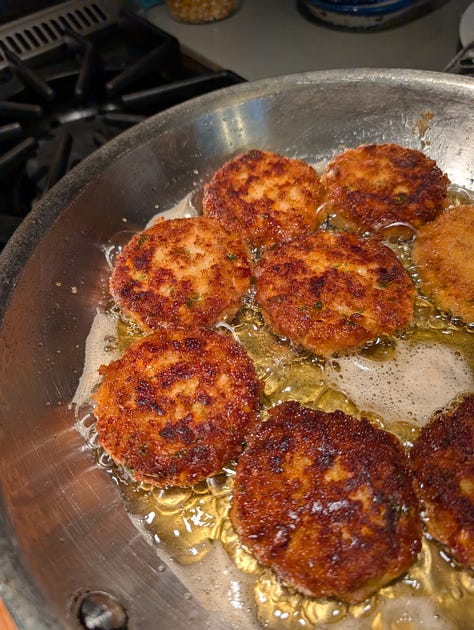
Put a scant 1/4 inch of oil in a large skillet and set it over medium heat. When the oil is heated, carefully add the croquettes and cook until nicely browned, 3 to 4 minutes (best to not crowd the pan too much; if needed, cook the croquettes in batches). Turn the croquettes and cook until browned on the other side and cooked through, about 3 minutes longer.
Makes 4 servings
No posts
Comments
Nothing yet. Say the first thing.
Sign in to join the conversation.