
We all think our parents are superhuman. We think they will somehow go on forever.
But on Wednesday night, the two words no one ever wants to hear were said out loud:
“He’s gone.”
My heart broke irreparably at that moment, standing inside the ward’s filing cupboard.
There was something almost comical about the scene. My sister, my stepmum, my stepbrother, my eldest child and I were all squeezed into this tiny space with the doctor as he explained how the end had come very quickly.
Dad would actually have found that amusing.
But we were there. We were with him, and we were able to say our goodbyes.
What comes next is a cavalcade of hollowness.
Dad gave me a number of promises to keep. I will keep every one of them, but what they are remains between him and me.
When I arrived home and told my wife and my other two children what had happened, I finally deflated completely.
My waystation, my sounding board and one of the great heroes of my life would no longer be sitting in his usual seat in the front room. He would no longer be at the end of the telephone, answering with that familiar, cheerful greeting:
“Hello, Matt.”
This was it.
What comes next is unknown. But he prepared me for it.
Because of that, we will go on. I will carry his life forward through mine.
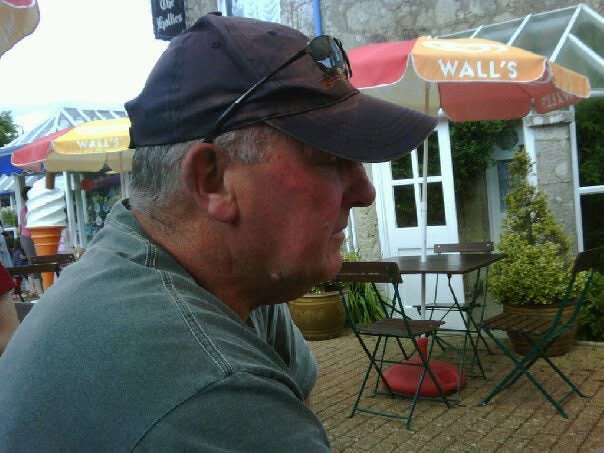
Robin Bourne.
Even saying or typing that name feels strange because, until I reached my early teenage years, I did not realise that was actually his name.
Nobody called him Robin. It was Bob.
The only people who ever seemed to use it were doctors and hospital staff, and I know it irked him every time.
But I digress.
Dad was born in March 1941 and died in July 2026.
Between those two dates sits a small, simple dash.
At first glance, it does not look like much. But that dash contains everything.
It is where a person lives. It is where they make their mark, change lives, create memories, make mistakes, learn lessons, raise families and leave something of themselves behind in the people who loved them.
Dad’s dash lasted more than eighty-five years.
It contained service in the Royal Navy, two marriages, two children, two stepchildren and six grandchildren, although seven in every way that truly mattered.
It contained friendships, adventures, laughter, work, long walks, drawings, books, countless films and more stories than I could ever hope to fit into one article.
Most importantly, it contained the lives he helped to create and shape.
Particularly mine.
This is not the complete story of Robin Bourne. That would take considerably longer, and some of the Navy stories should probably remain safely unpublished.
This is the story of his dash as I experienced it.
It is the story of my father and me.
Dad served in the Royal Navy, and there were many, many stories he passed down to me from those years.
Some of them I certainly will not be repeating here.
That nickname?
No.
I am resisting the urge.
He travelled the world. He went to Vietnam, where, according to one of the stories he told me, he took pot shots at the Vietcong after they fired upon a rather large Royal Navy vessel.
He visited places most people would only ever see in photographs, and he met my mother while he was in Malta.
Those years could fill a book by themselves.
Dad had also worked as a projectionist aboard ship. Years later, I would unknowingly follow him into that world, eventually becoming a senior projectionist at cinemas in Thurrock, Lee Valley and Bluewater, as well as working in the screening rooms at 20th Century Fox in London.
But I am getting ahead of myself.
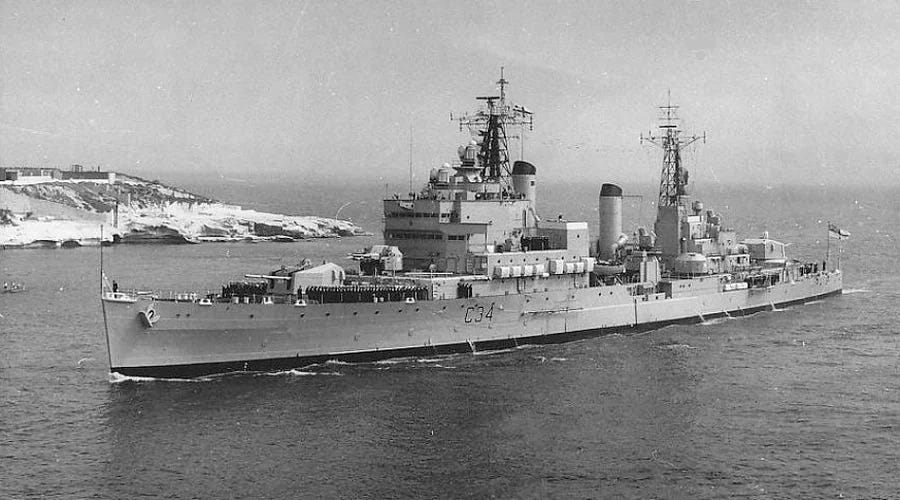
Eventually, Dad was married and living at 167 Woodlands Road in Ditton, near Maidstone in Kent.
My sister was born in February 1970.
But this story truly begins with one of the most significant moments in the history of the space-time continuum: the birth of Matthew Stewart Bourne on 11 September 1972.
Me.
From a very young age, Dad taught me how to swim. He took me to the movies, showed me how to camp and became my greatest cheerleader.
He was proud as punch, even when I took one of the many missteps that came along the way.
I know he felt the same pride in my sister and my stepbrothers, but this is my story, so let us move swiftly on.
Dad was fearless and willing to try almost anything once.
One Christmas, he decided to demonstrate how to ride a kitchen tray down a snow-covered hill.
The scene was reminiscent of National Lampoon’s Christmas Vacation, when Chevy Chase’s Clark Griswold over-lubricates his metal sled and shoots down the hillside like a rocket.
Dad began at the top of the hill in our back garden. In fairness, it would probably have been graded as a black ski run.
He launched himself down it, flew over the rockery, shot across the garden and was brought to a very abrupt stop by the back kitchen door.
He was probably fortunate not to end the day in traction.
But that was Dad.
No fear. He would try most things once, even when once was clearly more than enough.
Saturday evenings were spent together on the green corduroy corner sofa, watching Doctor Who, The Man from Atlantis, Blake’s 7, The Generation Game, The Osmonds and countless other programmes.
Sitting beside him back then was simply the best part of the weekend.
Sundays usually meant travelling to see grandparents. We would either go to Woolwich to visit his parents, Nana and Grandad, or travel to see Grandma and Grandpa.
Then Monday would arrive, school would begin again, and the weekly routine would resume.
I remember very little about what was happening in the wider world during the 1970s. At that age, my entire world was Ditton.
Birthdays were magical.
There was the Six Million Dollar Man space rocket, which Dad somehow carried beneath his arm after buying it from Gamleys at the Stoneborough Centre without me noticing what it was.
I was either an extremely trusting child or not particularly observant.
There was the year he stayed awake all night building and painting a fort for me, which I continued playing with for years.
There was the Alley Cats board game and countless other presents and surprises.
Everything back then felt like a joy.

Then Dad taught me to swim.
That would echo throughout the rest of my life. My love of swimming eventually led me to become a lifeguard, a leisure centre manager, a lifeguard trainer and a swimming teacher.
It all began with him.
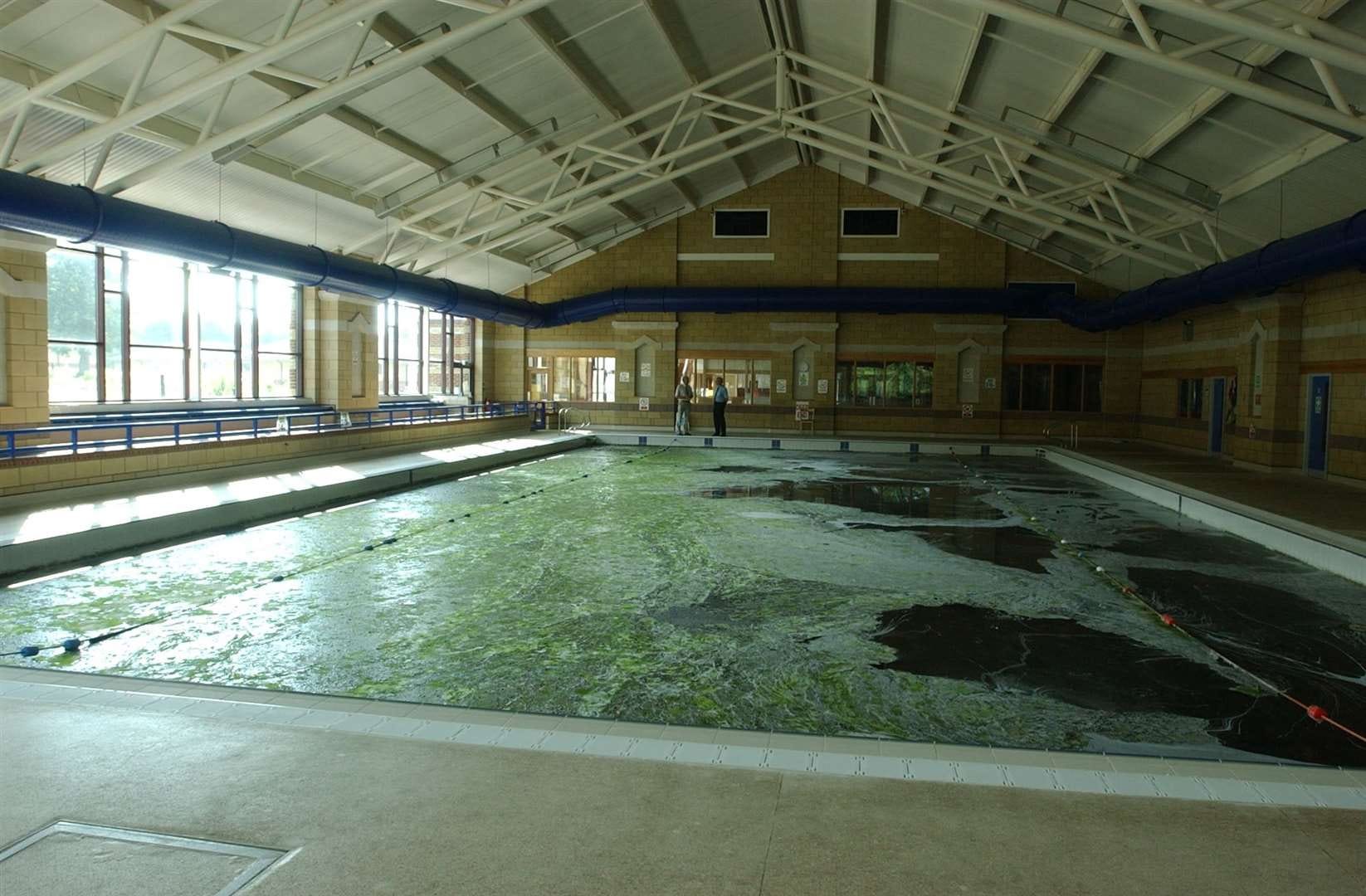
We used to swim at the pool at Buckmore Park. On one memorable occasion, we both became ill because there was algae in the water.
Things were not quite as health-and-safety conscious back then.
Later, we began going to the pools at Mote Park and Larkfield. I progressed from simply swimming to Dad teaching me how to dive.
Dad loved doing a pike dive and was especially good at it.
I generally managed to transform the same manoeuvre into a spectacularly ungainly belly flop.
Then came the moment when Mum and Dad separated, and with it one of the memories that haunted me for a very long time.
On the morning we were leaving Woodlands Road to move to Snodland, Dad went to work as usual. He worked for many years at Marconi, later GEC Avionics, at the top of Blue Bell Hill.
I was ten years old.
I stood at my bedroom window and watched him reverse his car down the driveway.
We always waved to each other from that window, but this time there were tears in his eyes and tears in mine.
In that moment, I genuinely believed I would never see him again.
Of course, I was completely wrong. We continued to see him all the time.
But that image has never left me. Even now, I can see it perfectly in my mind’s eye: Dad in the car, me at the window, both of us waving goodbye.
Until Wednesday night, it was probably the worst memory I had involving my dad.
My fears, thankfully, were far ahead of reality.
Dad went through a period of attending art classes and taking up running, and I continued seeing him most weeks or weekends.
Life had changed, but he was still there.
He remained constant.
Then Dad joined Gingerbread, a group for single parents. Through it came another of those moments that quietly changes the direction of your entire life.
We attended a picnic at Mote Park, where Dad arrived carrying what I remember as the largest picnic basket ever assembled.
It contained everything.
He could probably have opened a pop-up fine-dining restaurant right there on the grass and still had enough left over to feed the rest of Maidstone.
It was at that picnic that we met Glenda, who would become my stepmum, along with Mark and Steven, who would become my stepbrothers.
That meeting opened an entirely new chapter of family life, filled with holidays, laughter and memories.
There were Holidays to Wales, days out together and the unforgettable sight of my two stepbrothers recreating Hulk Hogan versus The Ultimate Warrior over a pair of socks.
The stakes were high.
The championship was apparently laundry.
They were fun times, and from what began as a painful period of change came a bigger family and a whole new collection of memories.
Dad loved his movies.
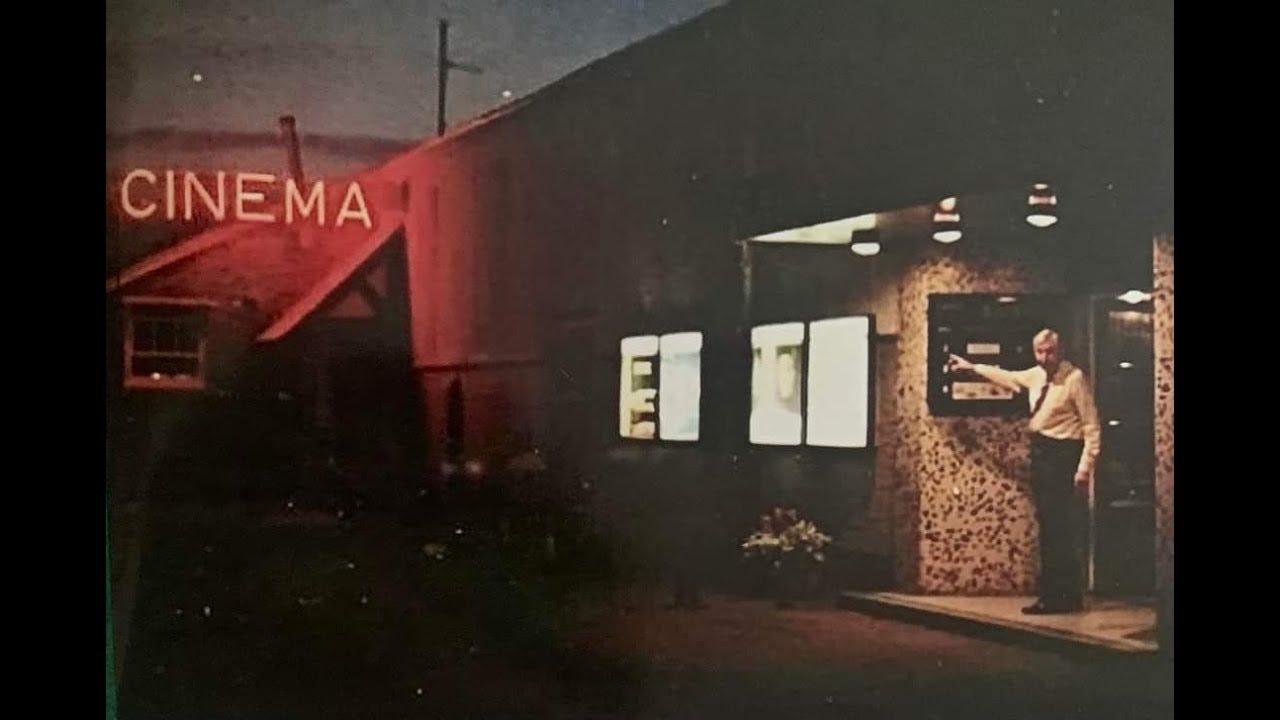
Usually on a Wednesday evening, he would take me to the Raymar Cinema in West Malling.
That cinema opened my eyes to a world that would become part of almost everything I did for the rest of my life.
We saw everything from The Empire Strikes Back and The Black Hole to the first James Bond film I ever watched at the cinema, Octopussy, along with countless others.
We loved every moment of it.
There were the double bills, the ice-cream interval and even the cat that would occasionally emerge from behind the curtains.
It was a place of complete wonder, and those evenings with Dad are memories I will always cherish.
There were also family holidays to Butlin’s, where Dad would take me to the evening film screenings.
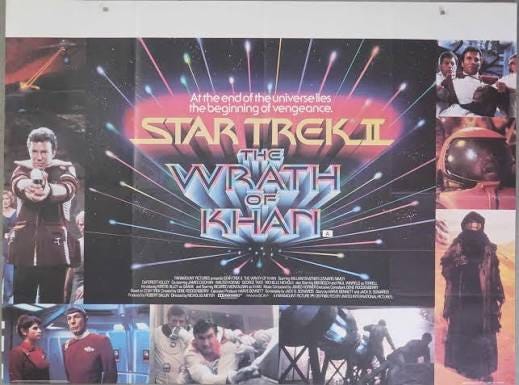
One of those films was Star Trek II: The Wrath of Khan, which was, of course, magnificent.
Even then, it felt like something special.
Then there was Who Dares Wins, a film I can safely say was entirely inappropriate for me at that age.
It was brutally violent, inspired by the Iranian Embassy siege and opened with someone receiving a crossbow bolt through the face.
For most of the first hour, I sat through what seemed to my young mind to be an endless amount of spy-thriller plotting, waiting patiently for something interesting to happen.
Then came the final twenty minutes.
The SAS launched their assault, the film exploded into life and suddenly everything was well with the world.
Dad and I were completely swept up in it.
Even now, I consider that final assault one of the most spectacular endings to an action film ever made.
More importantly, I remember the two of us sitting together at Butlin’s, absolutely loving every moment of it.
As we grew older, we began going to the cinemas in Maidstone.
My sister and stepmum might go to see something such as Footloose, while Dad would take my stepbrothers and me to something supposedly more age-appropriate, such as Night Crossing, The Goonies or whatever else happened to be showing.
We all went together to see Ghostbusters, which is, of course, the greatest movie of all time.
I could still point to the exact seats where we sat.
Except I cannot, because the cinema is no longer there.
Even as the years passed, Dad and I continued going to the cinema together. Perhaps not as often as we once had, but the tradition never entirely disappeared.
We saw Starship Troopers, the reissues of the original Star Wars films and, in one of my funniest memories, Pearl Harbor.
Do not judge us.
Dad loved war films. How were we supposed to know what we were about to witness, or endure?
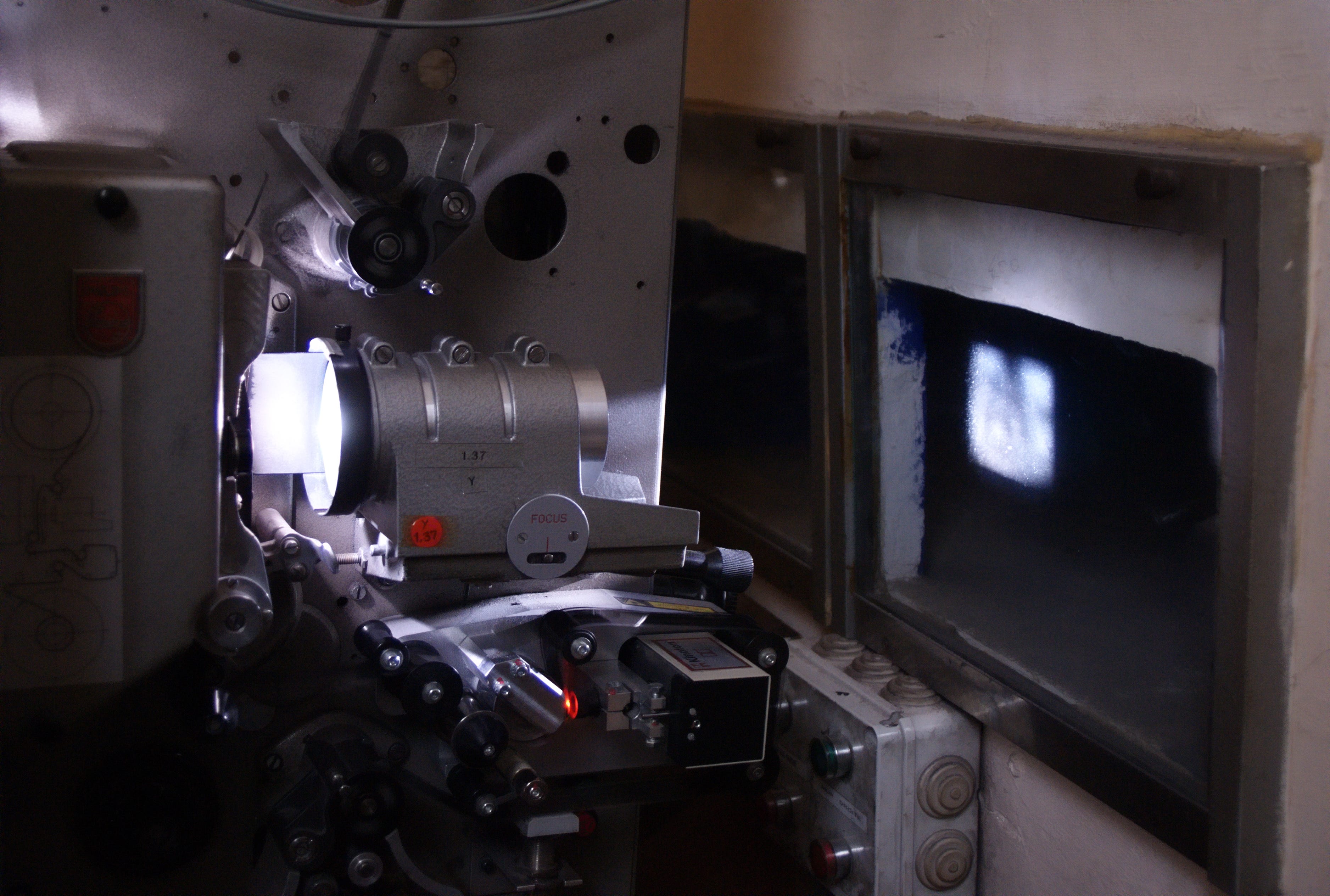
I had recently left my job at the Bluewater cinema where we watched it. When the film began, I immediately noticed that the picture was out of rack.
For anyone brought up in this digital age, films once arrived at cinemas on celluloid and had to be physically threaded through a projector.
The frames had to be aligned correctly. If the film was out of rack, the top of the image appeared at the bottom of the screen and the bottom appeared at the top.
Projection was a technical job back then.
None of these digital push-button affairs.
I promptly stood up, told Dad I would be right back and walked up the rear staff staircase into the projection booth.
I re-racked the film, passed one of the staff along the way, who did not bat an eyelid, and then calmly returned to my seat.
I told Dad what I had done.
He looked at me as though I were a complete madman.
“Did you do that?”
“Yep.”
He chuckled about it for days.
Dad continued loving movies throughout his life.
During his final years, when he could not get out and do as much as he once had, he watched them constantly at home.
We gave him access to our streaming services and even created his own profile.
Naturally, he ignored it, continued using mine and completely destroyed my recommendations.
Instead of the films I wanted to watch, my profile gradually filled with war films and westerns.
He did love a western.
There was Rio Bravo, Paint Your Wagon, Pale Rider, The Good, the Bad and the Ugly, Unforgiven and, of course, Blazing Saddles.
Paint Your Wagon still terrifies my sister because Lee Marvin singing “Wand’rin’ Star” used to make her cry.
His favourites also included G.I. Blues, Saving Private Ryan, The Longest Day, An Officer and a Gentleman, Neil Diamond’s The Jazz Singer and, somewhat inevitably, Porky’s.
But his favourite movie of all time?
Any guesses?
A sweeping western, perhaps?
A gritty war epic?
A great naval adventure?
No.
That is right.
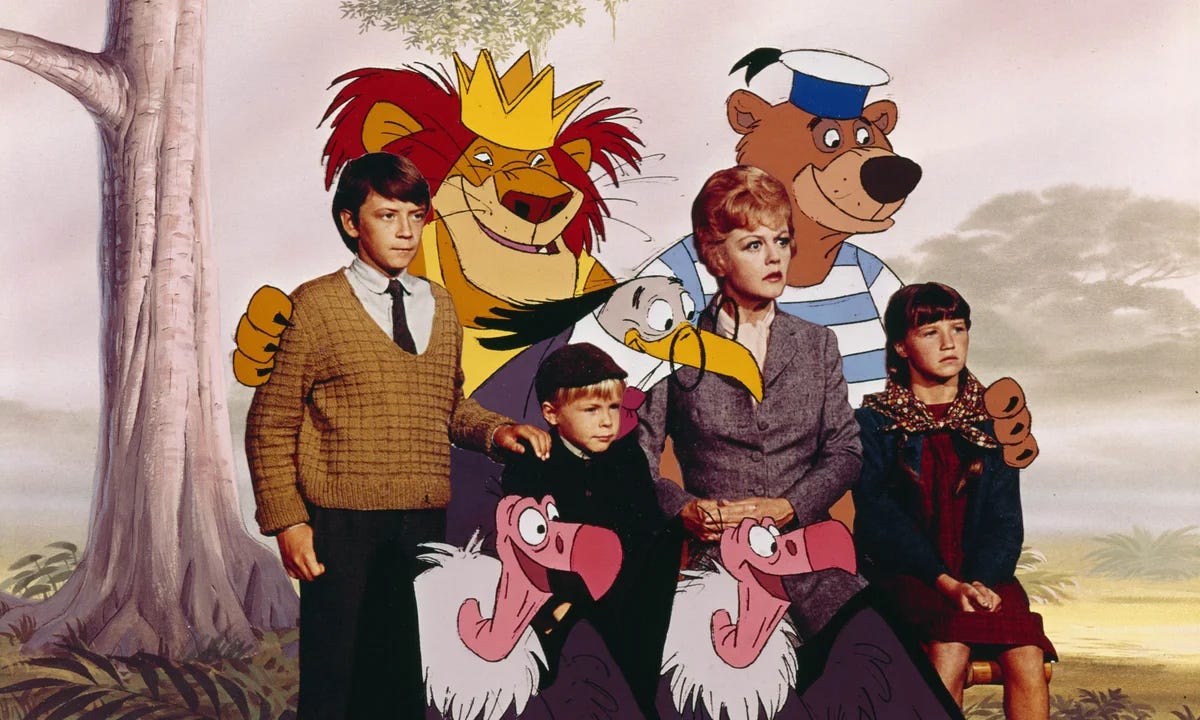
Bedknobs and Broomsticks.
As the years passed, we all grew up, married and began families of our own.
Nothing gave Dad greater joy than his grandchildren: Philip, James, Grace (Alice), Harvey, Rowan and Molly.
He simply loved being with them, hearing about what they were doing and watching them grow into their own personalities. Being their grandad was one of the greatest pleasures of his life.
He may have enjoyed seeing them slightly more when they arrived individually rather than all at once.
When they all descended for a weekend, the house became a whirlwind of noise, toys, arguments, laughter and general carnage. By the time everyone went home, Dad usually looked more exhausted than he probably had after completing basic training in the Royal Navy.
But he loved those weekends.
However tired he might have been afterwards, the noise and chaos were signs of the family that had grown around him and the lives that continued because of him.
They were another important part of his dash.
There are countless other family memories I could include, and I could probably continue writing them for hours.
But I am trying to stop this from becoming an autobiography.
That, though, is the measure of the impression Dad had on my life.
He always believed in me, just as he believed in all of us.
Whether he agreed with what we were doing or approved of every choice we made was almost beside the point.
It was our choice, and once we had made it, he was behind us.
He taught me to blaze my own trail and carve out my own path.
More importantly, he made me believe that I was capable of doing it.
I share more than a few traits with Dad, including his tendency not always to follow the rules and to bend them slightly whenever circumstances required it.
Admittedly, I have never been locked in the brig for clumping a naval officer, but that rebellious edge definitely came from him.
It was later refined by Bill Murray’s Peter Venkman, Chevy Chase’s Clark Griswold and Steve Guttenberg’s Carey Mahoney, but the original blueprint was Dad’s.
My inability to suffer fools gladly also came from him, as did my directness and occasional bluntness.
I cannot blame him for my habit of choosing precisely the wrong moment to illuminate a situation with my particular brand of humour.
That part is entirely on me.
Dad also taught me the importance of tolerance.
He believed people should be treated fairly, whoever they were and wherever they came from.
But tolerance did not mean weakness.
He also taught me not to allow people to take liberties, and that kindness should never be mistaken for permission to be walked over.
That balance, between compassion and strength, was one of the greatest lessons he gave me.
Wednesday was one of the worst days of my life.
But somehow, in the midst of it, it reminded me of all the best ones.
It reminded me what a wonderful father I had.
He was the greatest, and I will miss him more than I can ever properly put into words.
There are, however, one or two small consolations.
I might finally win a board game.
Dad always claimed he hated playing them, but whenever he did join in, he somehow always won.
I also will not have to compete with him for the Liquorice Allsorts prize during the Christmas bingo.
Every cloud, Dad.
So sleep well.
Thank you for a life well lived.
Thank you for the lessons you taught me, the wisdom you shared, the experiences you gave us and the example you set.
Yours was not a life defined simply by the dates at either end.
It was a life truly lived in the dash.
Robin “Bob” Bourne. 1941–2026
My father. My hero.
Comments
Nothing yet. Say the first thing.
Sign in to join the conversation.