
July is Disability Pride Month, coinciding with the anniversary of the Americans with Disabilities Act (ADA), which was signed into law on July 26, 1990. The movement leading to the ADA, like many civil rights movements, was initially dismissed and downplayed, then shamed and described as “impossible” when its momentum could not be stopped. While there were many protests, The Capitol Crawl in March of 1990 was a watershed moment a mere four months before the signing of the ADA. During the Capitol Crawl, activists left their mobility aids at the base of the U.S. Capitol Building and crawled up the steps, pulling themselves across concrete.
This happened during my lifetime, and it led to changes that every single one of us benefitted from. That doesn’t get talked about nearly enough. For those curious to learn more, there’s a fantastic documentary called Crip Camp (2020), which documents the lives of a handful of the many activists and protestors who fought for the Disability Rights Movement. It’s powerful, moving, and inspiring.
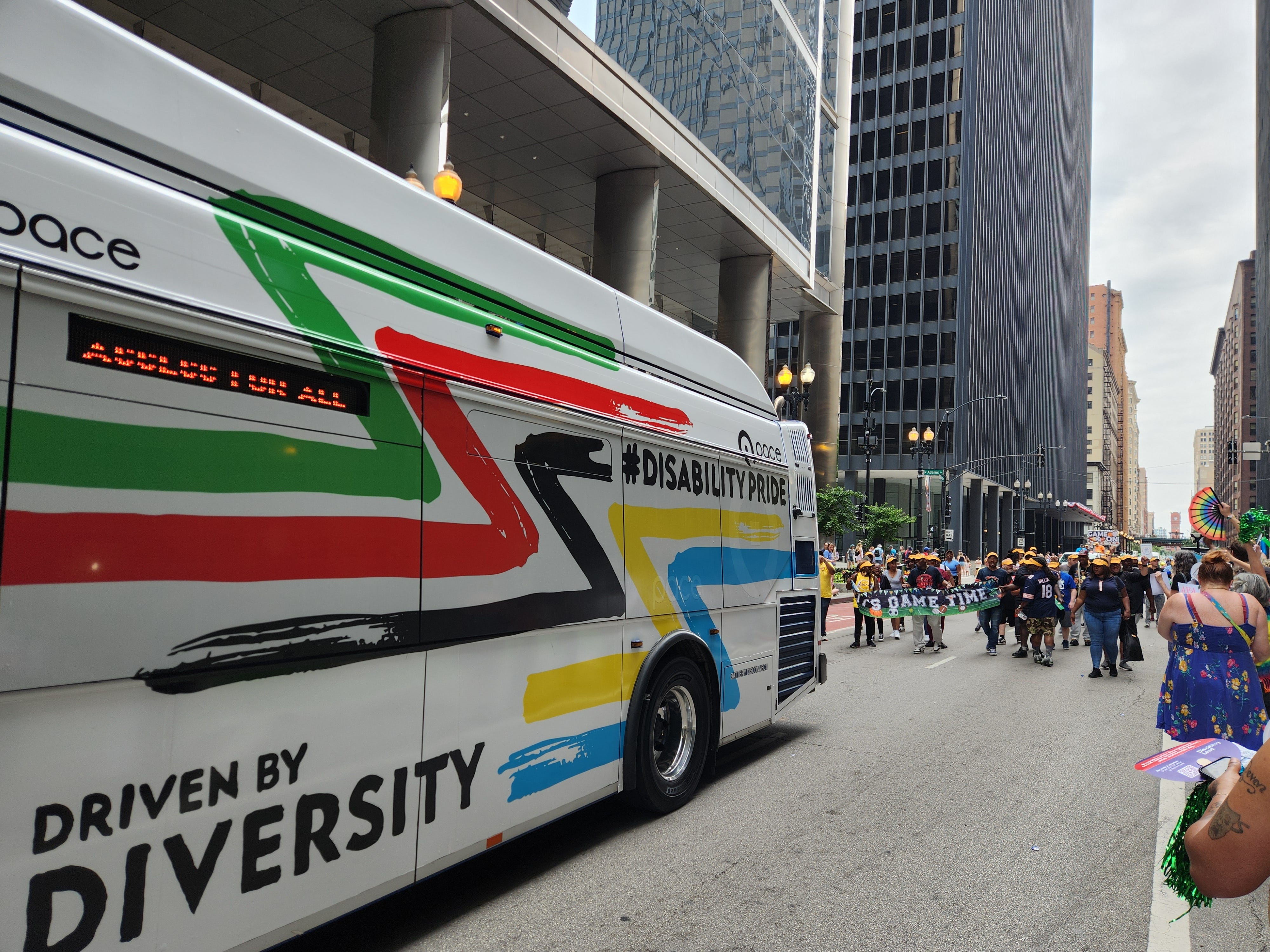
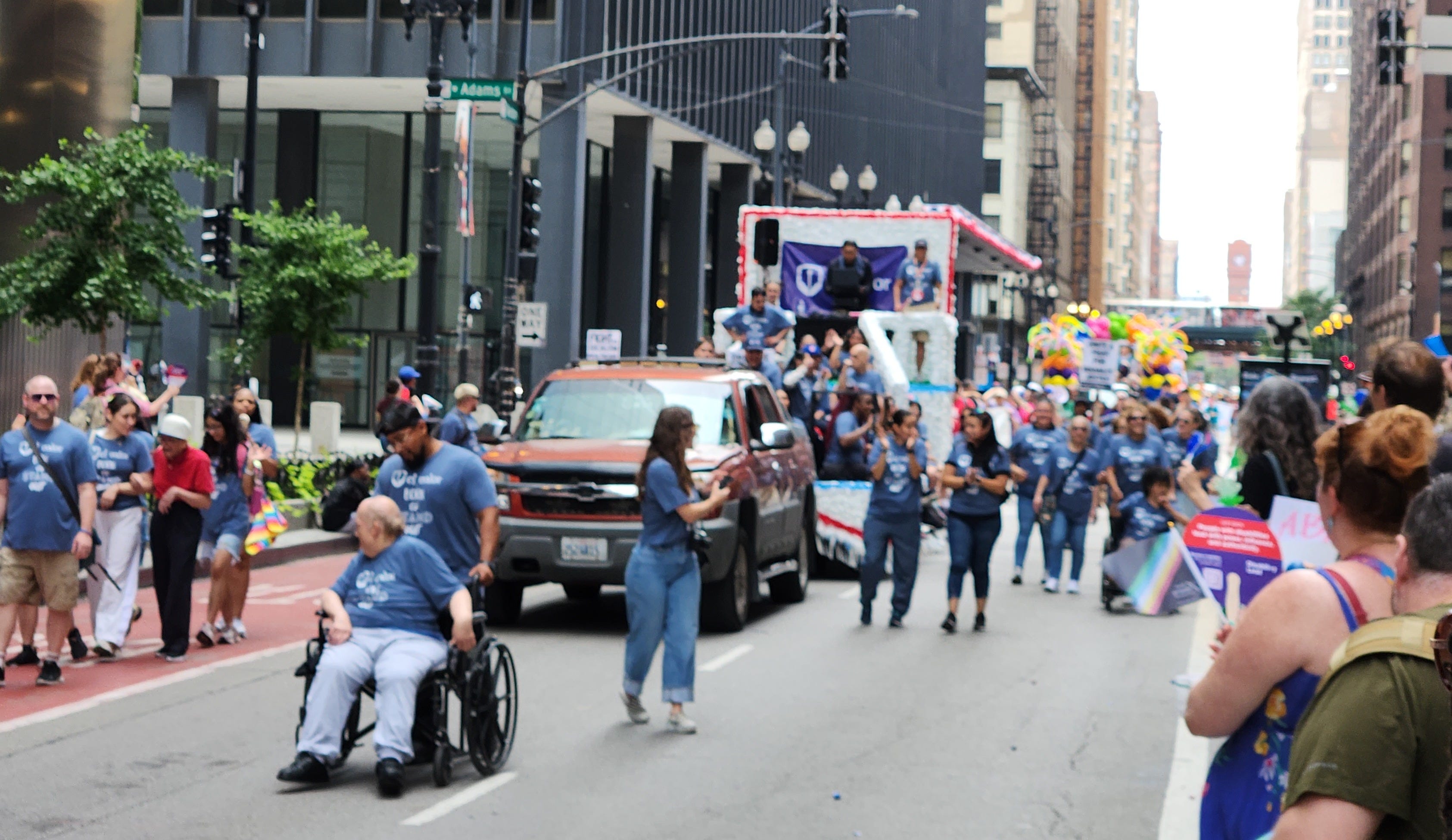
Also inspiring is that for 23 years, the Chicago Disability Pride Parade has commemorated the ADA and celebrated the over 70 million Americans who live with a disability. It’s the longest-running Disability Pride Parade in the country, one full of love, appreciation, and a forward-thinking attitude where every person has a voice in society.
It’s difficult not to get swept up in the energy, to tap into a synchronicity of spirit that’s so much more than the self. People from all walks of life and backgrounds come together sharing in a dream where everyone has equal access to resources and public spaces and has equal representation in society. It’s a dream where we celebrate each other, where we lift each other up for the benefit of all. Events like the Disability Pride Parade are where we feel that word that encapsulates so much of what the American Dream truly means: Community.
The official theme for Disability Pride Month this year is, “The World Works Better With Us.” It’s a powerful statement, but more than that, it gets to the heart of what inclusion and giving everyone a voice means—we all benefit. From The Arc’s National Counsel of Self-Advocates, who chose the theme, “When people with disabilities are included, respected, and supported, communities work better for everyone. That includes schools, workplaces, healthcare, transportation, and public life.”
Absolutely everything.
Art and creativity are always a social movement, and the flow of ideas and enrichment only grows tenfold when we open the door for everyone to participate. We speak our minds and hearts through our art. We empathize with, understand our differences, and celebrate each other through pieces that move us with love or confront us with our worst fears. That imperfect, messy, beautiful art drawn on leftover sketch paper, stapled together in a zine, or spray-painted on the walls of a subway station is a beacon that unites us. It’s raw, real, ignited with passion.
As tech magnates and big corporations wield control over more and more of the digital space, indie artists and readers are pushing back. The American Booksellers Association reported this year that there were 31% more indie bookstores in 2025 over 2024. This is part of a trend that has grown steadily since 2020. In the same breath, zines are reportedly making a comeback, bringing back that unique, counterculture, entirely human voice that can easily get lost in the algorithm.
I say it again, art and creativity are always a social movement.
One of the best things we can do, as creators, is elevate the voices of others. If we’re truly all in this together, grinding out our day jobs, so we can release our spirits at night, we need to show up for each other. We step outside of our creative office or away from the canvas and show up for each other. It can be as simple as showing support on a fellow artist’s post online or checking out an author friend’s book at a library. For those who have the power and means to show up for the community, it can look like purchasing a work of art from a bookstore or art gallery. It can mean sharing indie art with family and friends during holidays and birthdays or taking time out of one’s busy schedule to check out a reading or an art show.
We participate in a digital space that is deceptively lonely and yet warm and communal all in the same scroll of a social media feed. Because this digital space is so complicated, those little moments where we show up for an artist with appreciation or acknowledgment mean everything. Keep sharing your beautiful works of art and participating in making the world a more beautiful place, but don’t forget to hype up another creative every now and then.
Because this is how we win against the soulless corporations who want to run our books through a shredding machine in order to train their costly AI platforms. Not through anger, hatred, or vengeance. But through the strongest bond of all—community.
Did you enjoy reading my adventures to third spaces between issues of Because We Can? Books & Boards has officially moved to its own list. Read the most recent Books & Boards issue, where I visit Boekhandel Dominicanen, here:
Adventure #6: Boekhandel Dominicanen
P.S. If you like this newsletter and want to pay it forward, there are five ways to show your support.
Hit the like button—it’s quick, easy, and increases visibility for “Because We Can”
Leave a comment. Just say “hi” or tell me about your current work-in-progress. I love hearing from readers.
Buy a digital copy of MACHINE: A Cybernetic Fairytale on Itch.io or Amazon.
Forward this to a friend with an invitation to sign up: https://scottwaldyn.substack.com/about
Hit the ReStack button, and share with other Substack users.
P.P.S. Here are the latest happenings in my neck of the woods:
The Phantom 2040: A New Shadow webcomic from Comics Kingdom ended recently, and I reviewed episode 20 here.
My YouTube Channel is slowing coming together, housing playlists for my work at Chronicle Chamber and The Batman Universe, as well as original book reviews tied to my Books & Boards adventures.
No AI is ever used in the writing of Because We Can.
Comments
Nothing yet. Say the first thing.
Sign in to join the conversation.