
There was a time, before the 18th century, when work was slow.
Want to mill flour? Something had to turn a wheel. Maybe a human. Maybe an animal. Maybe a river.
It was clunky. If you and I looked back at it now, it would be wholly unimpressive.
Then, in the 1700s, a funny thing happened. Steam power arrived. Thomas Newcomen built the first working engine in 1712. James Watt made it genuinely useful in 1765.
Over the course of a few generations, we learned to burn coal, boil water, and turn that into far more power than muscle could ever produce. We could turn wheels, then gears, faster. Production no longer had to sit next to a river. And this little thing called the Industrial Revolution was upon us.
Here’s the part I find most interesting: nothing “new” was happening. The physics was always there. We just figured out how to reach it.
Friends, we’re in the same spot right now with AI.
I was prepping for a talk on AI and faith a couple of weeks back, and it hit me how closely the AI revolution tracks the Industrial Revolution.
Both start with a hard constraint on output.
Steam: physical work, limited by muscle.
AI: knowledge work, limited by cognition.
Both sit on top of a massive reserve of stored potential.
Steam: coal.
AI: the accumulated body of human knowledge.
Both needed a tool to convert the reserve into work.
Steam: the engine.
AI: the models.
Both create leverage instead of headcount.
Steam: not more people, better engineering.
AI: not more people, better workflows.
Both reward the early adopter.
Steam: the mill with steam beats the mill without it.
AI: the AI-forward company pulls away from the competition.
Both move you from doing to directing.
Steam: from doing the work to running the machine.
AI: from doing the work to directing the tool.
There’s one more parallel, and I’ve been feeling this one myself.
Pre-steam work was capped by physical capacity. Pre-AI work was capped by hours. I used to run out of day, and that was that. I was done.
Not anymore.
The work is accelerated enough now that I can finish in a few hours what used to take a day.
So what do I do with that? I do two or three days of work in a single day.
Cool, right?
But is it?
What I’ve lost is the time I used to spend marinating on an idea. Wrestling with it. Turning it over on a walk or in the shower or on the drive home.
When I can ship a deliverable in minutes, is it actually my most developed thought?
That, friends, is what I’m wrestling with. Ironically.
Steam took decades to work its way through manufacturing. AI is moving faster. Years, not decades.
The way knowledge workers worked on 1/1/22 will look nothing like 1/1/28. Six years. Wild.
So the challenge before all of us is discernment: when to deploy this tool and when to leave it alone. I’m certain the answer isn’t “deploy it 100% of the time.”
What’s at risk is a kind of mental exhaustion most of us have never had to manage. Just because we can move faster doesn’t mean we always should.
Hold both of these at once with me: The AI revolution is the biggest opportunity of our careers, and it’s also the fastest path to burnout we’ve ever built.
Here’s your one question before you close this: what did you used to think about that you no longer make time to think about?
Protect that this week. Put it on the calendar if you have to.
As always, if you’d like to chat about topics like this, I’m here for you: scott@scottmonday.com.
I recently shared my Audacious Guarantee talk with a local Rotary Club. I think it went well. I didn’t curse, which was a win. Check it out!
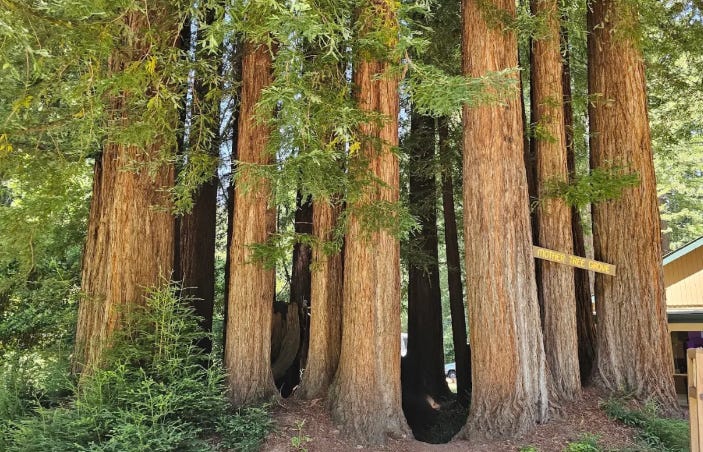
Things I've Enjoyed Lately: This year marked my family’s 18th year at family camp at Redwood Christian Park in the Santa Cruz Mountains. This year had its share of distractions back home, but our family, along with hundreds of others, treasures that place. Fair warning: take your kids once, and they’ll never let you not go again.
Comments
Nothing yet. Say the first thing.
Sign in to join the conversation.