
“An aging tour guide faces an existential crisis when an internationally successful fantasy TV show begins filming in his remote Scottish village.”
That was our logline for Sean Dunn’s debut feature, The Fall of Sir Douglas Weatherford, which, following its Rotterdam international premiere, is having its US premiere at the San Francisco International Film Festival tomorrow. As a logline, it was a good one, but it would prompt the next question: “What will be the film’s tone?” One can imagine an overly broad comedy with this premise while terms such as “existential” hinted at something darker and more interior. Yes, there was Sean’s very good script to hand to people, but these days, you need to do more early on to convey a director’s vision, which is where a lookbook comes in.
We were going out to actors and financiers in 2022 when we asked Sean if he could think about a lookbook that would visually convey the specific themes and references he had been accumulating in his head over the years he spent on the script. (Producer Alex Polunin originated the project with Sean, I joined in late development, and Jennifer Monks completed the producing team before the start of pre-production.) What Sean and Shakti Bhagchandani — the film’s editor and Sean’s wife — delivered knocked us out and proved to be a compelling document as we continued to pitch the film and also source department head collaborators. One potential financier who argued for the film at her company wrote me in an email, “This lookbook will forever live on my desktop screen as an example of excellence.”
When I edited Filmmaker Magazine, I commissioned an article by Meredith Alloway (whose sly horror comedy Forbidden Fruits opened recently) on the role of the lookbook, and I was able to convince a few filmmakers to share examples of theirs. In that spirit, I’m sharing some images from Sean’s here, which I hope will help filmmakers as they grapple with their own visual presentations.
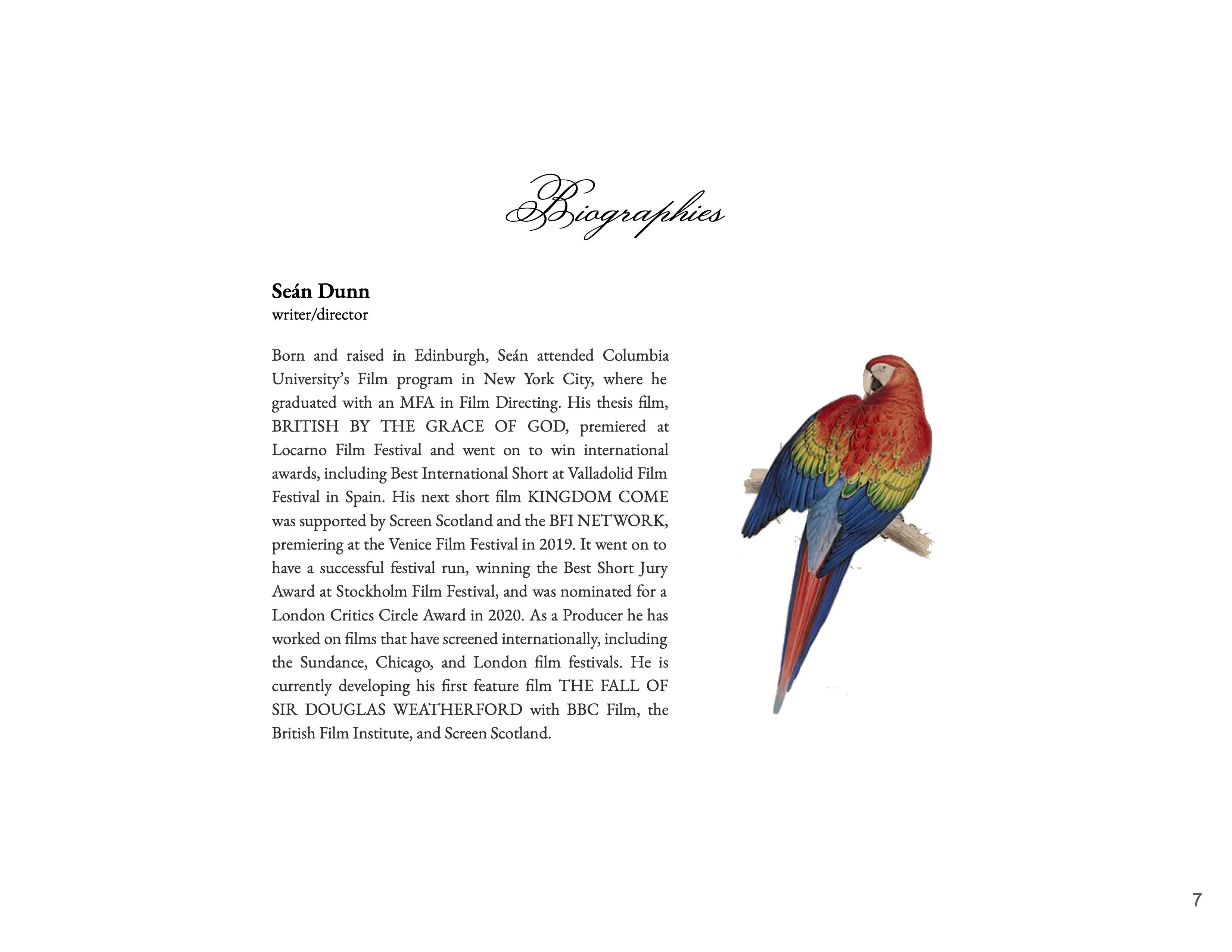
Something different about Sean’s lookbook is its length — 78 pages! The first few pages are mostly text, but Sean and Shakti used a lot of white space and graphics as they delivered the obligatory synopsis, director’s statement and bios. Here, the bird refers to Weatherford’s filmmaker within the film, a videographer and amateur bird watcher (Lewis MacDougall) who is making a documentary about Kenneth, our tour guide protagonist, played by the mighty Peter Mullan.
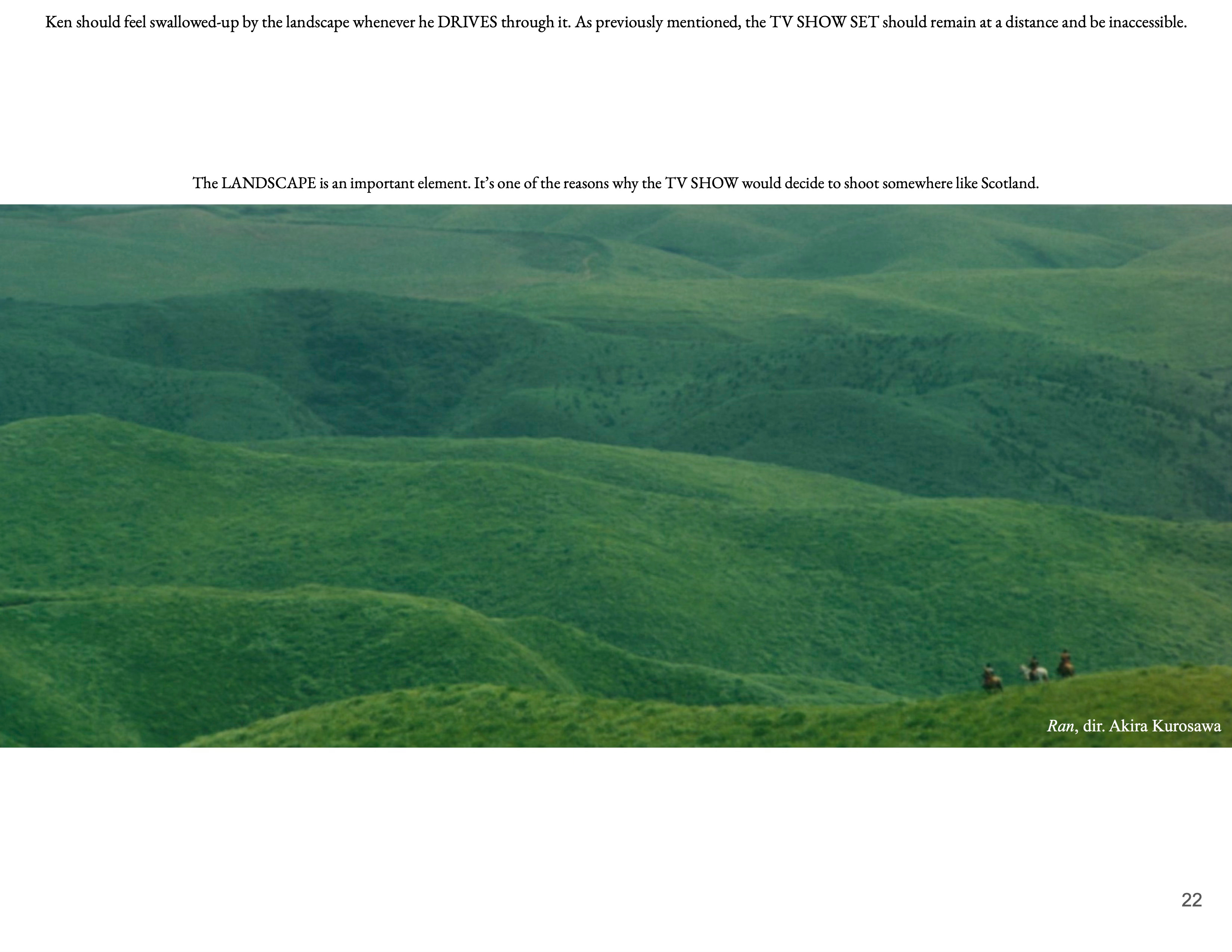
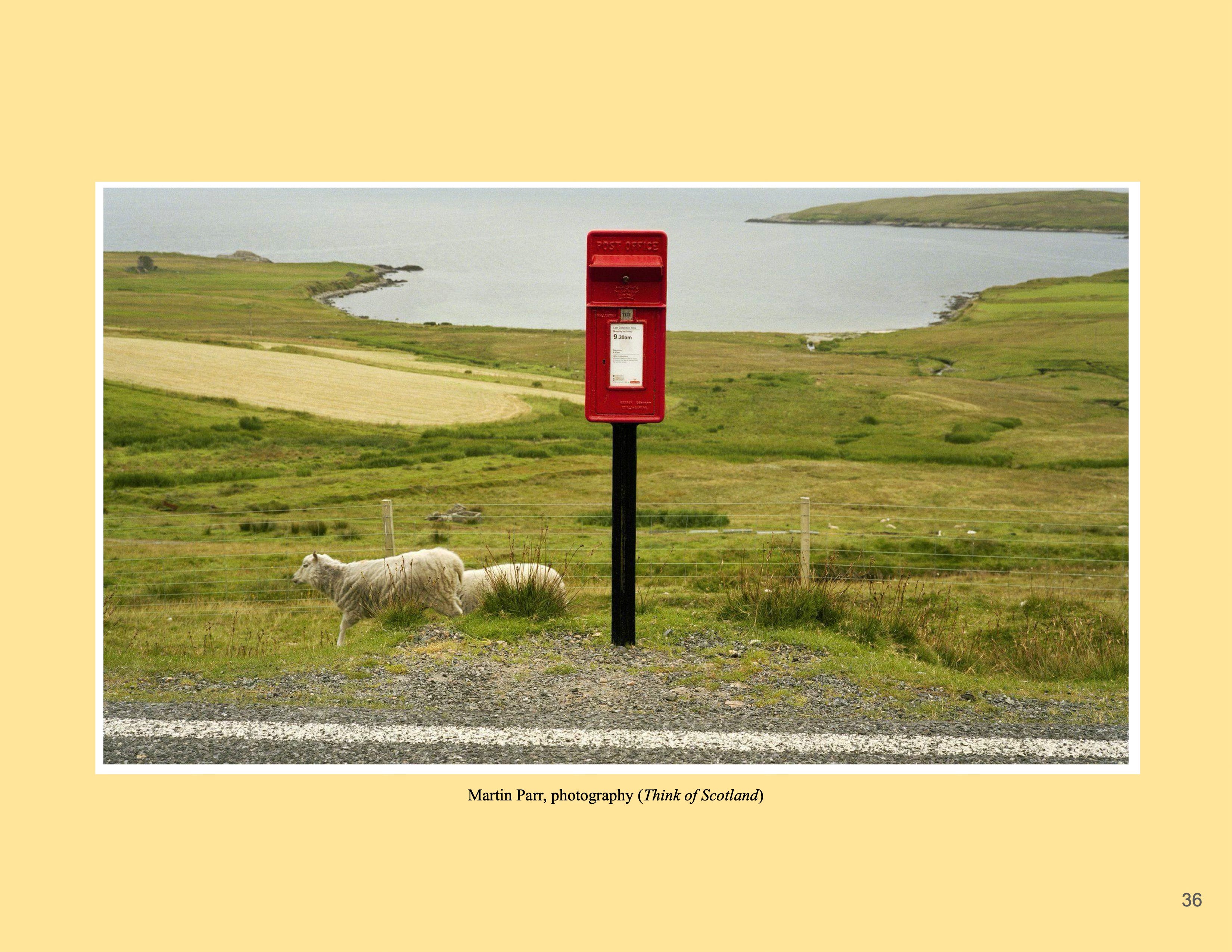
One of the reasons so many fantasy TV shows and movies shoot in Scotland is because of the spectacular landscape. Kurosawa’s Ran is a dazzling landscape reference image and also, as Sean has presented here, a somewhat abstract one. Which then is then juxtaposed with a photograph by the celebrated Scottish photographer Martin Parr, who captures, as Sean does in the film, the manmade (and animal) intrusions that can make such lush landscapes odd, funny and sometimes simply weird.
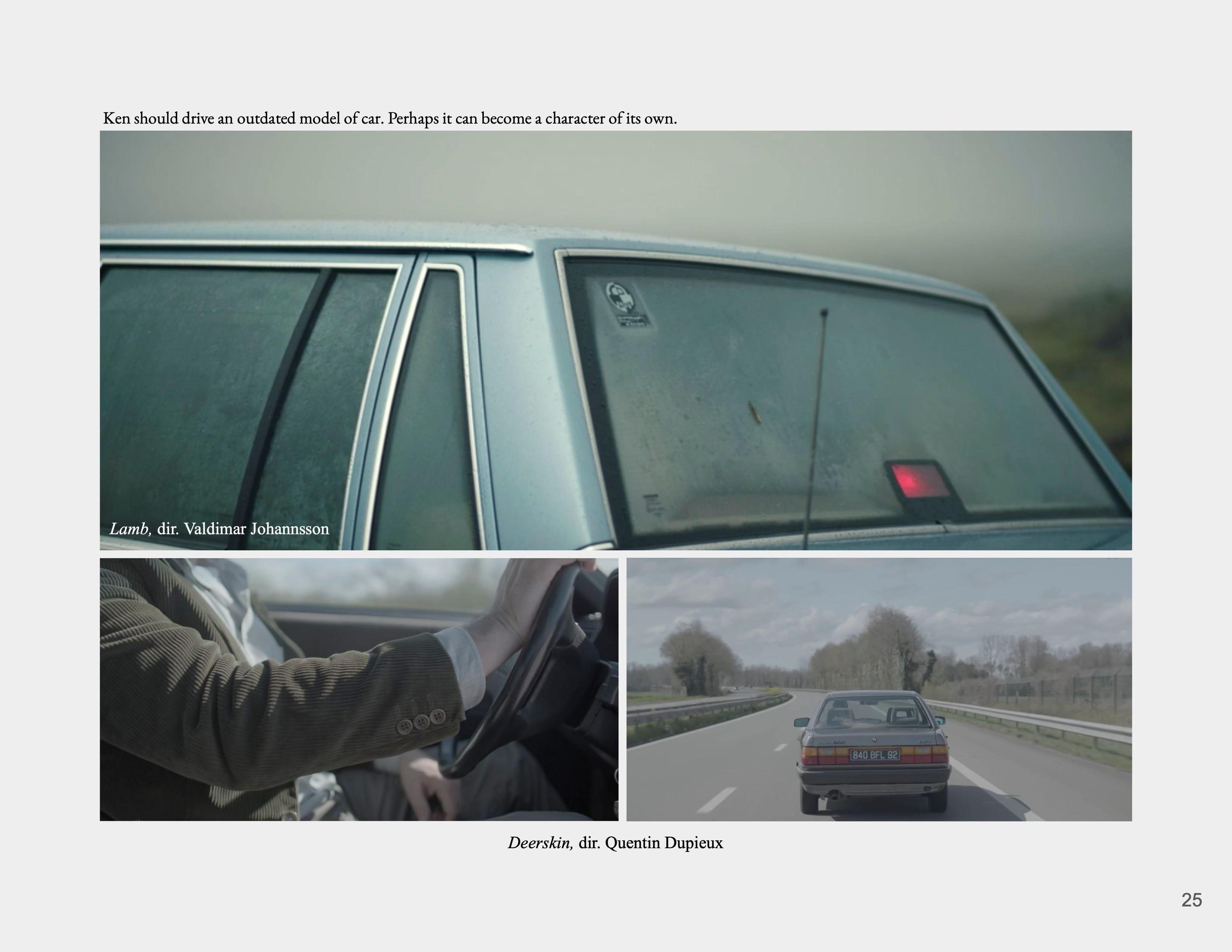
There’s a fair amount of driving in The Fall of Sir Douglas Weatherford as Kenneth travels from home to the visitor center where he extolls the history and Enlightenment philosophy of Sir Douglas Weatherford, a fictional amalgam of David Hume, Sir Walter Scott, Benjamin Franklin and Adam Smith. The car, an old model, becomes an extension of Kenneth — a character of its own, as Sean notes alongside these above images from Quentin Dupieux’s Deerskin.
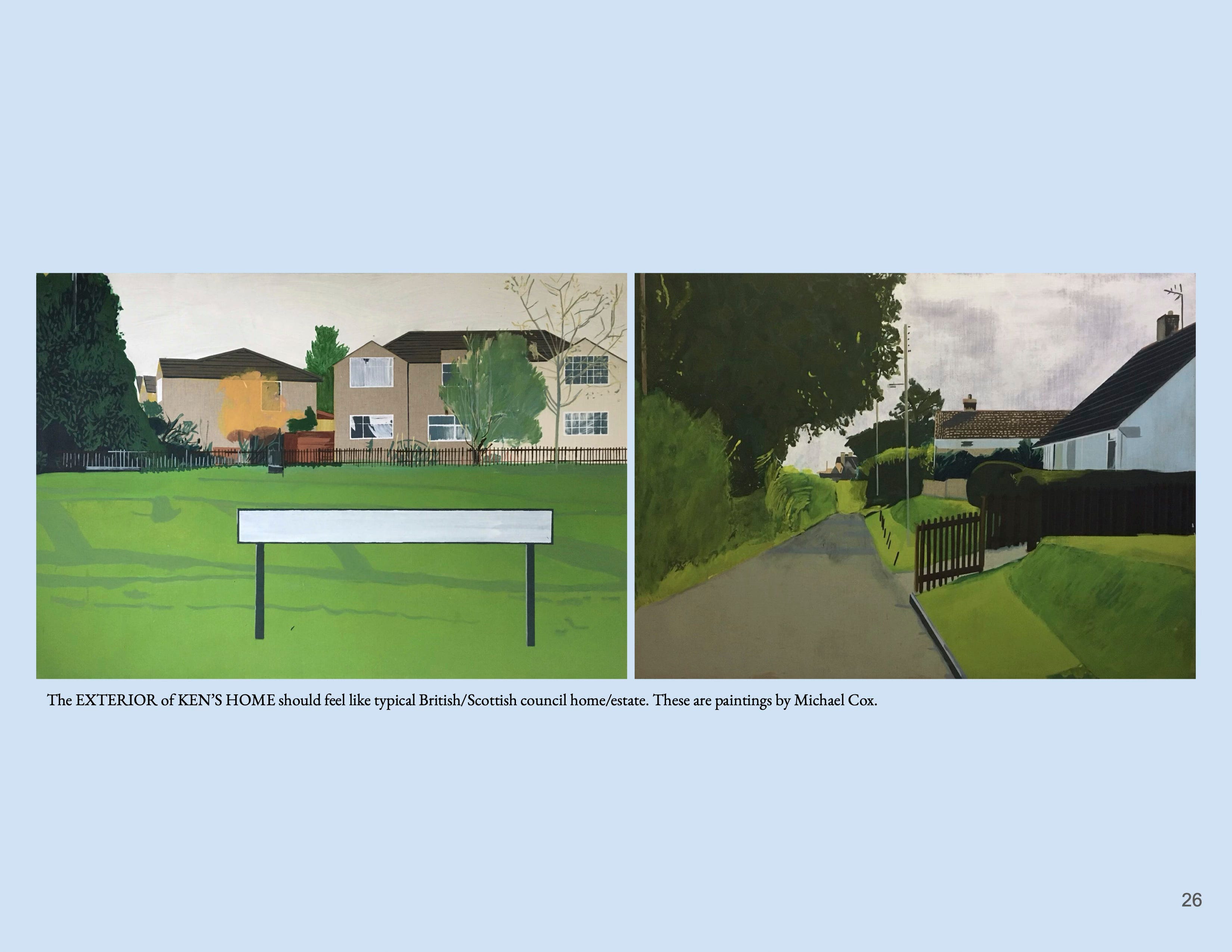
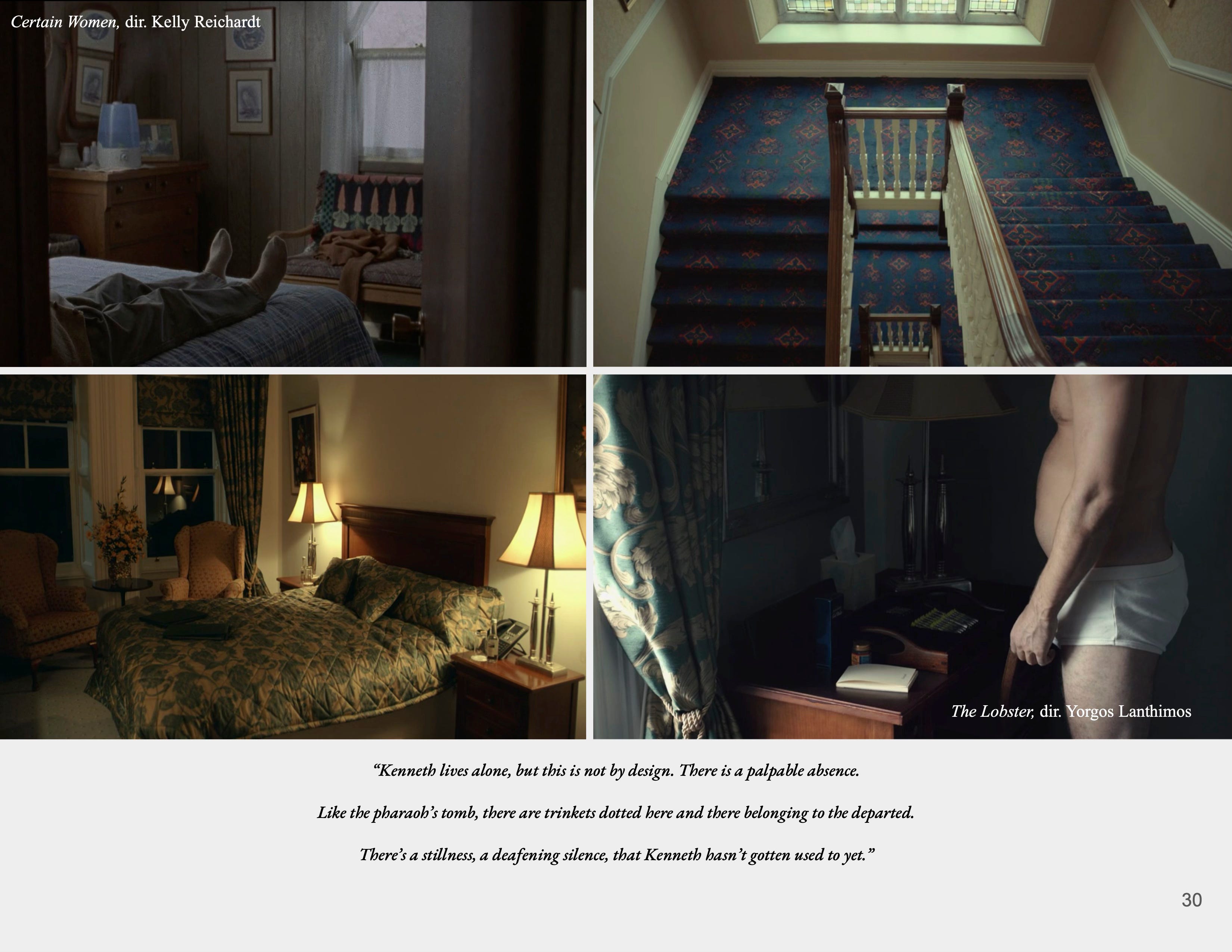
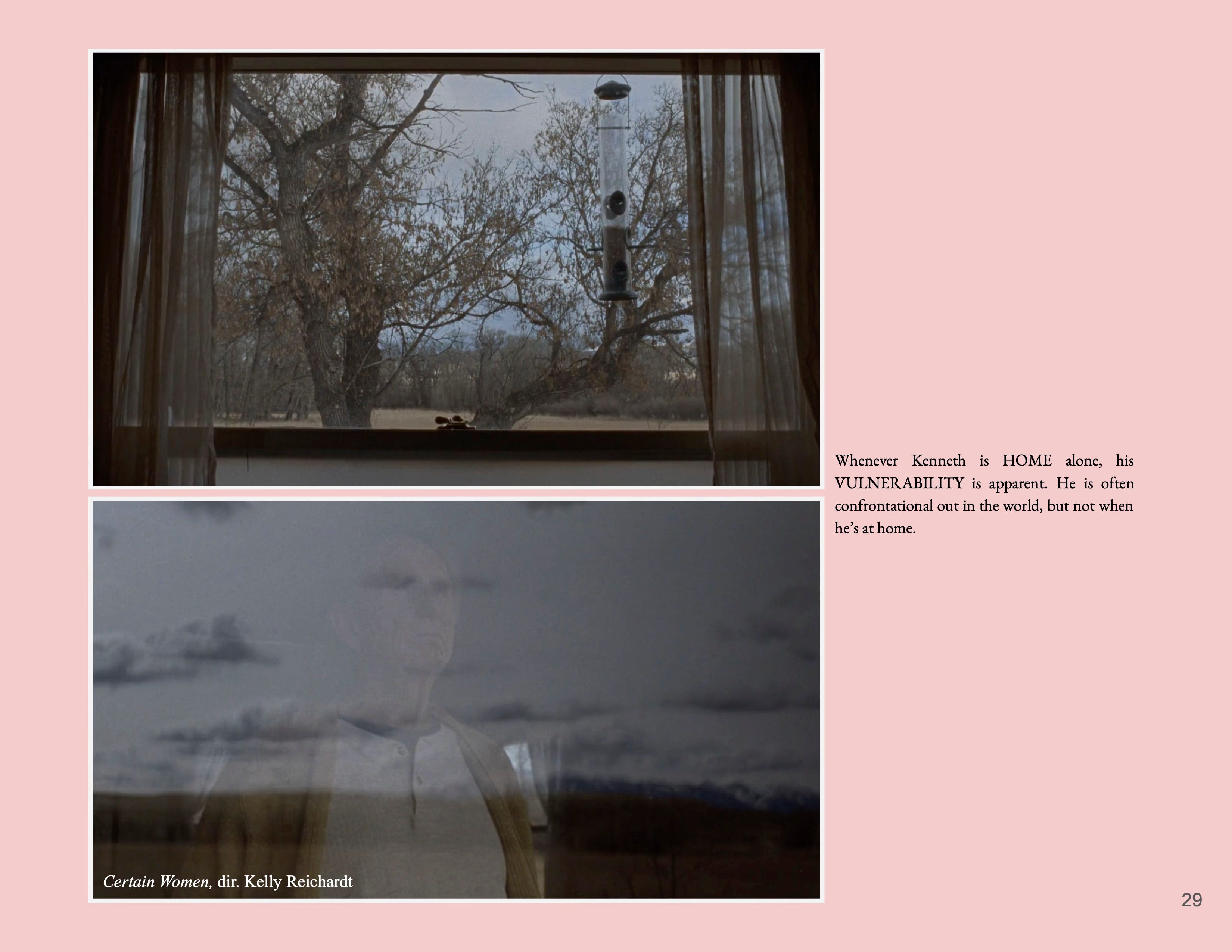
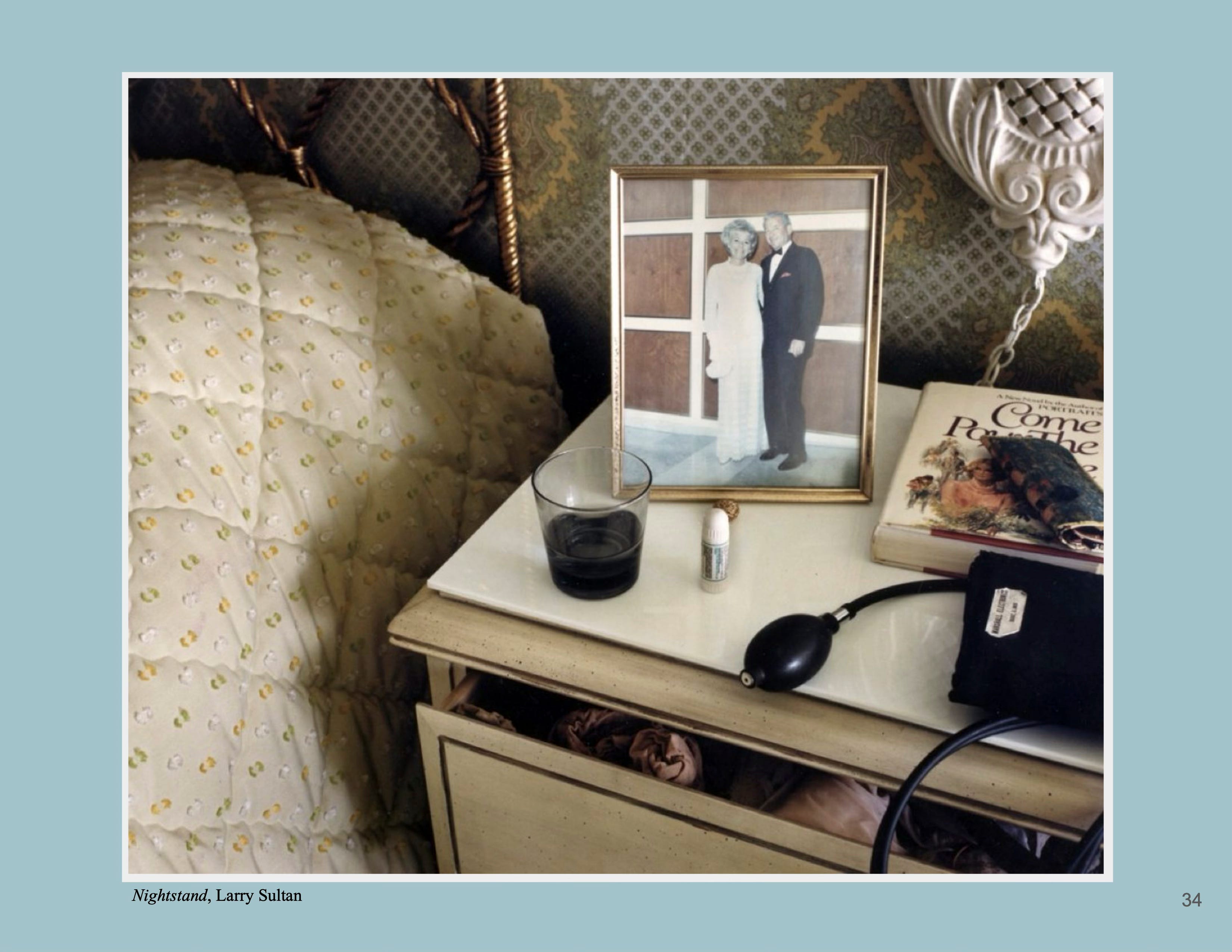
Kenneth is a widower, his wife having died just over a year ago, and the film finds him in that moment when the rest of his world has “moved on” while his own grief still lingers. Images from artist Michael Cox, filmmakers Kelly Reichardt and Yorgos Lanthimos, and photographer Larry Sultan were helpful as Sean worked with his various collaborators, including DP David Gallego, production designer Jamie Lapsley and locations manager Richard Brough, to make the home an emotionally resonant site inflected with the past’s joys and sorrows.
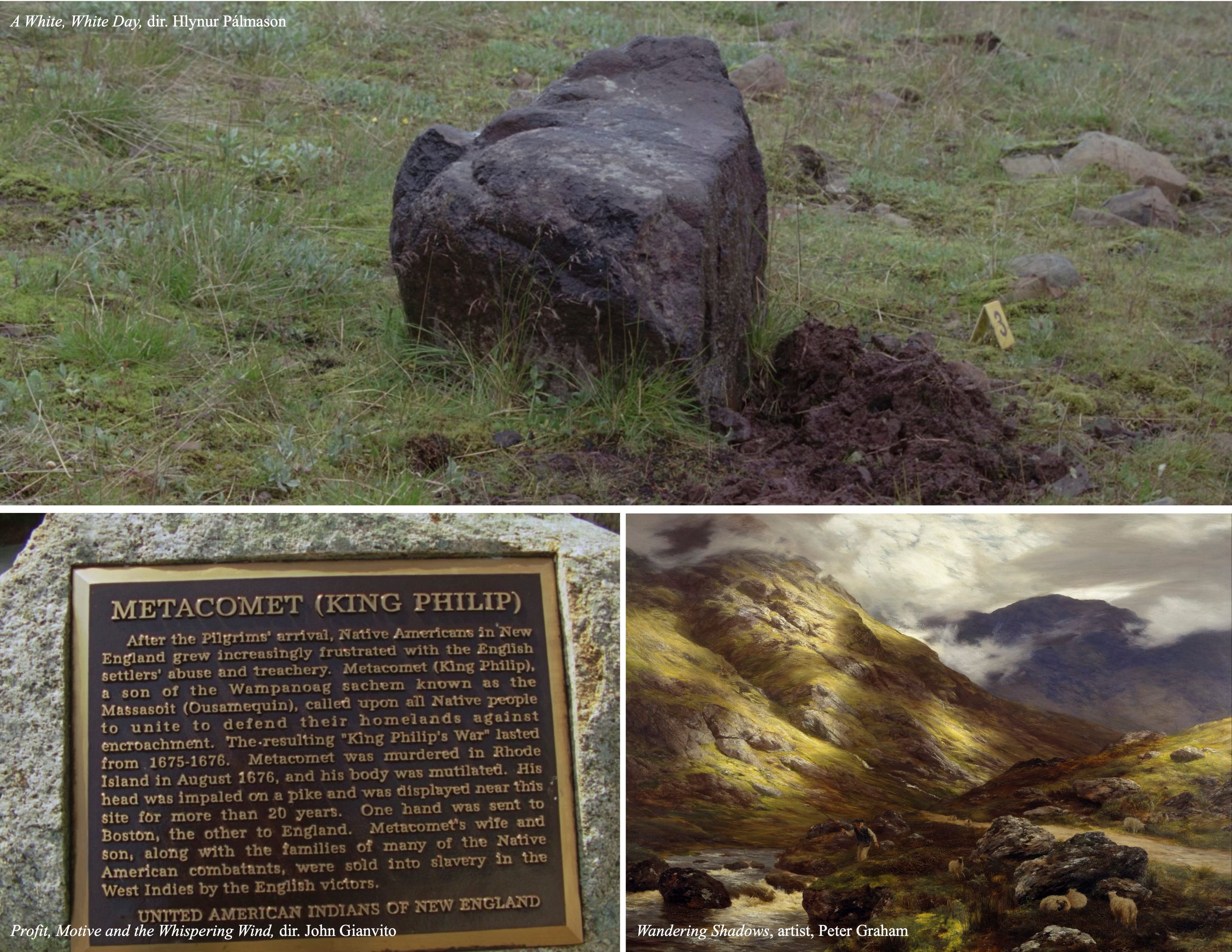
One of the comic leitmotifs in Weatherford are shots of the various boulders Kenneth tells his bemused tourists that the philosopher had placed along his walking routes, giving him places to sit as he wrote his various works of political philosophy. In some scenes, the boulders are specifically referred to in connection with Weatherford’s various treatises. In others, they are comically incongruous elements as the workers of the fantasy TV show, The White Stag of Emberfell, go about their days. Here, images from directors Hlynur Pálmason, John Gianvito and artist Peter Graham illustrate both the historical accuracy and symbolic possibilities of this device.
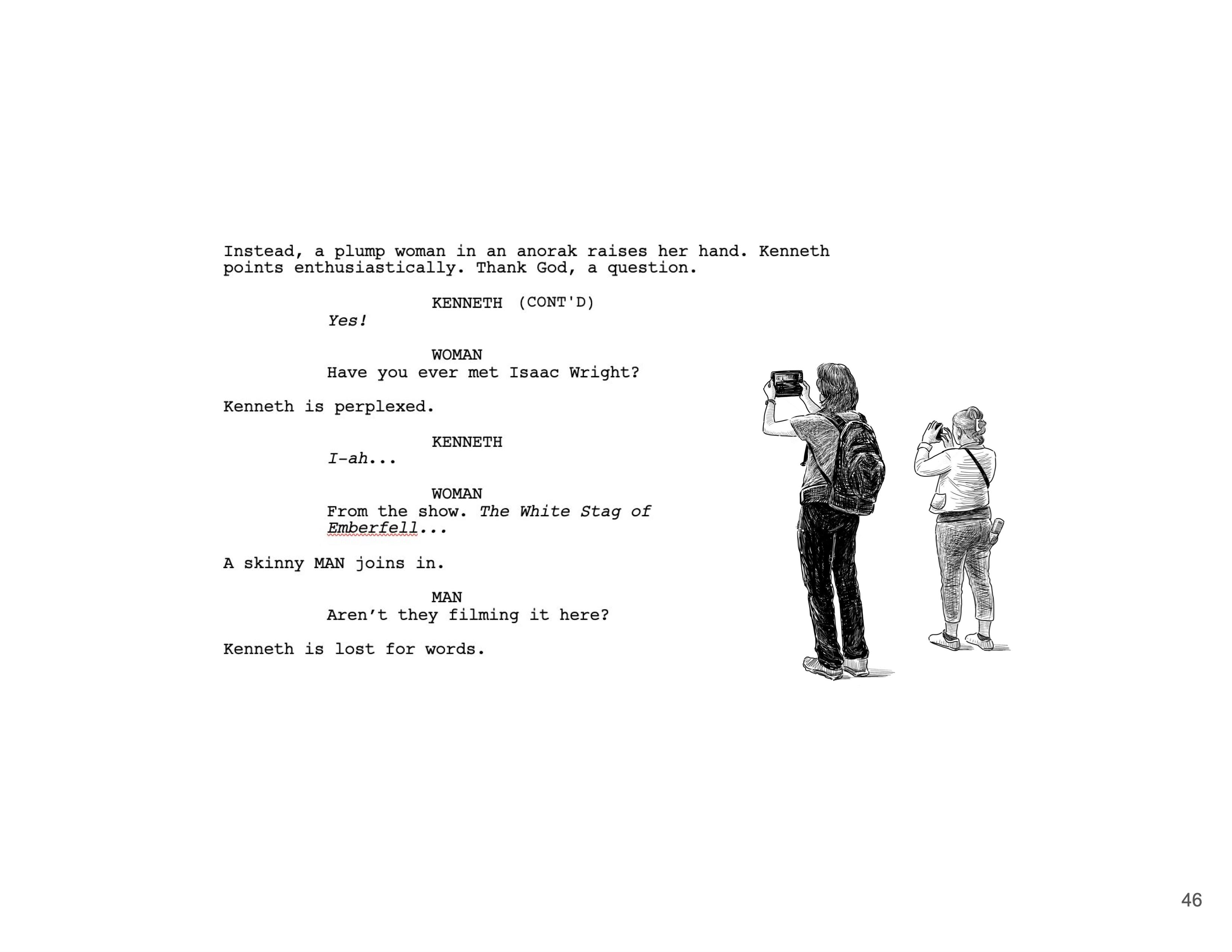
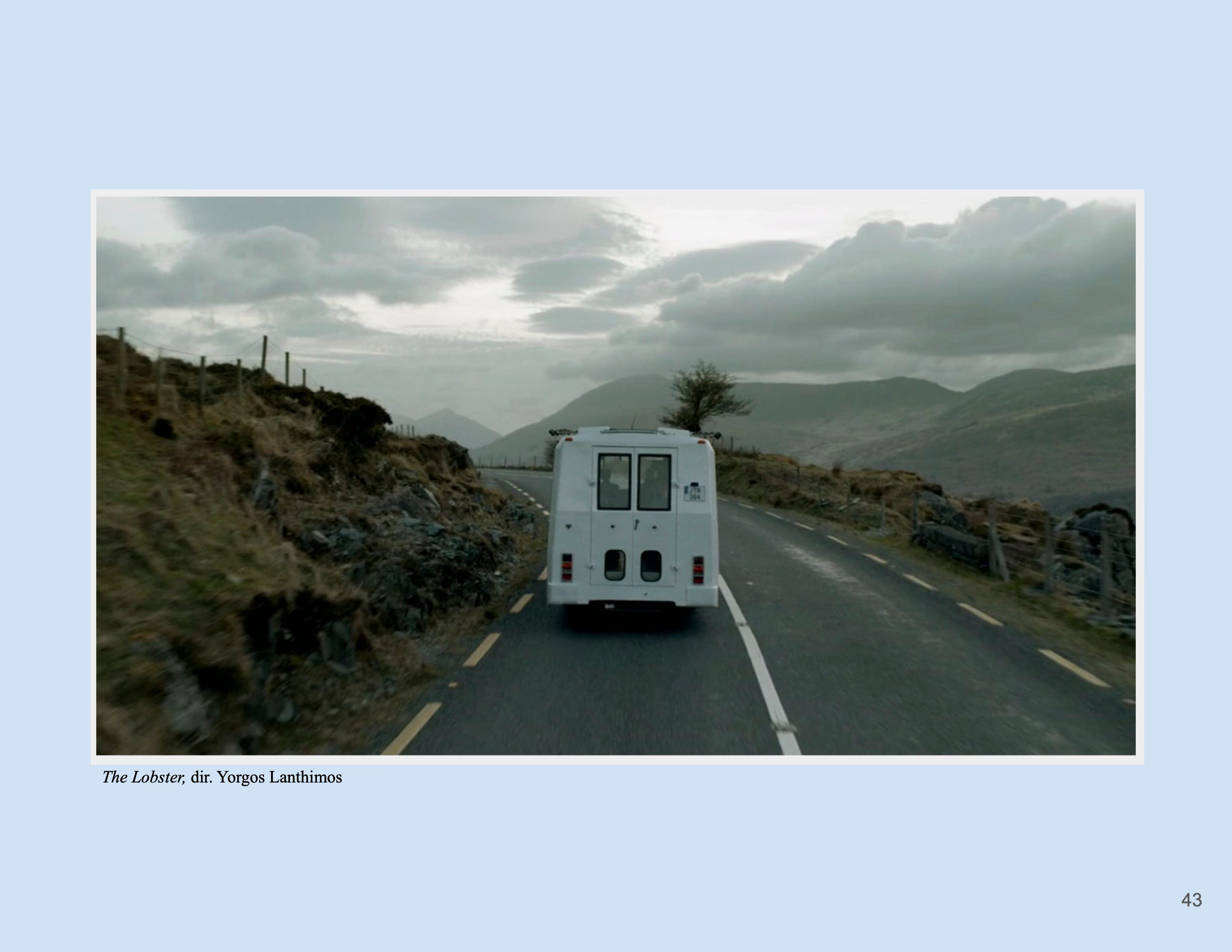
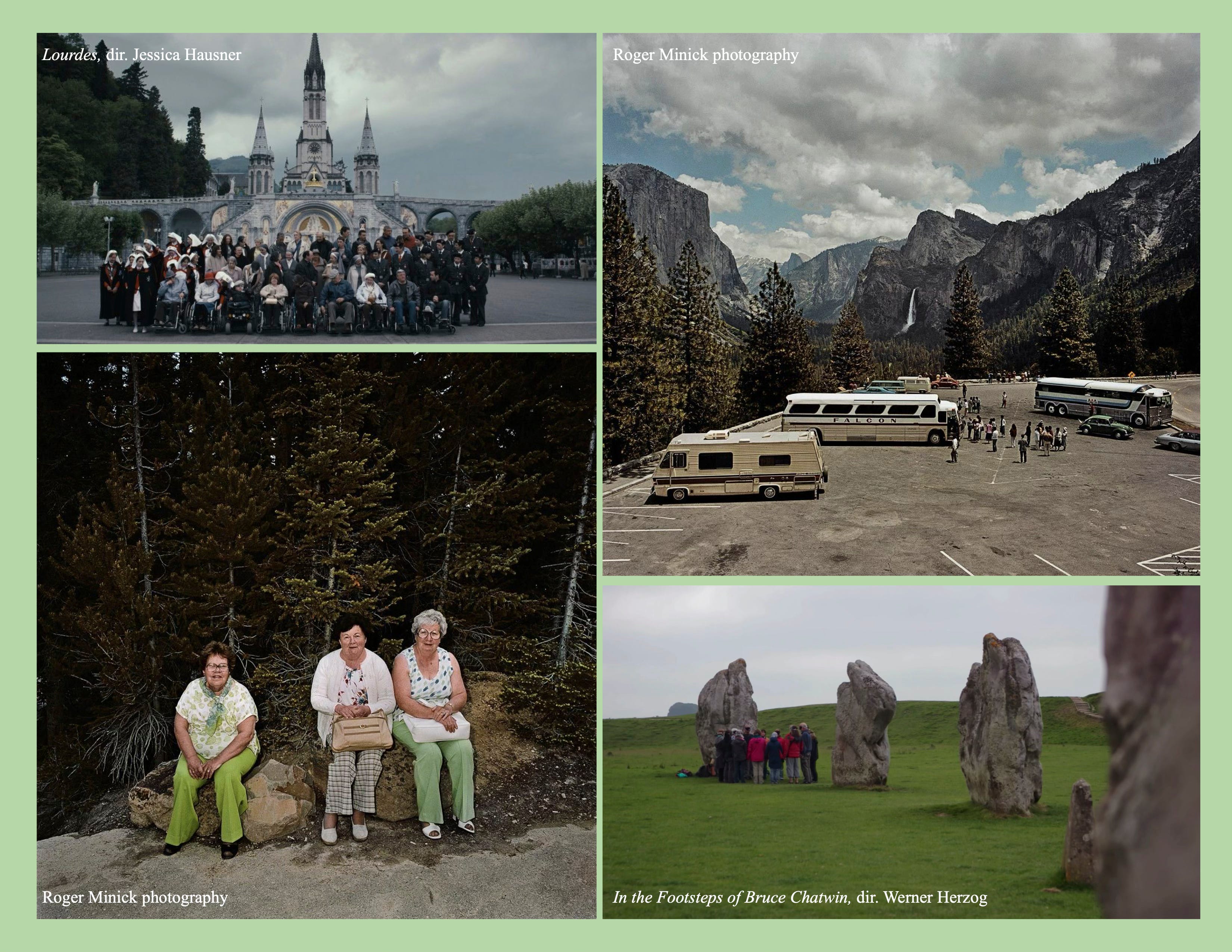
As a tourguide, Kenneth shepherds busloads of tourists around his town, narrating along the way the history of Sir Douglas Weatherford. It’s on one of these tours that he learns from a tourist about the Game of Thrones-like fantasy TV show, The White Stag of Emberfell coming to town to shoot its third season. The tourist wants to know, has Kenneth ever met the show’s handsome lead, Oscar Wright? (During pre-production, Oscar Wright became Oscar Sorenson, played by the brilliant Norwegian actor Jakob Oftebro.) Occurring early in the film, it’s the first moment that Kenneth suspects that his well-ordered life protecting the legacy of Weatherford could be imperiled. As he does throughout the lookbook, Sean included pages with bits of dialogue that set up the surrounding images, which, in this case, are pictures of a tourbus and then of tourist groups by filmmakers Yorgos Lanthimos, Werner Herzog and Jessica Hausner and photographer Roger Minick.
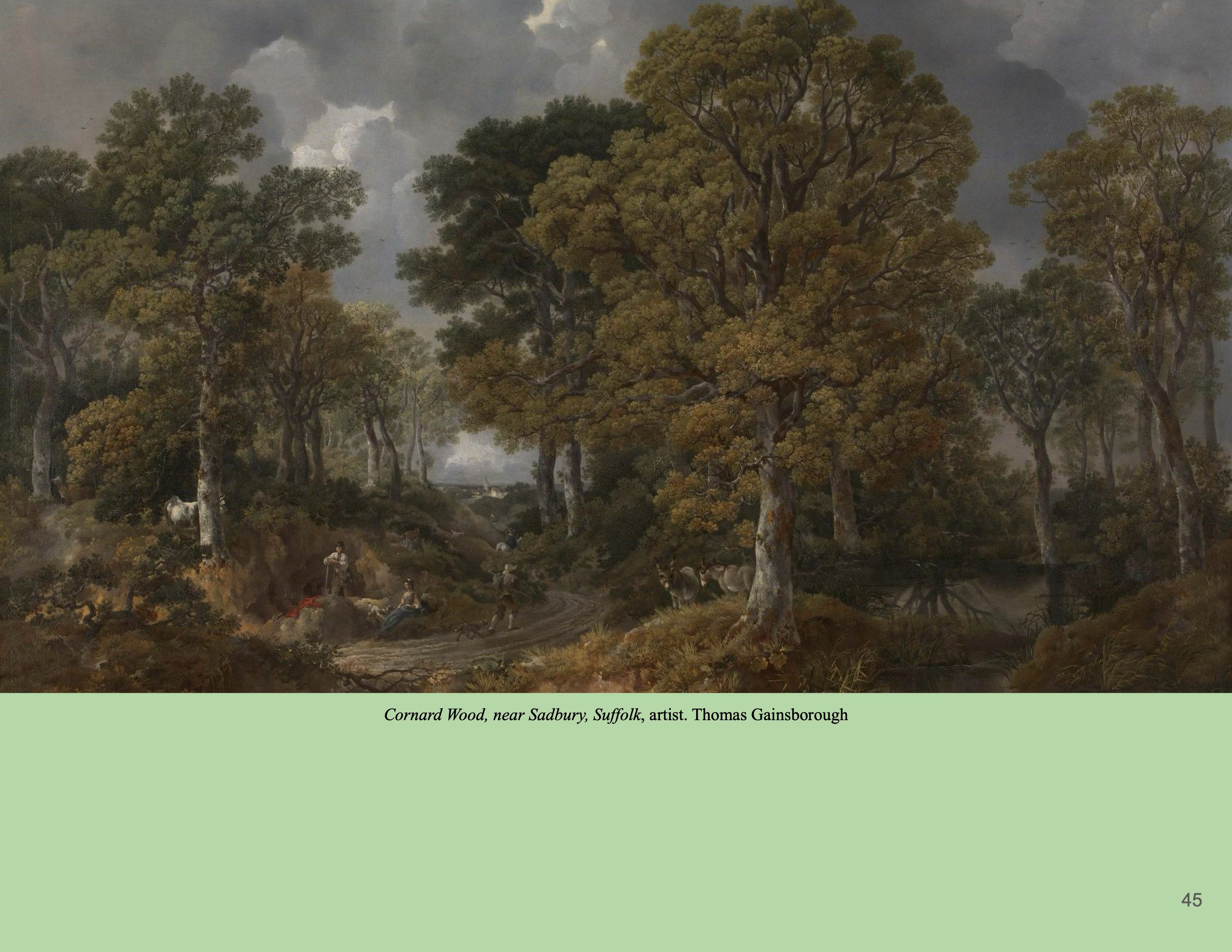
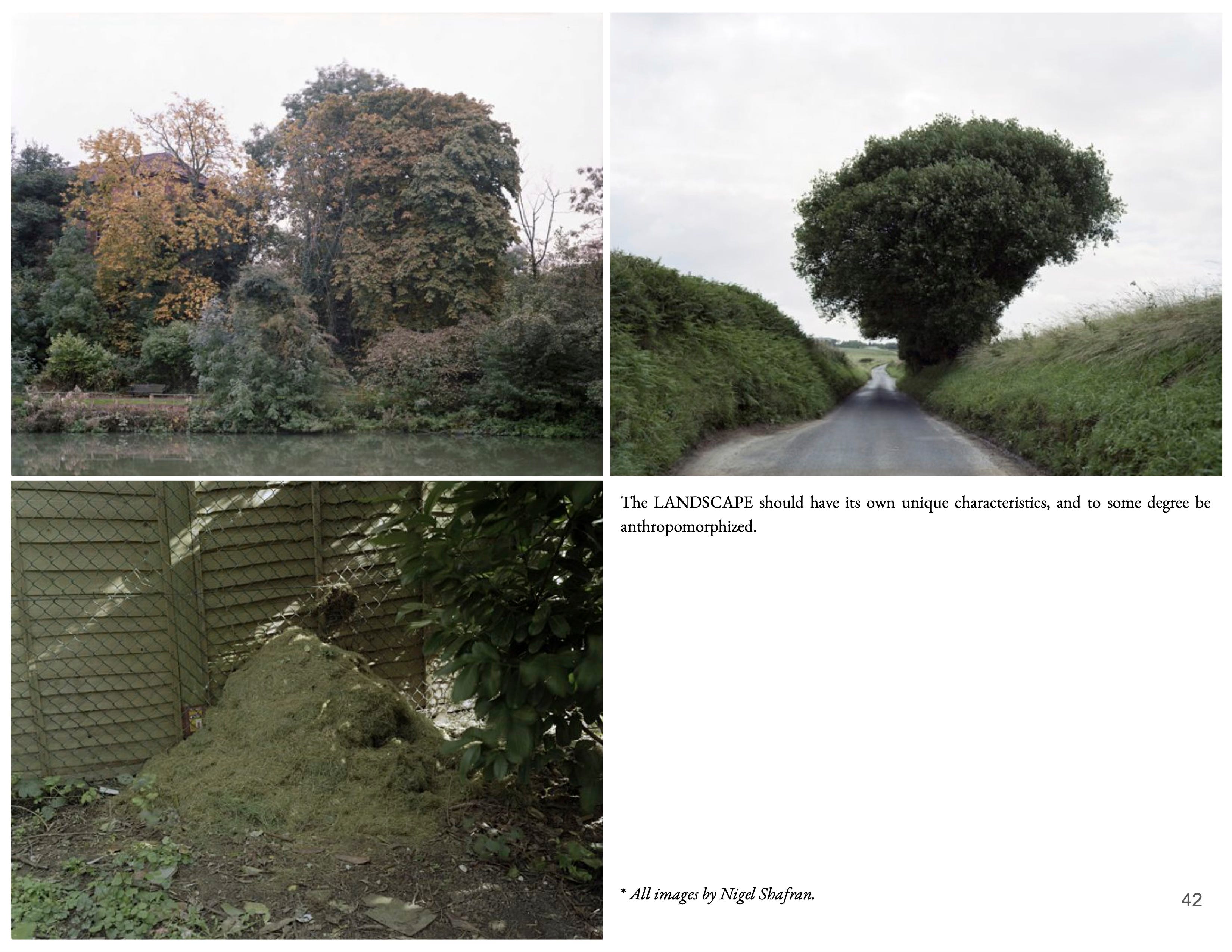
The Fall of Sir Douglas Weatherford is inflected in places by a kind of eerie folk horror, with the landscape, as Sean specifies here, “anthropomorphized” in places. In the film, Kenneth’s backyard garden is both a reminder of his wife but also a liminal space in which, at one moment, the ghost of Sir Douglas Weatherford appears. To illustrate these haunting landscape possibilities, Sean chose images from artist Thomas Gainsborough and photographer Nigel Shafran.
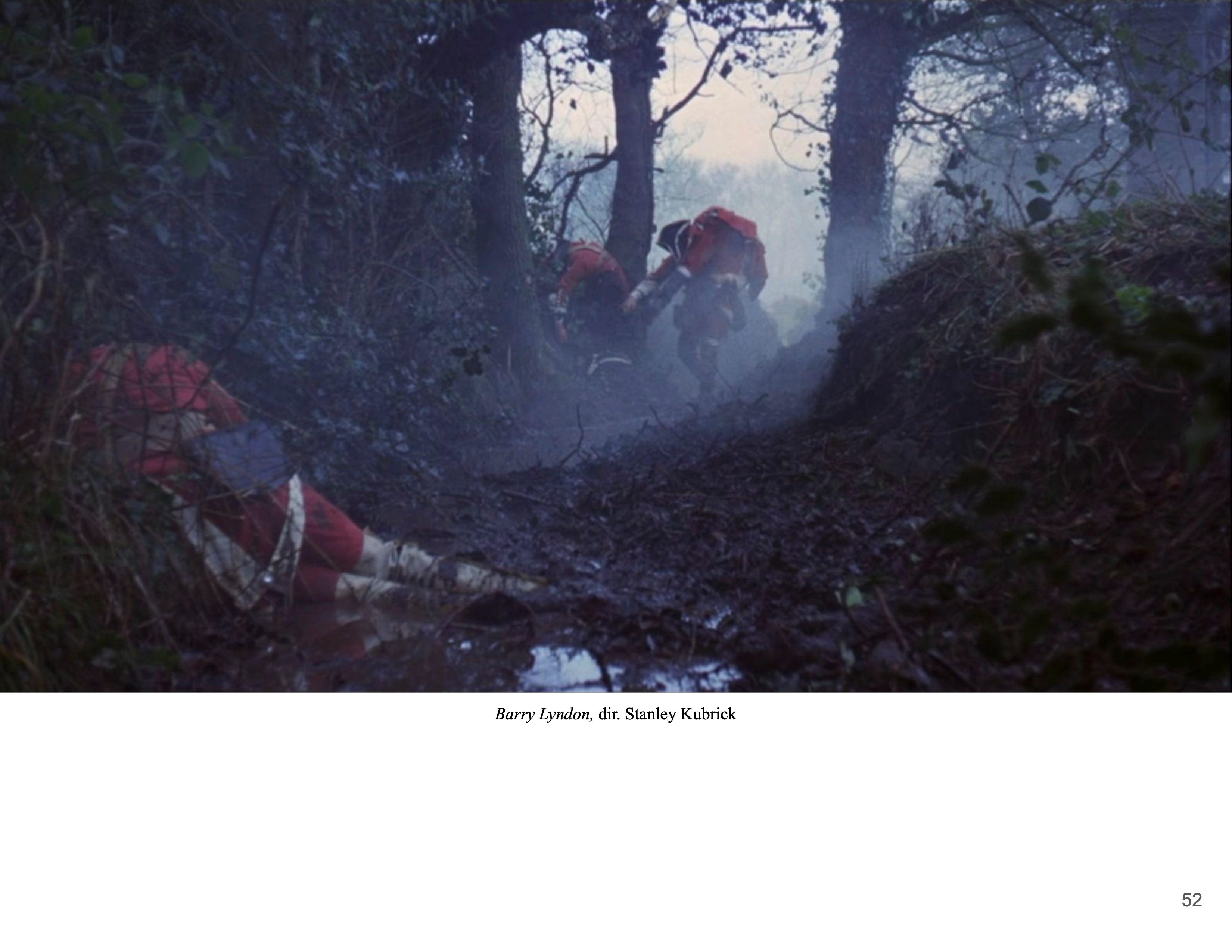
There’s one flashback battle-type scene in The Fall of Sir Douglas Weatherford, and, of course, the question becomes, how can you accomplish such a spectacle on a normal-sized budget? Above, an image from Kubrick’s Barry Lyndon illustrates shows how a location and costumery (our costume designer was Elle Wilson) can do so much.
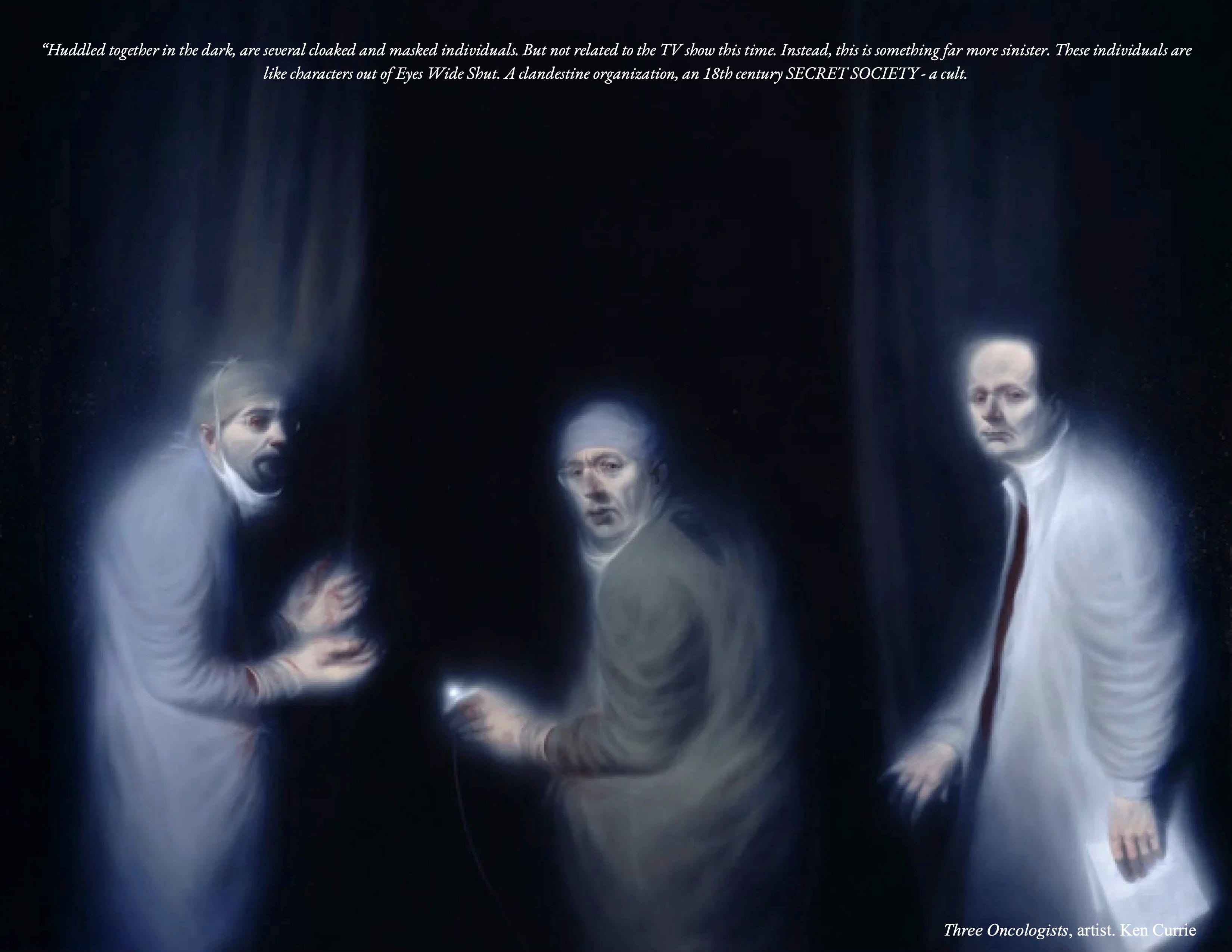
Finally, in addition to penning Adam Smith-like economic tracts, Weatherford was, like Benjamin Franklin, something of a medical inventor. But Weatherford’s inventions were a bit darker than Franklin’s bifocals and urinary catheters, extending into the realm of limb amputation and more. Glasgow-based contemporary artist Ken Currie’s Three Oncologists proved a useful reference image for what in the film became something even more disturbing, a vision of surgical horror and secret societies invading Kenneth’s psyche late in the film.
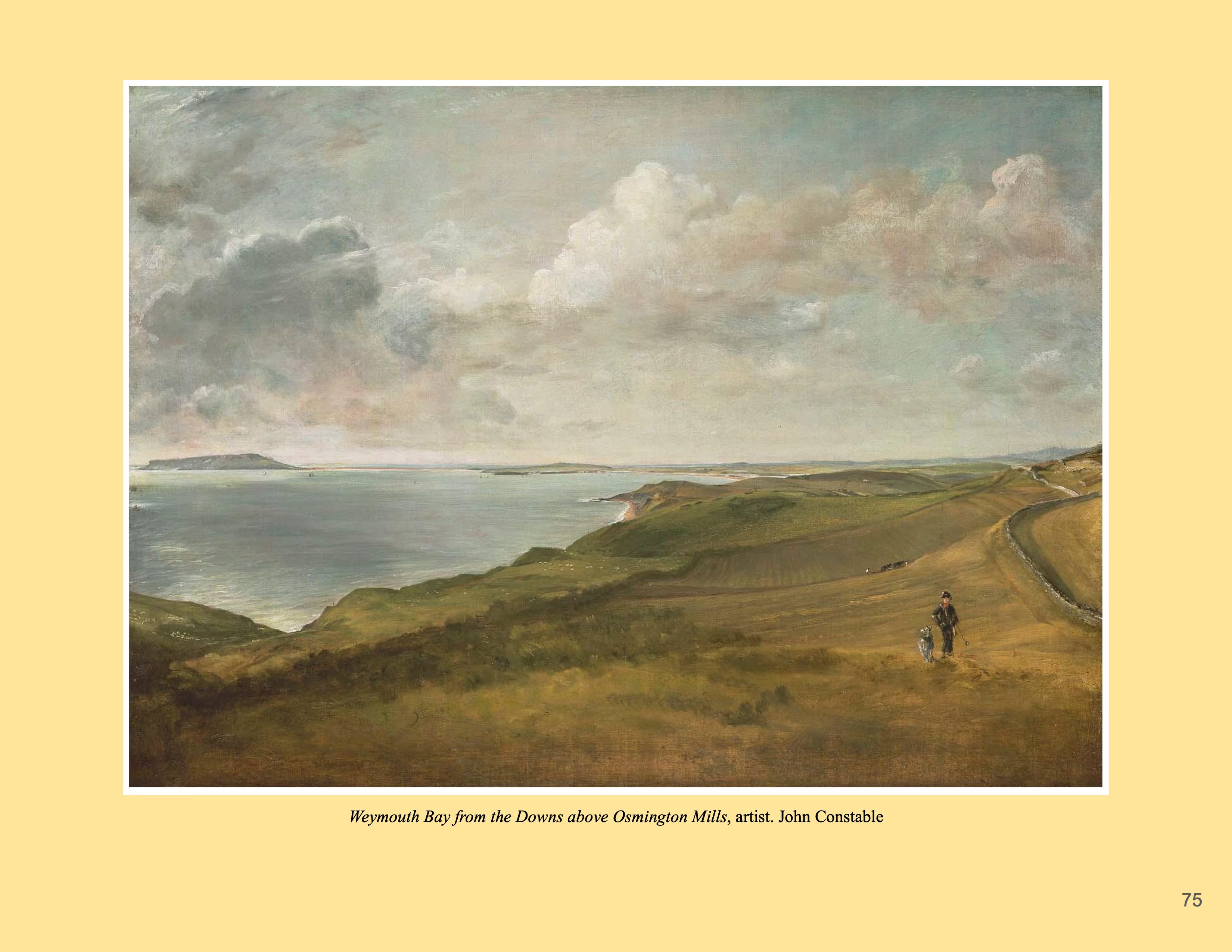
A final equilibrium is suggested by this image by the Romantic-era landscape painter John Constable.
The Fall of Sir Douglas Weatherford is supported by BBC Films, BFI and Screen Scotland and will be released by MUBI in the UK and Ireland.
No posts
Comments
Nothing yet. Say the first thing.
Sign in to join the conversation.