
Many people who care about the role of science in government decision-making will soon start thinking about how to rebuild the federal scientific enterprise considering what has happened under the Trump administration. And as they do so, there is a question they will need to grapple with: Could this happen again?
We cannot honestly say the answer is no.
Rebuilding US science is incredibly important. The federal government will need to rehire scientists and rebuild scientific capacity to levels that allow agencies to address the scientific challenges facing the public—many of which have not been adequately addressed for years. There is also a critical need to re-establish and revamp federal funding mechanisms for science within the government and for academic institutions and other research entities, public and private, across the country as well as internationally. Science education and training will need to be redeveloped after four years of undermining the pipeline for aspiring talent.
We should absolutely use the rebuilding process to make federal science stronger than it was before. That means diversifying the scientific enterprise so the nation can fully draw on its scientific talent and capacity, protecting grant funding and research pathways from political interference, making government decision-making more transparent, and identifying the weaknesses that allowed political officials to interfere with science in the first place.
But we also must be honest with ourselves about the authoritarian political regime we are living through right now. A regime that so many of us hope will not last forever. However, given the past decade, we can’t assume that the country will never again elect a president who is willing to disregard science and dismantle our scientific enterprise.
For decades, science policy experts worked to develop structures, processes, and dedicated positions intended to minimize (and ideally prevent) political interference in science-based and science-informed policy and decision-making. Federal agencies built out independent science advisory processes and peer review protocols and increased transparency in decision making. Many agencies, and ultimately the government as a whole under President Biden, committed to stronger scientific integrity policies, appointed scientific integrity officials, created public reporting processes, and trained employees on their rights and responsibilities.
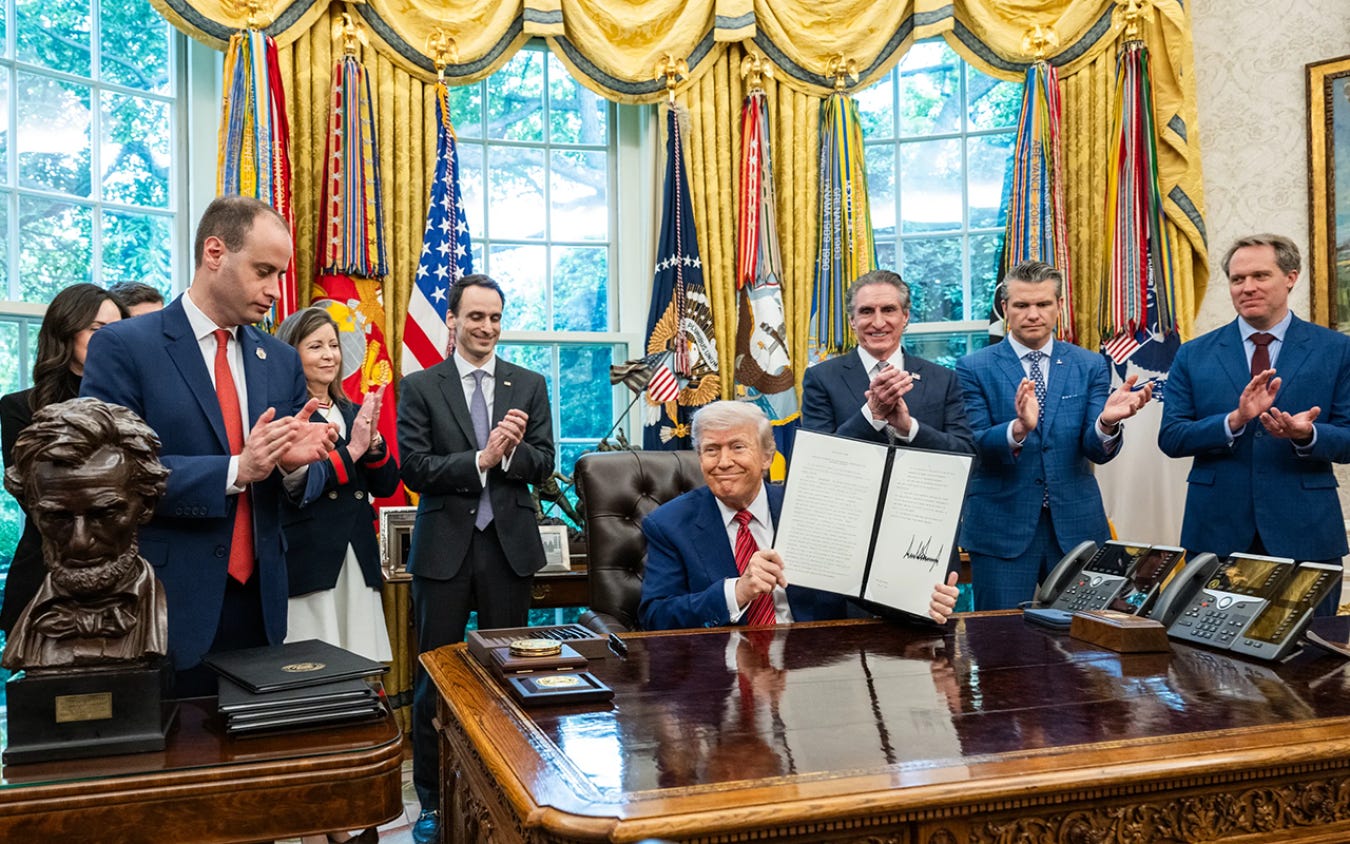
Then, with a stroke of a pen on May 23, 2025, President Trump dismantled much of that work. His “Restoring Gold Standard Science” executive order directed agencies to revise their scientific integrity policies and revoke Biden-era policies and actions. The executive order also created a new mechanism through which political officials could determine what counts as acceptable federal science, which has served as a more formal stamp of approval for politicizing science.
Beyond the Trump executive order, science advisory panels at agencies including NIH, CDC, EPA, and others have been grossly politicized to support preconceived policies that are often at odds with the weight of scientific evidence. Vaccine policies, disease monitoring and approval of pharmaceuticals, chemical safety, and pollution standards have all been weakened.
The administration has also removed scientific personnel and made it clear that federal employees who challenge its decisions may face consequences. If you are a federal scientist who cannot afford to lose your job, you may stay quiet even when you see political interference occurring. A scientific integrity system cannot function as intended if the people responsible for using it reasonably fear retaliation.
How can we, as a science community and the public that relies on us, make scientific integrity stronger? Greater transparency is part of the solution and could help the public understand what science an administration relied on, what science it ignored, and where political decisions departed from the available evidence. But a future administration could revoke those requirements, refuse to comply with them, or simply mischaracterize the evidence.
One possible way to counter future efforts to undermine scientific integrity protections against politicization of science-based decision-making is to broaden the scope of scientific integrity policies beyond just the protection for federal scientists and their work. Explicitly calling for strong, enforceable scientific integrity policies within academia, state and intergovernmental agencies, and even private institutions may seem a big task. But the result is that even in the face of federal pull back on scientific integrity, the rest of the system may stand as a bulwark against political interference from any one part of our governance system. In other words, if we can’t rely on the federal government to always be the holder of scientific integrity, we need to make all parts of the system aware of and formally ascribe to scientific integrity principles.
Congress could pass the Scientific Integrity Act in its current form, but legislation would only be as effective as the institutions willing to enforce it. Even if the bill passed under a Democratic-controlled Congress, it is not at all certain that a future Congress controlled by the president’s own party would conduct meaningful oversight. And if Congress declined to intervene while the courts continue to recognize expansive presidential authority over the executive branch, how protected would any of these systems really be?
Reforms could make scientific integrity stronger, but each would eventually run into the same issue: protection still depends on political leaders and institutions being willing to respect and enforce them.
Broadening out the legal basis (e.g., in state law, in institutional contracts with scientists, and in the agreements between government and research institutions) may strengthen the ability to enforce scientific integrity principles against political interference in science.
Are there mechanisms in the drafting of federal (and state or institutional) scientific integrity legislation and agreements that will make enforceability in the courts more attainable? Can the legal community help us figure out how to strengthen the legislation and agreements given the changes in legal precedent that have occurred over the last four years?
For example, recent Supreme Court decisions have greatly expanded the President’s authority to remove the heads of nominally independent agencies, making it easier for presidents to redirect agency priorities and pressure officials to place loyalty to the administration above their independent statutory responsibilities. But the notable exception was the Federal Reserve Bank. The Court distinguished the Federal Reserve because of its unusual structure and its roots in the historical tradition of the nation’s earliest central banks, suggesting that its leaders may retain stronger protection from presidential removal than officials at other independent agencies.
What can our legal scholars help us learn from these decisions? Is there a way to re-establish the independence of the major federal science funding bodies (NSF, NIH) such that they can support our science enterprise without political interference in much the same way as the Fed supports the economy? Perhaps that seems far-fetched, but it is worth asking the question.
The Trump administration has exposed a difficult truth: there may be no way to design a system located solely inside the executive branch that a determined president cannot dismantle, evade, or simply ignore. So, let’s go beyond the federal executive.
Scientific integrity will become a stable and essential element of public policy only when there is a broad public constituency that expects it and is willing to hold political leaders accountable for violating it.
Scientists remain broadly trusted, but that trust is highly partisan. A January 2026 Pew Research Center survey found that 90 percent of Democrats had at least a fair amount of confidence in scientists, compared with 65 percent of Republicans. Republicans were also considerably less likely than Democrats to say science has had a mostly positive effect on society.
As long as scientific integrity is understood primarily as something only Democrats, scientists, and good-government organizations care about, we may remain trapped in a never-ending pendulum swing. One administration rebuilds scientific integrity and attempts to move as quickly as possible to make science-based decisions. The next dismantles those systems and politicizes federal scientific processes. Then the cycle starts again. That kind of system slows scientific progress, destroys institutional knowledge, wastes public resources, and undermines the government’s ability to respond to threats facing the public.
Scientific integrity remains both poorly understood and increasingly partisan. For many people, it is a wonky concept associated with the internal workings of federal agencies. For others, concerns about scientific integrity may be dismissed as partisan criticism of a Republican administration. If the public does not understand what scientific integrity means or sees it as an issue belonging to only one political party, then political leaders may face little consequence for dismantling it.
That is why rebuilding scientific integrity cannot focus only on policies, positions, and processes inside the federal government. It must be based on a broader, bipartisan public understanding of what scientific integrity is, why it matters, and what people lose when it is undermined. Then it can become a truly national policy, not just a federal policy.
We need scientists and scientific institutions to spend more time working directly with communities. We need more scientists talking with their neighbors about how science is conducted, how evidence is evaluated, why independent processes matter, and how political interference affects people’s lives. But those conversations also need to involve listening (with empathy) to people’s questions, concerns, experiences, and reasons for distrusting scientific institutions.

Building broader support for scientific integrity cannot simply mean asking the public to listen to scientists. Scientists must also be willing to listen to communities and build relationships grounded in trust. An idea that has long been promulgated by environmental justice communities and advocates.
We should rebuild federal science. We should make scientific integrity policies as strong as possible. We should preserve data, maintain scientific networks, and create resilience outside the federal government wherever we can.
But scientific integrity cannot defend itself. If we want it to survive changes in political power, we must convince the public that it is worth defending.
If you enjoyed today’s post, please like it or share it with others. You can also support the work to shine a light on the politicization of science by becoming a paid subscriber!
If you want to share today’s post as a web page with your network, click this button:
If you have suggestions, questions, comments, or want to drop us a line, send it all to scilightsubstack@gmail.com
Comments
Nothing yet. Say the first thing.
Sign in to join the conversation.