
We tend to tell stories of scientific discovery from the opposite direction: what we found and then how we got there. Once an answer is known, the path toward it can appear almost inevitable. The scientist asked the right questions, designed the right experiments, collected the right evidence, and found something new. The reality is usually much messier and certainly not as straightforward.
Discovery most often begins with reluctance, confusion, failure, an uncooperative animal, a damaged instrument, an observation that makes no sense, or an assignment someone did not want. The breakthrough may be important, but the path toward it is full of ordinary human decisions made without knowing exactly where they will lead.
This week, we are focusing on the Story Collider episode "Discovery: Stories About Uncovering Something New." Ecologist Cylita Guy reluctantly agrees to fieldwork focused on bats, despite having entered her doctoral program determined to avoid fieldwork altogether. Maija Niemisto, an environmental educator aboard the Hudson River Sloop Clearwater, encounters someone whose presence prompts her to discover more about her city and herself.
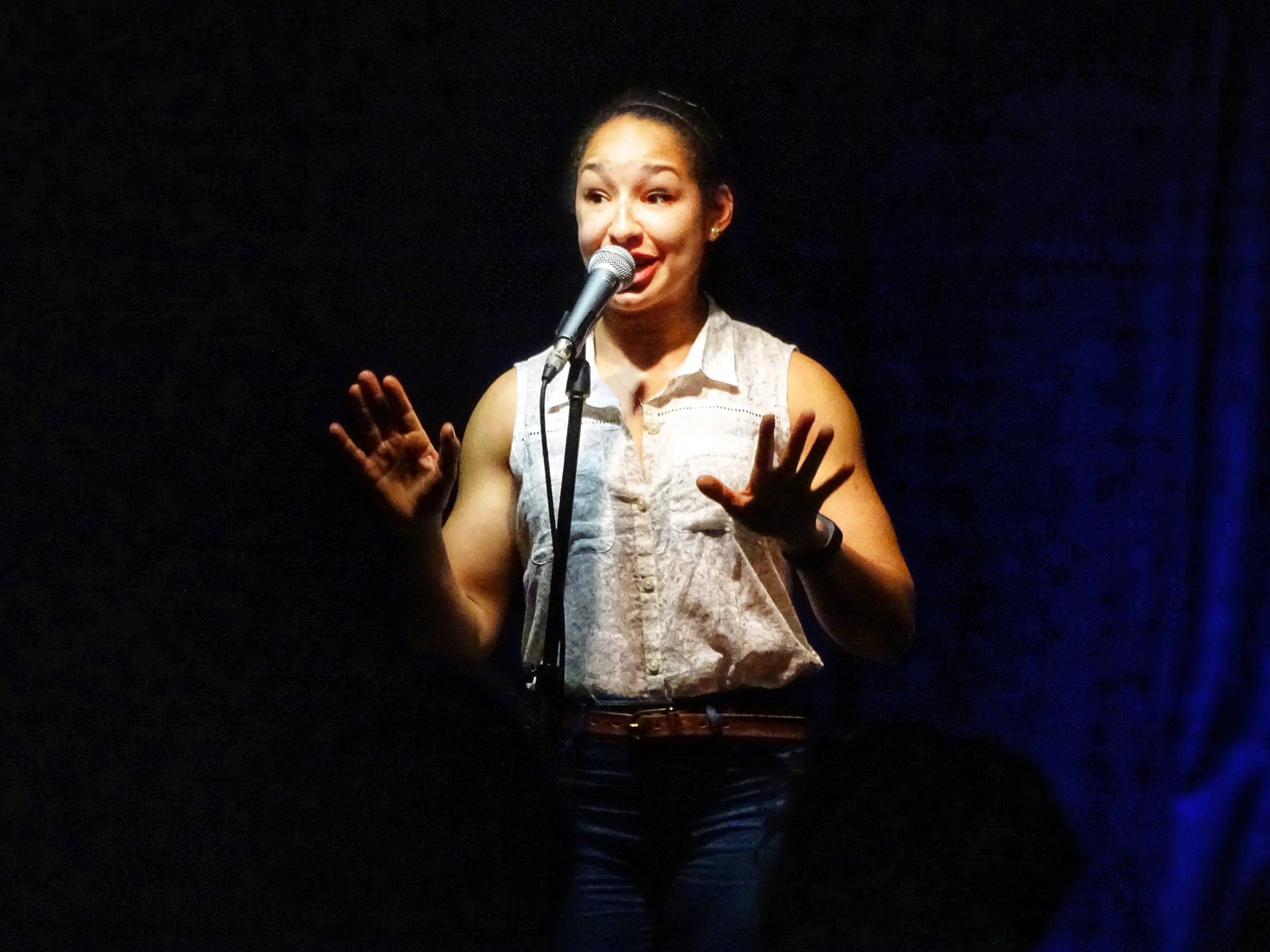
Guy’s story captures what it’s like to conduct fieldwork, a part of science that rarely appears in the polished final paper. It is physically demanding, unpredictable, and occasionally scary. Animals do not follow research schedules; the weather changes; equipment fails; and carefully designed plans are disrupted by nature.
For Guy, the work she initially resists becomes a surprising source of adventure and curiosity. Her research focuses on bats and the pathogens they carry, including questions about why bats can host certain viruses without becoming ill themselves. Yet her story is not simply about producing data. It’s also about discovering what kind of scientist she is becoming.
Scientific progress depends on people being able to change direction. A student may enter a field expecting to work in a laboratory and find purpose outdoors and vice versa. A failed hypothesis may reveal better or different questions. An observation treated initially as an inconvenience may become the most important result.
Science needs methods, standards, and careful review, but it also needs intellectual room. Researchers must be able to follow evidence wherever it leads.
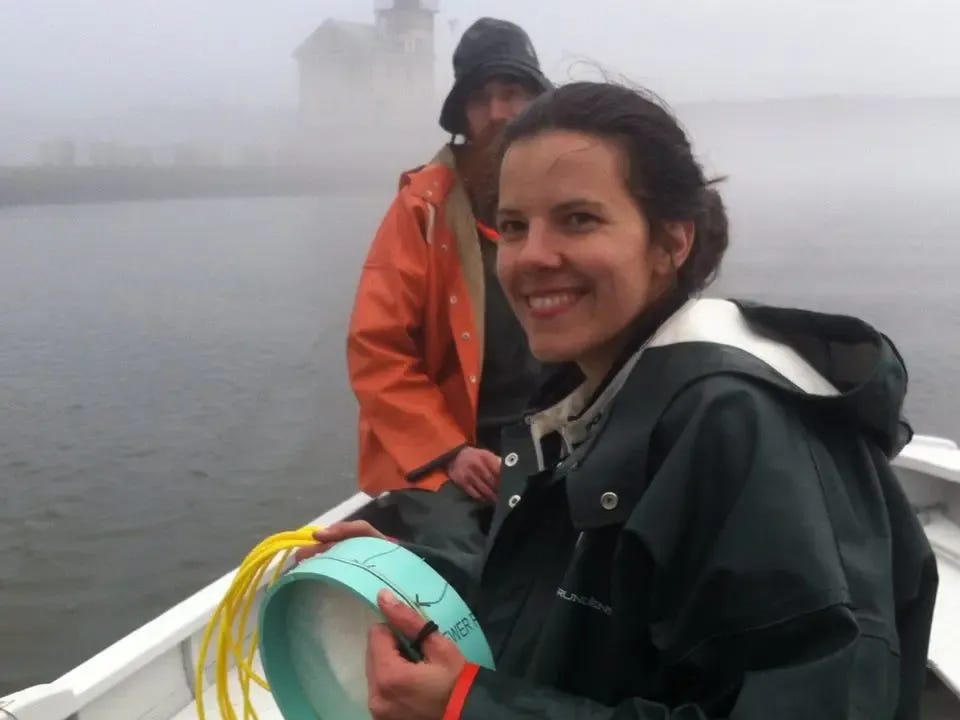
Niemisto’s story further expands the definition of discovery. Her work brings together sailing, education, ecology, music, and environmental advocacy. What she uncovers is not confined to a biological specimen or a set of measurements. It emerges through an encounter that changes how she sees her surroundings and her own place within them.
Discovery can involve recognizing a relationship that was always present but previously unnoticed. It can mean seeing a river not as scenery but as a living system shaped by history, policy, biology, and community. It can mean understanding that knowledge is not produced only by experts in big city institutions, but also by educators, residents, technicians, volunteers, and people who have known a place for a long time.
SciLight has repeatedly emphasized that science is a process of discovery, application, revision, and learning rather than a collection of permanent answers. It depends on education, public investment, research institutions, and a culture in which questions can be pursued even when their immediate use is not obvious.
That final point is especially important. Many discoveries that later transform medicine, technology, environmental protection, or public safety begin as basic questions and research with no guaranteed application. Demanding that every project produce an immediate commercial or political result misunderstands how knowledge develops. We cannot schedule discovery, but we can create the conditions that make it possible.
Those conditions include stable funding, trained staff, functioning laboratories, field stations, research vessels, museums, universities, open and public datasets, and the freedom to report findings honestly. They also include mentors who encourage students to attempt work they might otherwise avoid.
The stories from Guy and Niemisto remind us that discovery is not only the moment when someone says, “I found it.” It is also the long period beforehand, when people are still lost, uncomfortable, curious, and trying.
As we continue to look at the stories behind the science with the Story Collider, these stories reveal why the future of discovery depends not just on celebrating breakthroughs, but on protecting the people, places, and institutions that allow unexpected questions to survive.
Explore Discovery: Stories About Uncovering Something New and more true, personal stories about science from The Story Collider. Don’t forget to check out The Story Collider’s live shows, including upcoming events around the country this summer. In addition, you can read the following related stories from SciLight:
More or Less
This story argues for long-term basic-research funding, interdisciplinary collaboration, diverse voices, replication studies, null results, and room for research without an immediate commercial payoff.
The High Cost of Falling Behind
This post highlights that discoveries require stable funding, functioning laboratories, trained researchers, clinical-trial infrastructure, and institutional support. It would help move the post from the thrill of discovery to the systems that make discoveries possible.Freedom Matters
This is a story that explores why scientific discovery depends on intellectual freedom, democratic accountability, public investment, and the ability to pursue research whose eventual value may not yet be apparent.
If you enjoyed today’s post, please like it or share it with others. You can also support the work to shine a light on the politicization of science by becoming a paid subscriber!
If you want to share today’s post as a web page with your network, click this button:
If you have suggestions, questions, comments, or want to drop us a line, send it all to scilightsubstack@gmail.com
Comments
Nothing yet. Say the first thing.
Sign in to join the conversation.