

A group of researchers in Japan have discovered that a mineral on the seafloor, 360 kilometres south of Tokyo, contains unusually high amounts of gold. The gold is hidden inside the mineral pyrite, often called “fool’s gold” because it looks like gold but normally contains little or none. The deposit, found in 2015 at a depth of about 700 to 800 metres, was already known to contain rock with up to 275 grams of gold per tonne. The researchers have now analysed individual pyrite grains layer by layer and found one microscopic region containing 1.9 per cent gold by weight, about 95 times the previous record for pyrite from a seafloor vent. The team thinks arsenic, lead and copper distort the pyrite crystal and allow gold atoms to become trapped inside it, leading to the record-breaking concentration. However, this high concentration is likely present only in small samples. The average value per ton is likely in the range of US$ 13000 - 35000, but the costs for mining on the seafloor would much reduce the net value.
Paper here.
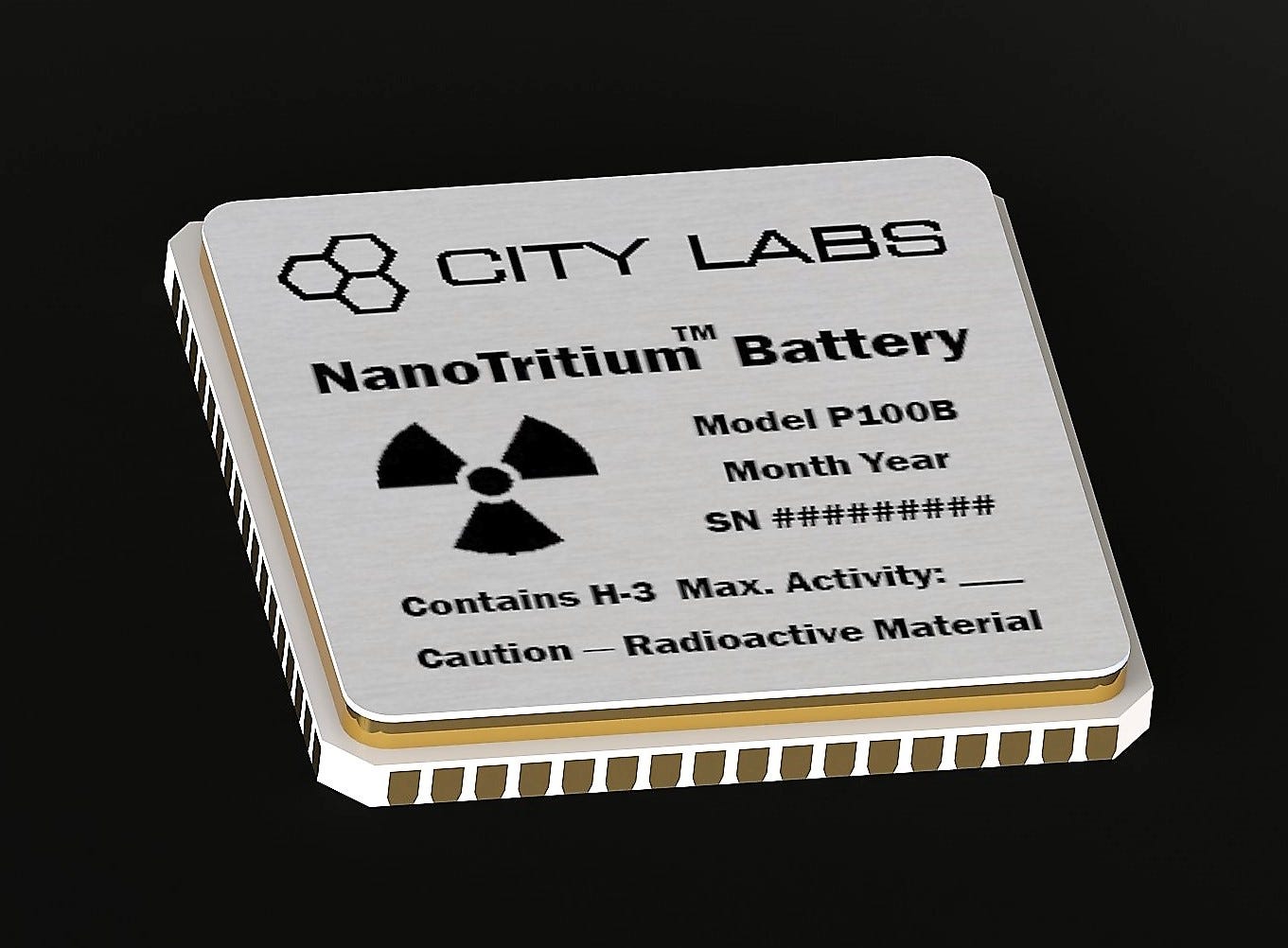
Image credit: City Labs
The US company City Labs has launched a tritium-powered nuclear battery into orbit with a SpaceX mission. The battery contains tritium, a radioactive form of hydrogen. As the tritium decays, it releases electrons whose energy is converted directly into electricity by a semiconductor. This type of battery is called ‘betavoltaic’. The battery is aboard a small satellite called BOHR. The satellite itself is solar-powered, the purpose of the battery is merely to test its performance. The company has not disclosed the exact type of battery, but their existing products produce power in the range nanowatts. Their advantage is not power but endurance. Tritium has a half-life of 12.3 years, allowing the battery to supply a slowly declining trickle of electricity for more than 20 years without charging. That could keep small sensors, clocks or memory systems operating in permanently shadowed lunar craters or other places where solar power is unreliable.
Press release here.
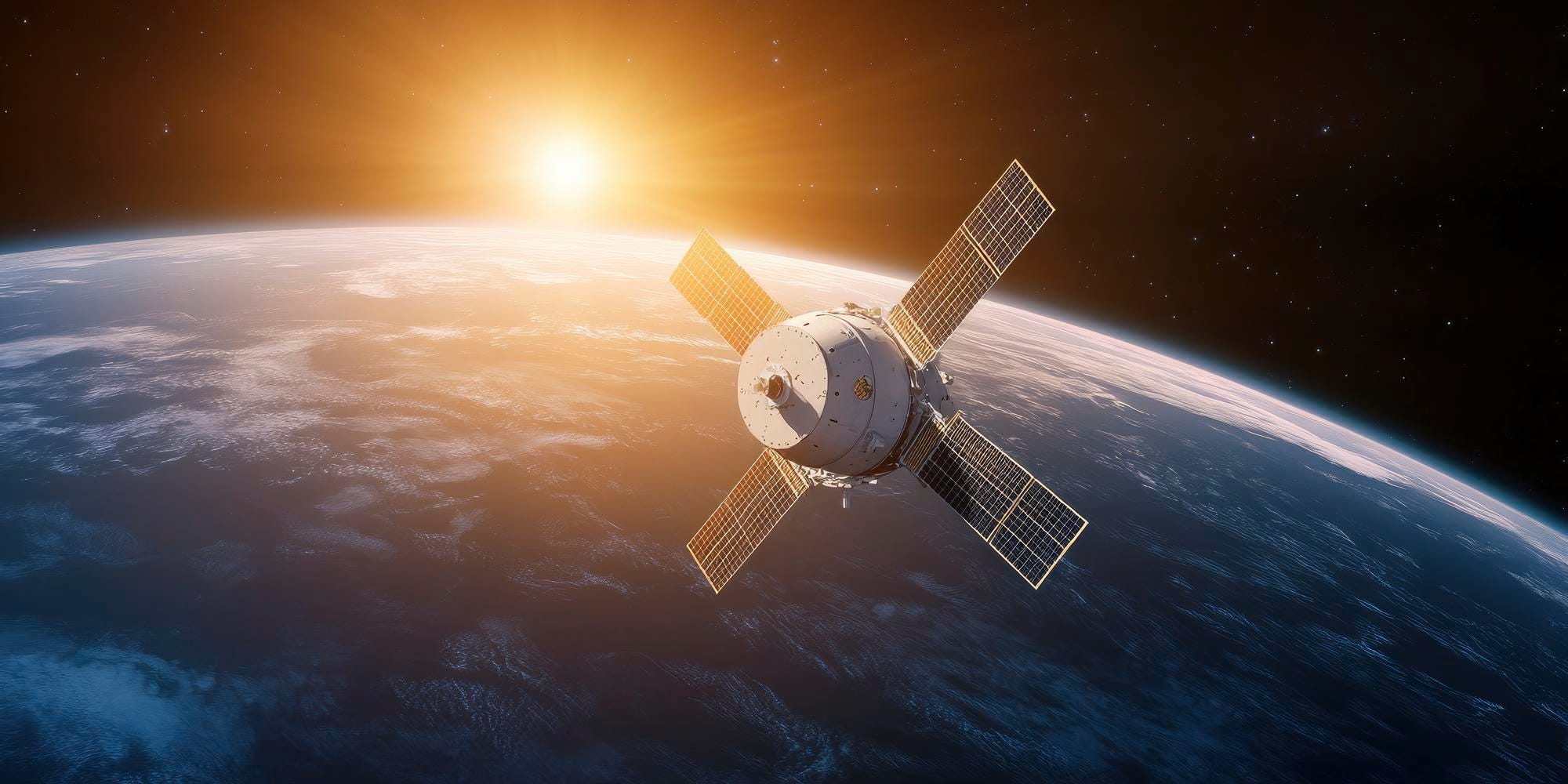
A researcher from MIT has proposed a way to inspect suspicious satellites for nuclear weapons in orbit. The satellite is basically a neutron detector. The idea is that highly energetic protons from cosmic rays hit the suspicious satellite. If the satellite contains large amounts of uranium that will produce far more neutrons than the lighter materials used in ordinary satellites would.
The author estimates that with current measurement technology, a detector about the size of a shoebox could identify a hydrogen bomb with 100 kilograms of uranium from 4 kilometres away after about a week with more than 99 per cent probability. That is a fairly long time, a short distance in space, and a large amount of uranium, but it demonstrates the potential of the idea. US defence and intelligence officials have claimed that Russia is developing a nuclear anti-satellite weapon and may be testing components aboard its Kosmos 2553 satellite. Russia denies the allegation.
Paper here.
No posts
Comments
Nothing yet. Say the first thing.
Sign in to join the conversation.