
Motherhood, Agency, and the Hidden Power of the Biblical Narrative
I find myself reflective today. Mother’s Day does that to me.
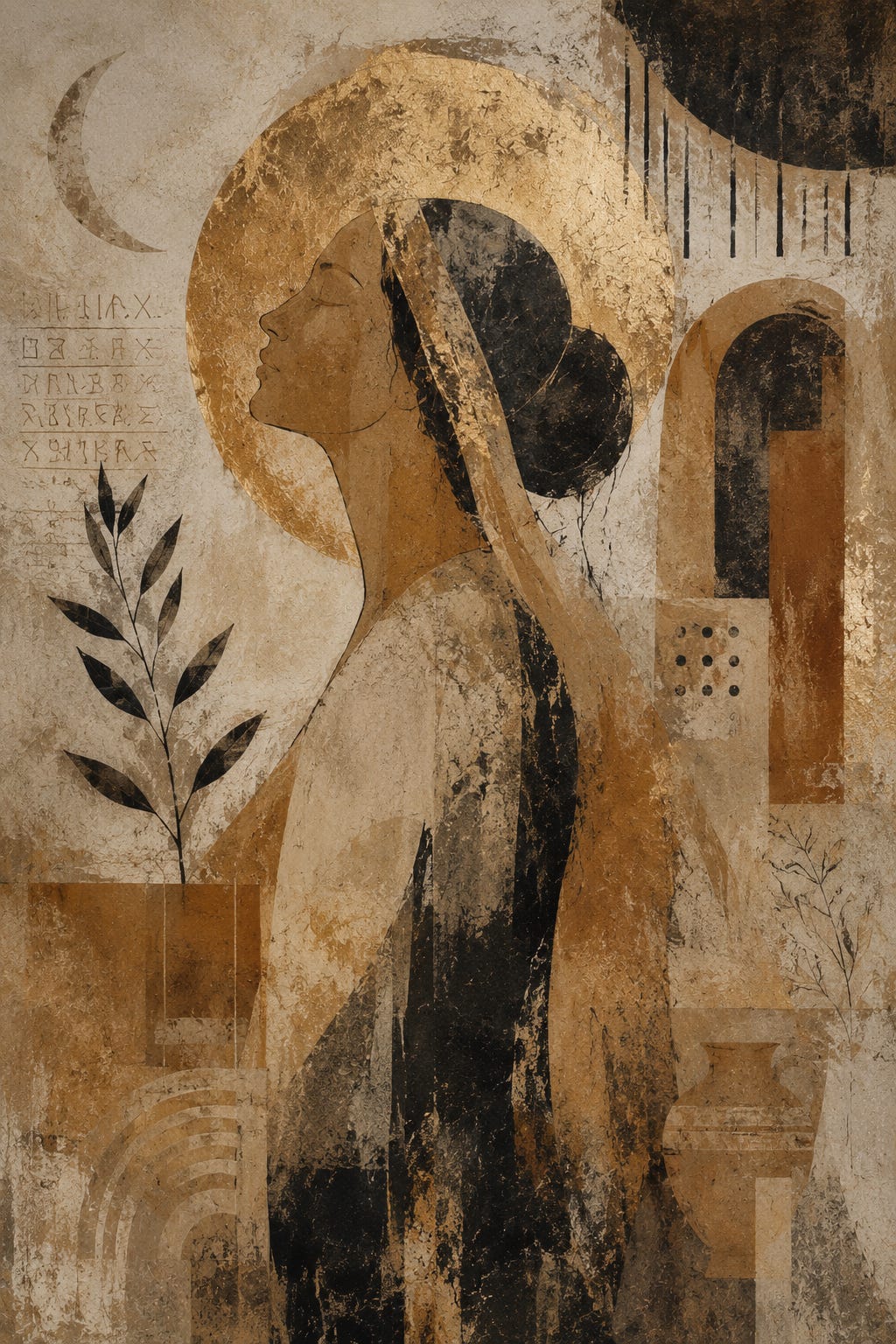
For the last year, I’ve been immersed in the stories of the matriarchs of Genesis: researching them, teaching them, wrestling with them, listening carefully to the tensions and complexities of their narratives. And the deeper I go into Scripture, the harder it becomes to ignore how much the role of women—and especially mothers—has been diminished within many modern religious spaces.
Particularly within Christianity, motherhood is often romanticized without being truly understood. For one Sunday each year, mothers are praised, sentimentalized, placed gently on a pedestal like fragile icons of sacrifice and sweetness. And then the deeper reality of women’s power in Scripture is quietly pushed back into the margins. But the biblical text itself does not place women at the margins.
Again and again, women stand at the center of transformation.
They move the story forward.
They preserve covenant.
They negotiate survival.
They shape households, inheritance, memory, and identity.
They speak with God.
They interpret danger.
They act when others hesitate.
They carry generations not only biologically, but ethically and spiritually.
The more I have taught Genesis, the more I have become convinced that the matriarchs are not supporting characters in the biblical story. In many ways, they are the story:
Sarah learns to navigate survival within systems that treat women as vulnerable bargaining pieces in the shadow of empire and inheritance.
Hagar, an enslaved foreign woman abandoned in the wilderness, becomes the first person in Scripture to give God a name — seen not from the center of power, but from exile.
Rebekah recognizes what Isaac cannot yet see and acts decisively at the threshold of Israel’s future.
Leah carries the slow grief of being unwanted while quietly becoming one of the central foundations of Israel’s lineage.
Rachel embodies the ache of longing, rivalry, motherhood, and loss — and in Joseph’s story, her absence becomes one of the loudest presences in the narrative long after her death.
Tamar forces justice into visibility when the structures meant to protect women fail completely.
Naomi’s story is not sentimental widowhood. It is the devastation of a woman who feels her future, fertility, stability, and identity have all withered away at once.
Ruth enters the covenant story not through status or purity, but through migration, risk, ambiguity, and radical loyalty at the margins.
The Hebrew midwives in Exodus quietly resist empire itself, preserving vulnerable children before the Exodus story of salvation can even begin.
And throughout Scripture, unnamed women linger at the edges of the text — carrying water, preserving households, burying the dead, protecting children, sustaining memory, and quietly holding entire worlds together while larger narratives unfold around them.
The more I study these stories, the harder it becomes to believe the Bible ever intended women to be read as passive background figures. Scripture entrusts women with thresholds of revelation and survival. Yet, so much of this has been buried beneath centuries of flattened interpretation—especially surrounding Eve.
I sometimes wonder if Christian communities have underestimated women for so long because they inherited a reading of Genesis that trained them to see Eve primarily as the origin of failure instead of as part of a profoundly complicated human story about knowledge, vulnerability, desire, mortality, and moral awakening. The text itself is far more nuanced.
The consequences of Genesis 3 belong to humanity collectively, and yet women have disproportionately carried the symbolic blame for human brokenness throughout religious history. Entire theological systems have been built around suspicion of women’s intellect, agency, leadership, and voice; while Scripture itself repeatedly portrays women as preservers of wisdom, justice, covenant, and life.
What strikes me most now is how often mothers in Scripture function not merely as caretakers, but as interpreters of survival.
They are culture-bearers.
Memory-keepers.
Negotiators of continuity.
Protectors of children and communities.
Moral and spiritual formers within the household.
Prophets within domestic spaces long before institutions recognized them publicly.
Motherhood in Scripture is rarely sentimental:
It is labor.
Risk.
Leadership.
Loss.
Creation.
Resistance.
Discernment.
Endurance.
And perhaps that is part of why these stories still matter so deeply. Because when we recover the voices of the women in Scripture, we do not diminish the biblical narrative, we uncover dimensions of it that were there all along.
Today, on Mother’s Day, I find myself deeply grateful for the women who carried faith, memory, wisdom, and survival forward through generations both within Scripture and within our own lives. And I find myself wanting the church to remember them more fully.
If you’re interested in these themes, I’ve spent the last year teaching through many of them in my Tents & Thresholds: Narrative Agency and Divine Encounter through the Matriarchs of Genesis study series.
No posts
Comments
Nothing yet. Say the first thing.
Sign in to join the conversation.