
I originally published an older version of this in January 2024 on Critical Rationalism News, a newsletter/blog that has since been discontinued.
Meme complexes, like religions, political ideologies, and scientific theories, spread like viruses. That doesn’t mean that they are always harmful. Even viruses in biology can be good. Bacteriophages, for example, are small viruses that infect and eliminate harmful bacteria. Religions can lead to immensely productive collaborative behavior and provide a sense of purpose, belonging, and community. Many have argued that ‘Christianity Built Western Civilization’ as suggested in the book of the name by Dr. Alex Locay. I have close religious friends whom I deeply respect; what follows is an analytical lens, not a judgment of believers.
However, religions can also lead to the suppression of freedom and criticism.
David Deutsch distinguishes two kinds of memes: rational memes, which replicate because they are useful or true and survive scrutiny, and anti-rational memes, which replicate by disabling the holder’s critical faculties - through fear, guilt, or suppression of dissent. Static societies are built on the latter; dynamic societies, on the former. Religions are a mix of both.

Now let’s look at the most common religions through this lens of virology. First of all, all religions employ these strategies to spread:
Moral framework: They offer useful guidance as to which behavior is encouraged and which is prohibited. Historically, they fostered a decentralized form of jurisdiction before institutionalized control of violence was invented or available. In Islam, this framework is called Sharia Law.
Mutation: Religions spread by mutating to adapt to the current moral knowledge and cultural norms of a society. For instance, usury came to be defined as “excessive interest”. Almost 25% of marriages within the Christian faith end in divorce, even though Jesus forbids it.
Child-age instruction: Children are more susceptible to accepting ideas they are told by authorities, as their ability to criticize theories is still developing.
Political influence-seeking: Sir Arthur C. Clark wrote: “It is a truism that almost any sect, cult, or religion will legislate its creed into law if it acquires the political power to do so.” Similarly, ever since Mohammed’s initial conquests, his was a political religion. Another example is the Christian Orthodox religion dominating the Russian government, which banned Protestant Churches like the Jehovah’s Witnesses from Moscow. Even America, though its constitution limits the role of religion in the government (”Congress shall make no law respecting an establishment of religion”), is united by a Protestant-theology-inspired American Civil Religion. The motto “In God We Trust” provides spiritual backing for the currency. The pledge of allegiance recited by schoolchildren describes the republic as “one nation united under God”.
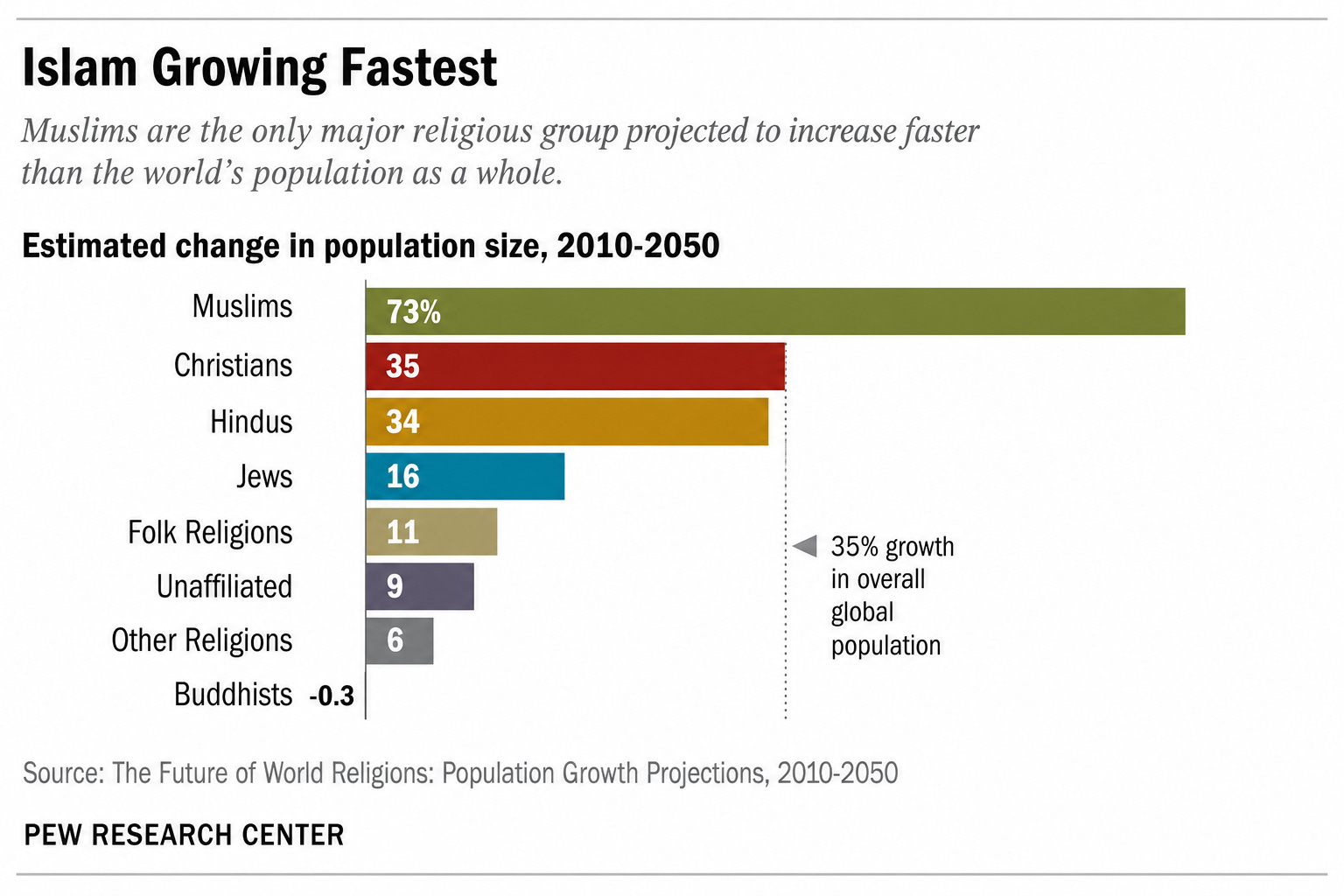
Controlling fertility: The rate of reproduction is a critical parameter of existence, especially among primitive societies, and religions are a potent means of regulating fertility. Religious practice usually causes an increase in fertility. Having too few people makes a group vulnerable to attack from more populous neighbors.
Guilt: Because many religions prohibit certain behaviors, when a person violates these prohibitions, they are made to feel guilty. This brings the person even closer to their religion.
Priests and Monks: They are forbidden from having children so that they may maintain focus on propagating the religion. This is genetic suicide for the priest’s genes but serves the virus that is Catholic religion.
Funding: Christianity encourages donating to the church, i.e. to institutions that spread and fortify the religion.
Financial aid with caveats: Christian institutions often offer a number of supporting services for the poor, such as homeless shelter, medical aid, or education. However, these services are usually only available for people that are already part of, or are willing to join, the religion.
Evangelism: Christianity places a strong emphasis on evangelism, or spreading the faith to non-believers, which helps propagate the religion.
Science: Societies that focus on knowledge creation prosper and proliferate. So does their religion. In Ecclesiasticus 42:21, it is written that “[God] has imposed an order on the magnificent works of his wisdom.” This and other passages gave Catholic scientists faith that God had created an explainable, quantifiable universe. Investigation into the workings of reality became a spiritual endeavor. More on this in Logan’s piece, Did the Catholic Church Give Birth to Science?
Reformation and softening: The Bible contains plenty of harsh material: death penalties for homosexuality (Leviticus 20:13), women commanded to silence (1 Timothy 2:11-12), endorsements of slavery. Christianity mutated away from enforcing most of it. This is the clearest existence proof that a religion can shed its anti-rational components without dying.
Punishing apostates: the extreme form of this is “honor killing”. (Honor killings are also common for gay people in Palestine).
Arabic Language: The use of Arabic in prayers and religious texts creates a sense of unity among Muslims worldwide, regardless of their native language.
Jihad: This term appears frequently in the Quran and in the Hadith. While modernist Islamic scholars have emphasized the defensive and non-military (spiritual and moral) aspects of jihad, in classical Islamic law (sharia), the term refers to armed struggle against unbelievers. Of the 199 hadith references to jihad in the Bukhari collection of hadith, all assume that jihad means warfare.
Taqiyya (deception): An Islamic doctrine permitting Muslims to conceal their faith or lie to non-believers when expedient. Originally a Shia survival mechanism under Sunni persecution, modern jihadists have weaponized it for offense. The Hamburg cell behind 9/11 drank alcohol, shaved their beards, and blended into German society while planning the attacks. Al-Qaeda and ISIS have formally encouraged operatives to mimic Western lifestyles. The 2024 Magdeburg Christmas market attacker posed as an ex-Muslim atheist and AfD supporter before driving into the crowd. Just as viruses mutate their surface proteins to slip past host immune detection, the meme suppresses its outward markers to bypass societal antibodies.
Mutation and the Islamic Golden Age myth: Islam does mutate (modernist takes on jihad, varying riba interpretations, devout Muslims serving in the IDF), but slowly. The Islamic Golden Age (8th-13th c.) is often cited as evidence of Islam’s rational compatibility. A more honest reading: it was an anti-Islamic Golden Age. Inquiry flourished when orthodoxy loosened, and ended when orthodoxy reasserted itself around 1100. Religion didn’t cause the flourishing. Its retreat did.
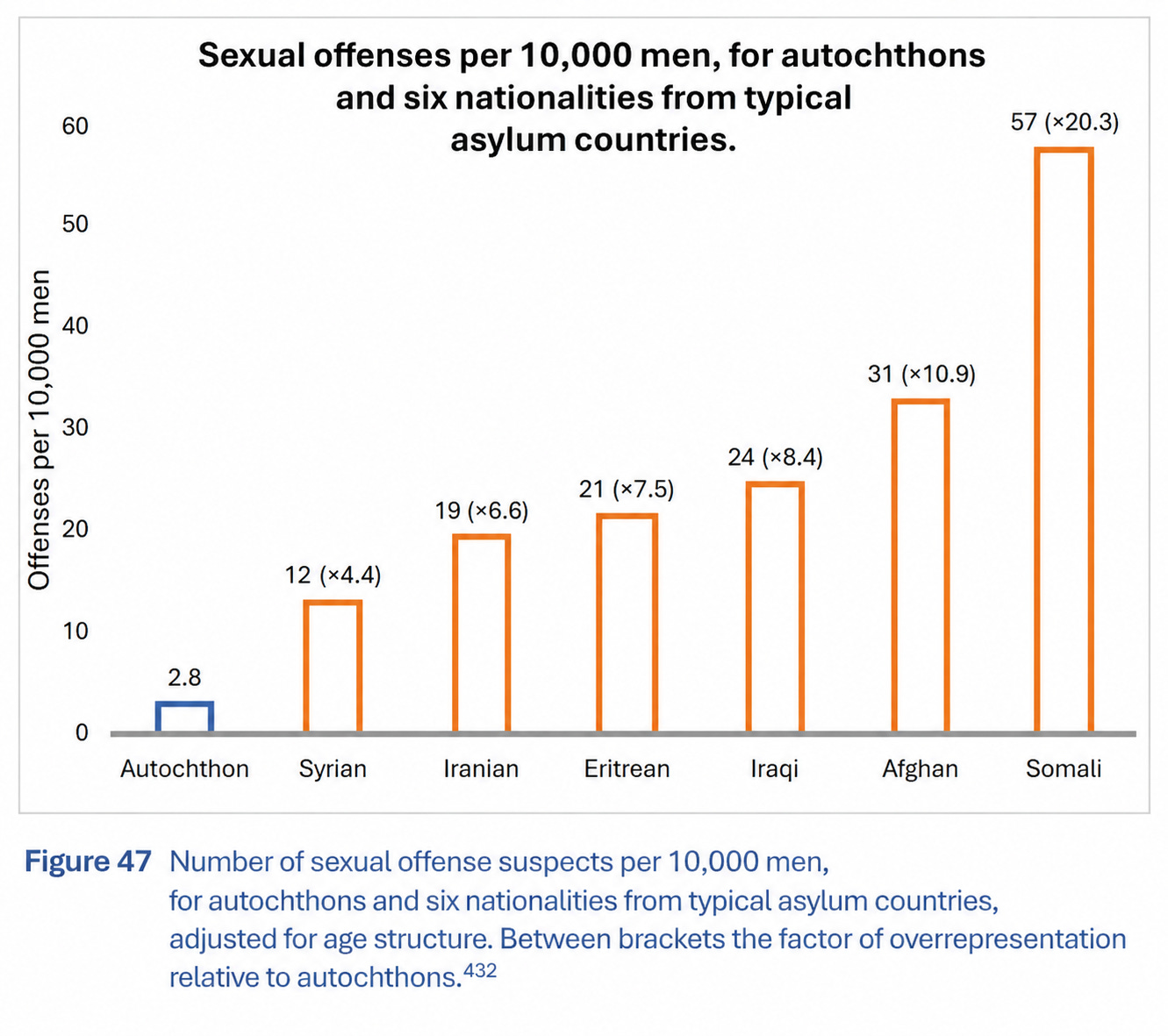
Limiting rights of women: Women have fewer rights and less worth according to traditional Quran interpretations. Limiting their rights, including their education, reduces their ability to criticize their oppressors. The cultural attitudes travel: in the Netherlands, men from Muslim-majority asylum origin countries are suspected of sexual crimes at 4-20x the rate of native Dutch men.
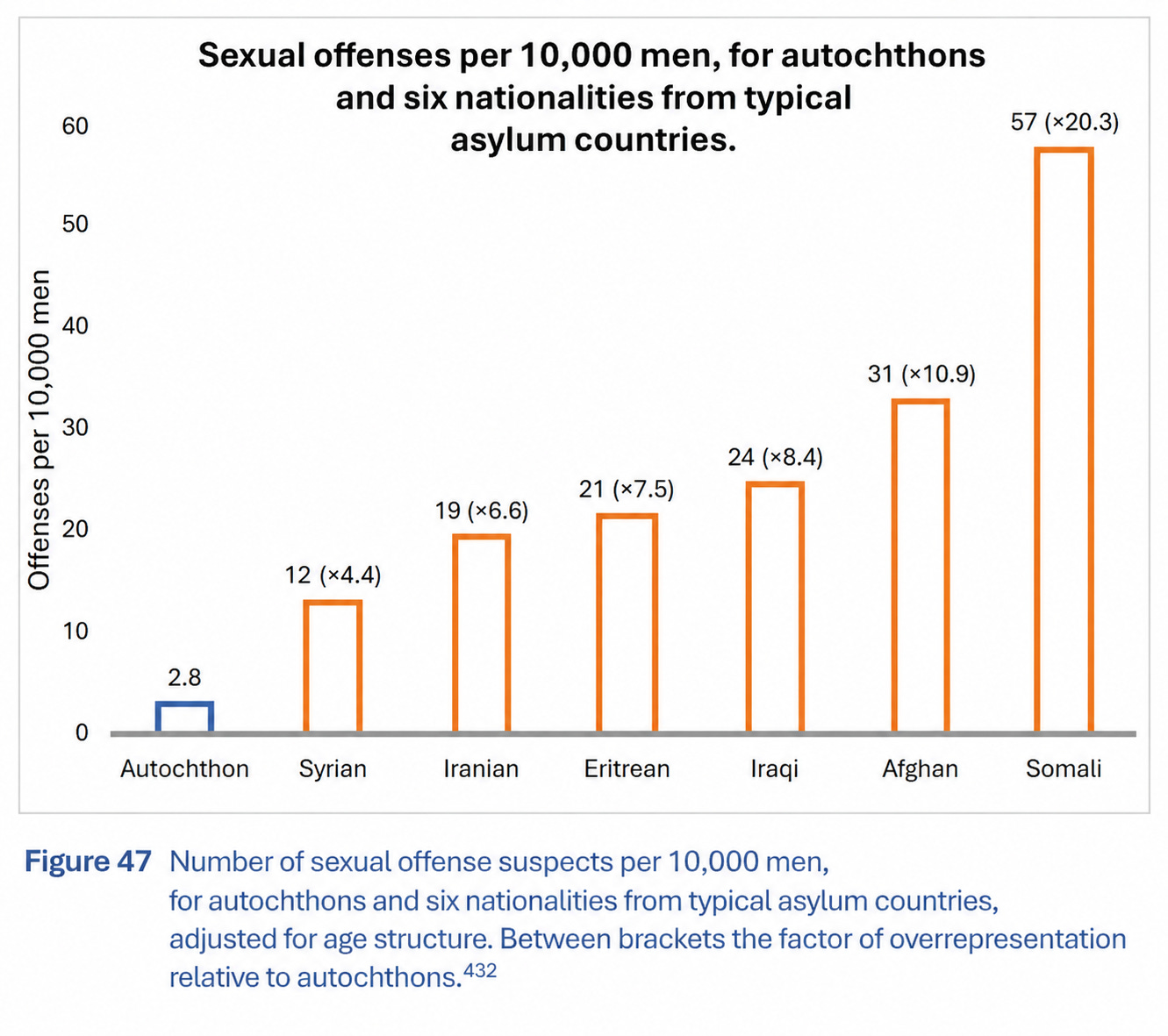
Source: Jan van de Beek, Migratiemagneet Nederland, p. 322 (Figure 47). Data from CBS (Dutch Central Bureau of Statistics). Translated to English via ChatGPT.
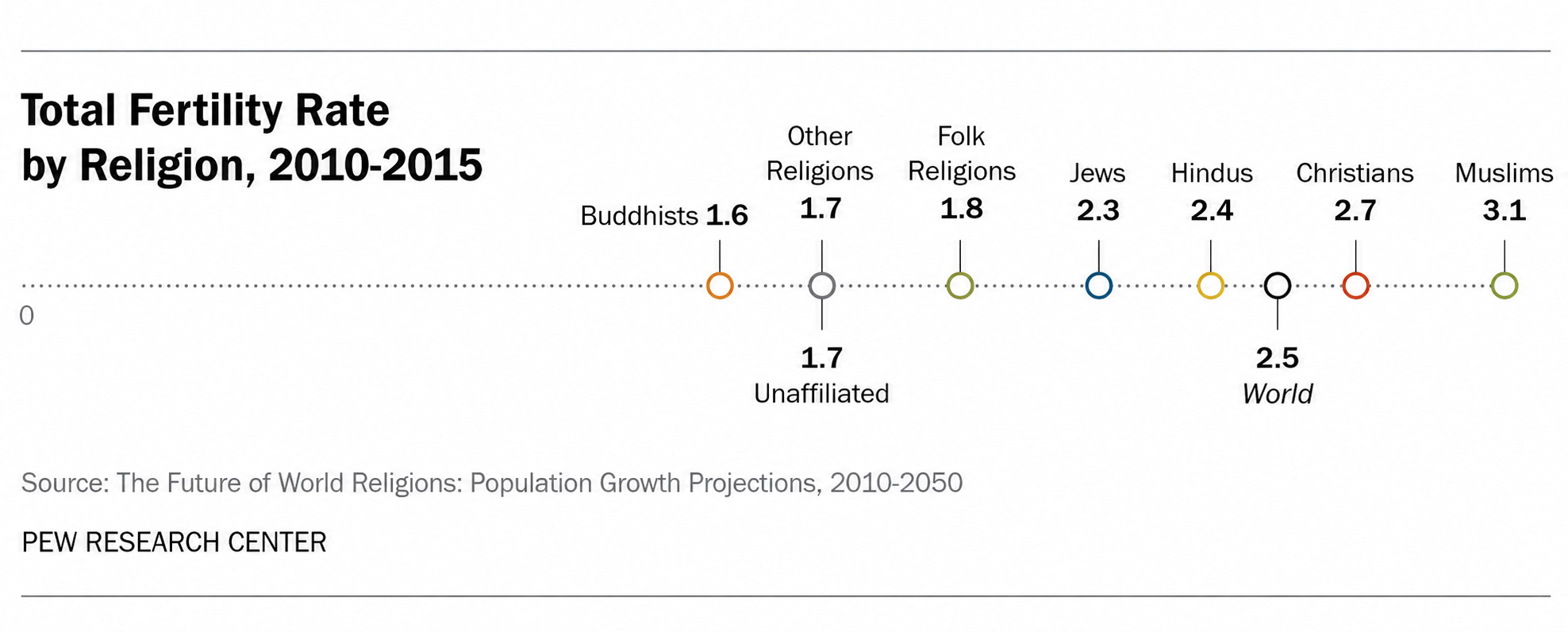
Woman hair-display & fertility control: Long hair is a strong signal of health and fertility1. The mandate for women to wear a hijab in the presence of non-related men might have originated to limit women’s ability to advertise their sexuality. Secondly, traditional Sunni and Shia Islamic marital jurisprudence allows Muslim men to be married to multiple women (a practice known as polygyny). This, together with additional encouragement by Islamic religious teachings, could have led to a higher fertility rate of 3.1 children per woman, increasing the spread of the religion. For comparison, Christians have a fertility rate of 2.7 children per woman. While the global average is just 2.5.
Vertical Distribution: Judaism is less open to converts. This can be a successful strategy because the community keeps the virus strong and, in turn, the virus binds the community closely together.
Rituals: Judaism, like other religions, has many rituals including dietary laws, Bar/Bat Mitzvahs, and Sabbath observance. These solidify the community members’ commitment to their faith.
Questioning: Similar to the Catholic belief of an explicable and ordered nature, Judaism comes with a culture of questioning existing knowledge. The phrase “How do we know this?” appears frequently in Rabbinic literature. Rabbis always had to explain their reasoning. The Talmudic tradition of chavruta - studying in pairs by arguing - makes intellectual conflict itself a form of worship. Even God is subject to argument: Abraham bargains with him over Sodom, Job demands explanations.
Literacy: Around 70 CE, after the destruction of the Second Temple, Judaism effectively mandated male literacy to read Torah - centuries before mass literacy reached most of Europe. Compounded over generations, this produced outsized intellectual output: Jews are roughly 0.2% of the world’s population and have won around 20% of Nobel prizes.
Subjectivism, i.e. the belief that there is no objective reality, is wrong. That means that there must be objective truth about the benefits and downsides of a certain religion, given a specific goal.
But what do we want? Moral knowledge is the knowledge about what to want, and what to strive for.
Karl Popper and David Deutsch have hypothesized that the most fundamental moral truth is to not destroy the means of error correction (the moral imperative).
What kind of errors? Examples include: bad leaders like dictators that kill civilians, the suppression or degradation of human rights and freedom of 50% of society (including legitimizing rape), forbidding a certain productive behavior like collecting interest.
I conjecture that the worst religion is the one that is most successful in removing the means of error correction.
But religions can mutate. There are devout Muslims who serve in the IDF, having found interpretations of Islam compatible with Enlightenment values. The right question is not whether a given religion is bad today, but whether it can mutate toward more error correction without losing its memetic potency. Christianity went through this with the Reformation and Enlightenment. Whether Islam can do the same, on a shorter timescale, is one of the more consequential open questions of our century.
Why Hitler Wished He Was Muslim - Dominic Green on Hitler’s admiration for Islam as a “Männerreligion” and the Nazi-Islamist political romance.
License to Harm: Deutsch’s Pattern and the Longue Durée of Antisemitism
The Pattern in the 21st Century: What, How, Why? (Online course by Landes and Deutsch)
On the Causal Powers of Mormonism - José Luis Ricón on what religion (specifically Mormonism) actually causes, empirically.
The Faith Instinct: How Religion Evolved and Why It Endures (book)
The God Virus: How Religion Infects Our Lives and Culture (book)
Hairstyle as an Adaptive Means of Displaying Phenotypic Quality,” Human Nature 15 (2004): 251-70
Comments
Nothing yet. Say the first thing.
Sign in to join the conversation.