
Please before diving in, read this disclaimer.
In June 2010, a company almost nobody had heard of finished digging a hole across America.
Spread Networks had spent roughly $300 million laying 827 miles of fibre from Chicago to Carteret, New Jersey, in the straightest line the geology would allow. Through the Allegheny Mountains, under rivers. The crews were told to keep quiet and stop asking questions. Dan Spivey had the idea, Jim Barksdale, who had run Netscape, put up the credibility, and the finished cable did exactly one thing: it cut the round trip between the futures market and the equities market from about seventeen milliseconds to thirteen!
They charged $14 million for a five-year lease. Michael Lewis made the whole episode famous in Flash Boys four years later.
Within about two years the cable was obsolete. Microwave relays beat it, because light moves faster through air than through glass. Spread Networks was eventually sold to Zayo in early 2018 for a net consideration of $130.5 million, well under half what the trench had cost to dig…
So the men who spent $300 million on straightness lost their edge to men who spent far less on towers. And the traders who had bought the fastest line in America discovered something slightly humiliating once they had it. Having shaved four milliseconds off eight hundred miles, the latency they had left to fight over was inside their own buildings, inside their own racks. In the last six inches between the wire coming out of the wall and the processor that was supposed to act on it.
That last six inches is a real place. It has a name, a form factor and a price. It is a card that slots into a server.
I have been thinking about that card a lot this year, because the same thing is now happening to artificial intelligence and the Agentic Economy at a scale that makes high frequency trading look like a little village fête.
Everything we read about AI is for now mostly around compute and chips: Nvidia’s Vera Rubin, AMD’s MI400, Google’s TPUs, whatever custom accelerator a hyperscaler announced last week or yesterday (at the path is goes it’s more like that…)
It’s like we have a post almost everyday about a new chip or partnership between a chip designer and a lab.
Compute is the thing that gets counted because compute is the thing that is currentyl getting sold and it is also, increasingly, the thing that sits idle. This follow a certain logic that WallStreet and chips designer and hyperscalers have absolutely understood which is the fast that an AI accelerator only earns its keep while it is working. The moment it is waiting for data to arrive from a server it is an extremely expensive space heater, it’s a microwave turning without food it it. And in something like an inference cluster, which is to say a machine built to serve millions of users rather than to train one model over three months, the waiting is constant, so the microwave is waiting for food.
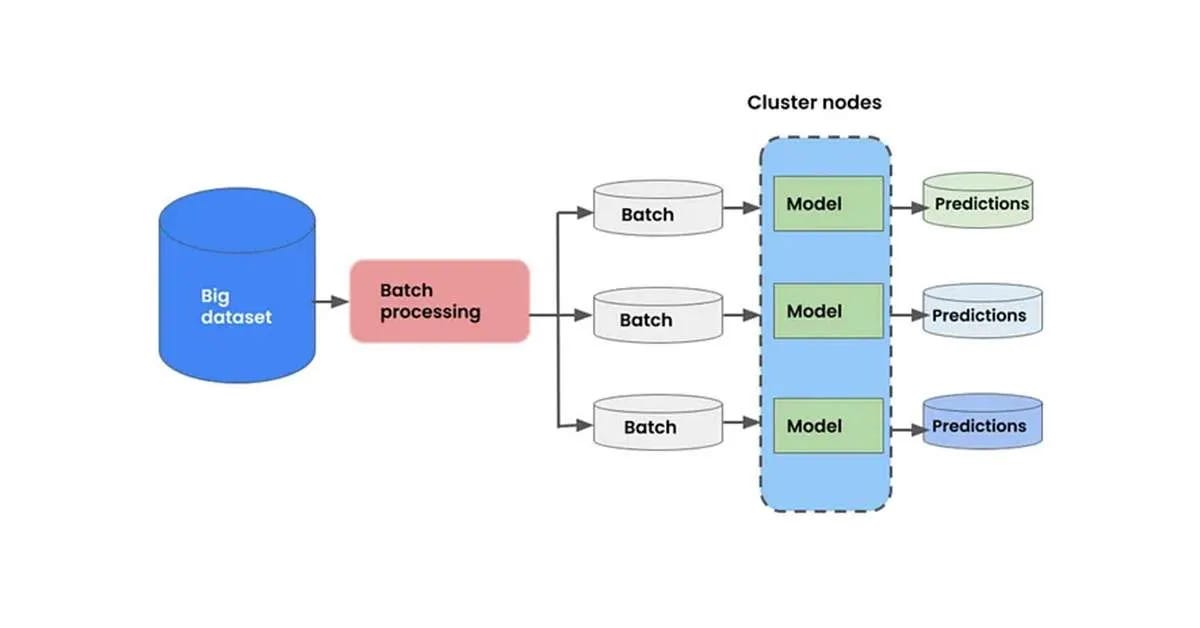
The way it works is really easy you will see, basically a request comes in, the model is spread across several servers, some results have to be exchanged between accelerators, and the answer has to leave the building fast enough that a human on the other end does not notice the delay, like in video game, it works if the guy you shoot get the bullet when passing your scope (given that you know how to aim).
And now an interesting word: Training tolerated latency. You can run a job for eleven weeks and nobody cared if a few microseconds leaked away each cycle but unfortunately it is not the case for inference as inference is a latency business. Like video games…
That’s why Dell’Oro Group now expects spending on switches in AI back-end networks to pass $100 billion by 2030, and that’s why it expects ethernet to win both the scale up and the scale out contest.
By finally getting to my point: we don’t talk about the adapter market underneath it, the cards themselves, which Dell’Oro has projected to exceed $16 billion by 2028, with data processing unit revenues already doubling year on year through 2025.
So the ‘bottleneck’ (I can’t stand that word anymore lol) has moved, again yes, to the fabric, and from the fabric to, our, last six inches.
And this interesting thing about this whole thing is that thee company that dominates AI compute also sells you the card. To give you a concrete example, Nvidia’s ConnectX-8 SuperNIC does 800 gigabits and works beautifully, also provided the thing on the other side of the slot is also Nvidia. I remember that Broadcom also launched Thor Ultra in October 2025, which for non connaisseur the first 800g Ethernet NIC compliant with the “Ultra Ethernet Consortium” specification. If you don’t know, it means that the thing is aimed specifically at clusters of more than a hundred thousand accelerators (which is common nowadays).
And, finally coming to the matter ! This leaves a gap in the middle, and the gap is the whole reason I am writing this!
Now there is more and more AI silicon companies, the Inference specialists that need a card that behaves exactly the way the architecture demand, that can be reprogrammed when the standards shift underneath them, (which I think they will by the way), and that ships in the low tens of thousands rather than the low millions.
The thing is, nobody builds an application-specific chip for a customer who wants twenty thousand units, because the economics are absurd.
So somebody has to make a programmable card instead. There are very few people left in the world who do this properly at four hundred gigabits per second with zero packet loss, and one of them is a company of eighty-two people in a Copenhagen suburb that most of the market still files under “telecom equipment, small, Nordic, avoid”.
I found it in my own Gem Folder, which I will come back to. First, the questions.
So as usual, these are the questions that I asked myself and that helped me build the argumentation for the thesis of this company.
Why does this have a board made up of the people who used to run Intel’s networking business?
What actually happened in 2024 and is it repaired?
If the network is the real AI bottleneck, why was Broadcom not simply going to take the whole thing?
How much AI revenue has this company actually booked to date?
What does the first production order really tell us, and who is the customer?
Why does a hardware business earn a 70% gross margin and what happens to that margin when AI volume finally arrives?
What has to happen for unit shipments to go from 9,700 to 60,000?
Accordingly, is the balance sheet strong enough to reach that point without another placement?
What is already in the price?
What would make me wrong?
You know know that I changed how I work and it’s cool thing:
I now send one Hidden Market Gem idea every single day. One company, every day, across every sector, into my big gem ideas folder which I called ‘The Mining Session’, which is my own working watchlist and which I update daily. This is a daily drip, a daily drip of raw ideas, the ones I am actually looking at, before they become anything.
This company came out of that folder. I put it in front of subscribers a few days ago. Today it gets the full treatment.
Paid subscribers get the daily gem idea, the whole folder, my live portfolio, my investment strategy, and the full track record of every article published since the start of the year. The portfolio sits in the Perks section on Substack, so you can see exactly what I own and what I have done with it, rather than taking my word for anything.
Everything below the line is for subscribers.
Let’s go
Comments
Nothing yet. Say the first thing.
Sign in to join the conversation.