
Hello guys, I spent the last +12 hours (I also slept a bit lol) writing this just so you won’t make a massive mistake at the opening next Monday. This time i won’t talk about an hidden market gem or anything else, but why people are scared, why they sold, why they should have not and why you shouldn’t. I tried to make this as easy as possible to understand, but you are smart so I won’t be any issue for you. In case you don’t understand I post these two notes:
Because people have been massively selling their AI stocks for some reason, even if there are no reason at all. Let’s start with one of my favorite all time:
Manchester, 1865. A 29-year-old logician named William Stanley Jevons publishes a book with a black dusty title, The Coal Question, and detonates the economic consensus of Victorian Britain.
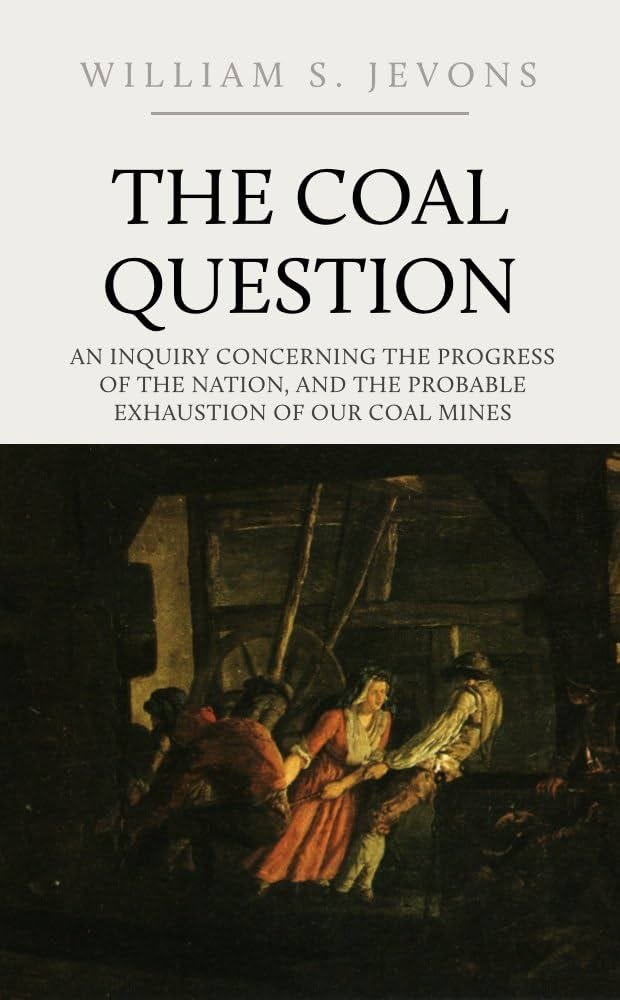
At the time, the country is anxious, indeed, coal is the empire’s bloodstream and everyone fears it will run out. Like oil today lol, anyway. The engineers have an answer ready: efficiency. James Watt’s engine at the time extracts far more work from a tonne of coal than Newcomen’s ever did, so surely consumption will fall. Jevons says the opposite. His moto: make coal cheaper to use, he argues, and you do not use less of it. You find a thousand new uses for it! And it happened: more factories, more railways, more furnaces, more of everything nobody had yet imagined. British coal consumption did not fall. Actually it exploded, decade after decade, exactly as he predicted and become of the most superpower the world ever known.
I keep coming back to that book that i first discover 4 years ago when I was in class prépa in France, first because it is brilliant to explain how we treat expectation, second because I learnt by heart the complete title and I looked super smart (that is the only book I knew) and then because 161 years later the market still refuses to read it.
Fast forward to a Monday in January 2025. A Chinese lab called DeepSeek releases R1, a reasoning model built for a fraction of what OpenAI spends, and Nvidia loses roughly $600 billion of market value in a single session, the largest one-day destruction in market history.
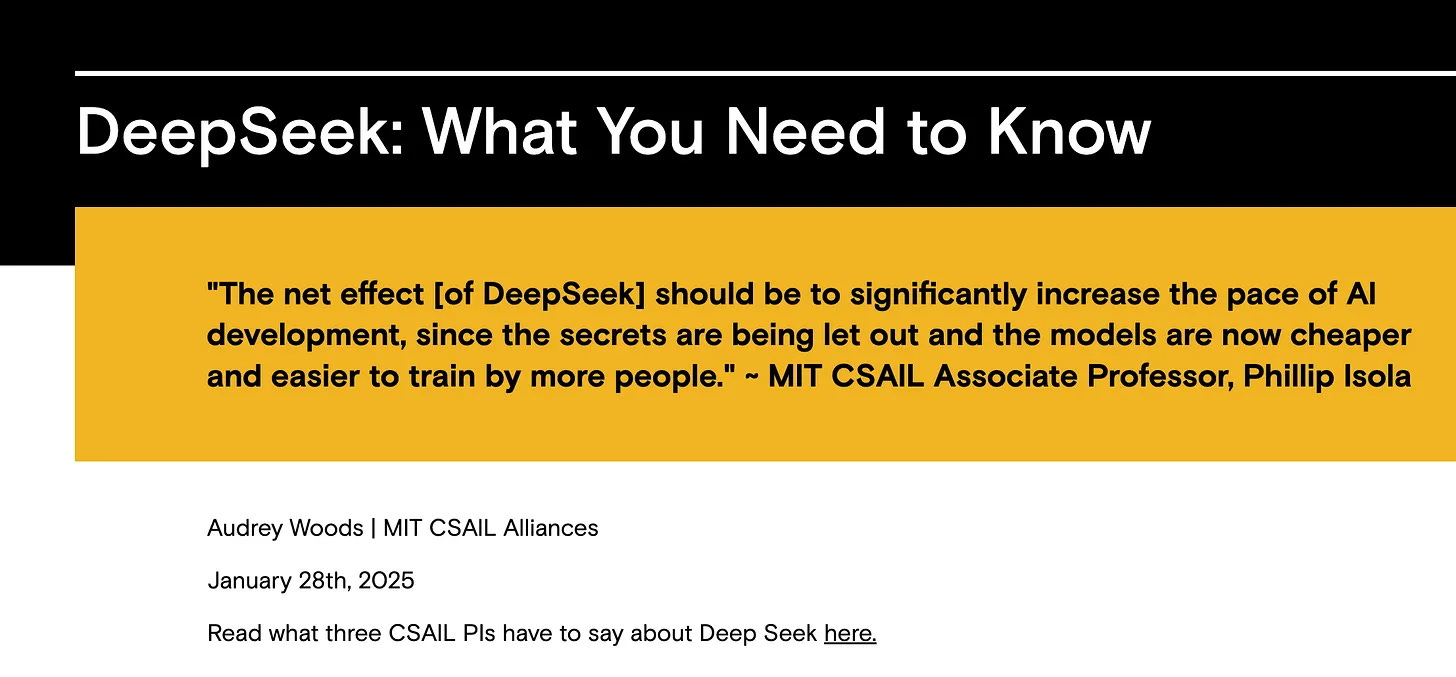
The logic of the sellers is Victorian engineering logic: efficient AI means less compute, less compute means fewer chips, fewer chips means sell Nvidia. Within hours, Satya Nadella, who runs one of the largest buyers of compute on Earth, posts five words on X: “Jevons paradox strikes again!” As AI gets cheaper and more accessible, he argues, its use will skyrocket into a commodity we cannot get enough of…
The market ignored him, then spent the following year proving him right, then forgot the lesson entirely… History doesn’t repeat itself, but it rhythms.
Because here we are again. July 2026.
Moonshot releases Kimi K3, a 2.8 trillion parameter open-weight model, the largest ever published, roughly 75% bigger than DeepSeek V4. Which is in reality, a Claude 2.0.
Meta announces on 1 July that it plans to sell surplus AI capacity through a new unit, Meta Compute.
SK Hynix signals a slower pace of HBM expansion.
A hawkish Federal Reserve under Kevin Warsh adds nine policymakers leaning towards hikes.
And over $1 trillion of market value evaporates from AI chip stocks in a matter of weeks. And my personal favorite detail from this correction: on 15 July, ASML beat estimates and raised guidance, and the sector sold off, because a record equipment backlog was read as a warning of overcapacity. Read that sentence again. A company told the market its order book had never been fuller, and the market heard bad news…
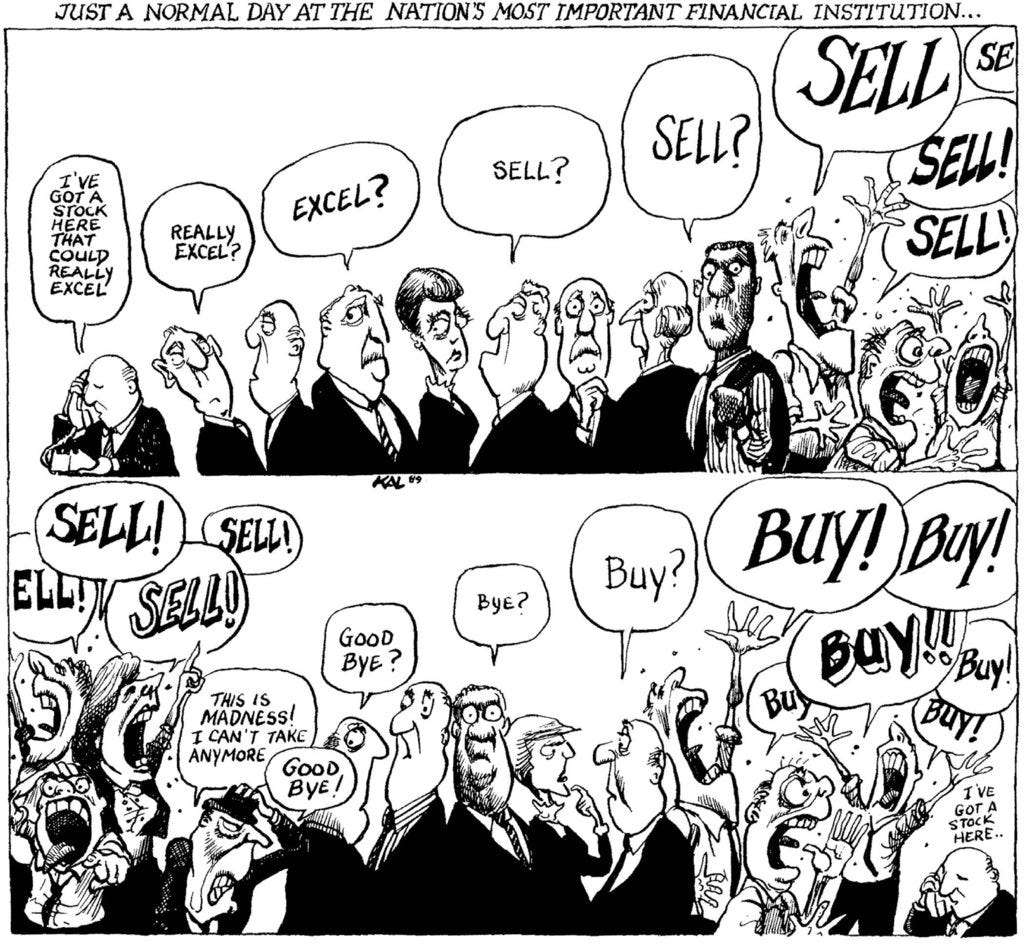
Every one of these episodes follows the same script: a new model, a bearish thread from an influencer, a whiff of the word bubble, and the whole narrative is put on trial for a 15% drawdown. I think the people selling into these air pockets have not understood the machine they are trading. So let me explain the machine.
I like this cartoon, so I put it again:
Take a chip, call it Chip X1, that can run four ChatGPTs simultaneously. Tomorrow, the model becomes more efficient and needs half the compute. Do we switch off half the chip? No. We run eight ChatGPTs on it.
Then Nvidia releases the X2, which runs eight of the original models. Is the X1 obsolete? Yes and no : it keeps running its eight, while the X2 runs sixteen.
Then the model itself grows hungrier, because those sixteen instances generated the data and the revenue to train something far more capable, and suddenly the X2 runs only two of the new model and the X1 manages one.
Chips get better. Models get either cheaper or more powerful, and usually both in alternating waves. The loop spirals. This is not a theory I invented. It is coal in 1865, it is bandwidth in 1999, it is storage in 2005, when a gigabyte stopped being precious and we responded by filming everything we ate.
Every technology that got radically cheaper got radically more consumed. I have yet to find the counter-example, and believe me, the bears have been looking. That is historical fact.
There is a second pattern the market refuses to see, and it is the one I find genuinely fascinating as an investor and entrepreneur in the making.
Since 2023, the binding constraint on AI has moved like a travelling circus. Let me explain, first it was GPUs, and the world discovered the word allocation, then it was energy, and utilities became growth stocks again, then data centre shells and land, then raw materials and transformers, then photonics and interconnects, and now, in 2026, it is memory, with DRAM prices up roughly 90% in the first quarter alone and Micron, SK Hynix and Samsung each crossing $1 trillion of market value in May, a milestone no memory trio, or cartel, call it what you want, had ever reached.
Here is what the rotation hides, my spiral: he market treats each bottleneck as solved the moment it stops being the headline but the truth is… none of them is solved, why did you sell you energy stocks to memorys?
TSMC’s C.C. Wei stood in front of shareholders on 4 June 2026 and called this year’s demand growth “insane”, warning that supply will lag demand for years, with advanced nodes reportedly sold out through at least 2027. We are in mid 2026, so in one year and half… Also CoWoS packaging demand is heading towards one million wafers in 2026, nearly triple the level of all of 2024. SK Hynix’s CFO told analysts the entire 2026 HBM supply was already sold out. Micron’s Sanjay Mehrotra said his HBM capacity for 2025 and 2026 was fully booked. Nvidia disclosed $500 billion of chip bookings across 2025 and 2026, a figure its CFO has since said has grown, and Jensen Huang now talks about a demand backlog exceeding $1 trillion through 2027.
The energy question is so unresolved that Washington is targeting a quadrupling of nuclear capacity by 2050.
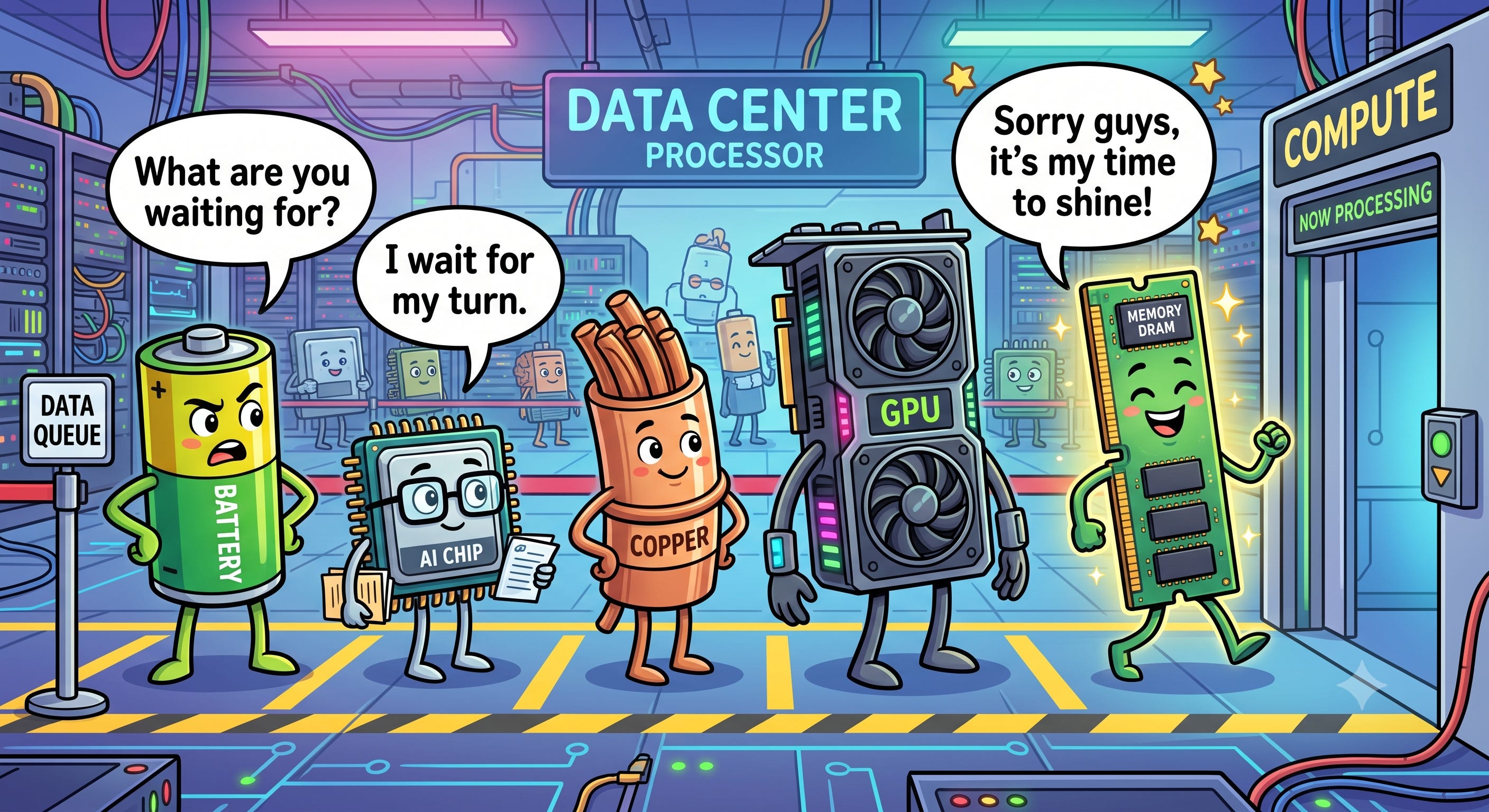
So no, we did not fix the chips, the power, the land, the copper or the optics. We simply got bored of talking about them. The constraint did not disappear, in fact, it even multiplied. When every layer of a supply chain is sold out simultaneously for years ahead, the honest description is not “overcapacity”.
I would rather say, it is a queue.
I made this funny image with a model that caused a market crash of -10% and thanks to a chip that made another -5% drop:
Joseph Schumpeter taught us that fundamental innovations do not arrive alone. They arrive in clusters, dragging swarms of secondary innovations behind them, and each cluster takes decades to work through the economy. The steam engine begat the railway begat the department store begat the mail-order catalogue. Electricity took forty years to reorganise the factory floor, because it was not enough to swap the steam shaft for a motor, you had to rethink the entire building. The internet needed fifteen years between the Netscape IPO and the smartphone economy it made possible.
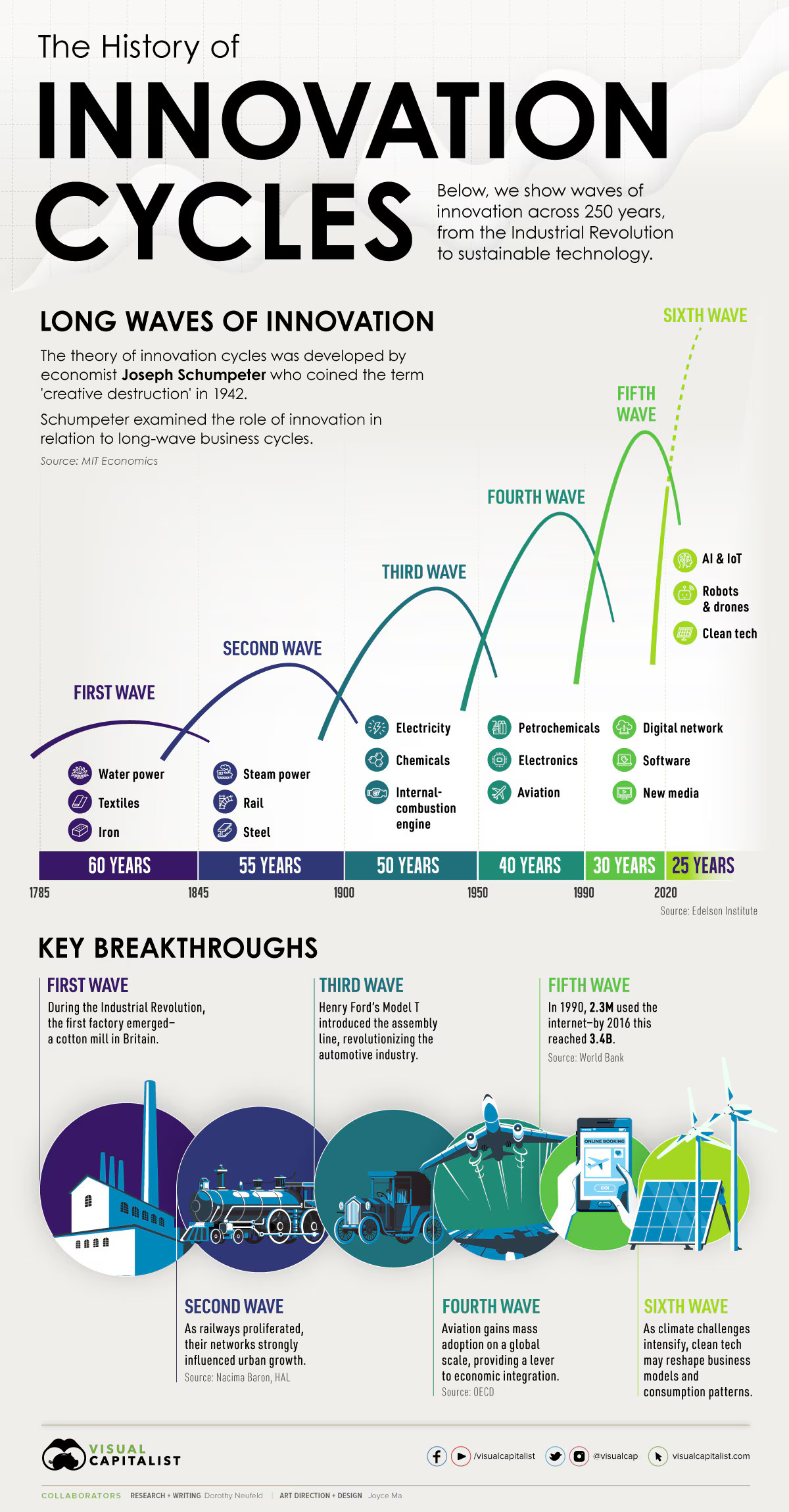
Where are we on that clock with AI? I would argue we are somewhere around 1996, and I may be generous.
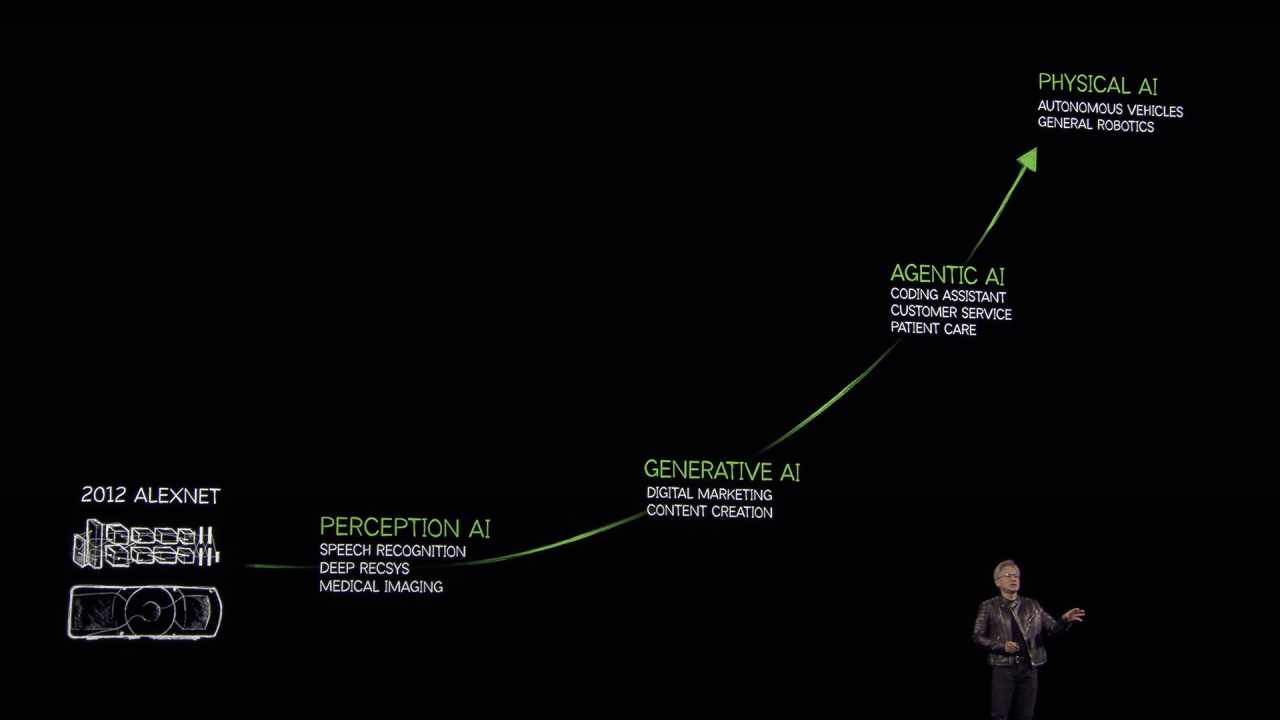
Just so you know, we are only making good progress in generative AI VS what it could eventually be. Agentic is at the embryonic stage. Physical? not even existing, we are only talking about it for real since weeks.
What I want to tell you is that three years ago, ChatGPT could draft an email, an okay e-mail. Today, Claude Cowork takes control of my computer and writes code while I am at the gym dying doing the 5th reps of 100kg benchpress (not a flex).
That is the distance travelled in thirty-six months, and it is precisely why nobody, not one CEO, not one analyst, not one central banker, can tell you what compute demand looks like in 2036. The models improve monthly.
Every improvement unlocks use cases that were science fiction the previous quarter, and every new use case books capacity that does not yet exist. Forecasting AI demand ten years out today is like forecasting mobile data demand in 1999, when the killer app was the ringtone. We have not discovered 1% of what this technology will be asked to do. That uncertainty is not a bug in the bull case.
IT IS THE ACTUAL BULL CASE.
Every drawdown, the prosecution presents the same three charges.
Let me take them to you one by one.
The Meta Compute announcement was read as proof that hyperscalers have chips gathering dust and my read is the exact opposite: Meta monetising spare cycles is Jevons in action, capacity finding demand at a clearing price, the same way AWS was born from Amazon’s spare servers in 2006. Nobody today argues Amazon overbuilt in 2005. Meanwhile the physical layer beneath Meta is sold out for years, you cannot have an overcapacity crisis and a $1 trillion backlog at the same time…
Here I refuse to be a cheerleader, not my style, because the numbers have moved and I would rather tell you before the bears do.
Until mid-2025, this buildout was overwhelmingly funded from operating cash flow, I am afraid that era is ending because hyperscalers raised roughly $120 billion of investment-grade debt in 2025 if I am not mistaken, including Meta’s record $30 billion october deal and Google $25 billion, and Bank of America expects the group to consume about 90% of operating cash flow on capex in 2026, up from 65% last year, with aggregate capex on track to cross above cash flow around the third quarter.
That is real, and it deserves monitoring but context is everything. This debt sits on top of over $400 billion of annual operating cash flow generated by the most profitable business models ever built. The telecoms of 1999 borrowed junk-rated billions against traffic projections and prayer; WorldCom and Global Crossing had no cash machine underneath the leverage. And when Meta priced its $30 billion bond, the order book reached $125 billion. The most conservative money on Earth, the credit market, oversubscribed the AI trade four times over, that is not what a solvency crisis smells like from my experience.
Yes, parts of this market are priced for delirium and this a point i give to bears with no problems at all, and I will not defend a speculative small cap at 100 times sales (I usually don’t right?).
But the core is not the froth! Cisco peaked at 131 times forward earnings in March 2000, having built its myth on hardware nobody needed twice. Nvidia, after generating $215 billion of revenue in fiscal 2026 with data centre sales up 73% year on year in its final quarter, trades in the mid-twenties to mid-thirties on forward earnings depending on the week.
That is a multiple you could literally defend to a value committee! And the decisive difference with 1999: the revenue is arriving, OpenAI reached roughly $25 billion of annualised revenue by February 2026, up 233% year on year, with over 9 million businesses paying. Same for Anthropic. Pets.com never had a quarter like that... the dot-com bubble was surely a valuation crisis without revenues and this is a valuation debate on top of the fastest revenue scaling in corporate history.
If you will not take it from a newsletter writer in front of a Bloomberg terminal, take it from Larry Fink. The chief executive of BlackRock, the largest asset manager on Earth, told the Milken Institute in May that AI is creating simultaneous shortages across four markets, compute, chips, memory and electricity, and has called the buildout a once-in-a-century investment opportunity, comparable to the railways and the highways, requiring some $10 trillion of capital in the United States alone.
He explicitly frames the moment as a supply crunch, not a bubble. When the man whose entire business model depends on not losing his clients’ retirement savings describes your bear case as a shortage, I would at least pause before pressing sell or even turn off the computer and go for a walk to think about it.
I am wary of plenty of names in this rally, and at Future Cognitive Capital my working assumption with my other analyst friends remains that the largest share of value will ultimately be captured by data-driven businesses rather than by every company with AI in its investor deck.
Selectivity is not optional here.
But anyway, on the direction of travel, I think the panic sellers have made a category error because they are trading AI as a product cycle when it is an infrastructure cycle, and they are treating every efficiency gain as a demand shock when 161 years of evidence says efficiency is the demand shock, in the other direction.
A better Chinese model is bullish.
Cheaper tokens are bullish.
Meta renting out spare compute is bullish.
i see these as the signatures of a general-purpose technology becoming a commodity we cannot get enough of, which is precisely what Jevons would have told you to buy.
Humanity is financing the largest infrastructure programme in its history, the CEOs building it say they cannot meet demand for years, and the revenues are compounding at rates the dot-com era never saw. This locomotive will have accidents, derailments even, and some carriages are certainly overpriced but honestly getting off at the first station because the air smells of coal? Jevons wrote a whole book about that smell: it was the smell of the century starting.
The fear sellers have always existed and they will always exist, but history rarely paid them.
— Hidden Market Gems
Guys, this article reflects my personal views and is provided for information purposes only. It does not constitute investment advice, an offer, or a recommendation to buy or sell any security at all. I hold positions in chips companies or AI related stocks. Always do your own research and consider your personal circumstances before investing.
Comments
Nothing yet. Say the first thing.
Sign in to join the conversation.