
Quick housekeeping: it’s been a minute. Going to Japan mid-February and a pretty relentless stretch at my day job meant the every-other-week schedule slipped. Focus went to getting things done wherever I could - more on that in the Studio Update below.
Ok. Now.
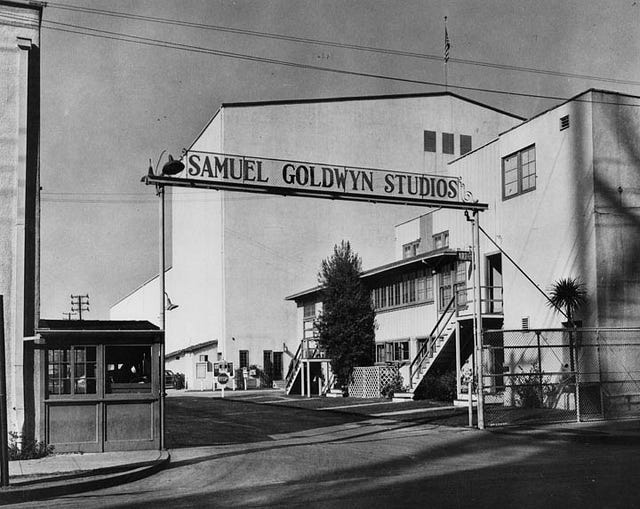
I’ve been thinking about what happens when the look of something becomes the whole argument for why it matters.
You’ve seen it. A trailer drops and it’s gorgeous. Dynamic lighting, scale that makes you lean forward, and production design leaves you breathless. You feel something before you know anything about the story. The feeling of importance. That sense that whatever this is, it cost enough to be worth your time.
There’s actually a name for this.
A film scholar named Vivian Sobchack wrote about it back in 1990, calling it “visual and aural excessiveness” in the big Hollywood epics like Ben-Hur, Cleopatra, The Ten Commandments. Her argument was that the material weight of these films did the emotional work that story is supposed to do. You didn’t need to care about the characters yet because the scale had already told you something important was happening.
We’re seeing that a lot right now.
Jon Stahl – was a writer on Veep who’s been a leading voice in the filmstack community on Substack - put it more directly: at some point, production value stopped supporting good storytelling and started replacing it. He’d rather make something compelling on his iPhone than something hollow with a 200-person crew.
And then he said the thing I can’t stop thinking about: It’s a massive problem that GenAI’s main trick is approximating Hollywood-level production value.
Jon’s right (and go show him he’s right by liking and following his work):
But I want to sit with why he’s right for a second.
Excess always required buy-in.
You had to agree to be impressed before the story earned anything. And that agreement held because scale was genuinely hard to produce. It’s expensive and time-consuming. The spectacle carried proof and somebody believed in this enough to put all of that behind it.
AI doesn’t change the trick, it just removes the cost. You can now generate the feeling of importance for almost nothing.
The signal that used to say this matters doesn’t say anything anymore.
Which means if you were leaning on the look as your primary argument, you just lost it.
But it’s not just a problem for the people making things.
When everything looks polished and expensive and important, how do you know where to put your attention?
I wrote a while back about focusing on signal vs. noise – learning to tell the difference between things that feel like progress and things that actually are. Surplus is what makes that so hard. When the floor for “looks impressive” drops to zero, the FOMO gets louder and the real signals get buried.
That’s scary. But a writer named Ed William, who writes his Substack called Rough Cuts, reminded me we’ve been here before:
After World War II, the old studio system cracked: antitrust rulings, television stealing the audience, attendance dropping by half. The infrastructure that organized filmmaking for decades fell apart.
Studios panicked and threw money at gimmicks. 3-D. CinemaScope. Cleopatra almost killed Fox.
And then, eventually, the filmmakers who’d been quietly developing real craft, like Scorsese, Coppola, and Altman (just a few obviously) stepped into the gap.
Now, I know that’s a simplification (it was a short window), but the pattern holds.
Disruption strips away the scaffolding → Things get chaotic → People who were always doing the real work become visible. Not because they changed, but because everything around them did.
That’s where I think we are.
And it’s personal for me. What I’m building with Space Dinos leans heavily on a specific visual tradition, inspired by specific shows and visual language, and that aesthetic is load-bearing. It’s a promise about the kind of craft behind it. But it only holds weight if what’s underneath is real. If the characters have actual stakes. If the story earns the look instead of hiding behind it.
Otherwise it’s just a prettier version of the same surplus. A nice shell.
“The rest of us will be fine," Jon wrote.
I keep coming back to that. It’s reassuring, but it’s also a challenge. You have to actually be one of the people doing the real work before it mattered. You don’t get to care about craft retroactively. Either that was always the center of what you were making, or it wasn’t.
I think it was. But the proving of it is the work now.
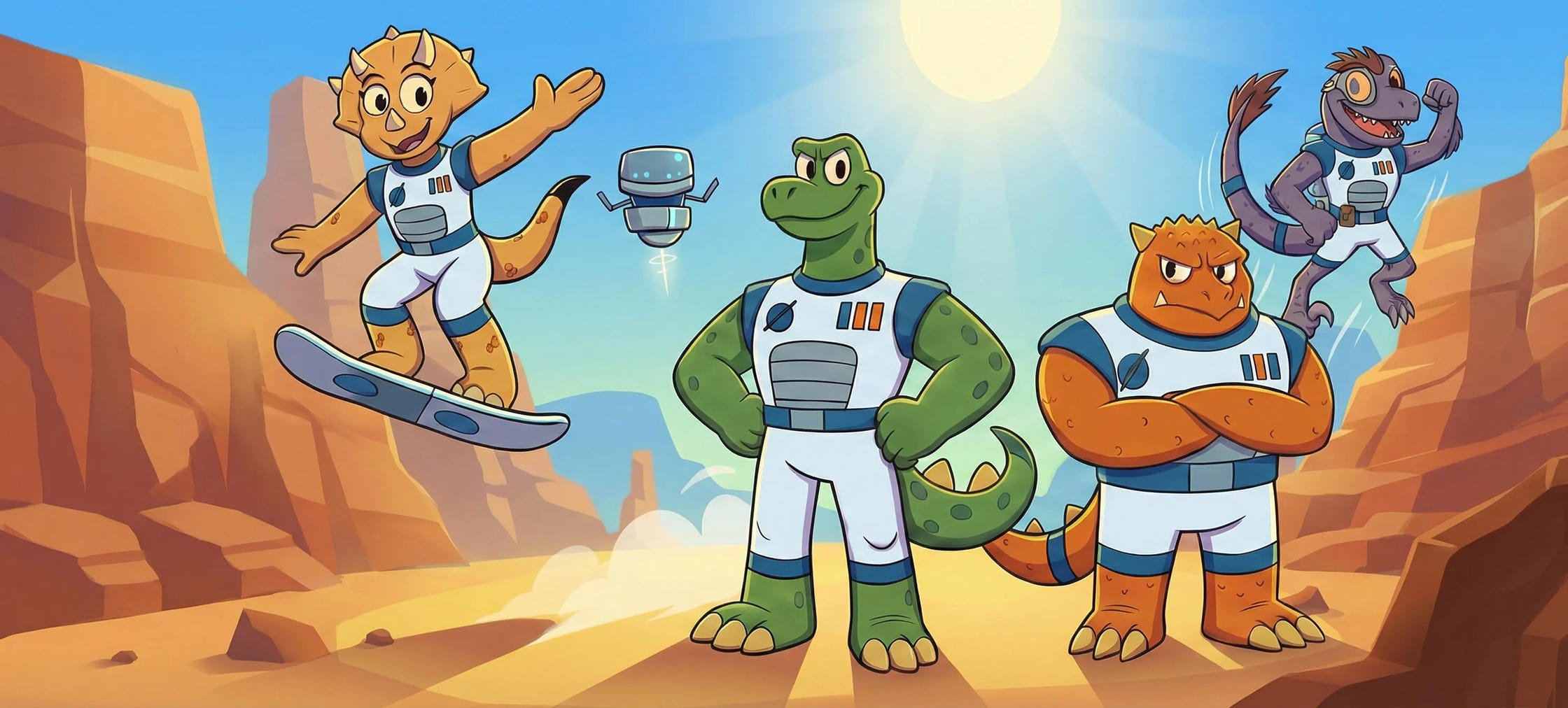
Animated series. Logline: In a universe where high-stakes races keeps the peace, the newly-formed Space Dinos team gets derailed when two human stowaways turn their galaxy upside down.Accomplished:
Locked in a Creative Director! ! This is huge step forward.
Goal for the next two weeks:
Get the creative workflow moving. Next step, designing our iconic characters. 🚀 🦕
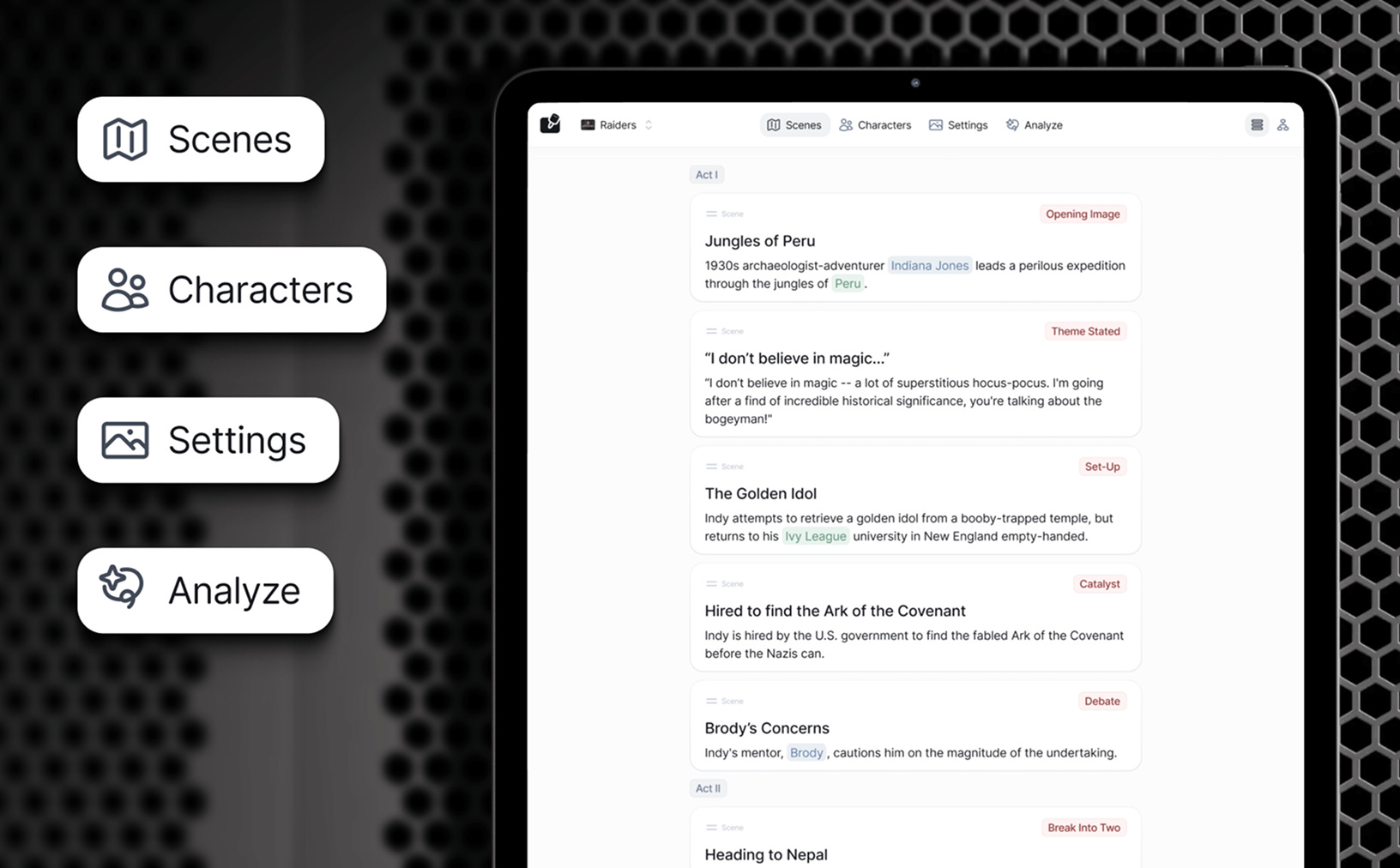
A modern story tool for writers and creators to turn story arcs into compelling narratives and characters for any screen orientation.Accomplished:
2 user feedback calls
Migrated the entire project to new libraries for a more secure foundation for future building and scaling
Completed all core functionality
Goal for the next two weeks:
Stress test all user flows for bugs
Build out a version storytellers can use during invite-only alpha testing. Interested in being part of this? Please reach out.
As always, thanks for being here.
Be well. Excelsior,
Will
Learn more about why I write here.
If this resonated with you, consider passing it along to someone who might appreciate it.
Thanks for reading Saturday Morning! Subscribe for free to receive new posts and studio updates.
Comments
Nothing yet. Say the first thing.
Sign in to join the conversation.