
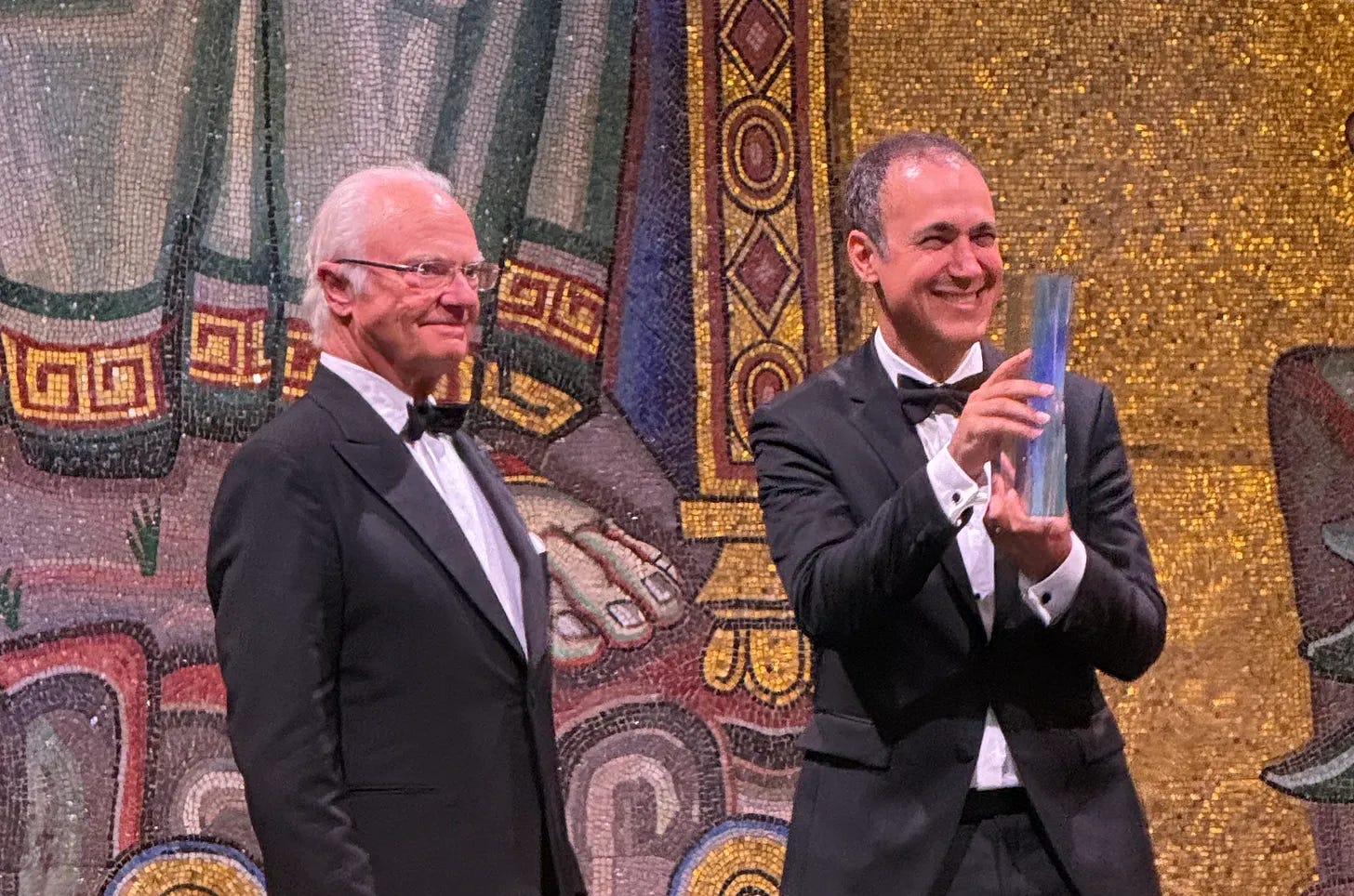
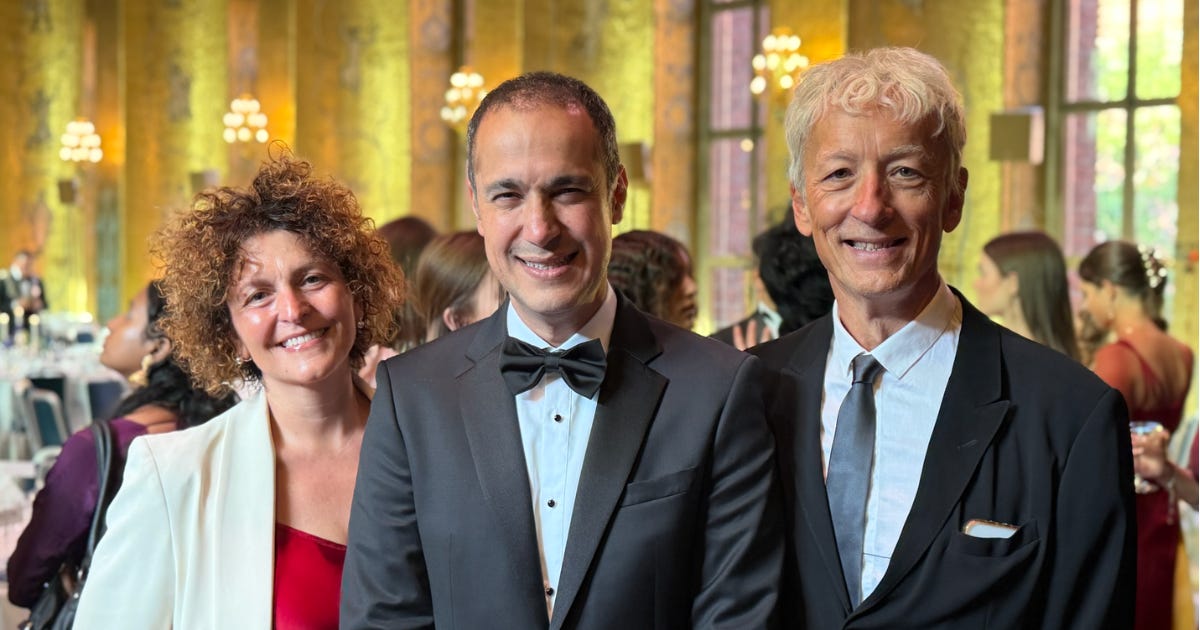
Last night, beneath the golden mosaics of Stockholm City Hall’s Golden Hall, Kaveh Madani received the 2026 Stockholm Water Prize — the award often described as the “Nobel Prize of Water.”
It went to an Iranian scientist who has done something rare and urgent: he has turned the global water crisis into a political, civic, and deeply human question.
The evening could have been the international celebration of a brilliant scholar. Instead, it felt like something larger. Almost like a peace prize.
Because Madani did not step onto that stage carrying only models, data, and years of research. He carried the story of a man who served at the highest levels of his country’s environmental institutions, who paid the price of intellectual freedom with arrest, exile, and distance from his homeland — and who today still speaks about water as one speaks about the most essential things: with clarity, gratitude, and responsibility
.
His speech was not a celebration of himself. It was an act of restitution.
He thanked his people. His mother, who through great sacrifice transmitted to him a mission and a devotion to water and its protection. His family. His classmates and research companions, who had travelled from all over the world to celebrate that moment. And above all, those who, at different moments in his life, gave him trust, advice, or opened a door when very few doors were open.
He thanked Sweden, the country that gave him his first visa to come to Europe. He thanked Swedish taxpayers, whose taxes made it possible for him to study. In just a few sentences, he reminded everyone that welcoming talent, when it is systemic and farsighted, is not a cost. It is an investment in the future.
Those words made me feel proud to be European. And at the same time, they forced me to look with discomfort at a system — our system — that today often seems to have lost exactly that kind of vision.
Listening to him, I thought that perhaps this is how we recognize giants: not by the way they walk onto a stage to receive an award, but by how quickly they transform recognition into an act of service. They do not keep the light on themselves. They turn it into energy to illuminate the path for others.
Madani was awarded for his pioneering contribution to global water governance and for making one of the deepest crises of our time understandable: what he calls water bankruptcy.
It is a hard expression. And a necessary one.
Because “water crisis” is no longer enough. A crisis can pass. Bankruptcy remains, unless the structure changes. It means we have consumed more than natural systems can regenerate. It means we have treated water as a technical issue, when in reality it is politics, economy, agriculture, health, peace, security, justice.
And it means we can no longer pretend this problem belongs only to the Global South, to poorer countries, or to places far away from our daily lives.
It concerns us.
It concerns Europe. It concerns Italy. It concerns our cities, our fields, our food supply chains, our development models, and the way we inhabit our territories.
Copernicus is telling us this without rhetoric: Europe is heating up, drying out, watching its rivers decline and its anomalies become normality. This is no longer a climate forecast. It is our daily news.
That is why we need science capable of translating data into public awareness.
Kaveh does exactly that.
He does not simplify complexity. He makes it understandable. He explains that water is not merely a complicated problem, solvable with more technology, more funding, more infrastructure. It is a complex problem. And complex problems are not solved once and for all. They are navigated. They require trust, compromise, cooperation, political vision, shared responsibility.
This is an enormous lesson in a time when we are constantly tempted to turn everything into slogans, polarization, and the emergency of the day.
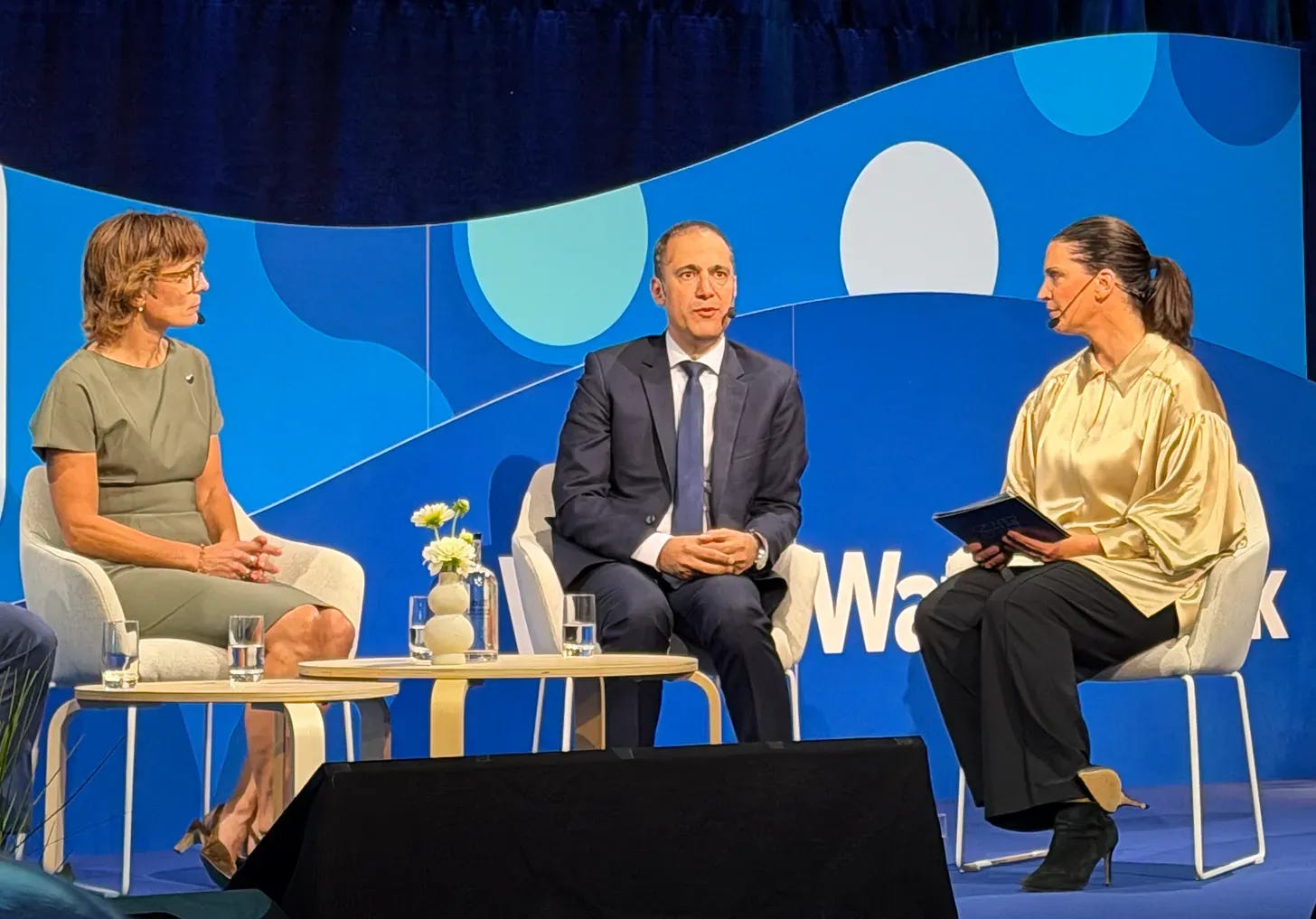
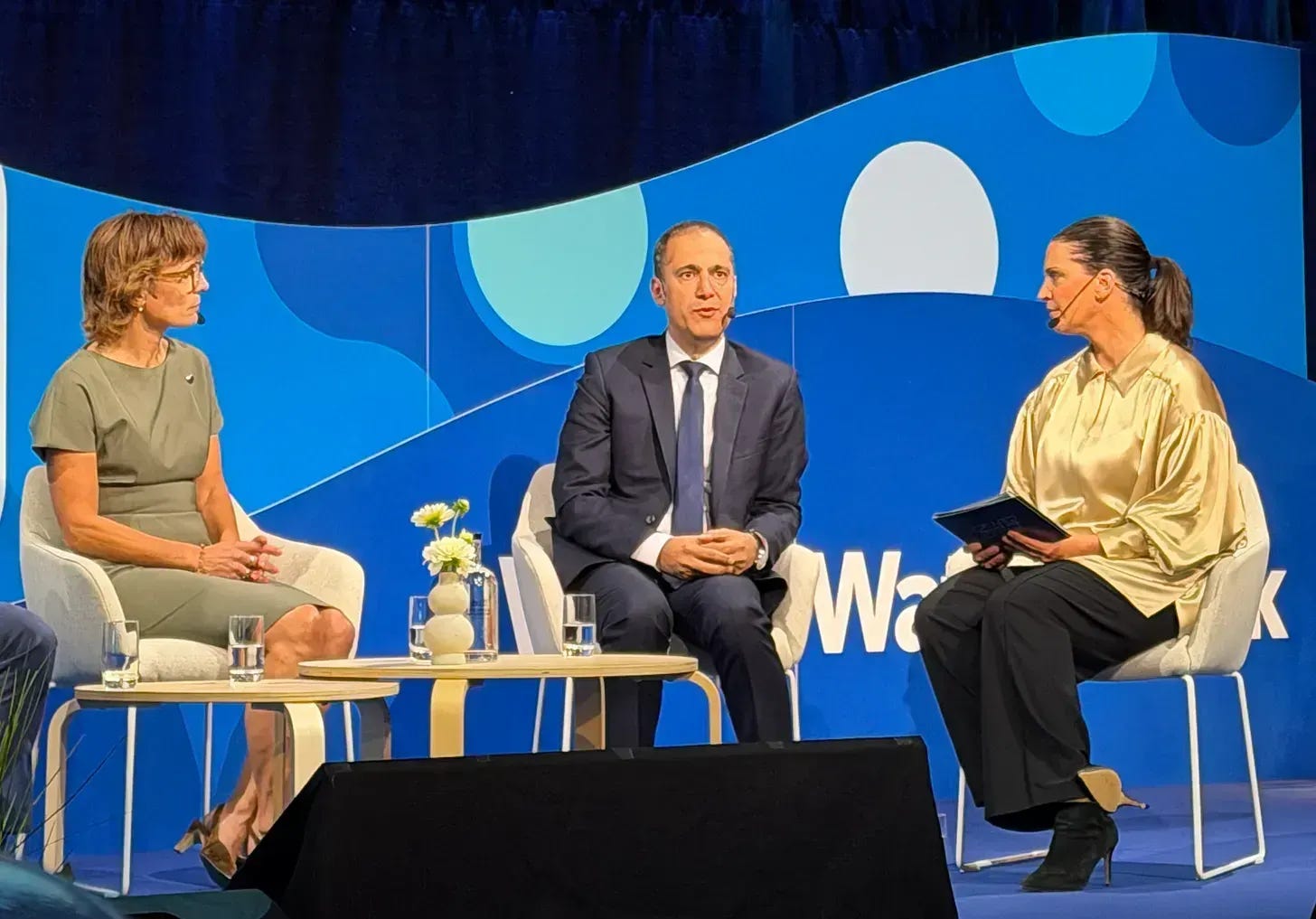
That is why I am deeply proud that Italy welcomed him as one of the leading voices of the Venice Climate Week, together with European Commissioner for Environment, Water Resilience and Circular Economy Jessika Roswall, who was seated beside him last night in Stockholm.
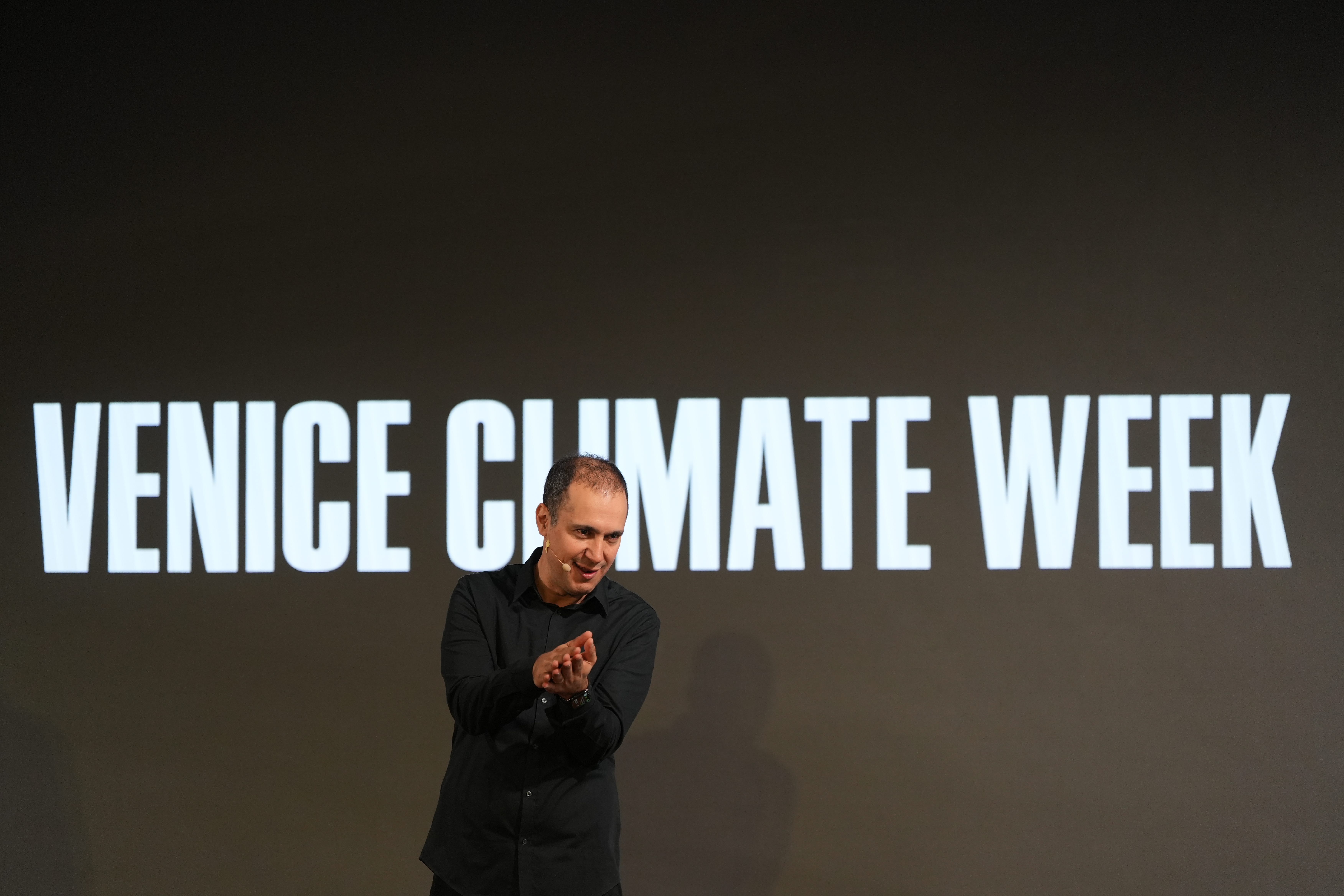
Venice was the right place to listen to him. A city that lives on water, with water, thanks to water — and that reminds the world every day how fragile beauty becomes when care is missing. During Climate Week, Kaveh met institutions, young people, citizens, and communities. He delivered a masterful lecture, explaining data, geopolitical implications, environmental risks, and social consequences of the water crisis with extraordinary precision.
And he did it with that rare quality that belongs only to the truly great: generosity.
He was not speaking to impress. He was speaking so that people could understand. Because only what we truly understand can become action. And only shared knowledge can become shared responsibility.
This is the point.
Kaveh Madani’s victory is not only good news for the scientific community. It is a call to all of us: politics, institutions, businesses, media, schools, cities, rural communities, food and energy systems.
Water is not a side issue in the climate agenda. It is the center. It is the thread that holds everything together.
And yes, we are proud of him almost as one is proud of someone from the family, a teammate. Because when a voice like his is recognized by the world, what wins is also the idea that science can be a service. That data can strengthen democracy. That knowledge must not remain locked inside expert circles, but must reach people, young generations, decision-makers, communities.
And yet, next to pride, there is discomfort.
Not toward Kaveh. He has earned his place in the world through coherence, work, and truth.
The discomfort concerns us. Our attention. Our priorities. The speed with which we ignite around media emergencies that last only a few hours, while we struggle to give stable space to what will truly shape our future.
Because this is not about sterile visibility. It is not about occupying a stage, a page, a headline.
It is about accepting a collective responsibility.
If water bankruptcy still does not shake us as much as the latest controversy of the day, perhaps the problem is not only climatic.
Perhaps we are already inside another kind of bankruptcy: the bankruptcy of our priorities.
No posts
Comments
Nothing yet. Say the first thing.
Sign in to join the conversation.