
Happy Transgender Awareness Week, everyone !
It’s been a minute since my last post. I have being reflecting for the last couple months how to make my content both more valuable and more concise. Ultimately, I think that personal stories resonate best. And my goal is to make them shorter and easier to digest.
So, let’s get into it. Here is my first shot at a new format! In this article, I will be writing about a long-term relationship I don’t dicuss that much publicly: my 17-year career in anesthesia.
Healthcare is my blood. My sister has been a nurse for over 20 years, and my mother was one for over 40. It was a familiar profession for me, although not one I was ever especially passionate for—I always saw myself more as an artist. However, I grew up in a pragmatic family during an economically difficult time in the Rust Belt. And in the middle of that recession of the 90’s, I saw that my mother always had work and she always made a paycheck. That imprinted on me as a child. We all need money to survive!
My mother always told me if I went into nursing, I should pursue anesthesia because it offered better pay and more respect. Mama wasn’t wrong on either count. Back in 2000 when I first decided to pursue the profession, nurse anesthetists were already making six figures. Twenty five years later, salaries have only grown exponentially. I’m sometimes a bit shocked by the rates being offered for travel assignments across the country. Of course, the downside is all the long hours that must be put in to earn those rates. In that sense, money is both the enticement and the trap of working in anesthesia. . .

Every major life decision carries a personal “why” with it. I was no different. As mentioned earlier, salary and respect were important factors in my choice to become a CRNA (certified registered nurse anesthetist). AND YET. . .there was also a deeper, more subtle “why“ for me. That “why” had very much to do with social currency.
CRNA’s are highly valued in the medical profession. They possess a high level of training and skills, are known to shoulder a lot of responsiblity, and are respected for making sound clinical judgments under pressure. Additionally, most people know that the road to being a CRNA is not an easy one. It takes grit and determination. And so, the public gives nurse anesthetists one thing it does not readily offer to trans people:
Credibililty.
Nurse anesthetists command credibility for who they are and what they do. In contrast, trans people are constantly questioned for who we are and the way we live our lives. That divide is pretty stark. And so when I graduated from anesthesia school back in 2008, I bridged that divide. To be both trans and a CRNA meant merging two identities that the public had vastly different opinions about.
A new intersection was born.
Well, at least it was a new intersection for me. I’m sure that there are several trans CRNA’s out there (I myself have only met one other), but overall we are quite rare. Maybe that is because medicine in general is a fairly conservative field. It could also be because trans people are two to three times more likely than their cisgender counterparts to live in poverty. It’s hard to keep an eye on the prize when battling poverty. Just existing can be difficult, let alone getting educated! I did soldier through those long years of school, though. I knew I was fortunate to finish. And with great fortune comes great responsibility. . .
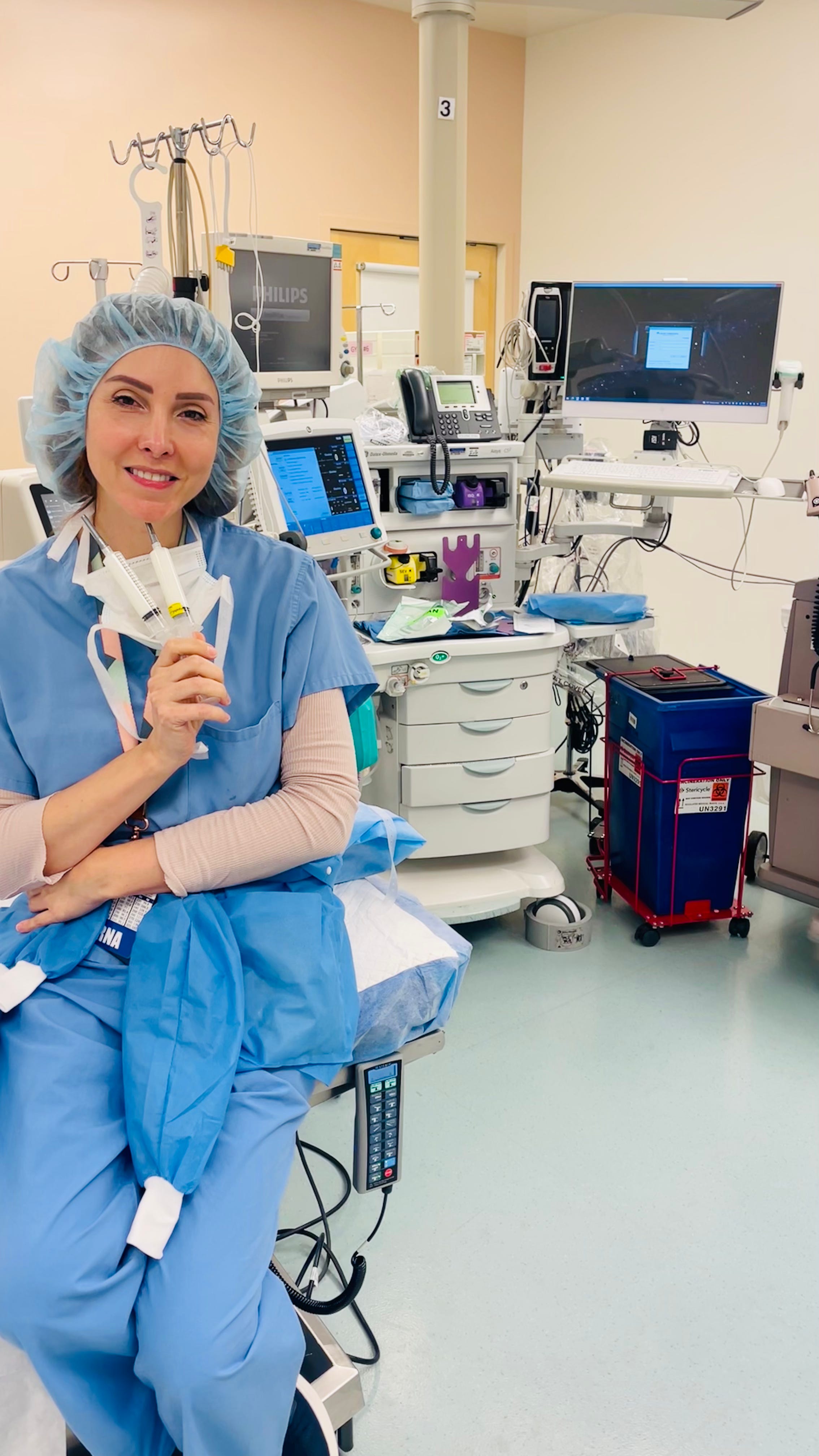
Starting back in 2014, I tentatively decided to become public about my transition. The move was bold for someone who lived fairly stealth through much of her career, but I felt it was important. I knew people would receive my story differently because of my credentials. Plus, I was heartened that public opinion toward trans people had (briefly) softened back then. It was the time of the so-called ‘transgender tipping point’ and the world felt full of possibility. What I didn’t expect was that by 2025, the public’s fixation on trans people (and their feelings towards us) would have taken such a dramatic turn. We are back to the days when people feel emboldened to call transgender a mental illness again—despite statements from the World Health Organization (WHO) and the American Psychiatric Association (APA) to the contrary.
“If being trans is a mental illness, then why have I been able to practice anesthesia for 17 years?”
The above is my go-to line when people go down the ‘trans is a mental illness’ rabbit hole. It’s actually a pretty decent argument to make. Transphobic people really love to dismiss our sanity and abilities. I hope that my career in anesthesia has forced people to pause and perhaps confront their biases. Yes, I know they probably still trash-talk trans people behind close doors. Yet in public, they have to respect that we are intelligent and qualified enough to put patients to sleep for surgery.
I really love contrast and juxtaposition. It forces people to reevaluate their beliefs. . .and maybe even grow a little.
There are a lot of badass transwomen out there. Some of us are doctors, entertainers, lawyers, CEO’s, designers, billionaires, high-end fashion models, businesswomen, and yes, even nurse anesthetists. We have the credentials and yet we should also not have to brandish our credentials to be seen as human. This is the world we live in, though. Many minorities before us have had to travel the same road. So, what is most helpful in this particular moment?
If there is any piece of advice I can share here for anyone who is different, it’s this:
Keep breaking the mold.
That’s it. The world wants to paint trans people a certain way. It’s important that we continue to show what we are made of. That means to keep pushing back against the stereotypes and to keep showing up with all our humanity. And to keep reminding people that they have more in common with us than they care to admit.
In closing, I just want to say that being a CRNA has been my superpower for almost two decades now. It has been a useful weapon to have as I navigated the conservative world of medicine, especially on the days when the only energy I had was to show up and be seen.
Has it worked, though? Have I found the credibility that I was seeking all those years? Watch out for my next post when I dive into that. Like I mentioned at the beginning, my plan is to keep these articles personal and concise going forward. I hope the new format is helpful!
In the meantime, what is everyone thinking about those Epstein emails?
Comments
Nothing yet. Say the first thing.
Sign in to join the conversation.