
How readily do you associate hope and joy with trauma?
Some years ago, as I was about to start my counsellor training, I remember my husband’s concern. How would I cope working with traumatized people?
In reality, some years down the line, I still feel honoured and humbled by the work I do to support people on their healing journey. I am still in awe at the resilience of the people I meet, many of whom have lived through situations they should not have had to live through. I am inspired by the ability I witness not just to survive, but also to thrive. This in itself is immensely hopeful.
What I have learned is that hope and joy sit alongside trauma as integral parts of our lives and expanding the capacity for experiences and emotions of all kinds is integral to healing.
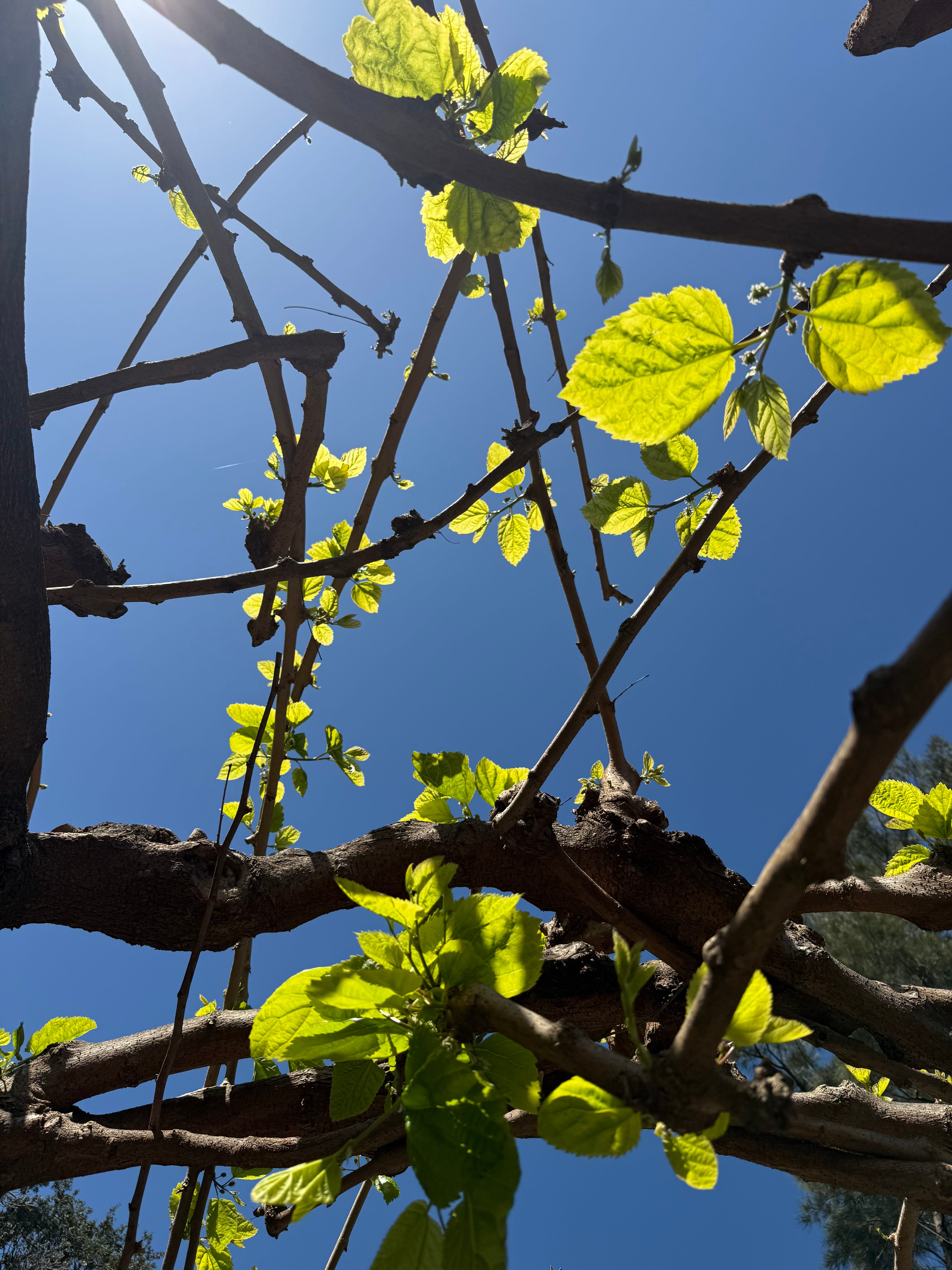
Looking up at the light in the beautiful training centre in Barcelona.
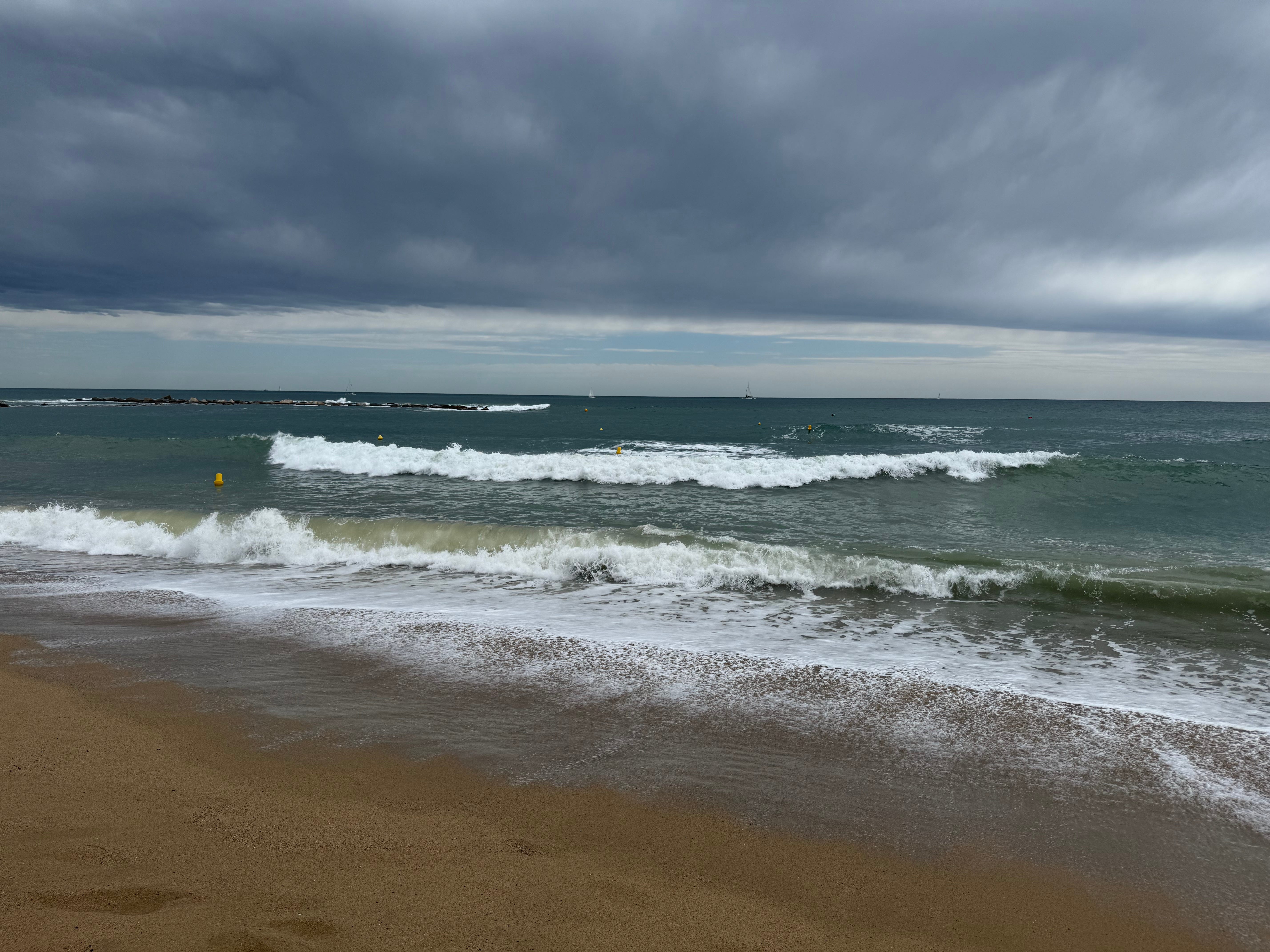
Savouring some moments by the sea with my colleagues during our day off.
I’m writing these words to you on a literal journey, sitting in a train on my way back from a week of advanced training in Somatic Experiencing. I’m not sure what you imagine a professional training focused on the resolution of trauma is like. I’m guessing that you maybe imagine lectures on the nature of trauma, understanding what it is, how people are affected and learning and practicing techniques to support clients to heal. Yes, we certainly did all of that.
We also did some other things that may surprise you more (or perhaps not?).
We danced, including at one point the Macarena – perhaps because the training was in Spain.
We joked. We laughed. Deep belly laughs.
We shared tears, hugs, a lot of tapas and compassion for each other and the people we support.
We connected deeply with each other as colleagues who care profoundly, forming relationships so that we can support each other in our work.
In other words, we embodied – sometimes literally – what we might wish for our clients.
An ability to approach difficult experiences and issues that have caused much pain and lead to many unpleasant emotions many of us want to avoid. And an equal ability to dive into the pleasures of life: the joys, passions, strengths. The compassion, the creativity, the connections that make life meaningful for us. Put simply, feeling alive.

Watching light emerge from behind the dark, cloudy skies over the sea.
One of many things that led me to explore Somatic Experiencing is that way its creator, Peter Levine, sees trauma. Trauma is not the traumatic event (or events) that impacted us through no fault of our own; it is rather the traces it left us with in our bodies. Peter Levine once described a couple who were both in their car when it crashed. His body activated, wanting, but unable, to flee. Her body froze, becoming numb, protecting her from the pain. Two people. Two different protective responses to the same event.
This approach encourages us to listen carefully to each person, whose story and body and experience are unique and to seek in them the keys to their healing. This does not mean individualizing or pathologizing trauma. Rather it means holding a deep reverence for how we responded or adapted to be able to survive and taking into account the broader social and cultural webs in which we are all held.
We actively work to support people to cultivate that sense of aliveness, which may have faded into the shadows, as our nervous systems – understandably - focus on potential threats in life to keep us safe.
This is why it is so important to heal in relationship, including the therapeutic relationship. It is often my honour to offer my client the compassion that they may have failed to receive at the time. This is something I do this freely and authentically from the bottom of my heart.
The approach is hopeful; it offers us the possibility of healing in the present, pain that originated in the past. We cannot change the traumatic event. But we can change our relationship to it now, to free up energy that we can then use to do all those things we want in life. More than that, we actively work to support people to cultivate that sense of aliveness, which may have faded into the shadows, as our nervous systems – understandably - focus on potential threats in life to keep us safe.
I am returning with my heart full, grateful for days with colleagues and friends, supporting me to listen even more carefully to the whispers of my clients’ bodies, as well as their words, to support them to, slowly and gently, move alone their journey towards greater aliveness.
What would fill your cup? What would you like more of? How would you like to feel more often?
Trauma healing could sound like a daunting, scary process. Whilst not always easy,
one of many things about this approach is that, we can, steadily and gently, expand our capacity to live life to the full, navigate its difficulties with greater comfort and luxuriate in the joys life can offer us as well. We can do all of this, if desired, with a compassionate guide to support us on our journey.
We may enter therapy or counselling feeling our cup is half empty, wanting to get rid of something or feel something less (anxiety, stress, depression).
Therefore, I would like to leave you with a question: What would fill your cup? What would you like more of? How would you like to feel more often?
I would love it if you feel drawn to share your answers with me. Perhaps we can list many of the things that make life so worthwhile together?
This space is for me to share some reflections on trauma, healing and relationships. If you are curious about this approach and how it might support you, you are welcome to reach out to me for information about my counselling services for individuals and couples. You may also like to join my workshops, which are inspired by this somatic approach. You are welcome to join my mailing list to be the first to find out about the next dates.
Comments
Nothing yet. Say the first thing.
Sign in to join the conversation.