
What if I told you your body isn’t an obstacle to overcome…but it’s an ally you can trust?
That the nervous system isn’t just a complicated network transmitting random electrical signals through the body…but it’s wise? That it serves as a conduit for what I like to call the real A.I. (Ancient Intelligence), constantly communicating in ways our conscious mind can’t fully perceive.
Our body and nervous system always want to protect and guide us. But when wires get crossed, it can be difficult to understand what their messages are. Imagine if that symptom you have that won’t go away, or keeps getting worse – like an annoying pain in your neck, or chronic constipation – is its way of saying: Can you hear me now? How about now?
Yoga helps untangle jumbled wiring that is brought about by stress and trauma. There’s no way around it – if you’re human and you’re alive, you’re going to face adversity. Even if you work really hard to avoid such adversity, that in itself creates its own type of dysfunction (see The Comfort Crisis1). The practice of yoga helps bring clarity back to the conversation between body and mind, so we can hear the messages that have been there all along.
One of my most poignant lessons of this truth came from working with Matthew Sanford (who I mentioned this summer in my article about Yoga Butt). I discovered his pioneering work with Mind Body Solutions2 in 2018 while working on a project to promote yoga for people with disabilities. Matthew survived a devastating car accident as a child that left his body paralyzed. Once a thriving athlete, he spent years cut off from his body until he discovered yoga as he explains in his book Waking: A Memoir of Trauma and Transcendence.
What I found especially fascinating about yoga for people with disabilities was witnessing its impact on wheelchair users, rewiring the mind-body connection severed at the the time of injury (or for some, from birth). Building interoception (body awareness), strength, and confidence empowers many to be more independent, better attune to their bodies, and navigate the world with newfound confidence and compassion.
I’ll never forget one woman I met early in her yoga journey. She acquired a spinal cord injury during an accident in her 20s and starting yoga a few years later marked a big shift in her healing journey. Prior to finding yoga, transfers in and out of her wheelchair were a frustrating burden. Through yoga, she found more ease, control, and coordination. I remember her reporting an exciting new development when we reconvened for part two of our training: “My physical therapist couldn’t believe it, I’m a different person than I was last week. I’m not just dragging my paralyzed body around anymore. I’m in it.” Sometimes it doesn’t take much to begin to untangle the jumbled wiring!
Trauma is a fact of life. Veterans and their families deal with the painful aftermath of combat; one in five Americans has been molested; one in four grew up with alcoholics; one in three couples have engaged in physical violence.
The Body Keeps The Score: Brain, Mind, and Body in the Healing of Trauma
Dr. Bessel van der Kolk
I don’t know what it’s like to be in a paralyzed body, but I do know what it’s like to be paralyzed by emotions like grief and terror. I think that’s why Matthew’s teaching really speaks to me, because he speaks the language of those who have experienced trauma, loss, and disability.
The Body Keeps The Score by Dr. Bessel van der Kolk is credited with ushering in a new era for how trauma is recognized and treated. He asserts that “one of the ways the memory of helplessness is stored is as muscle tension or feelings of disintegration in the affected body areas.”
When I was plagued with chronic back pain in my 20s, I ventured deeper into yoga looking for relief. I remember one of my teachers recommending Dr. John Sarno’s Healing Back Pain book and on my initial reading of it I rolled my eyes – he proposed that stress and anxiety, not structural abnormalities, are the root cause of chronic pain. It was a message I wasn’t ready to receive. I wanted something to be physically wrong with me and eventually I found it: a herniated disc at L5-S1. I searched high and low for a doctor that could give me the right pill or surgery that would fix me. All the while, I worked relentlessly to get my body strong, flexible, and pain-free.
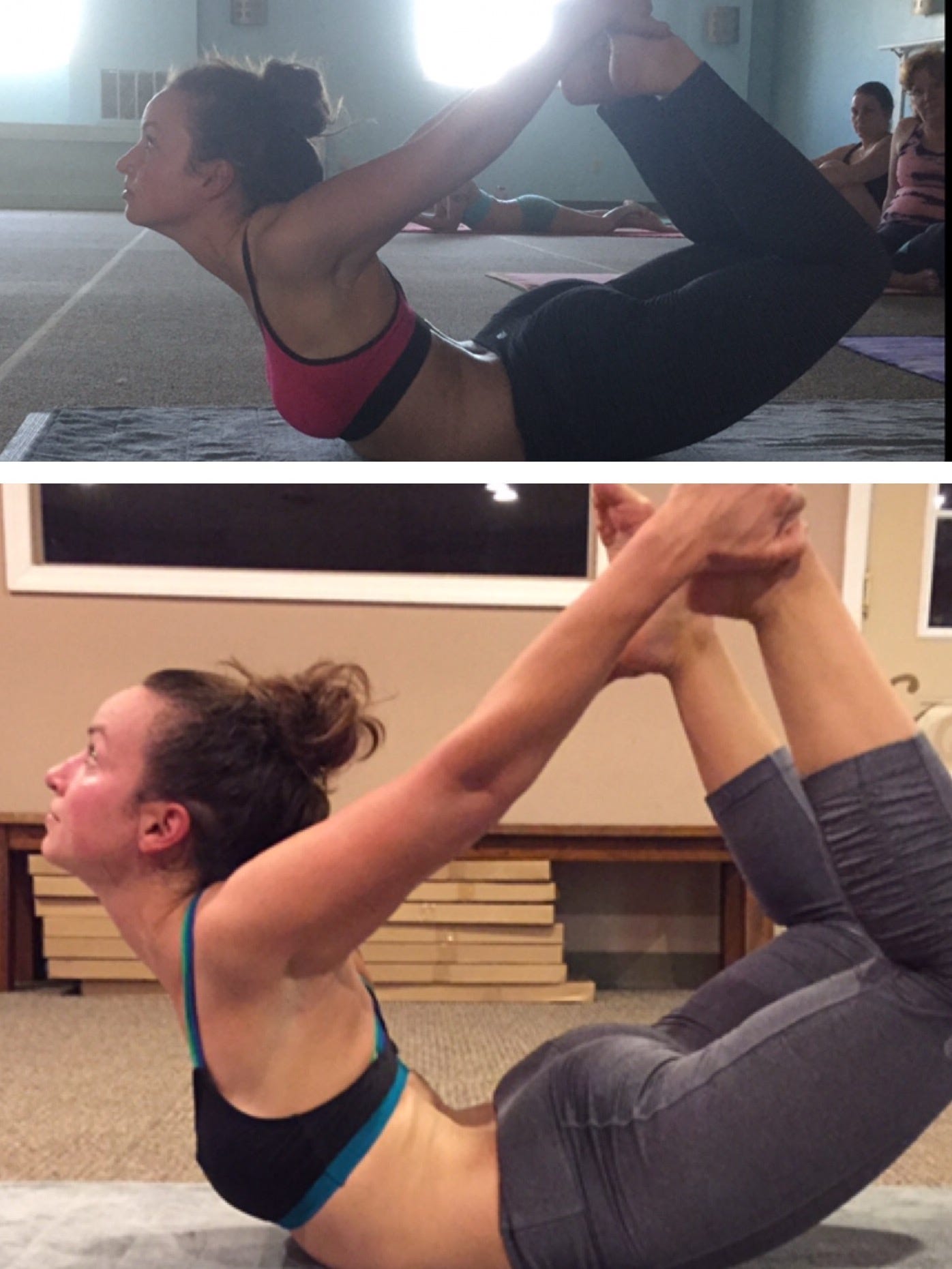
Over the course of several years I tried many ways to relieve back pain and in this time I noticed a pattern unfolding. Although I had imaging that verified the presence of an injury, my back pain was not all day every day – it would run in cycles, and often be triggered by facing a significant stressor. I found out that herniated discs – what a scary term! – are actually a common occurrence and most people that have them do not experience any pain at all (see this study and this study).
Let me say that louder for the people in the back: Having a herniated disc does not have to mean you are sentenced to a life of pain! I gave Dr. Sarno’s book another chance and that’s when the pieces of the puzzle started to click into place. My brain couldn’t keep a lid on my stress and anxiety. It was spilling out into my entire body.
The lives of many trauma survivors come to revolve around bracing against and neutralizing unwanted sensory experiences, and most people I see in my practice have become experts in such self-numbing. They may become serially obese or anorexic or addicted to exercise or work. At least half of all traumatized people try to dull their intolerable inner world with drugs or alcohol. The flip side of numbing is sensation seeking with risky activities which give a false and paradoxical feeling of control.
The Body Keeps The Score: Brain, Mind, and Body in the Healing of Trauma
Dr. Bessel van der Kolk
In Dr. van der Kolk’s first study of yoga as a treatment for PTSD, he witnessed the highest dropout of any study he had ever conducted (50%). Why?
Whether or not we’re fully aware of trauma we’ve experienced, regaining interoception (body awareness) isn’t easy, and it can be downright scary. Certain postures can elicit intense sensations and emotions, or even trigger full on PTSD flashbacks – feeling like a past event is happening all over again. If yoga feels like it makes matters worse instead of better, of course people are going to quit!
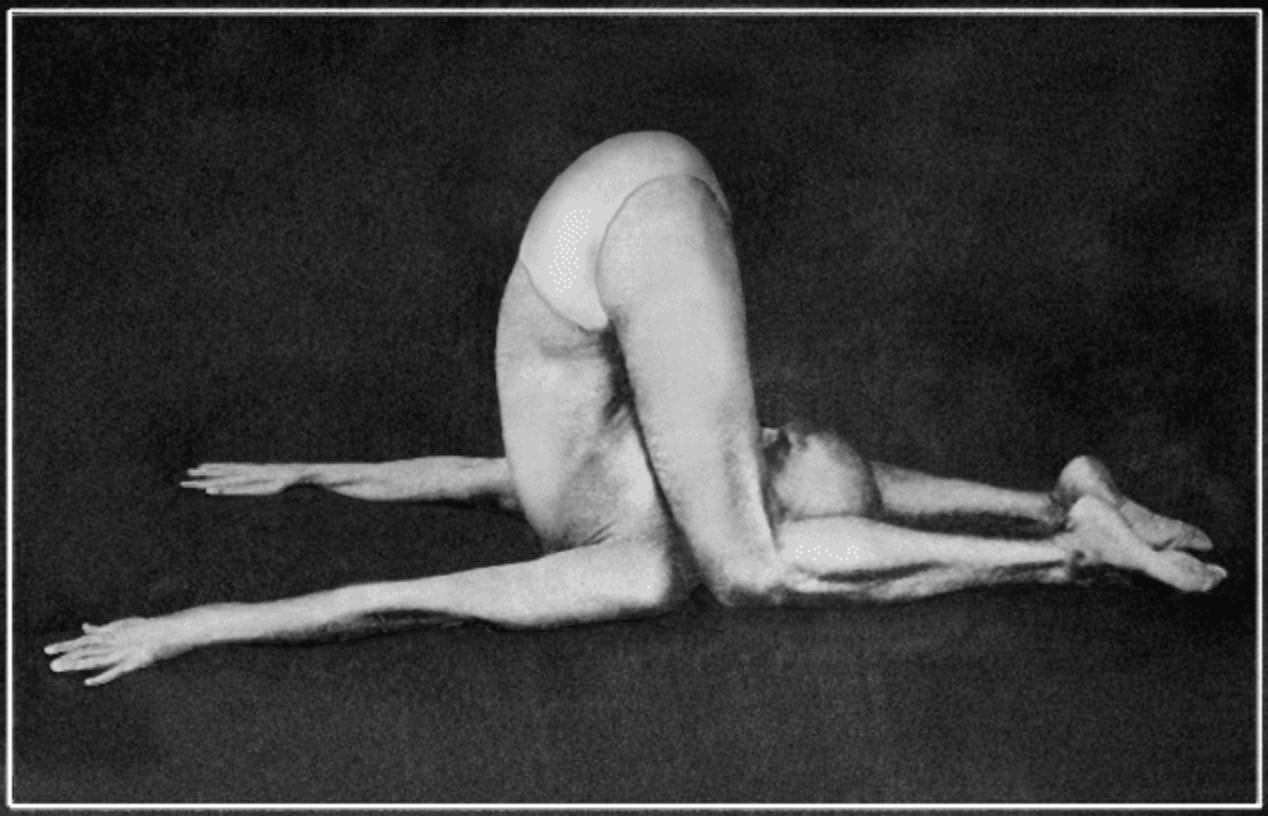
Although I’ve known of this phenomena for many years, I didn’t experience it for myself until my recent regular Saturday morning yoga class. One moment I was moving into a familiar posture, the next I felt a chill move through my body as if I was time traveling back to the operating table. My physical body was on my mat in the studio, surrounded by the other students. My teacher’s voice kept traveling into my ears from the front of the room. But another sound started streaming in – the steady beep of a heart rate monitor and the eerie echo of an operating theatre. “Just keep breathing, slow deep breaths,” the voice became two – my yoga teacher, and my nurse.
Today’s yoga poem is inspired by this experience in Karnapidasana (Ear Pressure Pose), exclusive for paid subscribers 😉
Comments
Nothing yet. Say the first thing.
Sign in to join the conversation.