
I keep reading things about the biomedical-industrial complex which leave me open-mouthed.
Some of these are little-known stories I just happen to come across. But some of them are huge meaty issues which others have looked into in some depth, but have just never become widely known.
The story of Biogen’s drug for Alzheimers, aduhelm, is one such example.
Imagine someone told you this:
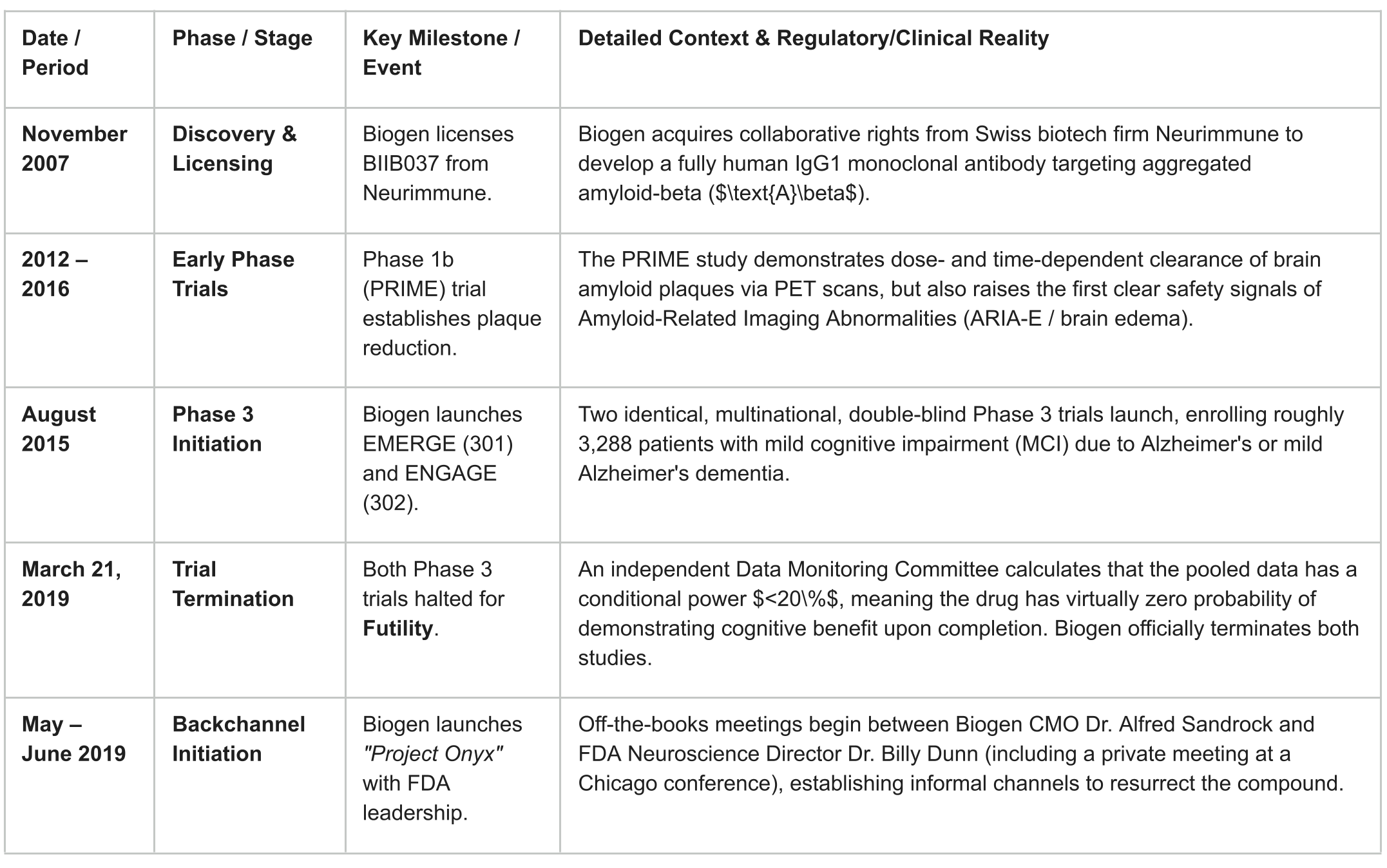
A drug for Alzheimer’s (which was later priced at around $50k / annum) failed its phase 3 efficacy trials, in that they were halted early due to “futility”1.
Moreover, significant safety concerns were raised by the data from the trials.
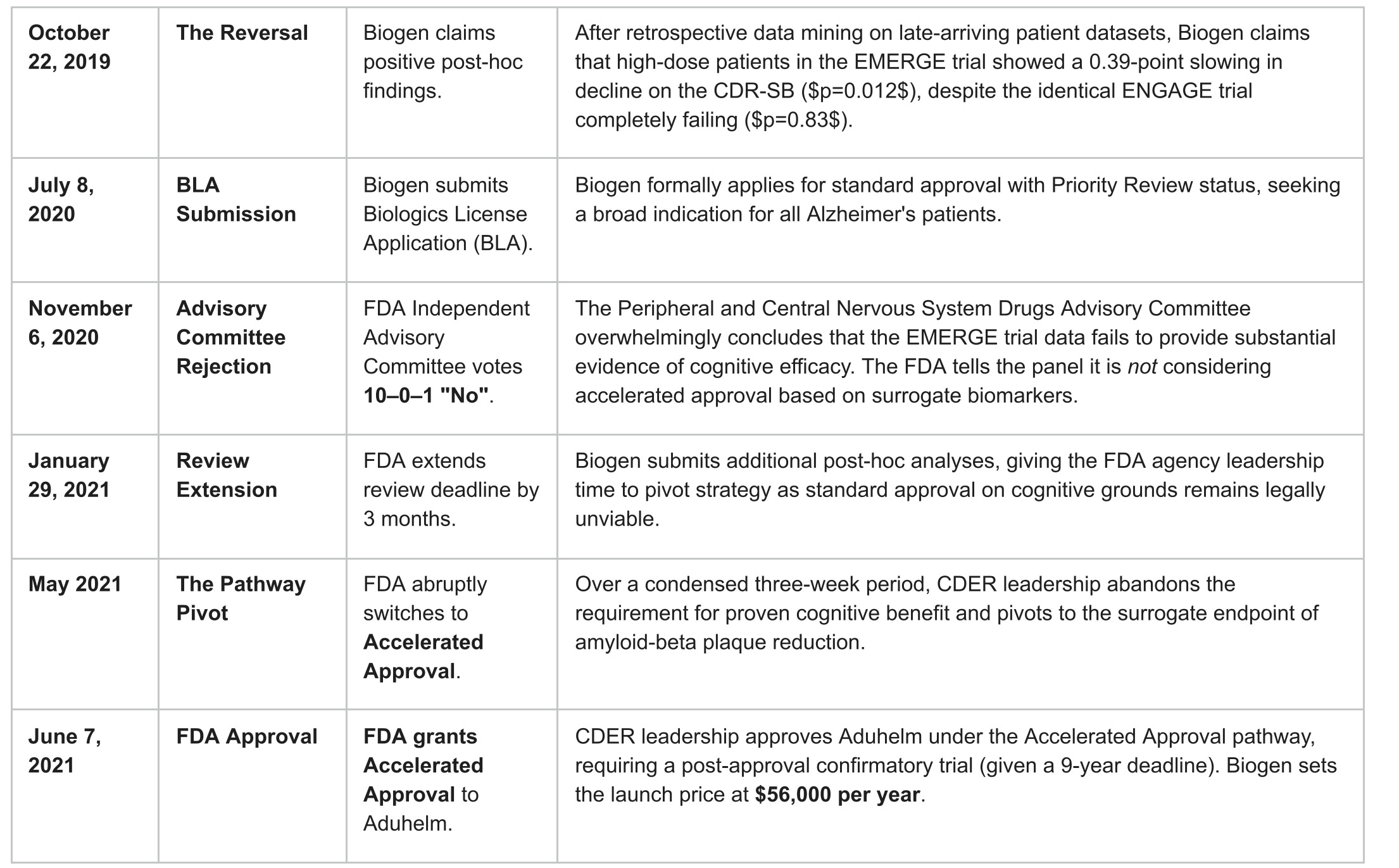
The FDA’s independent advisory committee voted unanimously (10-0) against approval.
Instead of being canned, the manufacturer embarked on an undisclosed and extensive collaboration with FDA officials - involving off-the-record phone calls and meetings (in total, at least 115 total meetings, calls, and email exchanges over the 12-month period from July 2019) - to formulate a means by which the drugs could be approved on some other pretext, specifically a biological surrogate marker (the amount of amyloid plaque present) thought to play a role in Alzheimer’s disease.
Senior leadership within the FDA made an administrative executive decision to approve it, overruling internal statisticians and the external advisory committee.
This was despite substantial clinical data available to them at that time that showing reducing or removing amyloid plaque did not reliably halt, reverse, or meaningfully slow cognitive decline.
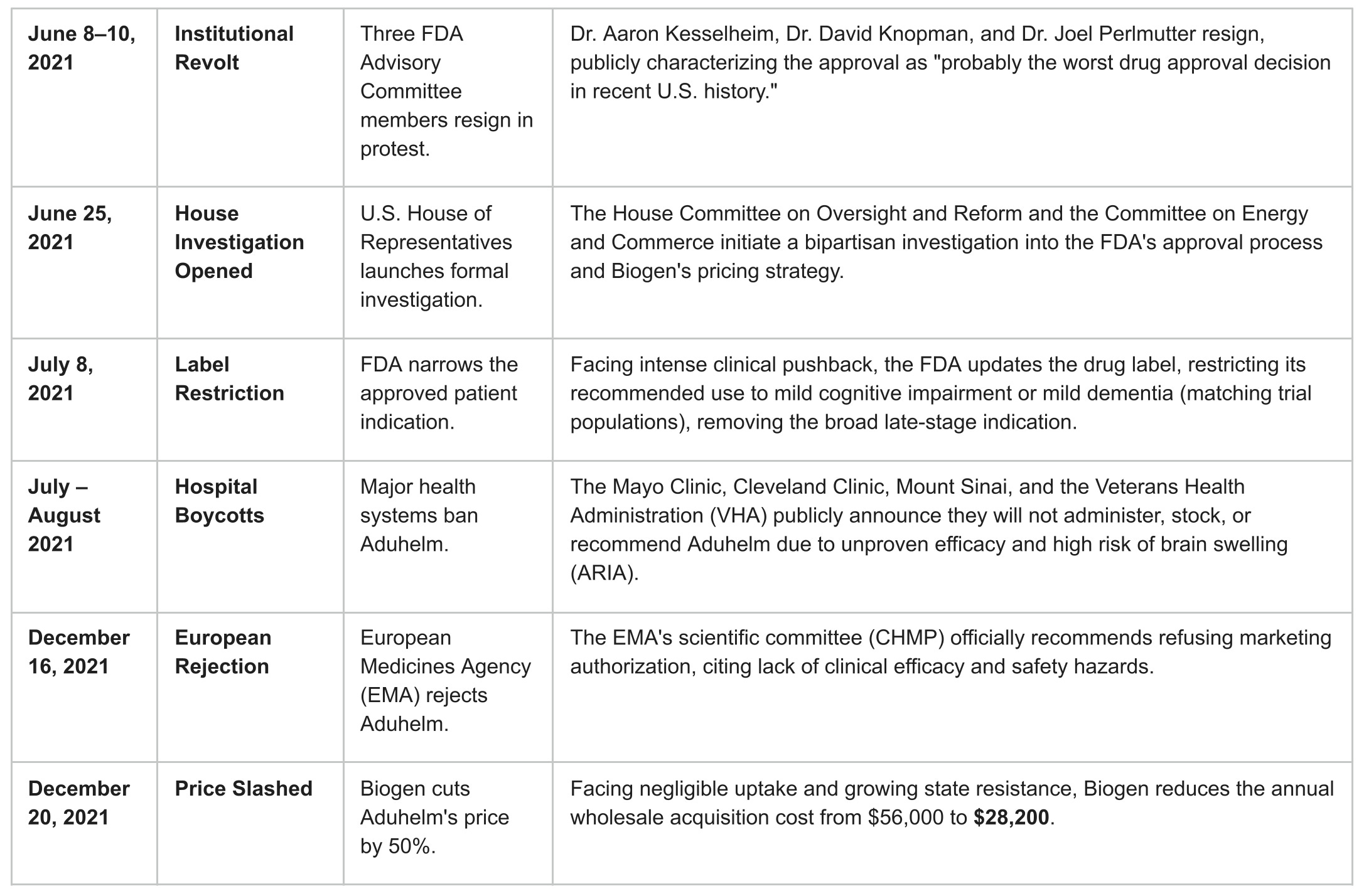
In protest, three senior FDA officials resigned.
It is barely believable, but it actually happened.
But worse than that, no FDA officials were ever santioned or disciplined for the episode. In fact, the careers of the three officials mainly responsible moved in the opposite trajectory:
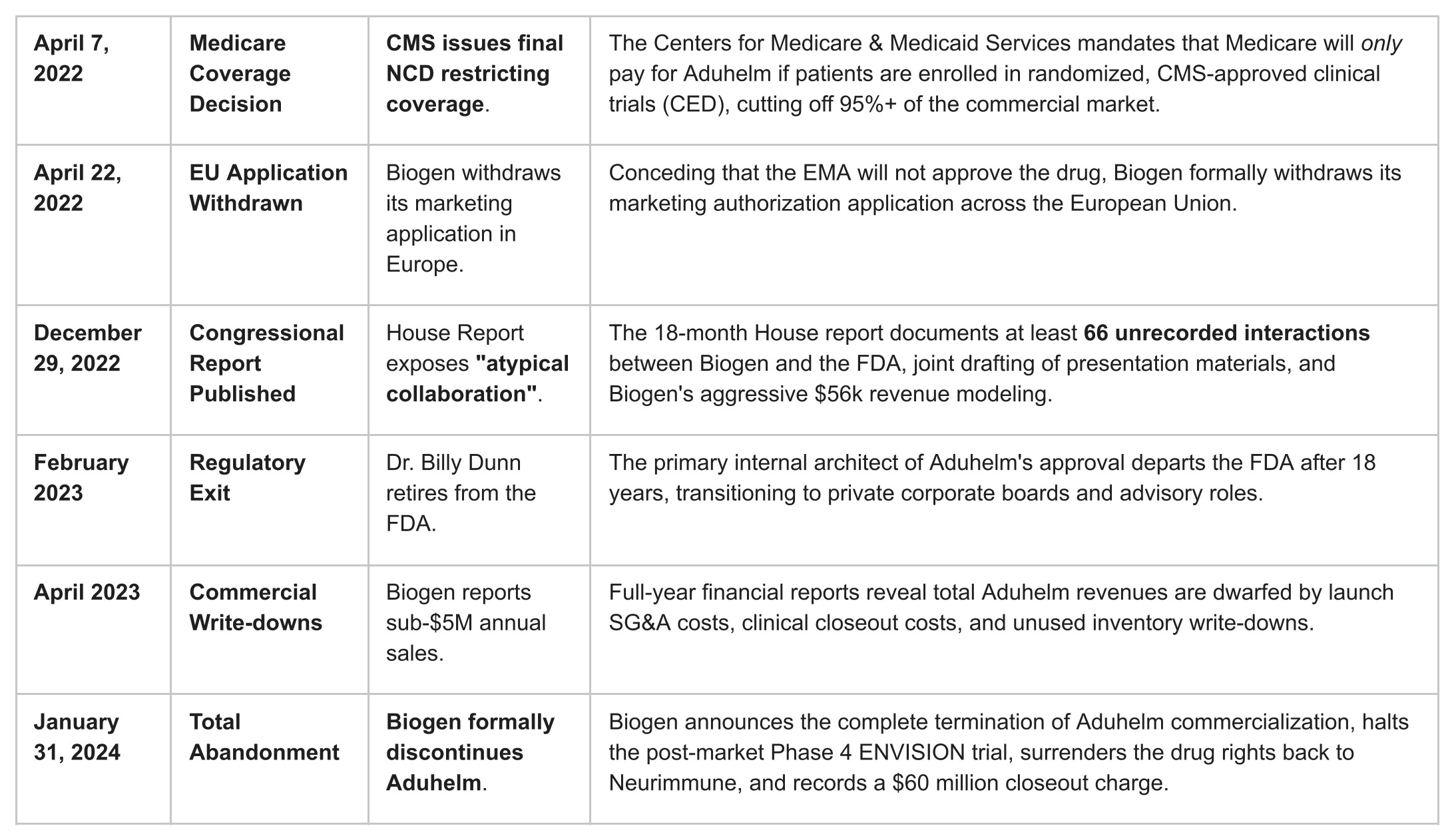
Dr. Billy Dunn, who led 66 undocumented interactions with Biogen and bypassed the 10–0 Advisory Committee rejection, remained in his executive post until retiring in 2023. Thereafter he took a number of positions in the private sector.
Dr. Patrizia Cavazzoni who officially signed off on the surrogate-endpoint approval faced no sanctions and retained her high-level leadership post.
Dr. Janet Woodcock (Acting Commissioner) faced no reprimand and retired with all her benefits intact.
In fact, no FDA official has ever been fired, had their pension stripped, or held legally liable for approving a drug that was subsequently proven to be dangerous (or ineffective).
Appendix:
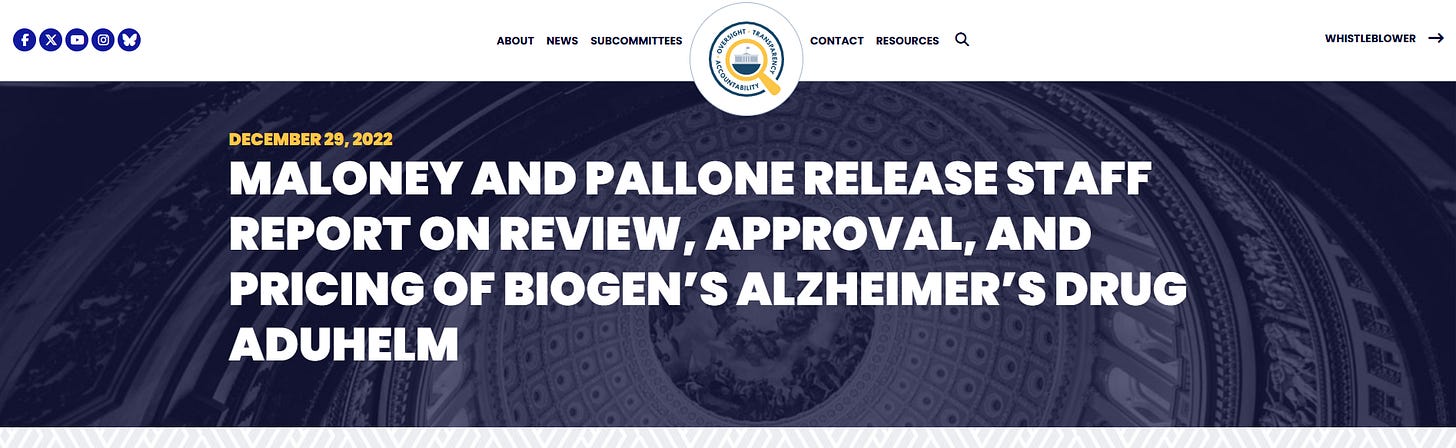
House committee report (click on image to go to the landing page, from which the report can be downloaded):
Detailed timeline for Aduhelm created by Gemini AI:
“Futility” was defined in the protocol. An analysis would be carried out after the half the patients had compoleted 18 months of treatment and the trials would be deemed futile if there was a less than 20% chance that - once all the patients had been recruited - statistically significant benefit on the primary cognitive test would be demonstrated.
No posts
Comments
Nothing yet. Say the first thing.
Sign in to join the conversation.