
Dear Sangha,
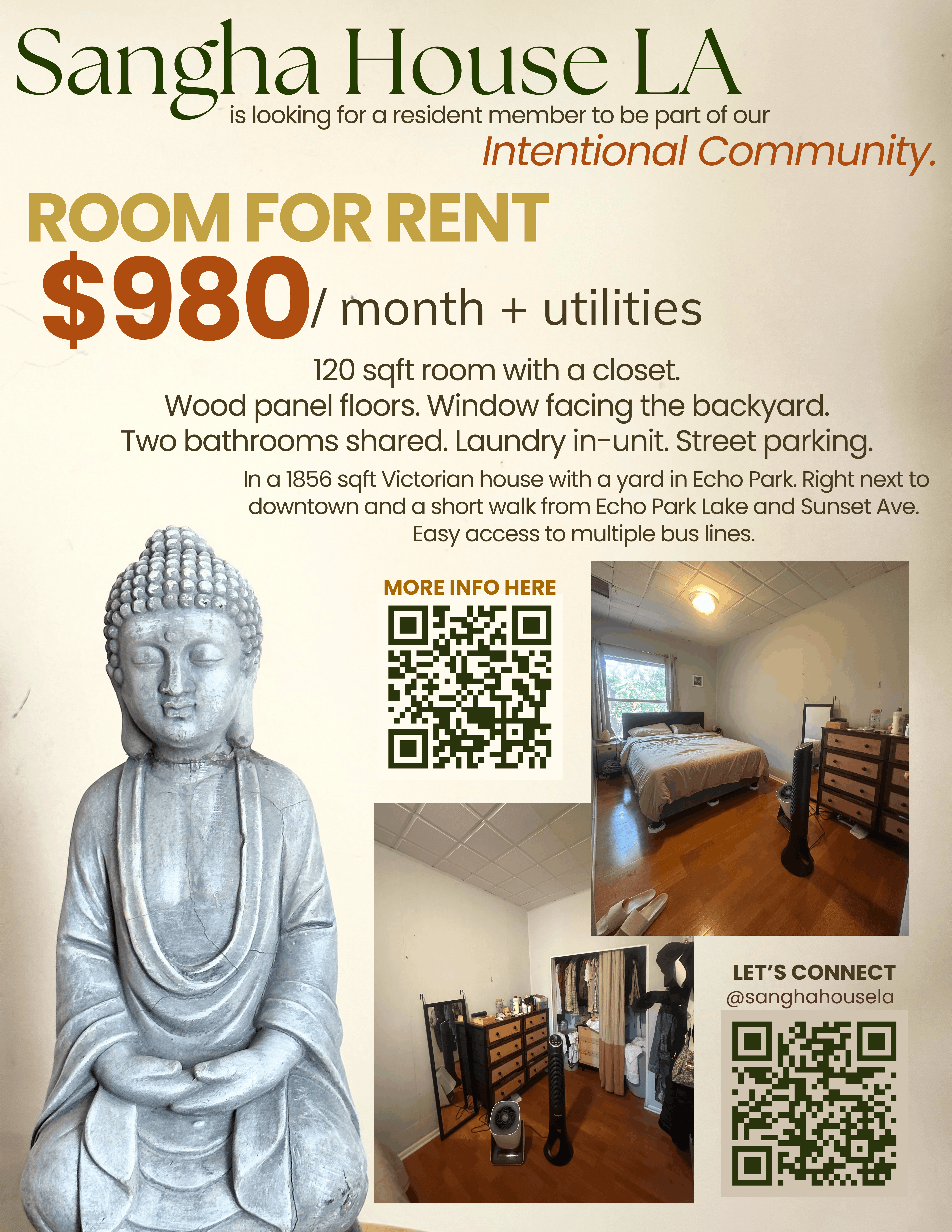
We have a room opening!! Our dear housemate and community member Rachel is moving out September 1st to live with her grandfather in Canada. If you’re interested, please be in touch.
On to a reflection I wrote in May for Wake Up International, the youth wing of the Plum Village community, to explain what Sangha House is and invite anyone interested into dialogue about intentional community. If that’s you, register so that we can be in touch.
in community,
Garrett
I live at Sangha House LA, an intentional community I co-founded in 2025 with two friends from my local Plum Village sangha. Our intention was to support ourselves in the practice and to establish a community that could offer the dharma to others and serve as a hub of spiritually grounded organizing in the movement for the radical transformation of society. I want to offer some reflections on our experience, and what lessons one might draw from it toward supporting a wave of lay engaged intentional communities in the Plum Village tradition and beyond.
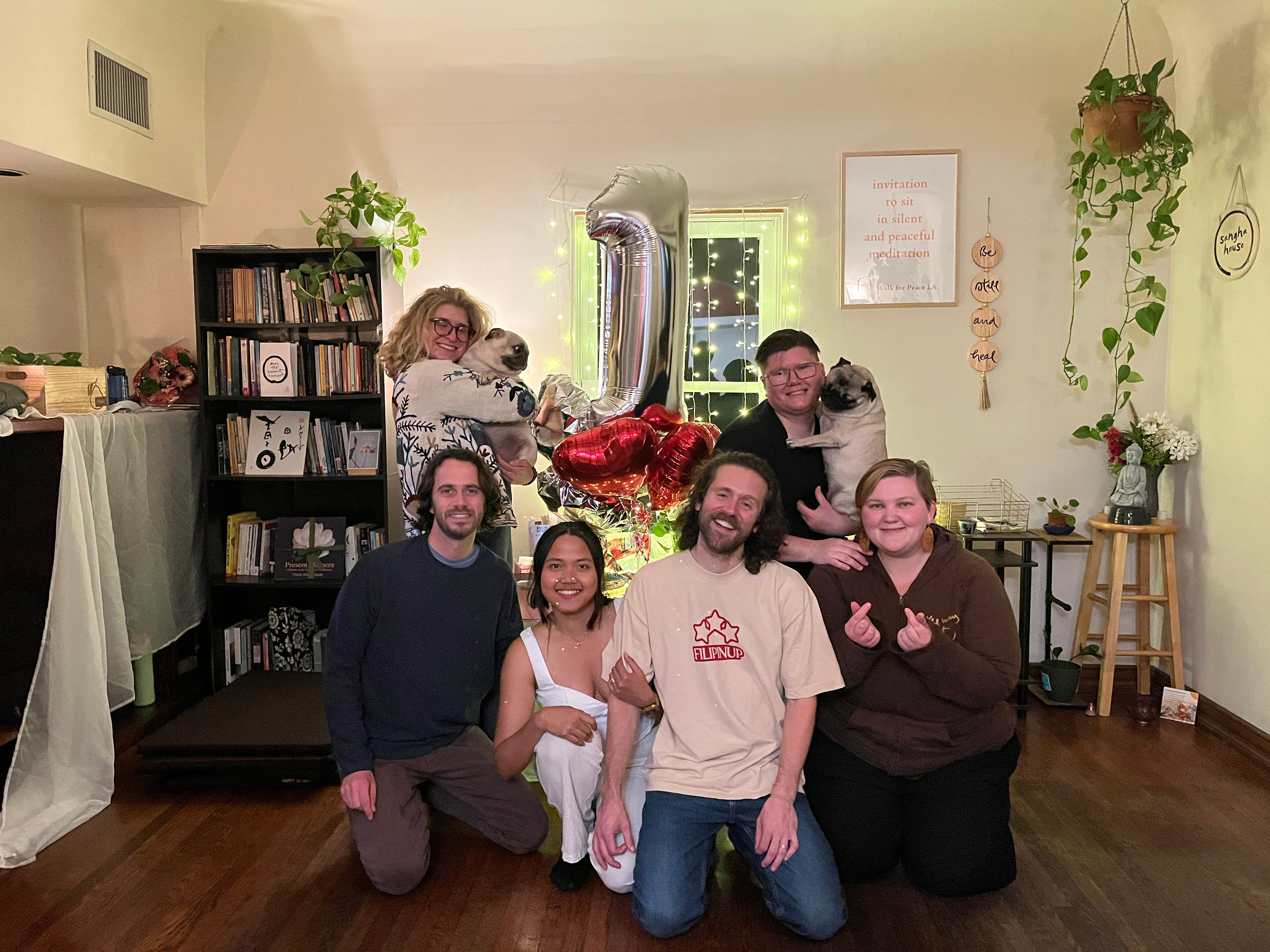
Sangha House LA has been flourishing at many levels, first among which is that we who live here are supported in our practice. We have morning meditations at 6:15 am. We have house meetings and Beginning Anew meetings where we are held in the practice. Everyone cooks for the house once a week, so that there is food on the table and food in the refrigerator. (One of our unofficial mottos is “love people, feed people.”) We are currently preparing for a visioning retreat with the 7 core community members at the end of May where we aim to develop and refine structures that will allow us to continue to function and grow over the next year.
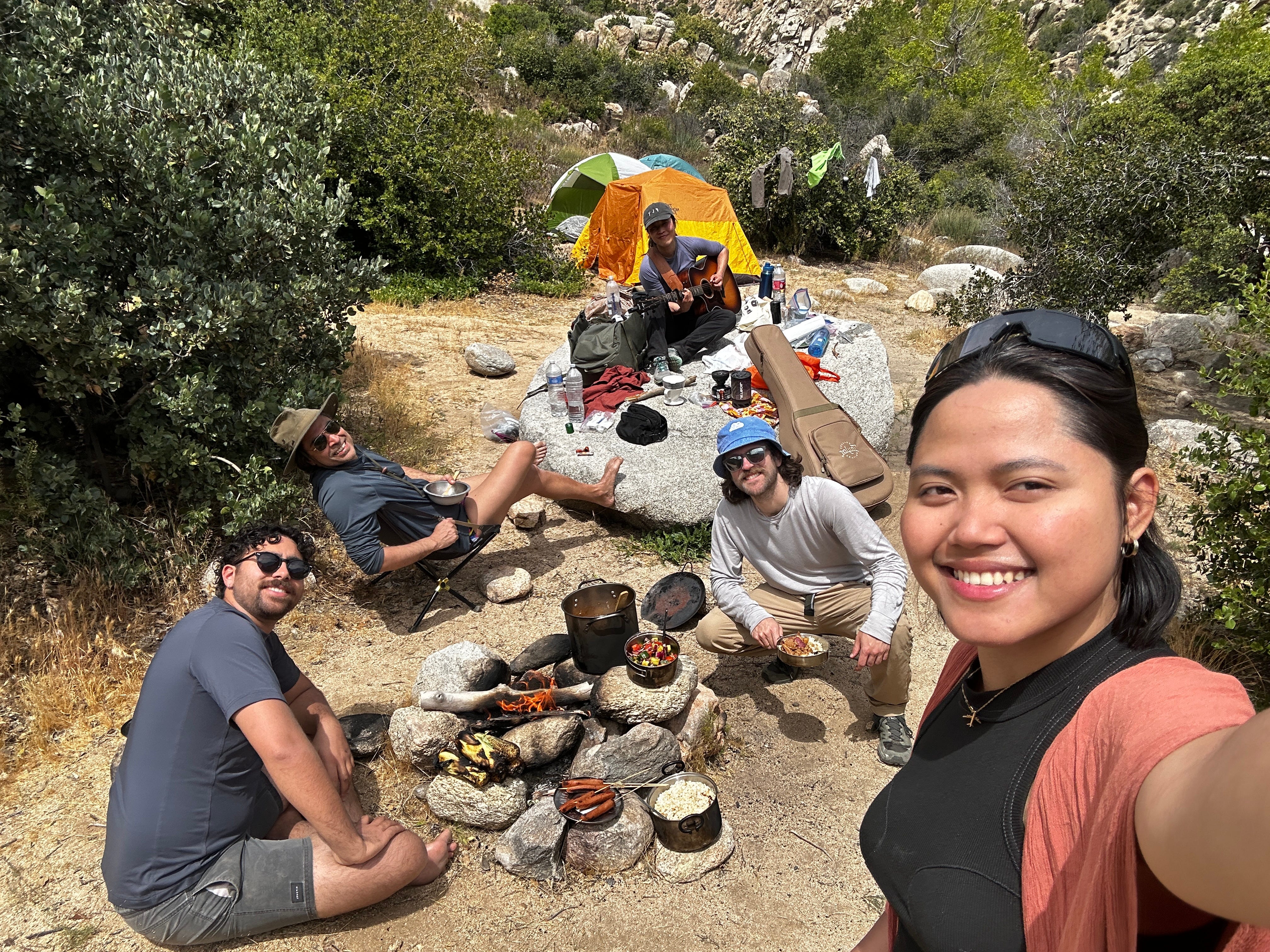
On Wednesday evenings, we host a weekly sangha which has become home to an active community, so much so that people often spill out of breathing room onto mats and cushions in the foyer and hallway. During the week the WhatsApp pops off with photos, chatter, invitations, and offerings from the community: a grief circle; a camping retreat; an open mic night; a book club on Mutual Aid, by Dean Spade; an offers and needs market… There are two other intentional communities who are close friends of the house, which function as semi-formal “sister communities.” In sum, there is a whole ecosystem of young people, many of whom are committed to organizing social action grounded in spiritual practice.
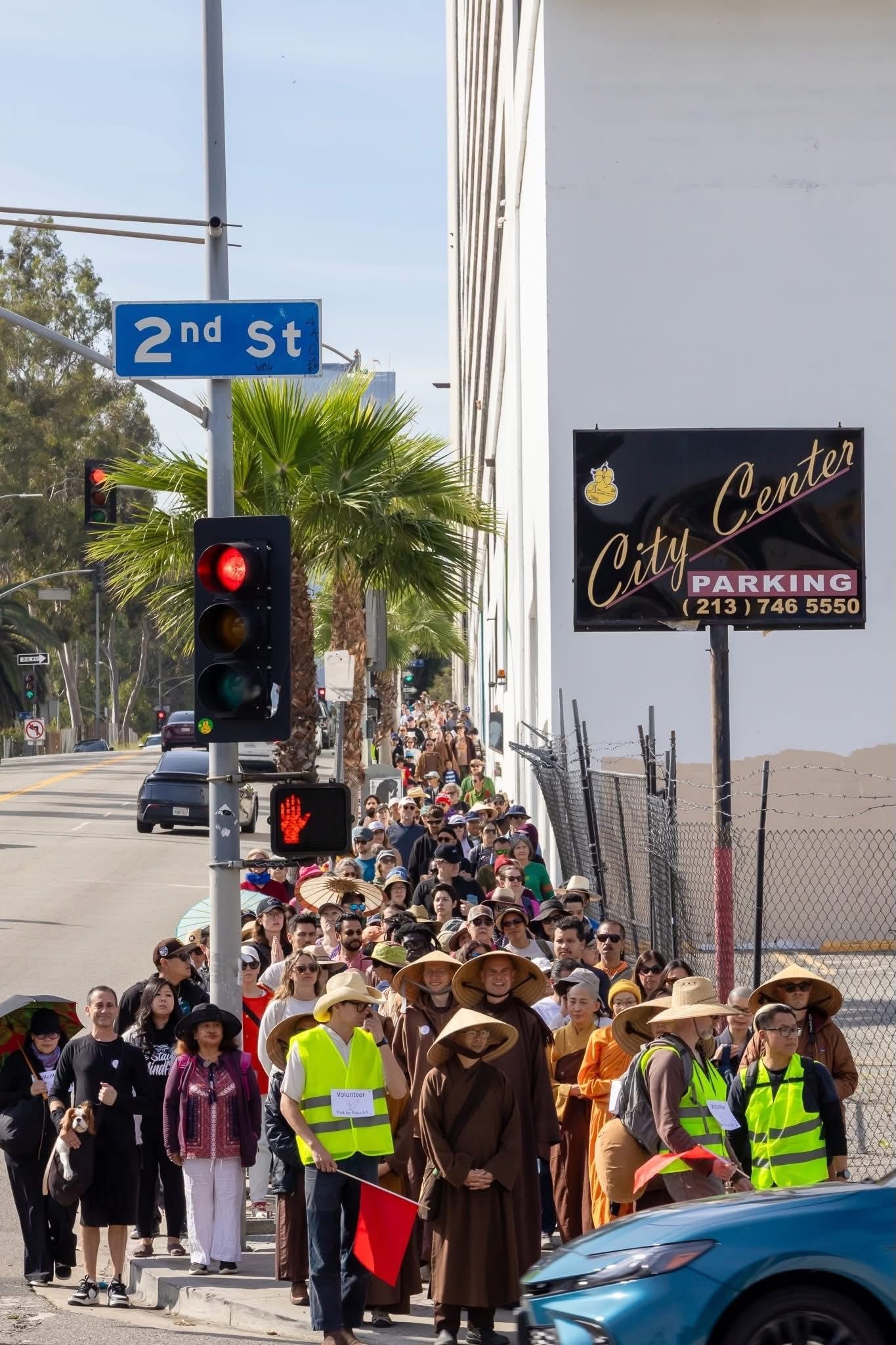
One of our proudest accomplishments this past year was organizing Walk for Peace LA in February. The concept spawned over a dinner at our table in the breathing room after passing around a phone showing social media posts of the monks from Huong Dao Vipassana Bhavana Center in Texas on their incredible pilgrimage to DC. A month later, over 30 monastics, including 12 from Deer Park, and 750 lay practitioners gathered for a contemplative walk through downtown Los Angeles in solidarity with and appreciation for their journey. We learned a ton, and formed rewarding relationships with monastics from several temples and an incredible co-organizing team.
Intentional community has something special to offer Western culture today. The mainstream culture of individualist capitalist consumerism has ripped apart the social fabric of our lives, and destroyed our felt sense of integration in a larger natural whole. In the US, we move away from family for school, and get a job on the other side of the country. We pay for our haircuts, rides to the airport, and mental health. Capitalism takes away your village and then sells it back to you, if you can afford it. Meanwhile, we eat plants and animals produced by land we don’t care for and know. We are encouraged to seek to recover the intimacy and security we lost in accumulation, consumption, and status symbols. It creates suffering and is destroying the planet.
The solution to this suffering is not going to come from the dominant culture. How could it? The executives and billionaires are not going to save us. Tech is not going to save us. More planets are not going to save us. If we can’t take care of one planet, how would more help? In order to heal, we need alternative norms, practices, and cultures. Among other things, we need to retain and regain contact with ancient wisdom traditions and indigenous ways of life, which sustained life in harmony with the environment for millennia. We need to learn from them. We need practices that help us experience our basic goodness, and realize our sacred interconnection with all things. We need paths that help us grow toward spiritual maturity and eldership.
These wisdom traditions can only be genuinely approached in community. You can read about them in books, but that’s not enough. What we want is to experience it, to embody it, and to live it. That’s why you can have a good alternative therapist, and that’s helpful, but it’s still not enough. The mainstream culture is both all around us, and inside of us. We need something equally encompassing to continue our healing. We learn from the village — engaging with mentors, peers, and mentees in multidimensional relationships. We are social beings, formed by community, hurt in community, and healed in community. Again, if we go to sangha once a week, that’s good, but we will still want more. We want to take the practice into every corner of our lives. For that we need to live with people who are practicing it, in a culture that supports it. That is intentional community.
Essentially, this is what monasteries are: highly structured intentional communities. They offer a container to support people in dedicating their lives entirely to spiritual practice. Our goal at Sangha House LA is to create a container analogous to this for householders, i.e. people with jobs and families. We want to channel the energy of the monastery in the city, among lay practitioners. We want to carve out a path for ourselves as lay people to make our spirituality the overriding priority in our lives.
On the one hand, the Plum Village tradition provides broad support for its monasteries. The monasteries are wonderful practice centers that serve the community and world as a place for refuge at many levels. Thầy’s dedicated the latter part of his life to developing the structures that support them. On the other hand, there is significant support for the lay community. There are hundreds of local sanghas, the lifeblood of the lay community. There is also material on how to start and maintain a Plum Village sangha, including facilitation scripts, songbooks, directories, and trainings.
Moreover, with the Order of Interbeing there is a structured path for going deeper in the community, an ordination process with literature, assignments, mentorship, and ceremonies. I am currently an aspirant, and have deep appreciation for the tradition which has made this path available to me. There is Wake Up and the North American Wake Up OI Study Group, which has organized an online cohort to support young people across the continent in navigating the ordination process. I have sat with two dharma siblings, cohort mates and Sangha House members in beautiful Shining Light ceremonies in preparation for ordination. I am developing a relationship with Dharma Teacher, Pete Kuhn, to take the practice deeper into my heart and life.
There is little support, however, for lay intentional communities. This is all the more significant because in his early days Thầy focused on building within the lay community. The School of Youth for Social Service was a lay movement: people living together in the world doing social work and organizing work, grounded in Buddhist values of non-violence and compassionate action. The Order of Interbeing developed the same impulse. As Fred Eppsteiner says in an interview recently published by Parallex, “the OI was going to be Thầy’s legacy: he was creating this order in which monks, nuns, and laypeople would all be equal and share the same principles.” These principles are practiced in community.
So why shouldn’t there be more support for young lay people living together in the practice, doing sangha building and organizing work in the city? We feel there should be. This is our lineage. One can imagine a directory of intentional communities; a starter pack with meeting templates and resources for those interested in founding a community; and a carved out role of a “Sangha Teacher”, a Dharma Teacher or monastic in the region who checks in with them once a season and supports them in Beginning Anew. What else can we imagine?
One thing we learned from Walk for Peace LA was that, if you want to go deeper in a community, you should consider finding a way to offer it something. Organize an event. Plan an action. In that spirit, we would like to offer something to the Plum Village community, the broader engaged Buddhist community, and anyone interested in living in intentional community devoted to organizing social action grounded in spiritual practice: a virtual intentional community sangha.
We are co-organizing this with the Action Wake Up house in Escondido, which is a joy and support and in and of itself. We share much with that project in spirit and are looking forward to getting to know them better through this sanga. And we know there are other nodes out there, devoted, activist-minded, often youthful communal swirls in the sea of the mahasangha. The goal is to create a space for our communities to support each other, learn from each other, and see what we can do together.
To be clear, we are not offering expertise or even competence in living together in spiritual community. Our intention is to show up as a beginners. We need help from those with more experience to adequately tackle the challenges we face, around topics such as selecting new community members, managing house finances, making decisions as a community, and more. We are envisioning a place where we can sharpen and distribute those structures.
The virtual intentional community sangha will be a place to
Gather and create community around lay intentional community
Share about the joys and challenges of living in community
Pool knowledge, resources, and inspiration
Dream up structures for supporting lay intentional communities
Our first meeting will be this fall. (Date and time TBD.) Please let us know if you’re interested here.
No posts
Comments
Nothing yet. Say the first thing.
Sign in to join the conversation.