
Dear sangha,
If you’re new to the Sangha House LA newsletter, welcome. Thank you for signing up to hear from us.
You might’ve subscribed in the last month when you heard about or attended Walk for Peace LA. If you participated in the walk and have thoughts on the walk and/or the issues discussed below, we’d love to hear from you! Please leave a comment or reply to the email.
What follows is a reflection on the walk from Garrett, including some thoughts on why it worked and what’s next for our community.
Wow, wow, wow. Walk for Peace LA was a success. Beyond what we could’ve imagined at the start, the walk bloomed. Not only did monastics from many traditions show up and the community massively turn out, but organizing the walk took us deeper into community, relationship, our practice, and interbeing. While that is still sinking in, I want to take a moment to revel in it, and to reflect on what happened and what it means for the Sangha House.
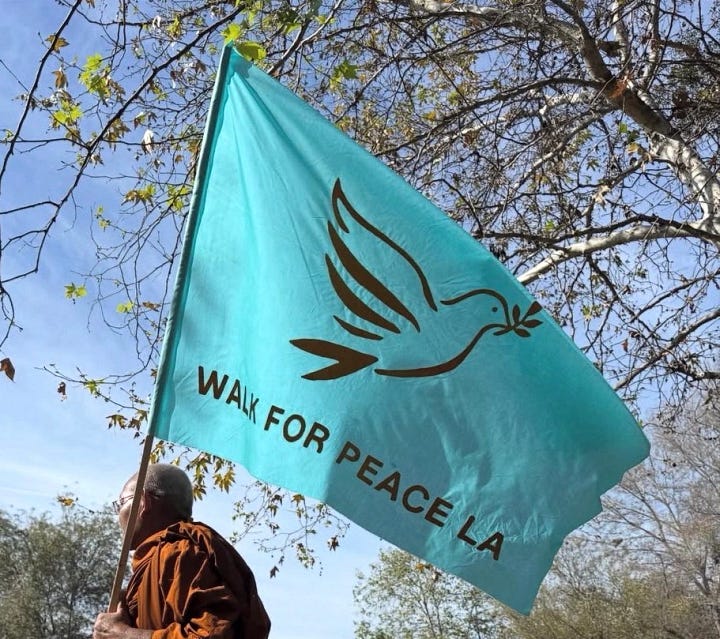
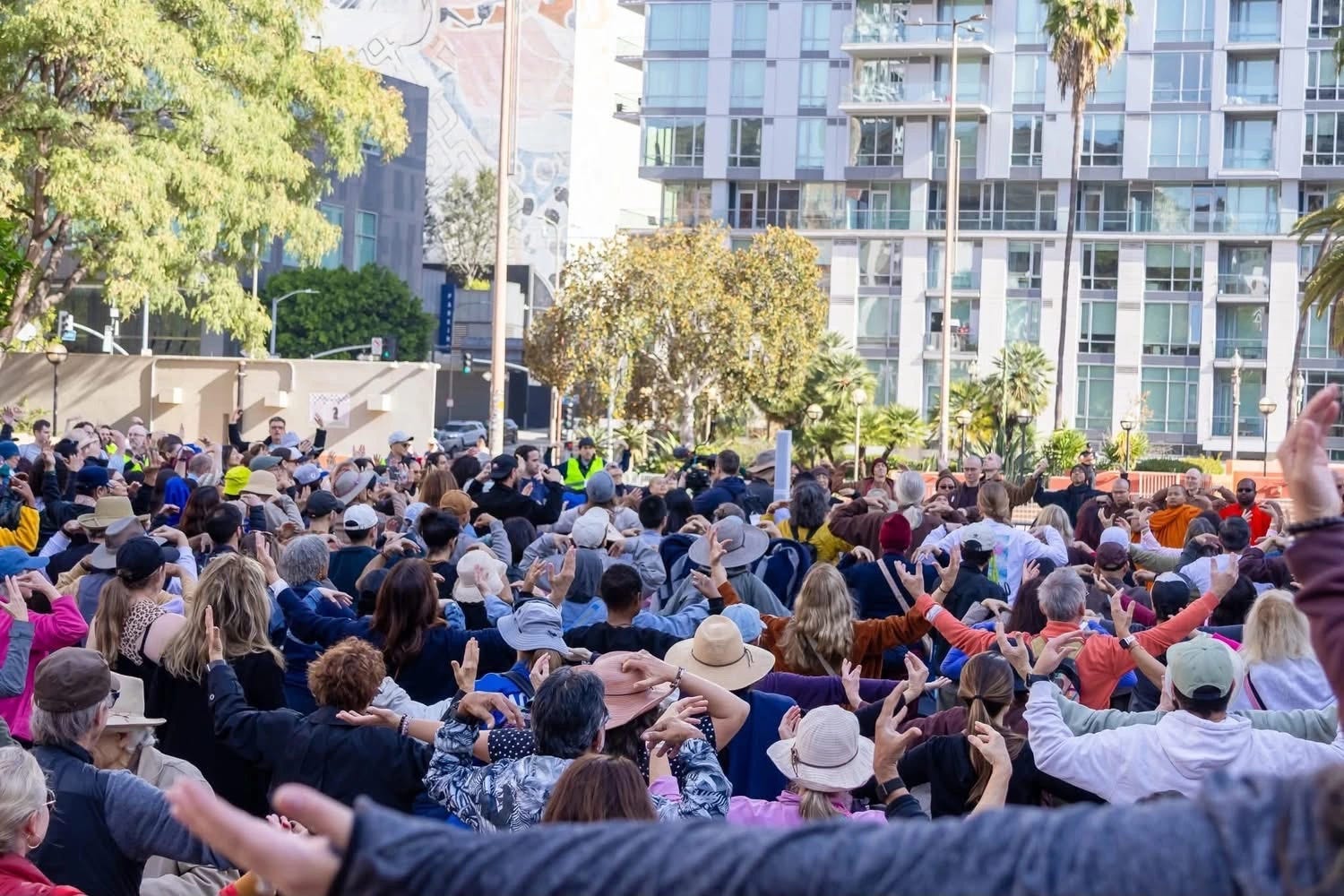
First of all, let’s just take a moment to witness the fact that it worked. At our first organizing meeting, we said, “We are committed to doing a walk, even if it’s just 20 of us.” As it turned out, there were way more of us than that. In 4 weeks, the walk grew from a mere seed to a fully formed mosaic flower. We had a route, permits, and vests. We had posters, sound amplification, and a flag. We had more than 30 monastics from different traditions, a team of organizers from across SoCal, an even larger team of day-of volunteers(!) , and around 750 participants.
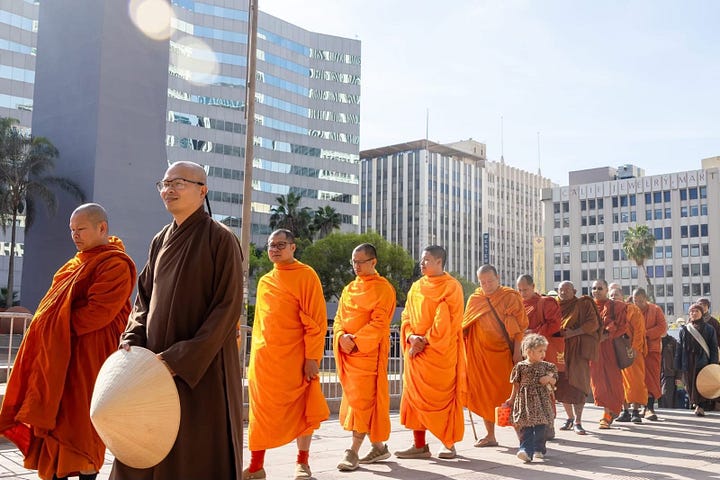
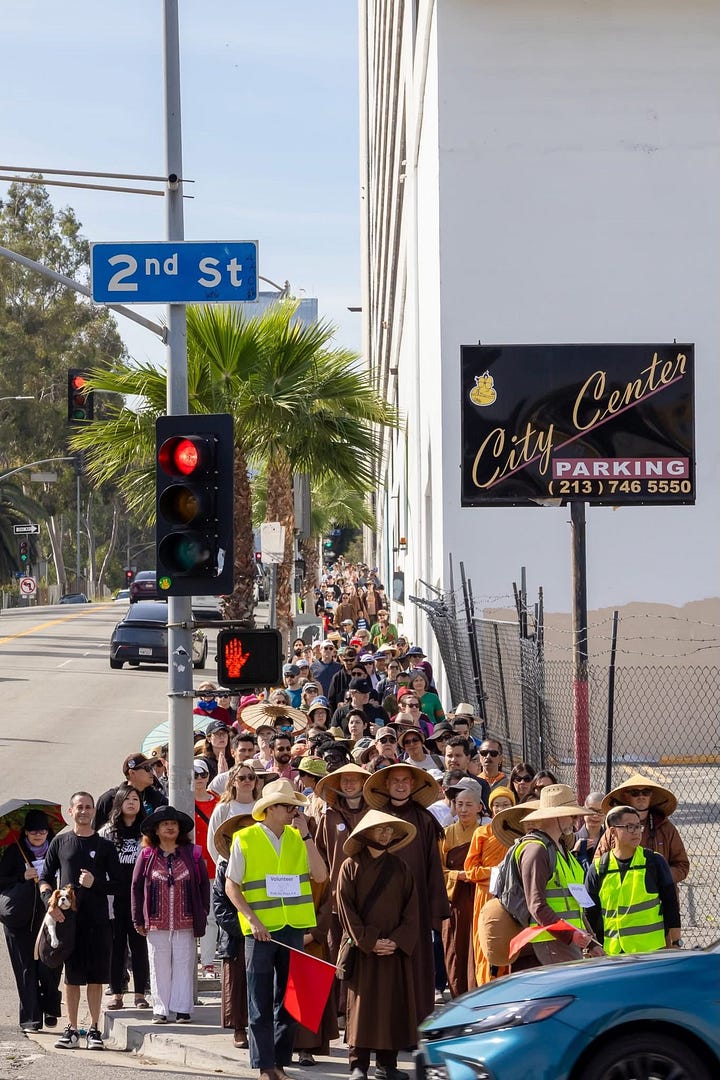
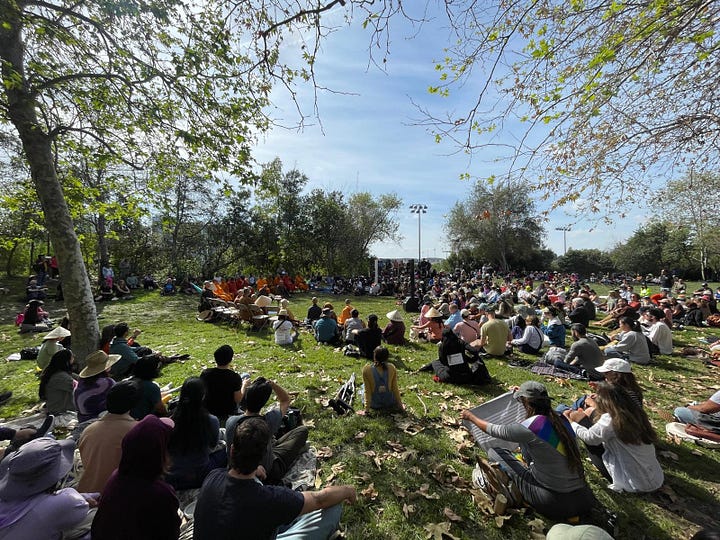
Together we generated an energy of mindfulness and compassion with every step. We did so in the heart of the city, at Pershing Square, crossing the 110 freeway, and in the oasis of Vista Hermosa Park. The locations worked, the walk was smooth, and the program was wonderful, from Sister D’s walking meditation instruction to Venerable Lotus’ metta meditation.
How did this happen? Why did it work? The main reason seems to be that it was timely. It was inspired by the moment. In the simplicity of their message, the depth of their commitment, and the skillfulness of their media campaign, the Theravāda Buddhist monks from the Huong Dao Vipassana Bhavana Center in Texas were a powerful force snowballing up the East Coast for 3 months. Pair that with an immense collective hunger for peaceful activity in the face of an unrestrained Trump administration, which came to a head in early January as ICE shot citizens dead in the streets of Minneapolis while the Trump administration captured the head of Venezuela by force and threatened to take Greenland. The result was a community ready to leap into action.
As an organizing team we had the good sense to follow the model of the Huong Dao monks as closely as possible, and to ride the wave. The organization was good enough to gain the trust of successive rings of participation: a few interested folks, a few co-organizers, a few monastic communities, then through their channels the sanghas surrounding those communities, trickling out beyond them into the general public. It had momentum.
Finally, the walk involved multiple Buddhist lineages. One comment we received was that it was particularly wonderful that the walk brought monastics and practitioners from different traditions together. I am particularly proud of this because it reflects the diversity of our Sangha House community, which brings together practitioners from multiple traditions. Shoutout to Christopher, who moved into an intentional community founded as a house “in the Plum Village tradition,” even though his primary identification is different, and who has invited and allowed us to grow beautifully in that way.
As satisfied as I am that everything went smoothly on the day of the walk, the most rewarding part of Walk for Peace LA was what came before (and after) the public event: co-organizing, and the relationship building that entails. Can you believe that we regularly had 12-20 people on our organizing calls!? What a beautiful surprise this was. You have to remember we haven’t done this before! We are a new intentional community, under a year old, with some local connections but without an established regional network of relationships. I am almost overwhelmed with gratitude for the co-organizers who joined up with us on this walk.
And it was just so fun! The team was amazing! People stepped up. People pitched in. We upended our normal schedules to design posters, to discuss the program, to join late night calls and endure meeting marathons.
My partner Liz provided a beautiful metaphor at our debrief meeting after the walk. She had done the initial design of the flyer. It was 100% hers and she liked it. Then, when Chris altered it by changing the font, she felt resistance. He could change the font, but he’d better not then attribute the design to her! She suffered. Eventually, Larene remixed the design again, adding a dove inspired by the flag from Walk for Peace USA, and put it in a frame on a tripod on the day of the walk. It welcomed guests as the visual front door of the walk. It’s perfect, Liz said with gratitude looking at the poster that is now hanging on our wall.
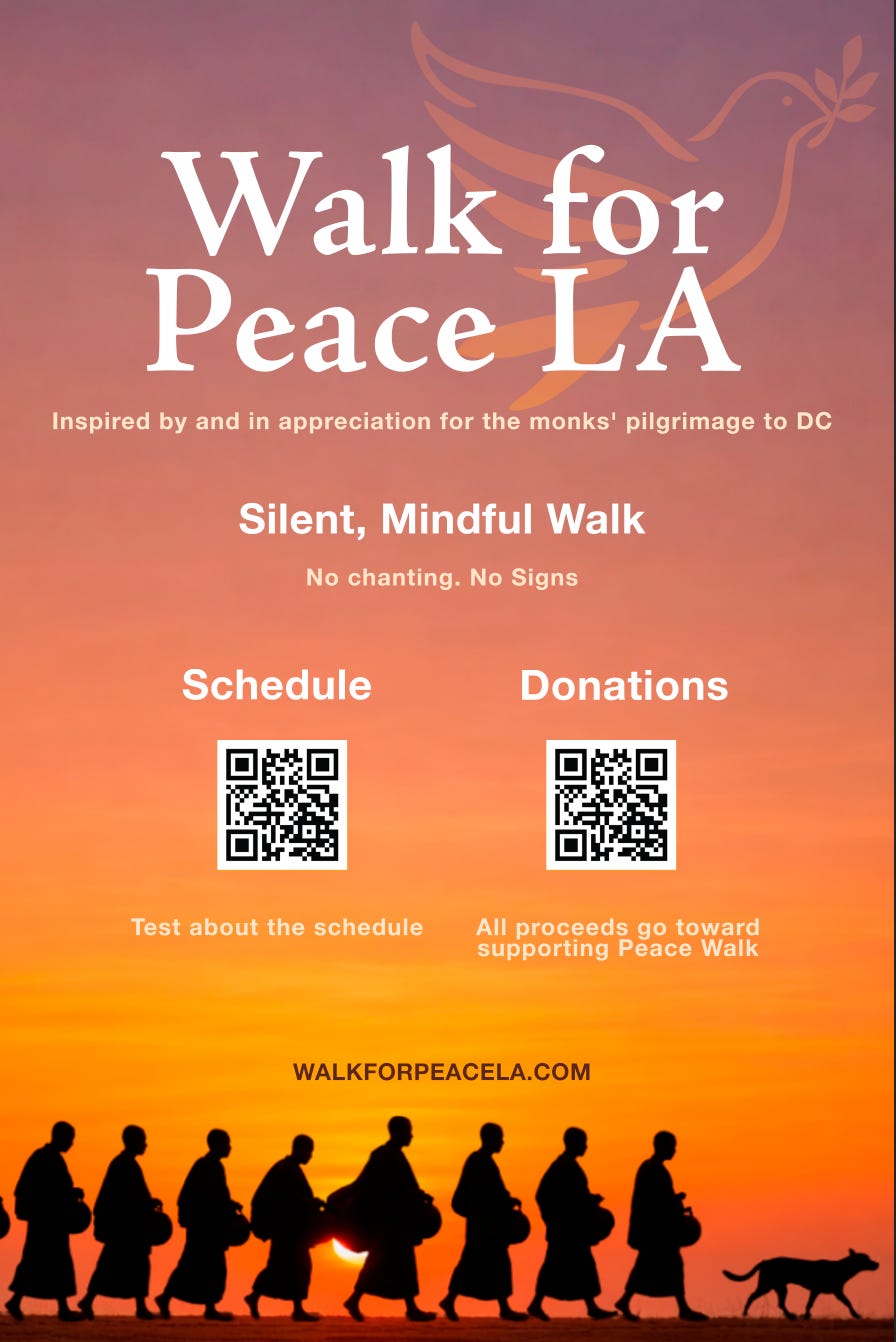
Now, the poster represents not only the walk, but the non-self of a walk, a poster, or anything else. The real mosaic of interbeing is always hiding beneath identity. I have grasped that, with the help of the wonderful dharma stream. “No I, no me, no mine.” In the ultimate dimension, there is no “I”. The self is made of non-self elements.
Oooeee, after much sitting meditation, walking meditation, and dharma sharing, it was a joy to do working meditation with this organically materializing team of sangha organizers. That’s community. That’s engaged Buddhism.
Several of us in the house are Order of Interbeing aspirants, wanting to be formed by and to go deeper in the Plum Village tradition. After this walk, I have a piece of advice to any aspirants who want to go deeper in community, whether this one or another. PLAN AN ACTION! Plan an event. Co-organize.
Promoting and organizing a walk expanded our community in many ways, and I want to go through and name some of them.
One of the great reasons to be part of a spiritual tradition is to be connected with elders, people who have more knowledge and experience than you do and from whom you can learn. This walk connected us to organizing elders like Steve and Joanne, leaders with organizing experience and relationships in the broader community. We could not have done it without these people! It wouldn’t have been the same event. They supported us, guided us and grounded us. They transmitted some of their knowledge and experience and practice to us.
Before I found the spiritual path, I did it on my own. In my own thoughts I was going to figure out the world. That didn’t work out too well for me, and I found a new way. In 12 Step, you work with a sponsor, a relationship that has changed my life twice over. I learned to do life with others. I learned to make decisions in consultation, in discernment, with the help of spiritual peers, elders, and contemplative prayer. In the Plum Village tradition, thanks to the Order of Interbeing Study Group, I am now working with a Dharma Teacher, where I am developing a similar relationship. It was so wonderful in this event to be connected, to work side by side with organizing elders.
The walk gave us a chance to connect with an extended sangha. We host a weekly sangha (meditation + dharma sharing) on Wednesdays at 7 pm, which has in recent months been home to an active flourishing community. But the walk expanded this in two ways.
One, we got to work, to build something with our friends. The six of us who live here — Chris, Casiana, Taylor, Rachel, Liz and me — we were in it day and night for almost a month! Tee and Anthuan, great friends of the house, took on special organizing roles in the effort.
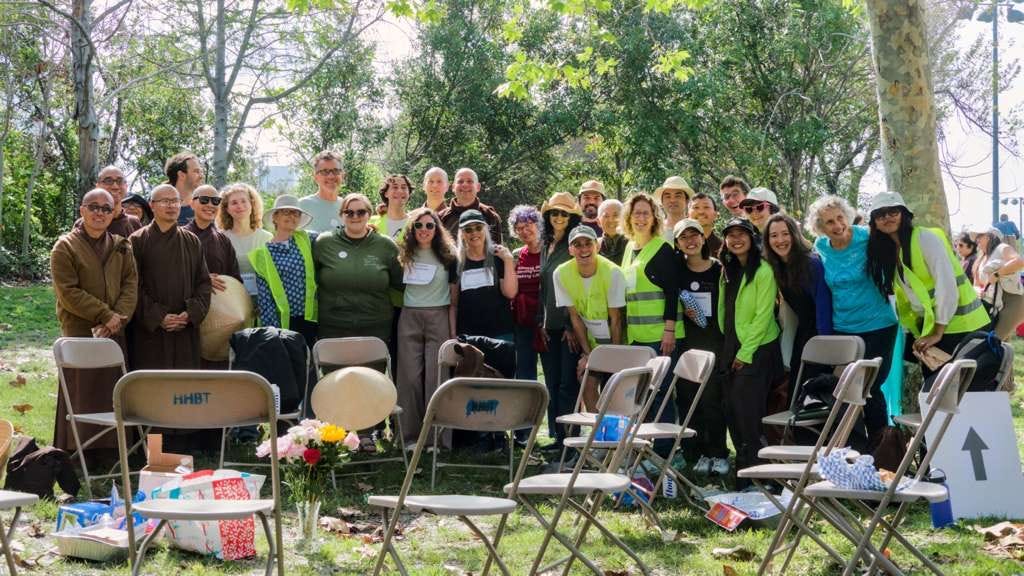
Two, we got connected with a regional community of organizers: organizers from other sanghas, people who don’t attend our Wednesday evening sits. Carmiel jumped in as volunteer coordinator. Larene made wonderful posters, stickers, and volunteer bibs. Stephon and Steve V. made awesome videos capturing the walk. Tommy Tran was there from the beginning and liaised with DIMC. Michael Giuffre delivered on the sound equipment. Carla helped with the route. MaryLinda helped with outreach. At a critical moment, Sean and Ray stepped in to help with tear down / set up (at two locations). And on and on.
The whole walk was a mosaic poster created by sangha.
In this regard, Plum Village really showed up. The Compassionate Heart Sangha really showed up. We learned that there is an organizing community out there who has capacity and interest in planning an action. We want to keep this relationship going.
The walk gave us a chance to connect with local monastics. For example, Venerable Minh Hai, Venerable Piyananda, Venerable Pannaloka, monastics from Dhammakaya International Meditation Center, Deer Park, and University of the West and others. Through Joanne, we connected with Venerable Lotus and Bhante Ananda at University of the West.
We got to co-organize and to co-regulate with them. For example, on a call with brothers from Deer Park a week or so before the walk, we organizers started to get stressed out. We were puzzling at the schedule and how we could get from Pershing Square to Vista Hermosa Park in time for the Theravada monastics to have lunch before noon, without knowing exactly when we would leave Pershing, how many people we would have, or how long it would take to traverse the cross walks... Brother Phap Dung brought us back home, saying, (I’m paraphrasing) “don’t worry about it. The most important thing is to relax. If the organizing team is stressed out, it will be shared with the walk.” This little release of control was wonderful.
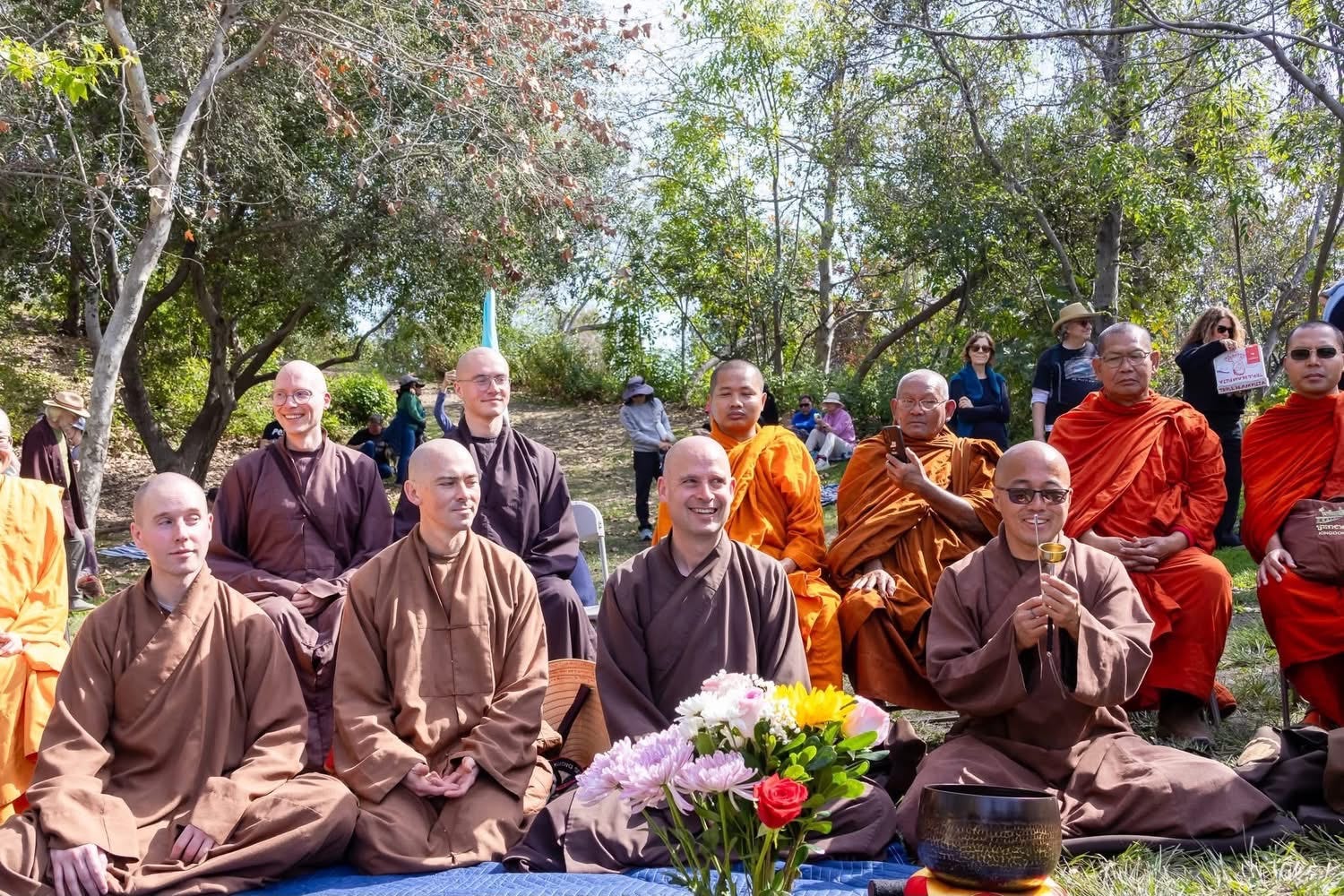
Connecting with sangha in these ways was incredible. To find mentorship and co-organizers, to have monastics join, to have a great turn out — all this felt like being held by community. Taking a leap and being caught. It showed us that we have something to offer and it allowed us to dream about what’s next.
But before going on to that, I want to reflect a bit more on this question. What do we, as an intentional community, have to offer the community? This is relevant because we are currently going through a formation or gestation process. We are actively engaging in questions of identity, form, mission, and community.
An intentional community like Sangha House can almost never provide huge numbers. In its current form, it cannot provide wisdom and long experience or much by the way of institutional power. What it can provide is youth, energy, and a hub of alternative culture. And these are considerable gifts.
Youth and energy and innocence were essential to the walk, which was organized entirely in a month and involved multiple traditions. It was an acute, concentrated effort, which occupied many late nights and weekends. Truth be told, at the start, we didn’t know what we had gotten ourselves into, but we didn’t have to. Steve did. We just provided the energy, the willingness to try, and to grow. Intentional community like Sangha House can provide a space that supports that.
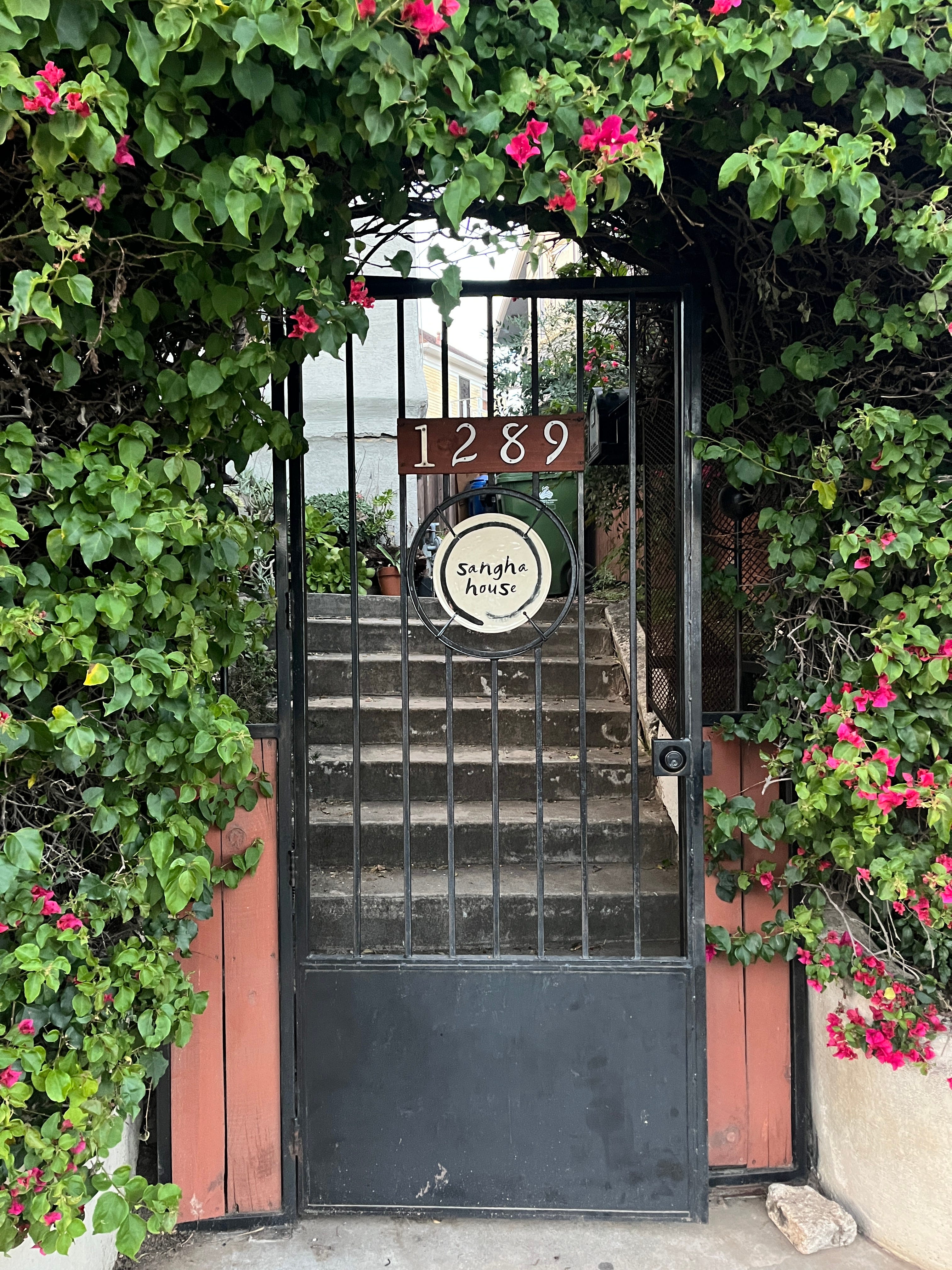
People don’t always understand intentional community. The assumption in the dominant culture is that it is a financial decision for young people, and if and when you can afford it, you move out to have your own place. This makes sense, because our culture is capitalist and individualist. But the real reason for intentional community is to create alternative culture. In the homogeneity of the dominant culture, intentional communities are experimental pockets, little swirls in the ether where something genuinely new and different is possible. Think of intentional community like a start up, not for a product, but for cultural and behavioral norms.
Essentially this is what a monastery is too. This is why a revolutionary radical like Ghandi lived in ashrams, and why Dorothy Day created the movement of Catholic Worker houses. You create a little bubble around you so that the alternative norms and culture can breathe without being wiped out by the dominant culture. Liz and I saw this firsthand when we visited Canticle Farm, a 40+ person intentional community, in November. It was like a little alternative universe of urban gardening, restorative justice, and mystical spirituality on a city block in Oakland.
At Sangha House LA we think of ourselves as a lay monastery in the city. In this intentional community, we come back to our breath. We practice looking deeply. We remember interbeing. And for a whole month, we had a culture where our collective lives revolved around Walk for Peace LA. Oh, this was incredible. For a whole month, we collectively made the walk a priority, and were supported in doing so by the people around us. It was assumed. It was in the air.
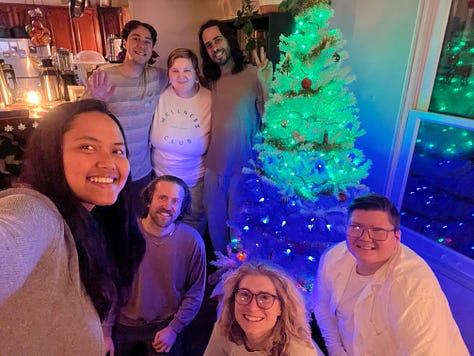
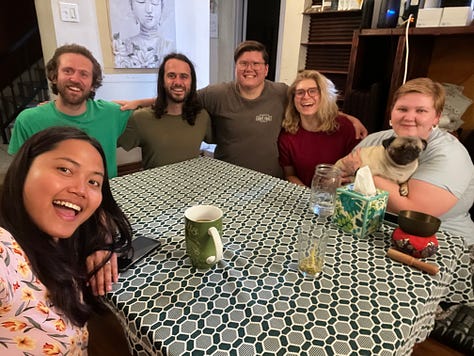
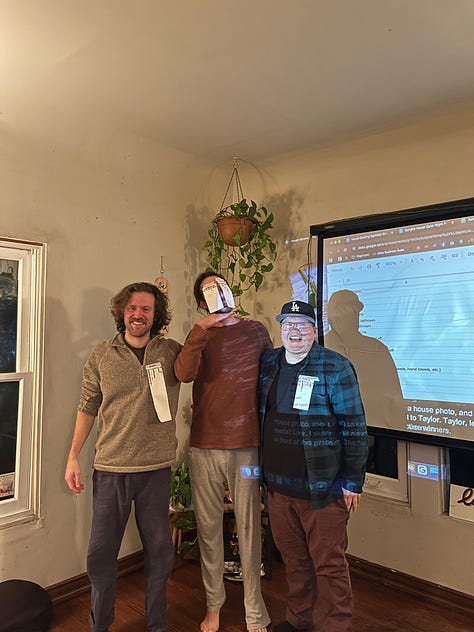
Organizing conversations unfolded in the kitchen at 7 am, before work. Some nights we worked in the living room until 10 pm. We met Saturday mornings, and worked all day. We skipped dinners and dates and canceled parties to make the walk possible. If we hadn’t been living together, in an engaged Buddhist house, if we hadn’t been supported by each other’s intention in that way, I do not believe we would have had the time or the collective energy to seriously propose the idea of a Walk for Peace LA, let alone to make it happen in a month. The energy of intentional community was a condition of the walk.
In other words, for the first time Sangha House had something concrete to offer the community, and in that exchange both were expanding. There was a wonderful symbiosis between the intentional community and the larger sangha. It’s not just that we got to connect and build relationships with organizing elders, an extended sangha, and monastics. It’s that we glimpsed a larger synthesis.
As a sangha, you all provided the breadth and experience and institutional power. As an engaged Buddhist intentional community, we provided an energy, a center of activity, a hub. It was wonderful, for several weeks, while this collective, hybrid organism was functioning to the end of Walk for Peace LA, like a toddler taking its first steps.
How do we keep this beautiful symbiosis going? (Plan another event?) How do we create an identity for ourselves that supports this? (A mission statement?) How do we continue building relationships with the monastics we worked with? How do we maintain relationships with organizing elders and the extended sangha that budded during the walk? (A board of advisors? A membership role for people who don’t live here?)
These questions are very interesting to me. I will be thinking and writing about them. As I mentioned at the top, if you have thoughts on this front, please comment or write to us. I look forward to thinking about these things more with you.
In community,
Garrett
No posts
Comments
Nothing yet. Say the first thing.
Sign in to join the conversation.