
Fenbendazole is a veterinary anthelmintic — a drug designed to kill parasitic worms in animals. It was never designed to fight cancer. And yet, over the past several years, it has become one of the most widely discussed experimental anti-cancer compounds in the world [1, 2].
The interest is not baseless. A growing body of preclinical research — studies conducted in cell cultures (in vitro) and animal models (in vivo) — has identified at least four distinct biological mechanisms through which fenbendazole may exert anti-tumor effects [1, 3]. These mechanisms overlap with pathways targeted by established chemotherapy drugs, which is precisely what makes the compound scientifically intriguing.
But preclinical evidence is not clinical proof. Understanding what the science actually shows — and where the evidence ends — is essential for anyone navigating this landscape.
In this article, we systematically break down each mechanism, cite the specific studies, and clearly distinguish between what has been demonstrated in the laboratory and what remains unproven in humans.
Every cell in your body contains an internal scaffolding system called the cytoskeleton, built partly from protein structures called microtubules. These tubular filaments are assembled from subunits of a protein called tubulin (specifically, heterodimers of α-tubulin and β-tubulin) [3, 4].
Microtubules perform many functions — maintaining cell shape, transporting organelles, enabling cell motility — but their most critical role is during cell division (mitosis). During mitosis, microtubules form the mitotic spindle, the apparatus that physically pulls chromosomes apart so that each daughter cell receives a complete copy of the genome [3].
If the mitotic spindle cannot form properly, the cell cannot divide. It becomes stuck in the G2/M phase of the cell cycle. This arrest triggers a cascade of events leading to mitotic catastrophe and, ultimately, programmed cell death (apoptosis) [3, 4].
Fenbendazole binds to β-tubulin at a site associated with the colchicine-binding domain [3, 4]. This binding prevents tubulin subunits from polymerizing into functional microtubules. Without intact microtubules, the mitotic spindle cannot assemble, and dividing cells are caught in a lethal trap.
This is not a novel concept in oncology. Two of the most widely used classes of chemotherapy drugs work through the same fundamental principle:
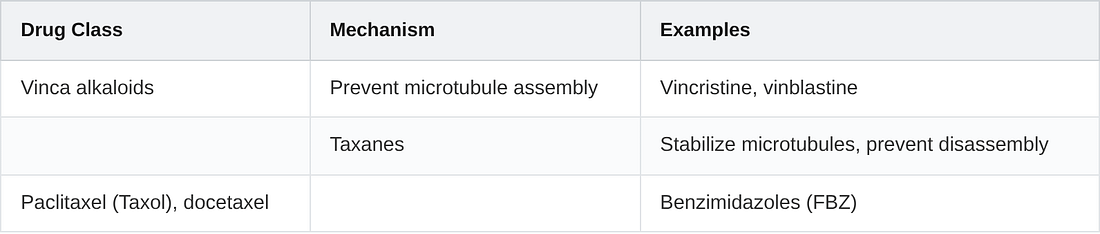
The 2018 study by Dogra et al. in Nature Scientific Reports was pivotal in characterizing this mechanism. The researchers demonstrated that fenbendazole possesses a moderate affinity for mammalian tubulin (not just parasitic tubulin) and can induce apoptosis in non-small cell lung cancer cell lines at micromolar concentrations [3].
This mechanism is well-characterized in laboratory models. However, achieving the concentrations of fenbendazole necessary to disrupt microtubules in human tumors — given the drug's poor oral bioavailability (estimated 20-30%) — remains a fundamental translational challenge [1, 5].
In the 1920s, German physiologist Otto Warburg observed something counterintuitive: cancer cells consume glucose at rates 10-200 times higher than normal cells, and they do so even when oxygen is plentiful. Instead of using the efficient mitochondrial oxidative phosphorylation pathway (which yields ~36 ATP per glucose molecule), cancer cells preferentially use glycolysis (which yields only 2 ATP per glucose) [3, 6].
This metabolic reprogramming — known as the Warburg effect — seems wasteful, but it provides cancer cells with crucial advantages:
Rapid energy production. Glycolysis, while less efficient, generates ATP much faster than oxidative phosphorylation.
Biosynthetic precursors. The glycolytic intermediates serve as building blocks for nucleotides, amino acids, and lipids needed for rapid proliferation.
Acidic microenvironment. The lactic acid produced as a glycolysis byproduct acidifies the tumor microenvironment, suppressing immune cell function and promoting invasion [6, 7].
For cancer cells, glucose is not just fuel — it is an existential necessity.
Preclinical studies show that fenbendazole disrupts this metabolic dependency through two key actions [1, 3]:
Downregulation of GLUT1. Glucose transporter 1 (GLUT1) is the primary protein that shuttles glucose from the bloodstream into cells. Cancer cells frequently overexpress GLUT1 to meet their voracious energy demands. Fenbendazole has been shown to reduce GLUT1 expression on the cell surface, effectively reducing the cancer cell's access to glucose [1, 3].
Inhibition of Hexokinase II (HKII). Hexokinase II is the enzyme that catalyzes the first step of glycolysis — the phosphorylation of glucose to glucose-6-phosphate. By inhibiting HKII, fenbendazole disrupts the entire glycolytic cascade at its entry point [1, 3].
The combined effect is a metabolic crisis: the cancer cell's primary energy pathway is compromised, leading to ATP depletion, oxidative stress, and death.
This mechanism is particularly relevant for drug-resistant tumors. Many cancers that develop resistance to chemotherapy become increasingly glycolysis-dependent. By targeting this metabolic vulnerability, fenbendazole may theoretically affect cells that have escaped conventional treatment [1, 8].
The glucose metabolism inhibition has been demonstrated in cell culture studies. The challenge of achieving sufficient drug concentrations at the tumor site in vivo remains. Additionally, normal cells also use glucose (particularly brain cells and red blood cells), so selectivity is a concern at high doses.
The TP53 gene encodes the p53 protein, often called the "Guardian of the Genome" [9]. Under normal circumstances, p53 serves as the cell's quality control system:
When DNA damage is detected, p53 halts the cell cycle to allow time for repair.
If the damage is irreparable, p53 triggers apoptosis — commanding the cell to self-destruct rather than risk passing on dangerous mutations.
P53 also regulates metabolic pathways, autophagy, and senescence.
In cancer, the TP53 gene is the most frequently mutated gene across all tumor types. Approximately 50% of all human cancers carry TP53 mutations, and many more have functional inactivation of the p53 pathway through other mechanisms [9, 10]. When p53 is disabled, cells lose their ability to detect and respond to damage, allowing uncontrolled proliferation.
Research indicates that fenbendazole can stabilize and activate wild-type p53 in cancer cells that retain a functional copy of the gene [1, 3, 12]. The proposed mechanism involves:
Direct stabilization of the p53 protein, preventing its degradation by MDM2 (the protein that normally marks p53 for destruction)
Mitochondrial p53 translocation — fenbendazole appears to promote the movement of p53 to the mitochondria, where it directly triggers the intrinsic apoptotic pathway by interacting with Bcl-2 family proteins [1, 12]
Induction of mitochondrial membrane permeabilization, leading to the release of cytochrome c and activation of the caspase cascade [3]
This mechanism is significant because it suggests that fenbendazole's effects are not limited to cell division arrest. Even non-dividing cancer cells could potentially be targeted through p53-mediated apoptosis [12].
The p53 activation has been observed in cell culture models, primarily in cell lines that retain wild-type p53. The relevance of this mechanism to tumors with mutant p53 (which represent roughly half of all cancers) is unclear and has not been adequately studied.
For decades, apoptosis was considered the primary form of programmed cell death. However, research over the past 10-15 years has revealed a far more complex landscape of regulated cell death mechanisms [11, 13]:
Pyroptosis — an inflammatory form of cell death mediated by gasdermin proteins, which form pores in the cell membrane, causing the cell to swell and burst, releasing inflammatory contents.
Ferroptosis — an iron-dependent form of cell death characterized by the accumulation of lipid peroxides, leading to membrane damage.
Autophagy-dependent cell death — where the cell's self-recycling machinery goes into overdrive, eventually consuming critical cellular components.
These alternative death pathways are particularly important in the context of drug resistance. Many chemotherapy-resistant cancers develop mechanisms to evade apoptosis (e.g., by upregulating anti-apoptotic proteins like Bcl-2). If a compound can trigger cell death through non-apoptotic mechanisms, it may overcome this resistance [11].
Recent preclinical studies (2024-2025) have expanded our understanding of fenbendazole's effects beyond classical apoptosis [11, 13]:
Pyroptosis: A 2025 study published in PMC demonstrated that fenbendazole can induce pyroptosis through the caspase-3/GSDME (Gasdermin E) pathway [11, 13]. In this cascade:
Fenbendazole activates caspase-3 (an executioner caspase)
Active caspase-3 cleaves GSDME, releasing its N-terminal domain
The GSDME-N domain oligomerizes in the plasma membrane, forming large pores
The cell ruptures, releasing inflammatory mediators
This mechanism was notably observed in chemotherapy-resistant cell lines, suggesting that fenbendazole may overcome certain forms of drug resistance [13].
Ferroptosis: The same study identified that fenbendazole can trigger ferroptosis by increasing intracellular iron levels and promoting the accumulation of lipid reactive oxygen species (ROS) [11, 13]. This iron-dependent death mechanism is particularly interesting because many aggressive, mesenchymal-type cancer cells appear to be selectively vulnerable to ferroptosis.
ROS Generation: Across multiple studies, fenbendazole has been shown to increase oxidative stress within cancer cells by elevating reactive oxygen species [1, 3]. This oxidative burden damages cellular membranes, proteins, and DNA, contributing to cell death through multiple pathways simultaneously.
These are the most recently described mechanisms and have primarily been studied in cell culture systems. Animal data is emerging but limited. The relevance to human cancer biology requires further investigation.
Having outlined four genuine, scientifically documented mechanisms of action, it is essential to address the elephant in the room: none of this has been validated in human clinical trials.
As of July 2026:
There are zero registered clinical trials for fenbendazole as a cancer treatment on ClinicalTrials.gov [14]
The American Society of Clinical Oncology (ASCO) has explicitly recommended against the use of fenbendazole for cancer outside formal clinical trials [15]
A 2025 case series published in Case Reports in Oncology was retracted by the publisher [16]
The drug's oral bioavailability is only 20-30%, making it challenging to achieve the concentrations used in laboratory studies [1, 5]
The pharmacokinetic challenge deserves emphasis. In the 2018 Nature study, anti-cancer effects were observed at micromolar concentrations in cell culture [3]. Achieving comparable concentrations in human plasma, given the drug's poor absorption and rapid hepatic metabolism (via CYP2C19, CYP2J2, and CYP3A4), would likely require doses far exceeding those used in current anecdotal protocols [1, 5].
Taking fenbendazole with a high-fat meal can increase plasma concentrations by 2-3x [5, 17], but whether this is sufficient to reach therapeutic levels remains unknown.
The potential for anti-cancer activity does not negate the potential for harm.
Hepatotoxicity is the most well-documented risk, with multiple peer-reviewed case reports describing severe, biopsy-confirmed liver injury in patients self-administering fenbendazole [18, 19, 20]:
Profoundly elevated ALT/AST
Jaundice and fatigue
Dose-dependent severity
Generally reversible upon cessation, but potentially life-threatening if unrecognized
Anyone considering fenbendazole should, at an absolute minimum, establish baseline liver function tests and repeat them every 4-8 weeks [21, 22].
Fenbendazole's preclinical profile is genuinely compelling — few repurposed compounds demonstrate activity across this many distinct anti-cancer pathways. The convergence of microtubule disruption, metabolic interference, p53 activation, and multiple cell death mechanisms creates a reasonable biological rationale for clinical investigation.
But rational ≠ proven. The compound sits in that frustrating gap between laboratory promise and clinical validation. Until well-designed human trials are conducted, all claims of efficacy remain exactly that — claims.
The science deserves to be taken seriously. So do the risks. And so do you.
Anticancer Research. "Fenbendazole as Anticancer Agent: Mechanisms." 2024;44(9):3725. Available at: https://ar.iiarjournals.org/content/44/9/3725
Cancer Choices. "Fenbendazole and Cancer: A Closer Look." Available at: https://cancerchoices.org/fenbendazole-and-cancer-a-closer-look-at-its-use-and-risks/
Dogra N, Kumar A, Mukhopadhyay T. Nature Scientific Reports. 2018;8:11926. Available at: https://www.nature.com/articles/s41598-018-30158-6
PMC. "Benzimidazole Anthelmintics in Oncology." Available at: https://pmc.ncbi.nlm.nih.gov/articles/PMC9559625/
Science Insights. "Can Humans Take Fenbendazole? What the Evidence Shows." Available at: https://scienceinsights.org/can-humans-take-fenbendazole-what-the-evidence-shows/
Warburg O. "On the Origin of Cancer Cells." Science. 1956;123(3191):309-314.
Sanare Lab. "ISOM Protocol: A Modern Metabolic Strategy." Available at: https://www.sanarelab.science/isom-protocol-a-modern-metabolic-strategy-using-repurposed-drugs/
Sanare Lab. "Fenbendazole vs Mebendazole: Cancer." Available at: https://www.sanarelab.science/fenbendazole-vs-mebendazole-cancer/
Lane DP. "p53, guardian of the genome." Nature. 1992;358:15-16.
Vogelstein B et al. "Surfing the p53 network." Nature. 2000;408:307-310.
PMC. "Fenbendazole-Induced Pyroptosis and Ferroptosis." 2025. Available at: https://pmc.ncbi.nlm.nih.gov/articles/PMC12314287/
Internal Healing and Wellness MD. "Fenbendazole and Stage IV Cancer Remission." Available at: https://internalhealingandwellnessmd.com/fenbendazole-and-stage-iv-cancer-remission-what-the-latest-research-reveals/
Frontiers in Pharmacology. "Fenbendazole: Novel Pharmacological Perspectives." 2025. Available at: https://www.frontiersin.org/journals/pharmacology/articles/10.3389/fphar.2025.1596694/full
ClinicalTrials.gov. Search: "Fenbendazole." Available at: https://www.clinicaltrials.gov/ct2/results?term=FENBENDAZOLE
ASCO Clinical Notice (May 2026). Available at: https://connection.asco.org/do/asco-clinical-notice-recommending-against-ivermectin-and-fenbendazole-cancer-treatment
Case Reports in Oncology. Retracted publication. Available at: https://karger.com/cro/article/18/1/856/927630
Medsbase. "Fenbendazole for Humans." Available at: https://medsbase.com/fenbendazole-for-humans-can-antiparasitic/
PubMed. PMID: 38706451.
PubMed. PMID: 34248555.
Karger. "Drug-Induced Liver Injury in a Patient." Available at: https://karger.com/cro/article/14/2/886/820730
NCBI Bookshelf. "Drug-Induced Liver Injury." Available at: https://www.ncbi.nlm.nih.gov/books/NBK553087/
PubMed. PMID: 39300766.
Disclaimer: This article is for educational and informational purposes only. It is not intended as medical advice and should not replace consultation with a qualified healthcare provider. Fenbendazole is not approved for cancer treatment in humans. Always consult your physician before considering any experimental protocol.
📬 Subscribe to Sanare Lab on Substack — all content is free, always: sanarelab.substack.com
🔬 Explore the full research library at sanarelab.science
No posts
Comments
Nothing yet. Say the first thing.
Sign in to join the conversation.