
Part 2 of this essay can be found here.
The purpose of life of an Indian is to escape India, it can either be done by leaving India physically or figuratively by shifting to a gated community. Once the Indian escapes India, India becomes the best country in the world & requires no improvement.
So says the pinned tweet - originally from 2022 - of the anonymous X account named Timothy Clifford. It is a provocative statement. And consciously so. But TC’s “Escaping India” theory is one of the great works of Indian Twitter. It is a post that has survived the test of time, aging like a fine wine and conquering news cycle after news cycle.
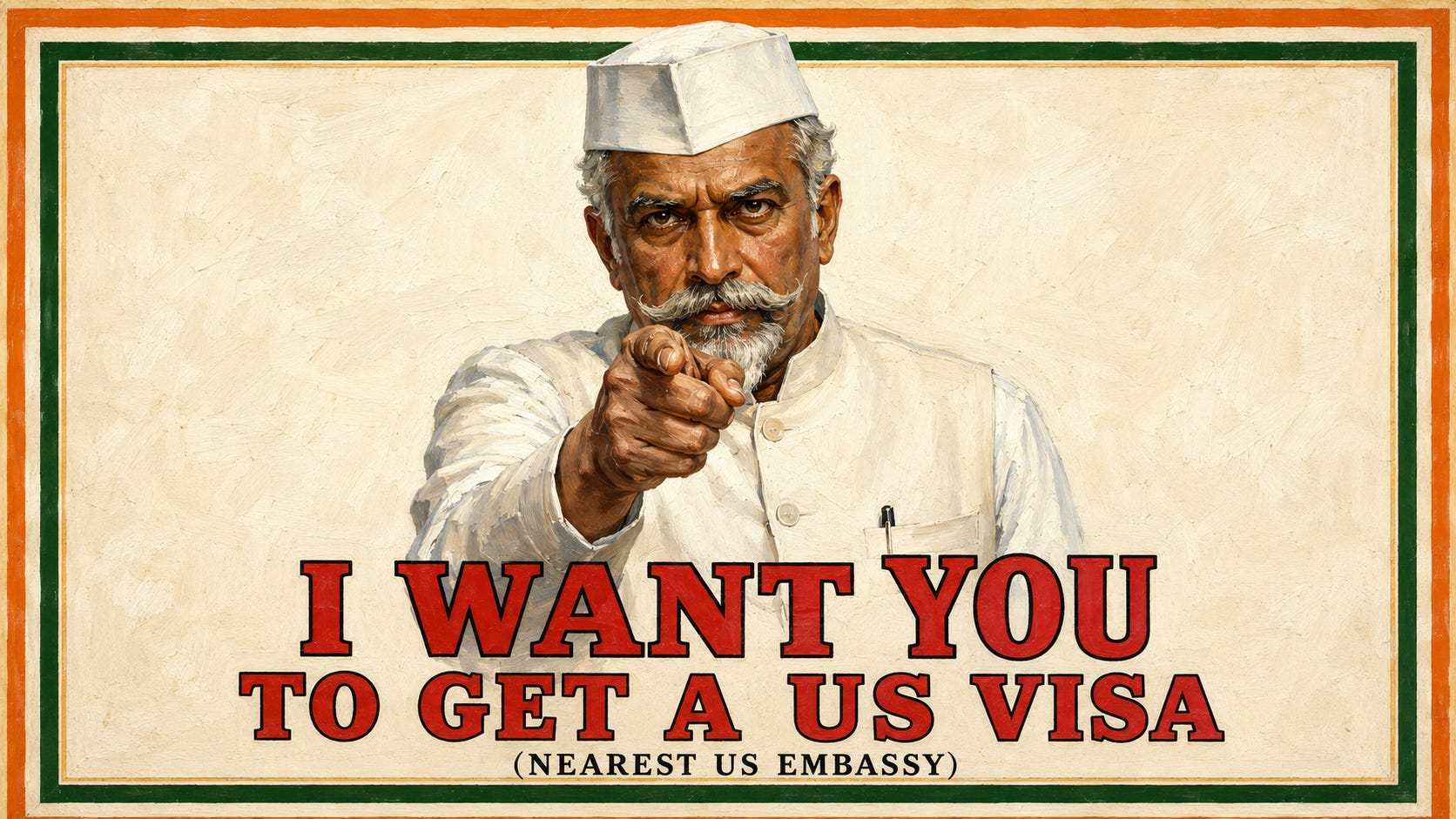
It’s hard to disagree with the post’s initial premise. India - and Indian society - can offer a lot to any person born and raised here. But there is a ceiling to what can be achieved in India and the kind of life that can be lived here. Especially when compared to what’s possible in the rest of the world, and in a technological and economic reality where affordable international travel exists, and social media platforms dominate people’s lives as they are fueled by low internet data prices. Twenty-first-century India is an airport departure lounge that sometimes doubles as a country. In this scenario, a person living in the developing world has immediate access through X, Instagram, or YouTube to images and videos of the quality of life available in developed countries across the world. It creates an obvious dilemma inside every high-performing or aspirational individual who finds themselves living in the developing world due to the “accident of birth”:
I can achieve a lot in India, but it will never be able to match the quality of life and luxuries available to people living in developed countries. So my choices are: (1) I can waste away my one life fighting in the endless struggle and ruthless competitive colosseum that is Indian life, or (2) I can pick my own selfish interests and make the decision that is right for myself and my future generations by “graduating” from India.
Graduating is my term for “Escaping India”. I think it is a good catch-all term for the phenomenon because one of the primary means of “Escaping India” in the last three decades has been by obtaining an education in fields like engineering and medicine. First, one “graduates” from their sorry middle-class existence to institutions like IIT or AIIMS through back-breaking hard work, and then, success at one of these institutions allows one to “graduate” from India itself to move to a foreign, developed country.
In the period from the 1990s to the 2020s, this has been the primary method of “Escaping India”. “Graduation” from India through the medium of these specialized fields, moving to a developed country, and “settling abroad” is as close as post-Partition India has come to having a notion of an “Indian Dream”. The act of Escaping India is at the top of the Indian pyramid of hierarchy of needs. It is the highest form of self-actualization that an Indian can achieve in his or her life.
The Indian Dream is to do well enough in India so that one can “Graduate” from India.
This essay is an exploration into this phenomenon - “Escaping India”, “Graduation”, “Visaism” (i.e. the International Escape) and “Gated-Society-ism” (i.e. the Domestic Escape).
Since I know a decent chunk of my readers will fall into this category of Indian “Graduates” (throughout this essay, I will be using “Graduate”, “Visaist” and “Escapee” interchangeably, unless clarified otherwise), I need to clarify that this is not meant as an attack on them. It is meant as an objective exploration of a demonstrable and observable phenomenon. Beyond that, it is aimed at trying to understand what the consequences of this phenomenon are, both for India (the place being “Escaped” from) and for the “Graduates” themselves.
In some ways, this is also meant as a confession and internal exploration. In different parts of my life, I have been both a Domestic and International “Escapee” from India. Therefore, this essay is partly a way for me to explore the things I have learned from my actions and whether any lessons can be drawn from them for the future.
Lastly, it is also partly meant to be a response, or parallel reading, to my friend Vishal Ganesan’s January 2025 essay The Hindu Case Against “Hinduism”: A Reflection on Dharma in the Diaspora, which was an infamous essay in the world of “Indian discourse” online when it first got published by Vishal. As a second-generation Indian American, he obviously brings a very different perspective to this topic. While not directly addressing his essay, my own essay will touch on many points that were raised in Vishal’s essay. In some ways, my essay is meant as an exploration of the same topic that he discussed, but from the point of view of “the other side”.
With this, let us begin our exploration of this topic by understanding the circumstances that make India a place that needs to be escaped from.
Now that we have examined the initial mindset of a potential Graduate from India, I think it is important to examine this process - the conditions behind it, and the mindset that leads to our Graduate’s decisions.
In particular, I want to dig into two crucial variables that lead us to the Graduation of the Indian Elite: (1) the broken nature of urban governance in India, and (2) the low-trust nature of Indian society and the complete lack of a sense of the “commons” it creates within the society.
Urban governance in India is broken. This is an undeniable reality that is visible and apparent to any honest observer. One can differ on the reasons for how and why this problem exists, or on the potential steps that lead to a solution to the problem, but one cannot deny that the problem exists in the first place.
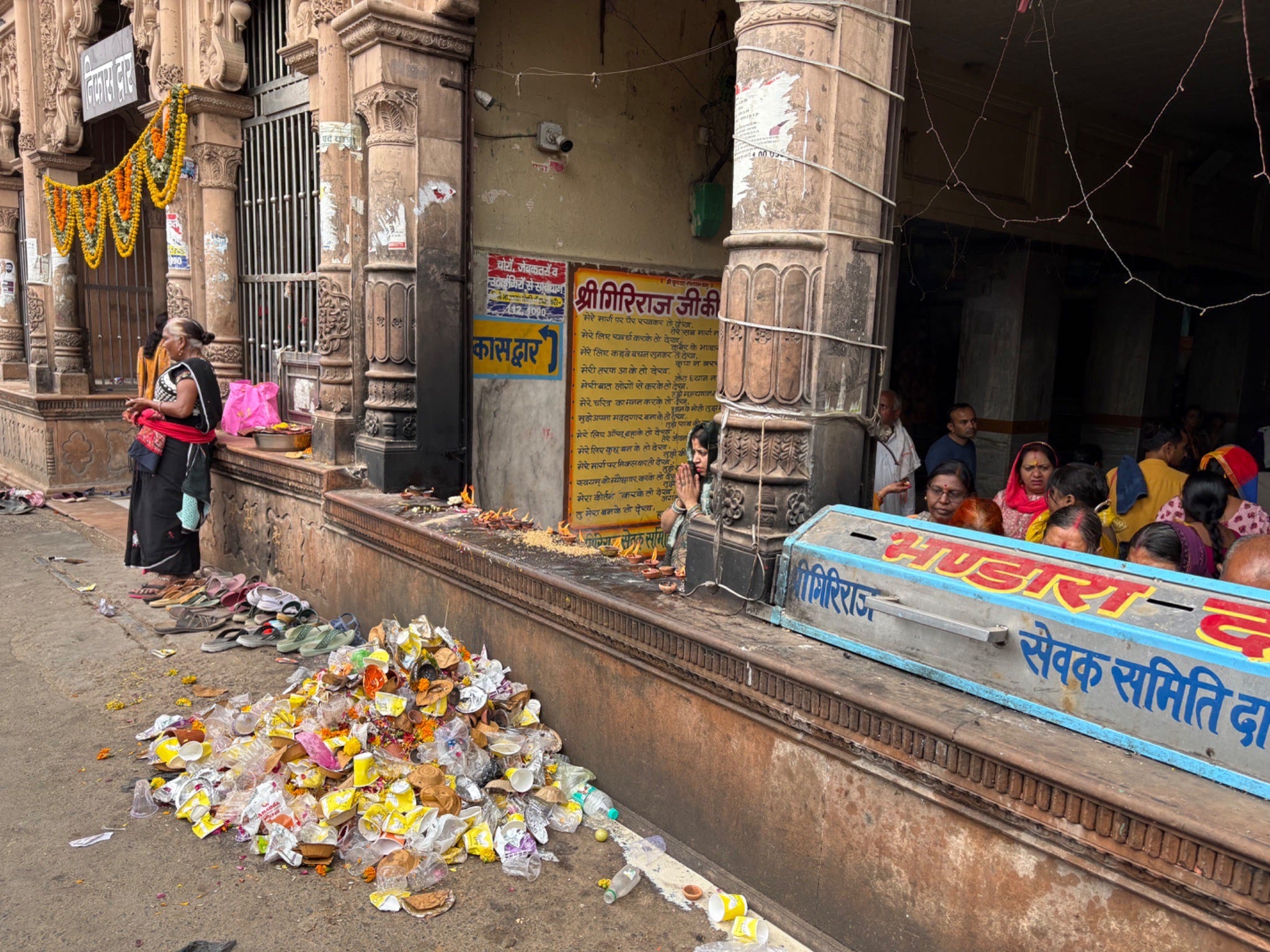
In fact, for those of us who still live in India, this reality exists all around us. It exists on our roads, in the state of our public hygiene, in our famous tourist places that have become indistinguishable from open-air dustbins. It exists at the micro level - a small plastic packet of paan masala thrown on the road by the daily-wage laborer as he trudges to his work - and at the macro level - in large “trash mountains” in every city and in plastic-clogged rivers and drains. It is as close to a universal urban experience as one can find in India. It affects the poor and the rich, people from different communities or religions, men and women, the old and the young, alike. The Urban India Squalor is an inescapable part of life in urban India.
Even beyond the sensory overload of litter and garbage flooding every Indian city, there are other infamous examples of a completely broken urban governance quagmire. These can range from the pathetic condition of most inner-city roads, the inescapable presence of overhead electricity and internet fiber wiring, a complete indifference to people posting leaflets and posters on public property, lawlessness and non-enforcement of traffic laws, etc. Its second-order effects are found in things like noise pollution and a “sensory overload” that is visible to anyone who walks down an Indian road at any point in their lives.
Put all this together, and it creates the Omiproblem of Indian Urban Governance. It is a problem where thousands of different threads - structural problems, legal problems, societal and cultural problems, economic problems, individual corruption - all get put together in a blending machine to create an unsolvable quagmire of Urban Indian Squalor. And no one is really interested in taking responsibility for these problems. Everyone wants to point to some other pole of responsibility. The Indian Public - both the perpetrator and the victim of this reality - lacks a sense of responsibility and a sense of a “Commons”. They want to litter as they please, and then they want the corrupt Indian Municipalities to clean up after them. Because after all, they have paid their taxes. Once they’ve paid their taxes, it becomes someone else’s responsibility and problem. The only real solution the Indian Public has to this Omniproblem is a vague Omnisolution of “fixing the Municipalities” or “Waking up to these issues”. Slogans, not solutions.
Why shouldn’t they be allowed to throw an empty packet of chips from their car once in a while?
However, if you understand the nature of Indian society, this outcome should not surprise you at all. It is the final, most visible result of a fundamental reality of Indian and Hindu society - the fact that we are a low-trust, highly tribal society glued together by the Ancient technology of Dharmic traditions and the Modern technology of the British-built Indian State. The Indian people want the ability to be able to complain about how they “don’t have clean air” or “live around garbage and filth”, but they don’t want anything to do with actually solving the problem that could actually achieve these results. They want what the equivalent Western person has in their countries, and they want it now. But they don’t want to do anything to help achieve this goal. They think it’s a ready-made solution available in Western countries, not a highly complex system of High Trust behavior established over centuries of sacrifice and constructive work.

It is a harsh reality, but it must be honestly understood and confronted if we are to solve an Omniproblem like this. The simple truth is, Indian society - and the majority Hindu society in particular - has a highly tribal and community-centered structure. The Swayambodha (sense of self and tribal identity) of Hindus in India does not arise (in our current state) at the level of religion, or even of broader society. It arises at the level of Jaati, or community. For Indian Moslems, this Swayambodha arises at the level of religion. If a random Hindu individual publicly succeeds in any walk of life, the people who will take most “pride” in his or her success will be members of that person’s jaati. If that person were a Moslem, it would be a matter of pride for all Moslems.
The result of this is a Low Trust Society where every community has a separate sense of self and a separate measure of “community success” and advancement. Therefore, when most people and groups in India think of “progress”, they do not think of “progress” for all. They are primarily concerned with the progress of their own tribe and their own community. If, after their own tribe has benefited from a process, there is something left to distribute, that excess progress can go to other communities.
When you run this experiment through a society of a billion and a half people, you get a Game Theory problem - if a society is made up of thousands of sub-communities, and all these sub-communities are optimizing for outcomes that maximize their own benefits, then there is no possibility of the creation of a “Common Wealth” that exists at the behest of, and for the benefit of, all communities. If everyone maximizes for the benefit of their own community, then no one community gets their most desired outcome. Everyone optimizes to win. And everyone loses. It is a classic Prisoners’ Dilemma problem, played out over a population size of 1.5 billion people.
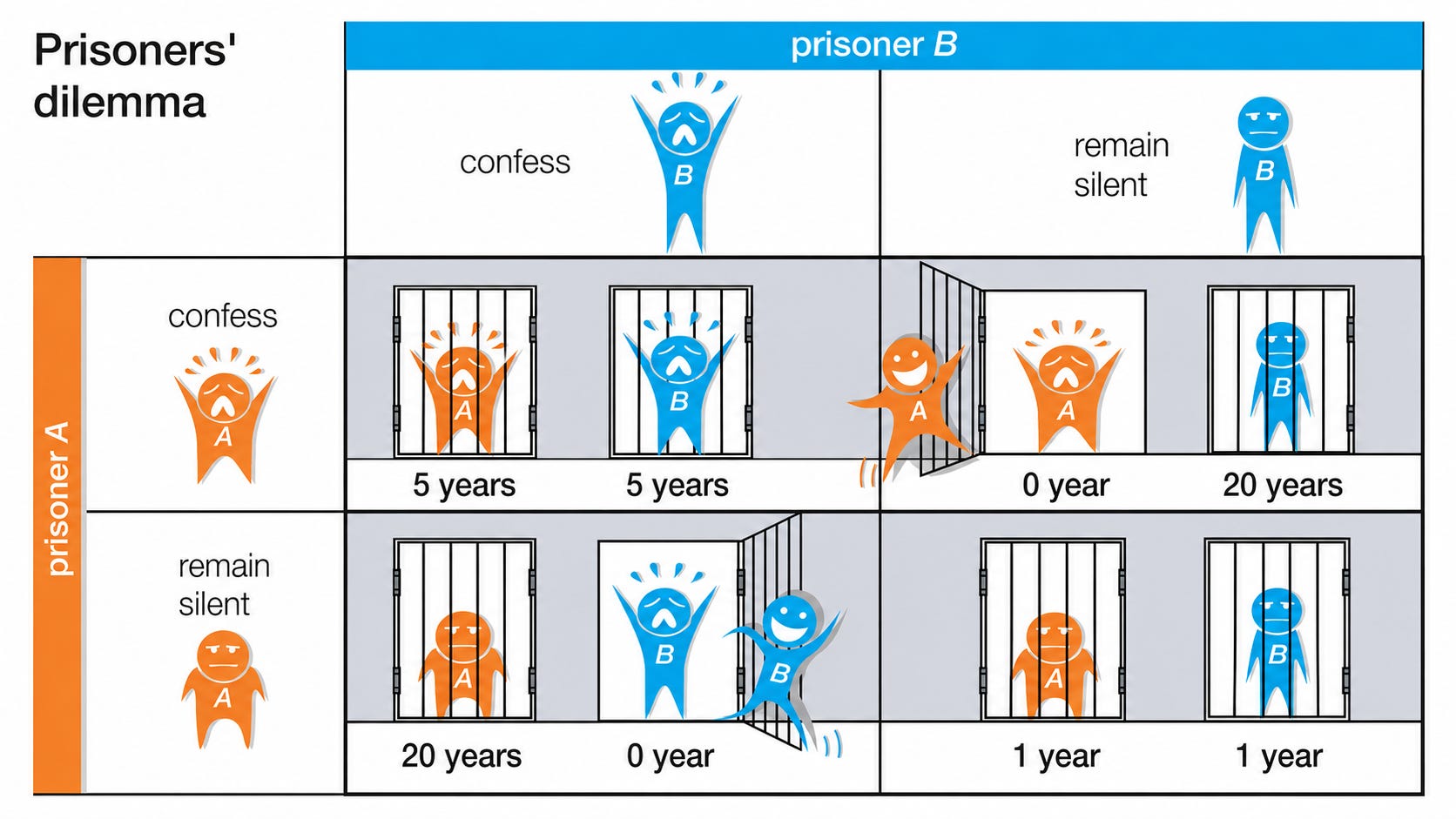
Take the example of a person who is sitting down in a seat on public transportation in a major Indian city. They have their phone out and are playing a video on YouTube loudly, to the point where everyone around them is exposed to the sound involuntarily. They are not wearing any earphones, despite the fact that they own a pair, and even have them in their bag. As expected in a Low Trust Society, there has been a privatization of the benefits in this scenario (the person listening to what they want to listen to) and a socialization of the costs (the noise pollution created for everyone else). There is no thought given by this person to the effects of their actions on others. The same dynamic is applicable to any driver in India who honks their vehicle madly and uncontrollably. They get the benefits of the honk (a small, immediate increase in urgency in the vehicle ahead of them) but they get to outsource the costs (the painful sound heard by everyone else). Why should they care? What have the others in the metro or on the road done to benefit them? Of course, the incredible thing about this scenario is that everyone else in the train or bus will also have their phones out, and will also be listening to music or videos without earphones. The end result is an indecipherable cacophony of noise produced by everyone’s phone, and a scenario where no one can listen to what they want, because of the noise of the video of the person next to them. In a traffic jam, everyone in the quagmire will be honking without any sense of civic sense. But the person honking also has to listen to the honks of every other car around them. This, in a nutshell, is India’s Low Trust Society. It is a perpetual, constantly reinforcing Game Theory problem, and an indefinite race-to-the-bottom.
If you extrapolate from this reality to thinking about the Indian Urban Squalor Omniproblem, suddenly it all starts to click. In Indian society, a task is only “worth doing” for a member of each Indian community if it benefits their own community in particular. Taking this even further, if there is a task that, if performed, might benefit an “enemy/rival community”, then it might not be worth doing at all. Once we understand this basic reality, it suddenly makes complete sense that every Indian family keeps their own homes in a state of pristine cleanliness, but does not feel it is their responsibility that the walkway leading up to their apartment complex is dirty and full of litter. In some places in India, if you look hard enough, you can find extreme examples of bungalows that are spick and span on the inside, but the moment you step outside, you are inundated with garbage and litter. It is the exact result one should logically expect from a Low Trust Society that is tribally organized, and that lacks a sense of the Commons.
And there is no mental contradiction created in the Indian mind about this phenomenon. Because an invisible “line” divides the inside and the outside.
What is inside belongs to me, my family, and my tribe.
What is outside could belong to someone else. I certainly have no say or stake in it.
If anything, cleaning up the outside could benefit someone else. It could even benefit my enemy tribe.
And why should I be the one to clean up the place in the first place? Why shouldn’t the others have to clean it? They’re as responsible as me for the mess…
Now, you might be thinking. Wasn’t this an essay about why Indians want to “Graduate” from India? What does litter and urban squalor have to do with this?
The answer, of course, is that it has everything to do with it. At the very least, it has a lot to do with this.
Put yourself in the shoes of a highly talented Indian engineer who has the skills and qualifications that are in high demand in the modern economy. Let’s say you are a data scientist specializing in Artificial Intelligence working in Bengaluru. You are heavily compensated for your specific skills that are in high demand in the current economy. You’re paid well. But every day you have to commute to work from your high-rise apartment. This commute is an amusement park ride themed around Urban Indian Squalor. You have to sit in a cab for hours, driving through broken roads that have not been repaired for ages. You cannot open the window of your cab because the air pollution caused by the vehicles would severely injure your health. The walk from your drop-off point to your office is filled with litter, beggars, and potholes that are broken and unfixed. The world around you does not match the world of your paycheck, and the world of your peers, who have Escaped India long ago…
Being the intelligent and observant critical thinker that you are, you have developed a sense of looking at India “Directly”. You cannot ignore the pollution, the anarchy and misgovernance, the litter, and the visible poverty. You see everything. You realize the depth of the problem, the sheer level of corruption, misappropriation of funds, and the apathy of the people in power. You think deeply about possible solutions - because that is your nature as an engineer and a problem solver. You are overwhelmed by the number of variables involved and the sheer scale of the problem at hand. You look at the local politicians, and you realize that you are ruled by thugs - crass and blue-collar thugs, and sophisticated and white-collar thugs. It’s all too much work. Too much to do for one person, even if they wanted to fix things.
It is easier to just leave.
To Escape from India and her problems.
Why should I not “get mine”?
I don’t owe anything to this nation or these People… I’m only here due to the Accident of Birth…
I owe it to myself and my family to maximize my quality of life
I must Graduate from India
What does it mean to look at India “Directly?” I’ll let V.S. Naipaul explain it in his first India book, An Area of Darkness. The below is Naipaul’s description of a man whom he believes had this “Direct” vision of India - Mohandas Gandhi:
The observer, the failed reformer, is of course, Mohandas Gandhi. Mahatma, great-souled, father of the nation, deified, his name given to streets and parks and squares, honored everywhere by statues and mandaps and in Delhi by Rajghat, which the visitor must approach barefooted over scorching sand, his portrait garlanded in every pan-shop, hung in hundreds of offices, bare-chested, bespeckled, radiating light and goodness, likeness so familiar that, simplified to caricature and picked out in electric lights, it is now an accepted part of the decorations of a wedding house, he is nevertheless the least Indian of Indian leaders. He looked at India as no Indian was able to; his vision was Direct, and this direction was, and is, revolutionary. He sees exactly what the visitor sees, and he does not ignore the obvious. He sees the beggars and the shameless pandits and the filth of Benaras; he sees the atrocious sanitary habits of doctors, lawyers and journalists. He sees the Indian callousness, the Indian refusal to see. No Indian attitude escapes him, no Indian problem; he looks down to the roots of the static, decayed society. And the picture of India which comes out of his writings and exhortations over more than thirty years still holds: this is the measure of his failure.
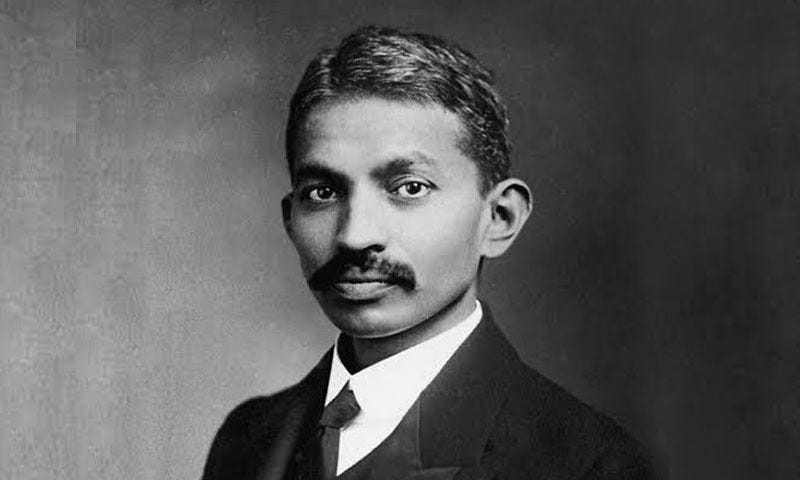
In essence, when one is born in India and grows up in India, they are empowered with a special talent - the talent to “not see India Directly”. To ignore the obvious - the filth, the garbage, the extreme poverty, the persistent, permanent low-trust behavior. Developing this skill to not see India “Directly” is actually a necessary requirement to live in India without losing one’s mind. As Naipaul continues in the same book, but in a different chapter:
It is well that Indians are unable to look at their country Directly, for the distress they would see would drive them mad. And it is well that they have no sense of history, for how then would they be able to squat amid their ruins, and which Indian would be able to read the history of their country for the last thousand years without anger and pain?
India, with its pluralities of society, its multitudes, its excesses (of luxury and poverty), its social ills and its stubborn ability to justify and rationalize these ills, is a maddening prospect for any observer, especially one who has to crawl through the filth every day in their lives. Any thinking person who tries to look at India’s “problem” Directly is going to be overwhelmed. To be overwhelmed by the extent of the task at hand, and the layers and layers of the madness.
What is it that one sees when one sees India “Directly”? One sees a hyper Low Trust Society barely held together by an old cultural software of Hindu/Dharmic traditions, with the legal modern software of the British Colonial State clumsily superimposed on top of the initial cultural layer. The reality of life for most Indians resembles Thomas Hobbes’ description of the State of Nature - a man-eats-man society that tends towards anarchy and disorder. A reality in which most lives are “nasty, brutish, and short”.
If one wants a physical demonstration of India’s Low Trust tendency towards anarchy, one only has to turn off the traffic lights in any major traffic intersection in nearly any place in the country. It doesn’t even matter if you are in a major city or a small town, in a rich neighborhood or a poor one. In the absence of the superimposed foreign Rule of Law (as represented by the traffic lights), the scene will devolve into chaos and anarchy almost instantly. Every person in the ensemble of vehicles - rich or poor, old or young, in cars or motorbikes - will act only to advance their own positions in the anarchical logjam. And this act of self-interested short-term behavior will make the overall traffic jam worse for everyone involved. If you have ever lived in India for any long period of time, you will have experienced such a situation before. You will have felt the helplessness in the face of the man-eats-man anarchy. You will have realized that Order in India is not organic or emergent. Order in India is not established “on its own”. It has to be imposed top-down, through the Law. Through the traffic light. Once the Order is imposed by what Naipaul has called the “arbitration of the conqueror/foreigner”, then it can maintain itself for a while. But Order in India is not natural or self-produced. The moment you turn off the switch of the traffic lights, you are immediately in a state of anarchy. This is what one “sees” when one looks at India “Directly”.
To want to “change India” is to be humbled by this anarchy and inertia. By the sheer refusal of the Indian population to change, to acknowledge mistakes. Even if “change” does happen, it happens slowly, almost wrapped in a sense of begrudging obligation.
I believe that the above process - first of seeing India “Directly” and understanding the scale of the pathologies of the society, then of being overwhelmed by the scale of the task at hand, and then finally resorting to cynicism and acceptance of the decay - is the first and most indispensable prerequisite of wanting to “Escape India”. What truly causes Visaism is the permanent and daunting brokenness of India.
One interesting thing about the topic of the previous section - the reality of an Urban population disillusioned with the state of their own country, and the many, many reasons for this Omniproblem - is that this is not a new thing in history.
In fact, in my opinion, there is a very obvious and famous historical precedent for the heartburn of the current Indian Elite. If you are educated in your history, you will know that I am referring to the history of the Elite of the United States in the late-19th and early-20th century.
This period of U.S. history is known as the Age of Reform. It was characterized by a growing disillusionment in the U.S. Elite about the institutionalized corruption that defined the American Gilded Age (1870s-1890s) and the eventual abandonment of civic virtue, lack of efficiency of urban governance and administration, the emergence of “ethnic” (i.e., Irish, Italian, or Jewish, or the “Ellis Island Cohort”) urban political “Machines”, the emotional elevation of rural life and farmers as unique preservers of civic virtue and tradition, and the erasure of morality from public life. Historically, there is a throughline of this tradition of thought from the likes of Carl Shulz, a prominent “reformist” Senator, E.L. Godkin, and George William Curtis, journalists and founders of The Nation and Harper’s Weekly, respectively. It also runs through Liberal Republicans and Mugwumps, best embodied by the brothers Henry “Brooks” Adams and Charles Francis Adams, who were northeastern American royalty, descendants of the family of John Adams and John Quincy Adams, and who wrote extensively about the complete degradation of the moral standards of public life in the Gilded Age. This stream of thought found its final expression in the Progressive Movement of the early 20th century, which is a three-decade-long process that created the Regime that still governs the U.S. today.

While the reader is welcome to pick up each thread listed above in their own time, I want to focus on just how similar the above concerns are to the concerns felt by the Graduating Indian Elite in 2026. Just like the educated, urban Indian of today, the urban American Elite was aghast at the state of their polity in the so-called “Gilded Age”. While many looked at the post-Civil War period and saw prosperity and rebuilding, the largely urban, educated, northeastern American elite looked at this period and saw uncontrolled collapse in civic virtue. They saw a “Spoils System” which institutionalized corruption in the economy and polity. They saw a disproportionate importance being given to rural areas, often at the cost of the emerging, upwardly mobile, and growing industrialized urban areas. They saw the emergence of “ethnic” Urban Political Machines like Tammany Hall in New York City. They saw civil and political virtues being degraded and the elevation of petty thugs and criminals to positions of power and privilege. When this criticism came from the likes of Brooks Adams or Charles Francis Adams, who essentially came from American Royalty, it carried a lot of weight, as there was still a desire within the American body politic to remain true to the embers of the American Revolution of the 18th century.
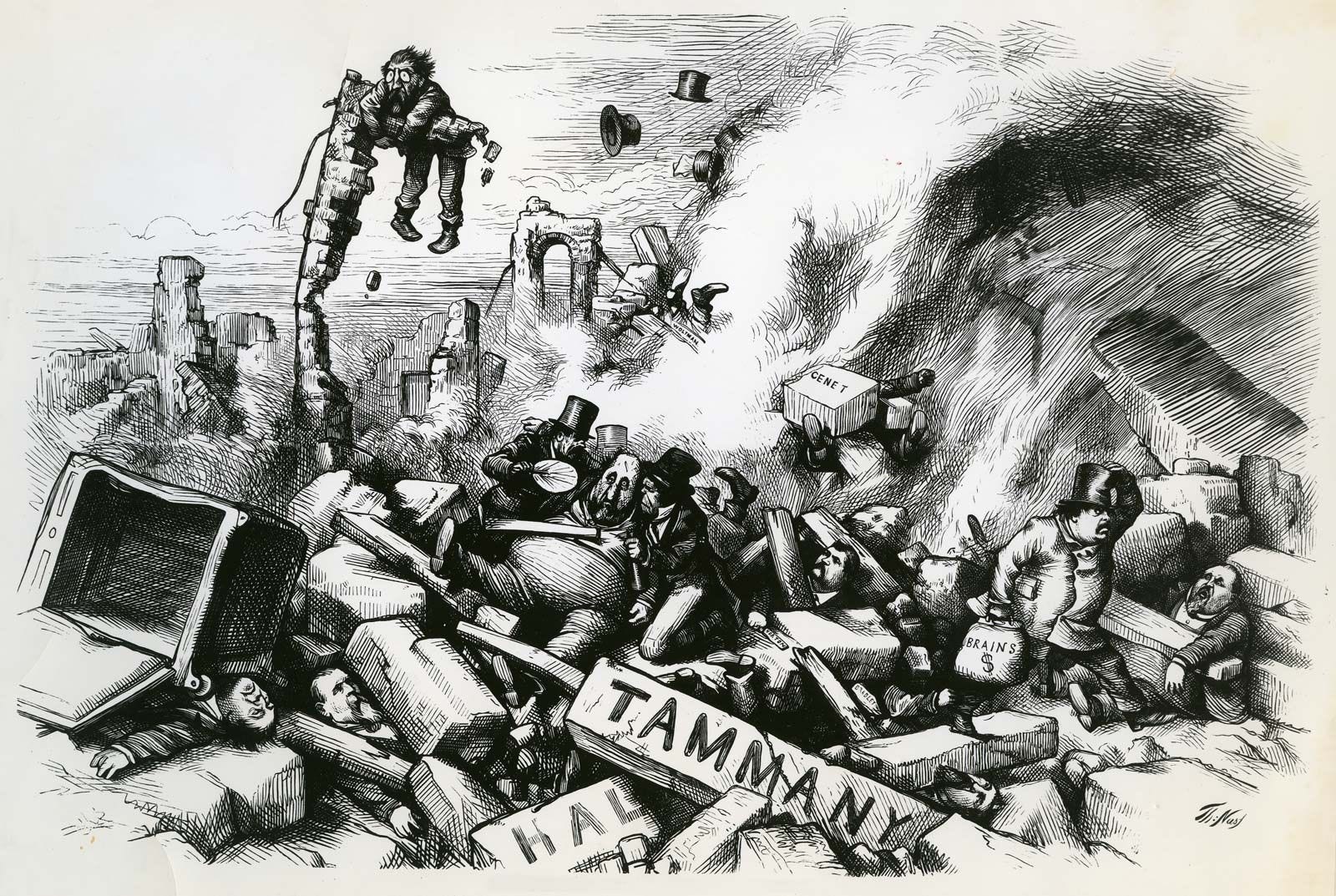
The way the Americans solved the problem is a story for another day. Essentially, the solution they found is one where Electoral Democracy in the U.S. was replaced by an Oligarchy of Experts - a process that started with Woodrow Wilson and got institutionalized by Franklin Delano Roosevelt and his “New Deal”.
From the point of view of our essay, we can draw some startling conclusions from this history. First, we see that this disillusionment and cynicism being felt by the Urban Indian in 2026 is not a new thing. It has happened before, to other Peoples. These other Peoples buckled down and found a solution to their problem.
However, while they might be facing similar problems, these two Elites differ in some crucial ways. Unlike the U.S. Elite of the Age of Reform, the Indian Elite of 2026 lives in the age of the airplane and almost instant communication. They live in the age of a globalized and interconnected world and economy. They feel no obligation to stay in India and fix their country, the way the Americans of the early 20th century did. Instead, the Indian Elite have the option to simply Run Away. To abandon their own country and their own responsibility for fixing things. It helps that they also don’t feel any responsibility, any noblesse oblige, towards the lower-class citizens (the “dehat”) of their own country, and have categorized themselves as above and different from the chaff that lies below them.
In some ways, this is a great insight for us to understand the character of the two Elites in question. The American Elite of the early 20th century, faced with their Omniproblem, chose to solve the problem and, in that process, conquered the world. The Indian Elite of 2026, when urged by History to rise to the same occasion and solve the same problem (with the potential of a similar reward), chose to pack their bags and leave. It is a demonstration of the nature and character of this Indian Elite, a talented but disappointing group of people. Of their selfishness, apathy, and abrogation of historical responsibility. While not being the only reason for Indian problems, it is one of the largest reasons for why no real solution seems possible in the immediate term.
Once the decision is made by the Indian that India - and all the squalor and decay and anarchy that India embodies - needs to be Escaped from, the next question arises:
How should I make my Escape a reality?
In most cases, there are two options available for the Escaping Indian, assuming that they are from the Elite sections of society and have the ability to chase either option.
The first option is to chase a Domestic Escape from India. This is the act of Escaping India while still living in India. While it may sound like a contradiction, it is a very real phenomenon. Incredibly, it is also not a new phenomenon. The desire of the Indian upper classes to Escape from the chaos of the Indian “mainstream” is almost as old as time. In the modern world, we can call this phenomenon “Gated-Societyism”.
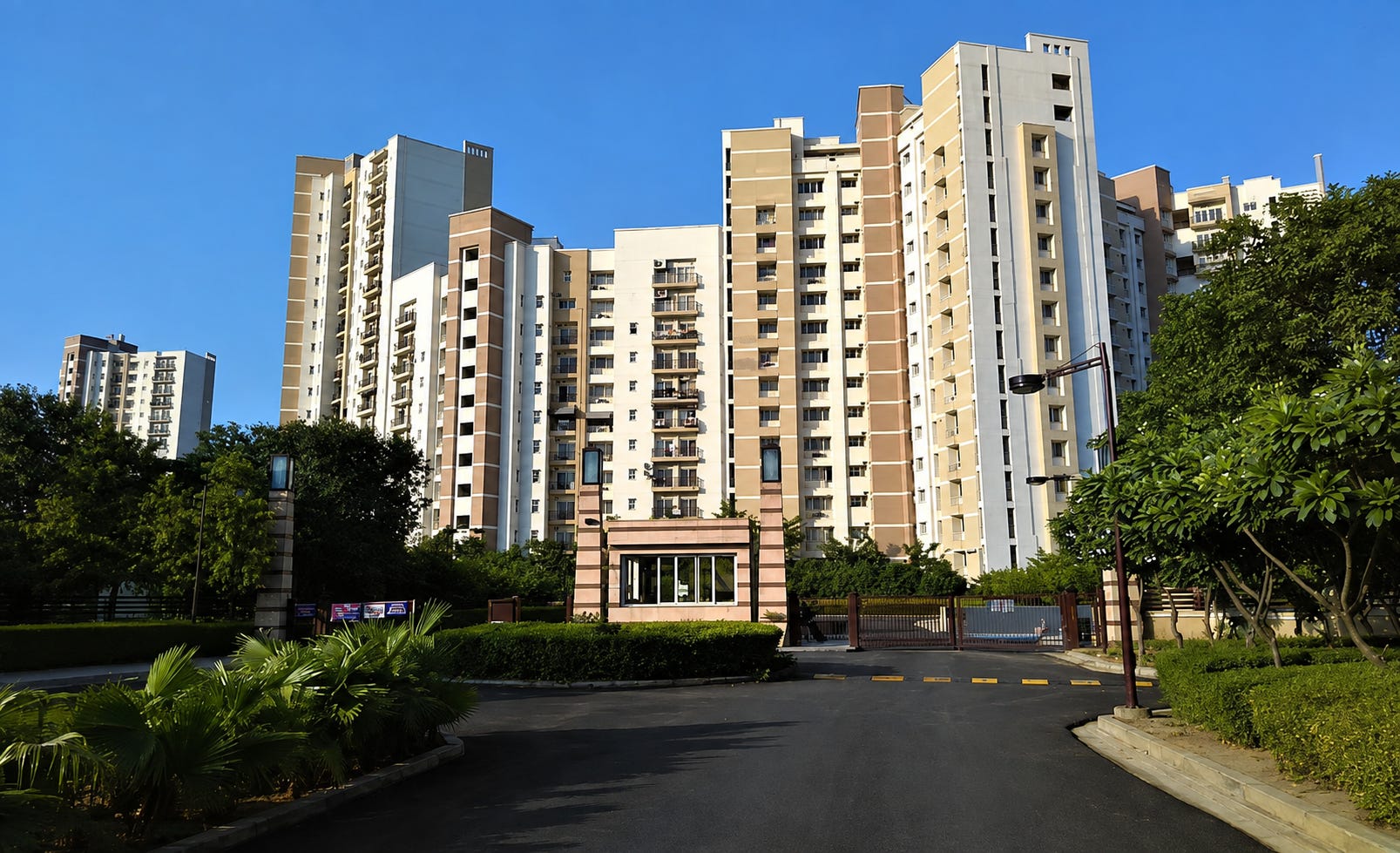
It’s not hard to figure out what Gated-Societyism entails. Frustrated with the emergent chaos and daily anarchy of Indian life, a large section of urban, rich, and educated Indians have decided that the only way to live a semblance of a civilized existence is to wall themselves away from the rest of the country in order to physically prevent the Indian chaos from engulfing their lives. In Gated-Societyism, this “walling-in” is a very literal thing.
Every major Indian urban area has seen the Gated Society phenomenon explode in the last three decades. Large societies with tall walls, where the rich of the city or state buy apartments and hide themselves away from the rest of the city. They are served and protected by an army of house-helps and security guards. These are islands of relative Order often surrounded by an ocean of Chaos. Metaphorically, the Gated Society represents peace-and-quiet, relative tranquility, when contrasted against The Outside, which embodies chaos, anarchy, uncertainty, and danger. The residents of Gated Societies often only leave their complexes when commuting for work, or to acquire the few home essentials they cannot buy from the purpose-built shopping complexes that exist to cater to their own needs.
As Timothy Clifford, whom we discussed at the beginning of this essay, has also previously written:
When you enter some gated community in India like some society, cantonment or private resort, consider (that) you are entering a whole new nation state with its own visa, passport, rules & regulations. The difference in the world outside & inside is so stark.
The change in culture, infrastructure & people is starker than what you would witness while crossing an actual international border like the Wagah or the Schengen ones. Maybe that’s why it is easier to cross into India from Bangladesh than it is to enter some apartment complex.
You need to have a passport and a visa (approval from someone who lives there). The borders are fenced, the guards are armed, the vehicles have stickers, any intruders are seriously dealt with. These securities are more than what you’d expect at some actual international border.
However all of this makes sense too. When you cross into India from Bangladesh, Nepal or Pakistan, the difference is not very stark. The level of infrastructure & the language, culture (except religion) is almost the same.
However, you can see the worst form of poverty just outside a gated complex & vast riches inside it. The culture & language (Hinglish vs local language) differences are also stark. The fact that we call a gated complex as “society” makes it clear. It’s a whole different world.
Gated-Societyism is an interesting pressure valve that has been created by the Indian system. It is a method for India to provide an experience somewhat resembling that of a developed, Western country, within India itself. Without the existence of Gated Societies, it is not hard to think that even more Indians would have opted to chase an International Escape from India.
It is interesting to explore what this Domestic Escape - living in Gated Societies - does to the minds of those who wall themselves away from India. By living away from India - and all its endemic chaos - the Domestic Escapee acquires a distance - both physical and spiritual - from pressures of living the “normal” Indian life. What happens next can go in one of two directions.
One possibility from here is the development of a searing hatred in the heart of the Domestic Escapee for the Indian People and Indian culture. In this scenario, the truth about the brokenness of India becomes a forbidden fruit, and having tasted it, the Escapee is driven mad with realization. He becomes a permanent and dangerous weapon targeted squarely at India and Indians, and he supports every move or ploy that would harm India. This often leads him to pursue radical ideologies like Marxism, third-worldism, radical casteism, etc. as a form of permanent “Mutiny” (in the Naipaul sense) against every aspect of Indian society.
The second possibility here is more benign. Having acquired a Distance from India through his existence in his citadel of Order, the Domestic Escapee can sometimes acquire the ability to look at India “Directly” (also in the Naipaul sense) in a constructive sense. The Distance allows him to see the reality of the Indian Squalor in a way that is simply not visible to Indians who are still wading through the Squalor. It is the difference between a view of a crowd from inside the crowd, versus a view of the crowd from a bird’s-eye view. In a best-case scenario, this new “Direct” vision can compel the Domestic Escapee into decisive, productive action to improve the Indian condition.
While it may sound like a purely negative thing, I do not consider Gated-Societyism to be an exclusively negative phenomenon. For one, it keeps the potential Indian Escapee within India, and in its own way, prevents the departure of another person who could make a difference in defeating the Great Indian Quagmire. Second, it shows that the creation of Societal Order is indeed possible within India. That it is not an endemic quality of the land and the water itself. It is not the physical soil of India that creates the Quagmire. Rather, it is caused by the people, and the peculiar social Order that has been created within India, both from India’s internal dynamics and from outside pressures. What Gated-Societyism shows is that even if it might take an immense amount of effort to solve, the Great Indian Quagmire is indeed a solvable problem. It might take an immense amount of political, economic, and social force, but it is not impossible. In its own way, this is a positive bit of information for us nationalist Indians to hang onto.
Having explored the phenomenon of the Domestic Indian Escape, we now turn our eyes towards its sibling - the phenomenon of the International Escape from India. This form of Escape from India has acquired an almost religious quality within the population and is the closest that Modern India comes to having an “Indian Dream”. This phenomenon - that I have termed as Visaism - is the topic of the next section of this essay.
In the context of our essay, we can see that the desire for Escape within the average educated Indian is very similar to a force of nature. If you deny a Domestic Escape for this desire, it does not lead to an end of the desire itself. Instead, the desire redirects itself and finds expression elsewhere. In some ways, the potential Escapee from India behaves like a powerful stream of water carving a path through a layer of soil. If you cut off one avenue of Escape for the water, it does not stop its flow. Instead, it will redirect itself and keep flowing till a new path appears. The Desire to Escape India is relentless and constantly reinforcing itself.
While fleeing to Gated Societies has been a way out for many, it is not something that is accessible to a lot of the middle classes and upper-middle classes of India. Instead, most of the educated, urban middle classes of India have had to look beyond the country’s borders, to throw themselves out into the great unknown, and chase an International Escape.
And it just so happens that this forceful Indian demand for Escape was met in the last thirty years with an equivalent supply from corporations in Western countries for cheap but competent labor. The result has been a Great Indian Migration to Western, developed countries, and the creation of a phenomenon I like to call Visaism.
What is Visaism? It is a modern Indian political creed where the sum total of all efforts - economic, political and social - of an individual or group are dedicated towards obtaining the Visa of a western, developed country. It is an ideology where no force in the world can stand between a man and his Green Card. A Visaist can be living in India - a tech worker in Bangalore who joins a multi-national company with the intention from day 1 of Escaping India through the company. A Visaist can also be living abroad - take the entirety of Hindu American politics in the U.S., which is oriented towards simply lobbying for more immigration from India. If you ever want to feel just how much of a religious fervor Visaism inspires in its adherents, take a trip down to the Shivaji Stadium station within the Delhi Metro system, which houses the Visa Application Center for the U.S. and other countries. Or go down to the U.S. Embassy in Delhi, where the applicants are standing in a line for their visa interviews. You will get a sense of a People on the Move. They are almost euphoric to be there. Every moment of their lives has been leading up to this moment. If you find yourself at the international Departure Lounge at Indira Gandhi Airport in New Delhi, you will find dozens of turbaned Sikhs and their wives, sisters, etc. who have come to see off just one member of their family or village. Visaism means something to the average Indian today. There is an unmistakable religious fervor to it. Even beyond that, one gets the feeling of raw urgency. As if the person involved and their family know that this is their only and last ticket out of hell…

One of the leading factors in this process of modern Indian Visaism has been the boom in the software services and technology industries in Western countries. As one of the biggest drivers of global economic growth in the last three decades, it has created a relationship of incredible synergy between Western capital and ingenuity and Indian labor arbitrage. After decades of success, this process has created a fable around itself in what can only be called an equivalent of the Modern Indian Dream. Get a good engineering degree from a good college. Get into a top IT Service company. And then Escape India as soon as possible. It has led to the Escape of millions of talented, hard-working, and tenacious people from India. Indeed, the scale of loss this Great Migration from India represents can hardly be put into words. It is not just a material loss of immediate contribution to the economy or a possible technological advantage for the nation. It is a loss of future potential, of future leaders in industry and politics. It has been life-changingly brilliant for every individual Visaist. It has been a tragedy for India.
While this process was happening, there was another critical, parallel process taking place. It’s the sort of thing that you don’t even notice as it’s happening all around you. And before you know it, the world around you has completely changed. This is what happened to cultural consumption of the urban elite in most developing countries in the 2000s and 2010s. Through a combination of technological and cultural factors, American cultural hegemony through music, TV shows, and movies penetrated urban, educated parts of developing society with the ferocity of an infectious plague.

In India itself, American culture and just the idea of life in America have become the aspirational ideal for an entire generation of urban and educated Indians. Even beyond an economic demand for Visaism, this has now created a cultural impetus and obsession for Escaping India and just “exist” in developed, Western countries.
Modern Indians seem to have developed their own petty version of the West Faustian Dream. In this Dream, the highest thing an Indian can achieve seems to be to travel to areas the White Man has already settled and “mapped”, and to “Exist” in these places.
A lot of these people, especially those who are my age (between 25-35), feel a strong cultural pull towards the West, especially for the United States, as they have grown up surrounded in the milieu of this period of American cultural dominance. I know this because I grew up feeling this way as well. If you grew up in the 2000s, American culture was the ultimate aspirational goal one could strive towards. Nearly every major cultural artifact from this period was based in an American city like New York City or Los Angeles. The people in these movies or TV shows lived lives filled with stories and individuality. American culture and politics themselves represented competence, innovation, growth, and progress, and it made for a sharp contrast with the entropy and corruption that seemed to dominate everything around your real, physical existence in your (developing) country. From thousands of miles away, this cultural expansionism has created an entire generation of young-to-middle-aged people for whom the ultimate achievement in life would be to move to these places and live the simulacrum of a life displayed in TV shows like The Office or FRIENDS. An entire generation of people with a Fear of Missing Out (FOMO) for living Instagrammable lives in a handful of cities in the U.S.
It is interesting to contrast this with the life of the individual Indian - invisible to the eye, always lost in a large crowd of indecipherable faces. Her life has a deficit of individual stories and individual value. As author V.S. Naipaul said in An Area of Darkness, “India produces so much life that it has not yet learned to ascribe value to the individual life”. In quiet moments of invisibility - like being pushed around by unknown faces on a metro ride, or being one legal intern at a Court among hundreds of faces. India denies its children this individual dignity. In the modern world, no person wants to be just one face in the crowd. They want to self-actualize; they want to feel unique and as the center point of their own little story. In their mind, this is not asking for too much. All they want is the basic dignity of an individual. If one really thinks about it, one can almost understand why so many Indians just want to Escape…
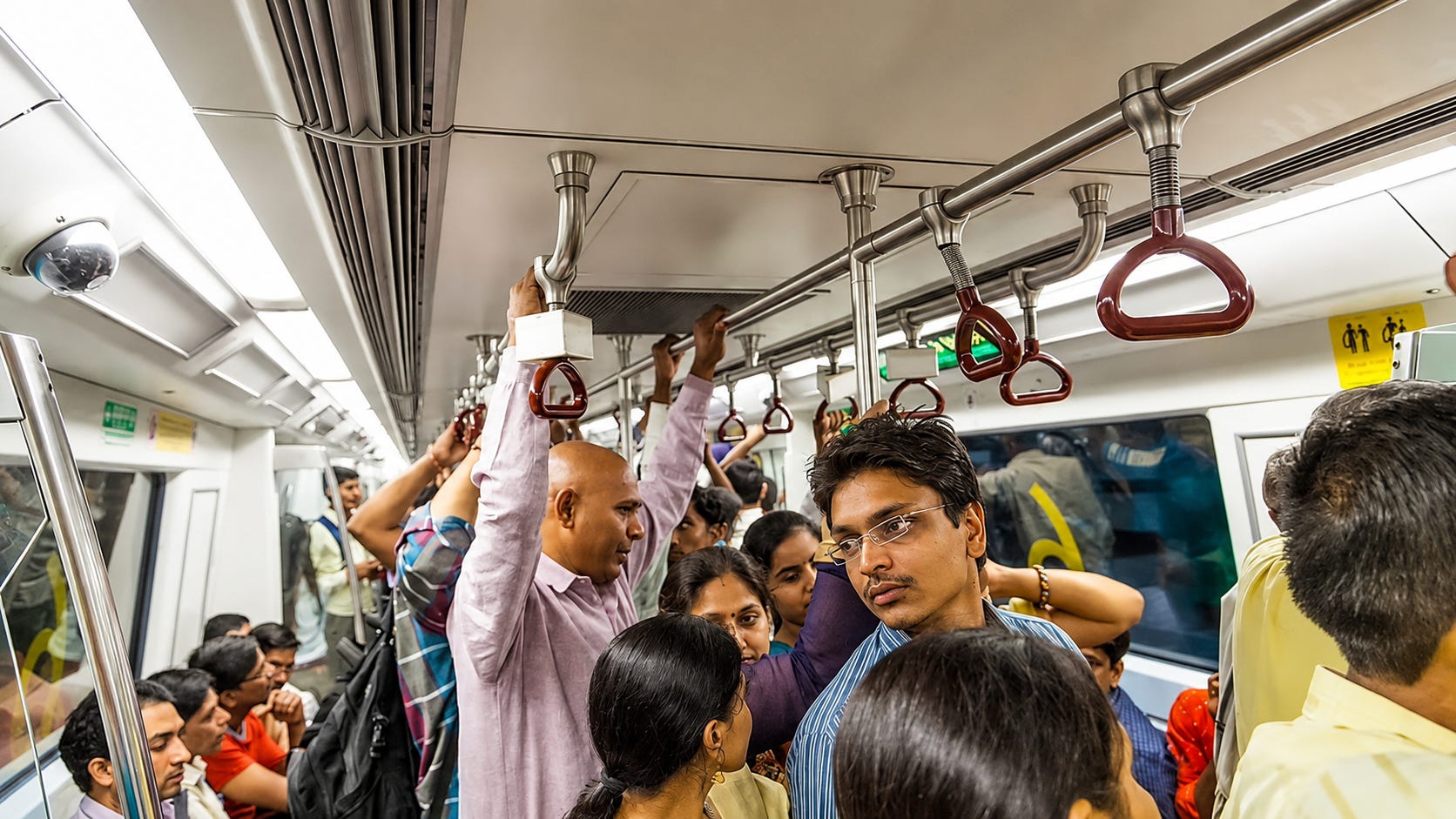
In the minds of those who have been raised in this context, it is simply not possible to live Beautiful Lives in India or Indian cities. The surroundings are too bleak and full of chaos. The poverty and low-trust “dehatism” is too pervasive. Unless you chase and achieve a Domestic Escape, it is basically physically impossible to live Beautiful Lives in India. It is not possible to live lives that make for glamorous reels or plots of romance novels. The Indian chaos engulfs you and refuses to leave your side, acting as a constant, physical reminder of the poverty, chaos, and decay that exists in the air. It is easier to just Escape. To undertake what is the equivalent of an Indian Hajj - a semi-religious pilgrimage that is equal parts obligation and desire. With one major difference, of course - unlike the Moslem undergoing Hajj as an item of faith, the Indian Visaist has almost no intention to return permanently to his home. For the Visiast, Escape is almost permanent. And India is a bad memory, an uncomfortable reality that has to be dealt with until their parents and family are able to join them in the lands of Beautiful Lives.
Once in the Promised Land, a new life in a new land beckons for the Visaist. Once he’s there, he will be able to chase his own diminished version of the Western Faustian Dream. While the Western Man mapped the whole world and spread his ideas, people, and spirit in every continent of the world, the Indian man’s Faustian Dream is more humble. He is simply content with traveling to the areas that the Western man has already settled and mapped, and to just “exist” in these places. Modern Indians cannot inherit the spirit of the Western sailor who crossed the Atlantic Ocean in the face of near-certain death and diseases, and built a civilized society in the Americas. The Modern Indian, being an elaborate Mimicry artist, can only visit these places as a sort of pale tribute to the real thing. It is almost an act of religious pilgrimage for the Modern Indian. In their own way, therefore, urban, upper-class Indians today are truer believers in the United States and the “American Dream” than even Americans themselves. In fact, as we’ve discussed before, to the extent that an “Indian Dream” exists, it simply involves an Indian doing well enough in India to “Graduate” to a country like the United States and to live the American Dream. Famous British author Malcolm Muggeridge once quipped that “the last Englishman will be an Indian”. In the modern context, I think it can be said that the last true believers in Western neoliberalism will also be Indians.

Fascinatingly, this period of time discussed above was also the peak of a domestic Indian cultural trend that was almost the mirror image of what we’ve discussed above. I am talking, of course, about the NRI culture movies created by the likes of Yash Raj Films in the 1990s and 2000s (going into the early 2010s). This kind of movie can be considered to start with Karan Johar’s Dilwale Dulhania Le Jayenge (1995) and Kabhi Khushi Kabhie Gham (2001), Nikkhil Advani’s Kal Ho Naa Ho (2003), Ashutosh Gowariker’s Swades (2004), Vipul Shah’s Namaste London (2007), and countless more. With the benefit of hindsight, it’s not hard to see that such movies appealed to not just the growing NRI (i.e., the early Visaists who are the subject of our essay) audience, but also to a cohort of aspiring Indian “Graduates”. For this group of people - and I used to be one of them - the only real way to live a storied life as an Indian was to leave India. Watching some of these movies years later, there are some incredible things I obviously never saw as a child. The places in these movies - usually cities like London, New York City, etc. - are almost presented as a fantasy land full of White People who are almost cartoon-like in their existence in the background of the stories. They feel like a child’s imagination of what these places are in reality. In the background of these White fantasylands, the Visaists live their Beautiful Lives, far away from the aesthetic violence of the Indian existence. The viewer is made to believe that these Indian lives have meaning and significance in these foreign countries, in a way that they simply do not have in India. These movies served as Dreams with dual edges- they acted as a piece of relatable cultural artifacts for the NRI already living in the West, while also becoming an aspirational ideal for the Indian resident who was planning to Escape as soon as possible.
In some states of India like Panjab, Gujarat, and the two Telugu-speaking states of Telangana and Andhra Pradesh, Visaism has become almost a pan-society phenomenon in the last two decades. It is no longer something restricted to the poor or the wealthy. Rather, most people from most sections of society want to achieve an International Escape from India. It has almost come to resemble a society-wide phenomenon of Faustian Expansion. People are born with the idea of them being sent abroad. Marriages are finalized between families purely on the basis of residence in developed countries. An entire industry has been created that is focused purely on getting Visas approved for aspiring Escapees, and videos are made congratulating people when they receive their visas.

Panjab has probably been the strongest hit out of them all. It really seems that every person in Panjab, young or old, man or woman, wants to Escape to Canada or the U.K. as soon as possible. Nearly everyone knows friends or family members who have already left. Most cultural production of modern Panjabi culture also happens out of Canada now. Entire pinds have been hollowed out in the last fifteen years, with parents of aspiring Escapees selling their agricultural lands to fund an educational visa for their children and sending them to “Degree Mill” colleges that offer low-quality degrees for a hefty price. Even Indian movies like 2023’s Dunki have been made to showcase this phenomenon. It is a veritable silent societal revolution.
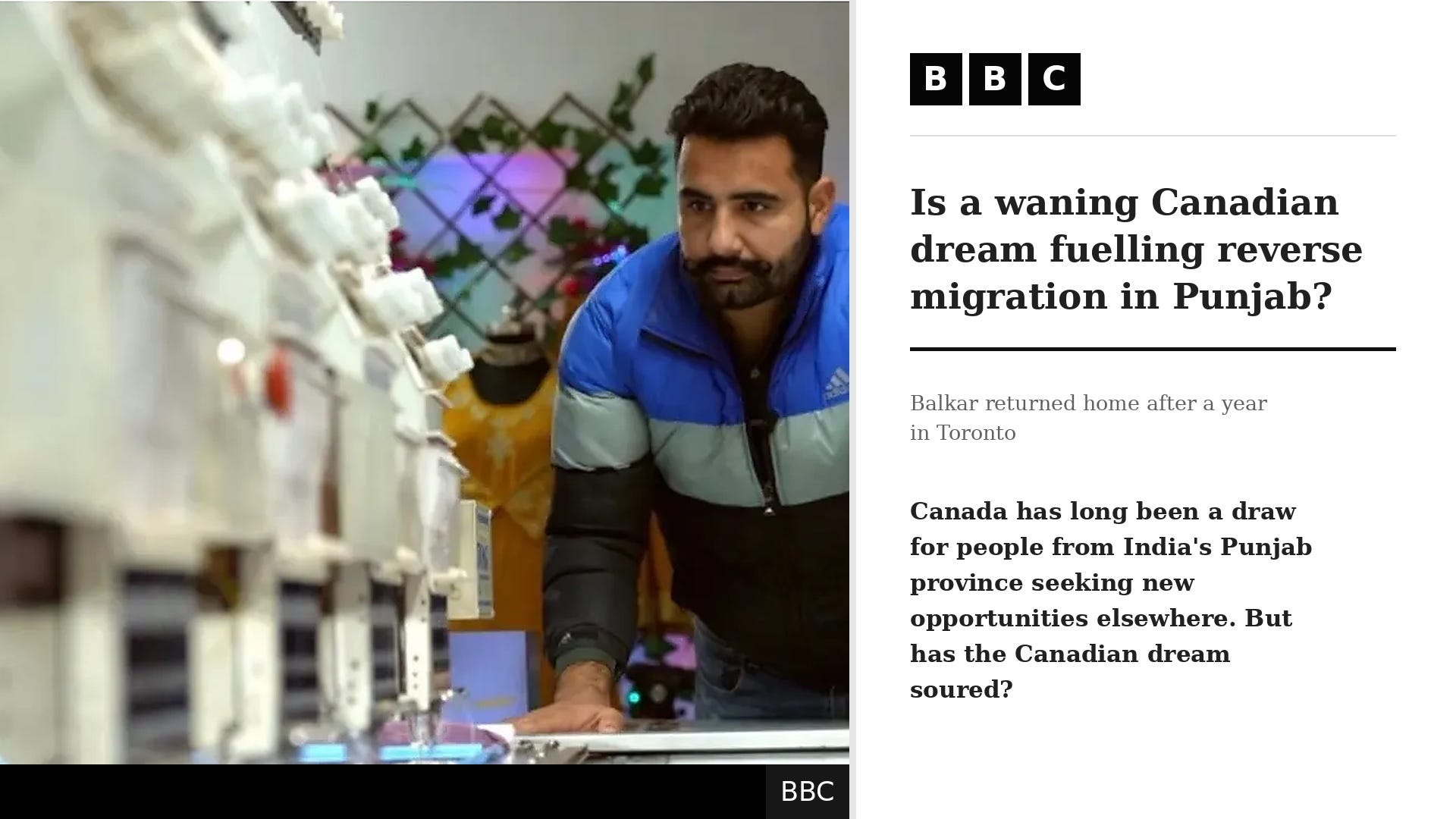
Therefore, in the last thirty years, Visaism (i.e. the International Escape from India) has emerged as a kind of unidirectional Indian “Hajj”, a religious rite of passage for a certain class of Indians to self-actualize themselves and feel that their life is full of meaning and stories. Since the 2010s, this process has been turbo-charged, and an opening of the immigration gates in developed countries has meant that Visaism has become the Indian Dream for a large percentage of the Indian Middle and Upper-Middle Class.
In the next section, which will open part two of this essay, we will be diving deeper into the topic of Visaism. We will be looking at its consequences and its causes, and analyzing the various threads that go into making it among the most important things happening in India today.
No posts
Comments
Nothing yet. Say the first thing.
Sign in to join the conversation.