
I am writing this article in the aftermath of the Vidhan Sabha elections of 2026 in India. In this round of elections, states like West Bengal, Assam, Tamil Nadu, and Kerala went to the polls to elect their next government, and in truly thrilling fashion, delivered one wild story after another. In Assam, a sensitive state in India’s Northeast region - now increasingly central to the national consciousness - delivered a thumping mandate for the incumbent BJP. In Kerala, the “Parotta” was finally flipped in characteristic fashion, with the Communist-led Left Democratic Front (LDF) finally giving way to the Indian National Congress-led United Democratic Front (UDF). In Tamil Nadu, we were witness to a true political earthquake, with Tamil movie superstar C. Joseph Vijay, a complete political newcomer, shattering decades of the status quo politics of Tamil Nadu’s traditional “Dravidian” Parties. But the real showstopper, the true paradigm shift, was in the enigmatic state of West Bengal, where the BJP stormed the home fortress of one of its loudest and most visible opponents - the dogmatic and pugnacious Mamata Banerjee.
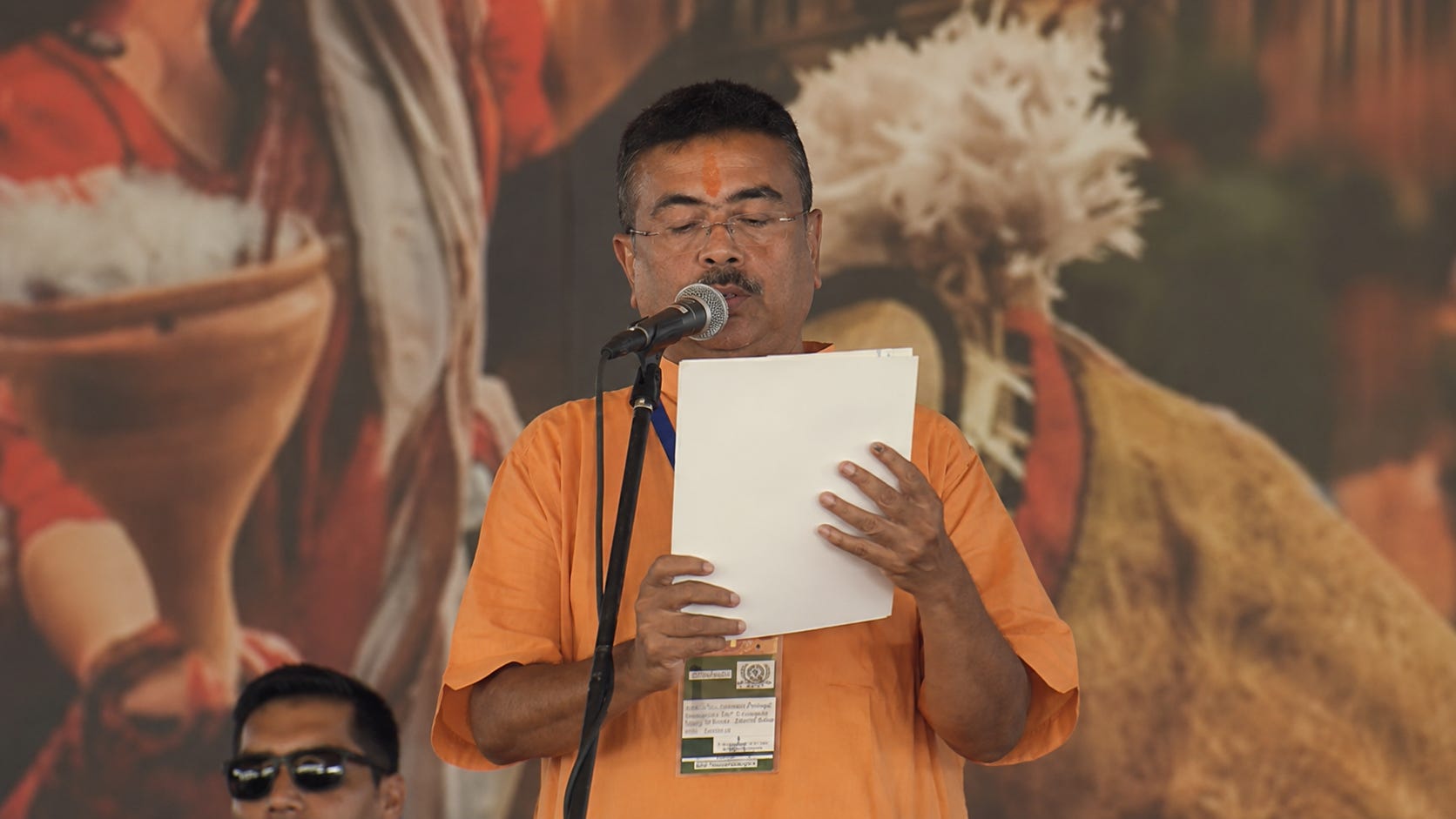
The verdicts in all these states are tantalizing. They are begging for analysis and rumination. And while I’m sure that other writers and analysts will pull at the various threads of these other elections, I wanted to use this result to reflect on a larger, more subtle point. In particular, I wanted to focus on the reality of the balance between the centrifugal and centripetal forces in Indian subregional identities and how these forces interact with the larger Indian national identity. To explore this, I will start by briefly exploring my theory of India’s “Parts” and India’s “Whole”.
The premise behind my theory of India’s “Parts and the Whole” is derived from this passage from Arun Shourie’s Eminent Historians:
“In a word, India is not real - only the parts are real. Class is real. Religion is real - not the threads in it that are common and special to our religions, but the aspects of religion that divide us, and thus ensure that we are not a nation, a country, those elements are real. Caste is real. Region is real. Language is real - actually, that is wrong: the line is that languages other than Sanskrit are real; Sanskrit is dead and gone…”
I believe this framing mechanism, as explained by Mr. Shourie, is important for understanding how every single theory/idea about India, other than the nationalist idea of India, “sees” the country when it tries to understand it. When someone who is a supporter of separatist or radical anti-Indian-nationalist ideas like Dravidian separatism, Khalistani separatism, Islamist separatism (which has created two independent nations in the last 100 years, one to our left, one to our right), or even most foreign “South Asian Studies” academics, “see” India, they don’t see one, unified country. They see twenty-five “different” countries, where the people speak “different” languages, and have had “different” historical and cultural developments and trajectories. This even extends to their understanding of the Hindu religion itself. When someone with the above mindset looks at the “variations” in Hindu traditions found in, let’s say, Kerala and Jammu, they conclude these “different traditions” are so dissimilar to each other that they couldn’t possibly exist under the same category. And hence, it must be some sort of conspiracy theory that has wrongly categorized these “different traditions” together in a lust for power and control.
It is not uncommon to see these ideas all across the different corners of Indian politics. For example, the “Dravidian” political parties and their ideologues have insisted that Lord Shiva is a “Tamil God” that has been “appropriated by Brahminical forces” and incorrectly added to the pantheon of Hindu gods. The Pakistani Army’s internet propaganda arm is routinely seen mouthing off on how India was also “created” by the British in 1947, and that it didn’t “exist” before that. For some, this theory is an incorrect-but-honest analysis, and for others, it is malicious and conscious propaganda.
For this group of people, “India” is not real. Only India’s “parts” are real. The British also agreed with this assessment after ruling and administering India for nearly two centuries. The always-wordy Winston Churchill is said to have explained that India is not a country, but that “India is merely a geographical expression. It is no more a single country than the Equator”. The founder of Singapore, Lee Kuan Yew, agreed with this assessment, himself explaining that “India is not a real country. Instead, it is thirty-two separate nations that happen to be arrayed along the British rail line”. In this way of looking at India, which can be called the “Parts Theory of India”, the separation of India into countless smaller, more “coherent” countries on the model of the European language-based nation-state is inevitable. It is simply a matter of when, not if.
Given the fact that the “Parts Theory” of India is the axiom of every ideology that positions itself against the idea of Indian nationalism, it should perhaps be unsurprising that Indian nationalists have often taken their own “idea” of India in the other extreme direction. In this theory of India, one that I call the “Whole Theory of India”, only the “Whole” of India is real. That is, there is an insistence that India is one country, with one culture, and should, to accelerate its modern development, also have one language. This is often called the “Hindi, Hindu, Hindustan” idea of India. It stresses the necessity of oneness and commonality. In my opinion, the “Whole Theory of India” is therefore somewhat uncomfortable with India’s “morbid obesity of diversity” or pluralism. It is not always comfortable with the fact that India’s various “Parts” have had wildly different variations and trajectories of development and history. There is a propensity to aim for homogeneity, caused by the fear of always-lurking centrifugal forces operating in a country and people as large as India. In my opinion, this causes the Whole Theory to be a little suspicious of anyone who wants to celebrate the plurality and multitudes of India and Hindu Dharma.
As I wrote about in my article with Brhat from 2023, my own belief is that the most accurate understanding of India is that both her Parts and her Whole are real. Both are equally “real”. The “Parts” are all “her Parts”. You can think of them as organs or vestiges of her Body. As Sri Aurobindo taught K.M. Munshi while teaching at Baroda College (now Maharaja Sayajirao University):
“Look at that map. Learn to find in it the portrait of BharatMātā. The cities, mountains, rivers and forests are the materials which go to make up Her body. The people inhabiting the country are the cells which go to make up Her living tissues. Our literature is Her memory and speech. The spirit of Her culture is Her soul. The happiness and freedom of Her children is Her salvation. Behold Bharata as a living Mother, meditate upon Her and worship Her in the nine-fold way of Bhakti”.
I don’t think it is possible to truly understand India - her reality, her past, and her future - without understanding this core fact. If one refuses to understand this fact, then they will always be shocked and surprised by what is happening in the country. India is a civilizational state, a complex entity that is constantly balancing forces that are increasing its plurality and variation, while also centralizing and homogenizing itself as it interfaces with modernity (modern technology, modes of transport, media, and methods of communication, etc.). In a paradoxical situation, both forces are operating in India at the same time. Pushing on some threads, while pulling on others.
It is in this context that I wanted to discuss the results from the May 2026 Vidhan Sabha elections in India. The states involved in this round of elections - West Bengal, Assam, Tamil Nadu, and Kerala, etc. - offer varying lessons and insights into the challenges and turbulence of keeping an unwieldy civilizational state on track. Each of them has chosen to reach their plurality and their relationship to the Whole in different ways. To start with, I will talk about the results of West Bengal and the lessons that can be learned from it in our Parts vs. Whole conversation. In the second part, I will compare the push and pull dynamics in two states of India that are similar in so many ways, but so different in others.
Now that we have explored my conception of the “Parts Theory” and “Whole Theory of India”, we turn our attention back to the 2026 Vidhan Sabha Elections in India. In this part of this two-part article, I want to focus on the results in West Bengal, and I want to explore the history that got us to this point. In Bengal, there is a long and largely unexplored history that helps us understand how and why we got to the gripping results of 2026. I believe that every Indian needs to know and internalize this history, because Bengal is a special “Part” of India. It is the fountain of some of our best qualities as modern Indians. And it needs to be studied and appreciated.
So let us begin by trying to understand Bengal’s reality through the “Parts vs Whole” Theory of India.
In trying to explore Bengal’s “push and pull” factors with regionalism and nationalism, one has to understand the parallel revolutions that transformed the province in the 19th century. While, on the one hand, Hindu Bengal was experiencing the transformative winds of the Bangali Kalpataru, thereby creating the modern Hindu Bengali identity we know so well today, the eastern part of Bengal - a place so confused that it has had three different names in the last 100 years - was going through its own revolution. In India, the first revolution - often called the “Bengal Renaissance” but something I’ve termed the “Bangali Kalpataru” - is quite well known. Its personalities and fruits are household names in India. Its images and its virtues continue to guide us even today. For this reason, I don’t want to dwell too much on this half of the revolution. You are welcome to read my article on the topic from 2023, or the countless other Indian works exploring this truly transformative process.
The Moslem Revolution in East Bengal, however, is not as well known in India. Perhaps it’s because East Bengal is no longer in India, and its names and places (like Chattogram, Dhaka, Mymensin, Rajshahi, etc.) have been airbrushed from our collective memory. But the emergence of the distinct Bengali Moslem identity - how, why, and when it happened - should be common knowledge among all Indians. It is impossible to understand Bengal’s “Parts vs. Whole” dynamic without this “other half” of its story.
It’s not much of a mystery how Islam came to Bengal. There are theories around the arrival of Arab traders and merchants and Turkish conquerors, tales of the cutting down of forest cover in East Bengal for agricultural expansion, and the settling of Moslem converts during the Mogul era. The overall “reasons” are likely a combination of all these factors, along with other, obvious factors like state patronage by Moslem rulers, divergent fertility rates among communities, etc. However, it is important for our article for us to know that by the time we reach the 19th century, Islam in Bengal had seen significant growth in influence and population for at least 500-600 years. We therefore enter the stage in the early part of the 19th century, which is the century of transformation in Bengal. Through various movements like the Titu Mir revolt, the Faraizi movement led by the likes of Haji Shariatullah and his son Dudu Mian, the Bengali Moslem identity, previously “syncretic” and full of “impurities,” was “hardened”. Now, of course, if you read your history beyond the surface level, you will notice how many Shuddho euphemisms the previous sentence is full of. The truth is, the “hardening” of the Bengali Moslem identity described by Shuddho (i.e. India’s unique brand of ceasefire secularism) historians is more clearly understood through the understanding that the Bengali Moslems were relatively newer converts, and hence still followed many of the practices of their non-Moslem, likely Hindu or Buddhist or tribal ancestors.
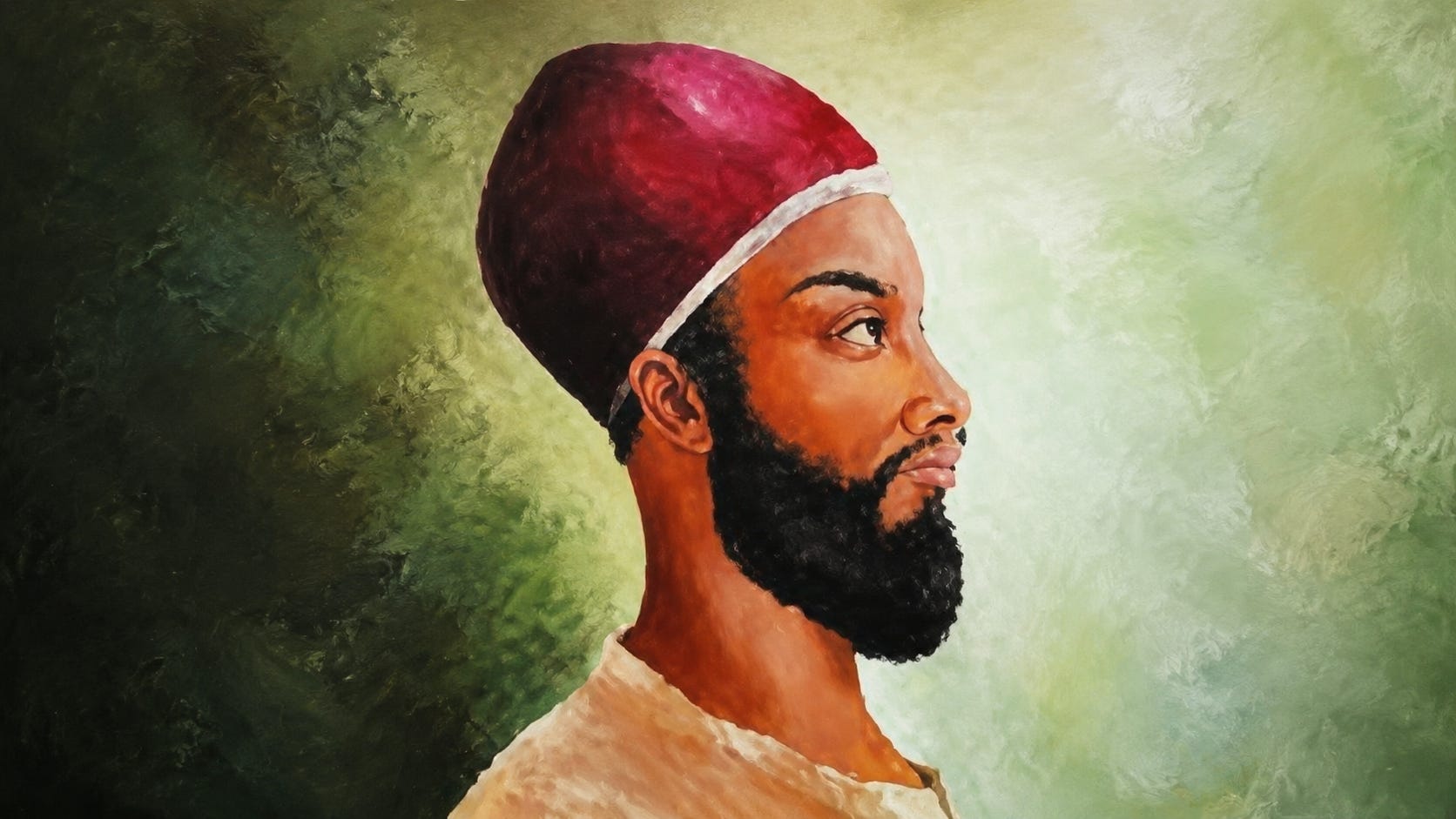
The “impurities” described in this euphemism were simply pre-conversion practices that the new convert had not given up on and continued to practice. Now, of course, this was a major problem for the Moslem clergy. Eradicating these “impurities” was a necessary step to complete the process of conversion. The Faraizi and Titu Mir movements became the vehicles to complete the conversion process. The euphemism used by Wikipedia for Titu Mir is that he “developed a strand of Islamic revivalism”, which is again a Shuddho euphemism for the “removal of pre-conversion practices from new converts”. This same process of “revivalism” took place throughout various parts of India in the 1800s (e.g. Deobandi Movement, parts of the Barelvi Movement, the Indian strains of the Wahhabi Movement, etc.), and Bengal was one of the major sites of this process. The “hardening” of the Bengali Moslem identity, or to put it more accurately, the completion of their conversion, came to a head with the Bengal Census of 1872, which is one of the most underrated and underappreciated tipping points in the recent history of Bengal and India. When a proper census was conducted by the British in the Bengal Province (which contained modern-day West Bengal, Bangladesh, Bihar, Jharkhand, Odisha and Assam), the British and the people of Bengal Province learned how high the percentage of Moslem population had gotten in the eastern districts of Bengal like Rajshahi, Dacca (Dhaka) and Chattogram (Chittagong), which along with the Sylhet district of Assam, now make up the modern nation of Bangladesh. As H. Beverly, the Inspector-General of Registration of the Census, observes in the section of his report titled “Religions: Mohammedans in Bengal”:
“Among the many interesting facts established by the census, one of the most surprising is the extent to which the religion of Mahommed is professed by the people of Bengal. The total number of Mahommedans in the Bengal provinces exceeds twenty and a half millions (20,664,775), being nearly one-third of the whole population. Nor are these twenty millions of Mahommedans distributed throughout the country quite in the manner that our previous knowledge would have led us to expect. The vast majority of them are found in Bengal Proper, where they number 17.5 millions against 18 millions of Hindus … The fact is that in Bengal Proper, the Mahommedans as a rule are the cultivators of the soil, day-labourers, or the humbler sort of mechanics; and so they do not come so prominently or so frequently under the notice of Europeans as in Behar where their position is reversed, the Mahommedans of Behar (Bihar) belonging mostly to the upper orders and dwelling in towns like Patna, Barh and Behar. Throughout Bengal Proper, east of the line of the Bhagirutty or Hoogly river, the Mohammedan element may be said to constitute at least one half of the population. In parts of that tract, as in the districts of Rajshahye, Bogra, Noacolly, and Chittagong, they form as much as three-fourths. These are very remarkable facts, and facts regarding which we have absolutely no historical evidence whatsoever. How come it that the Mahommedans are infinitely more numerous in Bengal Proper than in the Upper Provinces of India, and how is it that in Bengal more than elsewhere, they seem to form the cultivating and the labouring class?”
The census and its findings had a transformative impact on the Bengali psyche. Until this Census, the Hindus of Bengal simply did not know the extent to which the population of Moslems in various parts of Bengal, especially Eastern Bengal, had exploded. It changed how all the political stakeholders in Bengal - the British, the Bengali Hindus (who by this point were going through their own renaissance, Anandamatha was written by Bankim in 1882), the Bengali Moslems, the old Mogul-era Moslem elite living in Dhaka - viewed the politics and identity of the province itself. How should people even “think” of Bengal, if the population of the province was half Hindu and half Moslem, and up to 75% Moslem in places like Chattogram? How should resources be allocated among communities? How should political representation, if advanced by the British, be agreed upon by all parties? It opened a Pandora’s Box of questions on issues like identity, stake in development, etc. Questions that were to define the fate of the province in the next seven decades.
Another important element of this Census was that it forced people to pick a box to tick in the column of “religion”. This forced many half-converted Bengali Moslems, their identities and practices filled with Hindu “impurities”, to “pick a side” as the box they would tick would have legal and material consequences for their treatment by the British government. This “pushed” a lot of half-converts over the edge, to become “full-converts”, and given the fact that one of the major problems of the Panjabi Army in East Pakistan in 1971 was that Bengali Islam was full of “impurities” (like the women wearing Sarees and Bindis, speaking a very sanskritized language like Bangla, and rejecting Urdu), what we find is that this conversion process in East Bengal has still not been completed.
The truth of the matter is, Bengal’s history and destiny were conclusively written when the Census report was released in 1872. And history played this out. Within 30 years of the publication of the Census report, the British conducted the first Partition of Bengal along religious lines in 1905. The All India Muslim League was founded in 1906. Not in Lahore or Karachi. Not in Delhi or Lucknow. But in Dhaka. The Founder of the AIML was Nawab Sir Khwaja Salimullah Bahadur, the fourth Nawab of Dhaka.
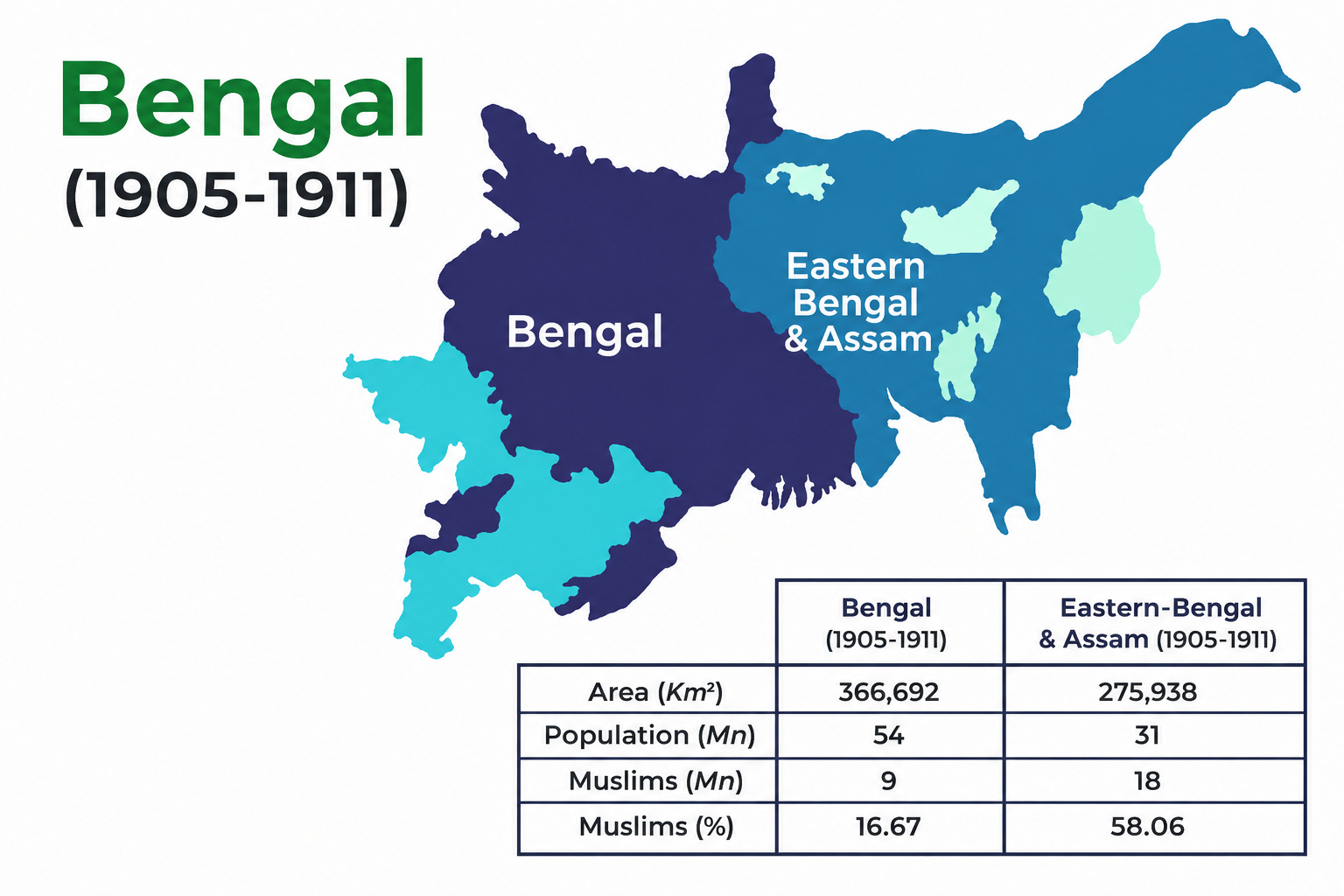
Now, this Partition of Bengal was reversed by the British in 1912, after a revolt by largely the Hindu West Bengal society through the Swadeshi Movement. This was the moment in national politics when Sri Aurobindo became a prominent figure in Indian politics, when Vande Mataram acquired the mass significance that it now enjoys (again, thirty years after Anandamatha was originally written), and where figures like Rabindranath Tagore came to the center of the national consciousness.
However, with the hindsight of history, we can now say that the nullification of the Partition of 1905 in 1912 was simply a temporary reversal. The Moslem East Bengali sentiments that had led the British to Partition Bengal on religious lines did not just vanish in 1912. Instead, they persisted and became stronger. The “hardening” of the religious identity of the East Bengali Moslem continued unabated. The religious population imbalance in East Bengal also continued to widen. And they started talking about their “rights”, “entitlements”, and “development” as a distinct thing from the development of the overall, combined population of Bengal province. In the period between 1912 and 1947, various leaders like Huseyn Suhrawardy and A.K. Fazlul Huq came to represent the politics and interests of the East Bengali Moslem population. Certain Bengali Hindu politicians like C.R. Das made some radical efforts to broker a communal peace in Bengal, but all they could do was put a temporary salve on an open wound.
It all came to a head In the 1946 Indian Provincial Elections (with an electorate limited by the British to around 10% of the population), which the All India Muslim League fought explicitly on the issue of Partition, the AIML won 113 out of 119 “Moslem Seats” in Bengal (seats based on Separate Electorates, where only Moslems could vote and Moslems could run), with the eligible Bengali Moslem electorate voting decisively for Pakistan. Later, a referendum on Pakistan was held in the Sylhet province of Assam, where 56.6% of the electorate voted to join Pakistan (in this referendum, the electorate was limited to around 18% of the population). Neither 10% of 18% is a small number, and it is actually a very appropriate sample to gauge the opinion of any population. Bengal’s split into two became an unstoppable eventuality. Nearly 75 years after the first Census of Bengal and its shocking findings, the ethnogenesis of the Bengali Moslem was complete.
Understanding this ethnogenesis of the Bengali Moslem identity is critical to understanding Bengal’s understanding of itself. It changed how the term “Bengali” was defined, about what the word meant, and how the world understood the word. The demographic reality set in motion a series of processes that led to the Partitioning of the province based on religion, the disruption, displacement, and death of millions of people. While the populations of Hindus and Moslems in Bengal were 50-50 in 1872 (18 million Hindus to 17 million Moslems), the last 150 years have seen a drastic change in this number as well. By most global estimates, if we take the overall Bengali-speaking population in the world today, then around 60-67% of them are Moslems and only around 30-35% of them are Hindus. This process of ethnogenesis, this creation of East Bengal (then East Pakistan, then Bangladesh), is critical to understanding the psyche of the modern state of West Bengal. After all, around 40-45% of the modern West Bengal population trace their origins on at least one side of their family to East Bengal, being “Bangals”, as opposed to the native West Bengali “Ghotis”.
For those of us who are not Bengali Indians, understanding this above process is crucial to being able to appreciate modern-day West Bengal’s sense of political self and in its relation to its regional identity (i.e. in our theory, the “Parts” portion of its identity) and its place in the national identity. This is a state and a people that have seen and lived through an immense amount of violence and bloodshed over the last hundred years, have seen various large migrations of peoples, and the immense pressure on land and resources that this obviously causes. In this context, it is perhaps not surprising that West Bengal - what’s left of Bengal in India - felt the need to isolate itself from the national conversation. To focus on its identity as a “Part” and to see itself outside of the conversation of the “Whole” of India (best represented by national Indian political discourse).
The other half of the twin 19th-century revolutions in Bengal is something that is better known to us Indians. In the 19th century, Bengal, especially the Hindus of West Bengal, were also the progenitors of Hindu Modernity and Indian nationalism. The early period of the Indian nationalist movement is filled with one Bengali name after another. But even before the rise of the organized Indian nationalist movement, thinkers like Ram Mohan Roy, Ishwar Chandra Vidyasagar, Maharshi Debendranath Tagore, Bankim Chandra Chattopadhyay, Chandranath Basu, Swami Vivekananda, etc., pioneered the tradition of Hindu Modernity in Bengal and India. Similarly, the early Nationalist movement and the Indian National Congress saw Bengalis often take a leading role, with figures like W.C. Bonnerjee, Surendranath Banerjee, Rashbehari Ghosh, etc. being major leaders and Presidents.
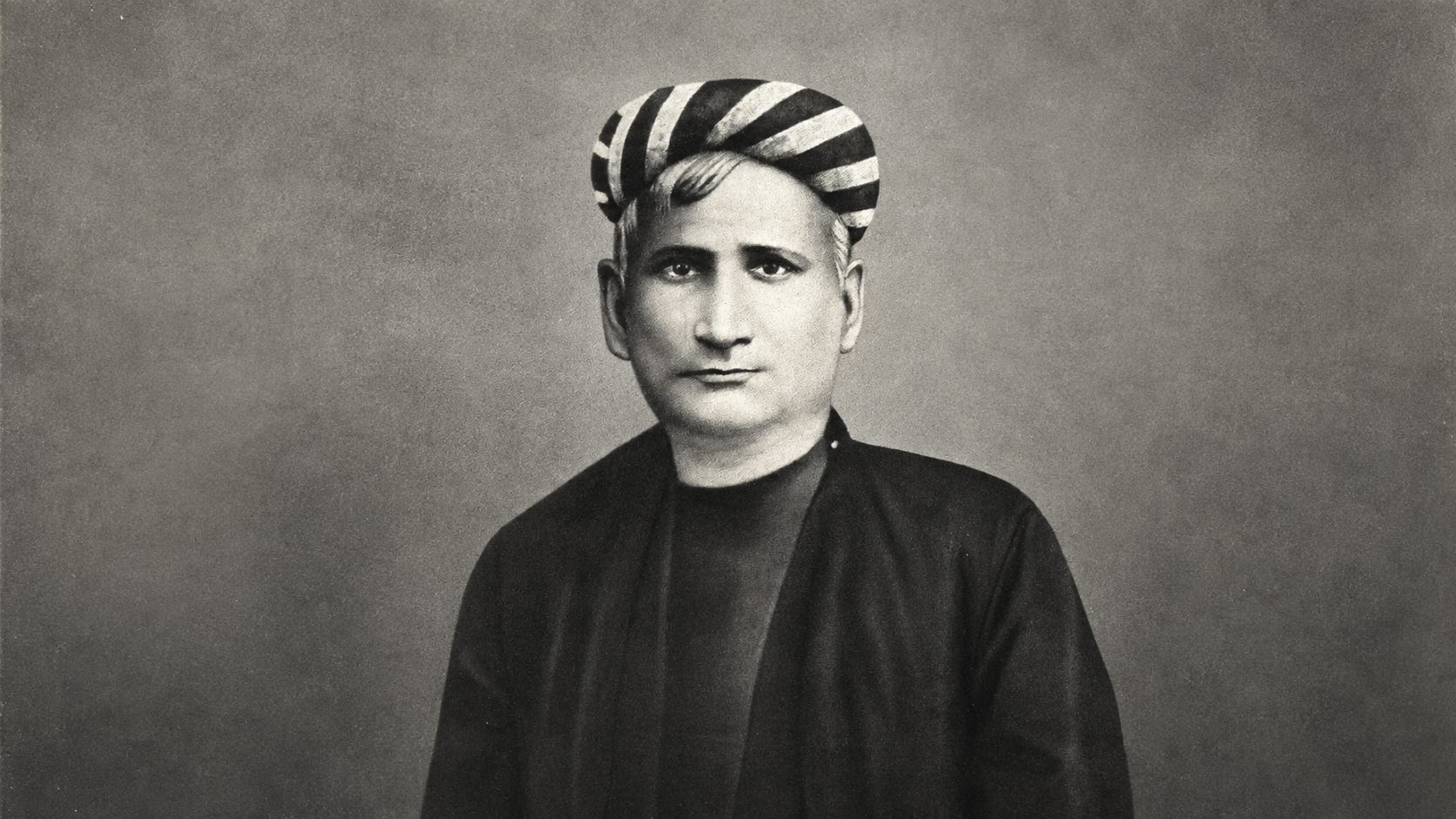
The Bengal Renaissance, what I call the Bangali Kalpataru, went beyond the political realm, extending into the arts, music, literature, dance, and more. It played a critical role in the movement of the Indian mind from its place as a stagnant and old civilization to a place where Indians could interface with modernity, where we could define and understand ourselves in the age of the steam engine, locomotives, and the telegram. This had to be done, while at the same time, the “Indianness” of India needed to be preserved. It is best understood as a process of an emerging Hindu Modernity, necessitated by the shock therapy of being exposed to and ruled-by a technologically and economically advanced civilization like the British. The writings of authors like Bankim, Aurobindo, Vivekananda, and Tagore on the issue of Hindu Modernity were revolutionary and transformative at the time, and continue to be trailblazers on this topic even today. One can read an article like Aurobindo’s ode to Rishi Bankim Chandra, and easily conclude by the depth of thought and quality of writing that it was a contemporary piece of writing. I firmly believe that nothing we have written in the post-Partition period on the topic of Indian nationalism and Hindu Modernity has been able to surpass the writings of these great men, even if they wrote over a century ago.
Similarly, one also cannot understand the more radical strain of armed revolutionary activity for the cause of Indian nationalism without the names of Aurobindo Ghosh, Barin Ghosh, Master Surya Sen, Jatindranath Mukherjee (Bagha Jatin), Rashbehari Bose, Khudiram Bose, etc. The topic has been covered in great detail by newer works like Sanjeev Sanyal’s Revolutionaries, so I’d urge my readers to pick up that thread in their own time!
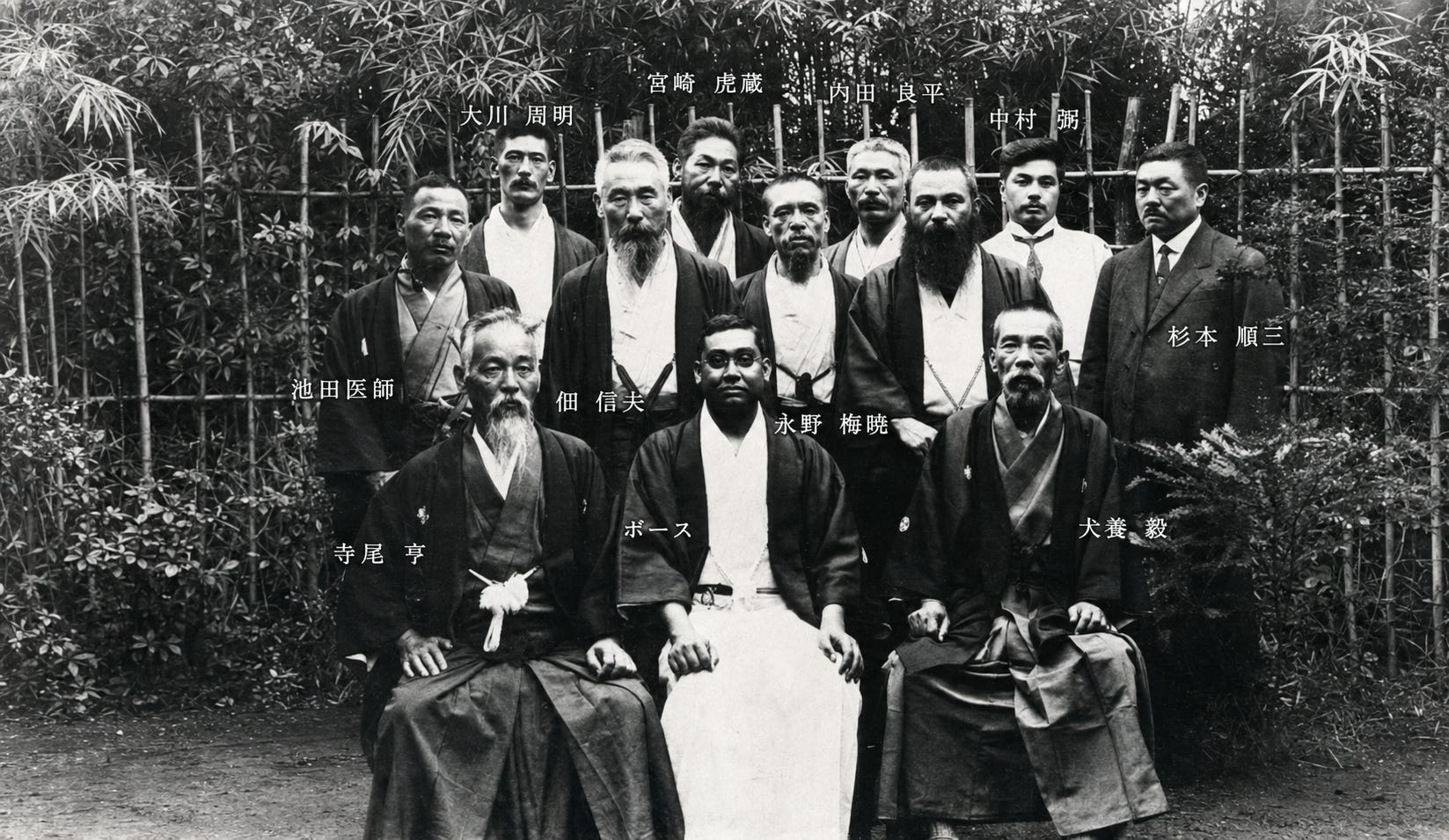
For this article, what we need to examine is that despite this central role of Bengal in all strands of Indian nationalism and Hindu Modernity, a palpable and noticeable decline occurred after the mid-1910s. Even when one reads the Shuddho historiography of Indian nationalism - which is essentially the history of the body known as the Indian National Congress - one starts seeing a paucity of Bengali names in the post-1915 period. While there was no “formal” reason for why and how this happened, I mark the retirement of Aurobindo Ghosh from active politics in 1910 as the turning point for this. With how prominent a figure he was in national politics between 1905 and 1910, with the brilliance and timelessness of his writings on nationalism, I personally think that if he had continued down that path, it would’ve been his face on Indian Rupee notes today, not Mohandas Gandhi’s. But it wasn’t to be. Aurobindo retired, and almost following up his act, Bengal retreated into itself.
When one reads the history of the Congress and the mainstream nationalist movement in the 1910s and 1920s, one barely sees any prominent Bengali names. Instead, Mohandas Gandhi took center stage by launching the Khilafat Movement in 1919. One also reads about Motilal Nehru, Annie Besant, Sarojini Naidu, (née Chattopadhyay, making her the most prominent Bengali name in 1920s Congress politics), Madan Mohan Malviya, Lala Lajpat Rai, etc. Perhaps the other prominent Bengali name of the 1920s was Deshbandu Chittaranjan Das, who came together with Motilal Nehru to create the Swarajist-Khilafat Party, created to fight elections in Assemblies, in defiance of Gandhi’s call for “constructive work” and avoidance of electoral politics. It is in this period that we also see the narrative sidelining of the Revolutionary Movement for Indian freedom, with the movement being dismissed as “disorganized individual acts of violence”, presumably because the Congress had no role in leading this movement. This is despite the fact that the Revolutionary Movement was its most active in the 1910s-1930s, with Bengalis like Rashbehari Bose and Sachindranath Sanyal being critical leaders of the movement.
However, there is one major name that emerged in the 1930s, almost in contradiction to the trend of the 1910s and 1920s, and that name is Netaji Subhas Chandra Bose, who is one of the most beloved figures in Indian nationalist history, at least in the eyes of the broader public. Shuddho historiography has often considered him to be more of an irritant than a hero. His opposition to Gandhi, whom he defeated twice in 1938 and 1939 to win the Presidency of the Indian National Congress (essentially defeating Gandhi in his own Party), does not do him any favors with Shuddho. Neither does the fact that he was the biggest rival to Jawaharlal Nehru for the inheritance of the Congress and Gandhi’s national movement. However, Shuddho does tend to strategically use Bose and others like Bhagat Singh and their socialistic leanings (something I attribute to their coming-of-age in the 1920s, when almost anyone who was even remotely an intellectual was a communist) when they want to take the ideological battle against Hindutva forces in modern Indian politics. So Bose has not been without some utility for them…
This tragic tale ends, of course, with Gandhi essentially forcing Bose out of the Congress, after the latter defeated Gandhi’s preferred candidate Dr. Pattabhi Sitaramayya. Subhas resigned from the Congress and created the All India Forward Bloc a few months later to advance his politics. After a series of events between 1939 and 1942, Bose obviously re-emerges on the national scene through his famous takeover of the Indian National Army/Azad Hind Fauj and his attack on British India on behalf of the Japanese. The rest, as they say, is contested and complicated history.
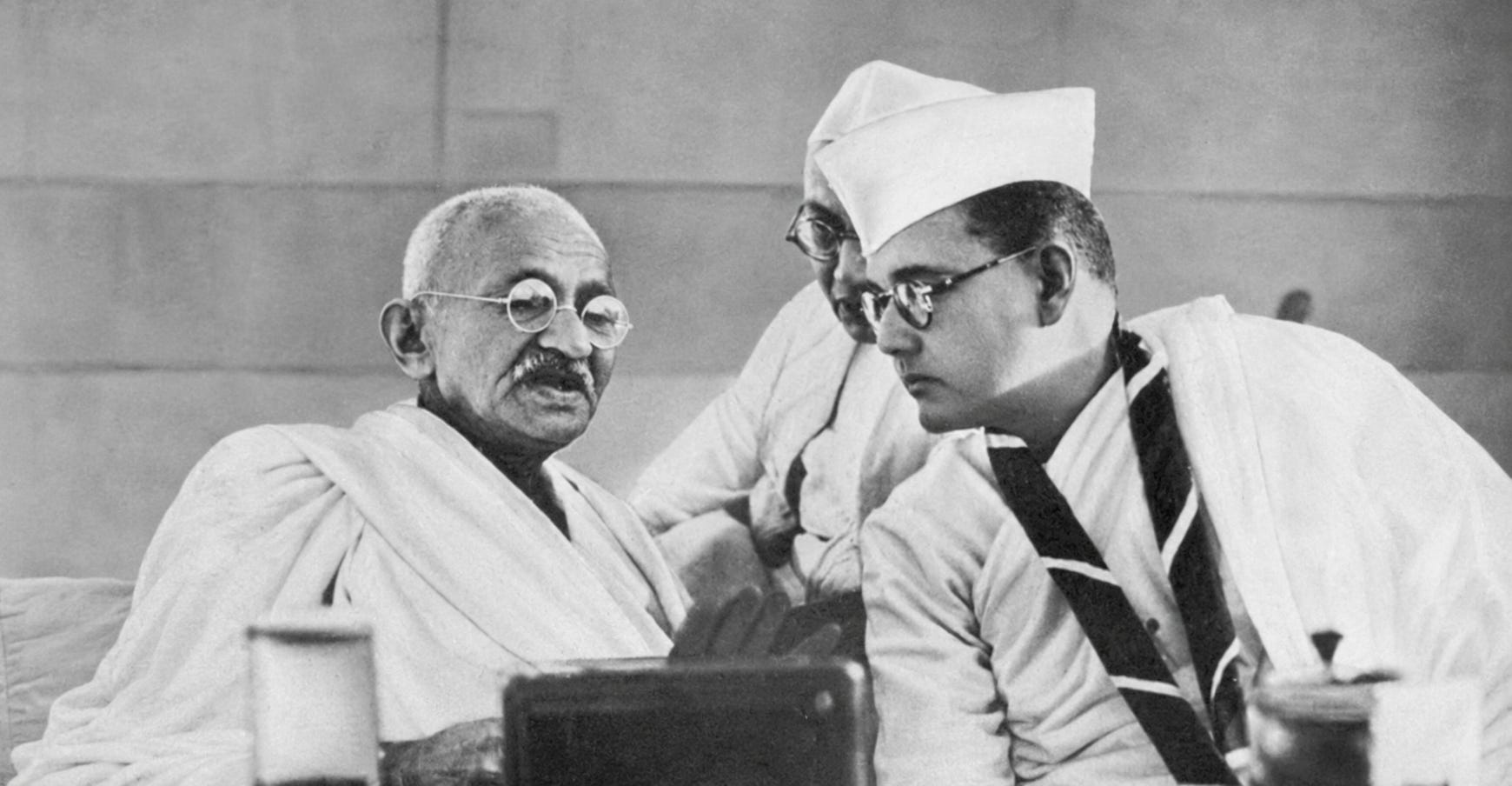
For this article, we need to understand that Bose’s isolation and removal from the Congress is seen by Bengali Hindus as the final straw in a long process of isolation of Bengali leaders and voices in the Indian nationalist movement. In a way, it does not matter whether this “isolation” is true. The perception remains, regardless of the truth or the complexity of the matter. And this isolation has been a defining factor of how Bengali Indians have seen their relationship with national politics in the post-Partition period - leading to their self-imposed exile from the national discourse and the pursuit of a radical “third-way” in politics.
Of course, when we speak of Bengal and “Independence”, we have to start our thought process with the 1947 Partition. Nearly forty years after the original religious bifurcation of Bengal in 1905, the province again got split into two, creating the modern entities known as West Bengal, a state within the Republic of India, and Bangladesh, a now-sovereign nation that also spent 24 years as “East Pakistan”. The Partition of Bengal, of course, was the fruit of the ethnogenesis of the separate Bengali Moslem identity in East Bengal since the mid-1800s. It was the culmination of a “hardening” process that started with the Titu Mir and Faraizi Movement in the early 19th century, and was given clarity and direction by the 1872 Census.
In the Indian context, this left the state of West Bengal with two immediate reality checks. First, there was a breakup of industrial ties and economic coherence as one province was broken into two. Second, there was a massive movement of a refugee population from East Pakistan to West Bengal. This process of the creation of West Bengal is itself a fascinating and remarkable story that deserves to be studied.
In this article, however, it is important to understand that the post-Partition Indian Government, led by the Fabian Socialist and self-proclaimed “last Englishman to rule in India” Jawaharlal Nehru, badly fumbled in addressing either of the two issues. With its economic coherence and dynamic shattered, with its jute-growing districts in East Bengal now part of enemy territory, the industries and mills of Bengal slunk into an irreversible decline. This was further exaggerated by the Nehru government’s Freight Equalization Policy (1952-1993), which subsidized the transportation of minerals across the country, hurting the development of industries in mineral-rich states like West Bengal, Odisha, Bihar, etc. Additionally, unlike the focus on refugee settlement from the Panjab and Sindh provinces, the resettlement of refugees from East Bengal in West Bengal was also handled poorly and callously by the Nehru regime, and further worsened by the Nehru-Liaquat Pact, which prevented Moslems who were going to leave West Bengal to go to East Pakistan from doing so.
Both these blunders are absolutely vital to understand the emergence of what would become the great scourge of West Bengal for nearly three decades - rule by the Left Front government led by the Communist Party of India (Marxist). The deindustrialization of the state, still reeling under the damage caused by the Partition, made the ground fertile for the emergence of radical and political communism in the state’s polity. Even the mishandling of the refugee resettlement contributed to the rise of the Left. The resettled refugees, battered, bruised, and mistreated due to the lack of care and oversight by the Central government, rallied around the Left Front in electoral politics and became a core part of the Left’s electorate in the State. Even in the 1984 Congress Lok Sabha election rout, where the Congress won 404 of 514 seats, West Bengal was one of the few states not fully engulfed by the Congress wave, continuing to vote predominantly for the Left Front. The Left Front government in West Bengal lasted from 1977 to 2011, covering a period of 34 years. This is still the longest uninterrupted rule by a leftist government through a democratic mandate, anywhere in the world.
In many ways, West Bengal’s short-term destiny was written when the Left first came to power in the state. Being who they were, they continued the rapid deindustrialization of the state, created a political system based on cadre-based organization and an economic system based on a syndicate organization where the state and the party reached down to the level of the individual transaction, and took their (illegal) share. They created a highly politicized, violent, and inward-looking polity, one which won election after election through intimidation and violence, while presenting a face of “progressivism” in the national media, which was also filled to the brim with Fellow Travelers. This led to the isolation of West Bengal from the national polity and national political consciousness. The politics and intellectualism of West Bengal and Kolkata came to be defined by a radical “third-wayism”, an oblique line of thinking that was more interested in the struggle of the South Africans against apartheid than in the struggles of other Indian groups within India. The dialectic of the state’s conversation had almost reduced itself to being in permanent opposition to the direction of movement of the Central Government in India.
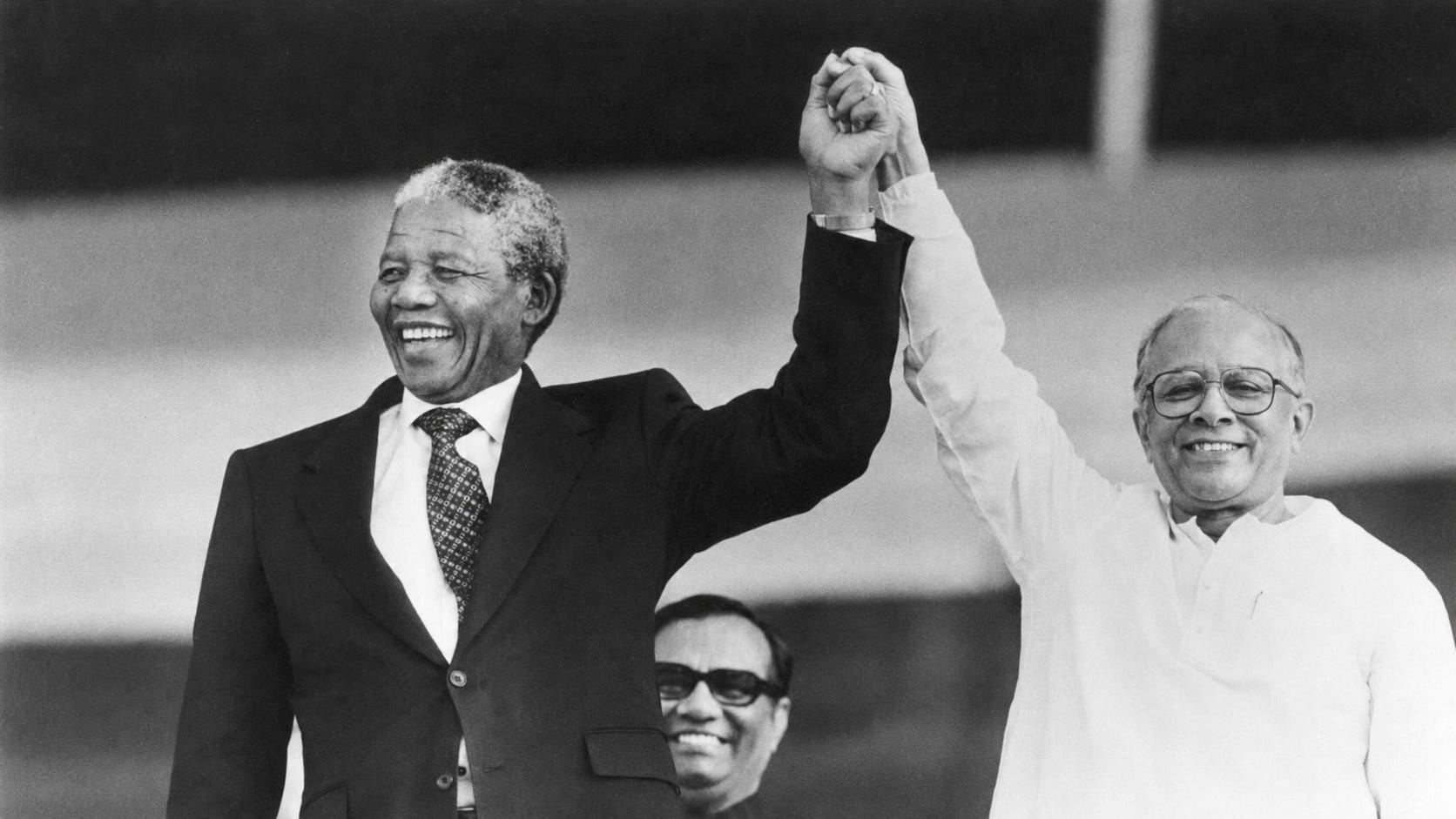
In many ways, it is this same trend of “Splendid Isolation” that continued the political instincts of the state even in the post-Modi era of 2014, where West Bengal continued to shirk the national conversation, voting consistently for the regional Party, All India Trinamool Congress, which was an offshoot of the Congress led by Mamata Banerjee. This period of retreating from the national consciousness is best summed up by V.S. Naipaul in his first India book, An Area of Darkness (1964), showing us that this trend of withdrawal had begun even before the Left Front came to power in 1977:
This (Kolkata) was the city which, according to bazaar rumor, Chou-En-lai had promised the Chinese people as a Christmas present. The Indian Marwari merchants, it was said, were already making enquiries about business prospects under Chinese rule; the same rumor had it that in the South the Madrasis, despite their objection to Hindi, were already learning Chinese. Morale was low; the administration in Assam had collapsed and there were tales of flight and panic. But it was not in this alone that the sadness of the city lay. With or without the Chinese, Calcutta was dead. Partition had deprived it of half of its hinterland and burdened it with a vast and dispirited refugee population. Even nature had turned: the Hooghly was silting up. But Calcutta’s death was also of the heart. With its thin glitter, its filth and overpopulation, its tainted money, its exhaustion, it held the total Indian tragedy and the terrible British failure. Here the Indo-British encounter had at one time promised to be fruitful. Here the Indian renaissance had begun: so many of the great names of Indian reform are Bengali. But it was here too, that the encounter had ended in mutual recoil. The cross-fertilization had not occurred, and Indian energy had turned sour. Once Bengal led India, in ideas and idealism; now, just forty years later, Calcutta, even to Indians, was a word of terror, conveying crowds, cholera and corruption, Its aesthetic impulses had not faded - there was an appealing sensibility in every Bengali souvenir, every over-exploited refugee “craft” - but they, pathetically, threw into relief the greater decay. Calcutta had no leaders now, and apart from Ray, the film director, and Janah, the photographer, had no great names. It had withdrawn from the Indian experiment, as area after area was withdrawing, individual after individual. The British, who had build Calcutta, had ever been withdrawn from their creation; and they had survived. Their business houses still flourished in Chowringhee; and to the Indians, products of the dead Indian renaissance, who now sat in some of the air-conditioned offices, Independence had meant no more than this: the opportunity to withdraw, British-like, from India. What then was the India that was left, for which one felt such concern? Was it no more than a word, an idea?
In this way, the fifty-year-rule in West Bengal by the Left Front and the Trinamool Congress can be seen as the final consequence of all the factors we have discussed so far. The ethnogenesis of the Bengali Moslem and the two Partitions of Bengal had heightened the regional spirits of West Bengal and the Hindus for whom it was created as a homeland. The isolation of Bengali leaders in the later stages of the mainstream Indian nationalist movement created a perception among Bengali Hindus that their voice was being sidelined. The short-changed treatment of West Bengal post-Partition, both in its economics and its refugee problem, heightened this perception of abandonment by the rest of the nation. It found expression in the radical third-way politics of the Left and the TMC, a politics of thuggery and intimidation fronted by well-dressed and spoken people in NCR media studios. In doing so, West Bengal spent fifty years embracing its distance from New Delhi and focusing on its nature as a “Part” of India.
After fifteen years of Mamata Banerjee’s rule, which continued their radical-third-wayism displayed during three decades of Left Rule, the voters of West Bengal did something really unexpected in 2026. They voted to align themselves with a national party. And not just any national party. It was an alignment with the ruling party at the Center. While there are many, many threads to unpack in the BJP’s victory in West Bengal in 2026 - like the massive religious polarization caused by the situation on the ground, the existential national security threat caused by a porous border, etc. - it is the electorate’s realignment with the national conversation that I want to focus on in this article, as it throws in a wrench in the unidirectional trends we have seen since at least 1872.
This is the first time that West Bengal voted to align its politics with the same Party that has been ruling in the Center since 1977. It represents a few things. First, it represents a willingness from the people of West Bengal to rejoin the national conversation. An end to the state “living a separate life” from the rest of the country. Second, in this longing for change, there was a need for the swallowing of some pride. Around three to four lakh Security personnel were needed to conduct an open and fair election in West Bengal in 2026. The Election Commission of India had to take specific and sometimes radical steps to counter the violence, intimidation, and booth capturing that had been normalized for decades by leftist intellectuals as simply something that was a “part of the political culture of the State”. The Union of India had to essentially use its full force to conduct an open election in the state, something that was not needed at all in other States like Assam, Tamil Nadu, and Kerala, which also went to polls at the same time, and two of which were convincingly won by non-BJP Parties. Such was the state of lawlessness in West Bengal under a system created by the Left and perfected and made more vulgar by the Trinamool Congress. Every single crime by Trinamool in the last fifteen years was justified, defended, and dismissed through whataboutism by certain politicians and activists, because this criminal organization masquerading as a political party was seen as the “last bulwark” against “communal politics” in the State…
Now, as we swim back into the mind of the West Bengal 2026 electorate, one thing that becomes incredibly clear is that the situation had become almost existential for a critical mass of the population. There was a clear and almost universal feeling within the Bengali Hindu (and others like Hindi-speaking Hindus, Gorkhas, tribals, etc.) population of West Bengal that something had to change, and that it had to change now. The result, along with the one in neighboring Assam, was the most stark and extreme Hindu consolidation in Indian history. In most critical seats in the election, the BJP received somewhere between 70 and 90 percent of the Hindu votes of the eligible electorate. This countered what was an equally lopsided Moslem consolidation for the Trinamool Congress in every part of the state, apart from the districts of Malda and Murshidabad. By any metric available, the Bengali Hindu is now the most pro-BJP group by percentage in the entirety of India.
Given the complete absence of caste as a politically activating agent in West Bengal politics, this consolidation can be (purely objectively speaking) considered to be a victory of pure ideological Hindutva. It shows the emergence of a political Hindu, of Hindus voting as a “vote bank” to protect what they perceive to be their interests (in this case, national security, the changing demographics of the state through illegal immigration, safety of women, the criminal syndicate organization of the Trinamool Congress, etc). There is also no shortage of irony in the fact that on the same karma-bhoomi of Marxist ideas for nearly eight decades, the West Bengal electorate decided to perform a synthesis between the thesis of a modern material-conscious identity with the antithesis of demographic pragmatism, embracing an outwardly Political Hindu identity.
In my opinion, the West Bengal 2026 Vidhan Sabha election is the biggest paradigm-shifting election in India since 2014. It will have consequences not only for India’s political future and national security, but also for the intellectual discourse within India.
In terms of its relation to the Parts Theory and Whole Theory of India, Bengal represents a curious dichotomy. It is in many ways the fountain of modern Indian nationalism and Hindu modernity. It was the progenitor and the first “Part” of India to conceptualize a Modern “Whole Theory of India”. It created a lot of threads that were eventually picked up by other parts of the country. For example, Chandranath Basu’s book named “Hindutva” is famous for popularizing the term “Hindutva”, taken from a term coined by the peerless Bankim Chandra Chatterjee. It is a slightly different conception of “Hindutva” from the version that arose with Savarkar and Golwalkar in Maharashtra, but the work was picked up and built upon by the likes of Savarkar…
But due to the history I’ve described above, Bengal receded from the national conversation, moving sharply towards an internal dialectic. There was a movement from defining the “Whole” to a conscious withdrawal, out of the feeling of being sidelined and ignored. At the same time, this shouldn’t be the biggest surprise. Bengal has one of the strongest and richest regional identities in India. The aesthetics, music, culture, art, etc. of the state since the Bangali Kalpataru are instantly recognizable across India and the world. Modern Bengali literature - taken to its current mass status through the two pillars of Bankim (prose) and Madhusudhan Dutta (poetry) - represented the first Indian language to acquire a modern literary tradition. There is an immense amount for Bengali Indians to be proud of. Both in their identity as Bengalis and as Indians. No amount of cheap insults or petty language from the people of other states can take this away from Bengalis.
To the extent that centrifugal forces exist in West Bengal, they do not exist in the form of a tendency towards separatism, no matter what Trinamool-funded goons who supported the “United Bengal” fantasy believed. It is not really possible in a world where Bengal has already been Partitioned on the basis of religion, and where millions of families hold deeply buried memories of the event that they don’t like to talk to strangers about. There is always the looming specter of an awkwardly placed “Desh” to the east, one which holds your own language in its name, whose national anthem was written by Rabindranath Tagore, and a “Desh” which has seen immense political tumult and upheaval since 2024, leading to an election where the Jamaat-e-Islami won 68 seats, predominantly on the Indian border.
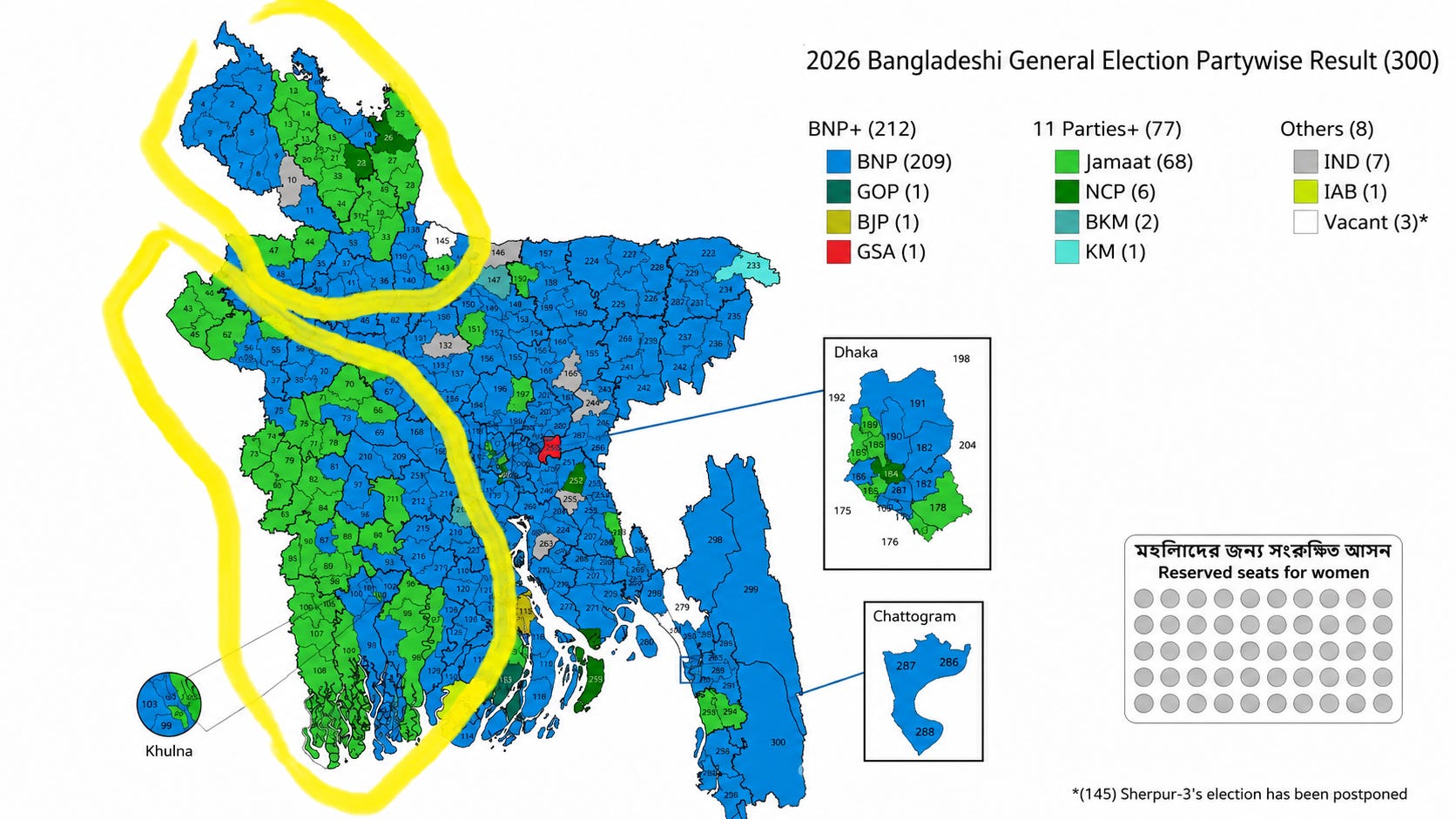
Instead, the centrifugal forces in West Bengal - forces that exist in every Indian state - manifest themselves in an immense pride in the region’s literary and cultural traditions, (so far) in a mistrust of the national Indian political destiny. In discourse, this has led to West Bengal defining its political dialectic (in the national sense) against the Center, as a matter of principle. This is how, guided by historical forces, West Bengal’s instincts as a “Part” have manifested over the decades.
As Indians from other states, we must now be waiting with an open hand as Bengalis take back their rightful place in our national discourse. We must understand that in Bengal, there is no, and there has never been any, rejection of the “Whole” of India. No matter what the decades of election results might convey. We must also value the fact that intellectualism in Bengal brings a special kind of radicalism combined with subtlety, clarity and direction combined with moderation. It is my opinion that the nationalist discourse of 2026, stagnant and stumbling, badly needs an injection of Bengali brilliance. For this, Bengalis will have to start looking outwards again, and to take forward the ideas of Indian nationalism and Hindu modernity that they themselves pioneered in the 19th and 20th centuries. Bengalis need to re-embrace the “Whole”, while also integrating the undeniable strengths of their “Part”. It’s something like how the Persona integrates the Shadow in Jungian psychology, to develop a complete Personality. Bengalis need to reject their impulse to abdicate leadership of Indian nationalism, and to take a leading role in defining our “Whole” moving forward.
The Modern Indian Story found its seed in Bengal. The process of Hindu Modernity started in Bengal. It is to the same people that India now looks toward with anticipation and curiosity. Hindu Bengal must take the reins of intellectual leadership again. It is from Bankim, Vivekananda, and Aurobindo that India will derive its Dreams and Direction for the future. It was true in 1910, and it is true now. And it is the role of this generation of Indians to make it happen.
বন্দে মাতরম!
No posts
Comments
Nothing yet. Say the first thing.
Sign in to join the conversation.