
Now we’ve covered what to eat and the best areas to explore, let’s delve into where to eat, my favourite restaurants in the city, and where to stay.
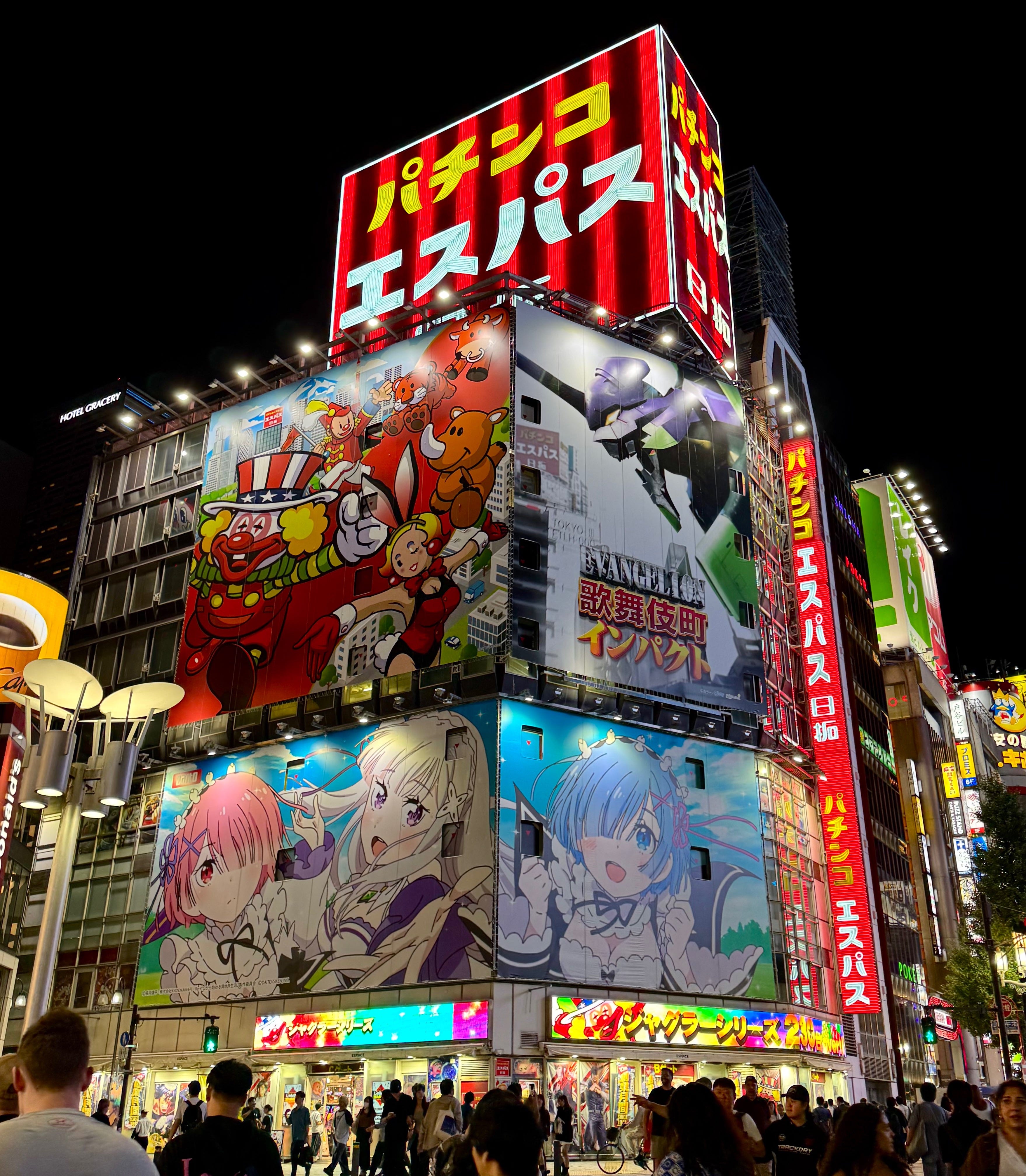
*I have hyperlinked lots of the places on Google Maps so they are easier for you to find
There are so, SO many recommended restaurants in Tokyo, and it can feel quite overwhelming to pick where to eat. Plus, the most popular/famous places often have very long queues or no walk-ins available, which makes spontaneous eating out slightly trickier, but not impossible. I didn’t pre-book any restaurants before my trip, as I didn’t realise this was the case, which made it harder to visit all the places I wanted. So if you have some non-negotiable restaurants on your list, I definitely recommend booking in advance. However, it meant I had to be a bit more flexible in my choices, and I ended up with some very delicious unplanned meals as a result. Below are food markets, restaurants and specific areas that I recommend during your stay in Tokyo.
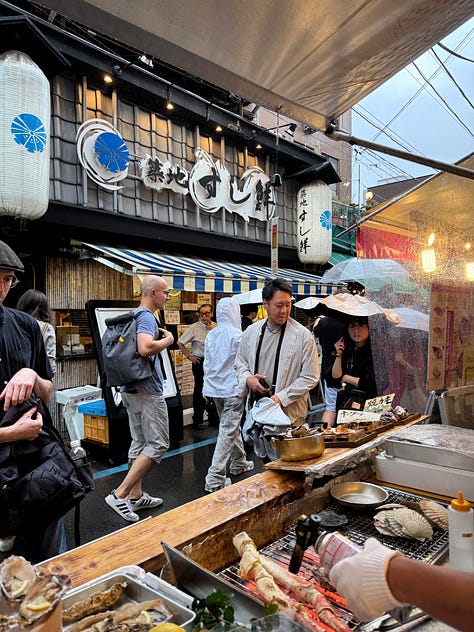
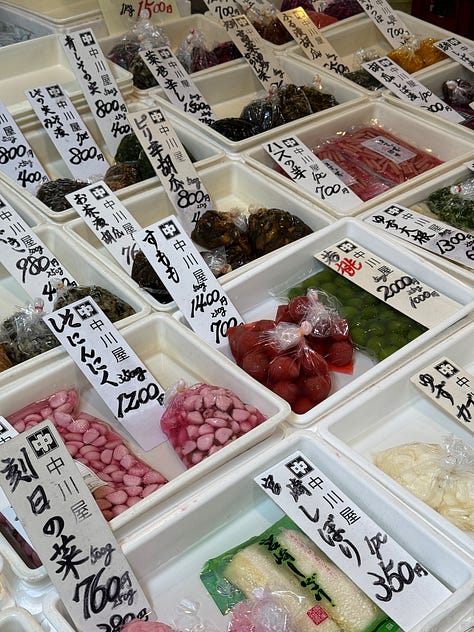
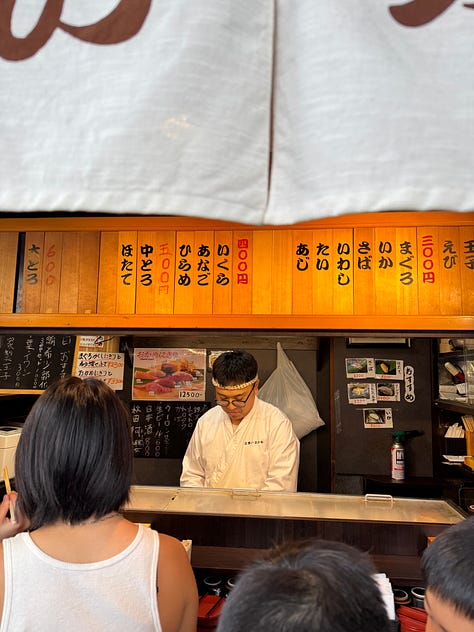
A bustling fish market tightly packed with lots of different food stalls, restaurants, fresh produce and kitchenware shops. This market is a great place to try a variety of different traditional dishes, and I recommend coming here hungry and with an open mind to try new delicacies. I had an amazing experience at a very small stall called ‘Sushi Okame’ where I stood with a cold Asahi beer and watched the chef create lots of different nigiri. I tried a selection of different tuna’s which ranged in fattiness and quality and they were all delicious. I also recommend trying the grilled oysters, blow-torched crab legs, uni (fresh sea urchin that melts in your mouth), and meat stew at Kitsuneya (expect a long line).
Ichiran:
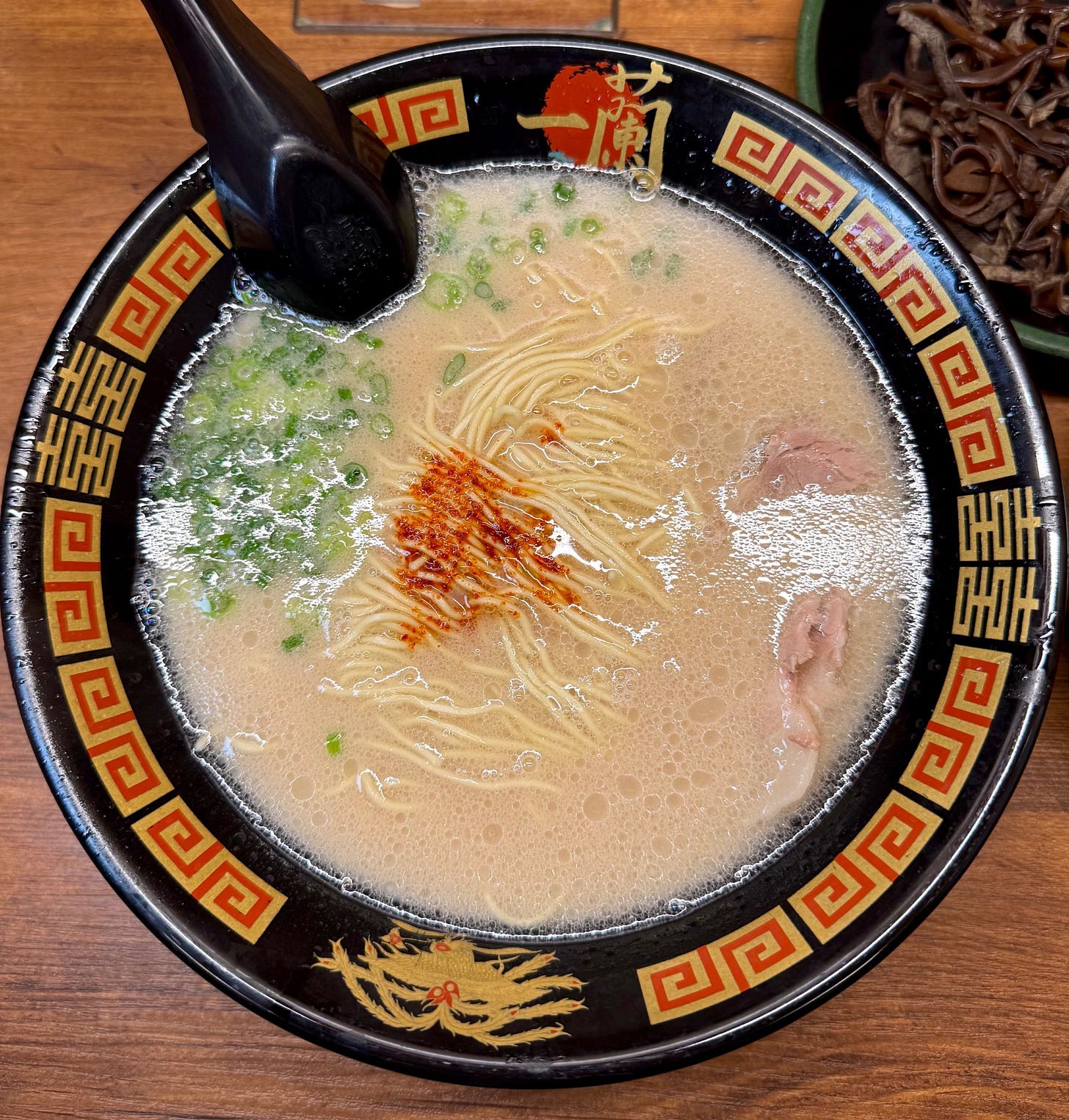
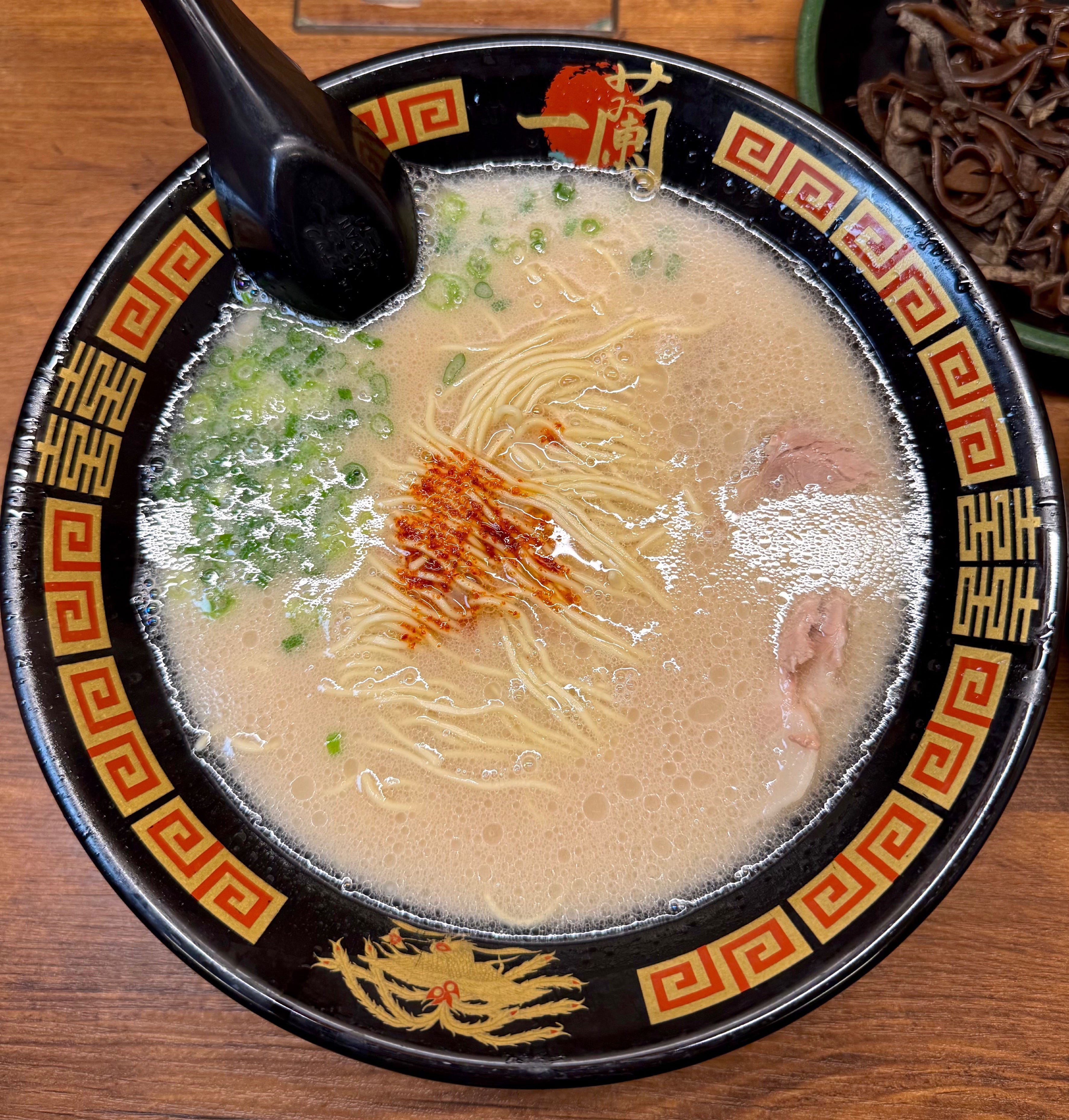
I felt I couldn’t mention this place, especially because it is all over social media, so here are my two cents. Ichiran is a very popular ramen chain serving tonkotsu ramen (pork bone broth) in its famous single-booth setting. I visited late at night, and thankfully, the queue wasn’t too long. If it is, or you’re in a busy area, then I don’t recommend spending a long time waiting, as you’ll be able to find far better alternatives nearby. The ramen is very tasty, but I found the broth a little stronger and richer than I’d like in a classic Tonkotsu (I did struggle to finish the whole bowl, as the portion sizes are large and there are a lot of noodles). I loved that you could ‘personalise’ your ramen by selecting your toppings, noodle thickness and firmness, and spice levels, and it was fun to experience the novelty of sitting in one of the famous booths to enjoy your meal. Overall, I had a very pleasant experience, but I would only recommend visiting if the queues aren’t too long!
Some alternative ramen restaurants that I didn’t get around to trying in Tokyo, but have heard good things about:
Ryan:
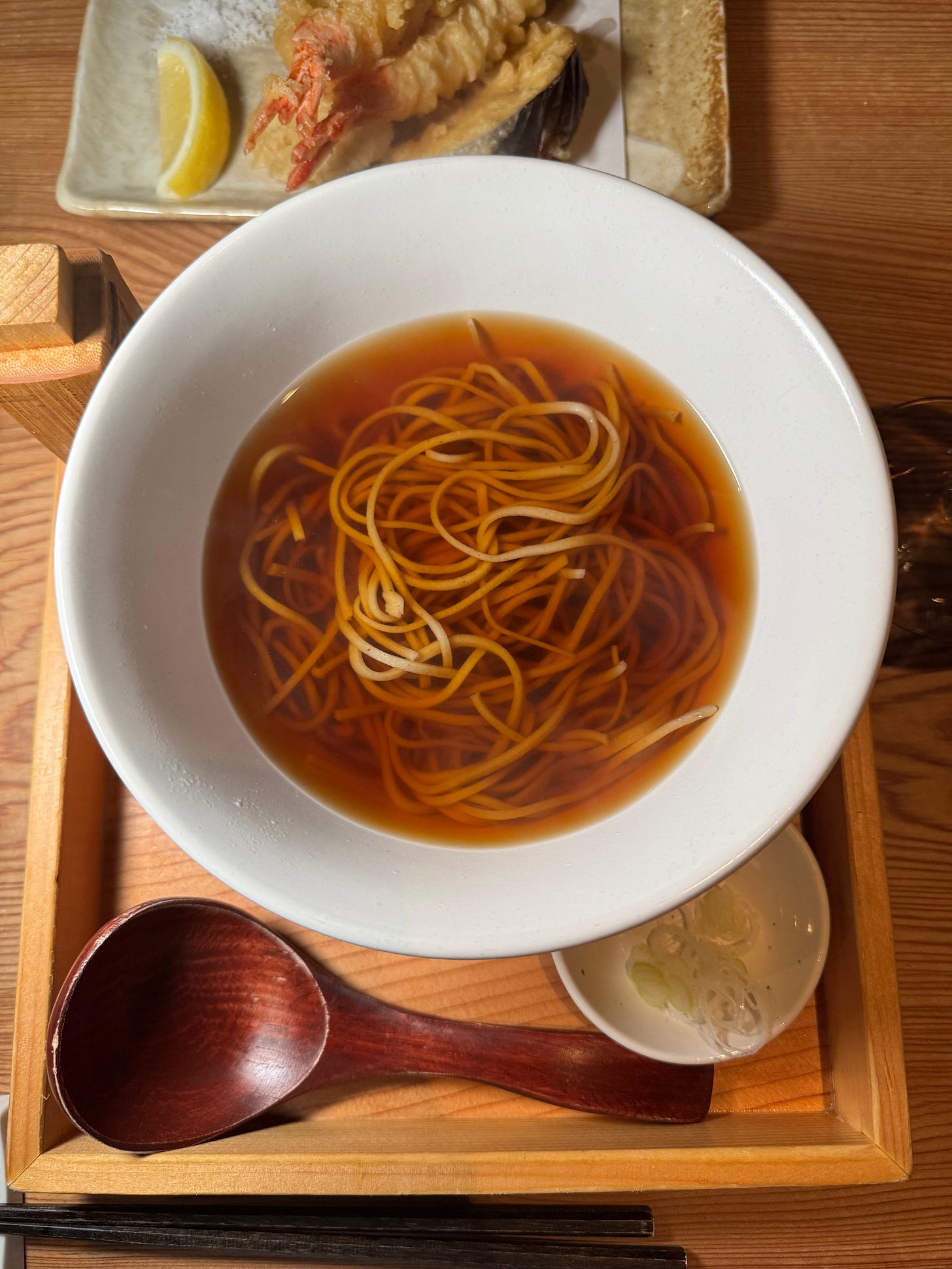
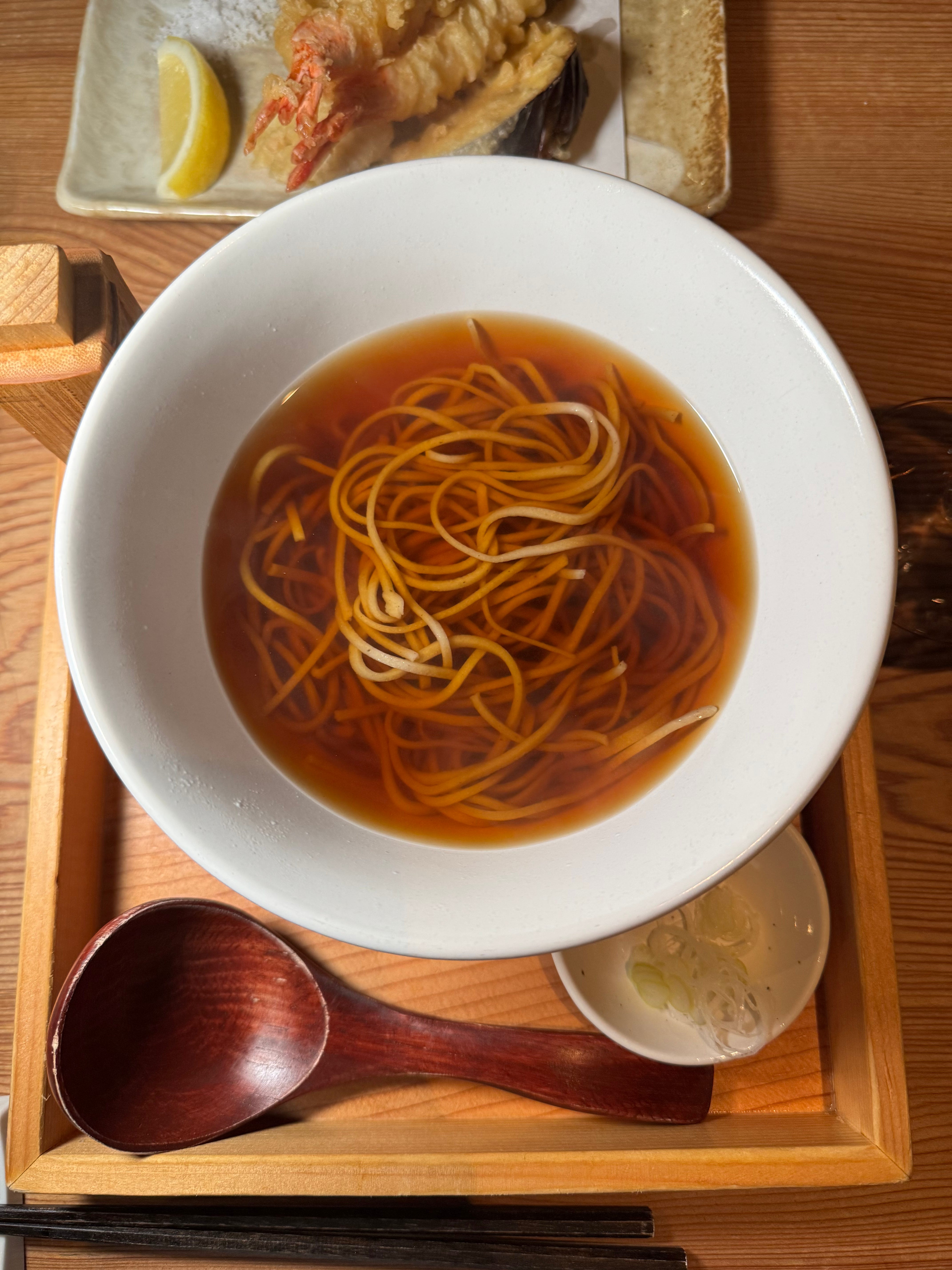
I found this place on my last night in Tokyo after craving one final soba meal before my 14-hour flight home, and it did not disappoint. Located in Shibuya on a quiet, unassuming street, this restaurant has a cool atmosphere, contemporary, aesthetic interiors, and an open kitchen where you can watch the chefs at work. The servers were very friendly, and there was an extensive wine & cocktail list to choose from. The restaurant is best known for its soba, but it also offers a full menu of small dishes to share if you’re after something different. I ordered the cold dipping soba with tempura on the side (prawn and vegetable), and the quality of the soba noodles here really stood out to me; they held their shape, were firm, and were flavoursome. My girlfriend, Hedy, tried the hot soba, which came in a delicious, warming broth and was also very delicious.
I returned to Tokyo after being in Osaka and was really craving tonkatsu. I tried their classic tonkatsu, and it was decently crispy and flavoursome. A lovely experience, and a great option for Tokyo, with not too big a queue. If you want the BEST tonkotsu, though, follow along my Osaka newsletter (coming soon) for where I had it.
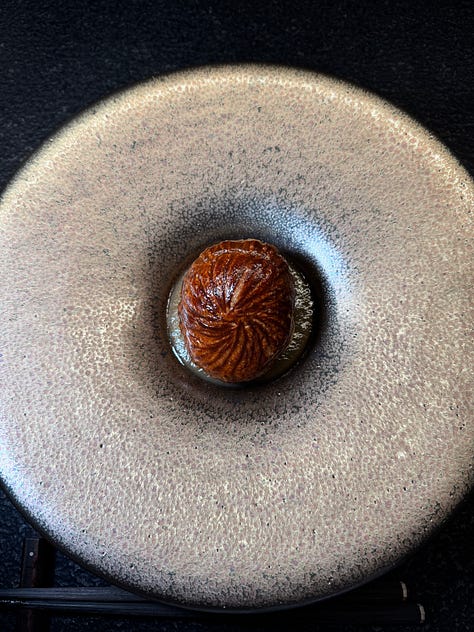
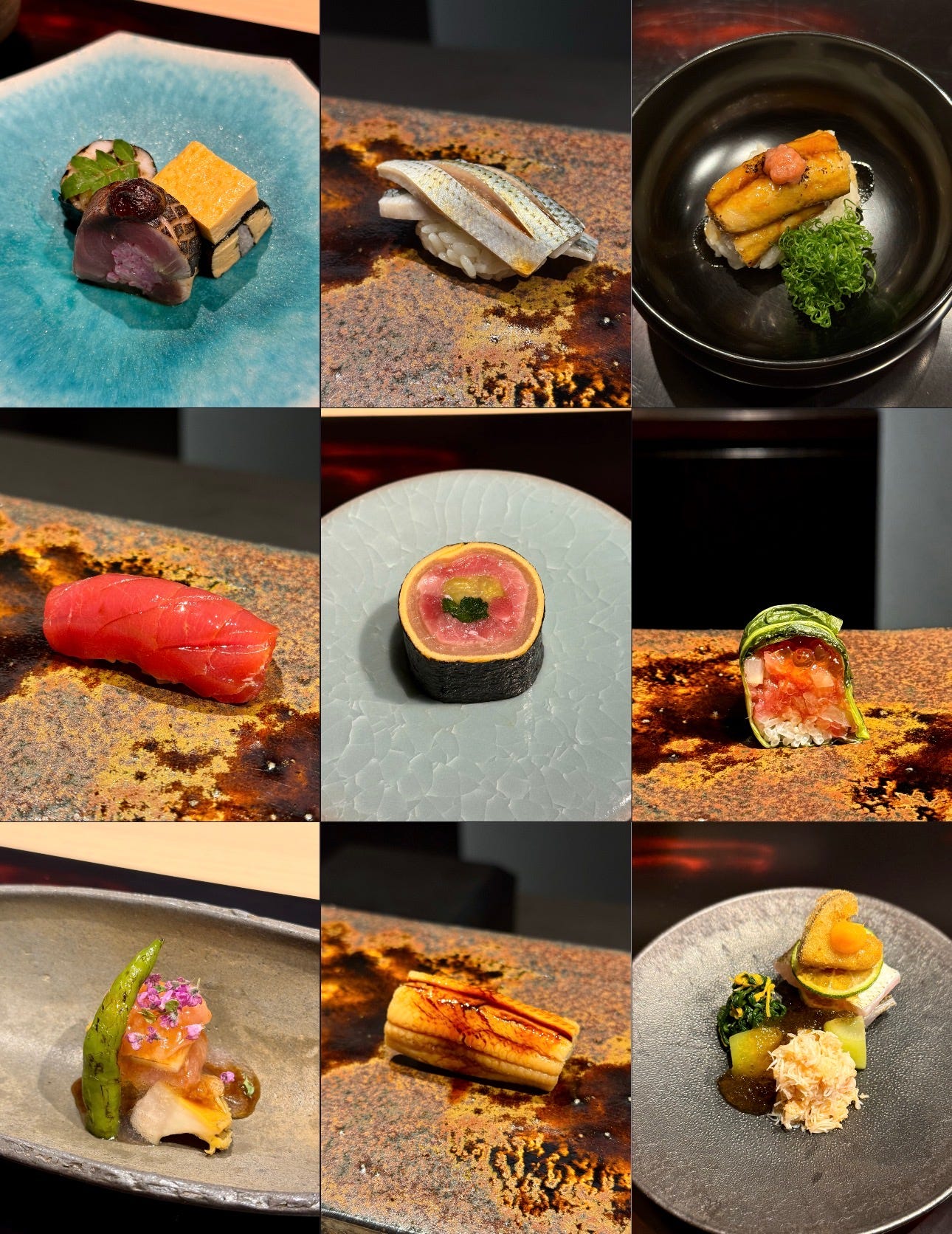
I was lucky enough to stay at this hotel, which I discuss in the 2nd part of the newsletter; however, non-guests can also visit the hotel restaurant, and I really recommend it. Before you enter the hotel & restaurant, you must remove your shoes, which makes it feel as if you’re entering someone’s home (don’t worry, they store them safely for your return). Then, from the moment you catch the lift down into the basement, you’re transported to a new form of dining. You are guided through a maze of passages into a private room, and everything feels very calm, intimate and exciting. You may start to think that maybe this place is style over substance, but this couldn’t be further from the truth. The dishes are all presented beautifully and explained to you thoroughly by both the waiter and these illustrative hand-drawn postcards. The tasting menu does change from season to season, and at that moment in time, the chef was exploring a modern twist on traditional Japanese cooking styles. I got to try interesting and innovative takes on these dishes, all paired with high-quality wine & sake. I was truly blown away by the kindness and knowledge of our waiters throughout this meal, and couldn’t recommend it more if you’re looking for an exquisite fine dining experience in the heart of Tokyo.
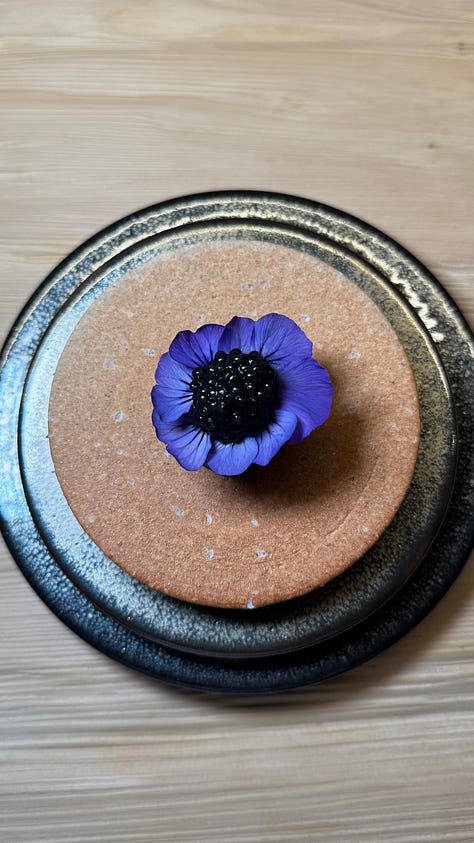
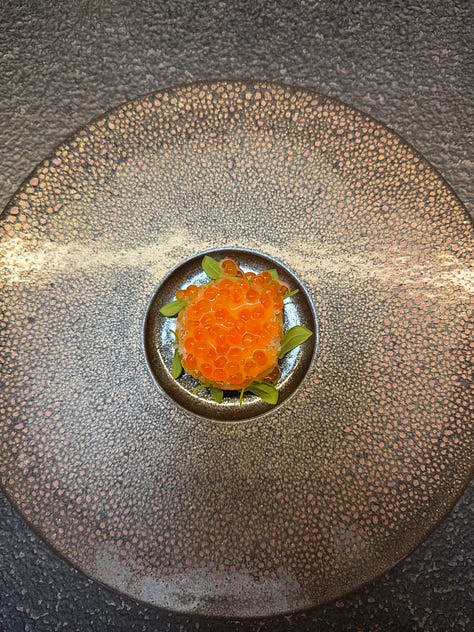
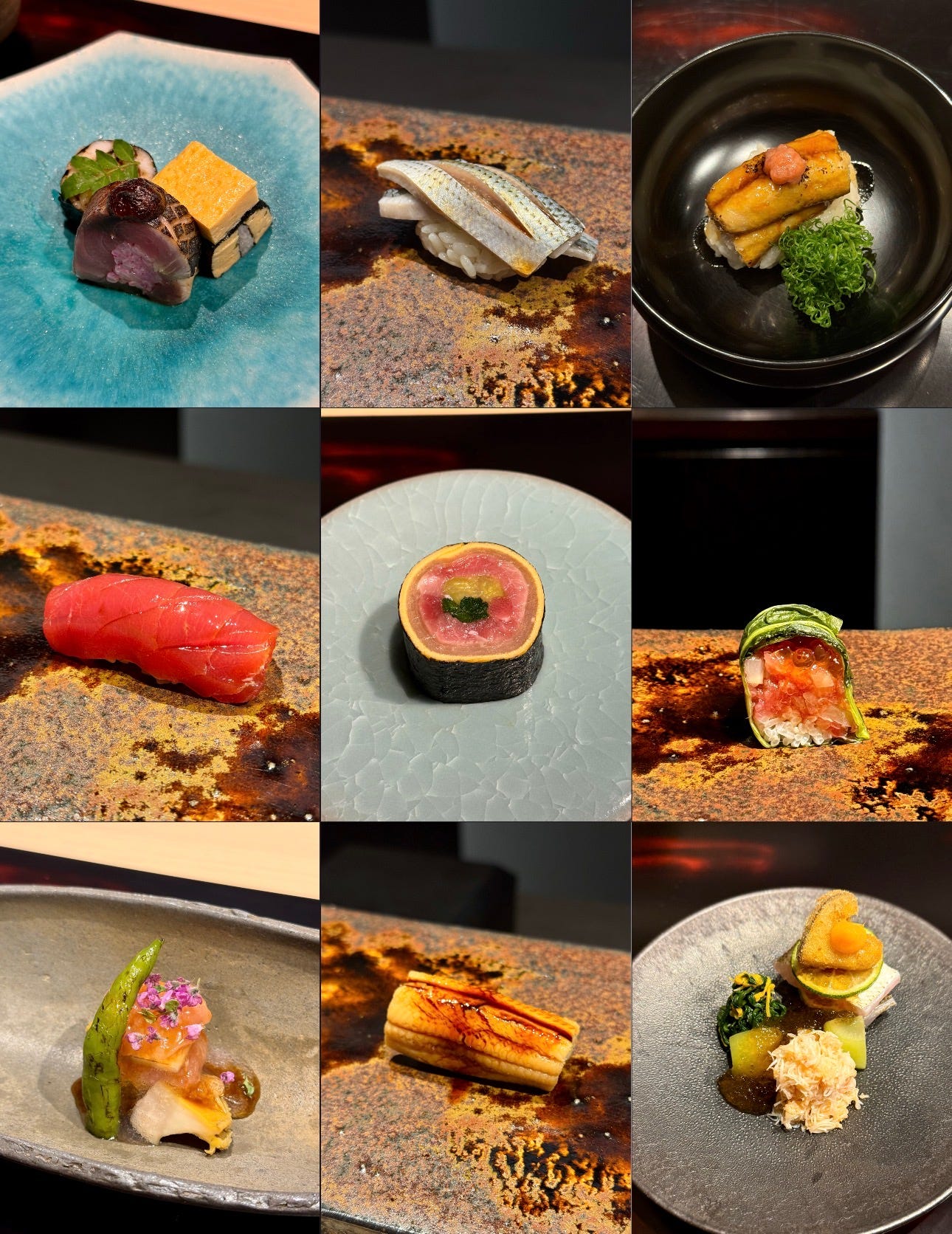
Also within Hoshinoya Tokyo, Sushi Otemon is a newer restaurant that offers an omakase experience with the same incredible service found throughout the Hoshinoya hotel. With roughly 8 seatings per slot, you are in for an intimate and exclusive experience featuring the finest-quality ingredients and the friendliest staff. The head chef takes you back to his childhood through traditional cooking styles and flavour combinations, whilst adding a modern, individual and creative twist to the dishes. I was also amazed by the quality and variety of wines on offer, which were paired perfectly with each dish. This is certainly a place en route to earning some stars, so I’d advise getting a visit in here sooner, before bookings get harder and prices go up.
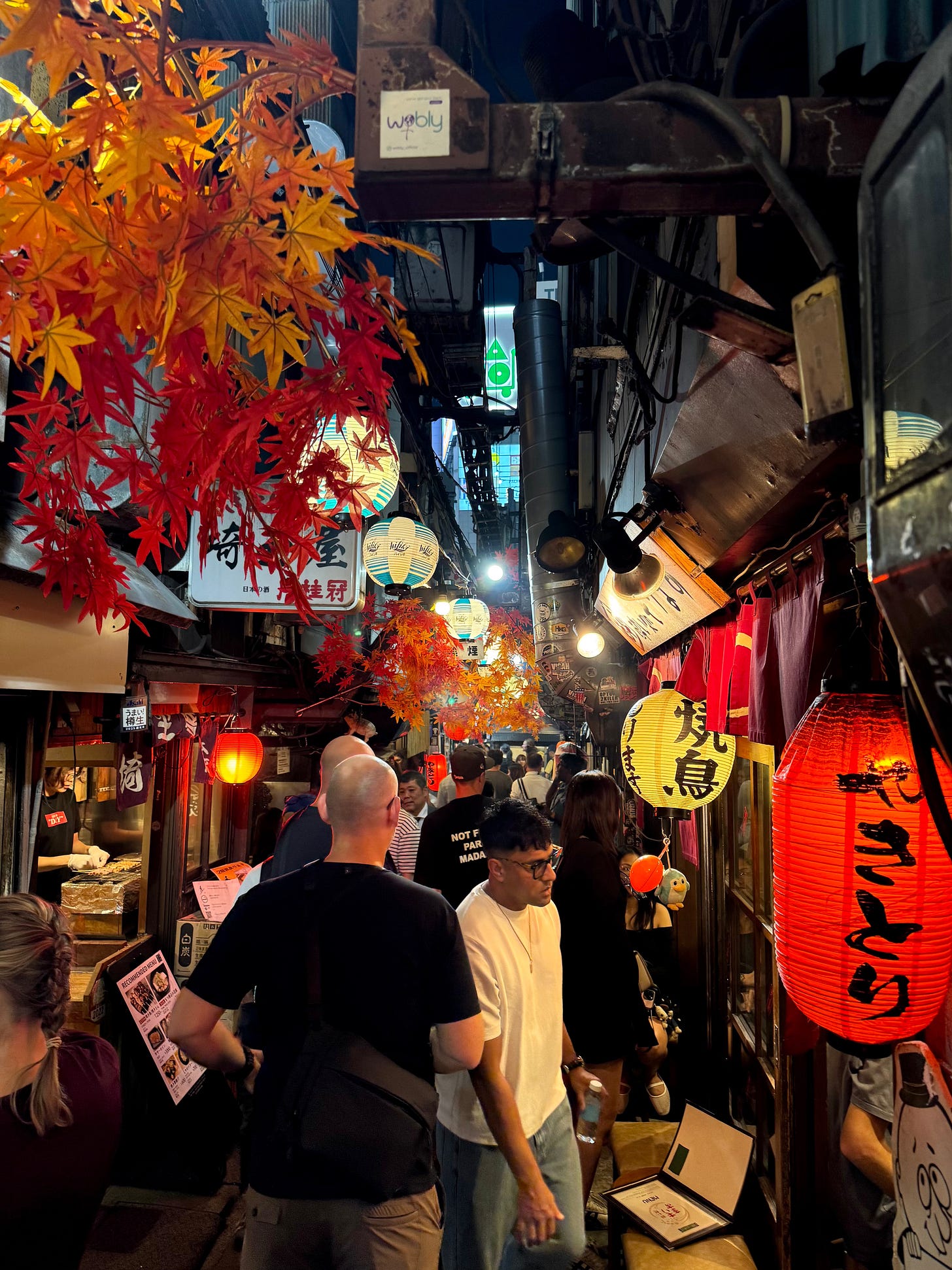
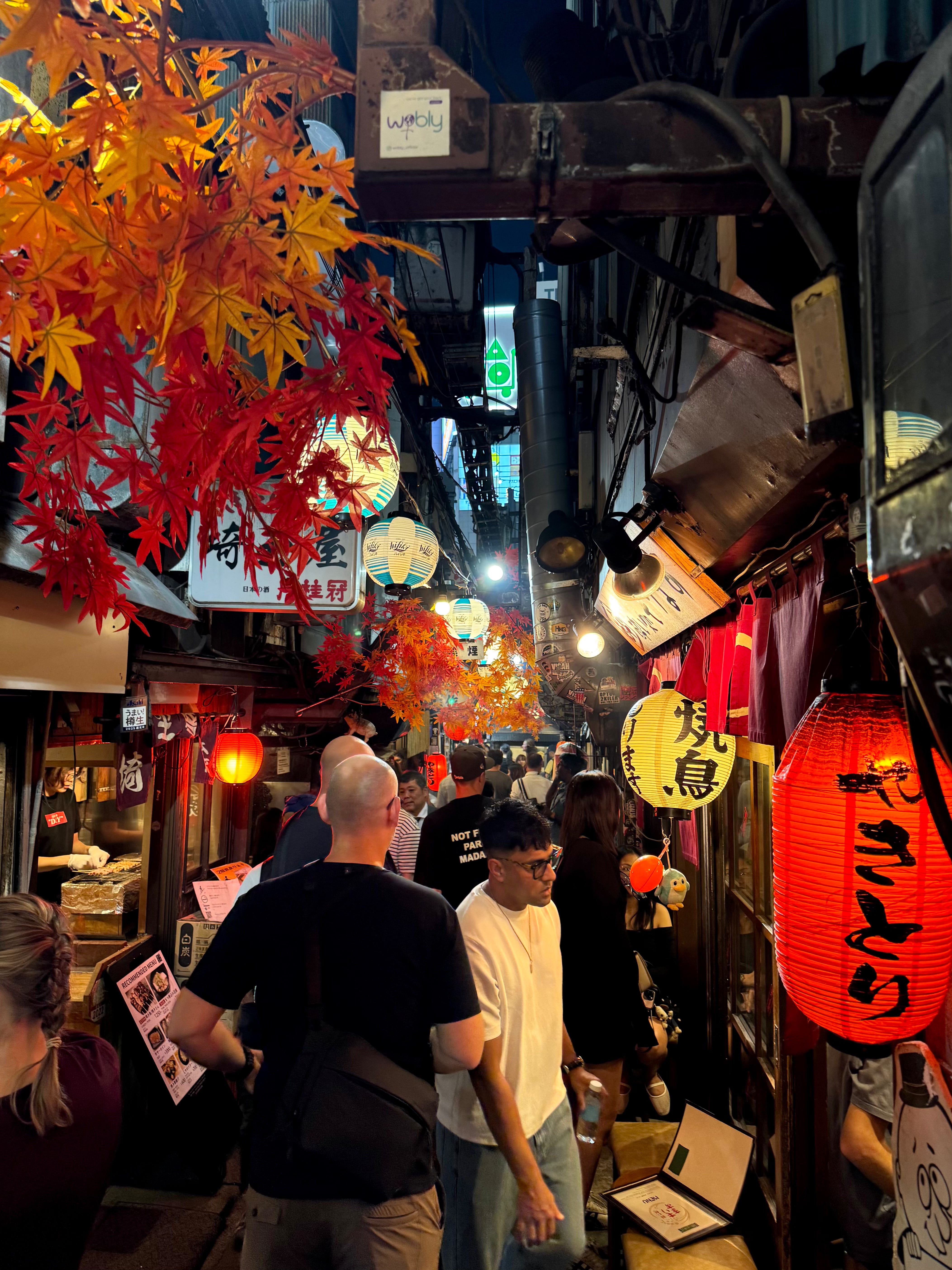
A famous alleyway also known as ‘memory lane’ located in Shinjuku, even if you’re not hungry it’s worth a wander through. Once you’ve walked through the alleyway, grab a seat in one of the many crowded izakayas (a casual Japanese pub/bar) that catches your eye and order a cold beer and a couple of yakitori to share, and you’ll be happy! I tried chicken, leek, and beef skewers and loved the flavour of the grill. This is a memorable and fun experience you should definitely try at some point during your stay for a quick late-night bite.
Omoide Yokocho As a lover of tempura, I really wanted to visit a proper tempura restaurant, and this place was recommended to me, so I thought it was worth mentioning. Whilst the food was tasty, I don’t think that it would be high on my recommendation list. For what you get, this restaurant is seriously expensive, and I didn’t feel that it lived up to the hype or was worth the cost. Tempura restaurants like this (set up like omakase) are all much of the same - delicious food, but incredibly high prices. If money is no worry to you, then by all means, visit a restaurant like this.
Some alternative tempura restaurants that I didn’t get around to trying, but again have heard good things about:
I stayed at Hoshinoya Tokyo, part of a hotel group with multiple properties across Japan (and Bali), offering a genuine boutique feel. I could not recommend this hotel or hotel group more. From the moment you arrive, you feel welcome and right at home. Whether this be when you are greeted on your arrival by a friendly face and guided to remove your shoes before entering into a space of zen, or when offered a warming cup of tasty green tea after a long day. The hotel interiors are aesthetically pleasing and draw inspiration from traditional Japanese ryokan, with a modern, relevant feel. The rooms come with all the amenities you need, including pyjamas, skincare and very comfy beds. There is a selection of different activities that you can take part in during your stay, which I recommend exploring. I got to take part in a traditional tea ceremony led by an insightful member of staff to learn all about the culture around tea, as well as experience learning Kenjutsu on the hotel’s helipad at sunset (it doesn’t get much better than that). I also got to try a traditional ryokan breakfast here, which was presented beautifully and had so many different and delicious components to try.
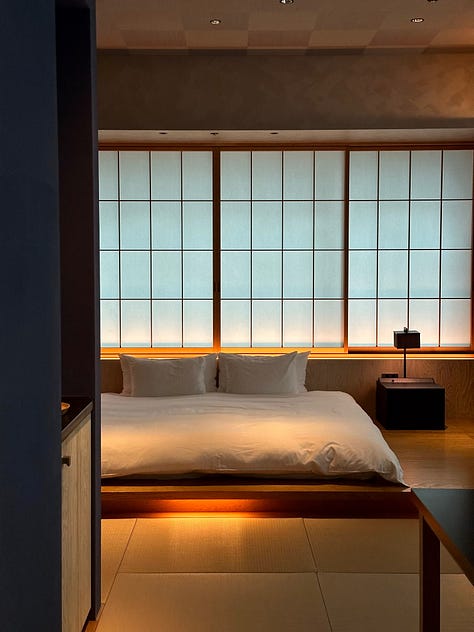
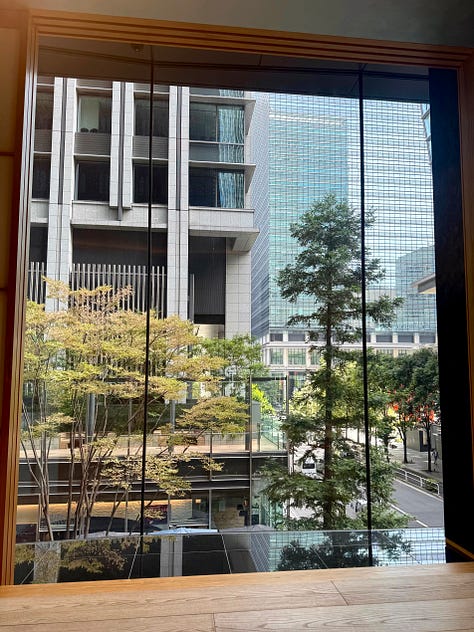
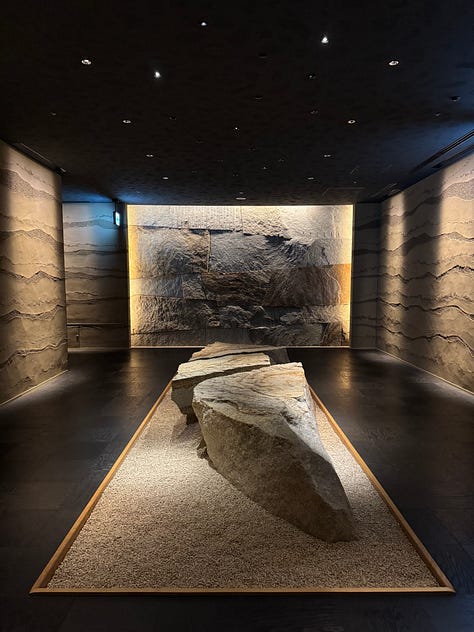
On my second time in Tokyo, I stayed at the Edition Ginza, which is located in the centre of Ginza and ideally right next to Itoya (only the greatest stationery store to ever exist - if you know, you know). I loved how central this hotel was, as it meant you could shop until you drop (literally) before rolling back into your room for an afternoon nap in a very large and comfy bed. The rooms are large and tasteful, but I did think it had a more commercial feel, which made it feel less special than other places I stayed during my trip. If you’re after location, comfort, and style, then this hotel is for you.
Keep your eyes peeled for the next travel newsletter where we cover all things Osaka…
Comments
Nothing yet. Say the first thing.
Sign in to join the conversation.