
Gospel Reading | John 20:19-31 (NRSVue)
When it was evening on that day, the first day of the week, and the doors were locked where the disciples were, for fear of the Jews, Jesus came and stood among them and said, “Peace be with you.” After he said this, he showed them his hands and his side. Then the disciples rejoiced when they saw the Lord. Jesus said to them again, “Peace be with you. As the Father has sent me, so I send you.” When he had said this, he breathed on them and said to them, “Receive the Holy Spirit. If you forgive the sins of any, they are forgiven them; if you retain the sins of any, they are retained.”
But Thomas (who was called the Twin), one of the twelve, was not with them when Jesus came. So the other disciples told him, “We have seen the Lord.” But he said to them, “Unless I see the mark of the nails in his hands and put my finger in the mark of the nails and my hand in his side, I will not believe.”
A week later his disciples were again in the house, and Thomas was with them. Although the doors were shut, Jesus came and stood among them and said, “Peace be with you.” Then he said to Thomas, “Put your finger here and see my hands. Reach out your hand and put it in my side. Do not doubt but believe.” Thomas answered him, “My Lord and my God!” Jesus said to him, “Have you believed because you have seen me? Blessed are those who have not seen and yet have come to believe.”
Now Jesus did many other signs in the presence of his disciples that are not written in this book. But these are written so that you may continue to believe that Jesus is the Messiah, the Son of God, and that through believing you may have life in his name.
It is the Second Sunday of Easter and the doors are locked.
That’s where this story begins this morning.
And it is quite the change from last Sunday.
Today begins not with triumph, not with certainty, not with clarity.
But with a group of people huddled together, afraid.
Afraid of what just happened.
Afraid of what might happen next.
Afraid that everything they thought was true… might not be.
And if you’ve been following the news cycle this week, I can’t help but to think a lot of us feel this way too.
Huddled together, afraid, uncertain…this is what it feels like to live in America right now.
We are, all of us, living in a kind of locked room.
Not physically, maybe, though for many of our siblings, they are physically hiding in locked rooms.
But for many us, it feels like we are living in a locked room, emotionally, spiritually, collectively.
That when we do open the door each morning, we do so hesitantly. Maybe opening it just a crack, to see what’s outside, making sure it is safe, that the world didn’t suddenly shift in the night.
Because the world feels…unsteady.
This week, we’ve watched violence escalate in Iran. We have listened as the President of our own country threatened genocide on an entire country.
We’ve witnessed the same old patterns— power, retaliation, fear, grief— play out again and again and again.
And living in this kind of cycle does something to you.
Even if it’s far away.
Even if you can’t name exactly why.
It sits in your chest.
It hums in the background.
It makes the world feel a little less safe, a little less certain.
And yet, at the exact same time, this week, many of us have also watched as human beings embarked on something extraordinary.
As a recovering space nerd kid, I hope that we all know that for ten days, through the NASA Artemis II mission, four astronauts traveled farther from Earth than any humans have in history.
They circled the moon. They lost communication with Earth for 40 minutes. They saw a perspective that no other humans ever have witnessed as they looked back at our planet from deep space.
And I am not sure about you, but I have found myself grasping for any ounce of joy I can find in this world right now. So, I have been the NASA livestream’s number one viewer throughout this mission. I can’t get enough of the joy and laughter and love they share together as a crew.
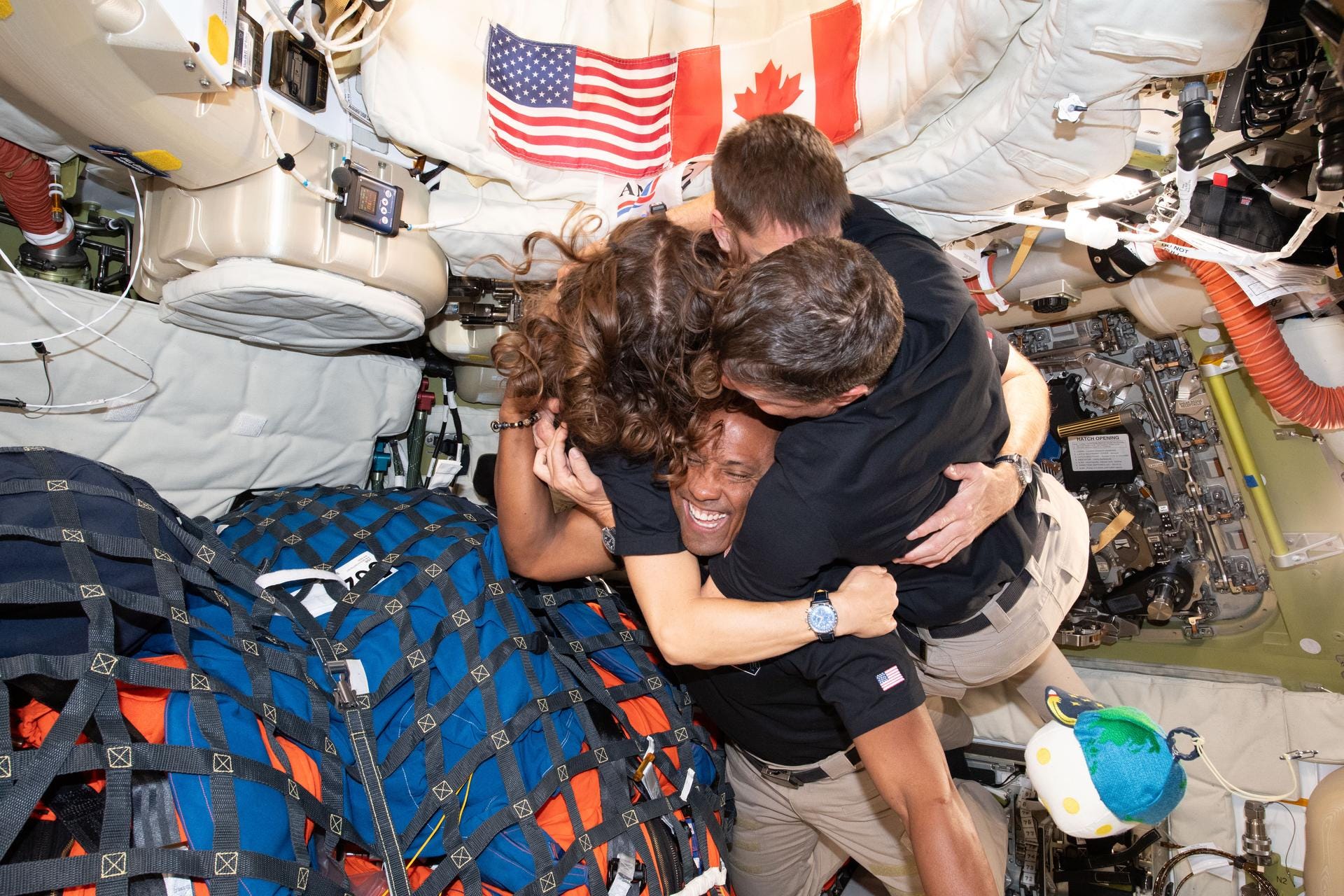
During this mission, Commander Reid Wiseman’s crew honored his late wife, Carroll Wiseman, who died of cancer while they were training for this mission. And the video, if you haven’t seen it yet, is guaranteed to cause me to immediately break into tears. Because the crew honors Carroll by naming a lunar crater after her. The crater, described as a “bright spot on the moon” is visible from Earth and in the video, the moment when the crew says this, they immediately start sobbing and hugging one another. Their love for one another, for Carroll and their daughters, feels like the kind of love the world needs reminding of right now.
It is striking to me that even 252,756 miles from Earth, love is still the most powerful force in the universe.
In an interview on Easter morning, Pilot Victor Glover, the first person of color to travel beyond the space station, shares the emotional impact that this mission has had on him. He shared that most profoundly he has realized that when they look back at the Earth, they don’t see countries. They don’t see enemies. They don’t see who’s right and who’s wrong.
Instead, they see one small, fragile, blue planet. One home.
And so here we are, holding both of these truths at once this week:
As humans, we can reach the moon…and yet, we cannot stop killing each other.
We can achieve breathtaking beauty…and participate in devastating harm.
We can invent technology capable of breaking the bounds of human exploration…and use that same technology to harm one another in unimaginable ways.
That tension, that contradiction, that ache: that’s the locked room.
And so regardless of where we are in the universe, we are reminded that we are all humans made of the same emotions, desiring the kind of love that keeps us rooted.
And so this morning, right in the middle of all of this chaos and in the midst of our contradicting feelings, we read the ancient story of Thomas.
And poor Thomas. History has not been kind to him.
We often call him “Doubting Thomas,” like he’s the problem, but Thomas is just saying out loud what everyone else is thinking.
“Unless I see it… unless I touch it… I’m not buying it.”
And can you blame him? Because what is he supposed to believe after what he just witnessed?
That death doesn’t win?
That hope is still possible?
That love is stronger than violence?
Those are hard things to believe when the world keeps handing you evidence to the contrary.
And what I love about this story is that Jesus doesn’t shame Thomas.
He doesn’t say, “Get it together.”
He doesn’t say, “Just have more faith.”
Instead, he shows up.
In the locked room.
In the fear.
In the doubt.
Not after it’s resolved, but right in the middle of it.
And the first thing he says is not an explanation. Not a theological argument. Not a correction.
He simply says:
“Peace be with you.”
Which, in hindsight is a kind of ridiculous thing to say at this moment because nothing about their situation is peaceful.
The empire is still in power.
Jesus was still executed.
The future is still uncertain.
And yet, Jesus says it anyways: “Peace be with you.”
Not as a description of the world.
But as a gift within it.
And that matters.
Because I think we’ve been taught to believe that peace is something that happens when everything finally settles down.
When the war ends.
When the fear goes away.
When the world makes sense again.
But that’s not what this is.
This is peace that shows up while the doors are still locked. Peace that breathes in a room full of anxiety. Peace that doesn’t deny the wounds, but stands right in the middle of them.
Because what does Jesus do next?
He shows them his hands. His side. And the wounds are still there because the resurrection did not erase them.
Let me say that again: Resurrection did not erase the wounds.
And I believe that this detail is perhaps one of the most important parts of the story and should mean something to us today.
Because we too are living in a wounded world.
There is real suffering.
Real violence.
Real grief.
And faith is not pretending that isn’t true.
Faith is not looking away from the war, or the fear, or the heartbreak.
Faith is being willing to see it…and still believe that it is not the final word.
It is here in the midst of this story, that I keep coming back to those astronauts.
Because when they look at Earth from that distance, every astronaut will say that something changes in them. This is so common that there’s a scientific name for it. It’s called the “overview effect.”
The technical definition is that astronauts experience a profound cognitive shift when they view Earth from space. It is often characterized by a sudden, overwhelming understanding of the planet’s fragility, unity, and the absence of borders and often causes a lasting, positive transformation in worldview, promoting feelings of awe, interconnectedness, and a desire to protect the planet.
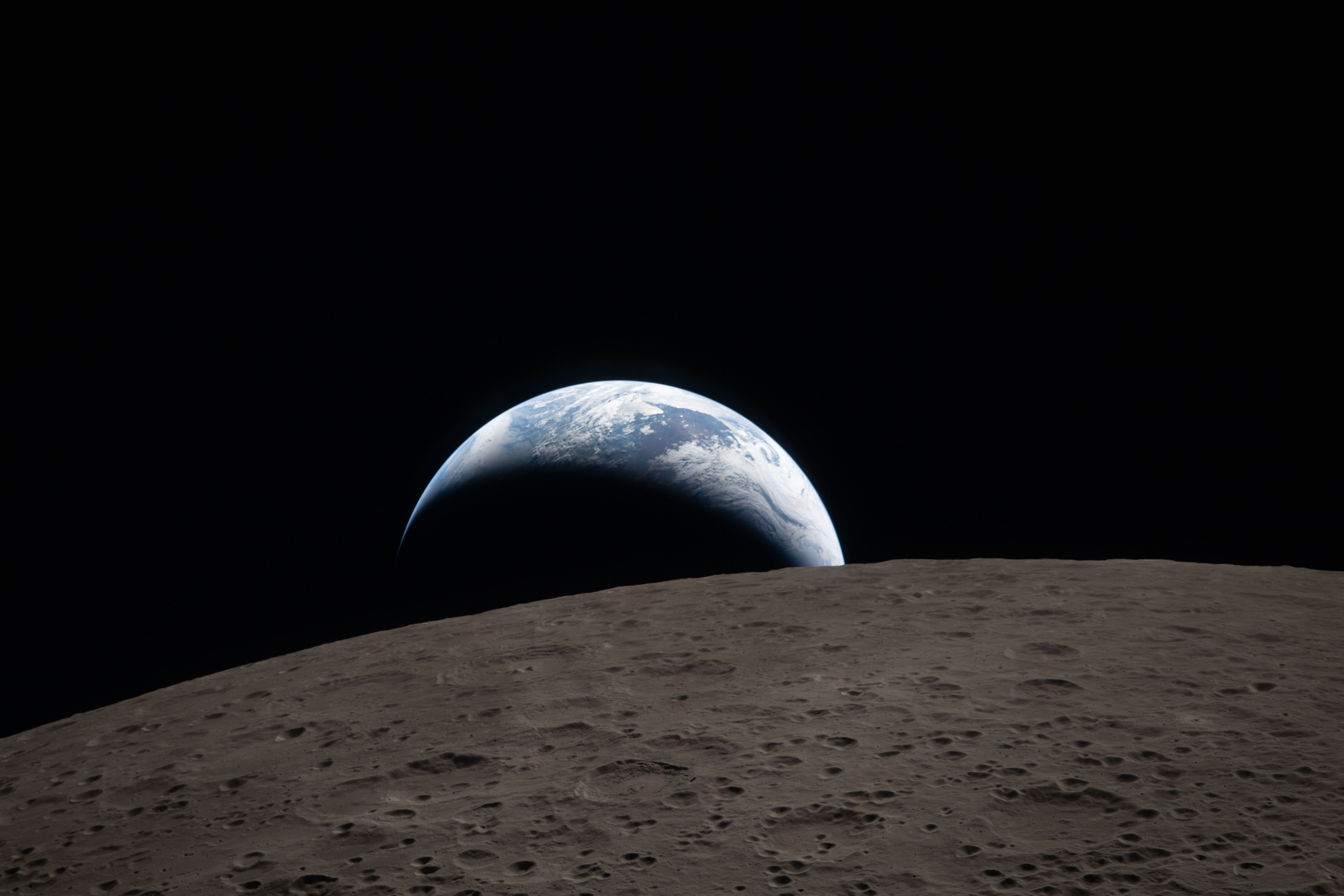
It’s this moment when you realize:
That’s all of us.
That tiny, fragile planet, that’s everyone we love.
Every story. Every life. Every conflict.
All of it.
And suddenly, the divisions we cling to feel… smaller.
Not unimportant.
But smaller than the whole.
And I wonder if that’s part of what resurrection does.
Not that it fixes everything overnight.
Not that it erases the violence of the world.
But that it gives us a different way of seeing.
A way of seeing that can hold both truth and hope at the same time.
See the wounds and still believe in life.
See the brokenness and still choose love.
See the fear and still hear Jesus say: “Peace be with you.”
And then, this part of the story is so important…He breathes on them.
Jesus gives them his Spirit.
Because fear takes your breath away.
Anxiety tightens your chest.
Grief makes it hard to breathe.
And Jesus gives it back.
“Receive the Holy Spirit,” he says.
And then he sends them.
Not into a safe world, not into a peaceful world, but into this world.
The same kind of world we are living in right now.
A world of contradiction.
A world of beauty and violence.
A world where we can touch the stars
and still struggle to love our neighbor.
And still, he sends them.
Which means he sends us, too.
To be people who tell the truth about the wounds and refuse to give up on hope. Who name the fear and still practice peace. Who live as if that fragile blue planet we all share actually belongs to God and to each other.
Because here’s the thing:
The world has not become less dangerous since Easter morning.
The disciples were still afraid.
Thomas still doubted.
The Empire still ruled.
And yet, Christ stood among them anyway.
And, Christ stands among us now.
In the anxiety.
In the grief.
In the questions we don’t know how to answer.
And he says: “Peace be with you.”
Not because everything is okay.
But because God refuses to abandon this world, even now, even here, even us.
Amen.
No posts
Comments
Nothing yet. Say the first thing.
Sign in to join the conversation.