
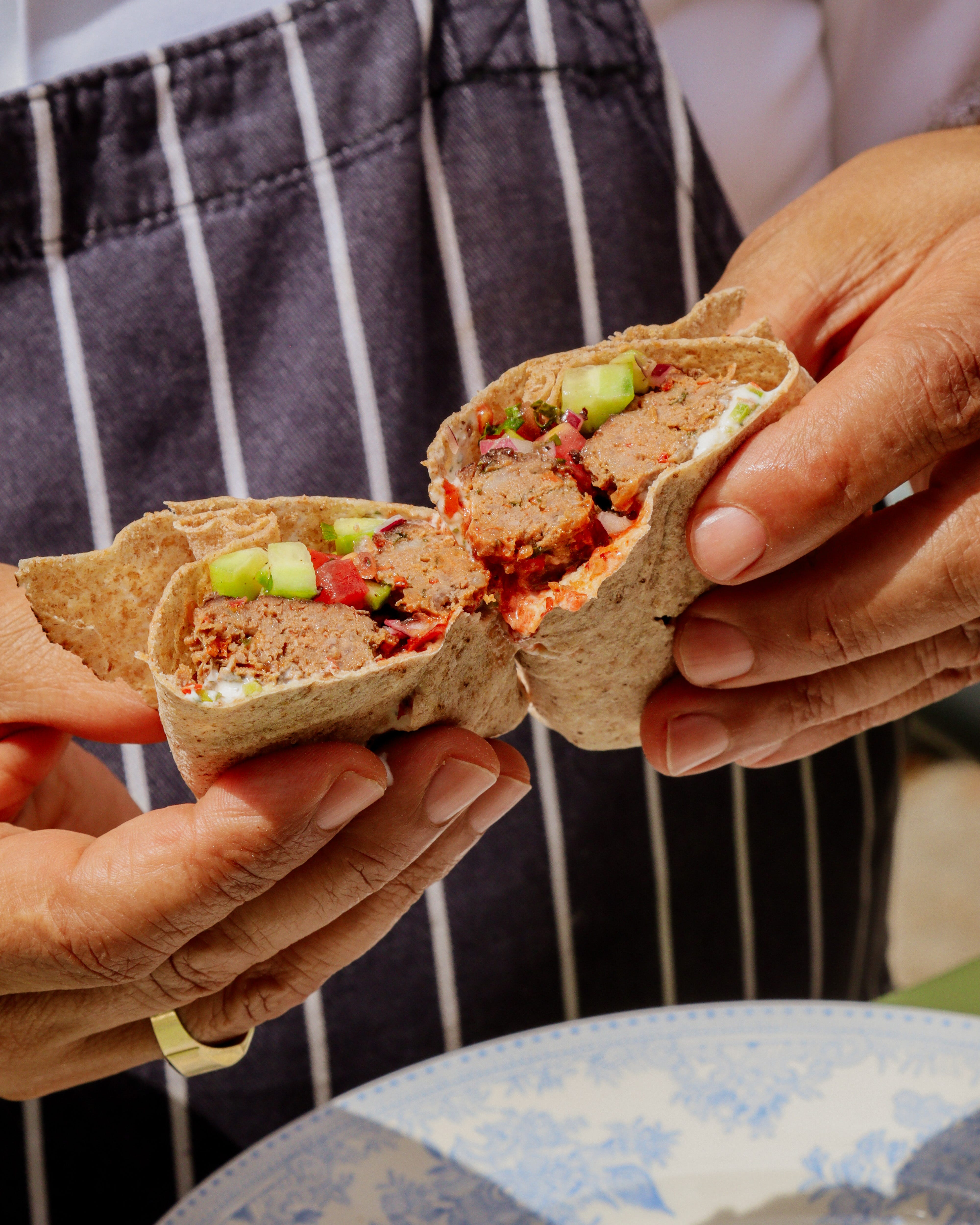
Is it a kebab? Is it a kofta? All you should know is, it’s delicious.
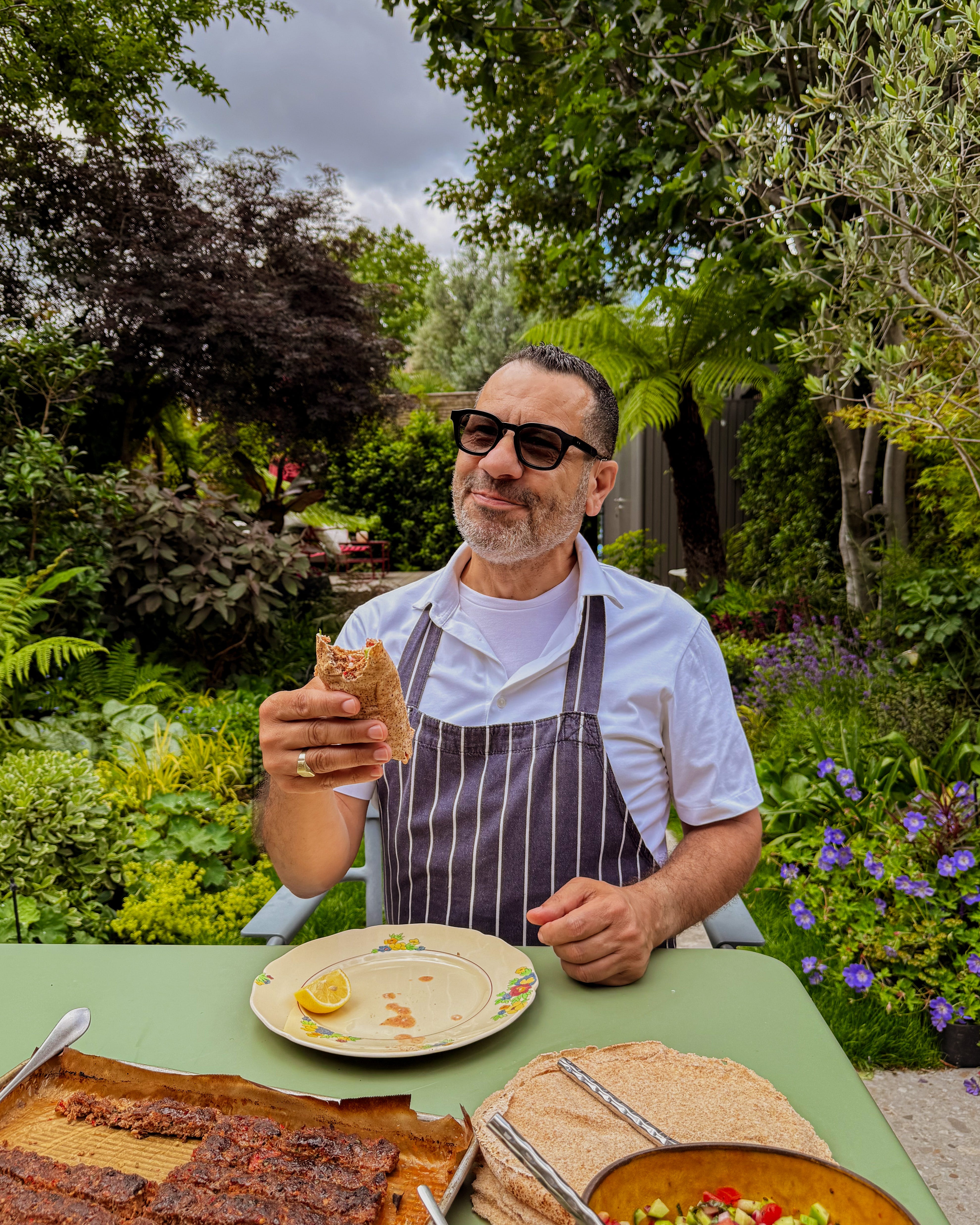
A whole tray of spiced minced beef, mixed with onion, red pepper, garlic and tomato, pressed flat, scored into kebab-shaped ‘fingers’ and baked until the top goes golden brown under the grill. Alongside it, a cool yoghurt sauce sharpened with green chilli and dried mint, a chopped salad bright with sumac and vinegar, warm flatbread and shatta for a bit of heat. Everyone builds their own wrap at the table.
The words tangle across the whole region, so here is a small dictionary for anyone who wants them untangled.
Kebab is an old word associated with meat cooked over fire. In the Middle East, said on its own, it usually means the minced kind: thick fingers pressed along long steel skewers and cooked over coals, sold in shops and at street corners, stuffed hot into pita.
Kofta is the mince itself: meat chopped fine, traditionally by hand with two large knives, together with the onion, garlic and parsley until they become one. It is a preparation, not a cooking method. Kofta can be patties, meatballs or thin fingers, simmered in tomato or tamarind sauce, grilled, or pressed flat into a tray and baked, which is where this recipe comes from.
Shish is simply Turkish for skewer and tells you the meat is in whole cubes rather than minced.
Doner means “it turns”: the familiar elephant leg rotating in British and European kebab shops.
It might sound confusing, but nobody in the region finds it confusing. Context does all the work. In broad terms, kebab is street food, kofta is homemade. That’s all you need to remember.
Thanks for reading Sami Tamimi - notes from my kitchen! This post is public so feel free to share it.
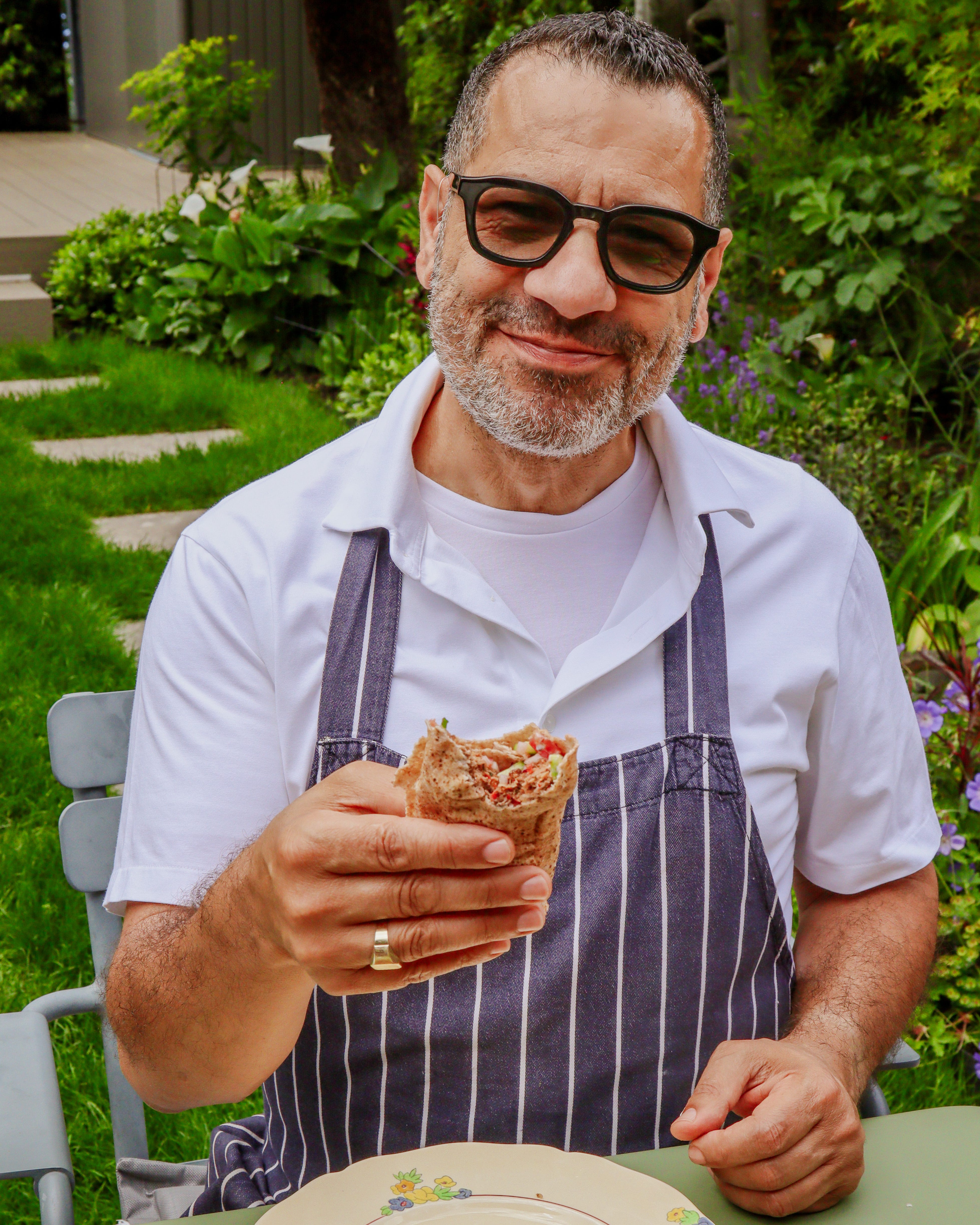
The kebab is one of the great tastes of my childhood. It belongs to Eid celebrations.
During the holiday we, the Tamimi children, would wait for our pocket money. It came from my father and from my uncles. They rationed it coin by coin. The moment it was in our hands we were gone, down to where the Eid fair was set up. There were donkeys to ride. There were games for the children. And there were the sellers: rows of them, food and sweets and things you did not know you wanted until you saw them. All those magical things competing for the same few coins burning in our small pockets.
My first purchase, every year, was the same. A kebab, hot from the coals, stuffed into pita with all the condiments. I would eat it standing in the middle of the noise, smacking my lips. Then, with whatever money survived, I bought as many sweets as I could. That was my Eid: the kebab first, the sweets after. Walking home with sticky hands and an empty pocket, I was entirely satisfied with my decisions.
Back then, kebab meant luxury.
The everyday version, the one made at home, was just as delicious. It came in the form of the siniyeh, the wide metal tray that lives in every Palestinian kitchen.
Kofta bil siniyeh is the mother dish of this recipe: minced meat pressed flat into the tray and baked, sometimes beneath sliced tomatoes and potatoes whose juices run down into the meat, sometimes blanketed in tahini or tomato sauce that sets in the oven into a pale, gently wobbling crust. The tray comes out, the kofta is cut into squares or diamonds and it is carried straight to the table in the tin it was baked in. No skewers, no fire, no performance. Just the tray.
In the past many homes did not have ovens, so you prepared your siniyeh in the morning and carried it to the neighbourhood bakery, the furn, where the baker slid it into the big oven alongside everyone else’s. The trays of a whole street cooked together in one fire. The baker knew whose was whose. Children were sent to collect them at lunchtime and walked home holding a hot tin wrapped in a folded cloth, the smell announcing the family’s lunch to everyone they passed.
This recipe is that tradition with one small innovation: scoring the meat into kebab-shaped fingers before it goes into the oven, so it bakes into neat individual kebabs rather than squares. My mother would have found the scoring unnecessary and the parchment paper extravagant. She would also have eaten three of them before they got wrapped in bread, standing at the counter, before anyone else was served.
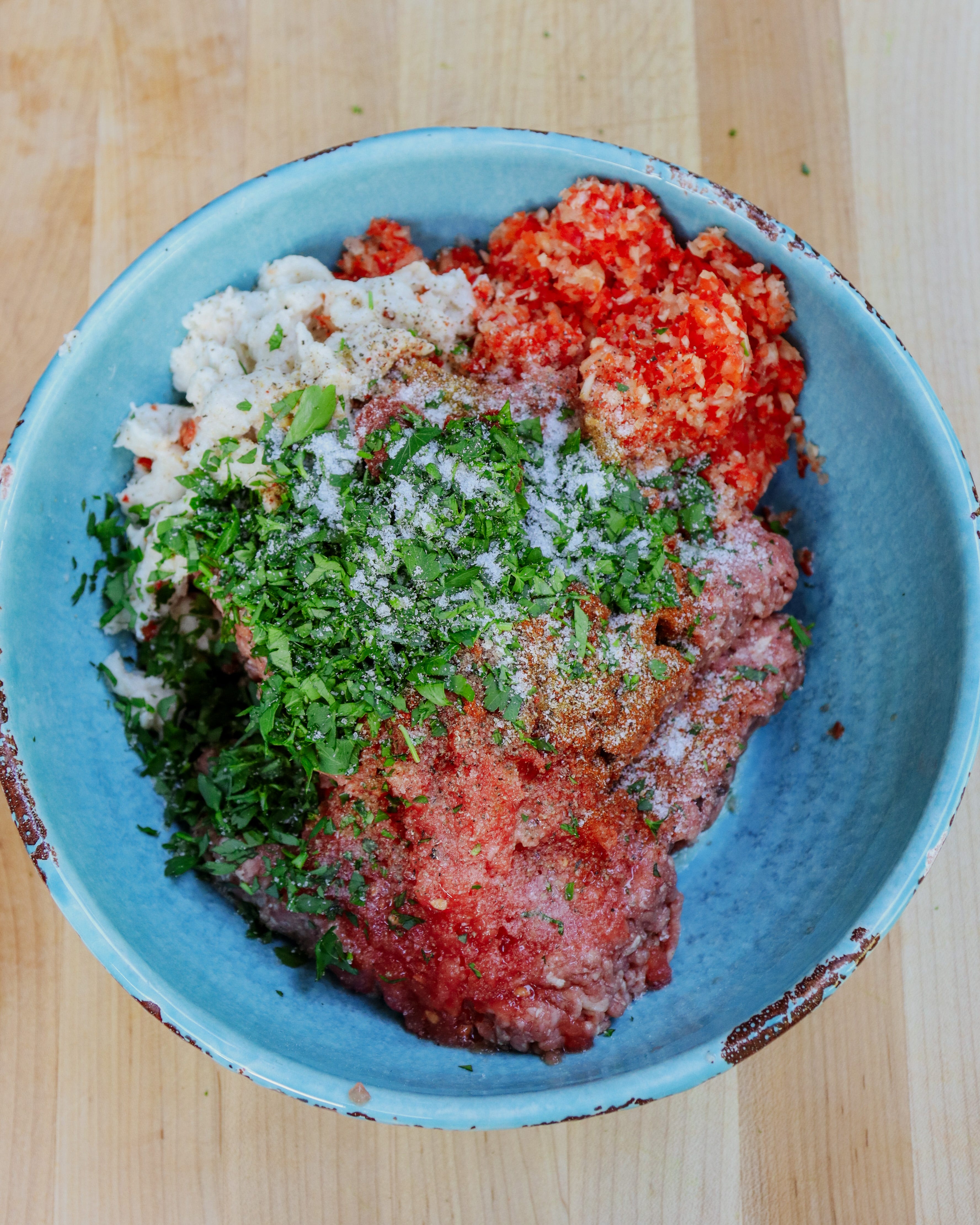
One small piece of technique comes straight from the women of Jerusalem. Many Palestinian families ask the butcher to mince the meat together with the onion, garlic and parsley, all through the grinder in one go. It saves work, but that is only half the point. Grinding everything together marries the flavours and textures in a way that mixing by hand afterwards never quite matches. The food processor step in this recipe is an echo of that butcher’s favour, done at home: the onion, pepper and garlic blitzed to a fine paste so they disappear into the meat entirely.
Then comes the part you must not skip: the squeezing. Squeeze the blitzed vegetables in your fist over the sink until they stop dripping and squeeze the soaked bread the same way. Water is the enemy here. A wet mixture cannot brown, it can only steam. A steamed kofta is the grey, dense version that has put generations of people off making this at home. What the squeezed vegetables leave behind is pure flavour without the flood of juice. Those few seconds carry generations of kitchen wisdom.
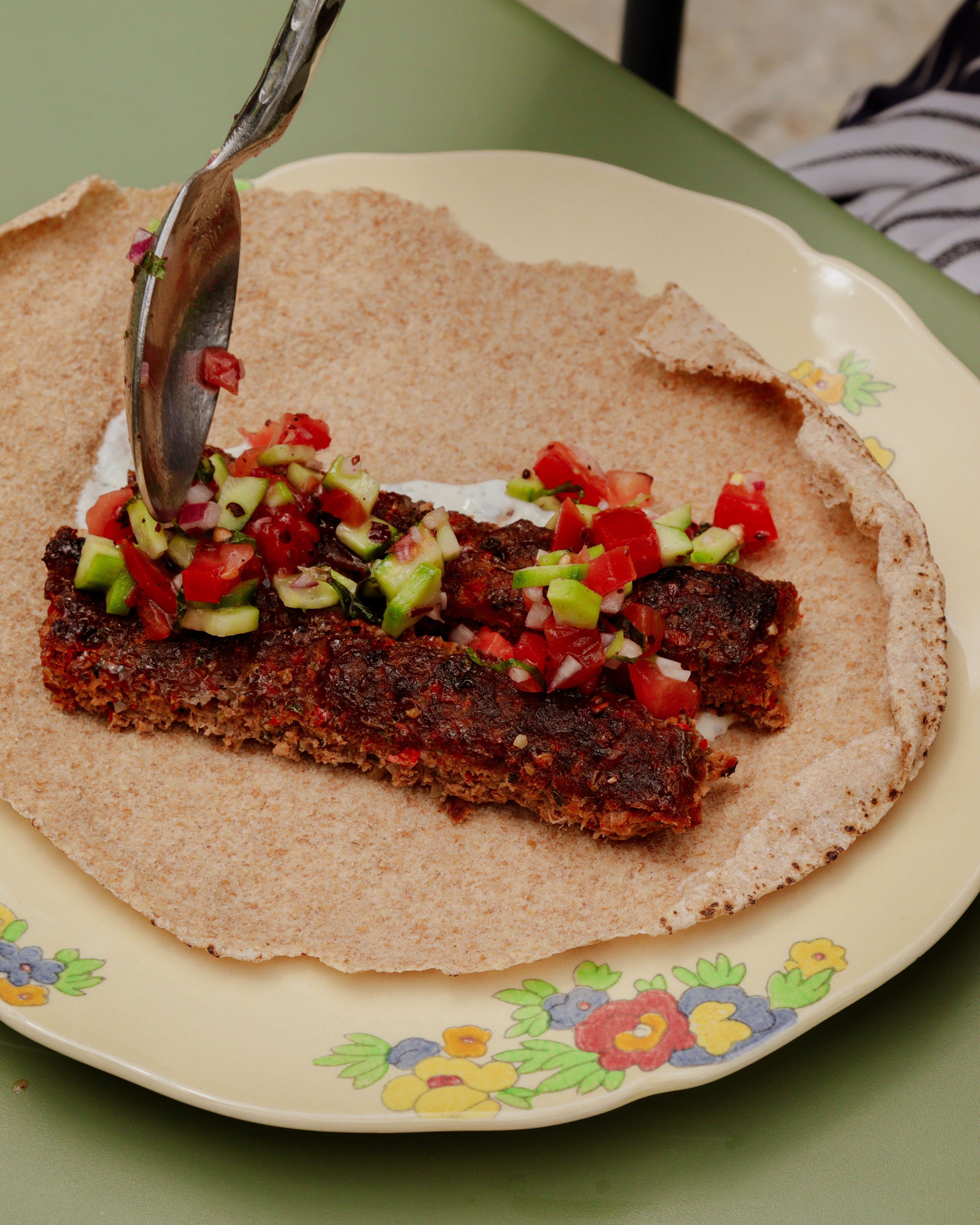
Spread the yoghurt sauce over warm pita, or a tortilla, yes, sue me. Add two or three kebabs, a generous spoonful of the sumac salad, mint leaves and shatta. Wrap it tightly and eat it leaning over the table, because it will leak. It is supposed to leak.
It is, I realise, the Eid fair sandwich of my childhood, made far from my childhood home. Somewhere, an eight-year-old me has already eaten his kebab and is counting what is left for sweets.
Now, yalla, let’s eat.
Serves 4-6
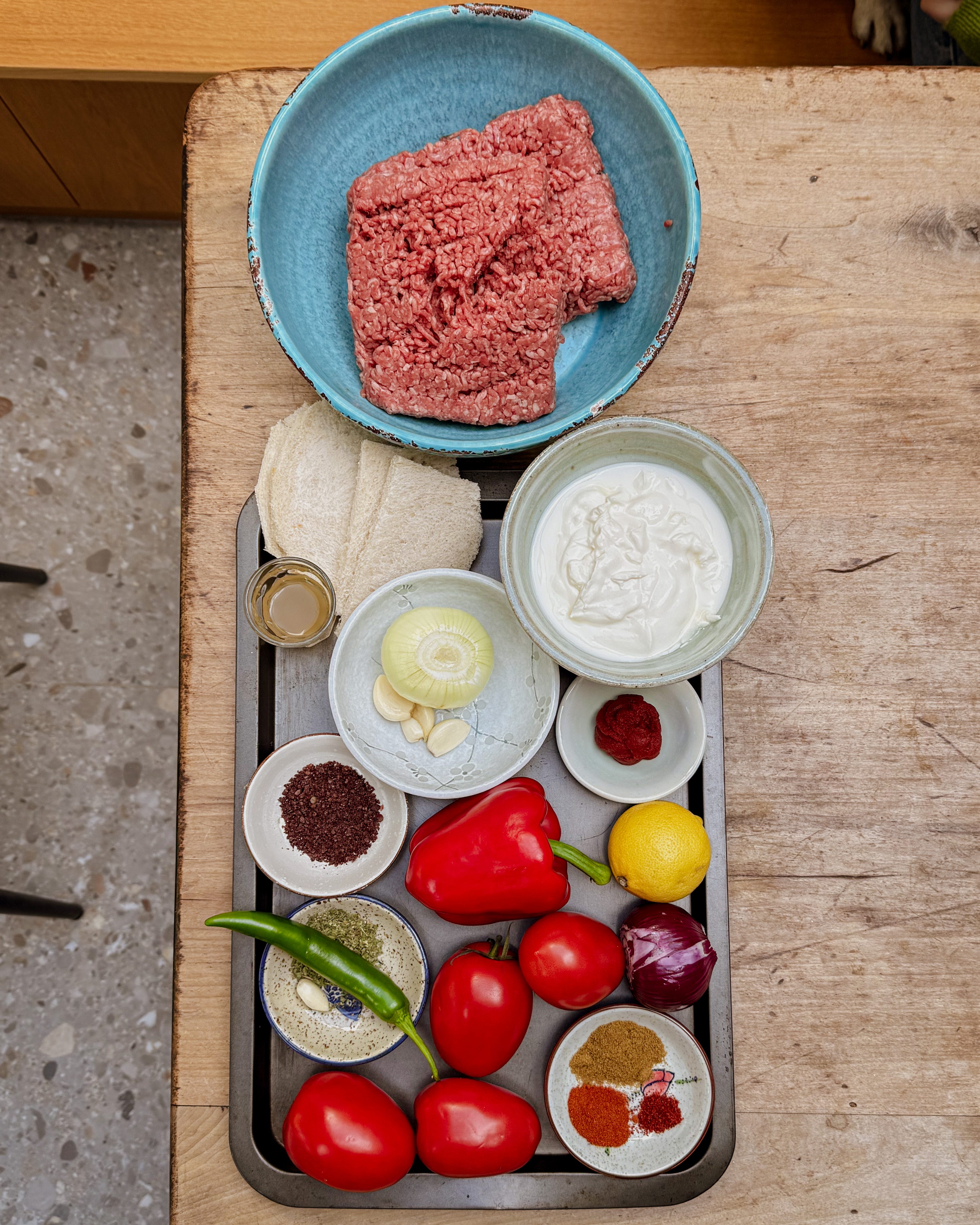
800g minced beef with 5% fat
1 white onion (120g), peeled and roughly chopped
1 red pepper (150g), roughly chopped
4 cloves garlic, crushed
2-3 slices of white bread, crust removed, 60g
1 large plum tomato (140g), coarsely grated
15g fresh parsley, chopped
1½ tbsp tomato paste
1½ tsp ground cumin
1 tsp sweet paprika
¼ tsp Aleppo pepper
2tbsp sunflower oil
salt and black pepper
Yoghurt sauce:
200g Greek yogurt
1 green chilli, deseeded and finally chopped
15–30 ml lemon juice
1 small clove of garlic, crushed
½ tsp dried mint
Salad:
3 mini cucumbers (200g), peeled and finely chopped
½ red onion, thinly sliced
2-3 plum tomatoes (300g), finely chopped
2 tsp sumac
1 tbsp apple cider vinegar
1 tbsp lemon juice
2tbsp olive oil
To serve:
pita bread or large flour tortillas
mint leaves
shatta (store bought or homemade)
Thanks for reading Sami Tamimi - notes from my kitchen! This post is public so feel free to share it.
Preheat the oven to 200°C fan.
Place the bread in a small bowl and add about 70ml cold water and set aside.
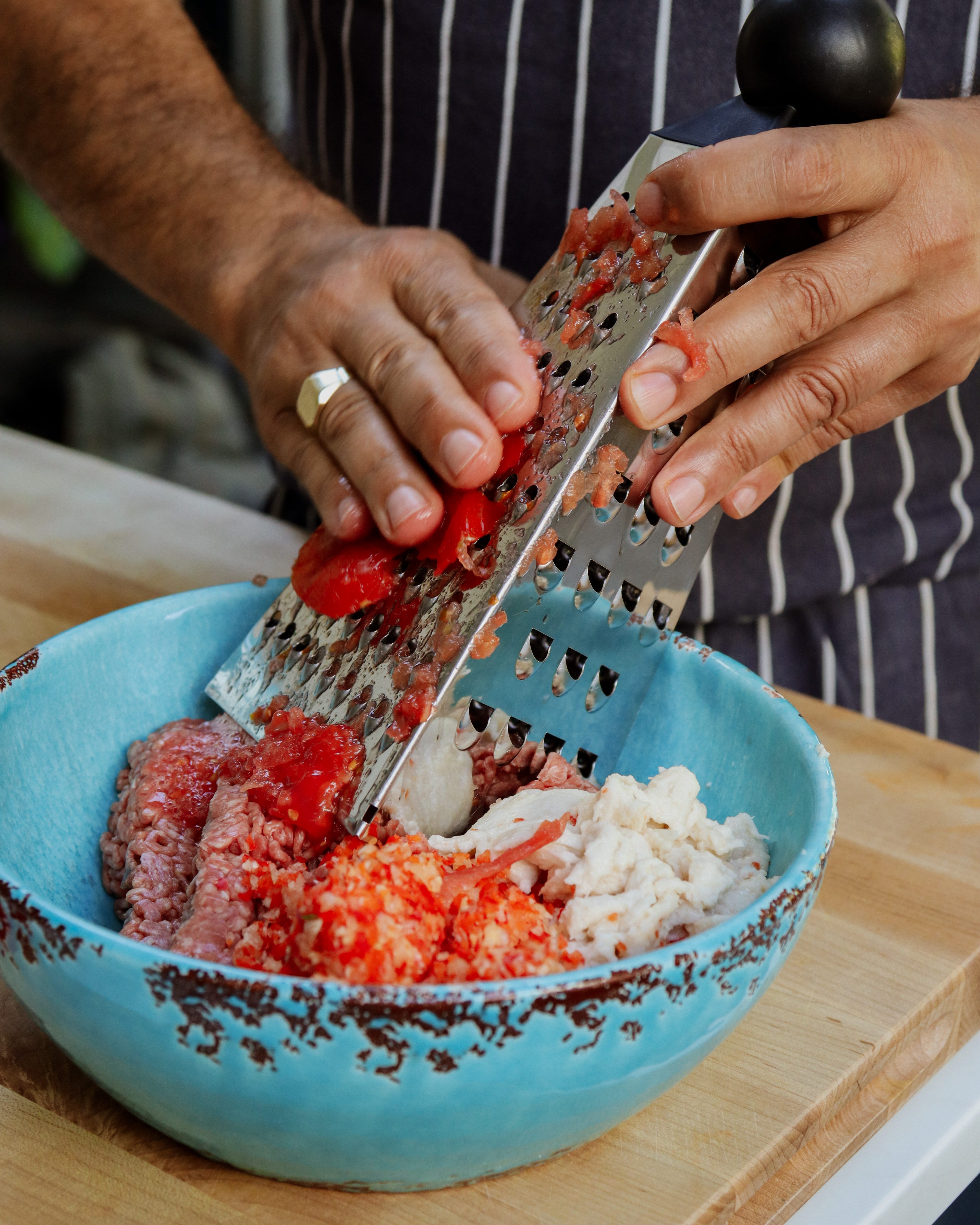
Put the onion, pepper and garlic into a food processor bowl and blitz for 1-2 minutes, until very fine paste. Transfer the mixture into a clean tea towel or a piece of muslin and squeeze the mixture to remove as much liquid as possible. Discard the liquid and place the onion mixture in a large mixing bowl. Do the same with the soaking bread.
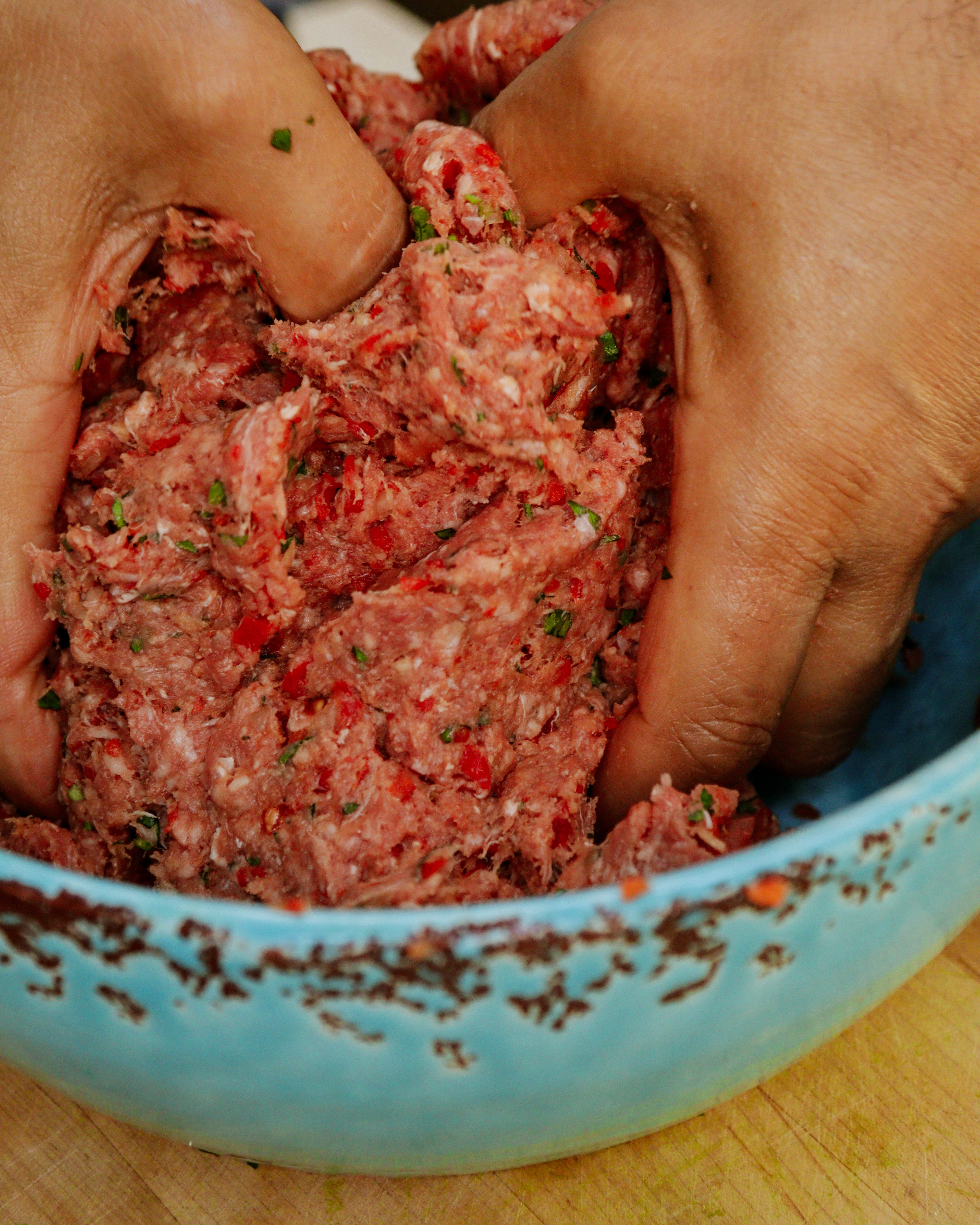
Add the meat, grated tomato, parsley, tomato paste, spices, 1½ teaspoon salt and a good grind of black pepper and mix very well until fully incorporated.
Spread the mixture evenly onto a parchment paper lined oven sheet pan (about 35x25cm) and flatten into a uniform layer. Score into kebab-shaped portions by cutting lines about 3cm wide horizontally or vertically.
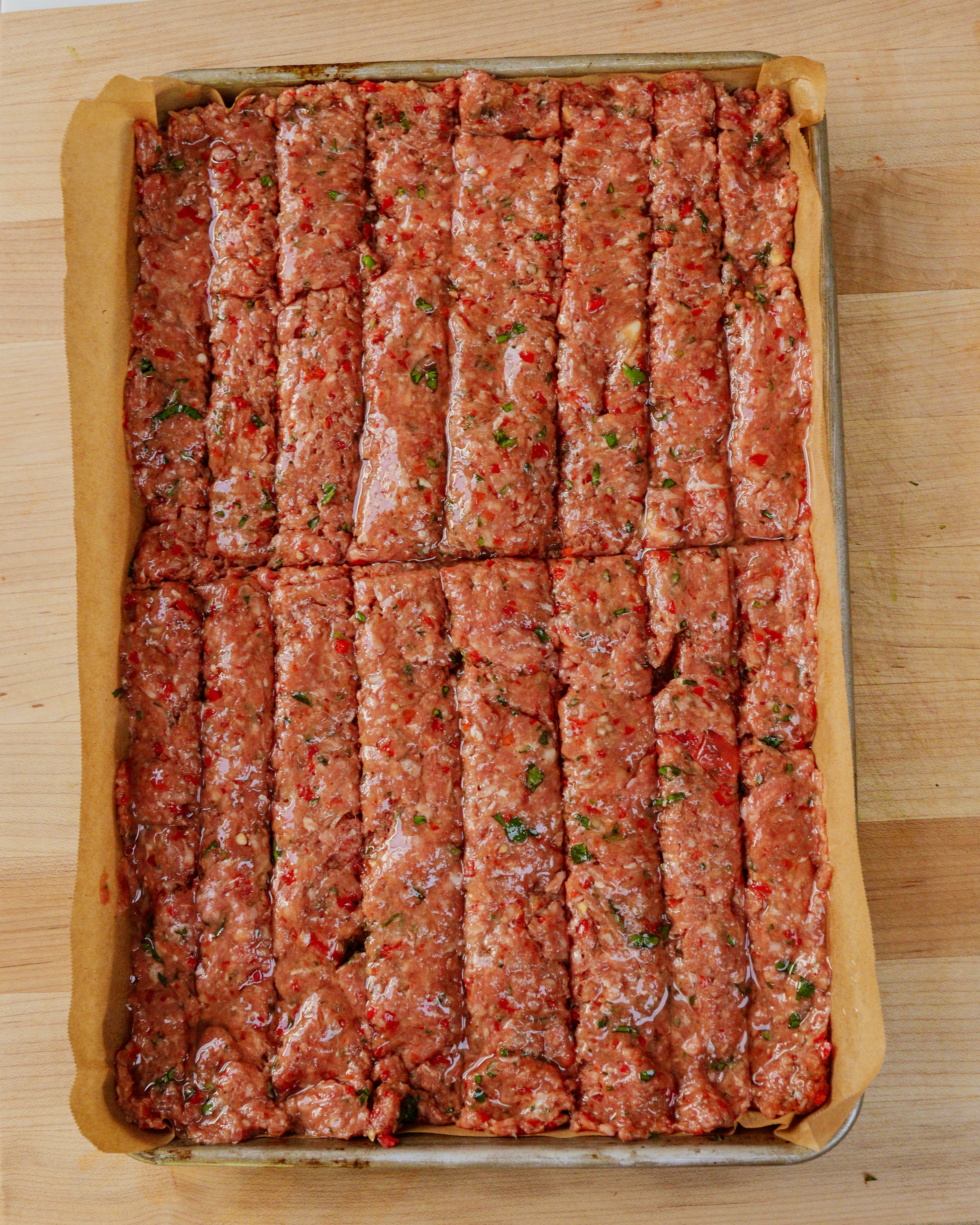
Bake for 10 minutes, then place the sheet under a very hot grill for 5 minutes, until the top is golden-brown.
While the kebab in cooking, put all the ingredients for yoghurt sauce, along with ½ teaspoon salt in a medium bowl and mix well to combine. Set aside.
Remove from the oven, pour off most of excess juices, and cut along the scored lines to separate the kebabs.
For the salad, put the cucumbers, red onion, tomatoes in a medium bowl, then add the rest of the ingredients, along with ½ tsp salt and mix well.
When ready to serve, spread 1 tablespoon of yogurt sauce into a pita pocket add 2–3 kebab pieces, top with salad, mint leaves and shatta, or make a warp if using tortilla
Enjoy,
Sami x
Thanks for reading Sami Tamimi - notes from my kitchen! This post is public so feel free to share it.
No posts
Comments
Nothing yet. Say the first thing.
Sign in to join the conversation.