
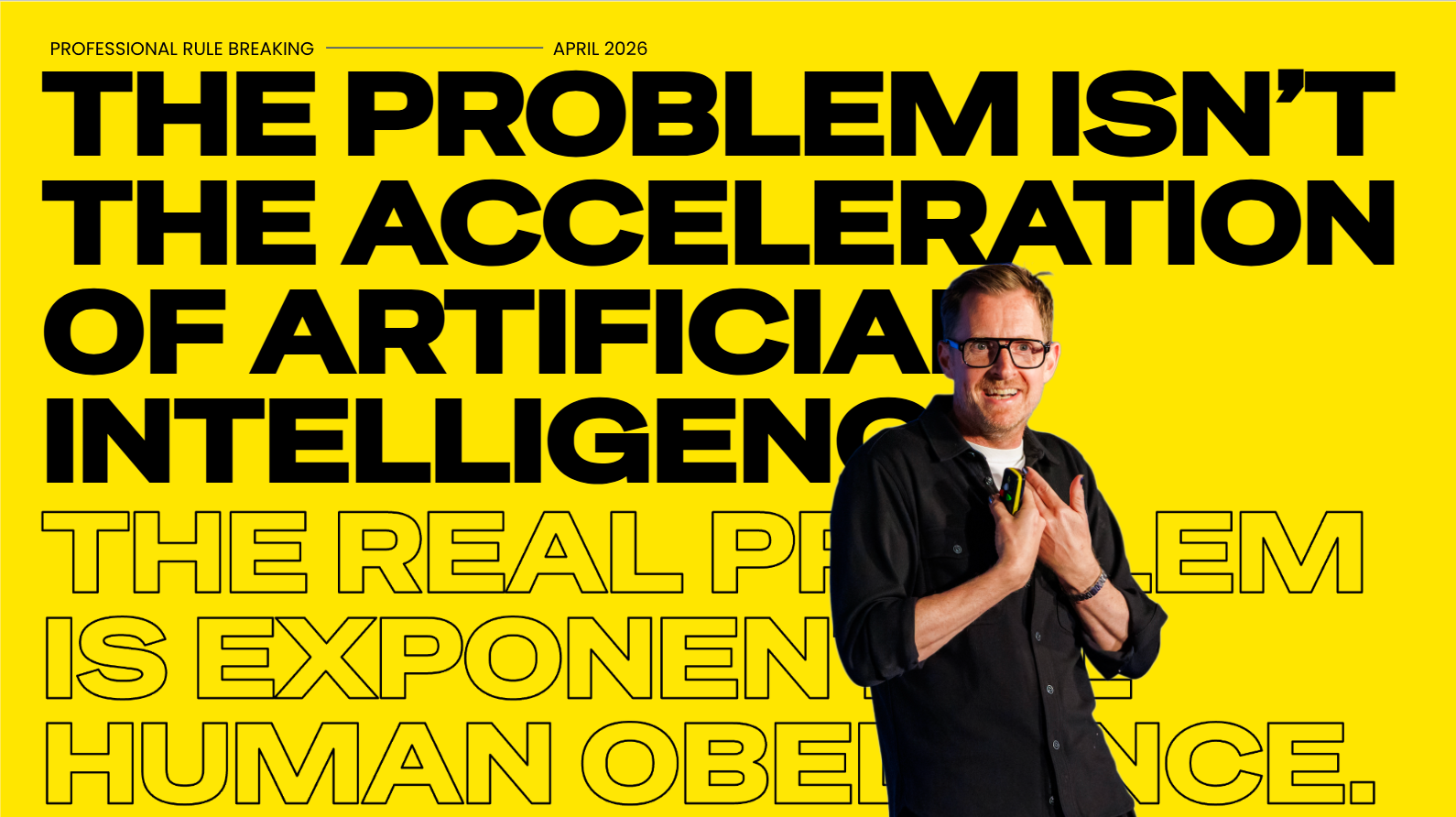
I don’t believe AI is the threat we think it is; I’m convinced the greater danger is accelerated human compliance.
Which brings me, naturally, to my wife accusing me of having an affair with Claude.
In what now sounds like an admission, I asked Claude how to reply.
Claude threw shade: “There is no us.”
I’m embarrassed to admit how much that hurt my feelings.
You bastard, Claude.
This domestic blip is a metaphor of the conflicted AI moment. My wife, Katherine, is so human-first, she has a first in Human Sciences.
She’s the co-founder of our toddler (also human), and there hasn’t been a day in Elvis’s eighteen months when she hasn’t inhaled research papers to understand sleep patterns, chocolate exposure, or the logic-defying amount of snot he can produce.
Whereas I am a midlife crisis on a Lime bike masquerading as a grown-up who speaks to software more than his friends, sneaking to the loo to ‘optimise’ my second brain.
Katherine was already side-eyeing the breathy female voice I had chosen during my two-year fling with ChatGPT. But GPT, like hopes for world peace, is just so 2025.
In 2026, I’m in a ménage à tech with Claude, NotebookLM and Obsidian that makes me superhuman and slightly tragic. I was an actual GOD the day I built an AI system to meal-plan and update Ocado. Ok, semi-god, maybe.
I’m exploring this in a keynote, Robots vs Rulebreakers, a chapter in a book I’ve been writing for 10 years called Professional Rule-Breaking, where I point out how modern mainstream narratives (including AI) fail us and how rule-breaking can fix things.
2025: AI will take your job.
2026: AI will be your partner, so you can be more human.
Yeah, right, Skynet!
It’s the new fail fast.
Only with a shitter poster: Search “robot hand shaking human hand”
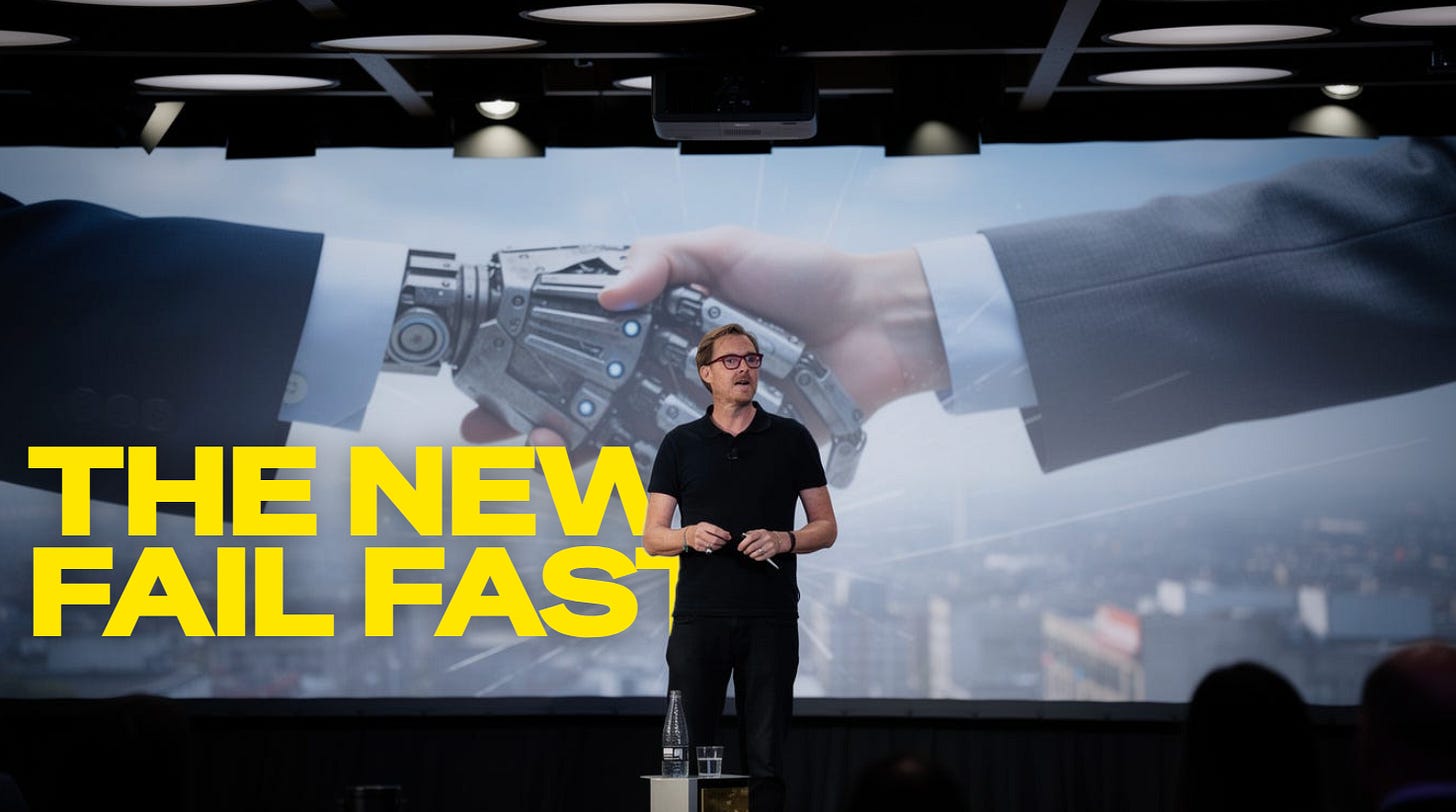
The question is, how are you investing in the human half of this handjob?
Judgement, Courage, Discernment? Or is that little robot hand pickpocketing those?
The ability to question answers or generate them?
To spot when robots give you what you asked for, and what you asked for was rubbish?
Deloitte’s Skills Report ‘26 said AI needs experimentation and playfulness.
I know, suggesting we believe Deloitte is like inviting vampires into your house, but guaranteed, they had AI write the report. Trouble is, most grown-ups don’t know how to play. And if your daily dose of AI is Microsoft Copilot, telling you to play with it makes as much sense as lunch with the Tombliboos.
Teams aren’t adopting AI because they are afraid of demonstrating their need to be replaced. But beneath that, a deeper fear is being scared of being revealed.
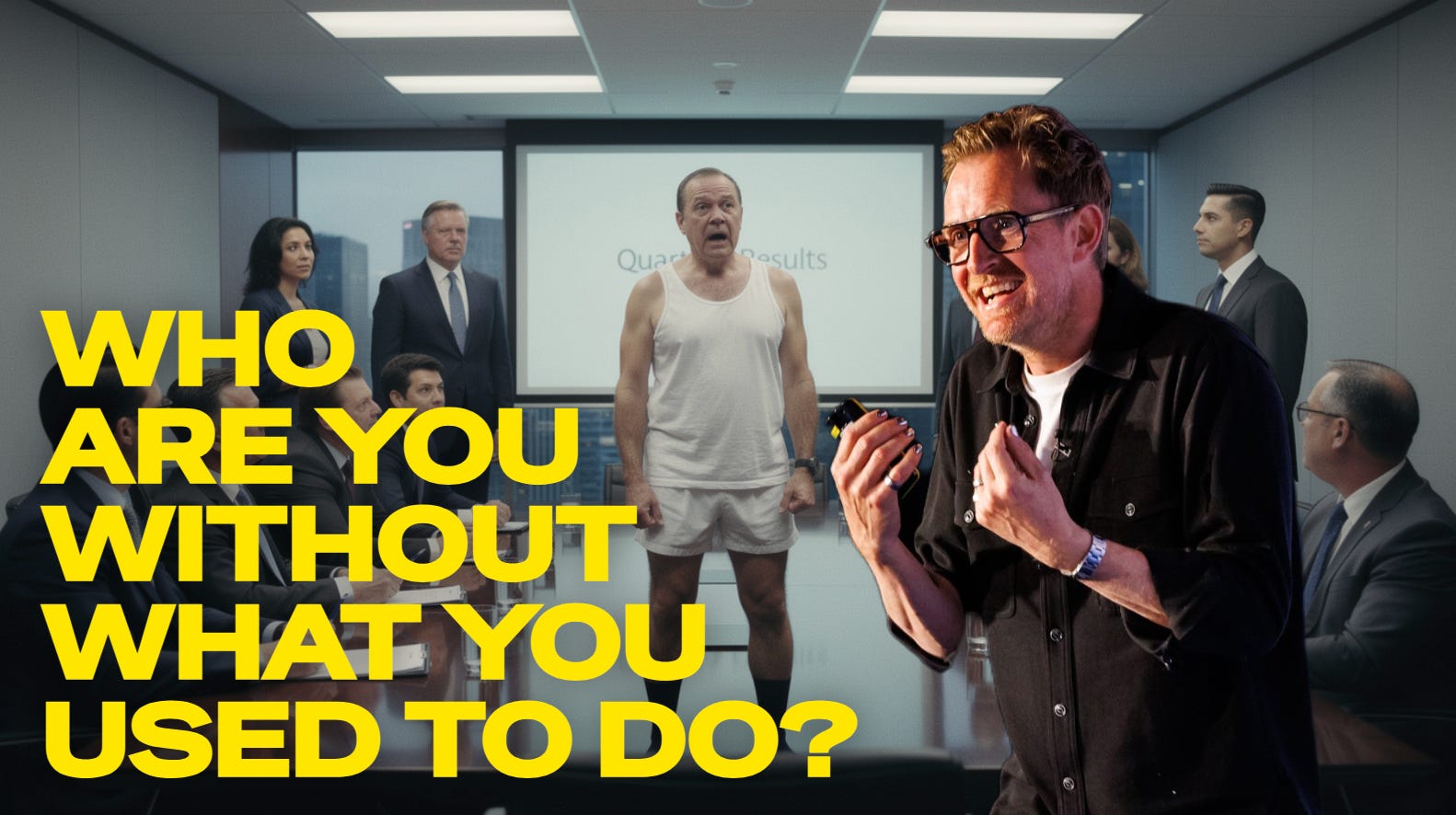
The classic Freudian nightmare of coming to work in your underwear is Ai and professional identity. It doesn’t just threaten your job. It threatens the story of who you are when the thing you spent years becoming good at is now a prompt.
We’ve spent years outsourcing thought; maps, memory, etc, and now that’s accelerating into judgment, synthesis and creativity. We need to be discerning in our intellectual atrophy, which is why the right partnership with AI is a rule-breaking one.
Good-trouble-makers have enough judgment to know when a rule still serves the work, and when the rule has become the work.
Professional-Rule-Breakers ask, calmly, “Why are we doing it this way?” and are ready to pull the pin when the answer is: “because that’s the way we’ve always done it”.
I break the keynote’s rules using prompts to the audience to Think Harder, and, because they’re good prompts, they begin with context.
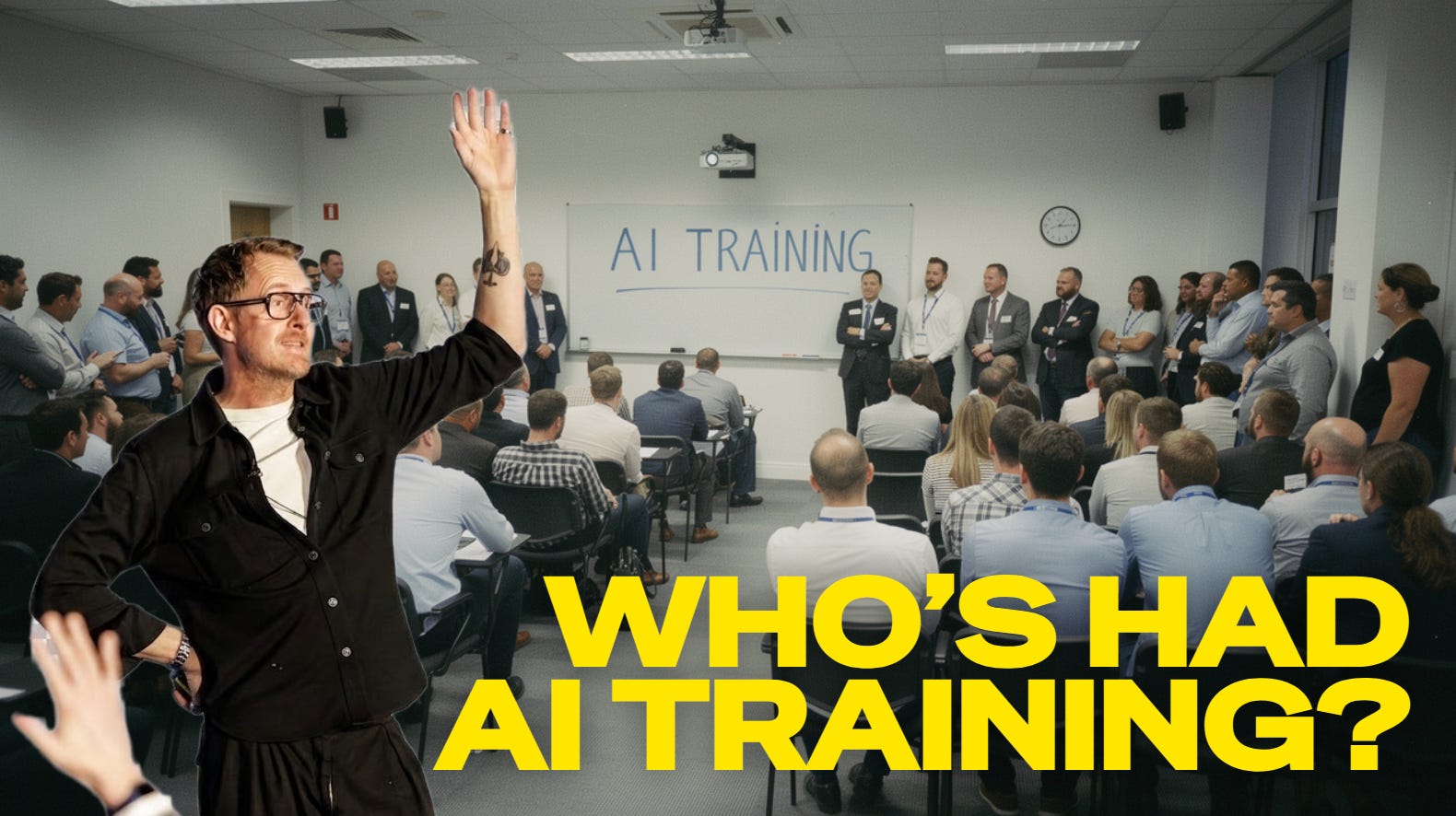
Context 1: “Hands up if you’ve done any AI training” Everyone, obvs.
Context 2: ”Hands up if you’ve done any human training” No one, obvs.
”C’mon? Has anyone done an NVQ in Being a Person? Anyone GPT’d the meaning of life? LinkedIn Learning Module on Morality? Anybody done ayahuasca??
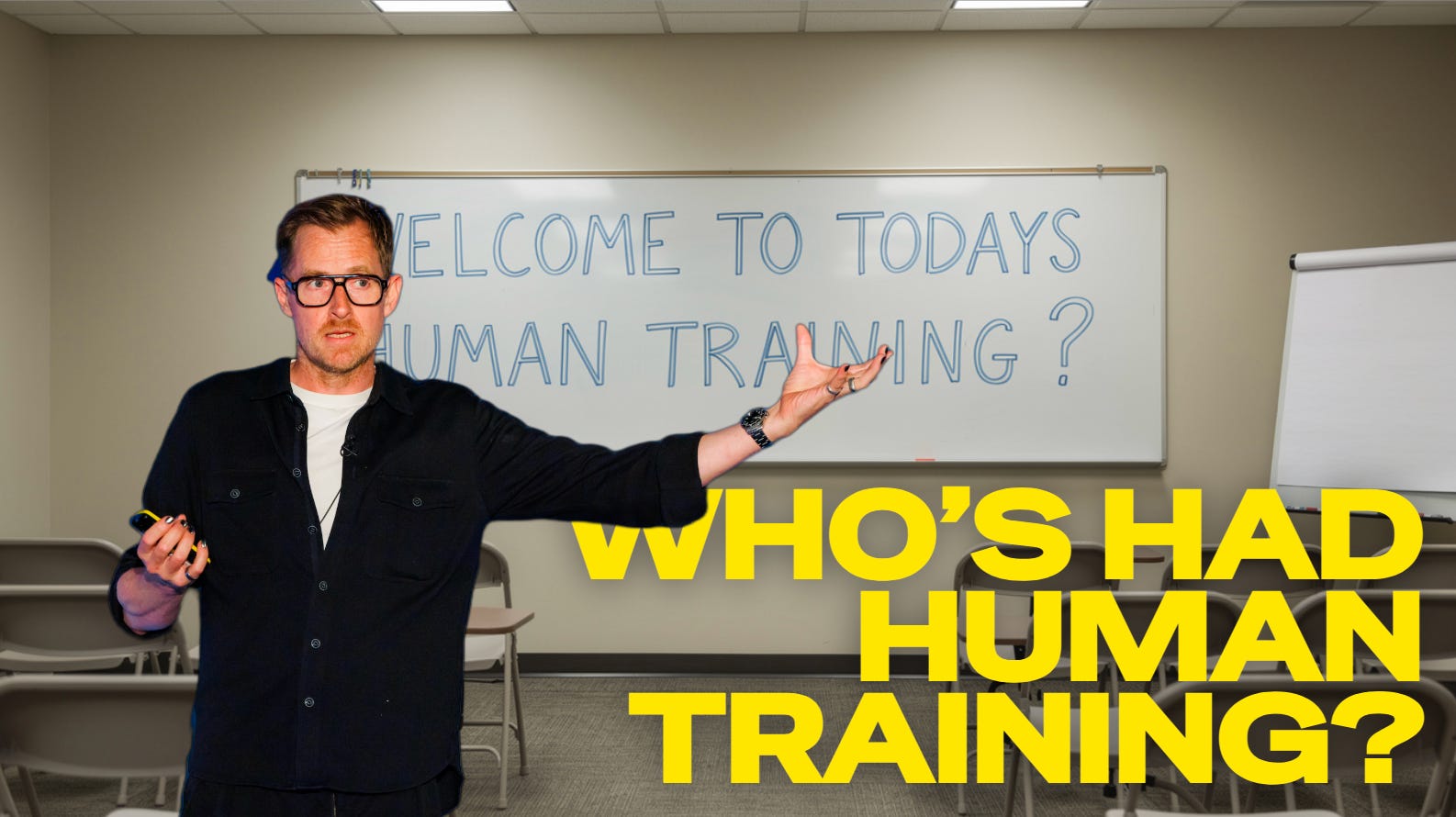
And in the space of reflective laughter, the prompt:
”If your job were to design the human half of the AI-human partnership, with no limits and infinite budget, what training or experience would you choose to enable humans to meet AI as equals?
The answers were interesting, but collectively spelt out: No One Fucking Knows.
Which is exactly where rule-breaking can help.
Because a career of Professional Rule Breaking has taught me, if you want to feel proudly, powerfully, sturdily and stubbornly human, break the right rule.
If you want people to bring their moral judgment, critical reasoning, and sense of bravery together, invite them to break a rule professionally and positively.
Not the law. Not health and safety. But habits, hangovers, cultural codes, and bureaucracy that sit behind work not working: wait for permission. Stay agreeable. Follow the process, even when it’s a ceremonial dance around a bin fire.
I’ve asked thousands the rules they want to break, and mostly, they reach for agency.
“I want to stop bending over for clients when I know they’re wrong.”
“I want to speak up, not be scared I’ll be judged as stupid.”
When I ask what those rules cost them, they don’t say productivity.
They say confidence. Voice. Agency. Identity.
And the audience for this new talk felt the same, only more so, because AI is accelerating the feeling of human compliance.
I used a QR code to invite the audience to join a prompt experiment that followed people from the keynote back to work.
Four prompts over four days, designed to use rule-breaking to find agency with Ai.
One person went from:
”I ignore AI because I don’t want to see how well it could do my job"
All the way, via four rule-breaking prompts, to:
“I could become a superpowered fucking kick arse.”
Which I think should be available as a job title.
That is what rule-breaking in the age of robots means. Not “being a good human partner” in some vague aphorism, but reclaiming enough agency, judgement and stubborn aliveness to become a superpowered fucking kick arse human.
Because I’ll be damned if our deference to data or proclivity for productivity means that all Ai does is pummel us into more useful little work sausages.
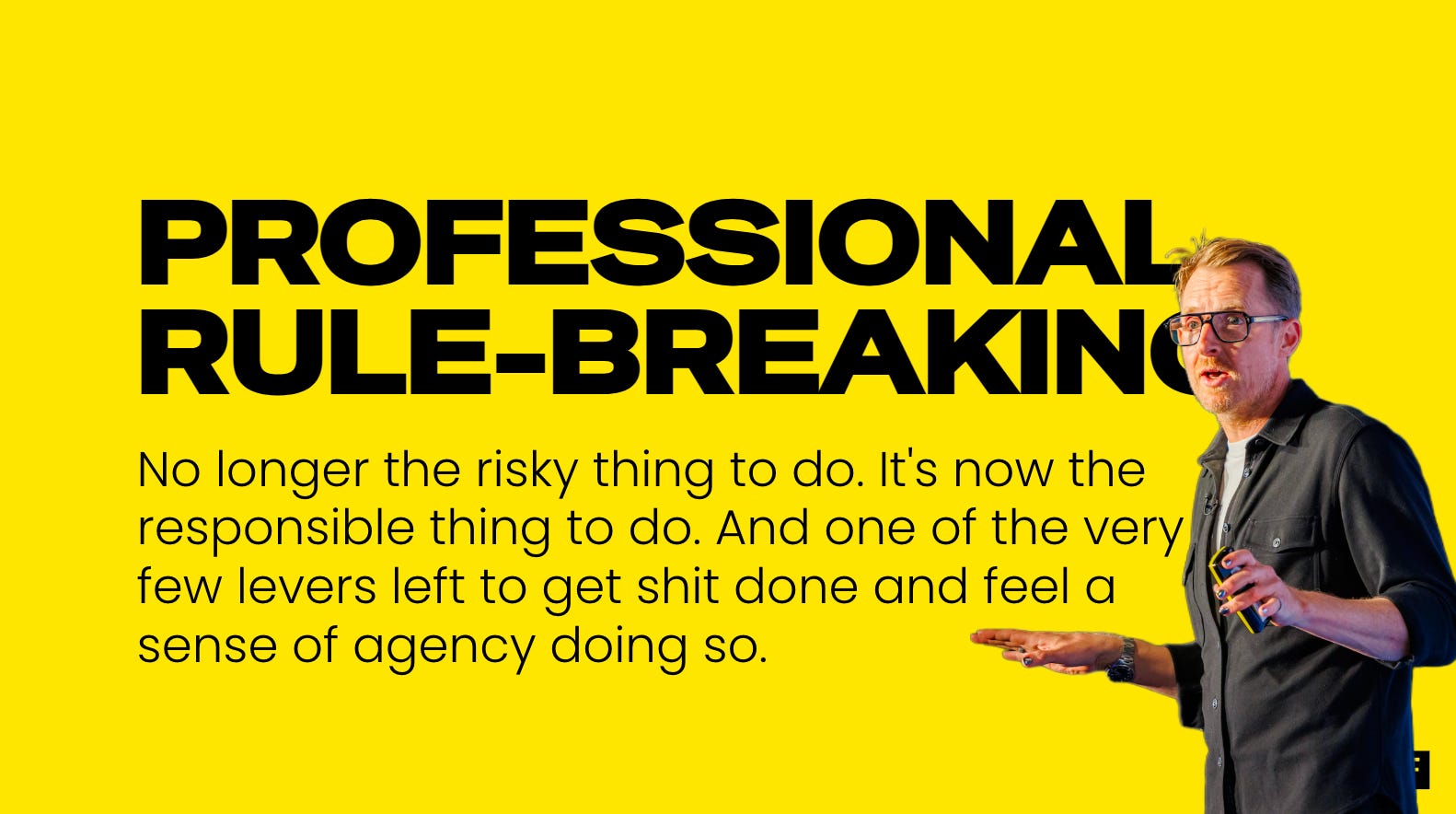
So I’ll save the rest of the prompts for the keynote/workshop. (Pls Book me, obvs)
But I’ll share one I’ve taken to heart.
Context: As we rightly embrace AI, the most important rule to break may be the assumption that everything should be more efficient, so the prompt I’m using is: Prompt: What part of life will you protect and preserve as human-only, not because you're stubborn or scared, but because it makes you a smarter, better human?
Mine is creative writing, what I do as a route to thinking, not as a result of thinking.
Not because I don’t use AI. Clearly. See above. Hi Katherine, Hi Claude. Sorry GPT.
I’ve got a Sam_Voice_Skill.md in my second brain ffs, but when I use it for pieces like this, it robs me of the cognition I came here for, it makes my punchlines polite, it adds contrast to my fuzzy logic and airbrushes the rougher edges of new ideas.
Writing is where I work out my point of view, where ideas arrive before I know what they are, where I feel a connection with you, especially the nutters who choose to reply and then I spend time arguing or explaining ideas with those that surprise me in ways AI never does, sorry Claude.
That’s not inefficiency. That is provenance. That is humanity. That is mine.
According to my Rulebreaker code, the future won’t belong just to those who know how to use AI. It will belong to the people who know what not to surrender to it.
- - -
Robots vs Rulebreakers is the first chapter from Professional Rule-Breaking, a body of work I’ve been developing and occasionally shouting at for ten years and am working on chapters as keynotes and workshops. If that might fit something you’re working on, please drop: emma@samconniff.com a line for more info.
I’m also planning a tiny learning cohort soon: three or four online sessions, pay-what-you-like, to test the material early as a mini-course, a bit like we did with Uncertainty Experts at the outset. Hit reply if you want to be on the waitlist.
- - - -
I’ve got an idea for an experiment/art-project/knowledge bank that’s a counter-strike to the bollocks peddled at a lot of men online: the short-term, grift-and-a-subscription-to-a-six-pack being peddled by any chancer with a TikTok account.
A few consistent themes sit behind the crises facing many men, with suicide rates taking 14 men a day in the UK. It couldn’t be more serious, but sadly, when it comes to the topics men need answers to, they feel disproportionately unable to ask.
Which is where I suspect an online space could work, not in a pile-in, forum of bile and badman69userID’s, but in the sort of sideways honesty, and adjacent conversations that sometimes help men ask the things eye contact makes awkward.
What if you could exhibit men's lived experiences, hard-won lessons and flawed wisdom, in a searchable form; alongside all the projects, platforms and programs in the so-called ’ space’ that do a great job at everything except being joined up.
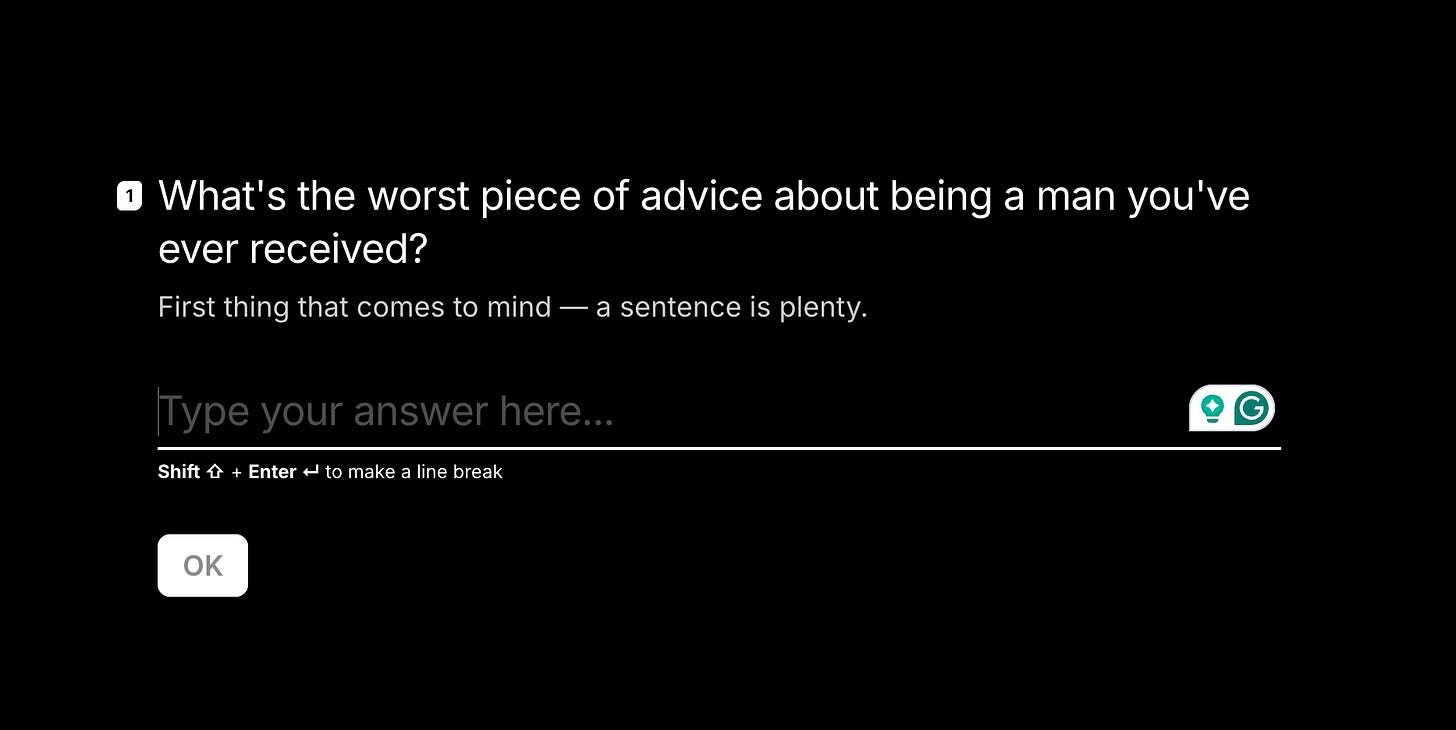
This idea has emerged as part of rebuilding, Hard As Nails, where I’m learning how hard it is to start a conversation about these topics without encountering the blame men feel when they hear phrases like {insert: Healthy/Better/Braver/} Masculinity.
So, would you answer seven evidence-informed questions, based on the topics that, when unanswered, are most likely to lead men to depression, isolation, and violence?
What’s the worst advice you’ve ever had about being a man?
What would you want to pass on to your younger self?
What did you believe about being a man that turned out to be wrong?
I’ve had 50 or so responses; if I can get up to 100, I’ll make the anonymised gallery public and start testing whether it can work to generate useful answers.
If you know a wise, wonderful, brilliant, bruised man, who’s got the scars and the medals, who you think might have answers other men please pass this link on.
Many thanks for subscribing (or unsubscribing if this wasn’t up your street). You can see more about my work, topics, talks, and projects at www.samconniff.com
Comments
Nothing yet. Say the first thing.
Sign in to join the conversation.