World events this morning/month/year do not make me want to dance. But as the news feed rolls on, March rolls around, and my brain seeks distraction, it remembers the deadline for the street party application. My brain loves a bit of administraction.
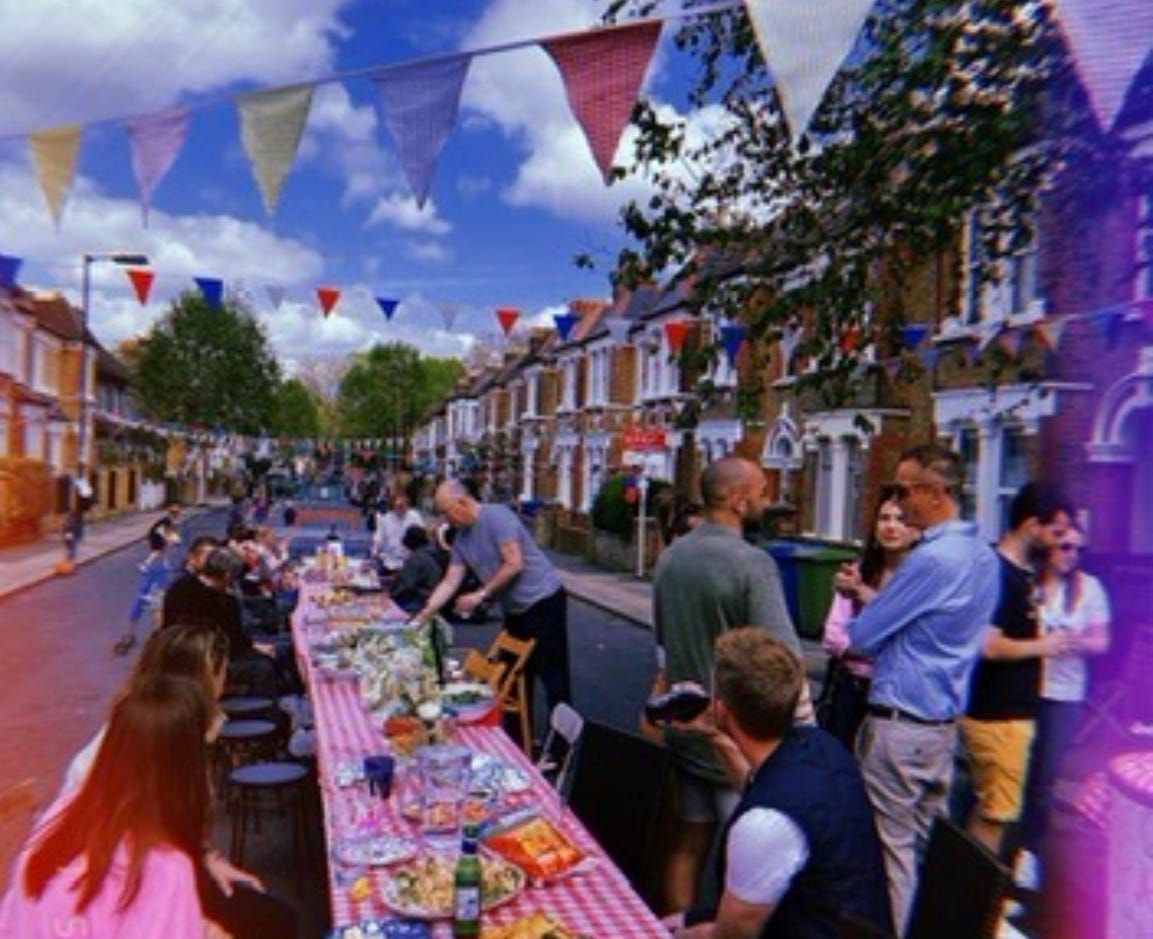
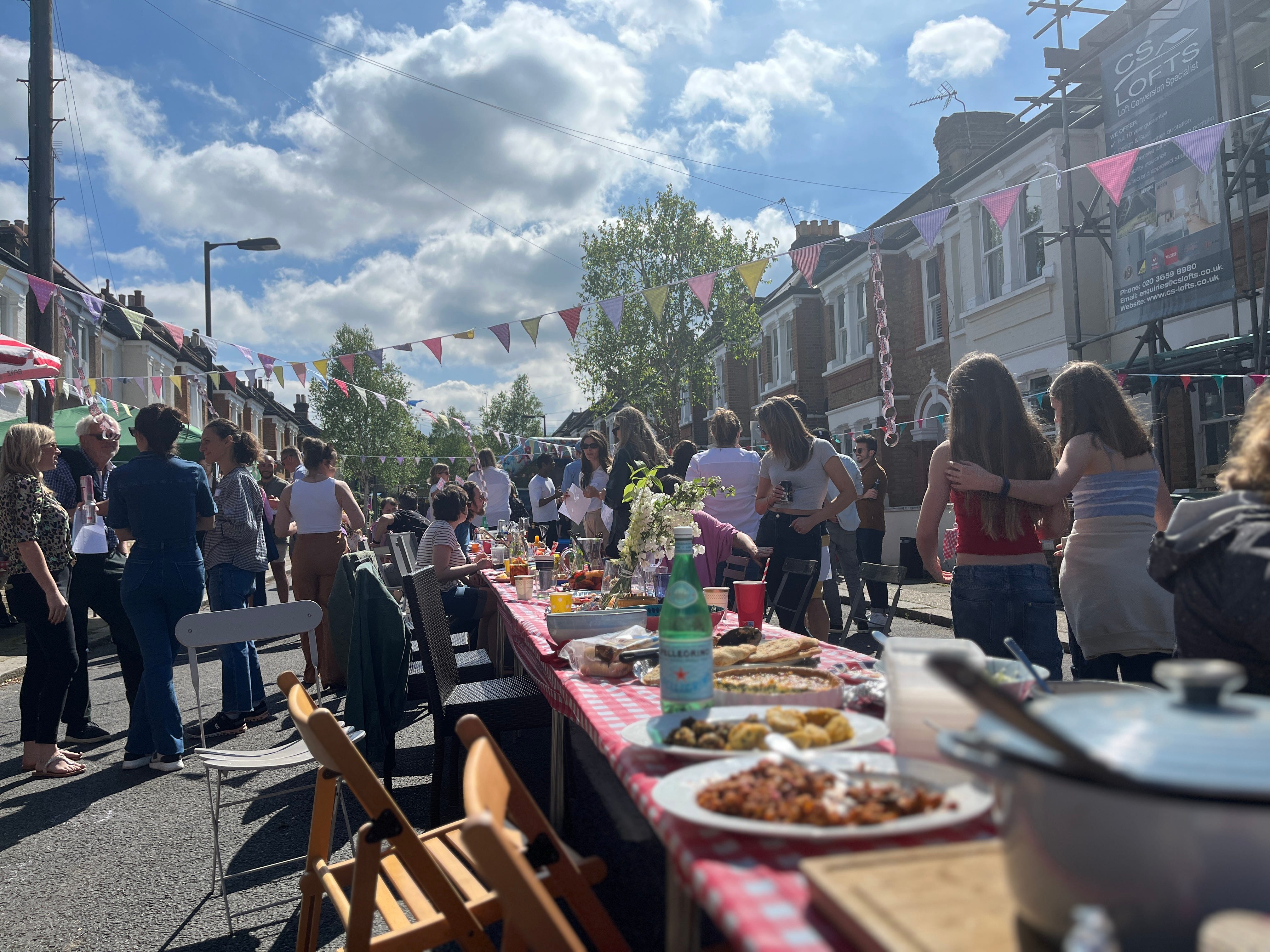
Our street party is not even mildly political. We close the road, open our doors and bake, very competitively. There’s bunting, music, BBQ and bruises from the bouncy castle. Literally, there is swinging, swaying and records playing.
But last year, against a backdrop of escalating conflict, ongoing suffering and existential anxiety, it felt like something more than the usual nice afternoon with the neighbours.
To me, anyway, it felt a little like resistance.
Against a backdrop of chaos, conflict and a climate crisis, I remember the feeling of powerlessness being counterbalanced as my little south London street assembled itself into a mini-republic, breaking bread instead of giving in to mounting dread.
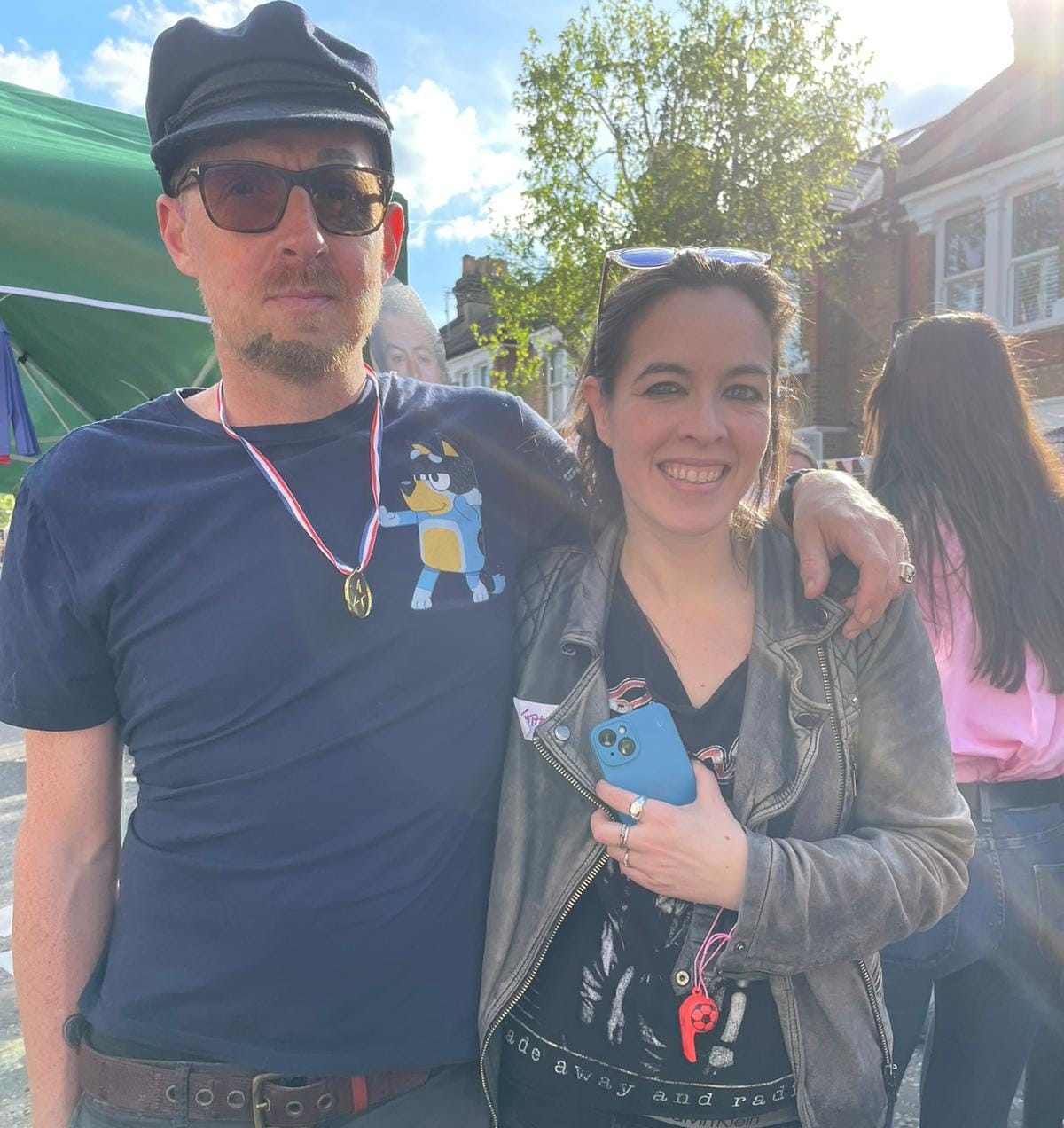
Me thinking Katherine is probably prouder of me than she was of winning the egg-and-spoon race.
A year later, same shit, same fan, now compounded by the revelation that many of the men in charge have been part of a nightmarishly callous club, calling a community into the street to eat, drink and dance together could feel irresponsible.
But it turns out it might be the most responsible thing any of us can do.
Because as well as being a welcome distraction, it serves as a reminder of the answers we know deep down but so often forget: connection is the antidote to fear, and community is the answer to uncertainty.
So whilst the headlines of doom roll on once again and texts telling us to stockpile roll in, waving a sausage roll in the air like you don’t care with your eighty-two-year-old neighbour becomes a gentle act of defiance, as well as humanity.
So, as I woke from my dreams of being called up to go to war (again) and wonder who I can donate to (again) or look up if there’s a peace protest I’d feel safe taking the kids to (again), and have a creeping feeling none of that seems to stack up. (again)
And I realise it’s time to get the street party application in, and that somehow, maybe naively, maybe optimistically, that seems like the sort of mix of embracing diversity, local solidarity and fundamentals of humanity that gives me hope.
I also think my street will do pretty well in a Zombie (or other) apocalypse, and our street party is part of the groundwork for that!
I didn’t grow up on this street. I arrived depressed, divorced, with more baggage than boxes and two daughters in tow, just as my close friends all moved out of London.
But in this street, I found connection. As we slid into Covid, my girls and I made flyers for a street WhatsApp that became a lifeline.
So when I organised a post-lockdown street party, I overcame my usual event anxiety — the fear of no one showing up — by telling the neighbours it was an act of gratitude. Which it was. But if I’m honest, it was also an antidote. Because I, like a lot of midlife men, suffer from loneliness, and do very little about it.
A street party is a brilliant social cheat code. There’s none of the usual awkward atmosphere, and there’s always something to do. You don’t have to worry about small talk when there are balloons to fill and extension leads to find. There’s no worry about people not showing up when the party is literally on their doorstep.
And the sight of your street with no cars and covered in chalk drawings is like a sigh of the soul — as if you’ve gone back to a time when technology destroying humanity was still a movie plot and neighbours knew each other’s names.
They soon will, if you bring some stickers, a pen and some of No 82’s Pão de Queijo’s.
For lunch, all the neighbours brought out a dish to represent their house.
Street Party Squad
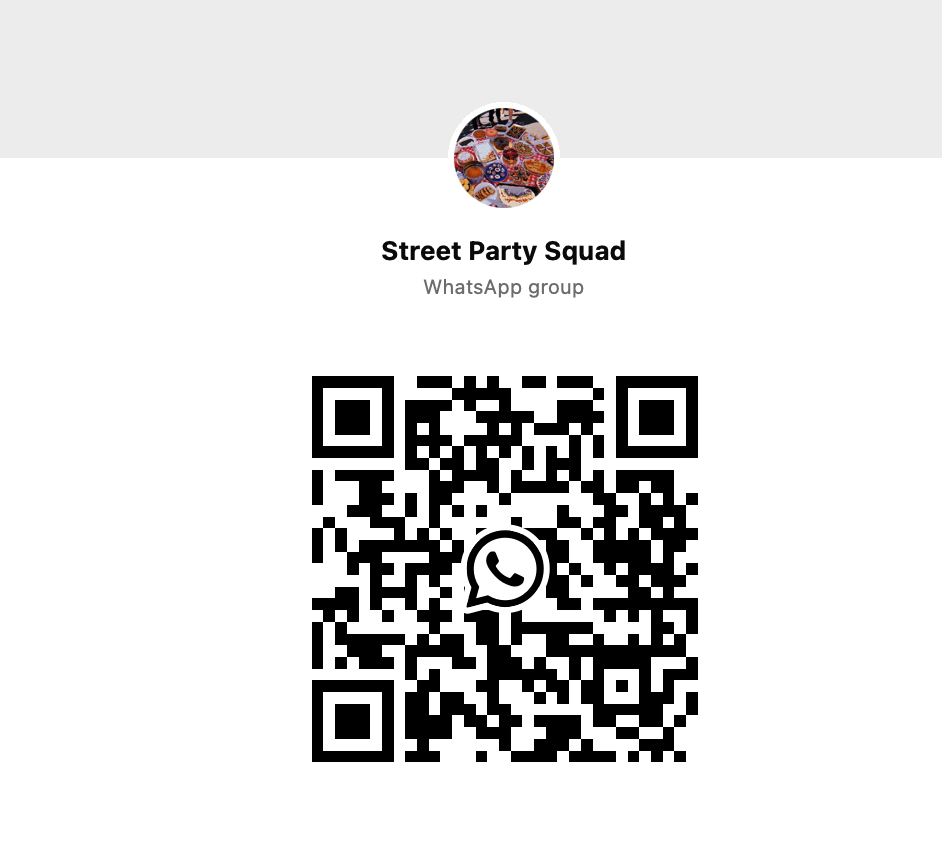
If you’ve woken up wondering how we fix the world, but like me don’t have a buclear de-escalation strategy up your sleeve and a bit of a busy week ahead, I’ve started a WhatsApp group for anyone who also thinks a few more street parties might lead to a more cohesive, resilient and supportive society in good, and bad times. Btw, It’s just me so far.
As my freinds, will tell you. I’m not the chattiest on WhatsApp, but I’ll commit to sharing every step of the street party process as we do it (it’s really not that much) e.g. applying for the licence, boshing out flyers, wrangling neighbours, the lot. It’s all publicly available stuff, but if ten of us do it together, the sense of peaceful, positive, powerful resistance might be all the greater. Gathering. Community. Love. Inclusion. An alternative to the fear on our screens.
Reply to this email with your name and number and I’ll add you, or use this link: https://chat.whatsapp.com/CO0AOPH7TlxJ7SArpdcBA8?mode=gi_t if you can handle yet another WhatsApp group in your life. So far it’s just me, but my street party mates will join and pretty soon it’ll be clear how if we can do it, ANYONE can.
I’m not the first person to suggest that the future lies in community, or that as global things collapse, we’ll depend more on local resources. And I’m not the only one saying that if you want to build local networks, deepen social bonds, and quietly discover which of your neighbours has apocalypse skills, then a party’s a decent place to start.
The Big Lunch has helped organise events including millions of people. Their data shows participants felt less lonely and had a stronger sense of belonging as a result. The majority of these events brought together different generations and cultures; often people who’d never spoken before.
But it goes deeper than feeling good.
After the 1995 Chicago heatwave, 700 people died. When researchers studied who survived, it wasn’t the wealthiest communities. It wasn’t the ones who could afford to stockpile, or even the ones who lived on the nicest streets. Some of the best survival rates were in the most notorious neighbourhoods. The difference that saved lives was connection. People checked in. Knocked on doors. Shared fans and fridges.
Today, those same temperatures are becoming average in cities around the world. Nine of the ten hottest years in recorded history have occurred in the last decade, and the next decade is expected to be worse. But if heatwaves aren’t what’s keeping you awake, substitute whatever is; from war to weather, from favelas to townships to Blitz Spirit London, the evidence is consistent: no matter the shitshow, community is the response.
A street party ticks every box for building community resilience, strengthening local organising capacity, and giving grown-ups an excuse to play games in the street.
If you want to do something practical, powerful and positive about that nagging sense of apocalypse; if you want to feel connected, united, backed up and back together again; then break bread with your neighbours. Throw a street party.
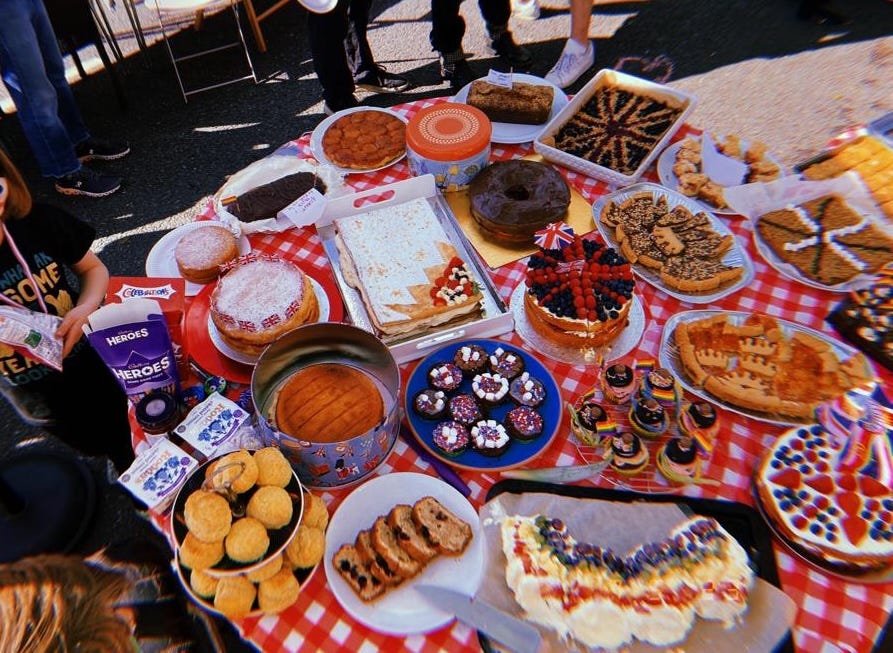
The cake-baking competition is known to get quite competitive.
7. Apply for a licence
Google “[Your Council Name] + Street Party Application.” You’ll need names and contact details for three neighbours (not just you), a proposed date, and the stretch of road you want to close. Planning for May or June? Apply in February or March. Planning for September? Apply by May or June.
6. Drop the first flyer
Once you’ve applied, print the notification PDF from the council and pop it through doors. This isn’t the fun flyer — it’s the official heads-up that a licence has been applied for. It matters because it reassures anxious or introverted neighbours that they’re included, not ambushed.
5. Form a “committee”
Scary word. Not a scary thing. This is basically an excuse to go to the pub with three to five neighbours and split a few fun jobs: food table, bouncy castle, face painting, who’s got the gazebo, who owns the loudest Bluetooth speaker. We did it all in one pint.
4. Posters and the Aggy Car Flyer
Some people need time to mentally prepare for a social interaction outside their bins. Posters help. Put them up a few weeks before. Then 48 to 72 hours before the party, drop a note asking people to move their cars off the road.
3. Insurance
Not a legal requirement, but we always get it. Costs under £100. Covers up to £5 million. Helps everyone feel safer — especially if you’ve chipped in to hire an inflatable assualt course and then start doing timed runs once everyone has had a bit to drink. Not naming any names here.
2. Setup squad
Barriers go up around 9am. Someone will have forgotten to move their car — go knock. Then: tables appear, bunting flutters, chairs stack. This part is organiser heaven. A low-stakes morning of joyful faffery.
1. Icebreakers and edible diplomacy
We’ve done door-number treasure hunts, bingo with fun facts, and name stickers with house numbers. But the best one? Ask everyone to bring a dish that represents their household. You’ll end up with pierogi, samosas, falafel, fish fingers, tiramisu, plantains and Victoria sponge all on the same table. Which is kind of the point.
0. The tidy-up afterparty
Bin bags. Leftover cake. Slightly warm beer. The dozen people who hang around to help are usually the best kind of people. And somehow, this scrappy little wind-down ends up being the most magical part of all — the front garden afterparty that eventually gets told to go to bed.
And then all you have to do is take pictures at the moments the sun comes out.
If this struck a chord — if that sense of community, belonging and neighbour-ness spoke to you — but you also know you’ll probably never get round to it alone, or never get over the awkwardness of getting started, then don’t do it alone.
I’ve started a WhatsApp group called Street Party Squad. Right now it’s just me. But I’ll be updating it in real time as I go through every step — applying for the licence, designing the flyers, roping in the neighbours, booking the bouncy castle, all of it.
It’s all publicly available information. But if ten of us do this together, something shifts. The act of gathering your street becomes part of something bigger — a quiet, joyful, powerful act of resistance. Community instead of fear. Connection instead of doom. Love instead of whatever’s on our screens.
Ours is in June, or May, depends, but you can discuss that with your street. It’s easier than you think. Let’s be street party squad buddies.
🏴☠️ Pirate of the Month: Tim Smith
This month’s pirate isn’t technically new. He hasn’t launched anything shiny in the last 30 days. He hasn’t rebranded. He hasn’t pivoted.
He’s just been consistently, gloriously right for about three decades.
Tim Smith — founder of the Eden Project, environmental entrepreneur, social enterprise agitator, and chief instigator behind The Big Lunch — is one of those rare troublemakers who makes change stick. Not loud-for-the-sake-of-it disruption. The patient, slightly argumentative, occasionally infuriating kind that rewires culture over time.
Full disclosure: I’ve always found Tim a bit… challenging. He once gave me a properly hard time. Publicly. I’m not sure I ever fully forgave him.
And yet. When we finally sat down together on the Be More Pirate podcast, I was ridiculously proud to be there. And, if I’m honest, slightly in love with him by the end of it.
Because Tim does something most of us avoid. He pushes back. On lazy questions. On convenient narratives. On the idea that good intentions are enough. And, he pushes back quite hard, which is fun for a podcast guest to do.
In our conversation, he gently dismantled me and Alex more than once. Asked harder questions than we asked him. Refused easy applause. And reminded us that if you want long-term change, you have to design for it. Relentlessly.
The Big Lunch — his nationwide invitation for neighbours to eat together — wasn’t a “nice idea.” It was infrastructure. A slow-build social technology for connection. A deliberate intervention against isolation, fragmentation and fear.
Which feels… timely.
If the world currently feels like it’s defending a door while everything else burns, Tim’s work is a reminder that sometimes the most radical move is to lay out a trestle table on the pavement and share a sausage roll.
He understands — far better than I do — the compound effect of neighbours who know each other’s names.
The economic benefits. The health benefits. The resilience benefits. The simple but profound neurological shift from stranger to ally.
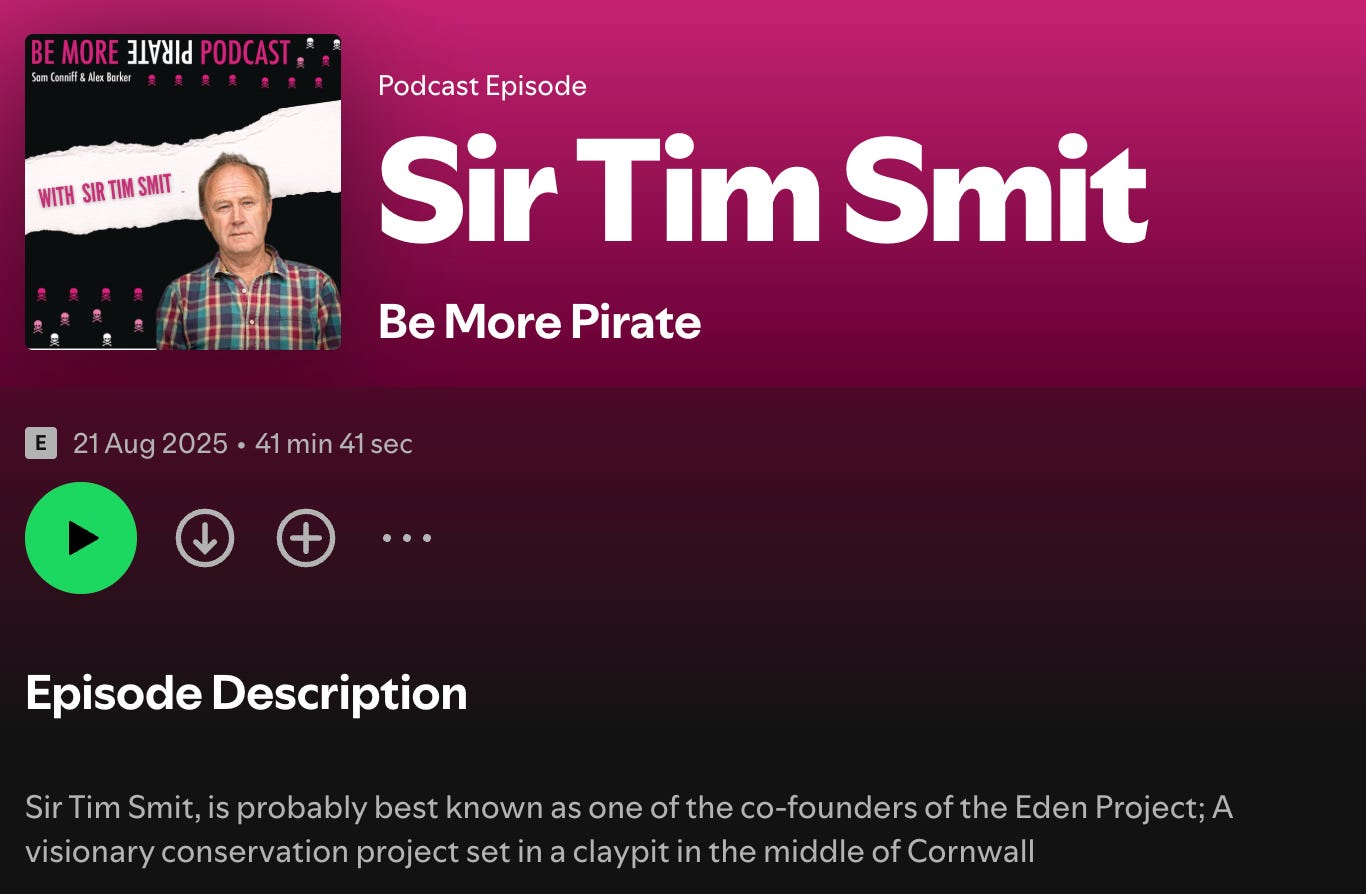
So if you’re reading the above and still umming and ahhing about joining our little street party uprising, go and listen to Tim here.
He’ll give you something more robust than my enthusiasm.
Something tested. Something argued through. Something that has already moved millions of people into the streets for the right reasons.
Good trouble. Long-term trouble.
Many thanks for subscribing (or unsubscribing if this wasn’t up your street) you can see more about my work, topics, talks, and future and past projects (and book me for any upcoming events) all at www.samconniff.com

Comments
Nothing yet. Say the first thing.
Sign in to join the conversation.