
We already have reams of reliable data, so we looked for the unusual.
We asked about the threat of aliens and far-right extremism. We asked about coping strategies, from building bunkers to learning AI.
We’ve written a grown-up press release, embargoed until tomorrow, but linked below for you lovely lot to take a peek, and here’s the behind-the-scenes look at the data.
Because buried underneath the book-based headlines we hope to see, is a more personal portrait of a nation quietly screaming into a cup of tea.
When asked the best way to deal with uncertainty, the second most common response wasn’t working out, cold-water plunges, breathwork, or even doomscrolling.
It was the pub.
Which is both perfectly human and scientifically solid. Because people didn’t say “booze or getting drunk”, they specified the place. The pub is about people.
It’s a way of saying: Sometimes when you don’t have any answers, the best thing to do is be with other people, who probably also don’t have many answers. Aka The Pub.,
The uncertainty of 2026, with all its climate crisis and extremeism, war and endless AI is confronting. But the pub is comforting.
We’re told (repeatedly) AI will transform decision-making, improve everything, whilst destroying everything and eliminate uncertainty.
Britain responded: Cool. Anyway. Fancy a pint?
Which appears to be the most accurate human feedback loop imaginable.
AI says, “I can model every conceivable future.”
Britain says, “Sure, but will Dave be there?”
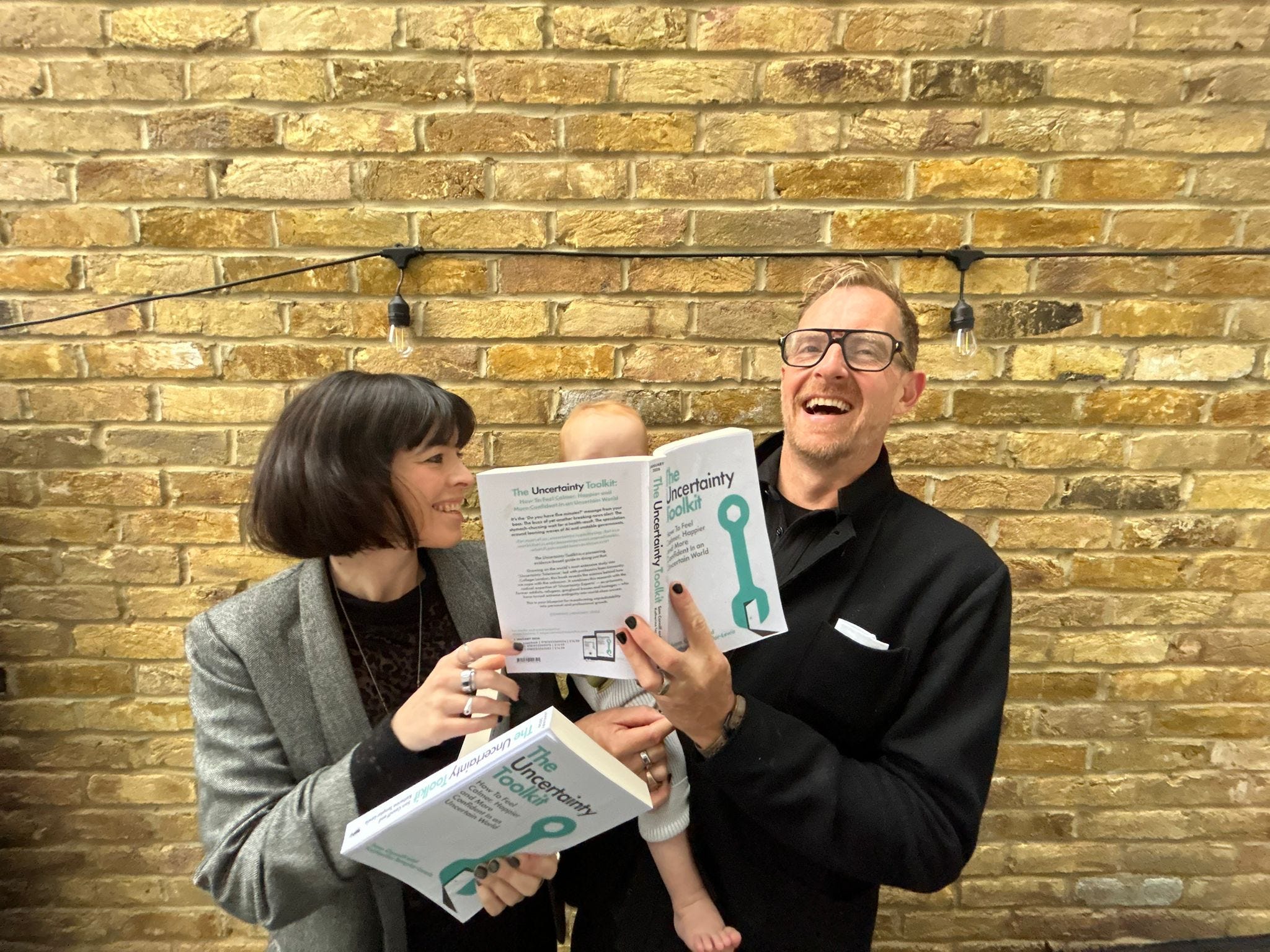
Promotional Message: We conducted this survey because our book, The Uncertainty Toolkit, launches on January 1st. Yes, an objectively terrible launch date.
We’ll link to the press release below, but more importantly, we’re asking for help.
If you know journalists, editors, podcast hosts, platforms, or people who enjoy going live and discussing uncertainty, decision-making, creativity, fear, AI, or the science behind it all, we’d love to be introduced. Please hit reply or share the link below.
(Nb; for K and me, asking for help is our purest state of uncertainty. I’m clearly trying to hide it in a broader piece of writing, but here goes, smoking my own pipe)
Here’s where the data gets more personal, because given the option, the one thing worse than war, extremism and the cost of living…
Waiting for reassurance, especially if that involves someone you care about.
Climate collapse in your area is terrifying, but still feels abstract.
Extremism in your town is alarming, but distant.
What really spikes anxiety, above even existential threats? The top three?
At 3, A loved one is not calling you back.
At 2: Waiting for medical results, for you or a family member.
And, at number 1… (dun, dun, dunnnnn)
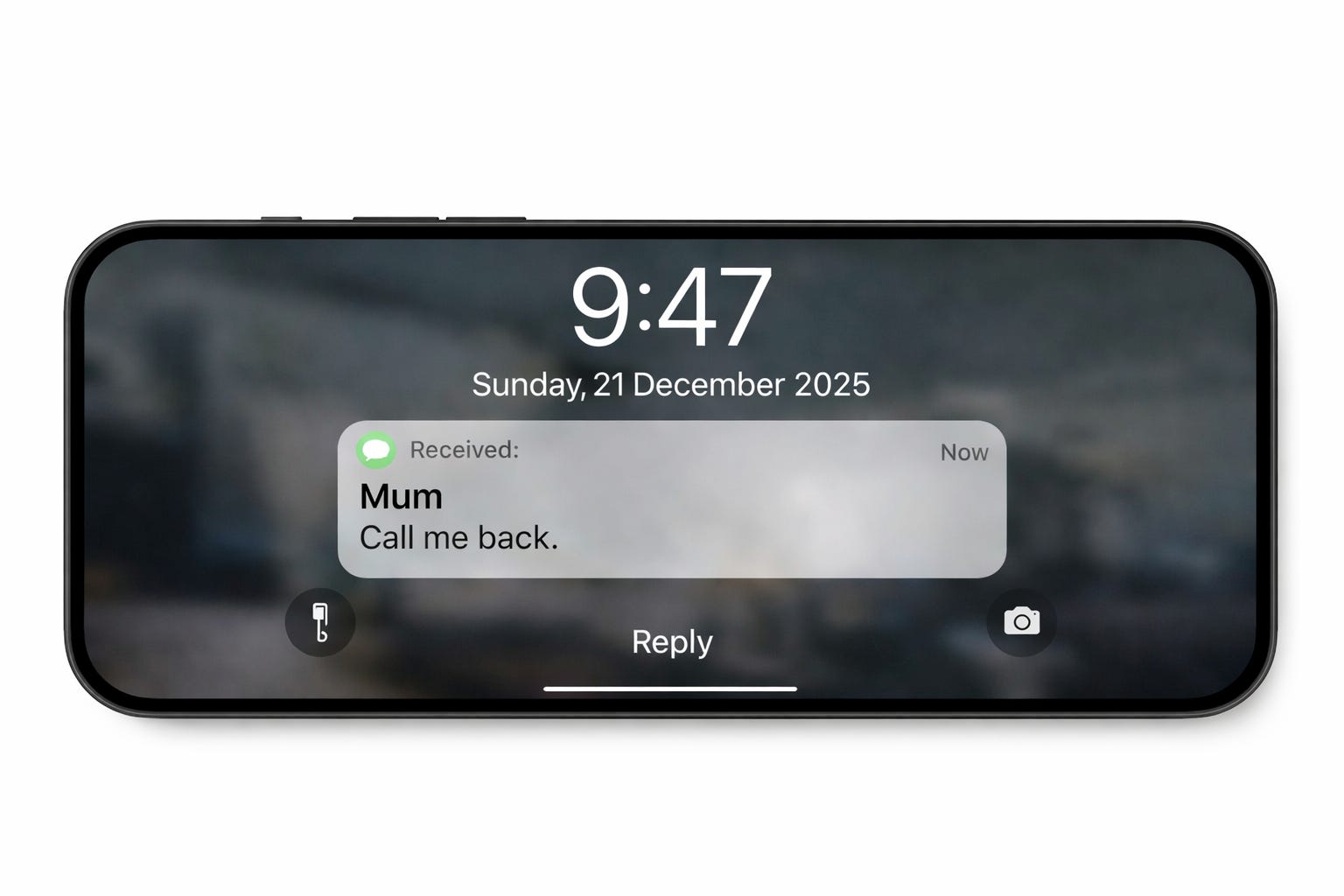
Receiving a message that says ‘call me back’. Ouch.
On one end of the street: fascists marching.
On the other hand, flood water is creeping towards your front door.
And still, the thing that sends the nervous system into freefall is a text that says “call me back”.
That’s funny, and also completely devastating. Because “call me back” isn’t information. It’s a vacuum.
Your brain immediately fills the Uncertainty Gap with worst-case scenarios. This is catastrophising at an Olympic level.
But here’s the bit I can’t stop thinking about. Consider the person sending the message. Who sends “call me back” without knowing precisely what they’re doing?
“Call me back” isn’t a message. It’s an emotional grenade with the pin left deliberately ambiguous. Which tells us something important.
We don’t fear uncertainty in general as much as we fear uncertainty inside relationships. and that’s not all bad, because relationships hold the ultimate answer.
When we asked who’s your go to, in a moment of not knowing, on the first pass, it looks like the interminable announcements about Ai might hold weight,
More people opted for a combination of ChatGPT, Google, and Social Media as a reliable source of wisdom than they did for their parents.
Sorry, mum and dad! All that living, all that worrying, and still we’d take an algorithm primed for loneliness, division and maximising sales, over you. Love you anyway.
But, all is not lost on the last front of being a human, because the one vote that beat all technology as a confidant to examine the unknown, was our primary partners.
Spouses, partners or other halves, by a lot more than half (64.6% to be exact) whre the first port of call, when faced with a difficult decision in the unknown.
And even more comforting (and scientifically accurate) than that, when asked what the main source of comfort facing uncertainty would be, the 10x answer was:
”A strong support system of friends and family”, above plans, maintaining a sense of humour, adaptability and even the option of a nuclear bunker.
Another pattern emerged quietly but consistently, and in line with all the research that’s in the book.
Given the clear choice, People would rather make a clear but bad decision than sit in uncertainty. Not because they’re reckless.
But because at it’s core, uncertainty threatens identity. People fear that indecision appears to others as incompetence, or that waiting looks like weakness.
We gave people the same choice we’ve asked thousands of teams around the world: IN a moment of uncertainty, would you prefer to be seen as decisive or indecisive?
We attach to that the clear choice: that being decisive leads to a negative outcome, whilst indecision leads to a positive outcome.
Here, as the book's research suggests, more than 60% of people choose the negative outcome and its costs to others to avoid incurring costs to themselves.
Which explains much about life, work, and most meetings.
This survey wasn’t meant to be funny. But humour often leaks out when people are telling the truth by accident.
The data show no lack of resilience or courage; we know from creating the book that no one has overcome the adversity of uncertainty.
It shows a country desperate for places where uncertainty doesn’t need to be avoided. Where not knowing is allowed. Where panic can be shared, or at least faced together.
Sometimes that’s the pub, sometimes it’s a hug, sometimes it’s picking up the phone (instead of ever messaging someone to ‘call you back’.
What’s clear, whatever way you look at it, through the four years of research and thousands of people that led to this book, or the survey commissioned to promote it:
The answer to uncertainty isn’t certainty. It’s company, it’s community, and it’s conversation.
And if that happens in a pub, then all the better. Here’s hoping the holidays ahead offer you the chance for a decent conversation and a deep sense of connection.
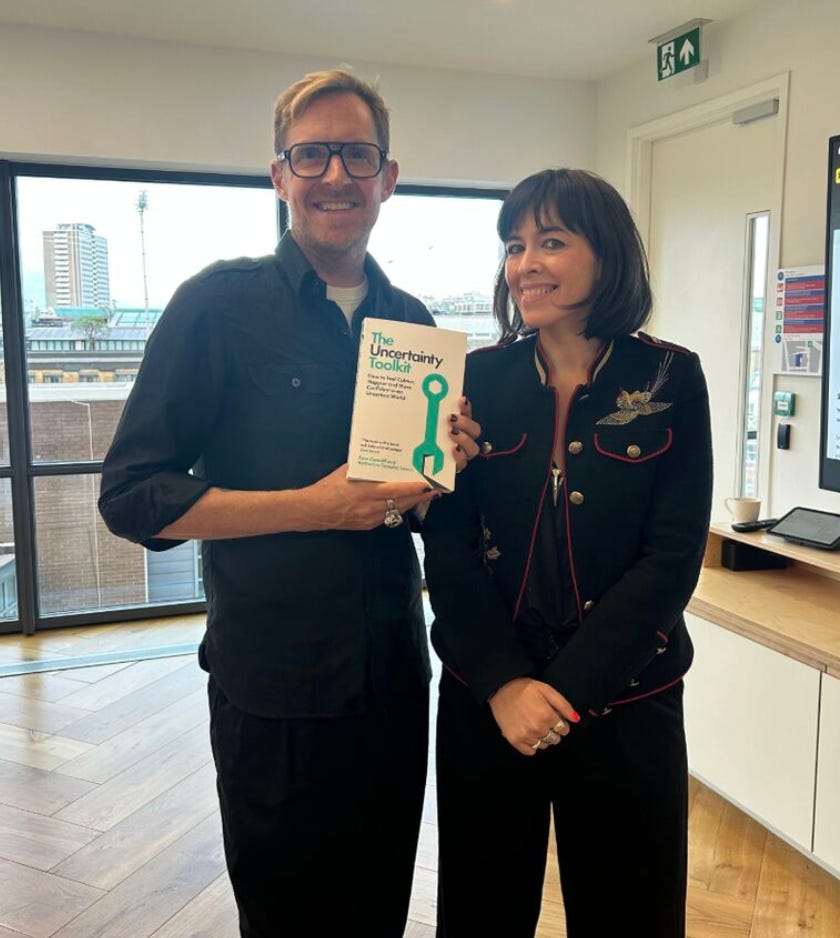
PS: A request for help.
If you’ve made it this far, thank you. Genuinely.
This survey-inspired Press Release goes out tomorrow, and it exists because The Uncertainty Toolkit comes out on January 1st. A date that guarantees everyone is either hungover, walking, or pretending not to check their phone. Probably all three.
We’ll share the press release below, along with the data behind it, but what matters more to us is the conversation around it.
We’ve spent years researching how people actually experience uncertainty. Not in theory, but in real life. In texts that say “call me back”. In moments of waiting. In pubs, kitchens, late-night spirals and half-formed decisions.
So if, while reading this, you thought:
“This would make a good conversation on so and so’s podcast, substack, newsletter, column, insta, etc…”
Whether that’s a live discussion, or your favourite late-night phone-in, a Substack Live, or just someone who enjoys thoughtful, slightly uncomfortable conversations about modern life, we’d love to hear about it.
Just hit reply. Share the link and/or make an introduction if it feels ok to do so.
Asking for help is, as you might have gathered by now, one of the purest states of uncertainty. And we’re right in it. Thanks very much indeed.
Comments
Nothing yet. Say the first thing.
Sign in to join the conversation.