
Last week, I received a package of all my mom’s folders from my childhood: a stack of tattered manilla, filled to overflowing with elementary school drawings, birthday letters from long-ago grandparents, handwritten lists of my most (and least) favorite friends, and, miraculously, my kindergarten report cards.
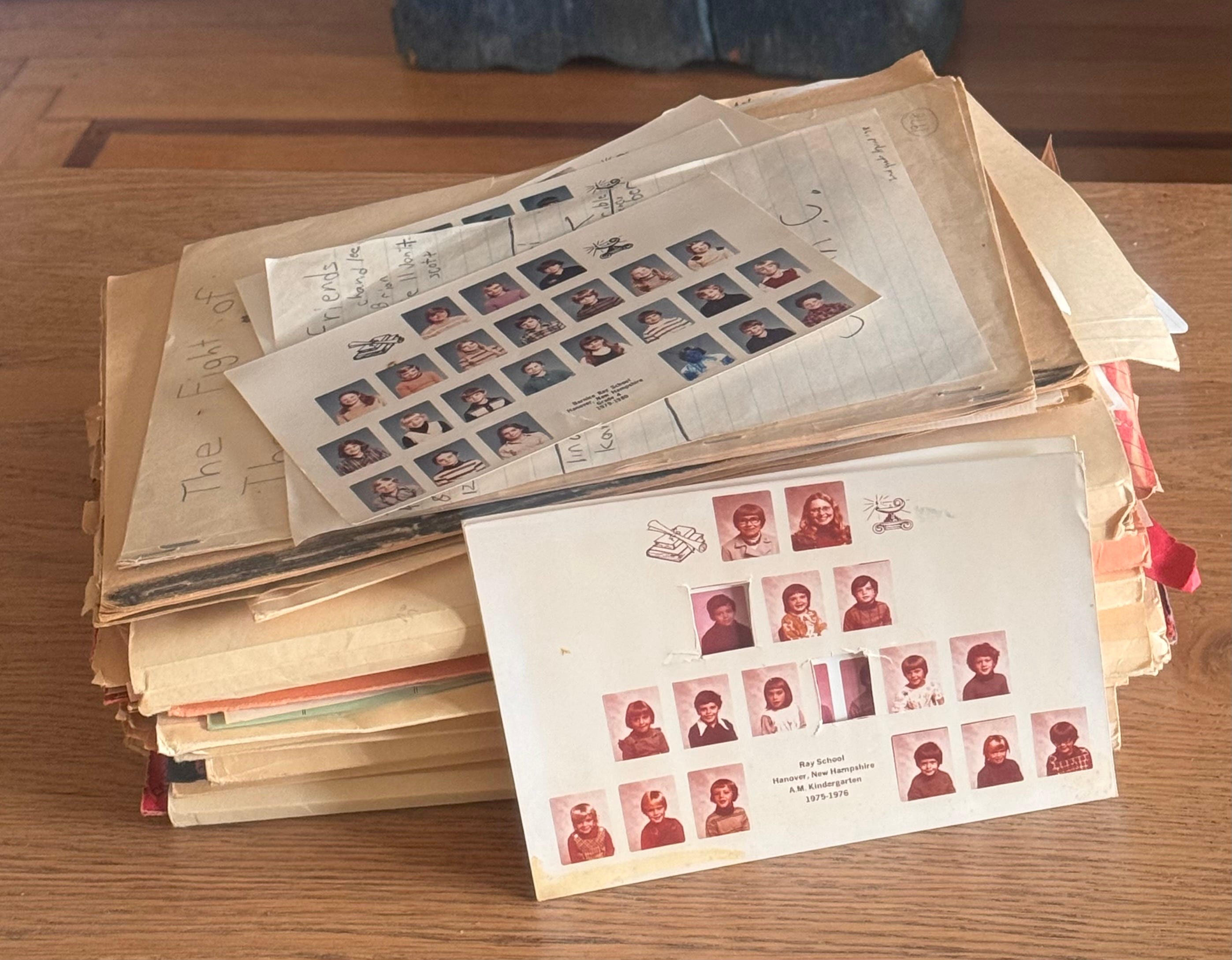
Finding them felt like discovering three messages in a bottle.
Each one is a beautiful testament to the women who wrote them -- and to the priorities of the era in which they were composed.
Typed and hand-signed on school stationery, they feel official and serious. And in less than ten sentences, they convey the close attention, empathy, and developmental understanding every parent wants their child’s first teacher to possess.
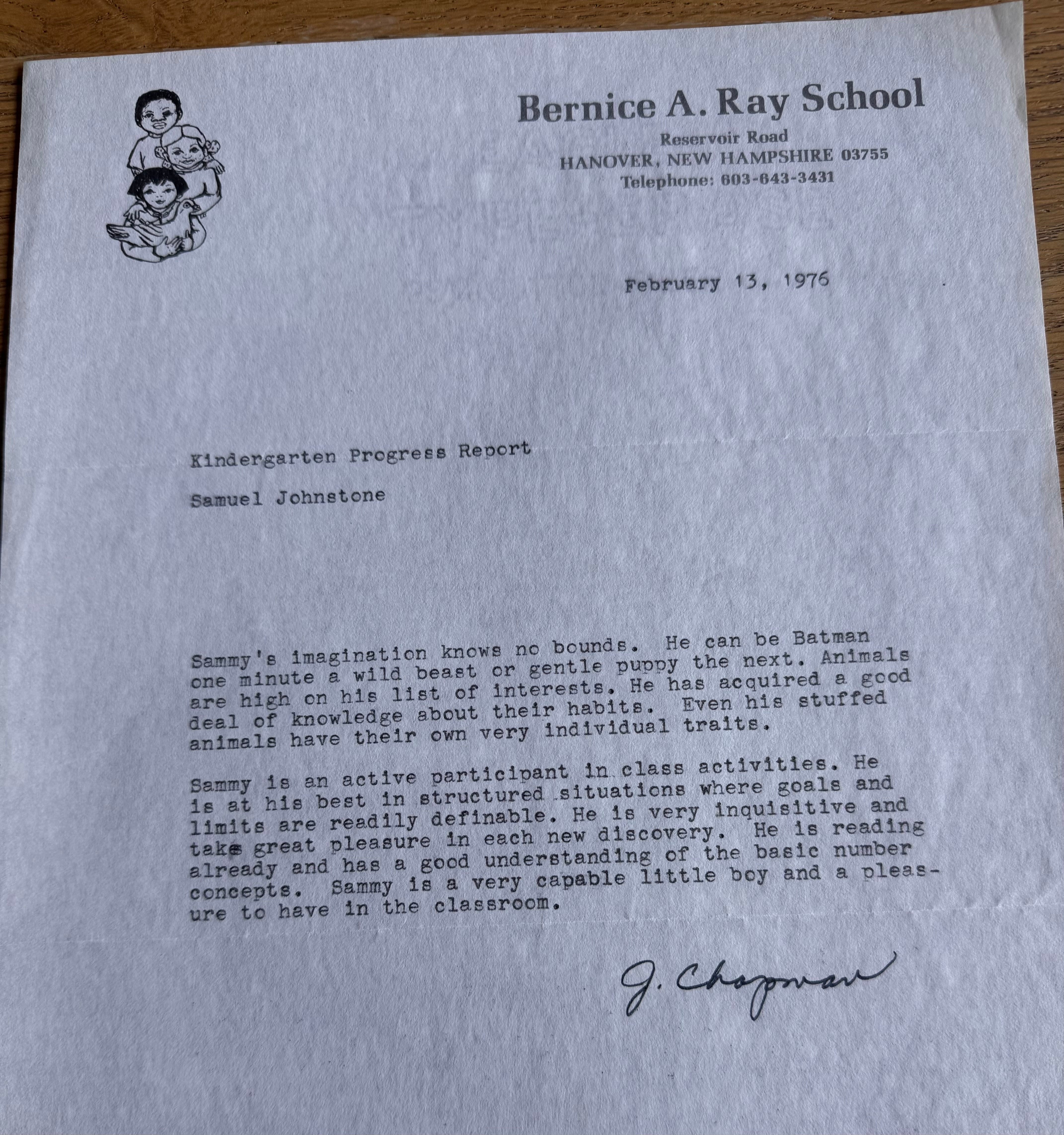
February, 1976: “Sammy’s imagination knows no bounds,” said Ms. Chapman. “He can be Batman one minute and a wild beast or gentle puppy the next. Even his stuffed animals have their own individual traits.”
Two months later, this time from Ms. Cadbury: “I think Sammy seems more mature now, and able to cope more readily with frustration. I feel he will go far in this world -- in what direction remains to be seen!”
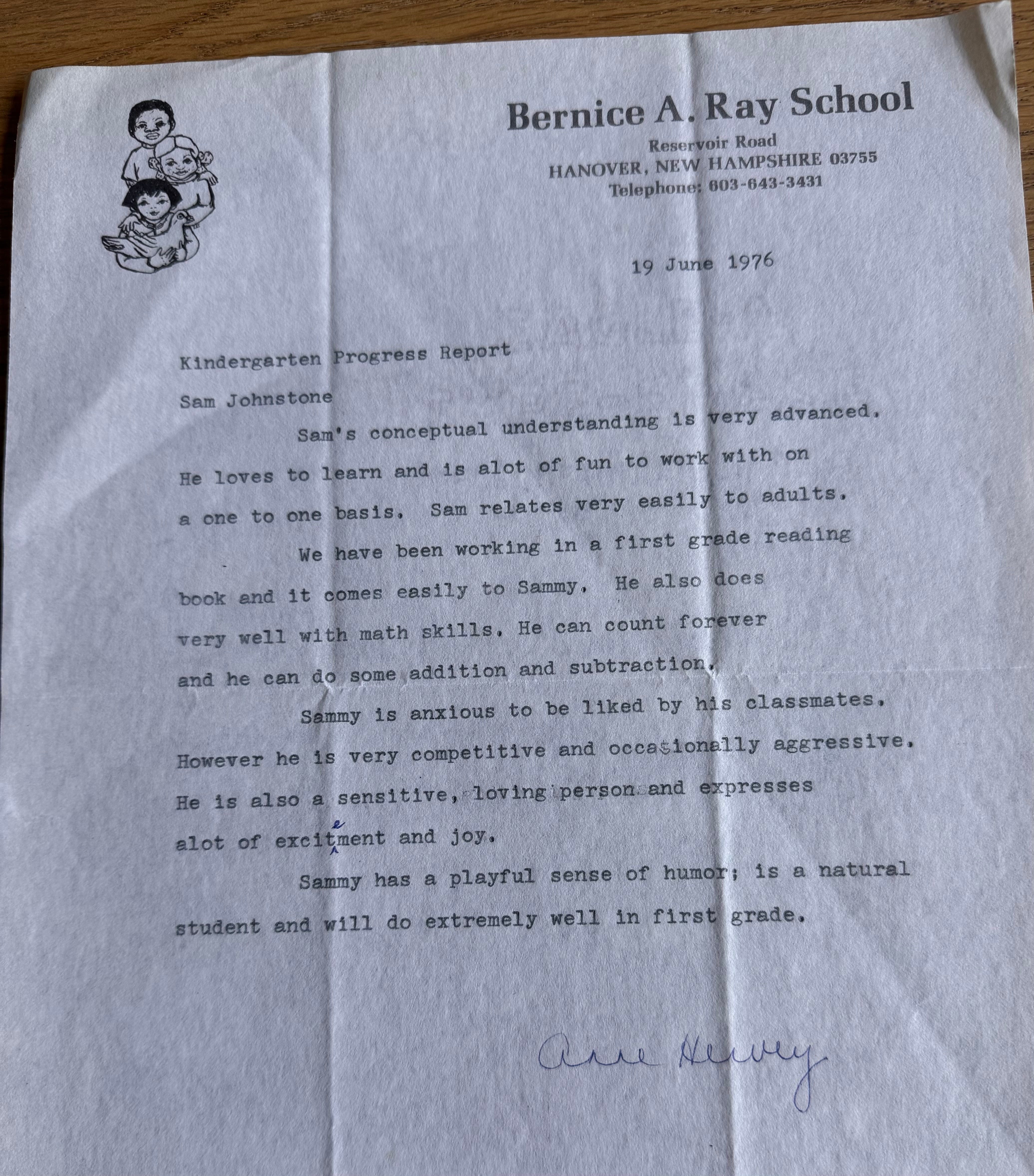
And finally, on June 19, 1976, from Ms. Harvey: “Sam relates easily to adults. Sammy is anxious to be liked by his classmates. He is very competitive and occasionally aggressive. He is also a sensitive, loving person who expresses a lot of excitement and joy.”
I don’t remember these women. I was just one of the countless students who passed through their class rolls year after year. Yet I can see how closely they paid attention to the children in their charge.
I imagine them sitting down in modest houses, secure in the sacredness of their service, and, one by one, describing our wild, nascent states.
This is, of course, what education at its best has always been about. Sixty years before these half-century-old notes were written, in fact, a longtime public school principal from New York City named Angelo Patri described our schools’ true purpose.
“The sacredness of the child’s individuality must be the moving passion of the teacher,” he began. “So you must not think too much of arithmetic, and rules and dates and examinations, for these are not teaching: the children don’t grow because of them. They grow because of their contact with you, the best that you know and feel.”
Comments
Nothing yet. Say the first thing.
Sign in to join the conversation.