
Look, it was always existentially precarious to embark on a writing career. I get that. Most books do poorly: bad reviews, bad sales, bad everything. Very, very few books do well enough for their writers to spend their lives just writing books. (Ah, blessed Eden!) And some books are middling in tantalising ways, tempting us fools into thinking that if we just girded our loins and worked other jobs that sufficiently financed this ruinous book-writing habit, we might at some point be able to turn out one more title in four years’ time. Rinse. Repeat.
This seemed to have been just the accepted arrangement for centuries, and for that reason, I’ve always been somewhat reluctant to aggro-plug my books. (You are doubtless thinking, “But you’ve been stuffing your earlier books down my throat,” but reader, if you think that is aggro, I assure you: there are worse offenders.) Today, though, it’s like writing itself is entering a moment of existential precarity. There are enough people out there thinking that AI-generated prose is sufficient for purpose, and even more people believing that they need AI to “write.” Not everyone, of course: the fact that there are, literally, thousands of you signed up to this newsletter comforts me somewhat. But there’s no doubt that writing and journalism are unsteadier professions and pursuits than they’ve been in this already hostile 21st century.
Which brings me to my ask. Here’s the cover of my new book, out in India, and I’m requesting—beseeching? asking? something simultaneously dignified and plaintive—to pre-order it.
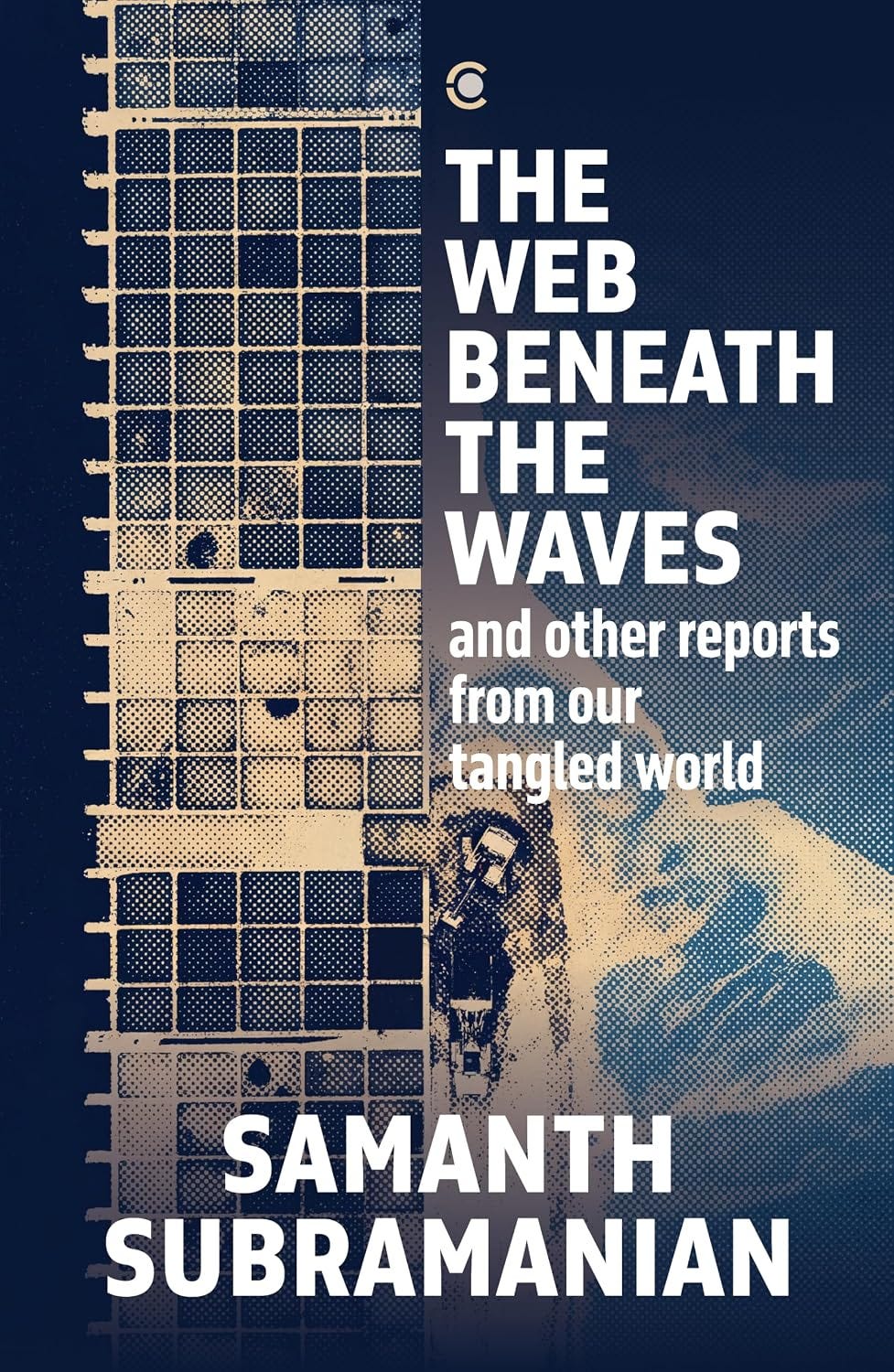
This Indian edition is a special book. It contains the full text of The Web Beneath the Waves, my short book on undersea data cables. But it is also an anthology of 15 other essays and pieces of reportage that I’ve written over the past 15 years, brought together for the first time. As the book jacket describes it:
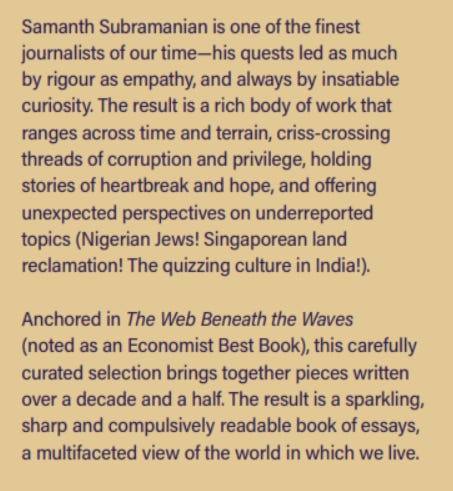
When I was starting out in journalism, I’d read anthologies of other magazine writers and think about what a fine career it would be to even be able to write a sufficient number of pieces to anthologise. For that reason, this book means a LOT to me. I’m also floored that Mukul Kesavan, a writer I admire deeply (and have just commissioned to write for Equator!), agreed to introduce the volume. If you will permit me a little more aggro-plugging, here’s how he sells you on the book:
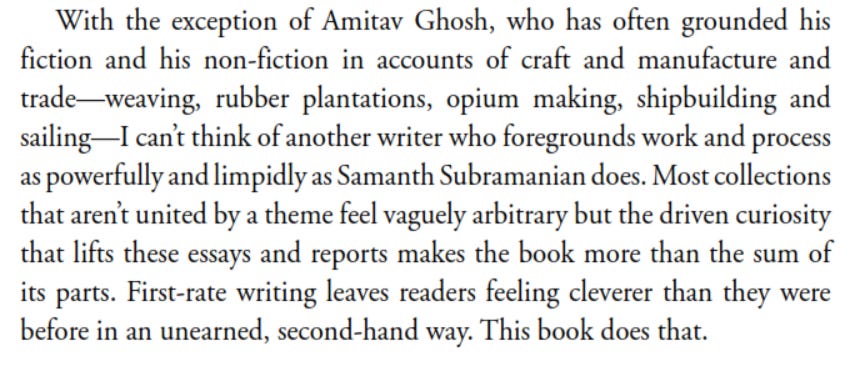
Which brings me back to my beseeching. Pre-orders are crucial in how vibrantly a book lives or how quickly it dies, so I urge you to pre-order a copy. Pre-order two: one for the home and one for the office. Pre-order several, and pass them out to friends as party favours or paperweights. Send news of this book to friends who like reading, and ask them to pre-order it. Put it on your social media, and urge your followers to buy it. They all count. There are, as I said, thousands of you reading this newsletter, and even a copy each (to say nothing of two or several) would make this book a bestseller, send it into reprint, give journalism a good rep, and inject topics like undersea cables and beautiful batting and dying languages into the life of our public sphere. It would also—and in this benighted age of AI slop, I say this quite earnestly—give me the ability and freedom to keep writing, and give publishers the confidence to keep publishing me.
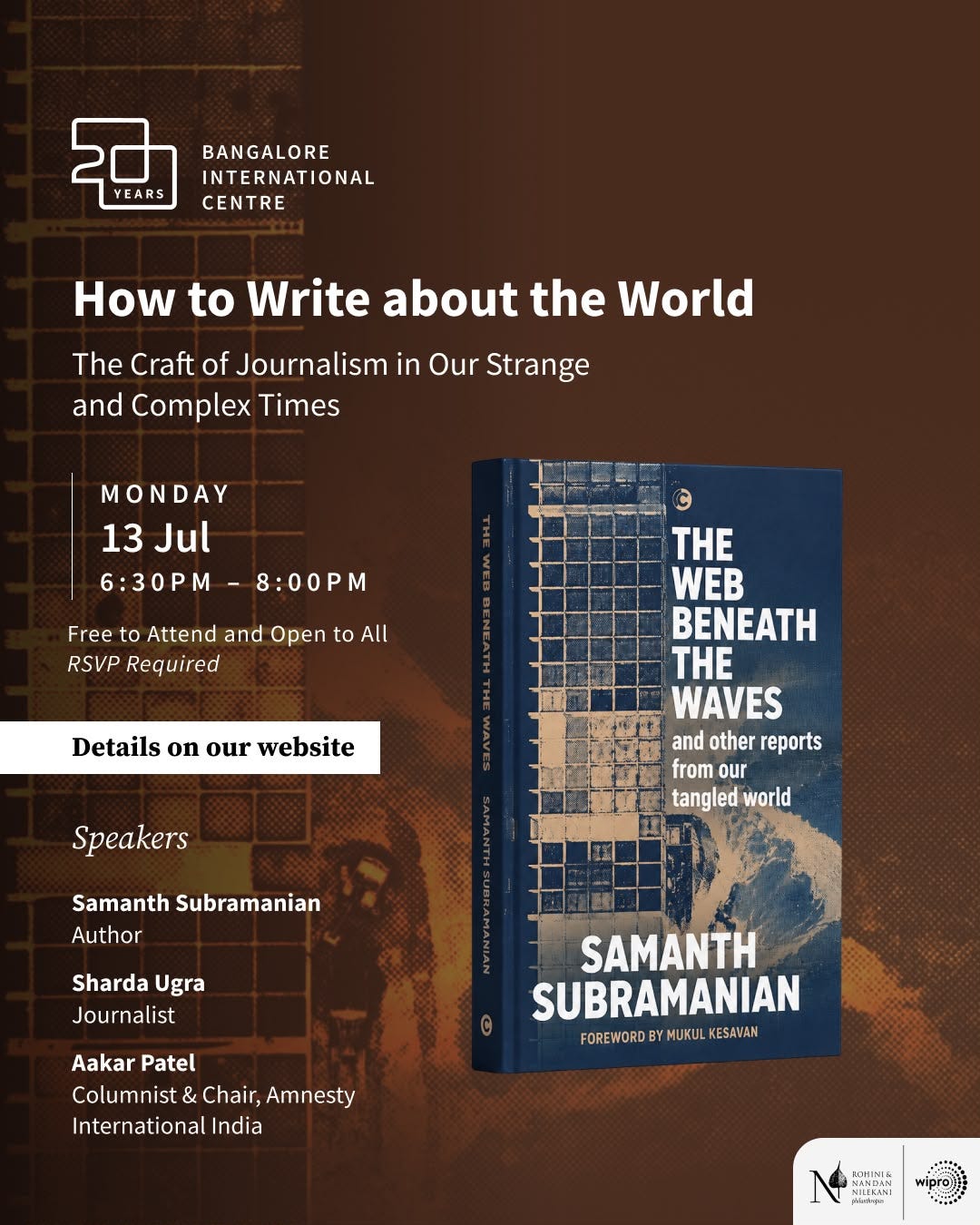
One last thing: if you’re in Bangalore on the evening July 13, come to the book’s launch at the Bangalore International Centre. For the most part, it will be Aakar Patel, Sharda Ugra and me spending the evening talking shop. We will discuss approaches to stories, narrate anecdotes of interviews gone right (and wrong!), recall misbegotten reporting trips, bemoan the state of narrative journalism today, and relish the genuine thrill of being a journalist out in the field.
In the weeks to come, I’ll pepper you somewhat more frequently than usual, but along with plugging the book, I promise also to tell you stories about how many of these pieces came to be, how they were written and edited, and what I wish I’d done differently. I’ll send images, notes on drafts, ephemera, and more. If someone has forwarded this newsletter to you and you’d like to sign up for it—please do. But even more crucially: please buy my book!
Know someone who loves reading about the world? Send them this post. And tell them about my book!
Comments
Nothing yet. Say the first thing.
Sign in to join the conversation.