
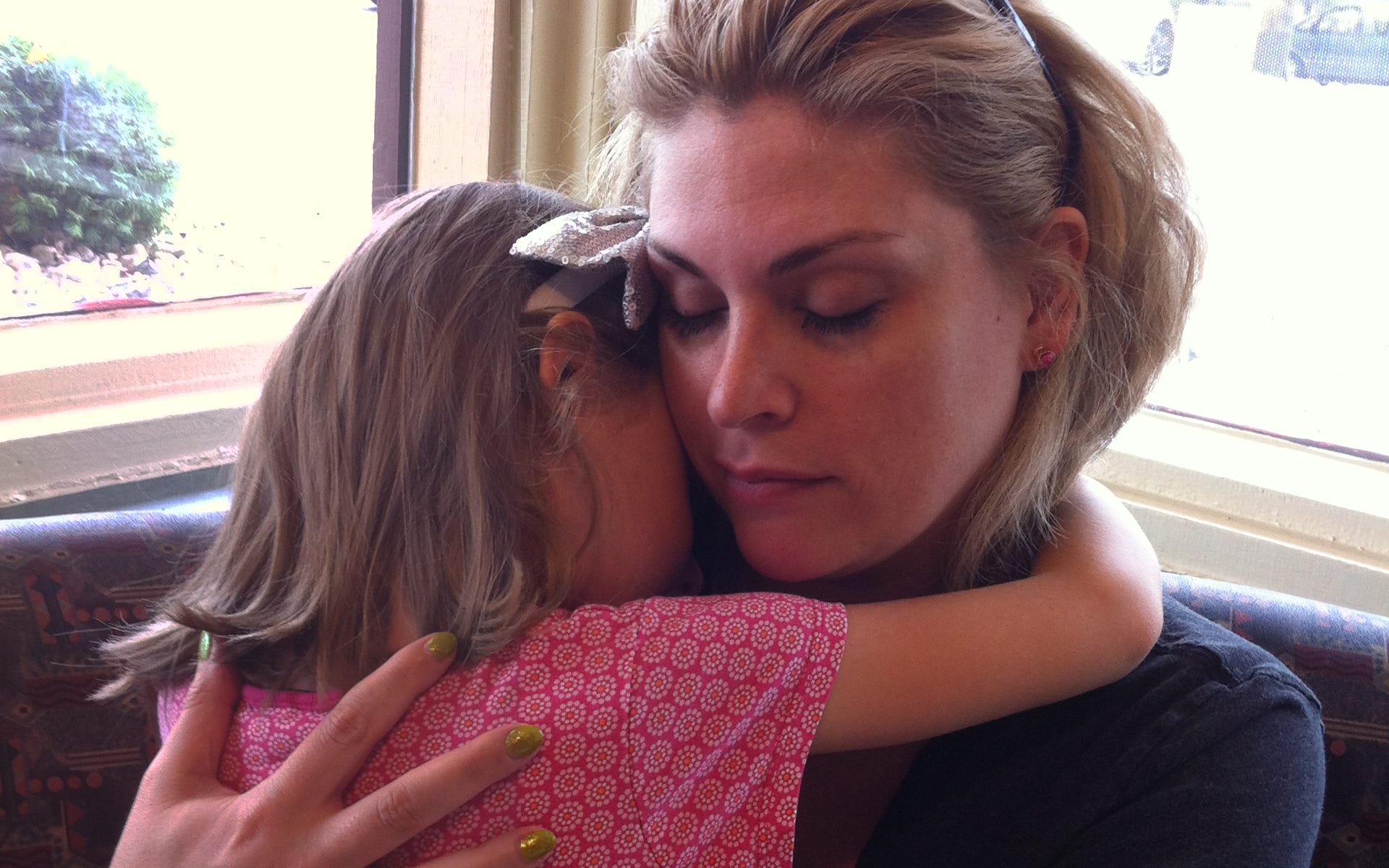
No community was ever built on the premise of “Every man for himself,” yet we live in a capitalist society that claims your worth is defined only by what you can afford through monetary means. If you spent your life taking care of the needs of others as a volunteer for unpaid services, are you deserving of the goodness you cannot afford later in life when you need to rely on others to take care of you?
Ask the average person, “Who in our society is deserving of travel, of occasionally eating out or having something nice?” and the typical answer might be, “Someone who works hard and earns the right to those privileges.” To this, we should ask ourselves, “Do all people who work hard get paid?” The answer, of course, is, “No.” In fact, it could be argued that those who work the hardest in society are usually the least paid. “If working harder and longer hours were the key to wealth, then every maid and mother would be a millionaire.”1
Every well-oiled system, from family to government, is greased by the hands of unpaid labor, such as grandmothers cooking in kitchens, aunties babysitting nieces and nephews, and mothers organizing fundraisers or baking goods for the neighborhood schools and churches. 2 Yet, when the opportunity comes for those grandmothers, aunties, and mothers to retire and travel, and they have no money to do so, society responds with the callous uncaring and woefully ignorant reply of, “Too bad you didn’t earn more so you could have saved money like we did, in order to deserve an occasional goodness or retirement necessities,” all of the while saying such words without the humility to acknowledge that they never would have been able to accomplish what they had without the unpaid sacrifices of caregivers, family, and community who helped them make it possible for them to do so.
You can’t earn more from a job that doesn’t pay to begin with. People assume if you have no savings, it’s because you didn’t budget your spending well instead of understanding that you have no savings because you had little to no income despite working hard. It’s time for society to compensate caregivers for their unpaid labor in the name of love, because love alone can’t be used to pay the bills.
“Norway, Sweden, and Iceland began building policy around this truth decades ago.
…
When you make the invisible visible, everything gets better.”3
To “earn” is to obtain some form of currency in exchange for labor. Not all earnings come from money. In fact, when you look at Webster’s definition of the word “earn,” most examples do not include the word “money.” It’s only the “AI Overview” definitions that have proliferated and populated every search engine, which include the word, “money” over and over again, removing our humanity one word meaning at a time.
Those who can financially provide for themselves were often indoctrinated in childhood to believe that the best way to care for themselves is to provide for themselves; but “to provide” and “to care” are two different things, and both are needed. A government agency can “provide,” but it takes a human to “care.” If we are too focused on one, we negate the other. Caring takes a level of vulnerability not often found in the mechanics of providing.
No amount of money to a high paid nanny for your children, or capable nurse for your aging parents will ever compare to the care they receive from someone who loves them.
When I was taking care of my energetic nieces and nephews, nurturing their individual sensitivities and needs, memorizing their food preferences, likes and dislikes, cheerleading their every endeavor from sports, to performing, to academics, delighting in their presence and making memories by taking them to the beach, movies, or out to eat, acting as a taxi and chaperon service for their extra curricular activities, being the family archivist who takes home movies and photographs at birthday parties and holiday celebrations, or providing comfort, and a safe place to land in my home in the aftermath of endured trauma, I would have taken a bullet to protect their lives. No hired help their parents could have paid for would do have done the same.
When my grandmother required 24/7/365 care, that included constant medication monitoring, adult diapers, projectile vomiting, endless laundry, every-other-day specialist appointments, monthly hospitalizations, and the thick skin of a rhino to endure the cruel signs of dementia, her needs could never have been managed with the same level of care by hired help. No single nurse could have had her medical records, allergies, and history committed to memory like I did or provided the commitment to care that I was willing to give. No nurse could have stayed by her bedside through every painful, frightening, medical emergency she experienced, holding her hand, gently brushing her hair, or massaging her feet to bring her even an ounce of comfort or distraction from the fear and pain, before they would have been called to help a dozen other patients with demanding needs in that same time period. My devotion to her was the soft kindness that helped make all of her discomforts bearable.
Those acts of love cannot be outsourced, and it feels awkward to accept payment for caring for someone you love. I never wanted my loved ones to think I was present for them because I expected to be paid, so I refused even the idea. I wasn’t thinking about how a lifetime of caregiving could leave me financially destitute by the time I began my descent into retirement.
We have to change the narrative around unpaid labor as merely an act of love and consider the long-range impact. Family members deserve financial compensation for caregiving. Thank you cards or occasional gifts are nice in the moment, but they don’t earn interest in a savings account to provide for us in our old age.
At the time, the kind of care I provided was valued beyond measure. There is no price tag for peace of mind when it comes to the protection of our children or vulnerable parents. If caregiving with the tenderness of love were a company position it would come with deposits into a retirement fund with compounded interest, financial bonuses of appreciation, and a hearty pension. Instead, it comes with gratitude in the moment and faded memories with time. Once the kids are grown and the aging, ailing parents pass away, there is no longer a demanding need requiring attention or appreciation for the caregiver. There is nothing in a bank to show for the years given or the sacrifices made. The loyalty given is no longer reciprocated because too often people only reach out when they are in need. When the need passes, they stop reaching out.
During the pandemic we discovered who the most important people to our survival were and we called them “essential workers.” They were broken down into five categories: medical, sanitation, food service, teachers, and caregivers (especially to children and elderly). Value is not the same as worth, especially when it comes to survival. We are all born with inherent worth, but our value is how that worth serves others and is seen by others.
Another way of looking at it is to consider the worth of water: a survival necessity. In situations where water is plentiful, it’s free; therefore it has worth, but no price, no value. In situations where it’s scarce, and necessary, its worth doesn’t change but its value, its price, can skyrocket. When we think about who and what has the most value, we think about what we need to survive. Caregiving, like water, is essential to communal survival. It’s often done by family and friends, usually women and is mostly unpaid labor.
I did not earn a pension for taking care of my grandmother for seven and a half years; but I learned compassion, patience, advocacy, and what it feels like to show up for someone who showed up for me and the honor to pay it forward.
I did not receive an income for raising a child with a complex medical condition, a 24/7 job that produced a loving, kind, wise, and (relatively healthy) wonderful member of humanity, but I had the great privilege to learn what it means to love someone unconditionally and express love through complete devotion.
I did not receive a benefit package for providing Thanksgiving dinners to those who had no family; or writing three letters a week to my husband’s cousin through all the years he was in prison for drug use in order to keep his spirits high and suicidal ideation at bay; or for the volunteer work of holding unwanted babies in foster care facilities because the state only employed enough people to feed and change the infants, not provide comfort; or showing up to domestic abuse shelters to empower women to transcend victimhood; or spending Christmas feeding and singing carols with the homeless; or being present for the the priceless moments for the children in my life so that their parents could work outside the home creating wealth; or spend countless nights talking loved ones off the ledge of self-destruction, that turned into midnight hours in parking lots of rehab facilities, in ICUs holding hands with people I loved as they recovered from an overdose, or chemo, or a traffic accident; or making it safe to tell the truth so that someone can share their shame of past mistakes and know the healing power of forgiveness, unconditional love, and what it means to have someone stay even when we bare our human imperfections. I learned the value of loving big, showing up, being consistently present for those in need, and the life-saving difference simple presence can be.
In addition to being a caregiver from as young as I can remember beginning with my parents and siblings, I had a career, a job, side hustles, and a disability to manage. No one has ever called me “lazy.” I’ve been working since I was a child and paying taxes my entire life.
Growing up, I was taught to follow my dreams but have a back up plan in case I failed. This meant that I was always juggling three kinds of work with very little rest: jobs for money, pursuing the career of my dreams, and doing the unpaid labor of caregiving. It was an endless hustle to survive; exhausting myself and my resources on a fast track to burnout. When I entered adulthood, there was a popular book at that time entitled, “Do what you love, the money will follow,” by Marsha Sinetar. What life has taught me is that sometimes “the money that follows” is not necessarily our own but it doesn’t make us any less deserving of having “earned” it.
I began writing and performing at a very young age. I knew my purpose in life was to combine arts with activism. I booked my first commercial as a teen, and it was nominated for a Clio award. I became a card-carrying member of the American Federation of Television and Radio Artists, and later the Screen Actors Guild. These unions eventually merged into SAG-AFTRA, which technically made me a “professional actor.” I thought I was set. I had legit talent agents. I went on hundreds of auditions. I was on a Emmy Award winning television show and performing live in well-known venues, receiving press, awards, and critical acclaim for my abilities as a writer and a performing artist, but it never amounted to financial security.
“Only 0.04% of professional actors fall into the category of “rich and famous.” Only 1% of professional actors make over 50,000 per year or more. Only 4% make $20,000 a year, just enough to qualify for Plan1 health insurance; and at any given time, there’s a 95% unemployment rate amongst all members of SAG-AFTRA.”4
Being a performing artist is a feast or famine career that requires a lot of unpaid work, in the name of building a resume, and a good deal of expenses to pay for studying, auditioning, training, travel, and other professional tools of the trade.
###
As a writer, my cultural commentary on A.I. and the stories I’ve broken on plagiarism have been referenced and quoted in The Atlantic, The Guardian, The Cut, Vox, theSkimm’, BestLife Magazine, as well as on various social media outlets and popular podcasts, all who profited financially, whilst I never saw a dime.
We have a broken system, in which lesser-known writers and artists have become the profit making inspiration, without any financial remunerations, for mainstream media and anyone with a significant following who chooses to republish our hours of research, work, and intellectual property and call it their own. It’s not fair. It’s not right. It’s not just. I don’t know how to fix it other than to call it out in hopes of calling it into right action.
What I do know is that if someone’s writing is compelling enough to sell thousands of papers, and generate millions of views, they shouldn’t be accused of not earning money just because it’s not their own pockets that are being filled.
I’m the author of a five-star reviewed book, in hardcover and Audible, for which I only receive pennies in profit for each listen or sale; and yet celebrities who’ve “borrowed” or “been inspired” by my works have made millions. When I ask to be paid for my work as a writer on Substack, it is somehow seen as “begging for money.” No other respectable job would be seen as “begging” for expecting a paycheck for completed work, so why should that of an independent author?
I know my work has value because I see others profiting from it. I deserve to be paid for the work I do. I have actually earned my right to live. I worked my whole life; and yet I have no retirement fund, pension, or savings because the work I did as a caregiver, writer, performing artist, and volunteer was primarily unpaid. I was compensated in character not currency; and only one of those pays the rent. If “tradwives,” “stay-at-home moms/girlfriends,” and independent writers and performing artists like me don’t want the same fate, take heed.
Some people earn their wealth in money; others earn their wealth in heart.
Please do not judge those who haven’t taken the same path in life of trading time for money, building a savings account, owning property, and taking care of themselves because they accepted the honor of taking care of others instead.
The world spins because it takes all kinds. We need people who are proficient at earning an income and we need people who are proficient at being caregivers, and we need those people to take care of each other.
The calling of the adult caregiver often comes from an unprotected childhood. Caregivers usually know what it means to suffer, to be unseen, forgotten, excluded, or not made to feel worthy enough to be protected and provided for, which is why they give so much to those who are in need. We become the adult we most needed in childhood to survive. I probably became a caregiver because what I needed most in life was to be given care, but it’s more than that.
Some people are just born to love. They have hearts that pulse with empathy. They can’t help being drawn to the most vulnerable members of society from animals, children, elderly and those who just can’t seem to make it on their own. They see someone in need and their heart opens and expands. Then there are those whose hearts contract and close when they see someone in need. It’s the difference between the empathetic and the apathetic, and the world is filled with both. I was born to love and to fight injustices. I will not apologize for who I am.
What if instead of judging whether or not someone is deserving based on the amount of money they earn, we base what they deserve (are eligible for) on the value they contribute to society? Who would personally have more value to you, the wealthy, successful, high-status person? Or the person who shows up when no one else has?
We’ve been conditioned to believe that caregivers will be taken care of by providers. In traditional gender roles the woman cared for the needs of the family and community while the man provided the means for her to do so. This put all the power in the hands of the provider turning many a caregiver into an indentured servant. Even in marriages built on equality, the provider can lose their health, or their income, or choose to leave the marriage thereby leaving the caregiver penniless. To be a provider, one must be committed; to be a caregiver, one must be devoted. Commitment is a practical contract with the mind; devotion is a spiritual contract with the heart. One is a sense of transactional obligation, the other is a sense of selfless service.
The thing is, we all pay our dues in life, one way or another. Some of us are lucky enough to work jobs that pay us well, and we will never know the shame of having to ask for help. Then there are those of us who pay our dues in life through caregiving for friends, family, and community. We all have a calling in life: some are called to serve others, and others are called to serve themselves; and eventually, each requires a seat at the other’s table to know wholeness.
True community is not independence or codependency but rather interdependence. Every caregiver deserves a seat at the table of being cared for. Those who pour love, encouragement, and empowerment into the world deserve to have those same gifts poured back into them.
There’s a difference between deserving and entitled; but in a world where nuance is seen as indecision and judgment is an easy finger to point, people forget that we all deserve to have our needs met, basic and sometimes otherwise.
No one is entitled to riches nor deserving of hardships.
When someone in your life is in need, take a moment to consider what they may have given with their time that possibly made your life easier or that you may have benefited from. Those who have no money are able to give their time, and those who have no time are able to give their money. The world needs both.
Thanks for reading Sage Words! This post is public so feel free to share it.
On February 1, we gave up everything to leave America: home, furniture, car, and left behind my daughter’s devoted father / my beloved husband who had to stay to tie up loose ends. We left for a career opportunity for our daughter. We chose to stay because we are in search of a forever home with a more affordable cost of living, healthier food, and economical healthcare and education.
Our daughter was one of 12 global students chosen to make their own short stop-motion film at Aardman Animations. She and I spent our first six months abroad in Bristol, England while she made her film (that’s the length of time an American passport allows you to stay before needing a visa). England has many things in common with America, including language, higher cost of living, and a sea of bureaucratic red tape, making it a non-contender, at this time, as an option for a forever home. Therefore, we left England and flew to Greece. We are not vacationing, we are in survival mode. August is the most expensive month in much of Europe for both local and foreign tourism. We’re in the area we could afford.
We are now exploring some of the countries offering financial incentives for people to move there as part of relocation programs to repopulate and revive communities whose populations have declined over the years. These programs include Greece and Ireland to name but two. Our goal is to utilize one of these programs to build an international artists and writers residency that would serve the local economy in the country we choose while providing a working income for us personally.
Currently, our daughter is exhausted and needs rest. Anyone who has ever made a film can confirm that it often requires a period of recovery afterward, especially when the filmmaker did everything from design and build the sets, the stop-motion puppet, costumes, and music. She wrote both the script and some of the music and recorded narration as well as vocals for the songs used in the film. She gave her everything to this special, evergreen film, AWEN. Her body and spirit are tired.
Now that it’s done, it’s time to submit it to film festivals, including The Academy Awards, if she so chooses, which requires an entirely new set of organizational skills, brain power to harness, and financial resources. She’s not quite ready to take on this task.
She has informed me that the next place we move to needs to be for an extended period so that she has time to fully recover and focus on her goals at hand, which do not include constant travel. If you know Gracie Justice, the way she does anything is how she does everything. The message of her film and the purpose of her life are both aligned with slow, intentional living that is based in natural settings.
As global nomads with no home base to return to and no retirement income to live off of, I’m not sure what our options are from here, all things considered. The only thing we know for sure is that we do not plan to lose our forward momentum by returning to America where we no longer have a home.
Until we’ve found and settled into a relocation program, our choices appear to be a year in Albania or our variation of “The Schengen Shuffle” (three months per year in the Schengen regions, three months per year in the Republic of Ireland, six months per year in the UK). It all sounds like an exciting adventure, and it is; but it’s also the exhaustive existence of suitcase dwellers, constantly moving and living with housing insecurity until we secure our forever home. I would not call this a glamorous life. I am however soaked in gratitude like a slice of sweet Greek Revani cake is soaked in honey. As I pray for our continued safety and health, I am grateful for every breath, every moment with my child, every opportunity to build a new life abroad and every person who cares about us and shows up.
Thank you for reading and sharing our story.
We appreciate your presence.
If you see fit to follow and support our journey, here are some options.
Read the book FREEDOM ⭐️⭐️⭐️⭐️⭐️
Watch Sage perform - please subscribe

Sage Justice is an award-winning poet, author, critically acclaimed performing artist, and intensely sincere, bold humanitarian activist.
After I witnessed an unknown poet have her work usurped, I was given the legal advice to place the following © date and statement on all my work: This concept/theory/poem is original to Sage Justice. If you use it, please give credit and link to original work. Thank you. www.SageWords.org © August 9, 2026.
Sage Words Meme. Text found in the book, FREEDOM, by Sage Justice
Not just churches but all houses of worship that represents any religion.
https://www.sagaftra.org/
Comments
Nothing yet. Say the first thing.
Sign in to join the conversation.