
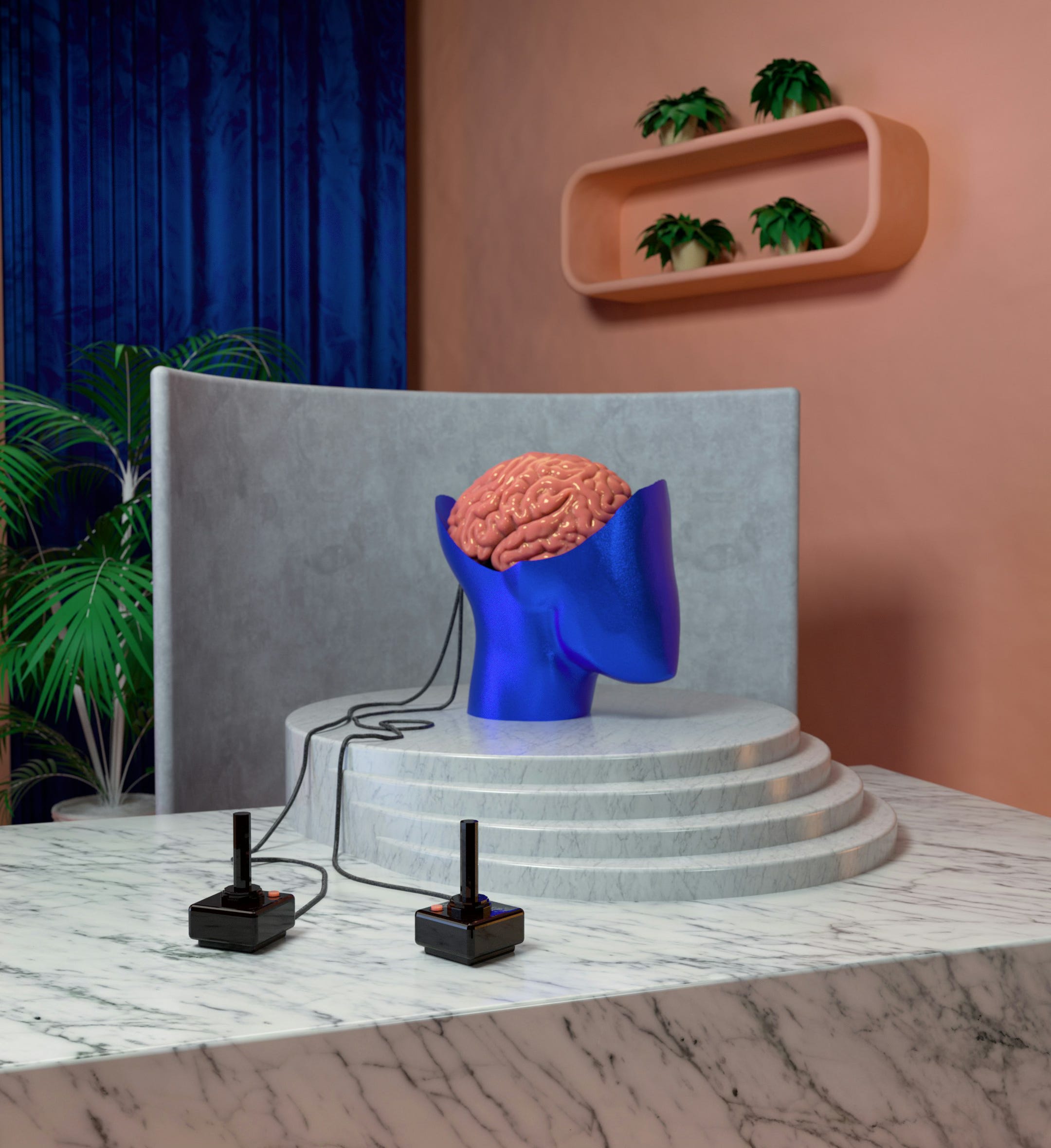
Technology has made the world immeasurably better.
It allows us to speak face-to-face with someone on the other side of the planet. It gives a child access to an entire library from a kitchen table. It helps entrepreneurs build businesses, physicians care for patients remotely and families stay connected across continents. Digital connectivity has expanded access to education, health care, financial services and economic opportunity in ways that would have seemed impossible a generation ago.
I have built companies with technology.
I use it to research and write this newsletter, manage my health, connect with friends, research new ideas and communicate with people I otherwise may never have met.
The problem isn’t technology.
The problem is that a powerful tool has quietly become the environment we live inside.
Our phones wake us up. They deliver the news, our email, our work messages, our entertainment and our social lives. They fill the five minutes before a meeting, the walk to the car and the brief pause while someone else goes to the bathroom.
We no longer have to be bored.
And that may not be entirely good for us.
Our brains didn’t suddenly become defective when smartphones arrived.
But they are highly adaptable.
When we repeatedly expose ourselves to rapid novelty, alerts and constantly changing information, we train ourselves to expect stimulation. We become more likely to reach for a device during the first hint of silence, difficulty or discomfort.
Even when we resist checking, the phone can continue competing for attention.
In one experiment, receiving a phone notification impaired performance on an attention-demanding task even when participants didn’t interact with the phone. Another series of experiments found that the mere presence of a person’s smartphone could reduce the cognitive capacity available for other tasks, with the largest effects among people who reported greater phone dependence.
The cost isn’t necessarily that technology makes us less intelligent.
It’s that part of our attention may remain occupied by what could be happening somewhere else.
Who emailed?
What happened in the news?
Did someone respond?
Is there something more interesting one swipe away?
That low-grade vigilance can make it harder to become fully absorbed in a conversation, a book, a creative problem or the moment directly in front of us.
Technology can also follow us into the hours when our nervous systems should be winding down. Controlled research on evening use of light-emitting devices has found delayed circadian timing, suppressed melatonin and reduced next-morning alertness.
This doesn’t mean every screen is harmful or that a weekend without Instagram will cure anxiety.
A 2024 meta-analysis found that digital-detox interventions produced a modest reduction in depressive symptoms but didn’t show consistent improvements in stress, life satisfaction or overall mental well-being. The evidence remains nuanced, and different people use different technologies in very different ways.
But newer experimental evidence is compelling.
In a month-long randomized trial, participants blocked mobile internet on their smartphones for two weeks while retaining calls, texts and internet access on computers. Sustained attention, mental health and subjective well-being improved. Participants also spent more time socializing in person, exercising and being in nature, and they slept more.
That last point may be the most important.
The benefit of unplugging may not come only from what we remove.
It may come from what returns in its place.
There’s something fundamentally different about attention in nature.
A screen demands focus through alerts, headlines and motion.
Nature invites it.
Your eyes move across distance. Your pace slows. Your attention shifts toward trees, water, weather, sound and physical sensation. You’re stimulated, but not constantly interrupted.
In one well-known study, a 90-minute walk through a natural environment reduced self-reported rumination and activity in a brain region associated with repetitive negative thinking compared with a walk through an urban environment.
A large observational study also found that people reporting at least 120 minutes in nature each week were more likely to report good health and well-being. That doesn’t prove two hours is a magical threshold, but it offers a useful target.
For me, this begins early in the day.
I try to get outside for morning sunlight, both to move and to give my circadian system one of its strongest environmental signals: light. Research consistently shows that the timing and intensity of light exposure influence circadian rhythms, sleep and mood.
I also take work calls outdoors while walking whenever the conversation allows it. I may still be using technology, but I’m no longer sitting indoors staring at another screen. I’m moving, breathing fresh air and allowing part of my attention to widen.
Then there is Saturday morning.
I make a commitment to take my kids on a nature walk every Saturday. These walks aren’t always peaceful. There are snacks, random rocks they insist on carrying home and occasional negotiations about whether walking is still part of the activity.
But that is exactly why the ritual matters.
We’re outside.
We’re together.
And for at least part of the morning, we aren’t competing with a feed.
Doing a digital detox with other people may be especially powerful. Social connection isn’t merely pleasant, it’s one of the most important determinants of healthspan.
A phone-free walk with a friend therefore creates several benefits at once:
Movement.
Nature.
Uninterrupted conversation.
And the feeling that someone else has your full attention.
This post is brought to you by Heavenly Heat Saunas, a brand I personally love.
My Heavenly Heat sauna has become more than a recovery tool in my home gym. I typically use it for 20–25 minutes at 140-plus degrees, and the ritual creates a natural transition between the intensity of work and the rest of the evening.
It’s also one of the few places where doing less is the point.
No email. No scrolling. No bouncing between tabs. Just heat, breathing and space to let the day quiet down.
My wife and I can both use it, which has also turned it into a shared health ritual rather than another solitary optimization tool.
For readers interested in building a high-quality at-home sauna practice, Heavenly Heat is a brand I strongly recommend. Use code LTWORKUP for up to $1,000 off your order.
Some of my best business ideas have come while swimming in the pool or standing in the shower.
Obviously, I’m not checking Slack underwater.
I’m not toggling between email and a spreadsheet. I’m not reacting to an incoming request. My body is occupied by a simple, familiar activity, while my mind has permission to move more freely.
That experience is consistent with research on creative incubation. Studies suggest that undemanding activities that allow the mind to wander can improve performance on certain creative problems. Walking has also been shown to increase creative ideation during and shortly after the activity.
The shower isn’t magic.
The absence of interruption may be.
We often assume that solving a difficult problem requires staring at it harder. Sometimes the brain needs the opposite: distance, movement and enough silence for ideas that were forming below conscious awareness to connect.
A digital detox doesn’t require disappearing into the woods for seven days.
Most people have jobs, children, aging parents, customers or patients who may genuinely need to reach them.
The goal isn’t total disconnection, it’s intentional access.
Spend the first 20 minutes after waking away from email, news and social media.
Go outside. Walk. Drink coffee near a window. Let natural light and your own thoughts reach you before the rest of the world does.
During the final 30–60 minutes before bed, avoid unnecessary scrolling and emotionally stimulating content. Charge the phone outside the bedroom when practical.
Choose one or two 45–90-minute blocks each day for focused work.
Turn off nonessential notifications and place the phone outside your immediate reach. Keep emergency contacts or genuinely essential work channels available when necessary.
The principle is simple: preserve access without preserving interruption.
Take one screen-free walk each day, even if it is only 10 or 20 minutes.
Eat one meal without a device.
Take an appropriate phone call outside while walking instead of sitting at a desk.
Schedule a weekly 90–120-minute nature block, ideally with family or friends. My Saturday walks with my kids are one version. Yours might be a hike, a park, a beach, gardening or simply walking through a tree-lined neighborhood.
Once a month, take a half-day away from social media, email, news and recreational browsing.
Calls and texts can remain available for emergencies. You don’t need to become unreachable.
Use the time for movement, nature, reading, cooking, conversation, swimming or anything else that allows your attention to stay in one place.
Technology should help us live our lives, it shouldn’t become the place where our lives happen.
A digital detox isn’t a rejection of progress. It’s a way of restoring balance - to focus without interruption, rest without stimulation, spend time with people without dividing our attention and occasionally allow the mind to go somewhere we didn’t schedule.
You don’t have to throw away your smartphone.
Just create moments when it’s no longer the most interesting object in the room.
Start with 20 minutes.
Go outside.
Bring someone you care about.
Leave the phone in your pocket.
Then notice what returns when the notifications stop.
Yours in Health,
Ryan
No posts
Comments
Nothing yet. Say the first thing.
Sign in to join the conversation.