
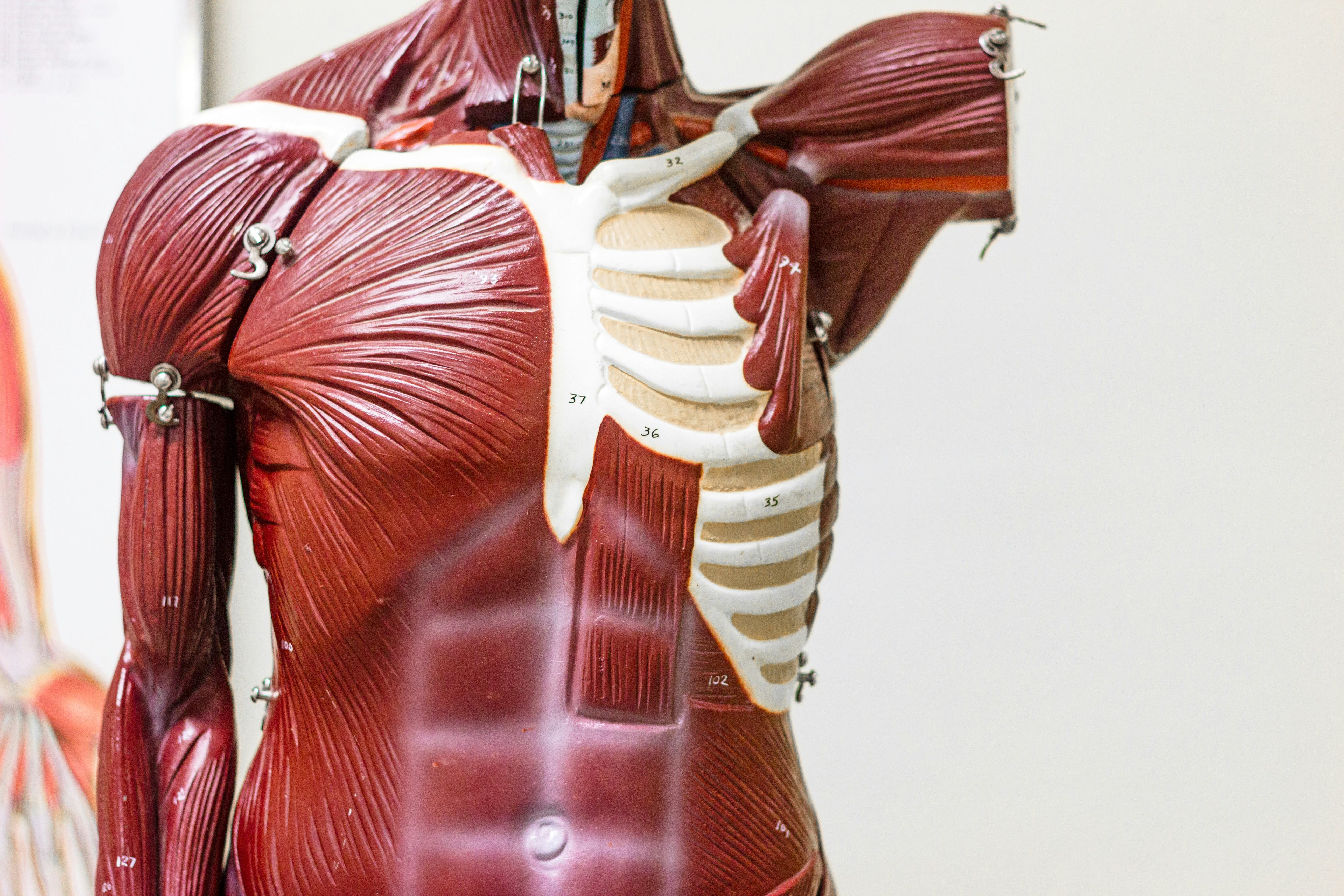
I’ve been thinking a lot lately about what it actually means to be “fit” in your 40s.
For much of our lives, fitness is easy to frame aesthetically. How much do you weigh? How lean are you? Can you see your abs? Do your clothes fit the way you want them to?
There’s nothing inherently wrong with those goals. But the deeper I get into longevity, the less interested I am in what my body looks like and the more interested I am in what it can do.
Can I carry something heavy without thinking twice? Can I get up off the floor easily? Can I catch myself if I trip? Can I hike, run, climb stairs, lift my kids and keep doing all of those things decades from now?
That, to me, is increasingly what fitness after 40 is about.
Not aesthetics. Capacity.
And the science suggests that distinction matters.
We hear a lot about preserving muscle as we age, and for good reason. Skeletal muscle is metabolically active tissue, it helps us regulate glucose, it protects our joints and, most importantly, it allows us to interact physically with the world around us.
But there’s an important nuance: having muscle and being able to use it are not the same thing.
In a longitudinal study of older adults, declines in strength substantially outpaced changes in muscle mass. In other words, someone can preserve much of the quantity of their muscle while still losing a meaningful amount of their ability to generate force.
This is why I’ve started to think about muscle less as something cosmetic and more as physical reserve.
Physical reserve gives you options. It makes carrying a suitcase through an airport unremarkable. It makes a steep hike manageable. It allows you to pick up a child, move a piece of furniture or recover from a major medical experience.
Eventually, those same reserves may determine whether getting out of a chair, climbing a flight of stairs or carrying groceries remains easy or becomes a meaningful limitation.
The goal, then, isn’t simply to maintain muscle, it’s to maintain useful muscle.
There’s another component of fitness that gets far less attention: power.
Strength is your ability to produce force. Power is your ability to produce that force quickly, and that difference matters enormously in real life.
Standing rapidly from a chair requires power. So does catching yourself when you stumble, accelerating to cross a street, stepping onto a high ledge or reacting quickly when something unexpected happens.
A 2025 prospective study published in Mayo Clinic Proceedings found that relative muscle power was an even stronger predictor of mortality than relative muscle strength among middle-aged and older adults.
That doesn’t mean everyone over 40 should suddenly start doing box jumps or Olympic lifts. It means there is value in maintaining the ability to move with some speed and explosiveness, using movements appropriate for your fitness level and injury history.
We shouldn’t train only to be strong enough to lift something heavy.
We should also preserve the ability to react when life moves faster than we expect.
This conversation has become particularly relevant because of the enormous rise of GLP-1-based medications.
Drugs like semaglutide and tirzepatide are changing far more than waistlines. For people with appropriate medical indications, they can be extraordinarily powerful tools, with benefits that increasingly extend beyond weight loss into cardiovascular, kidney and metabolic health.
But major weight loss comes with a tradeoff that deserves more attention: not all of the weight that disappears is fat.
In a body-composition substudy of the SURMOUNT-1 trial, people taking tirzepatide lost substantially more fat than lean tissue, which is good news. Still, roughly 25% of the weight lost came from lean mass. Semaglutide studies have similarly documented decreases in lean mass alongside the much larger reductions in fat mass.
If we’re using increasingly effective tools to make people lighter, we should be equally serious about helping them remain strong. Resistance training, sufficient nutrition and adequate protein become important companions to weight-loss strategies because the goal shouldn’t simply be to minimize the number on the scale. It should be to lose excess fat while preserving as much functional tissue and physical capacity as possible.
This is one reason I think our cultural obsession with getting lean can occasionally miss the point.
A lighter body isn’t automatically a more capable body. And when thinking about longevity, capability is what I care about most.
This post is sponsored by Nelly’s Organics, a brand I genuinely love and consume constantly.
I’m an avid consumer of their products, especially their Peanut Butter Quinoa bar, which has become part of my daily routine. Most days, I eat one to two bars a day. They are organic, vegan, gluten-free and made with simple ingredients, with 10g of protein, 5g of fiber, and 7g of sugar per bar.
What I appreciate about Nelly’s is that it’s real, convenient, satisfying food that fits into a life where I am trying to make better choices consistently.
You can learn more at NellysOrganics.com.
One of the simplest longevity measurements also happens to be one of the most interesting: grip strength.
A large meta-analysis covering 48 studies and more than three million participants found a clear inverse relationship between grip strength and mortality risk. Higher grip strength was associated with lower mortality risk across a broad range of adults.
That doesn’t mean squeezing a hand gripper is some secret life-extension hack. Grip strength is valuable because it appears to be a signal of something much broader - the integrated ability of your muscles and nervous system to generate force.
I like metrics like this because longevity can become incredibly complicated. We can measure hundreds of biomarkers, run sophisticated imaging and debate marginal differences in lab values.
But sometimes a remarkably basic question tells us something important:
Are you still strong?
Balance is another physical capacity most of us take completely for granted when we’re younger.
But balance isn’t a niche skill for old age. It’s something worth preserving long before falls become an obvious concern. It depends on strength, coordination, vision, proprioception, the vestibular system and the nervous system working together.
A British birth-cohort study that began assessing people in midlife found that poorer one-legged balance was associated with recurrent falls years later. Participants who consistently recorded balance times under 15 seconds had more than three times the risk of recurrent falls at age 68 compared with those who could maintain the position for 30 seconds.
The finding is a useful reminder that the abilities we lose later in life often begin deteriorating well before we notice them.
So train balance while balance still feels easy.
Muscle gets most of the attention in longevity circles. Bone deserves more.
You can have excellent cardiovascular fitness and plenty of muscle, but if your skeleton becomes fragile, your physical world can shrink very quickly. A fracture later in life can be far more than an orthopedic inconvenience; it can become the event that interrupts mobility and independence.
Resistance training is particularly attractive because it can work both sides of the equation. A systematic review and meta-analysis found that progressive resistance training increased lower-body strength while also improving bone mineral density at the hip and femur in older adults.
I think of the relationship simply: strong muscles help prevent a fall; strong bones help withstand one.
Longevity requires both.
The more I learn, the more my own training philosophy simplifies.
I’m not trying to build the perfect physique. I’m trying to build physical margin -enough excess capacity that normal life remains easy even as some decline inevitably occurs with age.
For me, that means prioritizing strength through regular resistance training and progressive overload. It means maintaining some power and speed rather than performing every movement slowly. It means pulling, carrying and gripping heavy things. It means including single-leg movements and exercises that challenge stability. And it means giving my bones a reason to remain strong through meaningful resistance and weight-bearing loading.
None of this requires living in a gym. In fact, a 2022 meta-analysis found that resistance training was associated with lower all-cause mortality, with meaningful benefits appearing at relatively modest weekly volumes.
The point isn’t that there is one perfect training program. The point is to keep giving your body a reason to retain capabilities that it will otherwise gradually surrender.
One of my favorite mental models in longevity is to work backward.
Instead of asking only what I want my body to look like next summer, I increasingly ask what I want my body to be able to do at 80.
I want to carry my own luggage. I want to get down on the floor and stand back up without giving it any thought. I want to walk through a new city all day, hike on vacation, climb stairs, carry groceries and live in my own home without arranging my environment around physical limitations.
None of those things sound particularly impressive. That’s precisely why they matter.
The great irony is that the physical abilities we barely notice in midlife may become some of our most valuable possessions later on. Independence is built out of ordinary movements: getting up, carrying, reaching, walking, reacting and maintaining your balance.
And that changes how I think about training today. I’m not only exercising for the body I have now. In some small way, I’m making deposits into the body I hope to have several decades from now.
There are no guarantees. Aging will happen, injuries happen and biology always gets a vote. But there is a major difference between arriving at older age with a large reservoir of strength, power, balance and bone - and arriving there having spent decades allowing that reservoir to slowly drain.
So yes, build muscle. But don’t stop there.
Build strength you can use, power you can access quickly, bones that can tolerate load and enough balance and coordination to navigate an unpredictable world.
The goal isn’t simply to look younger for longer.
It’s to remain capable for longer.
And after 40, I’m increasingly convinced that may be the better definition of fitness.
Yours in Health,
Ryan
No posts
Comments
Nothing yet. Say the first thing.
Sign in to join the conversation.