

I’ve resisted the temptation for years now.
Film has always been there; well before I ever picked up a camera — well before I was even born, for that matter. And yet, despite all of the advancements in the digital era, film still remains. And for good reason.
I have managed thus far, however, to put off learning to photograph with film for over three years now. The biggest reason being that I wanted all of my efforts to be focused on development — development of the photographer, that is, not development of film.
If you have followed my journey for much time, you will undoubtedly know my approach. Having only picked up the camera for the first time in my early thirties — and with very little time to actually go out and make photographs — I have committed to taking the same approach we teach our athletes to take in their long-term athletic development. As a Sport Scientist in professional baseball, I have seen innumerable examples of it working: intentional and deliberate practice, hard work, and consistency — it is a potent mixture. And when compounded over time, great things tend to happen.
With that approach applied to photography, I needed to ensure that there were no wasted repetitions with the camera. Each rep needed to push my development forward.
One might say that the constraint of film — only having 24-36 exposures per roll — would be more beneficial. And honestly, in terms of skill acquisition, there is a genuine case to be made for this approach. However, I instead opted for tighter feedback loops:
Make the photograph → See the photograph → Learn and adjust → Repeat
These feedback loops were iterative too: there was the instant feedback of viewing the image on the LCD screen, as well as the delayed feedback that came from reviewing the photographs in post. And, for the first few years of my journey, I would journal about the photowalk prior to that latter reviewing process. Regardless, this feedback loop is significantly tighter than what I would have experienced with film.
Still, over time I did add constraints. And I found they made my practice even more deliberate and intentional, and — to me — they made my images more impactful.
I moved from a traditional digital camera to a monochromatic sensor; then from an electronic viewfinder to a rangefinder; from autofocus to manual. And that is now how I make all of my work, with a Leica M Monochrom camera. Fully manual, black and white only.
I am a better photographer not for what I have.
I am better because of what I have deliberately chosen not to have.
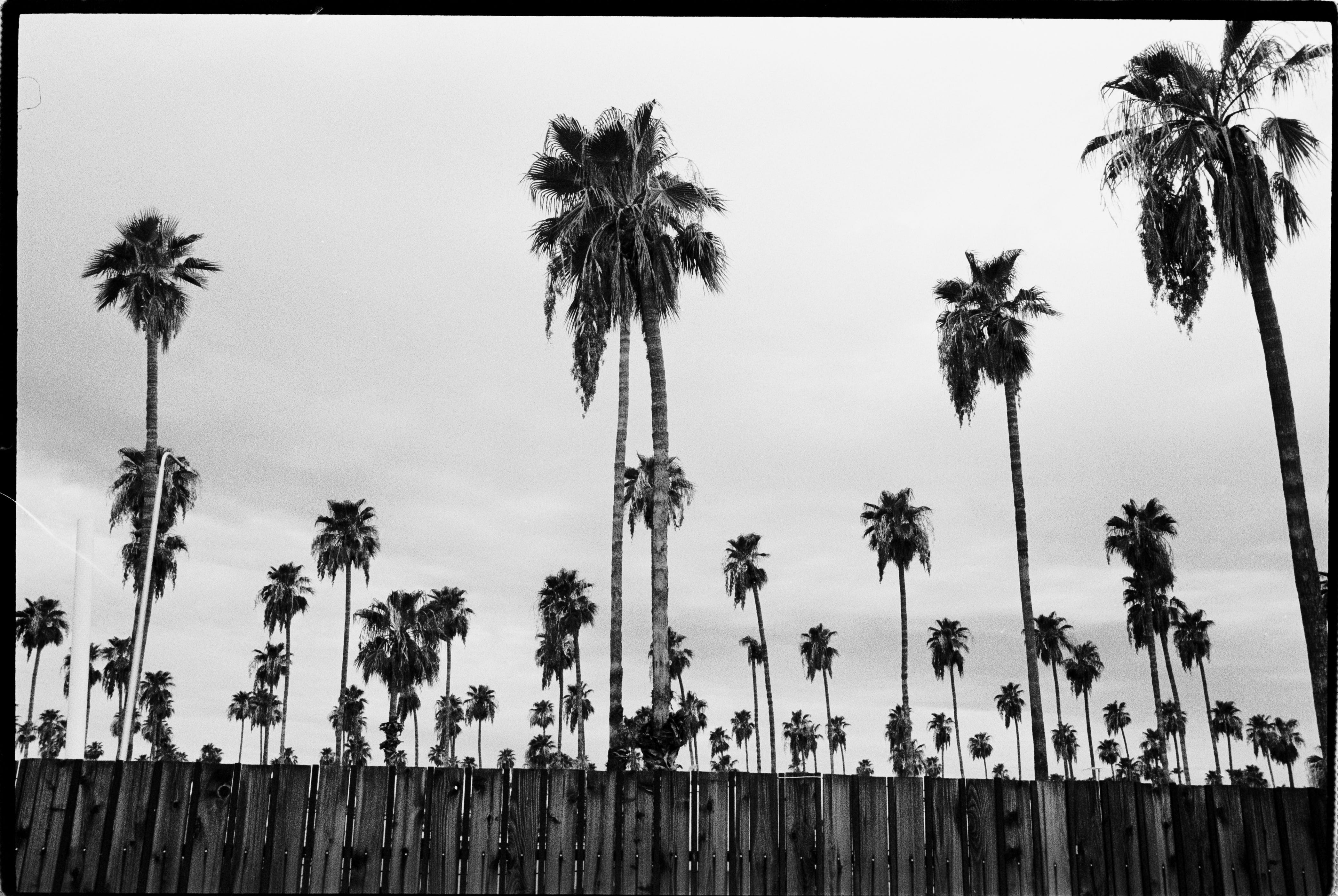
And that is where film now enters the equation. After three-and-a-half years of photographic development, I feel comfortable beginning to incorporate film. Not move to film full-stop, but add it into the mix.
Most folks will talk to you about the filmic look. Sure, I am happy to experience that too. However, the choice to bring film into the fold now is, like all prior decisions for me, a matter of development.
Utilizing film introduces several more constraints to the equation. For starters, finite exposures — 24-36 images per roll. Could I limit myself to just 24-34 images with a digital camera? Certainly. But there is a reason true constraints-based learning is effective. It is in truly taking away options/choices that we are forced to adapt. There are no more extra shots. No more ahhh just one more photograph. Thirty six. That is all.
Additionally, feedback loops are extended. There is no LCD to check after releasing the shutter, and no quick imports into Lightroom for review. You have to make the best decision you can in the moment, then wait to see what you actually made.
Not only that, with no LCD and just a simple internal light meter, I will have to understand light better. There is no making a guess and then checking the LCD to confirm the exposure, contrast, or composition. You are forced to learn it, to feel it, to nail it over time.
Thus, no color, no EVF, no autofocus, no zoom lenses — and now, with film, no LCD or instant feedback.
Every major decision I have made thus far with the camera has been about removing options, not adding them. And film will once again serve the same purpose.
That being said, there are several reasons incorporating film scares me.
For starters, I fear missing moments. I might make an image of a moment and not even know if I got what I wanted until well after the moment has passed, and that is an unsettling feeling. It induces uncertainty.
Additionally, uncertainty also comes from adding choice. And, in a way, adding film gives me more of a choice than I have ever really had with the camera. By simply adding a film camera into the mix, I have added one major option: I now have two cameras and a decision to make:
Do I make this image on film, or digital?
Uncertainty is a challenge, especially considering the investment of time and energy that we make in our photographs. But learning to tolerate uncertainty—to make a decision and keep going—is part of nearly every worthwhile pursuit.
Film removes choices within the act of photographing, but adding film creates a new choice before the photograph is made.
So, I decided that I would not shoot film until I could control for as many extraneous variables as possible. Choosing a rangefinder film camera with a 35mm lens — that would isolate film as the only significant variable that changes from my work on digital.
The decision then truly becomes one of medium: do I want an image to be on digital or film? There is still some worry about whether I will miss the moment, but the likelihood of that happening will only lessen with patience, practice, and persistence over time.
I know that this period of time is going to come with compromise. I am going to miss moments, and surely I am going to blow an entire roll at some point.
But that is fine with me, as it is all in service of “the greater good” — moving my body of work forward in the long-term by improving my competencies with the camera.
Because for three years now, every major decision I’ve made has been guided by the same question:
What will help me become a better photographer?
For a long time, the answer simply was not film.
But now I think film belongs in that answer.
Not because film is inherently better than digital, but because I finally feel ready for what film asks of me.
No posts
Comments
Nothing yet. Say the first thing.
Sign in to join the conversation.