
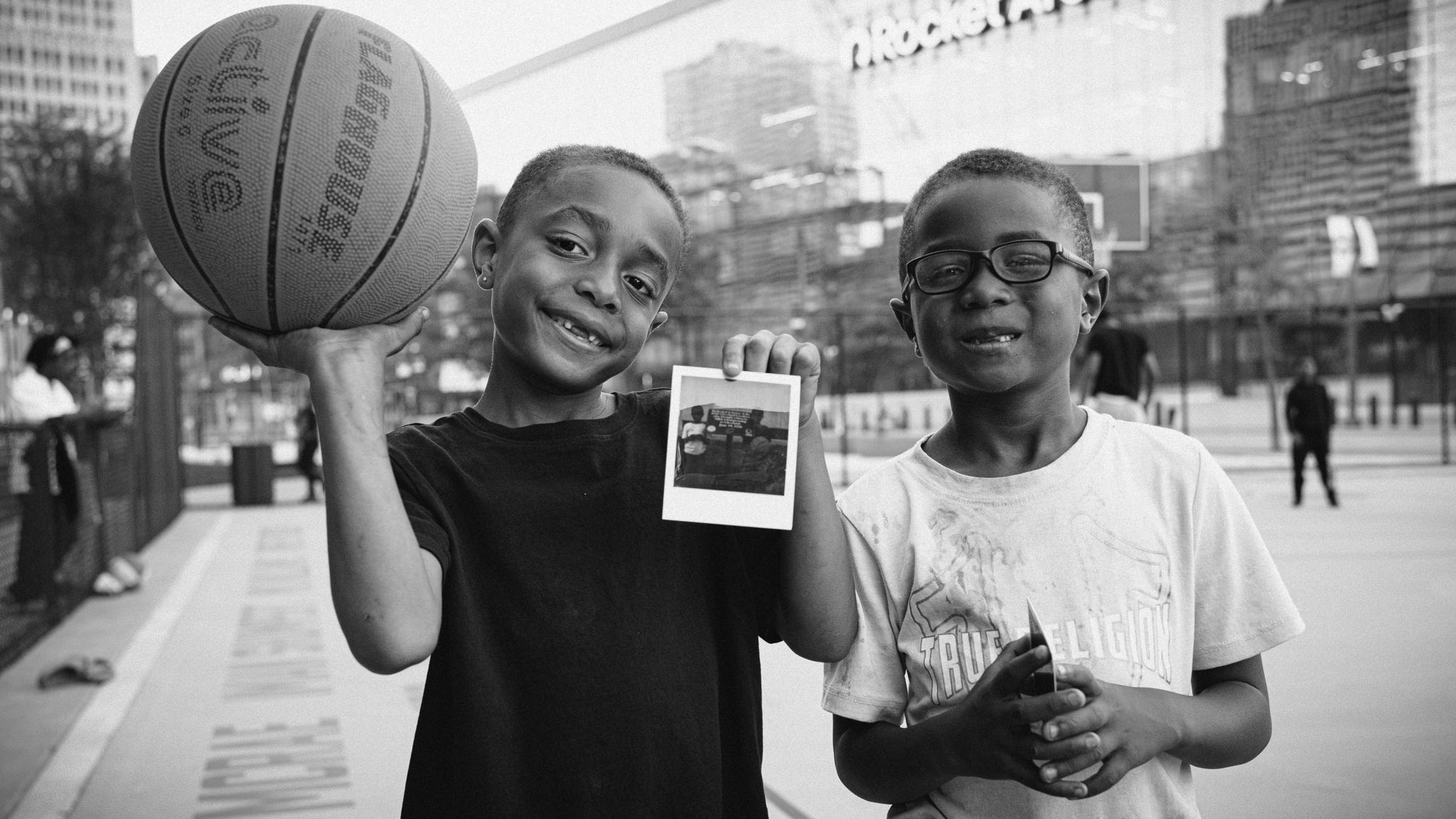
We all have our reasons to make photographs.
For a while, I felt it was simply a means of documenting the world around me while exercising my creativity through self-expression. And, to a certain degree, this still holds true. However, I have learned that the camera is more than that for me, that it serves another purpose in my life:
At first, I thought it was simply an excuse.
An excuse to do and be things I never thought I would do. An excuse to experience moments I would have never otherwise. An excuse to see and meet people beyond the confines of my own little world.
But the more I have reflected on it, the more I have realized that excuse isn’t quite the right word.
The camera hasn’t given me an excuse.
It has given me permission.
Despite working in an extroverted field — coaching and sports performance — for the last decade and a half, and doing so enjoyably, I have often felt that I chose a slight mismatch for myself in a career.
You see, if you asked me, I would confidently describe myself as an introvert. And, working in a professional sporting environment — with players, coaches, and other teammates — is a role that very much requires what extroverted qualities we each possess.
Although I emphatically love what I do, I would be disingenuous if I said I didn’t find myself mentally and emotionally drained from the work.
And yet, something rather strange happens when I walk the streets with my camera. One might think I would keep to myself — hide behind the camera, become invisible. However, it is in fact the opposite. I walk the streets with an openness that I find attracts folks, both to make an image together and to converse.
These moments, however, do not leave me drained. Rather, they fill me up.
At first, I could not really explain why this was the case. Why would interactions sometimes leave me drained, yet other times leave me recharged?
What I have come to realize is that the difference isn’t the people.
It is the performance.
I love what I do at work, but the role asks me to be polished, composed, and “on.”
On the streets, however, I get to be that same me, but turned off. I get to let my guard down, because there is no one to impress, no one to serve, and no role to perform.
In this way, the camera has become a great compliment to my working life. It has given me permission to take the pressure off from trying to be the “best” me, and just be whoever I am in that moment.
Conversations occur all the time on the streets, like just yesterday when I met a woman at a new basketball court in downtown Cleveland. We leaned up against the fence surrounding the court and talked about Cleveland and Phoenix, and we talked about each other.
Simple, carefree, and unvarnished, it was that conversation among others that helped ingratiate me with the people on the court so that they were comfortable with the camera being used in their presence.
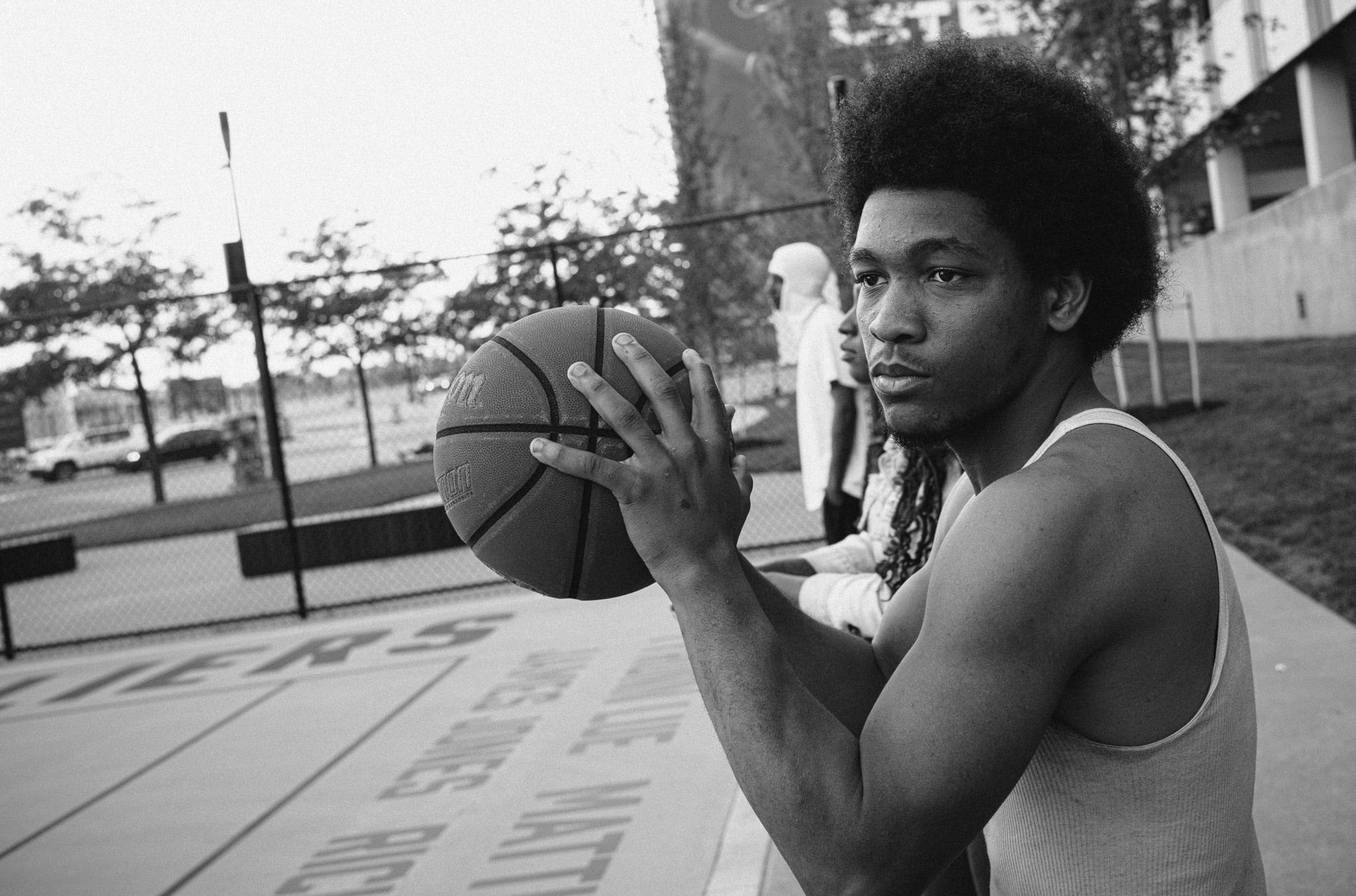
Without the camera, I might have never met this person, and without her, I might not have gotten to know the rest of the crew there that night.
The Boyhood Project is another example of people I likely would have never met without the camera. This project centers around photographing the relationship between a 12-year old boxing prodigy and his father.
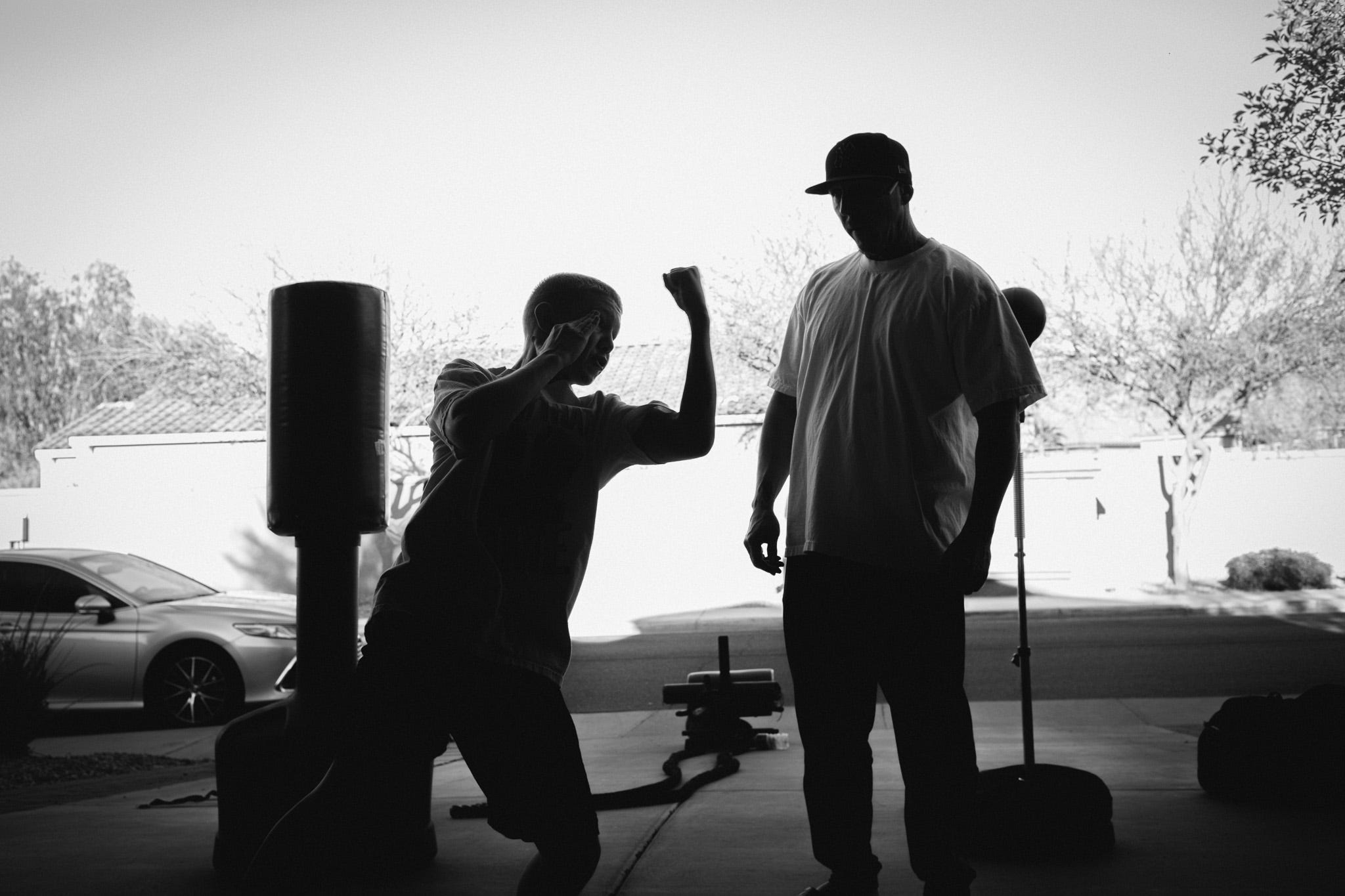
Photography led me to a neighborhood boxing gym where that pair were training, and through hours of time spent together, a relationship was development. Photographs just so happened to have been made along the way.
In this way, the camera has given me permission to meet, connect with, and build relationships — even if only fleeting at times — with people that I otherwise would have never gotten the chance to get to know.
The camera has also opened me up to experiences I might not otherwise have had. To go places and see things that were beyond the scope of my own little world, inspiring and challenging me to explore the country and my own backyard alike.
The American Dream project has given me reason to make stops on my work travels whenever possible — Chicago for a day here, Boston for a day there. It has made me look forward to road trips. It has urged me to venture beyond the places one would normally stay while traveling, venturing beyond downtowns and tourist attractions in search of the places where life is truly being lived.
Take my monthly work trips to Cleveland, Ohio, for example. Without the camera, I would just fly into Cleveland Hopkins International Airport, catch a ride to my hotel in the city, and then walk to the stadium and back for work each day. But thanks to the camera, I have seen places and met people that have brought joy, inspiration, and perspective to my life.
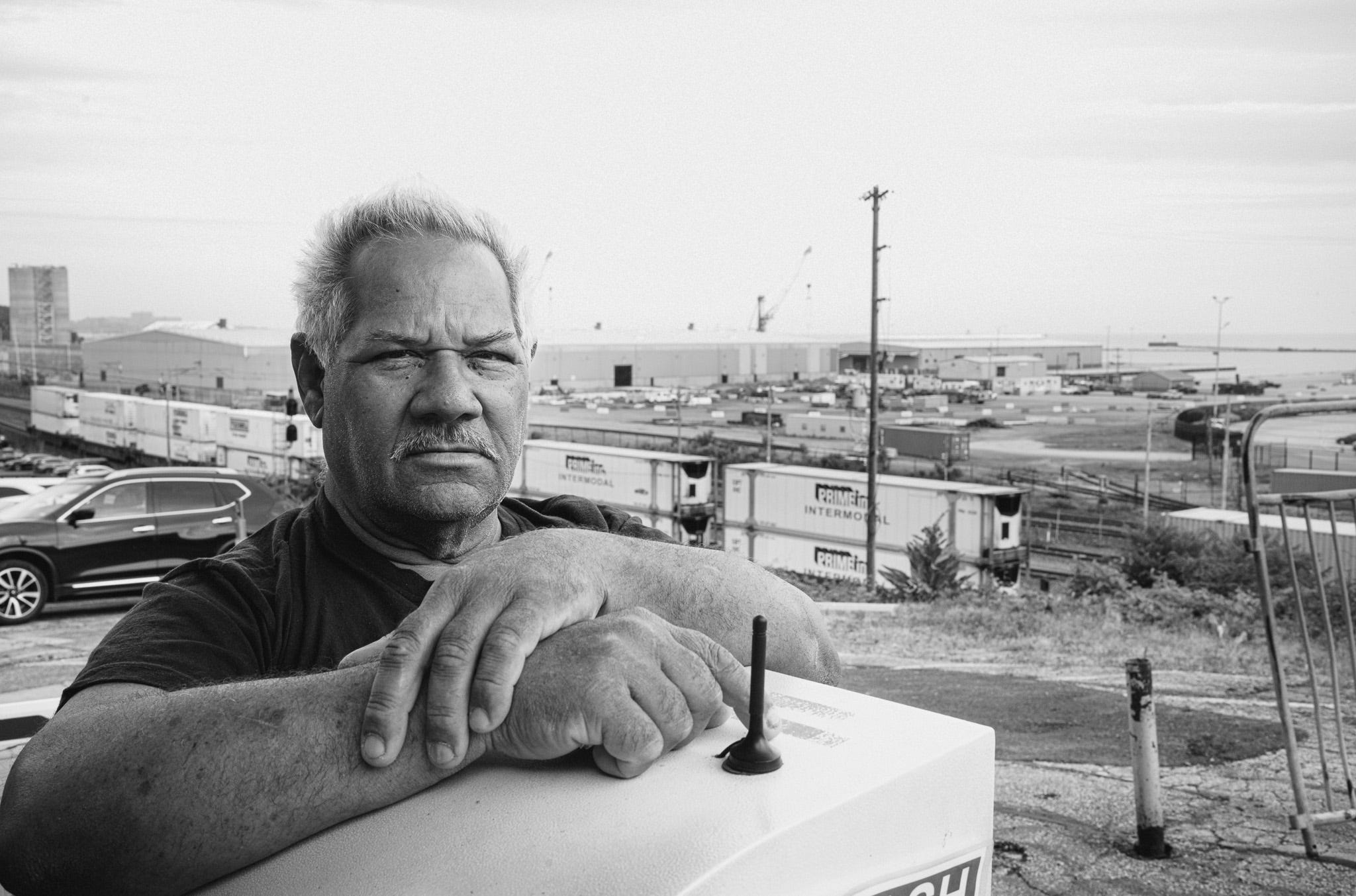
Just a few weeks back, I met Victor, an attendant for a parking lot on the banks of Lake Erie, who told me stories of his 35 years working that spot — The Pit, as they call it.
The very next day, I walked three miles to Central — a small neighborhood on the east side of Cleveland — and made photographs with kids and their families as they played in open fire hydrants in the middle of their neighborhood.
And when I am home in Phoenix, Arizona, I more often than not wander away from downtown proper and toward the margins of town where civilization begins to fade into desert. Here, I have watched as the land and its people live while the rural desert around them slowly gets paved over, renovated, and built upon.
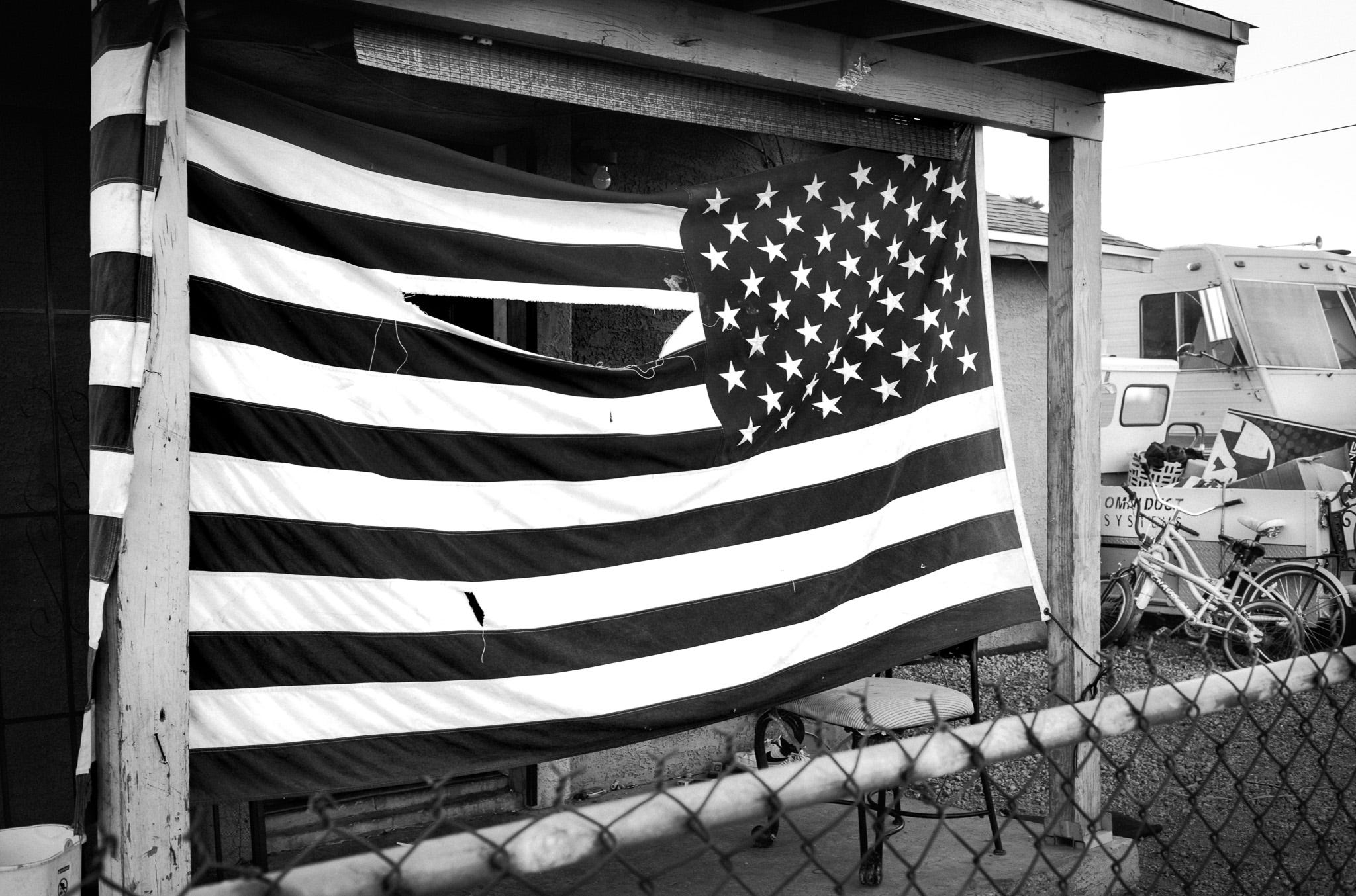
Anybody can get out into the communities. Nothing is stopping you or me. The camera has just become a very good excuse for me to do so.
Or at least that’s what I used to think.
As I write this, I find myself understanding more clearly how the camera ultimately serves me.
It has unintentionally helped me to feel secure enough to let my guard down and be myself and experience places I otherwise wouldn’t.
So maybe the camera isn’t just an excuse after all? Instead, maybe it is a kind of permission.
Permission to enter unfamiliar places.
Permission to begin conversations with strangers.
Permission to slow down.
And maybe most importantly, permission to simply be myself.
Looking back, I don’t think that’s what I set out to find in photography.
But maybe that is what photography has given me after all.
No posts
Comments
Nothing yet. Say the first thing.
Sign in to join the conversation.