
There is plenty of commentary about America these days.
Whether it be online or on television, it is hard to avoid hearing about all that we have seemingly lost: community and connection, purpose within ourselves, trust in one another.
There is undoubtedly some truth to this talk. I mean, things surely don’t look anything like they once did, do they?
Yet, over the course of a week, I found something different on the streets of Cleveland, Ohio.
Not nostalgia, nor stories of how things used to be.
But rather, a reason to hope for more promising possibilities; hints that some things continue to endure. People living in — and actively building — the kinds of communities we often assume no longer exist.
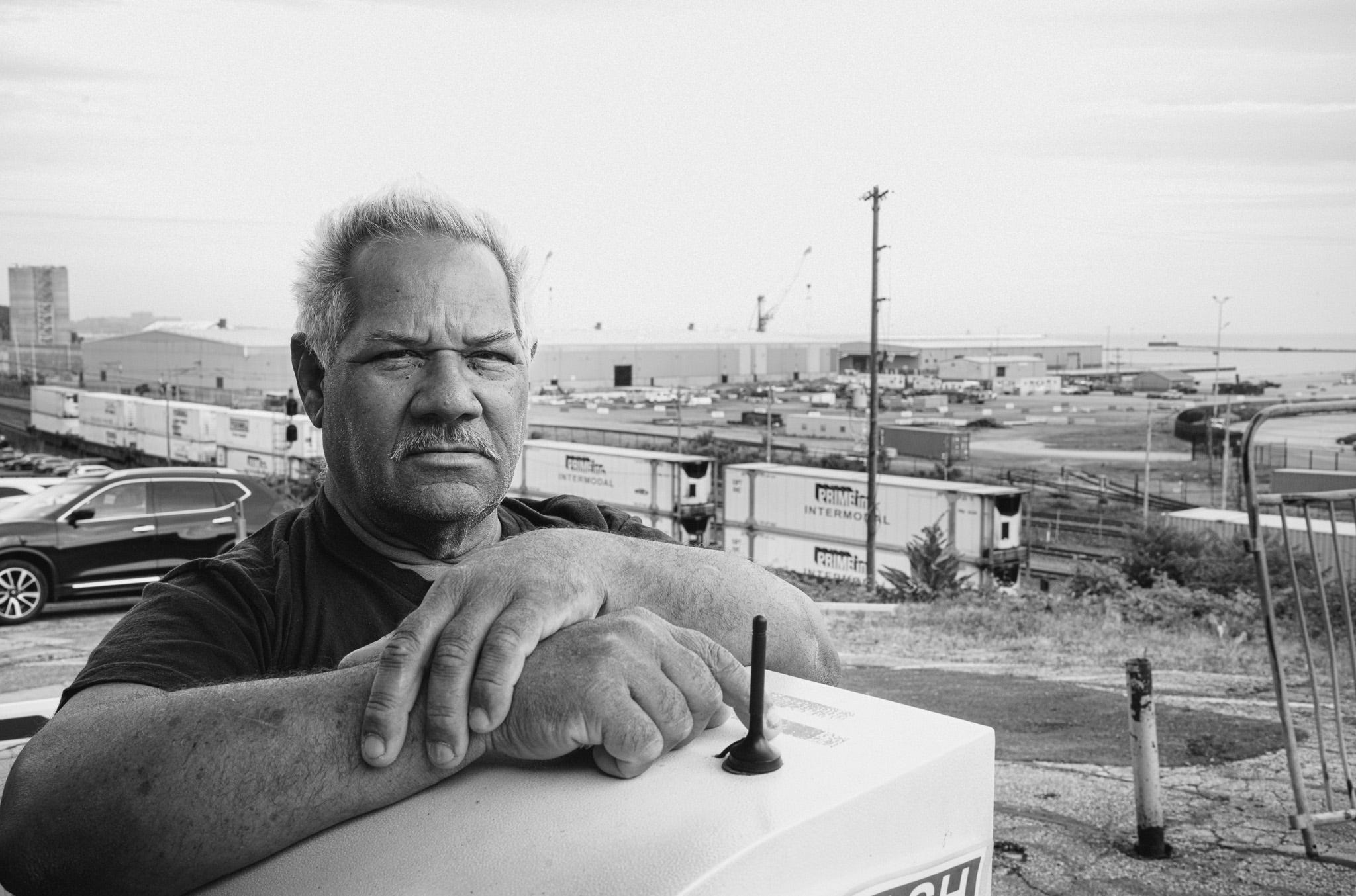
I circled downtown proper many of my mornings in Cleveland last week, walking amongst the rush of folks commuting to work. In fact, I spent over an hour alone photographing a parking lot in town that has been given the name The Pit. Pinned right in between Lake Erie and the Cleveland Memorial Shoreway, the lot gets its name from its topography — resting in a pit well below street-level. Presiding over the lot’s entrance, positioned high above the parking spaces, is the parking attendant named Victor.
The parking lot itself is quite photogenic. There is quite a bit of overgrown foliage, and off in the distance a train will occasionally rumble by while barges are loaded with shipping containers on the lake’s shore. There are relics of the past strewn about the lot, including an unused security turnstile. And, because the cars are parked at the base of a long hill, folks must breathlessly walk with vigor up and out of the pit.
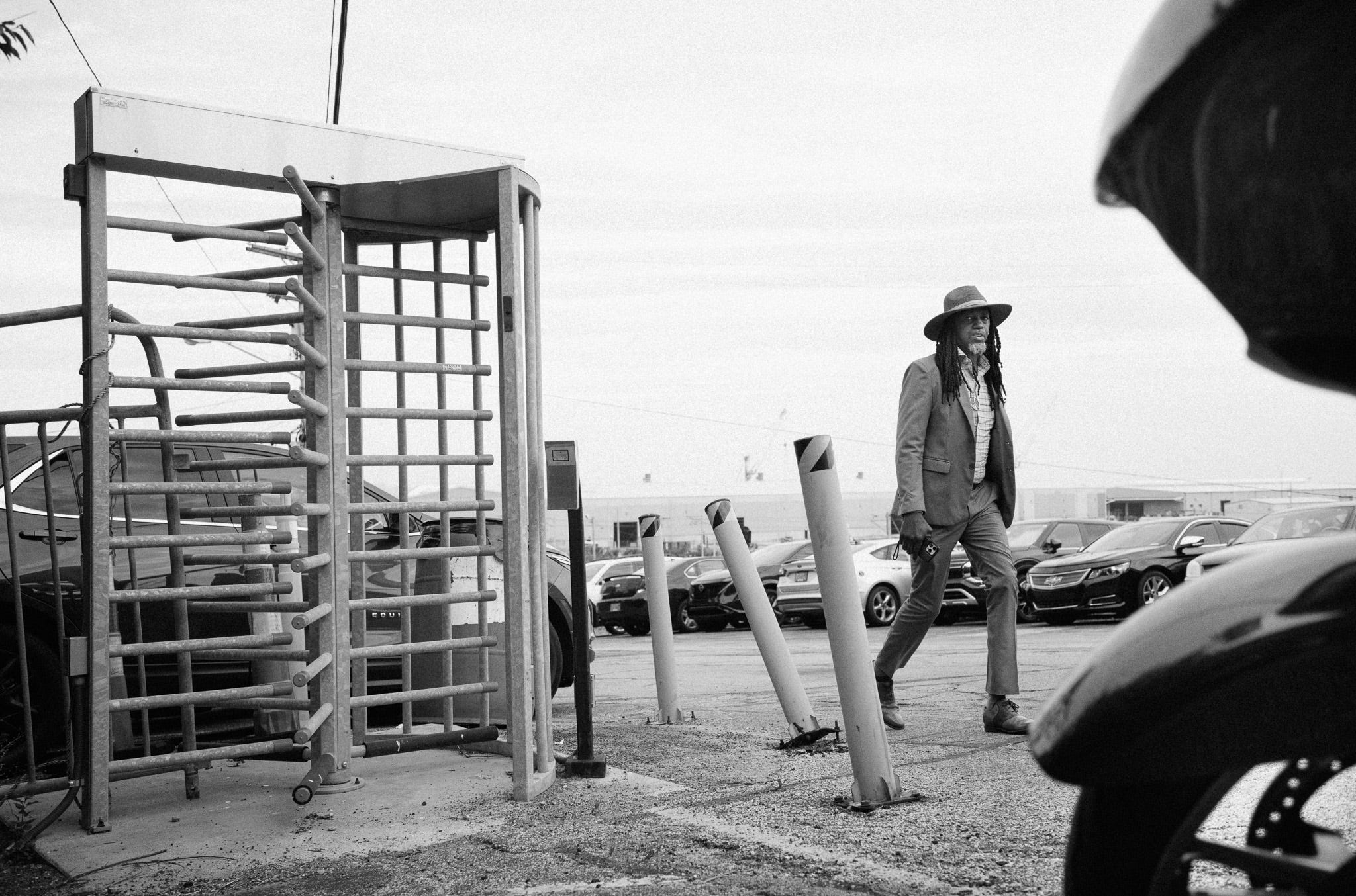
The lot sees hundreds of vehicles coming each morning where most folks pay the $5 to park their vehicle and walk to the nearby Courthouse — clerks, lawyers, witnesses, defendants.
Each one is greeted by Victor, who has worked at this lot, specifically, for over thirty years. His big, booming and accented baritone caught my attention just as I got to the lot. Good morning! he would shout to the regulars as they approached in their vehicles. And, the newbies? Well, if they followed the signs, he greeted them the same. And, if they tried to cut the line or go through a closed lane, Victor could be heard hollering, often in Spanish, “¿Qué estás haciendo, loca?” Yet, once they straightened up, they too received a warm welcome.
The way Victor ran the entrance to The Pit was a clear sign of his love for the job — stern, but with a firm touch.
With three decades of experience in the area, he had a lot to tell me. We chatted for quite some time while he worked. One arm on the ticket machine controlling the boom arm, Victor would assist a driver with paying for their parking pass, and then turn to me for conversation.
We talked about where we are both from and where we have been. Victor’s story predominantly revolved around Cleveland. He lives on his own with two dogs — Lola and Loco — and a handful of chickens.
“And I have people”, he said, “That is enough.”
But these days, time with his people is different than it was decades ago. People in every and any neighborhood used to just hang out together.
“Those days are gone”, he says flatly as another driver pulls up.
Victor turns from me to the driver and takes her card. “Tap to pay works, yes m’am”. He presses her card to the machine as she looks away disconnected and impatient — clearly new to The Pit.
“But me, I have a house at the very end of a dead-end street. I have benches for people to come sit on.” His hardened expression softens to a smile. “After church on Sundays, the people come to my house. I make food. We play games. Like the ole’ days.”
Victor turns from me back to the queuing line of traffic. It is rush hour.
“WHAT THE HECK ARE YOU DOING?” his voice booms past me toward a car in the wrong lane. I look back and the driver is laughing behind the wheel. Victor elbows me and chuckles, “I know her. An old friend.”
It seems as though many of the customers become friends with the attendant.
And though he mourned the days gone by, it seemed to me as though Victor had actually found a way to preserve them — building a community both at work and at home.
Later in the week, I walked three miles from my hotel in Downtown to the eastern part of the city named MidTown. Out there, I found abandoned buildings and forgotten playgrounds standing alongside a revitalized business infrastructure.
It was a hot, sticky summer day, and as evening drew to a close and I pressed in on two-plus hours of photographing, I made the turn to head back toward my hotel. Tired and dehydrated, I was ready for bed.
But, rather than retracing my steps on Carnegie Avenue back to the hotel, I decided to swing further south on my return. After walking a few blocks down Central Avenue, I noticed an inordinate amount of water gushing down one of the side streets. My curiosity took over, and I steered my steps upstream.
Another block and around the bend I saw what I desperately hope for when I first saw the water: two fire hydrants were wide open, flooding the roads with water in the middle of a neighborhood four-way stop. Kids by the tens were out in the intersection, jumping through the water, shooting each other with water guns, hydroplaning in shopping carts.
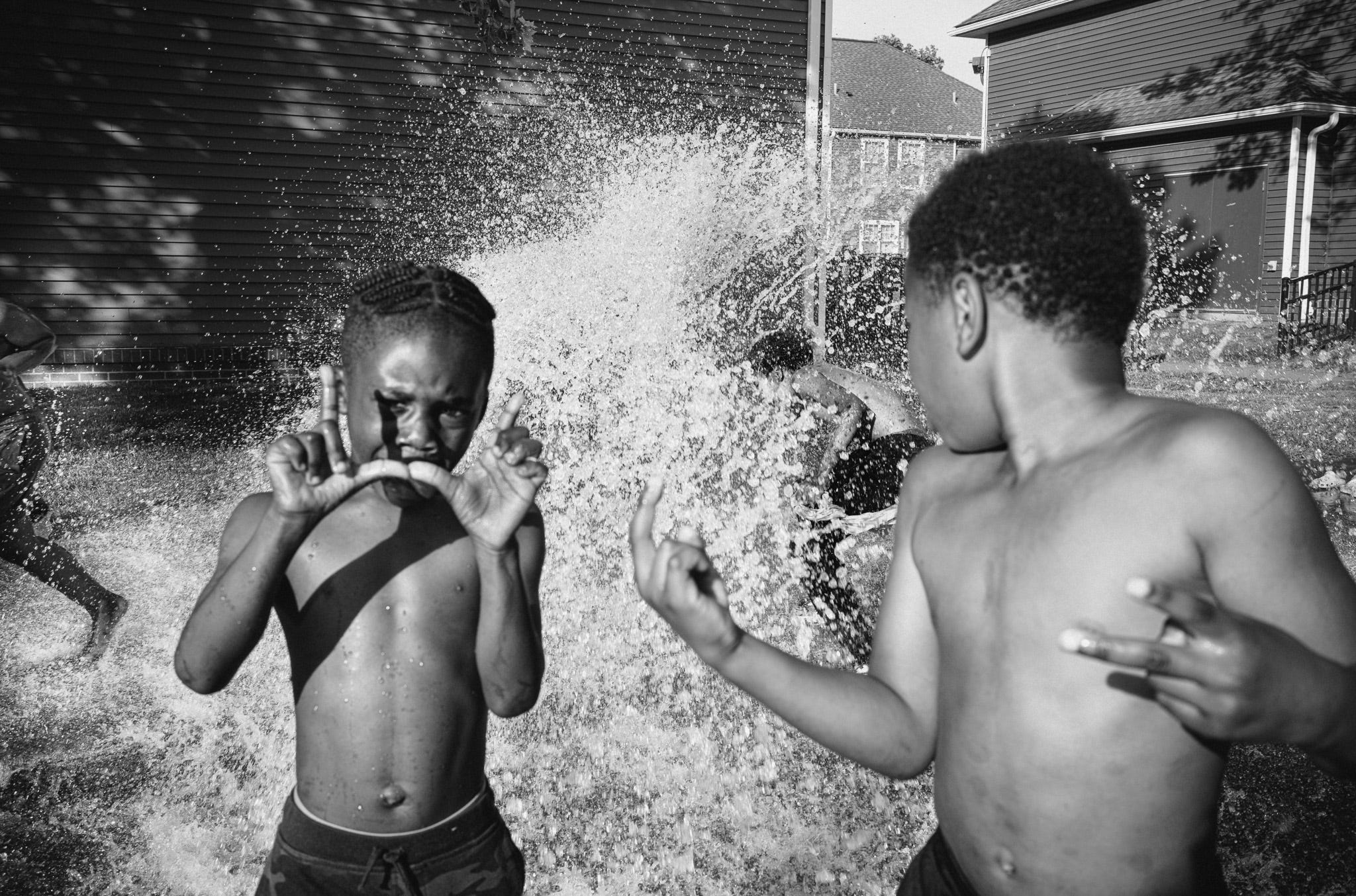
Parents lined the sidewalks and sat on their porches. Some grilling, some just kicking it with others, all watching their kids. Naturally, I had reservations as I approached the scene. A thirty-something year-old adult; a passerby; a stranger. Walking around with a camera, unannounced, photographing kids. I am not sure if that was ever really acceptable, but today it seems even less advisable.
It is a situation I had never been in, but an opportunity I could hardly walk away from. I thought of my father telling me about moments like these in New York City back in the 70’s. And I thought of Sage Sohier’s work, with kids playing in the streets (one photograph, specifically, involving open fire hydrants).
I decided to give it a go, but not without first talking to as many parents as possible. I found the nearest adult and introduced myself. I commented how great it was to see the kids just out here having fun together as they try to beat the heat.
“We don’t have a waterpark. So we make our own.”
Ultimately, every parent I talked to allowed me to stay. And the kids? “The Camera Man”, as they called me, got peppered with more requests than he could keep up with to take their photographs.
Although the situation was a little stressful for me — being mindful of the fact that I was an outsider — it was a beautiful moment. Maybe this happens all the time in various parts of America, but it is not anything that I have yet come across. It felt like a moment from another time, and yet it was just this week. Nobody planned it, branded it, or curated it. It just happened, unscripted.
In the process, I hugged one of the parents who told me their story; I partnered with the kids to make photographs, asking them where and how they wanted their picture taken and with which of their friends or family members, and made sure to show them the pictures on the camera’s LCD; my lens got splashed, my pants soaked in shin-deep city water, and my entire walk back was in soaked leather shoes.
On the west side of Cleveland there is a small neighborhood named Ohio City.
Despite being one of Cleveland’s oldest neighborhoods, it is remarkably well preserved. Homes from the 19th and 20th centuries still stand, and their inhabitants are out on their front porches.
I stop to make a handful of photographs, then continue to push out west. As I round a corner onto 38th Street, I sense something familiar: a handful of kids, not more than ten years old, out on a wide open baseball field in the middle of the park.
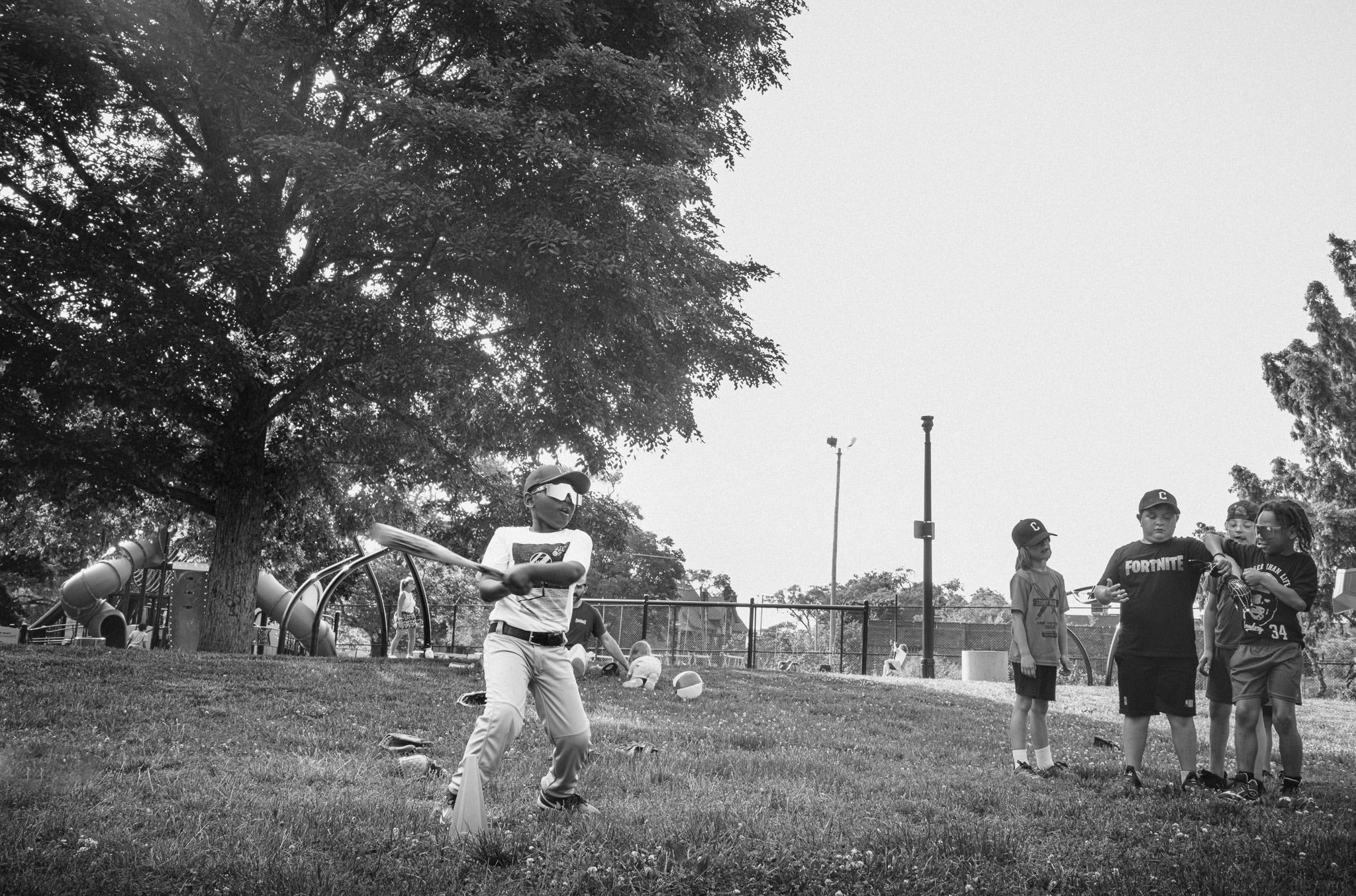
Fairview Park’s ballfield has no outfield fence, and kids dot the field like white clover flowers dot the grass which expands from the infield clay all the way to the park’s perimiter. I stop to watch, not only struck by the memories of my own youth playing baseball on a field not unlike this one in Ohio City, but by the timelessness of the moment.
As I photographed, one of the coaches — her name was Misty — told me all about the league and how they work to help the kids. Unlike other youth leagues, this one has no borders.
“You can come from any part of town and we will accept your child. This isn’t like the rest of the leagues or travel-ball outfits,” she explained. And I could clearly see it.
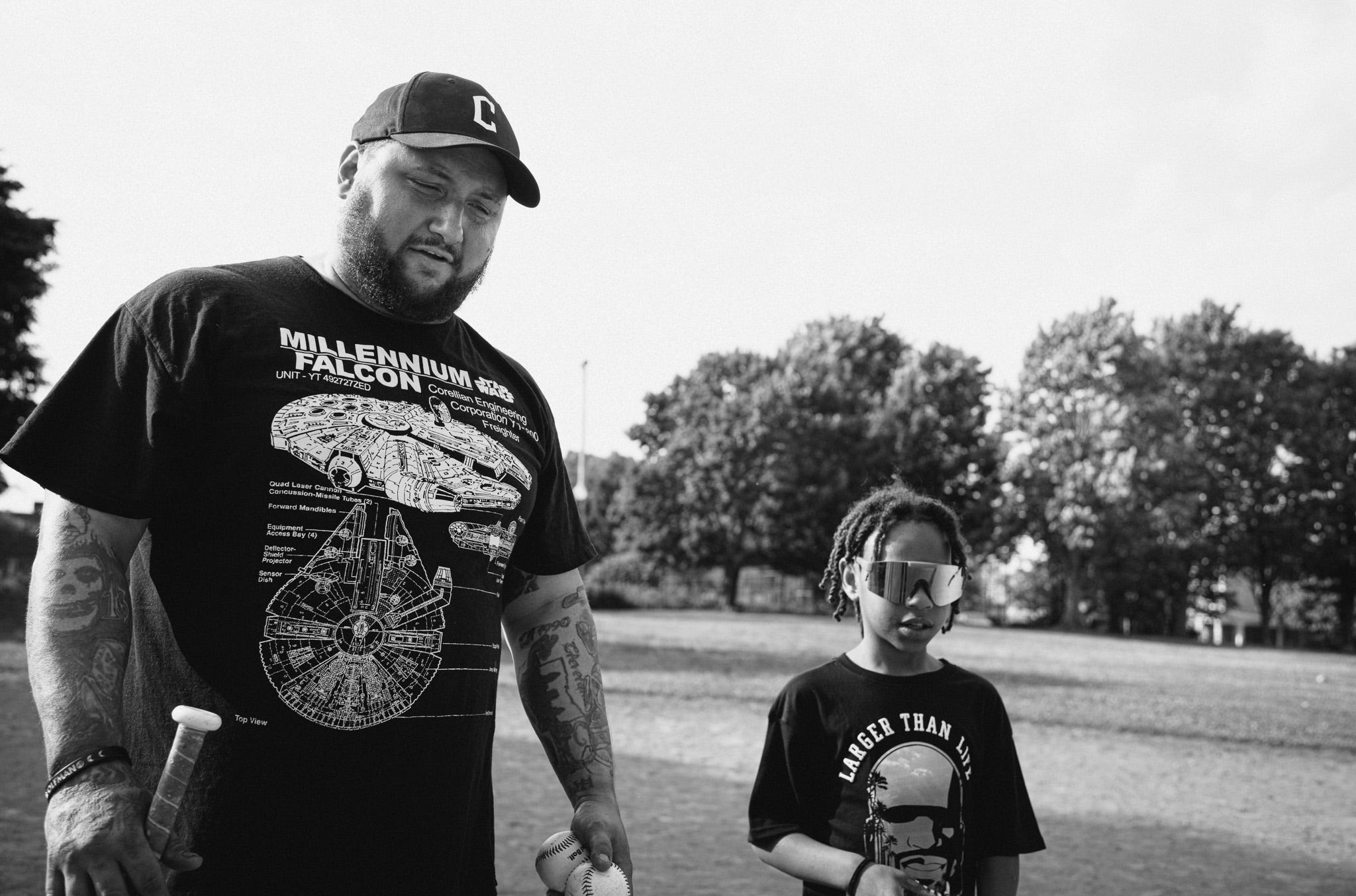
Kids of all kinds laced up their spikes that day. Boys and girls, athletic and awkward, confident and self-conscious. And as this diverse bunch whooped and hollered around the field, I watched Coach Misty and several other parent-coaches rein in all of that youthful energy; encouraging and reinforcing not only the tactics of the game, but life lessons.
This wasn’t just a place to drop off the kids or wear them out. It was a place of gathering. A community coming together for something that — though ordinary and seemingly insignificant — was so much bigger than themselves.
Over the course of a week in Cleveland, I kept stumbling upon the same thing.
A parking attendant who hosts neighbors after church.
Parents cooling off an entire neighborhood by cracking open the fire hydrants.
Coaches volunteering their time to children on a ballfield.
We spend so much time talking about what America has seemingly lost, and so very little time recognizing what still remains:
Community, fellowship, connection. Grit, resourcefulness, resilience. And most of all, people looking after one another.
That is what I think of when I think of America. And that is what I found on the streets of Cleveland last week.
No posts
Comments
Nothing yet. Say the first thing.
Sign in to join the conversation.